Barbados is just weeks away from unveiling a transformative new national digital payment platform, BimPay, scheduled to go live on June 12. A top executive from one of the project’s core participating institutions has framed the launch as a watershed moment for the island nation’s financial sector, forecasting sweeping changes to how residents manage and move their money.
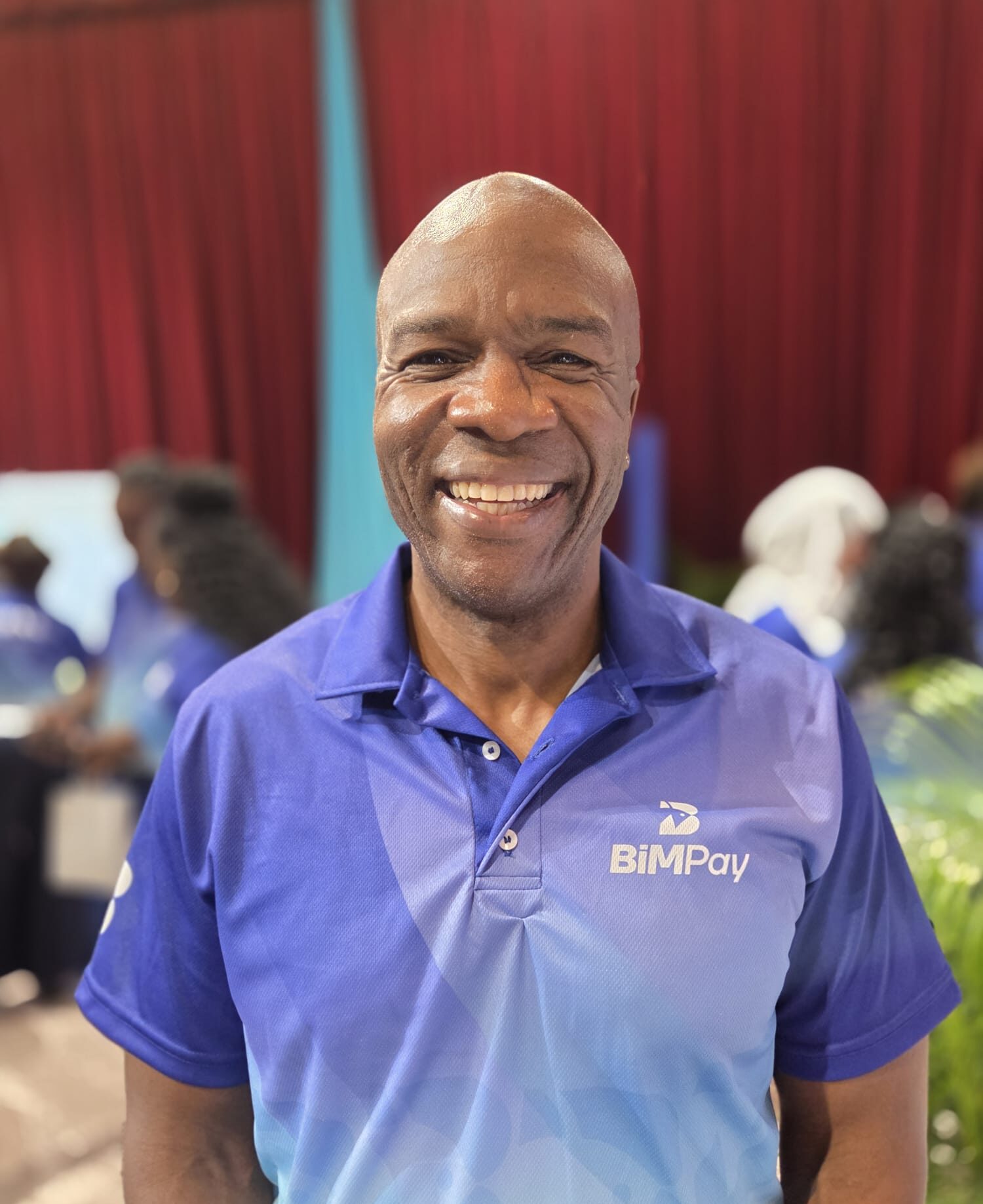
George Thomas, Chief Executive Officer of Sagicor Bank Barbados Limited, one of the six commercial banks and nine founding financial institutions backing the initiative, says BimPay directly aligns with his organization’s founding mission. When Sagicor Bank entered the Barbadian market three years ago, it launched as a digitally-first financial institution built around a core promise to deliver easier, safer, and more innovative financial services to local consumers. For Thomas, the national digital payment infrastructure project represents the fulfillment of that promise.
“It feeds into our existential ethos in that we were created to bring ease, safety, and innovation into the financial services market,” Thomas explained, drawing a direct line between BimPay’s goals and his bank’s original vision.
As a bank leader with professional background as a cybersecurity architect, Thomas brought a unique dual perspective to the project: one that celebrates transformative fintech innovation while prioritizing ironclad consumer protection. He stressed repeatedly that technological progress must never be pursued at the cost of robust security frameworks, and praised the Central Bank of Barbados for striking the perfect balance between forward-thinking regulation and risk mitigation.
“It’s good to see the regulator embrace that spirit of innovation whilst, again, I keep saying safety,” Thomas said. “Because as much as I’m an innovator, I’m also a cybersecurity architect. I am very conscious that it doesn’t matter what you build or how fancy it is, it has to be safe and secure. So I’m seeing all of those boxes being checked here.”
Thomas also commended regulators for their inclusive rollout strategy, which first让 internal agency employees test the platform hands-on as initial stakeholders — a small-scale preview of the nationwide adoption journey Barbados will begin next month.
Drawing on decades of professional experience working on early digital currency and payment experiments across the Caribbean, including past projects in the Eastern Caribbean Currency Union, Jamaica, and The Bahamas, Thomas framed BimPay as a far more pragmatic and scalable solution than prior regional attempts. While he described those earlier efforts as valuable proof-of-concept experiments that helped lay groundwork for future innovation, he argued BimPay addresses the core need of digital finance more effectively.
“I always believed in this approach because the money is already digital,” Thomas noted. “We just need the plumbing — the infrastructure to bring the capacity to access it and move it around to the general public, again, in a safe and secure manner. I think that is what this marks the kickoff. This puts the ball in play.”
For Thomas, the launch is more than just a domestic upgrade: it positions Barbados as a regional pioneer, bringing the island’s financial services infrastructure in line with global leaders across North America, Asia, and the Middle East. “All of Barbados should feel very proud come June 12 to be pioneers in the region,” he said. “I think this is a march towards parity with any place on planet Earth… We are now on par in terms of financial services and the capabilities provided to citizens.”
Beyond simplifying everyday person-to-person and retail transactions for ordinary Barbadians, BimPay unlocks substantial new economic opportunity for local fintech creators, entrepreneurs, and software developers. As an open digital infrastructure, the platform allows third-party builders to develop specialized, niche financial tools that larger incumbent banks often overlook, mirroring successful global fintech-bank partnership models.
Thomas pointed to well-known international precedents, such as M-PESA’s collaborative work with traditional banks across Africa, and similar fintech-institution partnerships across Europe, North America, and Latin America, to illustrate the potential for inclusive growth. “We know we are entering that race, and I think we’re going to race to the front,” he said.
On the question of whether all participating institutions will be fully prepared for the June 12 launch, Thomas confirmed that banks and credit unions across the island have been working around the clock for six months to complete seamless system integration. “Nobody in the banking system has been sleeping for the past six months, I dare say,” he joked. “We have been working tirelessly around the clock to make this happen. I can safely say, from a technological perspective, there’s a high degree of readiness, and come June 12, we’ll be ready.”
Pre-launch feedback from consumers has shown strong demand for advanced digital payment features, especially among younger demographics that are already accustomed to global digital payment standards like Apple Pay and Google Pay. Thomas says millennials and Gen Z creators, in particular, are already looking ahead to how BimPay will support the growing digital creator economy, with many already asking how the platform will enable them to receive payments for their social media content and online work.
While Thomas acknowledged that a small segment of more risk-averse consumers are taking a natural “wait-and-see” approach ahead of the launch, he emphasized that overall public sentiment across Barbados is overwhelmingly optimistic and enthusiastic as the island counts down to launch day. “That is normal,” he said of cautious attitudes. “But generally speaking, I found that people are optimistic and enthusiastic.”