作者: admin

  • Treated like a coup plotter

    Treated like a coup plotter

    In a sweeping 36-page legal affidavit submitted to Trinidad and Tobago’s High Court on July 3, 42-year-old Genevieve Hadeed has issued an unflinching denial of allegations that she conspired to assassinate Prime Minister Kamla Persad-Bissessar, describing the claims as a devastating, unfathomable shock that has upended her entire family’s life.

    The affidavit marks Hadeed’s first public personal account of the June 24 police raid on her family’s Westmoorings residence and the subsequent detention she faced under the country’s active state of emergency regulations. The legal filing is part of a constitutional motion brought by Hadeed and her husband, prominent local businessman Dominic Hadeed, who is also in detention.

    Hadeed recounts that she first learned of the grave allegations against her when a police corporal served her a formal Preventive Detention Order (PDO). The document cited intelligence claiming she had publicly called for the deaths of the Prime Minister, sitting government ministers, and members of parliament, remarks allegedly made during parliamentary debates over an extension of the national state of emergency.

    Reading the accusation for the first time, Hadeed writes, left her completely shattered. “Upon receiving the document, my heart sank. I envisaged my life was over. I became so weak and overwhelmed that I nearly collapsed to the floor. In that moment, it felt as though my entire world had come crushing down,” her affidavit reads. She says she was reeling from shock, fear, and disbelief, particularly at being lumped in the same category as Yasin Abu Bakr, the former leader of a failed 1990 coup attempt in Trinidad and Tobago. “I could not comprehend what I was reading… It was as if they were putting me in the same league as Abu Bakr, as if I were staging a coup,” she added.

    Hadeed categorically rejects all claims against her, emphasizing that she has never plotted violence, engaged in criminal activity, or taken any step that threatens public safety. “I have never plotted to murder anyone, nor have I plotted to engage in any criminal activity, nor have I ever acted in any way which could be considered to be prejudicial to public safety by taking steps to carry out the type of allegations that are being levelled against me,” she stated.

    She further describes the chaotic confusion of the early morning police raid on her home, where officers presented a search warrant tied to a conspiracy to murder investigation but provided no details of what she was alleged to have done, who she was supposed to have conspired with, or any other context. Hadeed, who has no prior criminal convictions or charges, called the entire situation deeply distressing and unfathomable.

    The affidavit details harsh conditions during her detention at Trinidad’s Woodbrook Police Station: an 8-by-6 foot cell with a soiled floor, no furniture or bedding, an open floor-hole toilet, no running water, poor ventilation, dim lighting, and rampant cockroaches. She says she spent multiple sleepless nights in the cell, only being taken back to her home under armed police supervision during the day to shower, change clothes, and eat.

    Hadeed also says she was stunned to learn that her 69-year-old maternal aunt, Star Sabga — a small businesswoman who makes a living selling homemade cheese — was also detained in connection with the case. She later learned from her legal team of a front-page *Express* newspaper report stating a PDO would be served against her, a revelation that left her even more confused, as no law enforcement official had notified her of the pending action. Hadeed noted that she had always understood PDOs were reserved for the most heinous and dangerous criminals, making her inclusion all the more bewildering.

    A notable error recounted in the affidavit saw police transport Hadeed to another local residence on the day of her arrest to question a couple about a different Genevieve Hadeed — her sister-in-law who permanently resides in Spain. Even after the couple confirmed the other Genevieve Hadeed lived abroad, Hadeed remained in police custody.

    Beyond her own ordeal, Hadeed centers much of her testimony on the harm done to her family. As the primary caregiver for her three children and her husband, who lives with multiple severe chronic health conditions including cancer, Charcot-Marie-Tooth disease, chronic lymphocytic lymphoma, and kidney disease, Hadeed argues that her detention and that of her husband has put his life at grave risk, as he has been cut off from regular medication, physiotherapy, and ongoing treatment. She also notes the profound emotional harm to her three children, who have suddenly been deprived of her daily care and guidance.

    A lifelong community and charity worker, Hadeed has previously served as president of the Syrian Lebanese Women’s Association and been deeply involved in local philanthropic work, a track record she says is inconsistent with the accusations against her. She closes the affidavit by reaffirming her complete innocence, arguing that she is being punished before any criminal trial has taken place, and urging the High Court to grant her immediate release so she can return to her family.

  • Detention politically driven

    Detention politically driven

    A prominent Trinidad and Tobago business leader is fighting what he calls a pre-planned, politically driven detention, vehemently rejecting unproven accusations that he plotted to assassinate government officials. In a 30-page affidavit filed with the High Court on July 3, Dominic Hadeed, founder and managing director of Blue Waters Products Limited, has launched a constitutional challenge against the country’s Police Commissioner, Minister of Homeland Security, Attorney General, and police corporal Eldon Calliste, laying out his full account of the events that led to his June 24 arrest and detention without criminal charges.

    Hadeed, who has never been convicted of or even charged with a criminal offense alongside his wife Genevieve, says the couple has been held in custody since late June without ever being interviewed or given a chance to respond to the allegations before preventive detention orders (PDOs) were issued. In clear, unreserved terms, he denied any involvement in conspiracy to harm members of the government or parliament.

    “I have never plotted to assassinate anyone. I have never plotted to engage in any criminal activity whatsoever and I have never acted in any manner prejudicial to public safety by taking steps to carry out the type of allegations that are being levelled against me or otherwise,” Hadeed wrote in the affidavit. He added that he remains fully willing to cooperate with law enforcement investigators, despite authorities failing to confront him with the allegations even after days in custody before the PDO was formally issued.

    A core part of Hadeed’s legal challenge targets the vague wording of the PDO itself. The document notes that the order fails to identify any supposed statements Hadeed is alleged to have made, the people he supposedly made them to, any co-conspirators linked to the claimed plot, or any overt actions taken to advance an assassination conspiracy. The allegations, he argues, are entirely unsupported by specific particulars.

    Hadeed also pulls attention to controversial remarks made by Attorney General John Jeremie during a June 10 parliamentary debate over extending the country’s state of emergency. According to the affidavit, Jeremie deliberately revived a 2017 comment from a Anthony Bourdain interview, where another local businessman described the country’s small Syrian-Lebanese community as the most powerful ethnic group in the nation. Jeremie’s repeated references to the so-called “1%”, Bayshore residents, government land leases, and the Teteron prison effectively singled out Hadeed and other members of the Syrian-Lebanese community long before any detention orders were approved, Hadeed contends.

    Those parliamentary remarks, he argues, amounted to a public preview of his arrest, proving that the decision to detain him was made before any serious investigation was completed. The “1%” label, Hadeed claims, has been deliberately used by government officials as a political weapon to stigmatize the minority ethnic group, and his current detention is the latest example of this targeted campaign.

    Behind the assassination plot allegations, Hadeed says, lies a years-long public dispute with the Trinidad and Tobago state over agricultural and commercial land leases that forms the true backdrop for his arrest. He explains that Blue Waters Products acquired the leasehold interests of PR Trinidad in 2007, when those existing leases were set to expire in 2015. Immediately after the acquisition, the company entered talks with state authorities to secure new long-term leases. Relying on repeated official assurances that formal leases would be granted, Blue Waters invested millions of dollars into developing the properties, according to Hadeed.

    Over the years, three successive national cabinets approved offers and amendments for multiple parcels of state land controlled by Blue Waters and its associated companies. Even though formal lease documents were never finalized, Hadeed maintains that binding legal agreements were already established through official offer letters, acceptance correspondence, and payments of premiums and processing fees to the Commissioner of State Lands.

    The situation shifted dramatically earlier this year, after Hadeed publicly criticized government ministers over business tax policies and delays in VAT refunds at a March 25 leadership event hosted by the Trinidad and Tobago Manufacturers’ Association. Just weeks later, on May 5, Minister of Land and Legal Affairs Saddam Hosein notified Hadeed that the cabinet had voted to rescind all previous approvals to grant leases to Blue Waters Products Ltd, OG C1 Property Ltd and OG C2 Property Ltd. Hadeed adds that Attorney General Jeremie also referred all matters connected to the proposed leases to the Commissioner of Police for criminal investigation.

    Hadeed retained top legal counsel, including former attorney general Ramesh Lawrence Maharaj SC, who responded to the government by asserting that his companies had acted lawfully and in good faith, and that binding enforceable agreements were already in place. After multiple rounds of correspondence failed to resolve the dispute, Hadeed’s legal team issued a pre-action protocol letter on June 22, formally notifying the government of a planned constitutional claim over the breached lease agreements.

    Just 48 hours later, police executed search warrants at Hadeed’s properties—a timeline that reinforces Hadeed’s belief that the entire police operation is directly tied to the land dispute, not any fabricated assassination plot. When officers arrived at his Bayshore residence before dawn on June 24 to seize electronic devices, Hadeed writes that he “immediately and honestly believed” the operation was connected to the state land lease controversy, given Jeremie’s earlier referral of the matter to police. “It never occurred to me, nor could it have, that the exercise had anything to do with any allegation of a plot to murder anyone,” he stated.

    Hadeed again points to Jeremie’s June 10 parliamentary remarks, noting that references to people “living in Bayshore” and “stealing government land and property” were clearly directed at his companies’ ongoing lease dispute, and proved that his detention had been planned in advance. The Attorney General’s references to “state leases” and “extraordinary steps taken…to secure valuable State lands” were an unambiguous reference to the holdings controlled by Hadeed’s businesses, he adds. When the searches were conducted, Hadeed says he remained convinced the action was solely tied to the lease dispute, and only learned later that authorities were linking the operation to an unsubstantiated murder conspiracy claim.

    In his account of the early morning raid, Hadeed says police searched his family home, seized electronic devices belonging to all members of the household—including his children’s devices—and later executed additional searches at Blue Waters’ corporate offices. He was not informed that he was under arrest until most searches were completed, and was never given a police caution or advised of his fundamental legal rights at the time of the operation, he claims.

    The sequence of events—from the pre-detention parliamentary remarks, to the escalating land dispute, to the execution of search warrants, and finally the issuance of the PDO—proves that the decision to detain Hadeed was made long before any investigation was completed that could justify the extreme measure, the affidavit argues. Hadeed is now asking the High Court to rule that his core constitutional rights have been violated, and to grant appropriate constitutional relief as his legal challenge to the legality of his detention moves forward.

  • Central Bank plans tighter oversight

    Central Bank plans tighter oversight

    A high-profile seizure of $2 million in U.S. currency at Trinidad and Tobago’s Piarco International Airport has spurred the Central Bank of Trinidad and Tobago (CBTT) to announce sweeping planned reforms to the country’s foreign exchange regulatory framework, addressing long-standing public concerns over oversight amid persistent domestic U.S. dollar shortages.

    The incident, first exclusively reported by the *Express* on Friday, unfolded on June 25, when Customs and Excise officials intercepted the cash shipment bound for Miami via Jamaica. Stowed in a white crocus bag, the funds were seized after authorities raised questions about accompanying documentation. The currency was later transferred to CBTT custody as investigations proceed, with U.S. law enforcement already brought on to assist with the probe.

    NCB Merchant Bank (Trinidad and Tobago) Ltd. has since publicly confirmed it is the owner of the seized funds, saying the shipment was part of standard daily business operations. In an email response to *Express* inquiries, CEO Marli A. Creese emphasized the bank had followed all applicable legal and regulatory protocols for cross-border cash transport. “All usual and required protocols were adhered to,” Creese stated, adding that the institution has fully complied with all information requests from investigators, and has already submitted additional supporting documentation that authorities requested. As of the latest updates, Creese confirmed the $2 million remains held in CBTT custody pending clearance to proceed with the shipment.

    While CBTT has declined to comment on the specific details of the ongoing investigation to avoid compromising investigative work, the central bank used the public attention sparked by the seizure to outline planned regulatory overhauls designed to close gaps in the current foreign exchange system. The institution acknowledged public frustration over persistent U.S. dollar shortages, where domestic demand consistently outpaces available supply, leading to widespread questions about the legality of large-scale U.S. currency exports.

    In a formal statement titled “Central Bank statement on current foreign exchange matters”, CBTT clarified that authorized foreign exchange dealers – licensed banks and non-bank financial institutions operating under the existing Exchange Control Act – are legally permitted to export foreign currency as part of their routine cross-border operations. The central bank added that in many cases, including the transport of U.S. cash, an equivalent credit is wired back to Trinidad and Tobago, resulting in no net loss of foreign currency to the domestic market. This clarification, CBTT stressed, does not address any specific allegations or questions being examined by investigative agencies.

    Even as it defended its existing management of the national foreign exchange system, CBTT confirmed that sweeping reforms are already in the works, developed in collaboration with the Ministry of Finance and other key industry and regulatory stakeholders. The core of the reform package is a full update of the decades-old Exchange Control Act, which will be renamed the Foreign Exchange Act to reflect its modernized scope. The revisions will clarify regulatory standards for foreign currency transactions, strengthen mandatory reporting requirements for authorized dealers submitting data to the central bank, and impose stricter oversight rules for cross-border cash shipments.
    CBTT noted that these regulatory updates are a targeted response to ongoing foreign exchange challenges the country has faced in recent years, with changes intended to address gaps in the current framework over the short to medium term. A series of new regulatory initiatives will be rolled out in the coming months, building on the legislative revisions to enhance overall supervisory capacity.

  • MY HEART STILL HURTS

    MY HEART STILL HURTS

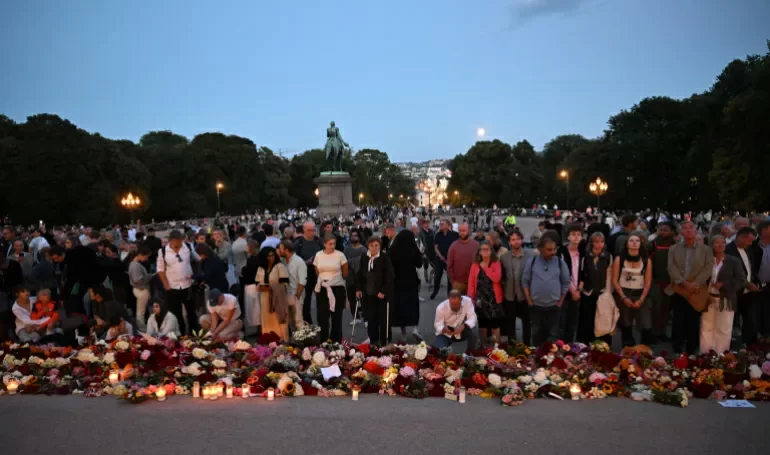
    For Nicole Richards, a matriarch from Beetham Gardens, four years have passed without the justice she has grieved and fought for. On a recent evening, she gathered roughly 20 supporters near the Republic Bank at the intersection of Chacon Street and Independence Square, where her 21-year-old son Fabien Richards was killed by Trinidad and Tobago police on July 2, 2022. Attendees lit white candles in memory of Fabien and his two companions, 24-year-old Isaiah Roberts and 17-year-old Leonardo Williams, who also lost their lives in the shooting.

    The tragedy unfolded in the early hours of that July Saturday, when Western Division police officers responded to a report of stolen motor vehicle and attempted to stop a white Toyota Aqua carrying six young people in Port of Spain. A high-speed chase ensued, ending when the vehicle crashed into an exterior wall of the Republic Bank on Independence Square. According to official police accounts, officers from the Guard and Emergency Branch who had joined the pursuit claimed they came under gunfire from people inside the vehicle, and returned fire at the car. Three of the occupants — Fabien, Roberts, and Williams — were killed instantly. A fourth teen was rushed to Port of Spain General Hospital for treatment of injuries, while the remaining two passengers were detained unhurt. Investigators later said they recovered a Smith & Wesson pistol from the crashed vehicle. The three detained passengers were eventually released pending further inquiry, and lead investigator Senior Superintendent Neil Brandon-John recorded statements from all three before his passing, which left the investigation stalled.

    For the Richards family, the pain of their loss remains as raw as the day they received the news of the shooting. In an interview with the *Sunday Express*, Nicole Richards, a mother of four, shared that the investigation went cold immediately after Brandon-John died, and authorities have not provided any updates to the family in the years since. “It’s painful because we are not getting the justice we want,” she said. “We will not stop until we get justice for all three boys. I want justice for my son Fabien.”

    Fabien never got the chance to hold or meet his own daughter, Soria John, who is now three years old. That unfulfilled future haunts Nicole every day. “His baby is three. A little sweetheart. She knows her daddy died, that he’s in heaven,” Nicole said. “When I look at her, I keep pleading for justice.”

    This is not the first devastating loss Nicole has endured: her son Garth Richards was killed after being hit by a bus in 2014. She says she draws her strength to keep fighting from her two daughters, Nicola and Isoma, and her faith in God. Remembering Fabien, she painted a picture of a playful, loving young man who would sneak up behind her, cling to her calf, and pretend to be a dog chasing her to make her laugh. He loved corned beef served over rice or pasta, and enjoyed making YouTube videos in his free time.

    Fabien had been on his way home with his friends from a farewell party held in Diego Martin when the shooting happened, Nicole explained. Today, he would have turned 25. Refuting the police’s claim that the young men were armed, Nicole described her son’s death as an execution: he was shot ten times in the head. “The children were on their way home. Fabien was talking to his cousin on the way home,” she said. “We want justice. They need to get rid of the corrupt ones who hold high office. It’s not right. It can’t be right in the eyes of God and man.”

    Amid a rising tide of violent crime and police-involved deaths across the country, Nicole is calling for sweeping leadership changes. She is demanding the immediate resignation of Director of Public Prosecutions Roger Gaspard, as well as Homeland Security Minister Roger Alexander and Defence Minister Wayne Sturge. “A state of emergency is not stopping crime,” she said. “I don’t dabble in politics. But it’s almost every day you are hearing an innocent person died. When I hear somebody died at the hands of the police, I wonder who is next.”

    Nicole Richards, Fabien’s older sister, echoed her mother’s call for justice, saying she has mourned her younger brother like he was her own son. Fabien lived with Nicola at her El Socorro home from primary school onward, growing up alongside her son Nicholai. “My heart still hurts. The pain is still fresh,” she told the *Sunday Express*. “Every day you hear horror stories: people being killed, children murdered, teenagers missing. You see his scenario being replayed in your head over and over. It’s not easy.”

    She cherishes the memory of her last birthday with Fabien, in November 2021, when the family held a lively games night. The two of them were the final pair left standing in a game of musical chairs, sharing a moment of joy that she still holds close. Today, the family shares their love with Fabien’s daughter Soria, who spends every weekend with them and is described by Nicola as “a darling.”

    “Only God can give justice because he sees and knows everything,” Nicola said. “He would have seen what unfolded in the car. He would have heard their cries.”

    The vigil drew solidarity from other families who have also lost loved ones to police-involved violence and been left without answers. Among the attendees was Alyssa Phillip, who has organized multiple protests demanding clarity for her friend Kaia Sealy. Sealy is currently facing charges connected to the January police shooting death of her husband Joshua Samaroo, and Phillip and the Richards family say their shared grief has forged a bond of mutual support in the fight for accountability.

  • Guyana flatly denies Suriname’s claim Ali was told of new Corentyne bridge financing plan

    Guyana flatly denies Suriname’s claim Ali was told of new Corentyne bridge financing plan

    Diplomatic tensions have emerged between neighboring South American nations Guyana and Suriname over the long-planned cross-border Corentyne River Bridge, after Guyana issued a formal categorical rejection of Suriname’s recent claim that Guyanese President Irfaan Ali was briefed nearly two months ago on Suriname’s plan to take sole responsibility for financing the infrastructure project.

    The public dispute broke into the open after Suriname’s Ministry of Foreign Affairs reiterated Saturday that Ali had been officially notified of Suriname’s intention to fully fund the bridge during a May bilateral meeting. This claim followed an earlier announcement of the unilateral financing plan made in Suriname’s National Assembly the prior week, which Ali had already dismissed as inaccurate.

    In a detailed official statement released late Friday ahead of Suriname’s latest reiteration of its claim, Guyana’s Foreign Minister Hugh Todd clarified the full context of the May 15 meeting between Ali and Surinamese President Jennifer Geerlings-Simons, emphasizing the gathering was convened at Ali’s initiative to coordinate disaster assistance amid severe flooding that hit parts of Suriname. During that meeting, Todd said, Guyana offered immediate support: it deployed a technical team of drainage and irrigation specialists from Guyana’s Ministry of Agriculture, and lent two high-capacity portable pumps to support flood mitigation efforts in affected Surinamese communities. At no point during that meeting, Todd stressed, was financing for the Corentyne River Bridge ever discussed, nor was any indication given that Suriname planned to abandon the long-standing collaborative framework for the project.

    Todd recalled that the Corentyne River Bridge has been framed as a joint bilateral undertaking since the project was formalized via a 2020 memorandum of understanding between the two governments under Suriname’s previous administration. From its inception, both sides have agreed that all aspects of the project – from planning and financing to construction, operation and long-term management – would be decided through mutual consultation and joint agreement. In line with this shared approach, Guyana and Suriname have together worked to court international development partners to secure funding for the bridge, which is viewed as a key regional infrastructure project that will boost cross-border trade and social development for both nations.

    “Contrary to the impression now being conveyed publicly, Guyana has never been informed through the established bilateral mechanisms that the Government of Suriname intended to assume sole responsibility for financing the bridge,” Todd said in the statement, adding that if Suriname had formally proposed a policy shift on the project’s financing structure, Guyana would have reviewed the proposal through established diplomatic and technical channels – a step that never occurred because no formal proposal was ever submitted.

    Todd noted that Suriname’s own recent public statement acknowledges that a joint technical working group for the project remains mandated to discuss financial, technical and operational details – a fact that he says confirms financing has always been understood as a matter for joint deliberation, not unilateral decision-making by either side.

    The Guyanese foreign minister added that if Suriname has chosen to revisit the agreed financing arrangements, the appropriate diplomatic process would be to raise the proposed shift through existing bilateral communication channels first, rather than announcing policy changes via public statements that bypass direct consultation.

    Guyana remains fully committed to moving forward with the Corentyne River Bridge project, Todd affirmed, and continues to hold that the initiative must proceed on the foundational principles of transparency, mutual respect, ongoing consultation, and joint decision-making between the two governments. “The Government of Guyana stands ready to continue discussions in good faith through the agreed bilateral mechanisms with a view to advancing this transformational project for the benefit of the peoples of Guyana and Suriname,” the statement concluded.

  • Keiko Fujimori na vierde poging gekozen tot president van Peru

    Keiko Fujimori na vierde poging gekozen tot president van Peru

    After weeks of unresolved uncertainty, mass public protests, and swirling allegations of electoral misconduct, Peru’s conservative political figure Keiko Fujimori has been officially declared the victor of the country’s 2026 presidential election, capping off her fourth bid for the nation’s highest office.

    The National Electoral Board of Peru confirmed that Fujimori secured 50.135% of the vote in the June 7 runoff election, edging out her left-wing opponent, congressional representative Roberto Sánchez, who garnered 49.865% of ballots. The razor-thin margin separated the two candidates by just over 50,000 votes, from a total pool of more than 18 million cast across the country and among overseas voters.

    The official announcement was delayed for weeks as electoral authorities carried out a full re-count of thousands of disputed ballots, prompted by formal objections filed by both campaigns. To date, no credible evidence of widespread irregularities has been uncovered by electoral officials, though Sánchez has refused to recognize the final result, maintaining that the electoral process was marred by unfair practices.

    For 51-year-old Fujimori, the victory marks a long-awaited political breakthrough. She had previously run for president three times, falling short by narrow margins in each contest. This cycle, she built a winning coalition by drawing strong support in the capital city of Lima and among Peruvian voters residing abroad, while Sánchez dominated voting in rural, interior regions of the country.

    Fujimori is the daughter of former Peruvian president Alberto Fujimori, who led the nation from 1990 to 2000. Her father’s legacy remains one of the most divisive issues in Peruvian public life: he is widely credited with taming crippling hyperinflation and defeating the violent Shining Path guerrilla insurgency, but was later convicted on charges of human rights violations and systemic corruption during his time in office, a verdict that continues to split public opinion across the country.

    In post-election statements, Fujimori has outlined her policy priorities, centering on post-pandemic economic recovery, attracting foreign direct investment, and implementing harsher security measures to address rising violent crime across Peru. Political and economic analysts predict her victory will boost investor confidence, particularly in Peru’s critical mining sector, which accounts for a large share of the country’s GDP and export revenue. At the same time, Fujimori will face the enormous challenge of governing a nation deeply divided along political and ideological lines. Peru will mark its tenth presidential administration since 2000, a statistic that underscores the chronic political instability that has plagued the South American nation for decades.

    Fujimori will be sworn in for a five-year presidential term on July 28, Peru’s annual Independence Day.

  • Op-Ed- 4 July: CARICOM Day as a Caribbean national holiday?

    Op-Ed- 4 July: CARICOM Day as a Caribbean national holiday?

    Five years after first raising the question in the *Jamaica Gleaner*, the President of the Caribbean Court of Justice, the Honourable Mr. Justice Winston Anderson, has re-urged Caribbean regional policymakers to make CARICOM Day a universal national holiday across all Caribbean Community member states.

    The push centers on July 4, the historic date when the Caribbean Community was founded. In 1973, four transformative regional leaders — Errol Barrow of Barbados, Forbes Burnham of Guyana, Michael Manley of Jamaica, and Eric Williams of Trinidad and Tobago — gathered in Chaguaramas to sign the Treaty of Chaguaramas, formally establishing the Caribbean Community. Vere Bird of Antigua and Barbuda, a key signatory to the earlier Dickenson Bay Agreement, also stands as a foundational figure in the regional integration movement. This date is far more than a historical marker: it marks the birth of the Caribbean’s most ambitious integration project for small developing states, and the origin of the region’s collective identity as one community made of many nations.

    Today, the Caribbean Community holds many of the traits of a unified economic and social space: it boasts shared regional institutions, a common legal framework, interconnected education systems, and a steadily integrating economy. Yet what it lacks is a collective, region-wide moment to honor and reflect on that shared project. While the United States marks its national identity every July 4 with widespread public celebration, the Caribbean has not claimed the same date, its own founding day, for collective regional observance. A universal CARICOM Day holiday would fill this gap, Anderson argues.

    Communal identity, Anderson notes, is forged not just by borders and institutions, but by shared symbols, traditions and collective rituals. Sustaining a regional community requires intentional moments where citizens can see themselves as part of a shared cross-border enterprise. A yearly CARICOM Day would create exactly that: a shared moment in time, separate from daily life, where Caribbean people can reflect on the regional integration journey and the shared aspirations that continue to drive it forward.

    Integration, Anderson emphasizes, is an intergenerational project. The founding leaders of 1973 knew from the start that building regional unity would take decades, not years, and that the work would pass from one generation to the next. The foundational progress of the 1970s was expanded by subsequent leaders including P.J. Patterson, Basdeo Panday, Owen Arthur, and Bharrat Jagdeo, who deepened economic integration and strengthened regional institutions. In more recent years, leaders such as Kenny Anthony, Patrick Manning, Ralph Gonsalves, and Mia Mottley have carried the mission forward, adapting the integration project to meet modern global challenges.

    Decades of work have yielded tangible, impactful achievements that have benefited all Caribbean people. The Caribbean Community has persisted through political transitions, economic volatility, devastating natural disasters, and shifting global power dynamics, proving the core idea of regional cooperation remains vital: by uniting across borders and diverse backgrounds, Caribbean nations can deliver greater well-being, security and prosperity than any can achieve alone.

    Key milestones include the ongoing expansion of free movement for CARICOM nationals across the region, a reform that enshrines the principle that every citizen of a member state is also a citizen of the broader Caribbean Community, a identity symbolized by the regional CARICOM passport. Regional institutions have also become core pillars of Caribbean progress: the University of the West Indies has educated generations of leaders, professionals and public servants; the Caribbean Examinations Council offers qualifications recognized globally; the Caribbean Development Bank funds critical development projects across member states; the Caribbean Public Health Agency coordinates collective public health responses; and the Caribbean Disaster Emergency Management Agency leads coordinated disaster relief. Even in sport, regional bodies like Cricket West Indies and the CARIFTA Games have united Caribbean people and become enduring symbols of shared regional pride.

    Anderson stresses that these gains should not be taken for granted, and a universal holiday would do far more than honor the past. If July 4 falls on a weekend, the holiday would be observed the following Monday, matching the arrangement already used for many public holidays globally. The annual observance would create space for schools to teach regional integration history, for governments to highlight the work of regional institutions, for businesses and civil society to celebrate Caribbean innovation, and for ordinary citizens to reflect on the shared inheritance that binds the region together.

    Currently, only two member states — Antigua and Barbuda, and Guyana — already recognize CARICOM Day as a formal public holiday, proving the policy is practical and achievable. Anderson urges policymakers not to delay action for another five years, as they did after the 2021 call. Every July 4, he says, Caribbean people should pause to celebrate how far the region has come, reflect on the work still ahead, and reaffirm their commitment to the regional integration project. “In the end, we are all we have. Warts and all,” Anderson writes.

  • Parris Charged in Connection with Nevis Business Break-ins

    Parris Charged in Connection with Nevis Business Break-ins

    CHARLESTOWN, Nevis — Law enforcement authorities on the Caribbean island of Nevis have secured formal charges against two local men in connection with two distinct criminal incidents that unfolded across the territory over the past month.

    The first case stems from a string of targeted break-ins at a local commercial premises, which led to the arrest and charging of 36-year-old Unique Parris, a resident of Marion Avenue on Nevis. Acting on First Instance arrest warrants, police took Parris into custody on July 3, 2026, filing four separate criminal counts against him: housebreaking and larceny, housebreaking with intent to commit a crime, and two counts of malicious damage to property.

    Official records confirm the alleged offenses took place across two separate dates, June 8 and June 29, 2026, at Business Solutions Plus, a local business located on Jew Street in central Nevis. The formal charging process was completed at the Cotton Ground Police Station, according to a statement from the Nevis Police Division shared with local media.

    In a separate case processed on the same day, law enforcement in nearby Cayon charged a second man linked to a non-fatal wounding incident. Damian Burroughs, a resident of Cunningham Village in Lower Cayon, was arrested and formally charged at the Cayon Police Station on July 3, also acting on a First Instance warrant. The charge stems from a June 27, 2026 incident that left local resident Luciano Abbott, also of Cunningham Village, with reported injuries.

    As of Sunday July 5, police have not released additional details about potential motives for either incident, bail status for the two accused, or upcoming court hearing dates. Local law enforcement has not indicated whether additional suspects are being sought in connection with either case.

  • Derde sabotage in vier dagen: Telesur ziet schade aan glasvezelnetwerk oplopen

    Derde sabotage in vier dagen: Telesur ziet schade aan glasvezelnetwerk oplopen

    Suriname’s national telecommunications provider Telesur is facing an escalating crisis of infrastructure sabotage, with its national fiber optic network targeted for deliberate vandalism for the third time in just four days.

    In the most recent attack, perpetrators intentionally sliced through critical fiber optic cables running along the Indira Gandhiweg highway. The damage has triggered widespread disruptions to mobile and internet services for hundreds of residential and commercial customers across multiple districts, including the surrounding Indira Gandhiweg area, Sitalweg, and Livorno-Beekhuizen. Company officials have labeled the string of attacks a deeply worrying development and issued an urgent appeal to the public to report any suspicious activity near key telecom infrastructure immediately.

    According to data released by Telesur, every vandalized fiber cable costs a minimum of $3,000 in emergency repair and replacement work, a financial burden that accumulates rapidly after repeated attacks. Beyond the direct monetary costs, the damage leaves hundreds of customers completely cut off from essential communication services for hours or even days, disrupting work, education, emergency access, and daily life.

    To address the growing threat, Telesur has reported every incident to local police and other relevant regulatory and law enforcement agencies. Working alongside these authorities, the provider has developed a formal action plan focused on three core goals: tracking down and prosecuting the perpetrators, stopping new attacks before they occur, and strengthening physical security for the country’s sprawling telecom network.

    Even with these new safeguards in place, Telesur warns the situation remains deeply concerning. The company has invested consistently in upgrading security measures, expanding surveillance of key routes, and speeding up repair response times, but executives acknowledge that full-time, constant monitoring of a fiber network spanning hundreds of kilometers across the country is logistically and financially impossible.

    “Our team is doing everything within our power to contain this problem, but we cannot solve it alone without support from the public and our law enforcement partners,” said Doric Ramlakhan, Telesur’s chief executive officer. “Sometimes, it feels like mopping the floor with the tap still running – as soon as we finish repairing damage in one location, another attack pops up somewhere else on the network.”

    Ramlakhan emphasized that Telesur invests millions of dollars every year to expand and modernize Suriname’s fiber optic network, with the goal of delivering fast, reliable telecommunications services to communities across the country, supporting national economic and social development. “Every cut cable doesn’t just add thousands of dollars in unexpected repair costs – it creates major inconvenience for our customers and slows the progress of our entire nation,” he explained. “This infrastructure isn’t just an investment by Telesur – it’s a public good that benefits every single person in Suriname. We’re asking the public to protect what we have all built together. This network belongs to all of us.”

    In closing, the company reiterated its call for all citizens to stay vigilant for any unusual or suspicious activity near telecommunications sites or cable routes. Anyone who observes potential suspicious behavior is urged to contact local police or other competent authorities immediately. “Only by working together can we stop repeated attacks on this vital national infrastructure,” Ramlakhan said. “We’re asking every person in Suriname to help us guard what belongs to all of us.”

  • Statement by Chargé d’Affaires Karin Sullivan, U.S. Embassy to Barbados, the Eastern Caribbean, and the OECS on the 250th Anniversary of the United States of America

    Statement by Chargé d’Affaires Karin Sullivan, U.S. Embassy to Barbados, the Eastern Caribbean, and the OECS on the 250th Anniversary of the United States of America

    As the United States of America prepares to mark its historic 250th anniversary of founding, Karin Sullivan, Chargé d’Affaires ad interim of the U.S. Embassy to Barbados, the Eastern Caribbean, and the Organization of Eastern Caribbean States (OECS), has released an official statement reflecting on the nation’s legacy and its enduring partnerships across the Caribbean region.

    In her address, Sullivan opened by grounding the 250th milestone in the core ideals that have shaped the United States from its founding: a commitment to democratic self-governance, individual liberty, and the constant pursuit of a more perfect union. She noted that over two and a half centuries, the nation has weathered profound challenges, from civil conflict to global economic upheaval and public health crises, emerging stronger with each generation’s commitment to refining and expanding the promise of American democracy.

    Sullivan went on to center the deep, long-standing ties between the United States, Barbados, the Eastern Caribbean nations, and OECS member states. For decades, these partnerships have spanned every sector that matters to regional stability and shared prosperity: from collaborative public health initiatives that strengthen local health systems and expand access to care, to climate action cooperation that addresses the existential threat of sea-level rise and extreme weather facing small island developing states. Sullivan highlighted ongoing work in economic development, including support for small and medium-sized enterprises, expanded trade opportunities, and investments in education and youth exchange programs that connect emerging leaders across the region.

    “Our shared history and shared values have created bonds that go far beyond formal diplomacy,” Sullivan said in the statement. “As we mark our 250th year, we reaffirm our commitment to walking alongside the people and governments of Barbados, the Eastern Caribbean, and the OECS to tackle shared challenges and seize shared opportunities.”

    She also pointed to people-to-people connections as the foundation of the strong bilateral and regional relationships, noting that thousands of citizens on both sides have built personal and professional ties through study programs, cultural exchanges, and community cooperation. These grassroots connections, she emphasized, make diplomatic collaboration more effective and more responsive to the needs of all people.

    Looking ahead to the year of celebrations marking the 250th anniversary, Sullivan invited regional partners to join in commemorative events that highlight shared values and shared goals, while also creating new space for deeper collaboration on the issues that will define the next chapter of transatlantic (and trans-Caribbean) cooperation. She closed by reaffirming that the United States remains committed to upholding the shared principles of democracy, respect for human rights, and collective prosperity that have guided both the U.S. and its Caribbean partners for decades.