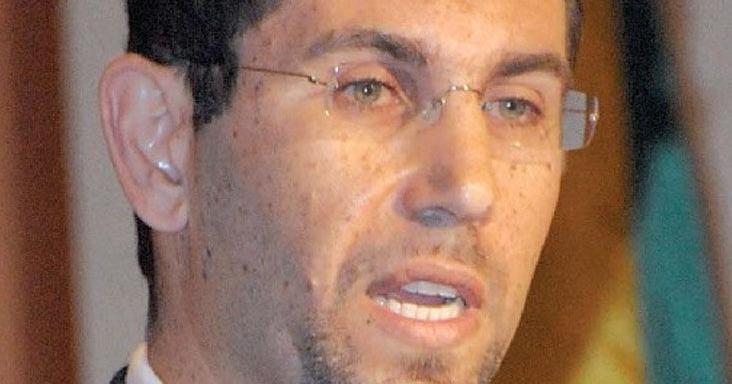
A prominent Trinidad and Tobago business leader is fighting what he calls a pre-planned, politically driven detention, vehemently rejecting unproven accusations that he plotted to assassinate government officials. In a 30-page affidavit filed with the High Court on July 3, Dominic Hadeed, founder and managing director of Blue Waters Products Limited, has launched a constitutional challenge against the country’s Police Commissioner, Minister of Homeland Security, Attorney General, and police corporal Eldon Calliste, laying out his full account of the events that led to his June 24 arrest and detention without criminal charges.
Hadeed, who has never been convicted of or even charged with a criminal offense alongside his wife Genevieve, says the couple has been held in custody since late June without ever being interviewed or given a chance to respond to the allegations before preventive detention orders (PDOs) were issued. In clear, unreserved terms, he denied any involvement in conspiracy to harm members of the government or parliament.
“I have never plotted to assassinate anyone. I have never plotted to engage in any criminal activity whatsoever and I have never acted in any manner prejudicial to public safety by taking steps to carry out the type of allegations that are being levelled against me or otherwise,” Hadeed wrote in the affidavit. He added that he remains fully willing to cooperate with law enforcement investigators, despite authorities failing to confront him with the allegations even after days in custody before the PDO was formally issued.
A core part of Hadeed’s legal challenge targets the vague wording of the PDO itself. The document notes that the order fails to identify any supposed statements Hadeed is alleged to have made, the people he supposedly made them to, any co-conspirators linked to the claimed plot, or any overt actions taken to advance an assassination conspiracy. The allegations, he argues, are entirely unsupported by specific particulars.
Hadeed also pulls attention to controversial remarks made by Attorney General John Jeremie during a June 10 parliamentary debate over extending the country’s state of emergency. According to the affidavit, Jeremie deliberately revived a 2017 comment from a Anthony Bourdain interview, where another local businessman described the country’s small Syrian-Lebanese community as the most powerful ethnic group in the nation. Jeremie’s repeated references to the so-called “1%”, Bayshore residents, government land leases, and the Teteron prison effectively singled out Hadeed and other members of the Syrian-Lebanese community long before any detention orders were approved, Hadeed contends.
Those parliamentary remarks, he argues, amounted to a public preview of his arrest, proving that the decision to detain him was made before any serious investigation was completed. The “1%” label, Hadeed claims, has been deliberately used by government officials as a political weapon to stigmatize the minority ethnic group, and his current detention is the latest example of this targeted campaign.
Behind the assassination plot allegations, Hadeed says, lies a years-long public dispute with the Trinidad and Tobago state over agricultural and commercial land leases that forms the true backdrop for his arrest. He explains that Blue Waters Products acquired the leasehold interests of PR Trinidad in 2007, when those existing leases were set to expire in 2015. Immediately after the acquisition, the company entered talks with state authorities to secure new long-term leases. Relying on repeated official assurances that formal leases would be granted, Blue Waters invested millions of dollars into developing the properties, according to Hadeed.
Over the years, three successive national cabinets approved offers and amendments for multiple parcels of state land controlled by Blue Waters and its associated companies. Even though formal lease documents were never finalized, Hadeed maintains that binding legal agreements were already established through official offer letters, acceptance correspondence, and payments of premiums and processing fees to the Commissioner of State Lands.
The situation shifted dramatically earlier this year, after Hadeed publicly criticized government ministers over business tax policies and delays in VAT refunds at a March 25 leadership event hosted by the Trinidad and Tobago Manufacturers’ Association. Just weeks later, on May 5, Minister of Land and Legal Affairs Saddam Hosein notified Hadeed that the cabinet had voted to rescind all previous approvals to grant leases to Blue Waters Products Ltd, OG C1 Property Ltd and OG C2 Property Ltd. Hadeed adds that Attorney General Jeremie also referred all matters connected to the proposed leases to the Commissioner of Police for criminal investigation.
Hadeed retained top legal counsel, including former attorney general Ramesh Lawrence Maharaj SC, who responded to the government by asserting that his companies had acted lawfully and in good faith, and that binding enforceable agreements were already in place. After multiple rounds of correspondence failed to resolve the dispute, Hadeed’s legal team issued a pre-action protocol letter on June 22, formally notifying the government of a planned constitutional claim over the breached lease agreements.
Just 48 hours later, police executed search warrants at Hadeed’s properties—a timeline that reinforces Hadeed’s belief that the entire police operation is directly tied to the land dispute, not any fabricated assassination plot. When officers arrived at his Bayshore residence before dawn on June 24 to seize electronic devices, Hadeed writes that he “immediately and honestly believed” the operation was connected to the state land lease controversy, given Jeremie’s earlier referral of the matter to police. “It never occurred to me, nor could it have, that the exercise had anything to do with any allegation of a plot to murder anyone,” he stated.
Hadeed again points to Jeremie’s June 10 parliamentary remarks, noting that references to people “living in Bayshore” and “stealing government land and property” were clearly directed at his companies’ ongoing lease dispute, and proved that his detention had been planned in advance. The Attorney General’s references to “state leases” and “extraordinary steps taken…to secure valuable State lands” were an unambiguous reference to the holdings controlled by Hadeed’s businesses, he adds. When the searches were conducted, Hadeed says he remained convinced the action was solely tied to the lease dispute, and only learned later that authorities were linking the operation to an unsubstantiated murder conspiracy claim.
In his account of the early morning raid, Hadeed says police searched his family home, seized electronic devices belonging to all members of the household—including his children’s devices—and later executed additional searches at Blue Waters’ corporate offices. He was not informed that he was under arrest until most searches were completed, and was never given a police caution or advised of his fundamental legal rights at the time of the operation, he claims.
The sequence of events—from the pre-detention parliamentary remarks, to the escalating land dispute, to the execution of search warrants, and finally the issuance of the PDO—proves that the decision to detain Hadeed was made long before any investigation was completed that could justify the extreme measure, the affidavit argues. Hadeed is now asking the High Court to rule that his core constitutional rights have been violated, and to grant appropriate constitutional relief as his legal challenge to the legality of his detention moves forward.