
Residents of two coastal Barbadian communities, Six Men’s and Shermans in St. Peter, are once again raising urgent pleas to local authorities for long-delayed infrastructure repairs and hurricane recovery work, warning that unresolved hazards from crumbling roads to unaddressed coastal erosion have upended daily life for months.
作者: admin
-
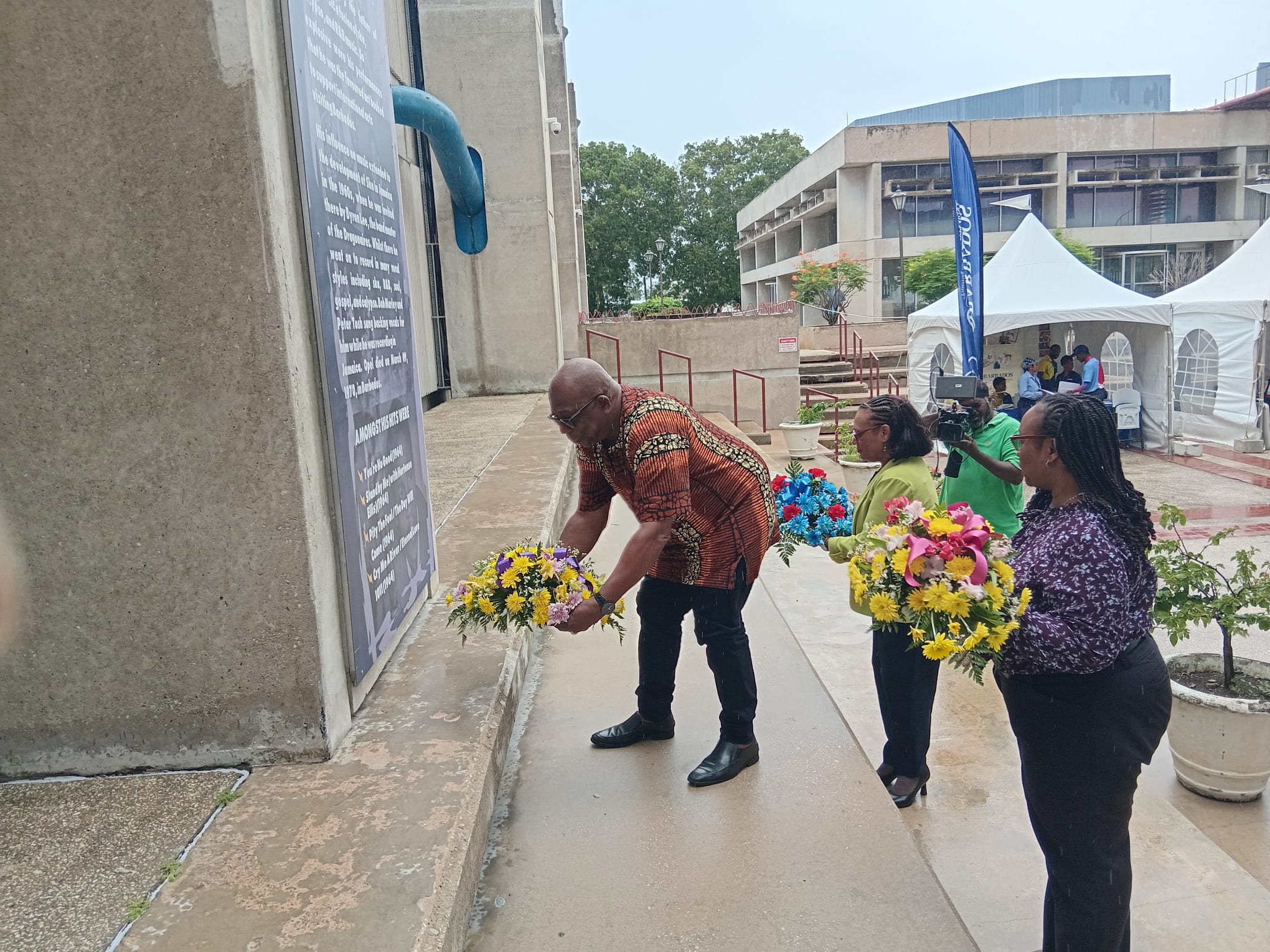
Postal Service to revive Jackie Opel Amphitheatre
Decades of silence will soon end at the long-underutilised Jackie Opel Amphitheatre located within the General Post Office complex in Cheapside, Barbados. Postmaster General Joann Busby has announced a bold strategic plan to breathe new life into the forgotten public space, transforming it into a permanent hub for cultural expression, youth artistic performance, and community heritage celebration. The announcement was timed to coincide with what would have been the 89th birthday of Jackie Opel, the groundbreaking Barbadian musician who invented the iconic spouge genre, who died prematurely 56 years ago at just 32 years old.
“For far too long, this amphitheatre has stood largely empty and quiet,” Busby shared in her address marking the occasion. “Countless pedestrians pass it by without a second glance; some long-term residents have forgotten it exists, while many younger Barbadians never knew it was here at all. But public spaces like this were never meant to be static monuments locked away in history. They are meant to be living, breathing places where culture grows, meaningful community conversations take root, new artists are discovered, and Barbadians come together to share and write our national story.”
Under the new operational framework outlined by Busby, the amphitheatre will host a regular, year-round lineup of events tailored to creators of all ages and backgrounds. Emerging musicians will use the stage to debut new work, spoken word poets will share their original perspectives, school students will get their first taste of public performance, and local families will gather to experience authentic, homegrown Barbadian art. The Barbados Postal Service, which manages the site, has taken the lead on the revitalisation project, a move Busby said aligns with the institution’s broader public service mission.
Busby praised her team for their forward-thinking vision that turned an overlooked, underused asset into an opportunity to reconnect the nation to its cultural heritage. “Many people walked past this amphitheatre and only saw an empty, forgotten space, but the Barbados Postal Service saw a chance to properly honour one of our greatest national icons,” she explained. “Today, thanks to that vision, this space is already coming alive again with the sound of music, voices, laughter, and shared purpose. Preserving our national culture is not a responsibility that falls only to historians or museum curators. Culture belongs to every single Barbadian, and every public institution has a part to play in protecting and nurturing it.”
For Busby, the project is far more than a simple infrastructure upgrade. It is an investment in Barbados’ collective national identity and intergenerational legacy. She emphasized that artists are just as foundational to a nation’s strength as politicians, educators, medical professionals, and business leaders. “Art shapes how a country sees itself. Artists hold onto our stories, capture our struggles, celebrate our wins, and give voice to our collective hopes, and that is exactly what Jackie Opel did when he created spouge,” she noted.
Opel’s revolutionary approach to music saw him blend diverse existing genres – including calypso, ska, gospel, and rhythm and blues – to create something completely new, a unique sound that Barbadians could claim as their own. Though his life was cut short, his impact has endured: decades after his death, Opel is still taught in Barbadian schools, and contemporary musicians continue to draw inspiration from his innovative work. Busby used his legacy to challenge all Barbadians to think about the impact they can leave on their communities, noting that legacy building is not reserved for famous icons – it is open to everyone from parents and teachers to the postal workers who deliver mail across the island every day.
Busby made a formal commitment on behalf of the Barbados Postal Service that the amphitheatre will not be allowed to fall back into disuse in the future. The department’s long-term strategic plan calls for close partnerships with the national Division of Culture, local educators, artistic collectives, and grassroots community organisations to build a consistent public events calendar. “Jackie Opel answered the question of legacy through his creative work, and each of us has to answer that question through the lives we choose to live,” Busby said in closing. “Barbados does not grow stronger by accident. It grows stronger when every citizen chooses to teach, to create, to mentor, and to serve. History is written by all of us, each contributing a line, a paragraph, or a chapter. As we reawaken this remarkable space, may we all leave inspired not just to celebrate a great legend, but to build a lasting legacy of our own.”
-

Police Provide Update on 77-Year-Old Killed Crossing Highway
A fatal traffic collision has claimed the life of a 77-year-old Belize City resident, prompting law enforcement to issue urgent public safety reminders after confirming the stretch of highway where the crash occurred has seen similar recent incidents.
Retiree Erlene Gillett died Thursday after being struck by a vehicle while attempting to cross the Philip Goldson Highway within Belize City limits, according to an official update from Belize police released as an ongoing investigation gets underway.
Assistant Superintendent of Police Stacy Smith confirmed details of the incident in a press briefing, noting that Gillett was hit by a Dodge Caravan driven by an adult male. As part of standard protocol for the investigation, the vehicle has been seized for forensic examination, and law enforcement has collected a urine sample from the driver to test for potential impairment. “What the investigation has shown so far is that Gillett was struck by the Dodge Caravan, which was being driven by the stated male person, as she was attempting to cross the highway. The motor vehicle has since been impounded as part of the ongoing investigation, and urine samples have been obtained from the driver,” Smith stated in her official comments.
In a revealing detail that underscores growing safety concerns for the area, Smith confirmed this is not the first recent fatal or injurious incident involving a pedestrian hit on that section of the highway. “If memory serves well, I believe this is the second of such incidents in recent times when a pedestrian was struck seeking to cross the highway,” she added.
With two incidents now recorded in a short timeframe, Smith is pushing all road users to prioritize safety, reminding both pedestrians and drivers of their shared responsibility to prevent collisions. She emphasized that even when pedestrians cross outside of officially marked zones, drivers carry an obligation to remain attentive, particularly since the highway segment falls within Belize City’s municipal boundaries, where pedestrian activity is expected.
“There is an onus on drivers. It is still within city limits, and though the area was not a designated crossing area, persons travelling onboard motor vehicles have a duty to pay attention and be on the alert as they are operating these motor vehicles,” Smith said, urging pedestrians to only use marked crossing locations whenever possible to reduce their risk of harm.
As of August 28, 2026, the investigation remains open, with police yet to release further details on potential charges or the results of toxicology testing for the driver.
-

Voices Beyond Violence: Movement born from St Omer’s death calls for change
The brutal killing of 24-year-old Joy St Omer in May 2024 sent shockwaves across the small Caribbean nation of Saint Lucia, igniting widespread public anger at the persistent crisis of gender-based violence. While many mourned and the national conversation began to fade as often happens after high-profile tragedies, three young local women refused to let St Omer’s death become just another forgotten statistic.
Christa McFarlene, Angel Foster, and Hasana Emmanuel channeled their collective grief and frustration into founding Voices Beyond Violence SLU, a grassroots movement dedicated to supporting women and girls affected by violence, challenging harmful cultural narratives around gender-based harm, and demanding greater systemic accountability for protecting vulnerable communities.
In an exclusive interview with local outlet *St. Lucia Times*, McFarlene and Foster detailed how the movement grew organically from a call for a peaceful gathering. Following St Omer’s killing, the trio invited concerned community members to join a vigil outside the Gros Islet Police Station, drawing hundreds of attendees including survivors of violence, young girls, local activists, and other citizens united in solidarity. The crowd gathered not only to grieve St Omer’s death but to demand that her killing spark lasting change, rather than being brushed aside by institutions and the public alike.
From the earliest days, the founders knew they wanted to build more than a one-off protest. Unlike spontaneous demonstrations that often dissolve after the initial moment of outrage, Voices Beyond Violence was designed to create a sustained, accessible space for confronting the uncomfortable reality of rampant violence against women in Saint Lucia, deliver public education on the scope of the crisis, and organize collective action for systemic change.
“We came together to grieve, as we absolutely should have,” McFarlene explained in the interview. “But we wanted to build something more than that: a space for education, a space to call out a crisis that should not be this widespread in our country.”
For Foster, a core priority of the movement is to create a safe, supportive environment where women and girls feel empowered to share their own experiences of violence without fear of judgment or retaliation, knowing their voices will be taken seriously. She noted that St Omer’s case has amplified longstanding unanswered questions about whether women who reach out for help from authorities actually receive the protection they need.
“Our goal is to build a Saint Lucia where women feel safe enough to speak out about what they are going through, to share their stories, and to know they will be heard,” Foster said.
In the months since the movement launched, new cases of violence against women have added significant emotional weight to the young activists’ work. McFarlene acknowledged that grassroots activism is extraordinarily demanding, especially as the three founders balance their organizing work with full-time jobs and personal responsibilities. Even so, she stressed that the burden of addressing gender-based violence cannot fall exclusively on the shoulders of volunteer activists.
“We have to remind ourselves that we are building one piece of the change Saint Lucia needs, but this fight is not all on our shoulders,” she said. Every action the movement takes, from social media advocacy to public marches, vigils, and protests, is intended to center survivors and their families and build toward a safer future for all Saint Lucian women.
One of the movement’s long-term core goals is to push for stronger legal and social recognition of femicide as a distinct, pressing crime, and ultimately cut the number of women killed by gender-based violence across the country.
A key cultural issue the organizers are working to challenge is the pervasive problem of victim blaming, a harmful attitude they say is deeply embedded in many sectors of Saint Lucian society. McFarlene explained that blaming victims often feels “safer” for many people than confronting perpetrators, especially in cases where community members may fear retaliation or personal connection to the accused. Foster added that society often creates an unrealistic standard of the “perfect victim,” requiring survivors to fit narrow expectations about their behavior before and after abuse to be deemed worthy of support.
She argued that a range of social factors, including cultural background, social status, and personal popularity, often skew how victims and perpetrators are treated in public discourse, allowing powerful abusers to avoid accountability while survivors are judged and sidelined. The movement explicitly pushes back against harmful narratives that question what a victim was wearing, why they did not leave an abusive relationship earlier, or what they could have done to prevent their own harm.
McFarlene tied these attitudes to the common psychological “just-world” bias, where people seek to explain tragedy by blaming the victim, in order to convince themselves that harm could never happen to them.
While the movement’s primary focus is on supporting women and girls, who are disproportionately affected by gender-based violence in Saint Lucia, the co-founders emphasized that they recognize men and boys also experience sexual and other forms of violence, and that all survivors deserve support and justice.
Even though Voices Beyond Violence is only a few months old, Foster said the movement has already shifted the national conversation around gender-based violence. “I’ve seen a clear change in how people talk about this issue,” she said. “Now more people are holding perpetrators, abusers, and the systems that fail victims accountable.” Social media has been a particularly powerful tool for the movement, with posts sparking widespread public discussion and being shared across Saint Lucian communities.
Even so, Foster refuses to call early shifts in conversation a success, as long as women continue to be killed by gender-based violence across the country. “Voices Beyond Violence will never stop this conversation, and we will never stop fighting for justice for women, girls, and all victims,” she said.
For McFarlene, one of the most meaningful early achievements of the movement has been creating spaces for collective grief and community solidarity that did not exist before. She recalled a vigil held at the site where St Omer was killed, where hundreds of people gathered with flowers and candles, sang hymns, and shared memories of the 24-year-old.
The overwhelming public response to the movement has convinced the founders that a large share of the Saint Lucian public wants to see real change, but simply lack accessible opportunities to get involved and organize. “We already have so many people who care about this issue in Saint Lucia,” McFarlene said. “What we need now is coordinated mobilization to turn that care into lasting change.”
-

NTUCB Protests, Warns Government: ‘We Will Give Them Reasons to Listen’
On August 28, 2026, organized labor in Belize took public action against the Briceño administration, holding a targeted 15-minute lunchtime demonstration outside the Social Security Board (SSB) headquarters in downtown Belize City. Led by the National Trade Union Congress of Belize (NTUCB), the protest drew additional support from the Christian Workers Union (CWU) and its members employed at the SSB, turning a midday work break into a visible show of labor discontent.
NTUCB President Ella Waight framed the demonstration as a purposeful “walk of demands,” a public reminder of the 11 formal policy and personnel requests the union submitted to the government earlier that week. The union had set an explicit deadline: the Briceño administration was required to deliver a formal response by the date of the protest. As of the demonstration, however, Waight confirmed that the NTUCB had received neither an official response nor even a formal acknowledgement of receipt of the union’s letter.
One of the most high-stakes demands on the union’s list is the immediate removal of Markhelm Lizarraga from his post as Chairman of the Belize Telemedia Limited (BTL) Board of Directors. Waight emphasized that this call is not driven solely by the NTUCB’s leadership, but originates directly from frontline BTL workers — the employees whose daily work keeps the critical telecommunications provider operational. “It is a call not just from NTUCB, but from the workers at BTL, the ones who have the capacity to ensure BTL runs smoothly or create issues,” she noted.
Waight acknowledged that Prime Minister John Briceño is currently traveling abroad, but pushed back on any implication that the government could use his absence as a reason for inaction. She noted that government operations continue seamlessly when the prime minister is out of the country, and the union only expected a basic confirmation of the letter’s receipt alongside a timeline for when official discussions could begin once the prime minister returned.
Beyond the demand for Lizarraga’s removal, Waight clarified that many of the NTUCB’s 11 requests could be resolved quickly through open dialogue, and the union’s core goal is to secure a formal meeting with the prime minister and his administration to address the full list of concerns. Union Senator Glenfield Dennison framed the labor movement’s next steps bluntly: organized labor will continue escalating pressure to force government attention. “I am of the view that power does not listen if they don’t have a reason to listen,” Dennison said. “So, we are going to continue to give them reasons to listen.”
Waight issued a clear warning if the administration fails to meet the union’s demand for dialogue: the NTUCB will escalate its targeted protest action to a full national demonstration. Similar localized protests are already scheduled across the country in the coming weeks to build momentum for the labor movement’s demands.
-
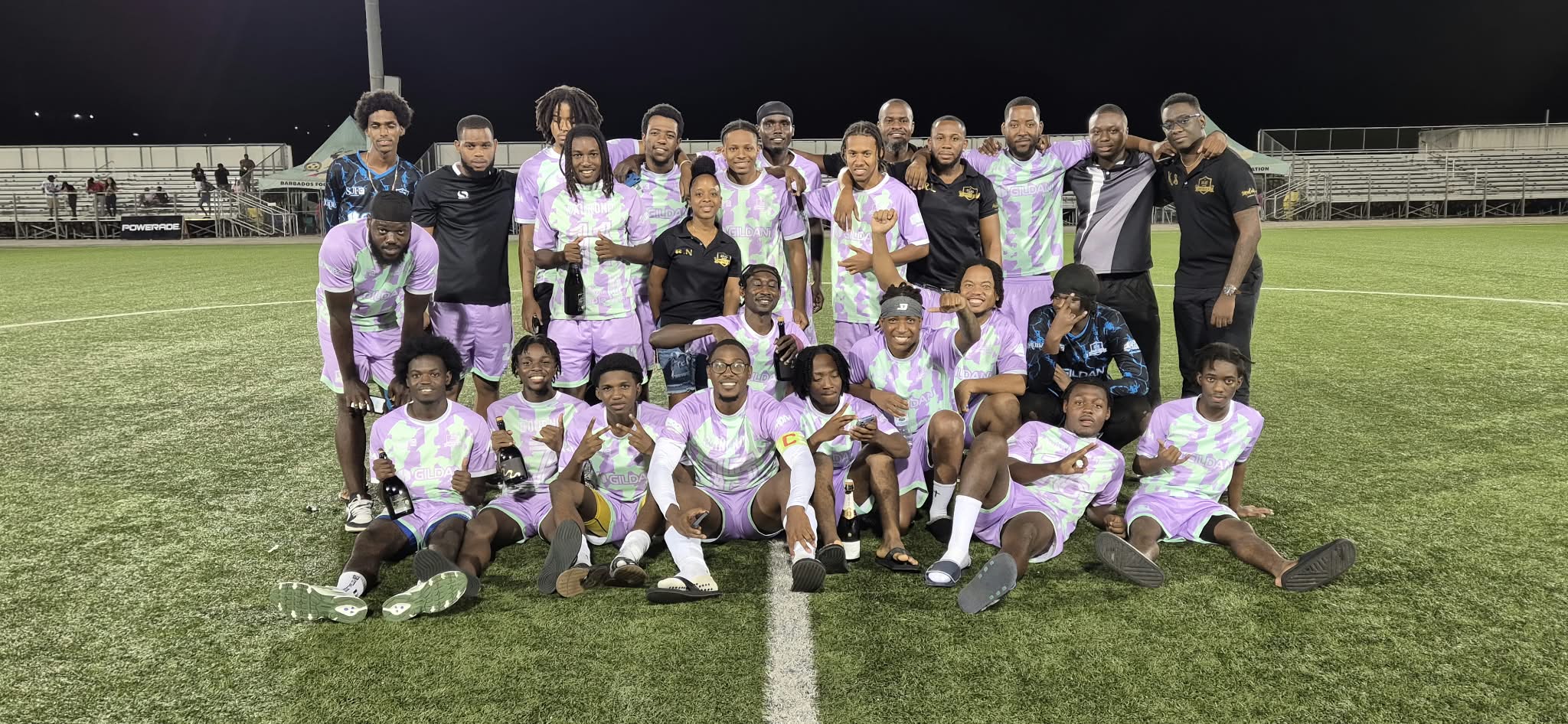
Atlas, Blackspurs secure promotion after playoffs
Two Barbadian football clubs, Atlas and Blackspurs, have officially earned their spots in the Barbados Football Association (BFA) Division One for the upcoming season, wrapping up a dominant run through the Division Two playoffs with a dramatic final clash Thursday night.
Hosted at the BFA Technical Centre in Wildey, the head-to-head playoff finale ended in a commanding 4-1 win for Atlas over Blackspurs, a result that did nothing to change promotion fate for both sides—both had already secured their place in the top division after finishing at the top of the playoff rankings. Atlas got off to a blistering start, with Joshua Bayne finding the back of the net just six minutes into the match to open the scoring. Four minutes later, Tyrell Waldron doubled the lead, putting Atlas firmly in control by the 10th minute. Shane Alleyne extended the advantage further in the 24th minute, putting Atlas up 3-0 before halftime.
Blackspurs managed to pull one back just before the break, with Bishon Richards cutting the deficit to two goals, sparking faint hopes of a second-half comeback. Those hopes were dashed just 15 minutes after the interval, however, when Ross Bourne scored the match’s final goal in the 60th minute to lock in the 4-1 scoreline for Atlas.
In the second playoff fixture of the night, Cave and L&R United played out a tight, goalless draw that did not shift the final promotion standings. Earlier in the week, Atlas delivered a crushing 7-0 defeat to Cave Hill, while L&R United and Blackspurs drew 1-1 in their earlier playoff matchup.
In a post-promotion interview, Kreg Stuart—who serves as both head coach and president of Atlas Football Club—called the promotion the payoff for months of intentional planning and preparation focused on developing young talent. “When I spoke to you during the Mavericks Under 19 tournament last year, I told you that we had a strong group of young players,” Stuart explained. “We had a team of 25 when we started the season and 14 of them were under the age of 19. We intentionally came into this season, wanting to focus on younger players and giving them opportunities.”
Stuart reflected on the team’s season trajectory, noting that after a strong opening round of fixtures, Atlas hit a minor slump in form before rolling off six consecutive wins to punch their ticket to the playoffs. He attributed the team’s success to an unusual commitment to consistent training, a challenge he acknowledged is common across Barbadian grassroots football. “They were willing to put in the work in terms of training and I know that’s something that we tend to have an issue with in Barbados, but I would say our players really put in the effort,” Stuart said. “We started our pre-season really in November, and we were willing to just keep practicing and they were always willing to learn. I think that having the young players really pushed us with their energy and enthusiasm for everything that we did.”
While the club is formally based in Hoyte’s Village, St James, Stuart highlighted that Atlas’ roster draws players from diverse communities across the entire island. Looking ahead, both Atlas and other top promoted sides are now gearing up for the upcoming Prime Minister’s Cup, which kicks off on September 7. Stuart made clear that the team has no intentions of simply participating—they plan to compete at the same high intensity that carried them through Division Two. “For sure, our intention is to compete. We don’t want to come and just make up a number. We want to make sure that we carry the same intensity that we had in Division Two,” he said. “After that it’s about next season, preparing and resting and going strong again in Division One.”
-
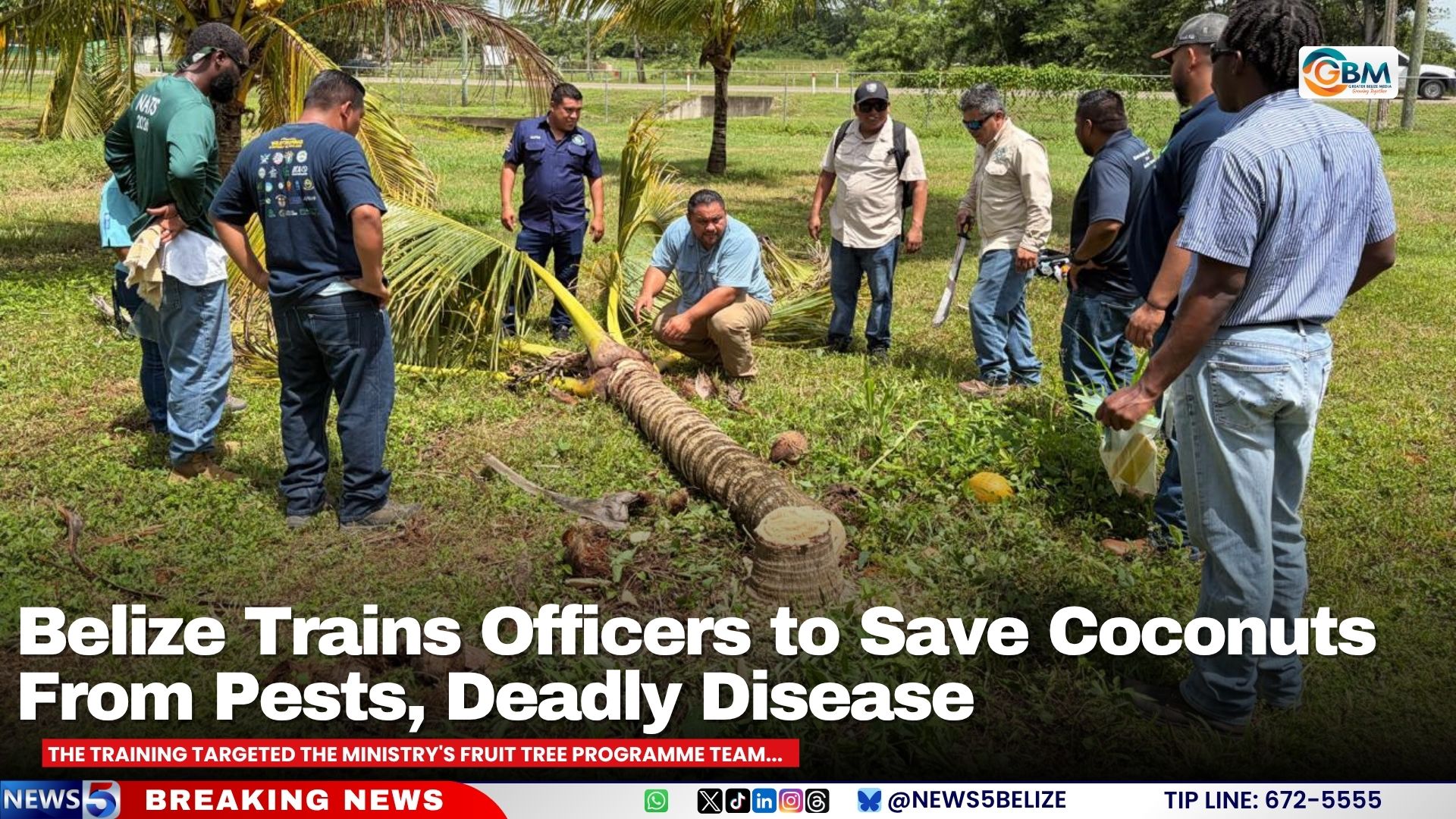
Belize Trains Officers to Save Coconuts From Pests, Deadly Disease
Belize’s national Ministry of Agriculture, Food Security and New Growth Industries has successfully concluded a five-day specialized training workshop hosted in partnership with the United Nations Food and Agriculture Organization (FAO), designed to boost the country’s capacity to detect and control invasive pests and lethal diseases that put its critical coconut sector at risk.
This Training of Trainers Workshop focused on coconut pest and disease management forms a core component of a broader FAO technical cooperation initiative that supports the revision of Belize’s National Rural Development Strategy, with targeted investment in the coconut value chain. The effort also aligns with FAO’s global “One Country One Priority Product” campaign, which works to foster green business development and inclusive sustainable growth for high-potential local agricultural sectors like Belize’s expanding coconut industry.
The training cohort was carefully selected to maximize national impact, including members of the Ministry’s national fruit tree program team, district-level agricultural extension officers, and technical officers from the Caribbean Agricultural Research and Development Institute (CARDI) who oversee coconut production activities across every region of Belize.
Over the first four days of the workshop, participants engaged in deep-dive technical sessions centered on integrated pest management practices, covering the most pressing threats to Belize’s coconut crops: the invasive coconut weevil, damaging red mites, and the lethal fungal red ring disease. All instructional content prioritized skills for accurate biological identification of threats and adoption of modern, low-impact management approaches, equipping participating officers to deliver faster, more precise diagnoses when responding to outbreaks in rural growing areas.
The workshop concluded with a full day of practical, hands-on learning split between local coconut plantations and a diagnostic laboratory. In the field, officers practiced on-the-ground identification of active red mite infestations and visible symptoms of fungal disease; in the lab, they mastered the laboratory protocols needed to confirm cases of red ring disease in infected plant tissue samples.
Following the successful completion of the training, national agricultural officials announced that the newly trained group of experts will move into the second phase of the initiative this fall. Between September and October, the cohort will roll out the identification and management skills they learned to extension teams across all districts of Belize. The long-term goals of the rollout are twofold: safeguard the livelihoods of small-scale coconut farmers who make up a large share of the country’s producers, and build greater climate resilience for Belize’s coconut industry as it faces growing agricultural threats from invasive species.
-

Youth netballer tapped for regional development camp
A promising young netball talent from Saint Lucia is stepping onto an international developmental stage this week, carrying the hopes of her home nation while opening new doors for cross-border youth sports collaboration. Naija Ferdinand, a dynamic young player who has already racked up an impressive list of career achievements at just the youth level, joins basketball prospect Mezan Lewis as the first athletes from outside Trinidad and Tobago invited to participate in the Trinidad and Tobago Olympic Committee (TTOC)’s long-running Youth Camp.
Selected by the Saint Lucia Olympic Committee to represent their country at the prestigious developmental gathering, Ferdinand’s invitation comes on the heels of a breakout summer that has cemented her reputation as one of the Caribbean’s most exciting rising netball stars. Hailing from the Saint Lucian town of Micoud, Ferdinand first turned heads earlier this year when she led her country’s Under-16 national side at the Jean Pierre Caribbean Youth Netball Tournament, where her standout performance earned her both team Most Valuable Player honors and the tournament’s President’s Award.
Her standout form extended far beyond the youth circuit over the past few months. Ferdinand’s versatility, which allows her to excel across multiple positions on the netball court, was a key factor in Saint Lucia claiming the Windward Islands School Games netball title – the country’s first victory at the event since 2019. She also earned a spot on Saint Lucia’s senior national team, contributing to a historic bronze medal finish at the Central American and Caribbean Games, a result that signaled her readiness to compete at the highest regional levels.
Ferdinand and Lewis traveled to Trinidad and Tobago alongside Jo-Ann Anderson, Saint Lucia’s national netball coach, who is serving as the pair’s chaperone for the duration of the week-long camp. Now in its 23rd year, the TTOC Youth Camp stands as one of the committee’s flagship community and athletic programs. Unlike typical sports training camps that focus exclusively on on-court performance, the initiative is designed to nurture holistic growth, embedding core Olympic values – excellence, respect, and friendship – into every aspect of the experience for young athletes at a critical formative stage of their careers and personal development.
The camp balances programming across four key pillars: athletic skill-building, leadership development, educational enrichment, and personal growth, creating a well-rounded experience rooted in Olympic ideals that extends far beyond the playing field. While netball is not currently classified as a medal sport for the Summer Olympic Games, it holds official recognition from the International Olympic Committee, and the TTOC camp maintains an inclusive mandate that welcomes athletes across a range of sports rather than focusing on a single discipline.
For Ferdinand, the camp experience comes as valuable preparation for future international competition. Even as she takes part in the developmental program in Trinidad and Tobago, the broader Saint Lucia senior national netball squad is gearing up to begin training this weekend for the 2027 Netball World Cup Americas Qualifiers. The regional qualifying tournament is scheduled to take place from October 19 to 26 in Barbados, where teams will compete for coveted spots in the upcoming World Cup tournament, giving emerging talents like Ferdinand a clear long-term goal to work toward as they continue to develop their skills.
-
Vader drieling wil kinderen in Paramaribo laten opgroeien
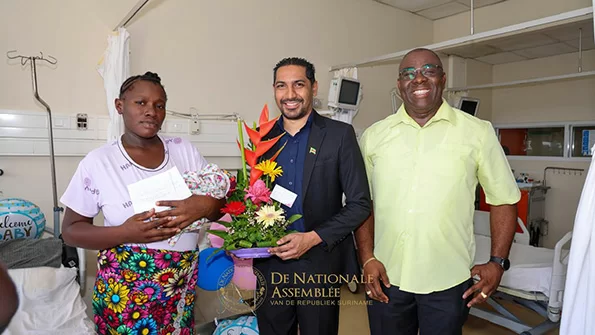
On August 28, a story of a growing Surinamese family and their appeal for support captured public attention, as a parliamentary committee traveled to the capital’s main academic hospital to meet a couple who recently welcomed a rare set of triplets.
Ivanka Koedemoesoe, the 32-year-old mother, gave birth to the three newborns on August 21 at the Academisch Ziekenhuis Paramaribo (AZP), marking a special milestone for the facility: hospital records confirm this is the first time a triplet birth has taken place at AZP in a full decade. The birth expands Koedemoesoe and her husband Waldo Brinswijk’s family to seven children total, a joy that comes with unforeseen practical challenges.
Unlike many families who reside in Paramaribo, Suriname’s capital and largest urban center, Brinswijk and his family currently live in the country’s inland region. In conversations with lawmakers, Brinswijk outlined the steep difficulties of raising a large young family in the inland, where access to critical basic services is far more limited than in the capital. His core wish, he shared, is to relocate the entire family to Paramaribo so his seven children — including the newborn triplets — can grow up with reliable access to quality education, healthcare, and other essential infrastructure that is harder to access in the country’s rural interior.
To hear the family’s request directly and offer initial support, the Permanent Committee for Social Affairs and Housing (Sozavo) of Suriname’s National Assembly organized a hospital visit just one week after the triplets’ birth. The delegation, led by committee chair Ivanildo Plein and member Aziez Salarbaks, met with Koedemoesoe and her three newborns at AZP, bringing with them essential care supplies for the new babies.
Beyond delivering immediate aid, the visit was designed to let committee members gather first-hand details about the family’s specific needs and challenges. During conversations with both parents, the delegation discussed the family’s current living conditions, the specialized care the triplets require, and the barriers Brinswijk has faced raising his large family in the inland.
Committee representatives confirmed after the visit that they will review the family’s request and explore what support can be offered through the legislative body’s official channels. The family’s relocation appeal will formally be brought to the attention of the national Ministry of Social Affairs and Housing for further review and potential action, as lawmakers work to identify solutions to the concerns Brinswijk raised.
-

“Aura Farming” Battles Turn Into Street Sport Across Latin America
A grassroots street competition born from TikTok culture is rapidly taking over public spaces across Latin America, drawing thousands of young participants and spectators to its unique, rule-free format that prizes personal magnetism over traditional athletic or artistic talent, according to international reports.
Known as aura battles, the unorthodox contests center on one core goal: cultivating an effortless, confident “aura” that resonates with onlookers. Unlike structured sports or performance competitions, aura battles have no official referees, fixed scoring systems, or rigid guidelines. Competitors take turns showcasing carefully understated dances, stylized poses, and dramatic deliberate gestures, with the crowd’s reaction acting as the final judge. Top performers often walk away with small cash prizes, but most participants join for viral social media fame rather than financial reward.
The craze traces its origins to online internet slang called “aura farming,” a term that describes the practice of projecting an effortless cool without appearing to try too hard. The phrase first gained traction online in 2024, but exploded into global mainstream popularity in 2025 following viral clips of 11-year-old Indonesian boy Rayyan Arkan Dikha. Footage of Dikha dancing calmly at the bow of a moving longboat during a traditional race amassed millions of views across social platforms, sparking a wave of “aura farming” edits featuring anime characters, professional athletes, and A-list celebrities.
In recent weeks, the trend has jumped from phone screens to city streets across Latin America. At a recent gathering held at the University of Costa Rica in San José, crowds clustered around competing participants, recording every exchange on their mobile phones to share online. Similar impromptu and organized events have popped up across Mexico, Argentina, and Brazil, most curated by local content creators who design the battles specifically to generate viral social media content.
Frederick Luis Aldama, a humanities professor at the University of Texas who observed an aura battle firsthand in Mexico City’s iconic Parque México, told reporters the trend holds unique appeal for young Latin Americans. He noted that the region has a long-standing cultural tradition of spontaneous public gathering in plazas and community courtyards, making the open-air format of aura battles feel like a natural fit for local communities. Aldama added that he was surprised by how the crowd’s favor leaned into quiet composure rather than over-the-top performance, aligning with the core “aura farming” ethos of effortless cool.
Not all local officials have welcomed the spread of the trend. In the Brazilian city of Cuiabá, Mayor Abílio Brunini blocked a planned aura battle championship from being held in the city’s central public square, claiming participants would eventually regret their involvement in the unstructured event. Despite the official ban, video footage captured dozens of young people holding an impromptu competition outside Cuiabá’s City Hall in July, defying the order to stop the gathering.
Since the first official organized aura battle was held in Mexico City on August 20, 2026, the movement has expanded at an extraordinary pace. Within days of the Mexico City event, comparable gatherings were confirmed in Costa Rica, Argentina, and Brazil, with organizers already planning new events across the region to keep up with skyrocketing youth interest.