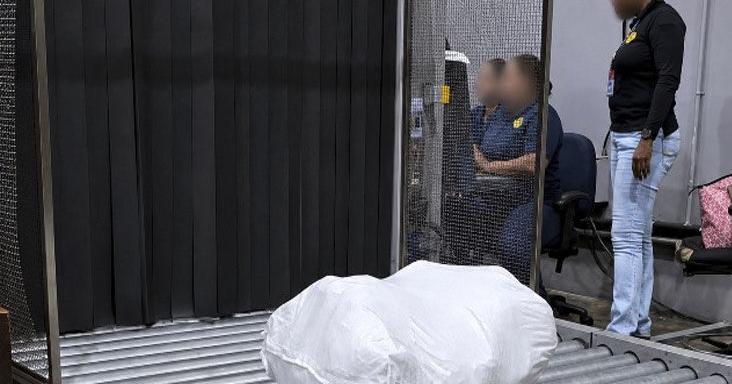
A high-profile seizure of $2 million in U.S. currency at Trinidad and Tobago’s Piarco International Airport has spurred the Central Bank of Trinidad and Tobago (CBTT) to announce sweeping planned reforms to the country’s foreign exchange regulatory framework, addressing long-standing public concerns over oversight amid persistent domestic U.S. dollar shortages.
The incident, first exclusively reported by the *Express* on Friday, unfolded on June 25, when Customs and Excise officials intercepted the cash shipment bound for Miami via Jamaica. Stowed in a white crocus bag, the funds were seized after authorities raised questions about accompanying documentation. The currency was later transferred to CBTT custody as investigations proceed, with U.S. law enforcement already brought on to assist with the probe.
NCB Merchant Bank (Trinidad and Tobago) Ltd. has since publicly confirmed it is the owner of the seized funds, saying the shipment was part of standard daily business operations. In an email response to *Express* inquiries, CEO Marli A. Creese emphasized the bank had followed all applicable legal and regulatory protocols for cross-border cash transport. “All usual and required protocols were adhered to,” Creese stated, adding that the institution has fully complied with all information requests from investigators, and has already submitted additional supporting documentation that authorities requested. As of the latest updates, Creese confirmed the $2 million remains held in CBTT custody pending clearance to proceed with the shipment.
While CBTT has declined to comment on the specific details of the ongoing investigation to avoid compromising investigative work, the central bank used the public attention sparked by the seizure to outline planned regulatory overhauls designed to close gaps in the current foreign exchange system. The institution acknowledged public frustration over persistent U.S. dollar shortages, where domestic demand consistently outpaces available supply, leading to widespread questions about the legality of large-scale U.S. currency exports.
In a formal statement titled “Central Bank statement on current foreign exchange matters”, CBTT clarified that authorized foreign exchange dealers – licensed banks and non-bank financial institutions operating under the existing Exchange Control Act – are legally permitted to export foreign currency as part of their routine cross-border operations. The central bank added that in many cases, including the transport of U.S. cash, an equivalent credit is wired back to Trinidad and Tobago, resulting in no net loss of foreign currency to the domestic market. This clarification, CBTT stressed, does not address any specific allegations or questions being examined by investigative agencies.
Even as it defended its existing management of the national foreign exchange system, CBTT confirmed that sweeping reforms are already in the works, developed in collaboration with the Ministry of Finance and other key industry and regulatory stakeholders. The core of the reform package is a full update of the decades-old Exchange Control Act, which will be renamed the Foreign Exchange Act to reflect its modernized scope. The revisions will clarify regulatory standards for foreign currency transactions, strengthen mandatory reporting requirements for authorized dealers submitting data to the central bank, and impose stricter oversight rules for cross-border cash shipments.
CBTT noted that these regulatory updates are a targeted response to ongoing foreign exchange challenges the country has faced in recent years, with changes intended to address gaps in the current framework over the short to medium term. A series of new regulatory initiatives will be rolled out in the coming months, building on the legislative revisions to enhance overall supervisory capacity.