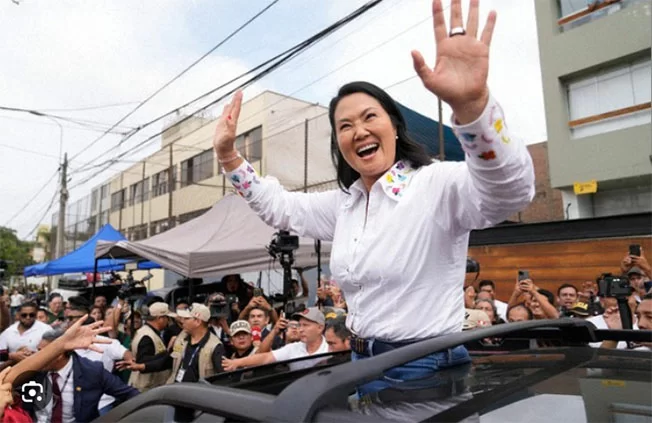
After weeks of unresolved uncertainty, mass public protests, and swirling allegations of electoral misconduct, Peru’s conservative political figure Keiko Fujimori has been officially declared the victor of the country’s 2026 presidential election, capping off her fourth bid for the nation’s highest office.
The National Electoral Board of Peru confirmed that Fujimori secured 50.135% of the vote in the June 7 runoff election, edging out her left-wing opponent, congressional representative Roberto Sánchez, who garnered 49.865% of ballots. The razor-thin margin separated the two candidates by just over 50,000 votes, from a total pool of more than 18 million cast across the country and among overseas voters.
The official announcement was delayed for weeks as electoral authorities carried out a full re-count of thousands of disputed ballots, prompted by formal objections filed by both campaigns. To date, no credible evidence of widespread irregularities has been uncovered by electoral officials, though Sánchez has refused to recognize the final result, maintaining that the electoral process was marred by unfair practices.
For 51-year-old Fujimori, the victory marks a long-awaited political breakthrough. She had previously run for president three times, falling short by narrow margins in each contest. This cycle, she built a winning coalition by drawing strong support in the capital city of Lima and among Peruvian voters residing abroad, while Sánchez dominated voting in rural, interior regions of the country.
Fujimori is the daughter of former Peruvian president Alberto Fujimori, who led the nation from 1990 to 2000. Her father’s legacy remains one of the most divisive issues in Peruvian public life: he is widely credited with taming crippling hyperinflation and defeating the violent Shining Path guerrilla insurgency, but was later convicted on charges of human rights violations and systemic corruption during his time in office, a verdict that continues to split public opinion across the country.
In post-election statements, Fujimori has outlined her policy priorities, centering on post-pandemic economic recovery, attracting foreign direct investment, and implementing harsher security measures to address rising violent crime across Peru. Political and economic analysts predict her victory will boost investor confidence, particularly in Peru’s critical mining sector, which accounts for a large share of the country’s GDP and export revenue. At the same time, Fujimori will face the enormous challenge of governing a nation deeply divided along political and ideological lines. Peru will mark its tenth presidential administration since 2000, a statistic that underscores the chronic political instability that has plagued the South American nation for decades.
Fujimori will be sworn in for a five-year presidential term on July 28, Peru’s annual Independence Day.