作者: admin

  • Scotiabank moves to take Scotia Group Jamaica private

    Scotiabank moves to take Scotia Group Jamaica private

    KINGSTON, Jamaica — Scotiabank Caribbean Holdings Limited, the majority stakeholder of Scotia Group Jamaica Limited (SGJL), has unveiled a definitive plan to take the Jamaican financial group private via a full cash buyout of all outstanding minority shares, marking one of the most notable regional financial transactions in recent years.

    As confirmed in SGJL’s official announcement released Friday, the parent firm already holds a controlling 71.78 per cent stake in the Jamaican subsidiary. Under the terms of the binding arrangement agreement, Scotiabank Caribbean will acquire every remaining SGJL share that it does not currently own at a price of $61.50 per share in cash. The proposed deal carries a 13 per cent premium to the 30-day volume-weighted average trading price of SGJL shares on the Jamaica Stock Exchange, calculated up to June 11 — the final trading session ahead of the public announcement.

    Several regulatory and procedural hurdles must be cleared before the transaction can be completed. These include formal approval from the Supreme Court of Jamaica, a majority vote in favor from minority shareholders who attend and cast ballots at planned shareholder meetings, and support from at least 75 per cent of voting minority shareholders by share value. The transaction will proceed through a court-sanctioned Scheme of Arrangement under Jamaica’s Companies Act, a standard structure for public-to-private conversions in the jurisdiction.

    Leadership across the Scotiabank group emphasized that the move aligns with the bank’s long-term strategic priorities for the Caribbean region. “With a legacy of nearly 137 years in Jamaica, this transaction reflects our ongoing commitment to our operations in the country,” stated Francisco Aristeguieta, group head of international and global transaction banking at Scotiabania. Jabar Singh, Scotiabank’s president for the Dominican Republic and the Caribbean, added that Jamaica and the broader Caribbean region remain core to Scotiabank’s global growth strategy.

    SGJL President and Chief Executive Officer Audrey Tugwell Henry noted that taking the firm private will unlock operational and strategic benefits for the business. The transaction is designed to boost both capital and operational efficiency, allowing the bank’s leadership to adapt more rapidly to emerging market opportunities while sharpening focus on long-term value creation and expansion of core banking services. SGJL also confirmed that completion of the deal will not result in material changes to the group’s ongoing day-to-day operations.

    The deal has already secured formal backing from SGJL’s board of directors, following a review by an independent committee of disinterested directors, with all board members facing conflicts of interest recusing themselves from the process. Independent financial adviser Ernst & Young Services Limited was engaged to conduct a third-party valuation of the offer and issued a formal opinion confirming the deal’s fairness to minority shareholders.

    Shareholder meetings to vote on the proposal are scheduled to take place in the coming months. If all approvals are secured, the transaction is on track to close in the fourth quarter of 2026. To accommodate diverse shareholder needs, minority investors will have the choice to receive their payout in either Jamaican dollars or U.S. dollars, with the U.S. dollar conversion calculated based on the Bank of Jamaica’s weighted average selling rate three working days prior to final settlement.

    As of the most recent reporting date of October 31, 2025, SGJL reported total assets of $774 billion. Scotiabank’s presence in Jamaica dates back to 1889, and the bank currently employs approximately 1,800 people across 28 local branches, making it one of the largest established financial institutions operating in the country.

  • Munga freed of murder charge

    Munga freed of murder charge

    KINGSTON, Jamaica — Waves of celebration have swept through the support network of renowned Jamaican dancehall performer Munga Honourable, following a courtroom ruling that cleared him and his co-accused of all murder charges on Friday.

    The case centers on the 2017 killing of Cleveland Smith in the Ackee Walk neighborhood of St Andrew. Prosecutors on the case confirmed they would not present additional evidence against either Munga — whose legal name is Damian Rhodes — or his co-defendant Sheridan Gordon, leading the court to dismiss the charges and release the two men.

    According to information obtained by the Jamaica Observer, the acquittal came after major inconsistencies were uncovered in the testimony of the prosecution’s only eyewitness. The high-profile trial officially opened last week, with the eyewitness concluding her testimony before the court on Thursday. The gaps and contradictions in her account ultimately undermined the prosecution’s entire case against the two accused.

    Munga was represented in court by experienced defense attorneys Christopher Townsend and Chadwyk Berry, while Gordon’s legal team was led by King’s Counsel Peter Champagne alongside attorney Sayeed Bernard. Additional updates on the aftermath of this ruling are expected to emerge in the coming days.

  • Pele’s 1958 World Cup winners’ medal set to fetch £500,000

    Pele’s 1958 World Cup winners’ medal set to fetch £500,000

    One of the most iconic artifacts in soccer history, the 1958 World Cup winner’s medal awarded to Brazilian legend Pele, is poised to go under the hammer later this month in the United Kingdom, with auction experts projecting it will draw bids reaching as high as £500,000, or roughly $670,000.

    The piece of sporting history is one of 450 World Cup-themed collectibles being offered by UK-based sporting memorabilia auction house BUDDS. The entire collection is estimated to bring in a total of £2 million in sales, spanning decades of the most prestigious tournament in global soccer.

    A separate, high-profile auction taking place on another continent will feature an equally prized Pele artifact: the match shirt the soccer icon wore during the 1958 World Cup final. Sotheby’s New York will host this online-only auction, running from June 29 through July 16. The event is timed to conclude just three days before the 2026 World Cup final, and experts currently predict the shirt could sell for more than $6 million.

    Pele, who was just 17 years old when he led Brazil to victory in the 1958 tournament hosted by Sweden, scored two of Brazil’s five goals in the decisive final match against the host nation. This victory marked the very first of Brazil’s five record-setting World Cup titles, three of which were captained and led by the striker affectionately known around the world as “The King of Soccer.” Born Edson Arantes do Nascimento, Pele passed away in December 2022 at the age of 82, following a years-long battle with colon cancer.

    Beyond Pele’s medal, the BUDDS auction features a roster of historically significant items that capture key moments in World Cup history. Among the standout lots is the match shirt worn by legendary English goalkeeper Gordon Banks during his iconic 1970 World Cup match against Brazil in Mexico, where he made what is widely considered one of the greatest saves in soccer history against a Pele shot.

    The auction also showcases an array of memorabilia from England’s own 1966 World Cup championship run, held on home soil. Highlights of this section include Banks’ own 1966 winner’s medal and the match shirt Alan Ball wore during that tournament’s final match.

    David Convery, head of sporting memorabilia at BUDDS, emphasized the unprecedented scale and importance of the upcoming sale. “This is the largest collection of World Cup memorabilia ever offered at auction, and it would be hard to find many past or future sales that could rival it in terms of historical significance,” Convery said.

    The auction will unfold in two phases: an online bidding period open to global collectors from June 1 through June 21, which will also feature shirts from every national team qualified for the 2026 World Cup. Following the online bidding window, a live in-person auction will be held on June 25 at BUDDS’s auction rooms in Wellingborough, located in central England.

  • John Bethell, businessman and civic leader, dies at 81

    John Bethell, businessman and civic leader, dies at 81

    One of The Bahamas’ most respected long-serving business and community figures, John Frederick “Johnny” Bethell, passed away peacefully at his Eastern Road residence on June 3 at the age of 81. For more than six decades, Bethell stood at the helm of the family-owned Bethell Estates Ltd, leaving an indelible mark on both the nation’s business landscape and its civic institutions through decades of dedicated public service.

  • Wells announces plan to regulate funeral sector

    Wells announces plan to regulate funeral sector

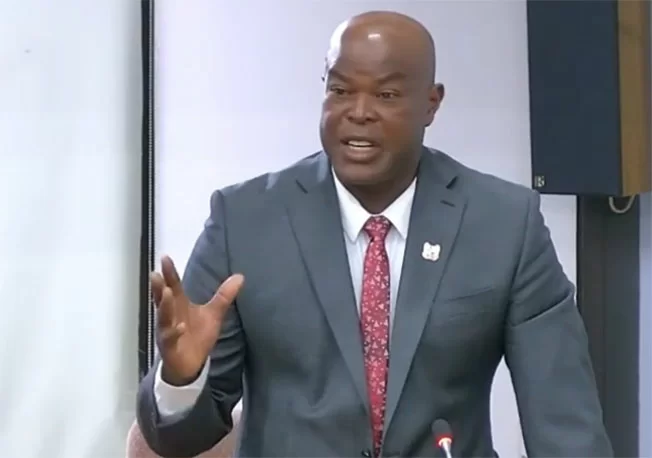
    During Thursday’s 2026/2027 Budget Debate in the Bahamas House of Assembly, State Minister for Health and Wellness Owen Wells outlined a far-reaching legislative and administrative reform package aimed at modernizing the country’s healthcare sector, with new regulation of the funeral services industry highlighted as a key priority for protecting vulnerable grieving families.

    Wells emphasized that families place unparalleled trust in funeral service providers during periods of profound loss, creating a critical need for formal oversight to guarantee ethical, professional care. The upcoming Funeral Services Industry Bill will enshrine binding requirements for operator licensing, uniform professional standards, robust consumer protections, and formal accountability mechanisms, all designed to ensure services uphold the dignity that end-of-life care demands. While the core framework of the legislation has been confirmed, Minister Wells did not release further details on timelines for tabling the bill, proposed penalties for non-compliance, or the specific agency that will be tasked with enforcing the new rules.

    The funeral industry regulation is just one component of a broader push to expand and update healthcare sector governance. Minister Wells confirmed that the ministry is also advancing three other key legislative initiatives: a Patients’ Rights Bill, an updated Elderly Abandonment Bill, and ongoing work to embed other existing health legislation into force.

    The Patients’ Rights Bill will establish a formal, clear framework to guide interactions between patients and healthcare providers, codifying core protections including informed consent for medical procedures, patient confidentiality, guaranteed access to personal health information, mandatory professional conduct standards, and requirements for respectful treatment of all care recipients. For vulnerable older Bahamians, the revised Elderly Abandonment Bill will strengthen existing legal protections, set clearer care standards, and reinforce commitments to upholding the dignity and overall wellbeing of the country’s aging population.

    Beyond legislative changes, the ministry is pursuing structural administrative reforms to keep pace with its growing scope of work. For years, the ministry has relied on external legal support from the Public Hospitals Authority, the Office of the Attorney General, and the Department of Legal Affairs to handle regulatory and legal matters. As the sector expands and modernizes, Wells announced that a dedicated in-house Legal Unit will be established during the 2026/2027 fiscal period.

    This internal legal team will cut response times for pressing regulatory and legal issues, reduce costly delays in contract negotiations, strengthen public procurement processes, and ensure all ministry policies and programs are legally sound from their design stage. The new unit will also reduce the administrative burden on the Office of the Attorney General by handling routine and specialized health sector legal work internally, including licensing reviews, administrative actions, contract drafting, regulatory rollout, and clinical governance matters.

    To address longstanding coordination gaps across the public healthcare system, Wells also announced the creation of a Public Health Operations Task Force. The inter-agency body will conduct a comprehensive review of how core public health entities – including the Ministry of Health and Wellness, the Department of Public Health, Princess Margaret Hospital, Rand Memorial Hospital, the Supplies Management Agency, and other relevant stakeholders – interact and operate. It will map existing workflows, identify systemic bottlenecks and service duplication, and propose evidence-based practical solutions to streamline cross-agency coordination and improve service delivery for patients.

    Digital modernization of health records will also remain a key priority during the upcoming budget cycle. The ministry will continue rolling out universal Electronic Medical Records across all Department of Public Health facilities, while working to integrate these systems with other major public healthcare institutions. Plans are also in place to strengthen the national Health Information Exchange, allowing authorized care providers to securely access critical patient data when needed for treatment.

    Wells pushed back against any perception that these reforms are merely bureaucratic adjustments, noting that every proposed change is centered on people. “These topics may appear administrative in nature, but their purpose is people-centred and intended to protect patients, support families, assist healthcare workers and strengthen public confidence in our healthcare system,” he said. The government’s overall legislative agenda for the health sector is focused on four core goals: strengthening patient protections, updating outdated professional regulations, improving national public health preparedness, and supporting innovation in how care is delivered to Bahamian communities.

  • COE expands green alert to 14 provinces due to heavy rainfall threat

    COE expands green alert to 14 provinces due to heavy rainfall threat

    In response to severe weather forecasts from the Dominican Institute of Meteorology (INDOMET), the Dominican Republic’s Emergency Operations Center (COE) has broadened a green-level weather alert to cover 14 provinces, including the nation’s capital National District. The warning comes as forecasters predict a range of hazardous conditions: moderate to intense rainfall, severe thunderstorms, sudden strong wind gusts, and the potential for isolated hail across the affected regions.

    Meteorological officials attribute the unstable weather pattern to two interacting atmospheric systems: a passing tropical wave and an upper-atmosphere trough. According to current projections, the intensity of rainfall will slowly taper off as evening progresses, bringing gradual improvement to conditions across the alert zone.

    The full list of areas placed under green alert includes Santiago Rodríguez, Puerto Plata, Elías Piña, Espaillat, Santiago, Valverde, San Juan, Dajabón, Montecristi, Hato Mayor, El Seibo, San Cristóbal, Santo Domingo Province, and the National District. As the most common alert level for potential hazardous weather, the green designation signals that conditions require close monitoring and precautionary action from residents and local officials.

    To reduce the risk of weather-related incidents, COE has issued clear safety guidance for communities in the affected regions. Residents are strongly advised not to cross swollen rivers, creeks, or ravines, as fast-moving high water poses a major risk of flash flooding and drowning. The agency also urges people to avoid all recreational water activities until the alert is officially lifted, as unstable weather can create unexpected dangers for outdoor recreation.

    Emergency management teams and meteorological staff are maintaining continuous surveillance of the evolving atmospheric conditions. Officials have reminded the public to only rely on official government communication channels for the latest updates, ensuring residents receive accurate, timely information to adjust their plans and stay safe throughout the weather event.

  • Main Event loss widens as revenue falls across key business lines

    Main Event loss widens as revenue falls across key business lines

    KINGSTON, Jamaica — Main Event Entertainment Group Limited (MEEG), a leading Jamaican entertainment and promotions firm, has reported a deepening net loss for its second fiscal quarter, as broad-based revenue declines driven by extreme weather, shifting consumer behavior and competitive market shifts outpaced the company’s aggressive cost-cutting initiatives.

    Newly released financial results for the quarter ending April 30, 2026 reveal that the company’s net loss ballooned to $45.5 million, a nearly five-fold increase from the $9.3 million loss recorded in the same quarter last year. Revenue across the business dropped 15% year-over-year, falling from $306.4 million to $261.3 million, while gross profit contracted 19% to $134 million.

    When extended to the first half of the 2026 fiscal year, the financial downturn is even more pronounced. Half-year revenue plummeted 47% from $891.4 million last year to just $472.8 million this cycle, reversing a $64.3 million net profit from the prior period into a $111.1 million net loss. This poor performance reflects challenges across nearly all of the company’s core business segments: declines were recorded in entertainment and promotions, audio production, film, multimedia, and its M Style division. The only outlier was the company’s digital signage segment, which posted a robust 22% year-over-year revenue growth amid rising demand for digital out-of-home advertising.

    Company officials outlined a confluence of headwinds that have pressured operations in recent months. The Jamaican entertainment and events sector has become far more competitive, with many large event and production contracts being redirected to other players. Meanwhile, consumers pulling back on discretionary spending has led to a sharp rise in event postponements and cancellations, creating further revenue volatility.

    Broader macroeconomic and environmental shocks have compounded these sector-specific challenges. Jamaica’s national economy continues to absorb aftershocks from Hurricane Melissa, while elevated global energy costs and ongoing uncertainty tied to geopolitical tensions and volatile commodity prices have further squeezed business margins.

    In response to mounting losses, Main Event has implemented a series of cost-control measures, including terminating underperforming property leases, restructuring its workforce, and tightening spending on utilities and general overhead. Despite these efforts, quarterly operating expenses still rose 5% year-over-year to $196.9 million, widening the quarterly operating loss to $59.3 million from just $8.3 million a year earlier. For the first half of the fiscal year, operating expenses remained broadly flat at $406.6 million, but the sharp revenue drop pushed the company from a $79.2 million operating profit last year to a $136.2 million operating loss this cycle.

    One positive note in the report is that the company fully repaid its outstanding long-term loan during the second quarter, eliminating all associated recurring interest costs moving forward. However, overall balance sheet metrics still declined: total assets fell 14% year-over-year to $1.05 billion as of April 30, 2026, down from $1.22 billion a year prior. Shareholders’ equity dropped 19% to $766.2 million from $946.8 million, a change driven primarily by accumulated losses reflected in retained earnings.

    Filings with the Jamaica Central Securities Depository (JCSD) confirm that MEEG Holdings Limited remains the company’s majority controlling shareholder, holding 205.5 million shares equal to a 68.5% ownership stake. Mayberry Jamaican Equities Limited holds an 11.24% stake, while Supreme Ventures Limited controls 10% of issued shares. Combined, the top 10 shareholders hold 94.5% of all outstanding issued shares, reflecting concentrated ownership of the Jamaican entertainment firm.

  • Rollins demands PLP disclose if Gardiner donated to campaign

    Rollins demands PLP disclose if Gardiner donated to campaign

    A fiery confrontation has erupted in Bahamian parliamentary budget debates, as Long Island Member of Parliament Dr Andre Rollins has launched intensified scrutiny over multi-million dollar government contracts awarded to a construction firm tied to a convicted US narcotics trafficker, calling for full disclosure of any campaign donations the trafficker may have made to the governing Progressive Liberal Party (PLP) over the past decade.

    At the center of the controversy is Top Notch Builders, a company that was granted a $35 million public-private partnership (PPP) contract to build the Eight Mile Rock administrative complex just 24 hours before the May 2017 general election. Public corporate registry documents from The Bahamas directly link Eric Gardiner, a man previously convicted of drug trafficking charges in the United States, to the firm, where he is listed as president and a director. Corporate filings further show that Top Notch Builders owns Complete Construction, the developer behind the current administration’s flagship Carmichael Village affordable housing initiative, which launched during the previous legislative term.

    In a surprising reveal, current Finance Minister Michael Halkitis has confirmed he previously held a director position at Top Notch Builders, though he maintains he stepped down from the role in 2021, citing disruptions caused by the COVID-19 pandemic.

    Dr Rollins dedicated the bulk of his budget debate address to pressing for clear answers about the awarding process for the Eight Mile Rock contract. He is demanding confirmation of which government official approved the deal, whether the contract was put out for mandatory competitive bidding, and whether Gardiner has ever contributed to PLP campaign coffers. “Who in the government knew what, and when did they know it?” Rollins asked lawmakers. “Was the project open to a competitive bidding process, and if not, why not? Which minister of government was responsible for signing off on the terms of the agreement?”

    Additional context around the case dates back to a plane crash on a previous Election Day, when U.S. rescue teams recovered Gardiner alongside ten other survivors. Authorities reported Gardiner was carrying $30,000 in cash at the time of the crash, and multiple survivors were observed wearing clothing and accessories branded with PLP branding. Dr Rollins argues Bahamian voters have a right to know whether Gardiner made any campaign donations to the PLP after the 2017 awarding of the Grand Bahama contract.

    “This is important because it would help to explain why a company he is alleged to be a beneficial owner of would receive unusually favourable contractual terms by public contract,” he explained. “It would also help us to investigate which government ministers had direct involvement in the issuance of that eight mile rock government complex contract to Top Notch.”

    Dr Rollins also alleged that a controversial “poison pill provision” was written into the PPP contract, designed to make the agreement impossible for a new administration to cancel. He claimed that when the Minnis administration took office in 2017, officials would have been required to pay the full value of the contract, including all accrued principal and interest, if they chose to terminate the deal.

    “It’s unbelievable that any government would not have done its due diligence on the principal of Top Notch Builders,” he said. “And with a principal who has been already convicted of narcotics trafficking by the United States of America to get $50.6m in government money means… if one was so minded or had that amount of money to wash or clean, it would be a very convenient way to do so.”

    Broadening his critique to public-private partnership arrangements as a whole, Dr Rollins warned that without mandatory public disclosure and robust oversight, PPPs can easily be exploited as vehicles for money laundering. He added that full, nationwide implementation of the Freedom of Information Act would significantly improve government transparency and accountability by creating a verifiable public paper trail for all state contracts.

    The debate quickly devolved into a heated parliamentary exchange after Dr Rollins opened his remarks with sharp criticism of the role of big money in Bahamian politics and alleged procedural exploitation in the House of Assembly. Fox Hill MP Fred Mitchell repeatedly raised points of order arguing Rollins’ comments were not relevant to the budget debate, a position that was later upheld by House Speaker Patricia Deveaux.

    The back-and-forth escalated into a public clash between Dr Rollins and Speaker Deveaux, with both accusing the other of undermining The Bahamas’ democratic institutions. At one tense point, Dr Rollins warned the Speaker to be cautious, saying he did not want to see her suffer a negative health incident. “You could never,” Speaker Deveaux shouted in response. “Ten of you. Ten just like you could not bring my health event. Be careful. Boy look here. Don’t do that.”

  • Leonel Fernández rejects proposed tax measures

    Leonel Fernández rejects proposed tax measures

    MADRID — Speaking to a crowd of gathered supporters at Madrid’s Eventize Space, former Dominican president and current leader of the opposition People’s Force party Leonel Fernández has issued a sharp rejection of the tax policy agenda put forward by the ruling Modern Revolutionary Party (PRM), warning that new fiscal burdens would be untenable for Dominican households already grappling with soaring living costs and persistent inflation.

    Fernández’s public criticism came during an event that also marked the swearing-in of new People’s Force members from multiple political backgrounds. The new recruits include defectors from the ruling PRM, the Dominican Liberation Party (PLD), and the Democratic Hope Party (PED), alongside Dominican professionals, entrepreneurs, healthcare workers and community leaders based across Spain and other European nations.

    At the gathering, the opposition leader argued that the current PRM administration is pursuing policies that function as a full tax reform, only rebranded under an alternative name to avoid public backlash. He stressed that the strained economic environment facing ordinary Dominicans makes any new tax-based policy completely inappropriate, noting that the government has yet to deliver solutions for the country’s most pressing public challenges despite its pursuit of additional public revenue.

    Fernández made clear that the People’s Force will stand firm against any legislative or executive initiative that raises taxes or pushes greater financial strain onto working families. He emphasized that widespread public anxiety over rising inflation and the escalating cost of essential goods has not eased, and reaffirmed his party’s commitment to advocating for the interests of workers, students, women, youth and all marginalized social sectors across the Dominican Republic.

    Looking ahead to the 2028 national elections, Fernández framed the strong turnout and growing cross-border support from the Dominican diaspora in Europe as a major vote of confidence in the opposition bloc. He noted that the influx of new members from across the political spectrum and the expanding base among Dominicans living abroad reflects the party’s successful, ongoing push to build its presence within the country’s global diaspora community.

  • Court sentences Claudia Pérez “La Tora” to one year in prison for defamation

    Court sentences Claudia Pérez “La Tora” to one year in prison for defamation

    In a high-profile ruling that underscores growing enforcement of digital defamation laws in the Dominican Republic, well-known communicator Claudia Pérez — widely recognized by her public name “La Tora” — has been convicted and sentenced to 12 months of incarceration for defaming ruling party deputy Sergio Moya via digital channels.

    The judgment was delivered this week by Magistrate Octavia Carolina Fernández Curi, presiding over the Eighth Criminal Chamber of the National District based in the capital, Santo Domingo. Beyond the custodial sentence, the court ordered Pérez to pay 5 million Dominican pesos in moral damages compensation to Moya, who is commonly known by his nickname “Gory,” and instructed the convicted communicator to cover all associated court costs for the proceedings.

    Court documents confirm that Pérez made use of social media platforms and other digital telecommunications channels to distribute statements that the justice system ruled had severely harmed the sitting deputy’s public honor and professional reputation. The legal action stemmed directly from Moya’s private criminal complaint, in which he alleged Pérez had falsely tied him to organized criminal activity in her public postings.

    In her ruling, Magistrate Fernández Curi confirmed that Pérez’s actions ran afoul of Articles 21 and 22 of the Dominican Republic’s Law 53-07, landmark legislation focused on high-technology crimes that explicitly penalizes defamation and slander committed through electronic mediums. Pérez is scheduled to begin serving her sentence at the Najayo Women’s Correction and Rehabilitation Center, a women’s prison facility outside the capital.

    Under the Dominican Republic’s existing criminal procedure regulations, Pérez retains the right to file an appeal of the ruling with a higher appellate court. If she chooses to move forward with an appeal, legal experts note she is also eligible to request a suspension of her sentence’s execution while the higher court conducts its full review of the conviction and sentencing.

    The court’s ruling also fully upheld the civil damages claim brought forward by Moya’s legal team. This case marks one of the most visible recent applications of Law 53-07 to digital speech disputes in the country, shedding light on how Dominican courts are addressing conflicts that arise from content posted to social media and other online platforms, an increasingly common source of legal tension in the digital age.