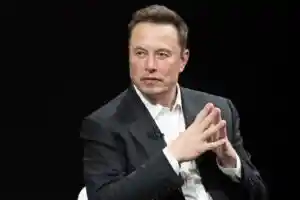
On a historic Friday for global capital markets, shares of Elon Musk’s aerospace and technology conglomerate SpaceX surged more than 20% in their Nasdaq trading debut, capping the largest initial public offering in history and catapulting the polarizing entrepreneur to a new milestone: the world’s first trillionaire. The blockbuster offering raised more than $75 billion in its primary tranche, and industry analysts expect the successful launch to open the floodgates for a wave of high-profile public listings from leading artificial intelligence firms over the coming months. Weeks of frenzied investor enthusiasm around the company— which evolved from a niche rocket startup to a diversified conglomerate spanning satellite technology, aerospace, and artificial intelligence—built up to the landmark debut on the New York-based exchange. At a celebratory event held at SpaceX’s Starbase facility in Texas, surrounded by employees who were set to earn life-changing windfalls from the public listing, Musk doubled down on the company’s ambitious interplanetary mission. “SpaceX wants to be able to take you to the Moon, take you to Mars, and ultimately beyond,” Musk told the crowd. “I’m confident at this point that with the incredible team that we have here at SpaceX, that we will do that for you.” Hundreds of SpaceX employees and supporters gathered in New York to mark the occasion, with the company installing a glowing neon sign in iconic Times Square to celebrate the listing. Sarin Sio, a representative from financial firm Dovetail who attended the Nasdaq headquarters event, noted that Musk’s unapologetic pursuit of far-reaching, futuristic goals that no other major firm has dared to prioritize has captured widespread public and investor imagination. The night before trading opened, SpaceX filed with U.S. market regulators to price 555 million primary shares at $135 apiece, setting an opening valuation of just under $1.8 trillion for the company. But less than 60 minutes after trading kicked off, share prices jumped 23% to hit $166, pushing SpaceX’s total market capitalization to roughly $2 trillion. That valuation places the new public firm among the 10 most valuable companies in the United States, outranking established giants including Musk’s own electric vehicle firm Tesla, social media and tech conglomerate Meta, and retail behemoth Walmart. If underwriters exercise options to sell an additional 83 million shares, the total capital raised from the offering could climb above $86 billion. Founded by Musk alongside business partners in 2002 as a private rocket development startup, SpaceX has expanded dramatically over its 23-year history: it is now the world’s largest commercial satellite operator, and it recently absorbed Musk’s standalone artificial intelligence firm xAI, which also controls the social media platform X. Trading under the ticker symbol “SPCX,” the company’s public performance is being closely monitored by Wall Street observers, as its reception will set a benchmark for other major AI firms planning to go public before the end of the year. Two of SpaceX’s top AI rivals, OpenAI and Anthropic, have already submitted initial regulatory filings to prepare for their own public listings. Friday’s IPO comes a little more than 12 months after Musk stepped away from his role in former President Donald Trump’s administration, where he led the controversial “DOGE” initiative focused on cutting federal government spending. Even as he led that initiative, Musk continued to hold his CEO roles at both Tesla and SpaceX. In recent years, Musk has become one of the most divisive figures in global business: his open support for Trump and right-wing populist movements across Europe, paired with a long track record of incendiary commentary posted to his social platform X, has turned him from a widely celebrated tech innovator into a deeply polarizing public figure. Despite that controversy, the record-breaking IPO demonstrates that Musk retains overwhelming support from institutional and retail investors. Bloomberg reporting confirms the offering was more than four times oversubscribed, with particularly strong demand from individual retail investors, who were allocated 20% of the issued shares. The IPO is projected to create thousands of new millionaires and multiple new billionaires, with current and former SpaceX employees and early private investors poised to cash out portions of their long-held stakes after decades of private ownership. The company’s $2 trillion valuation relies heavily on Musk delivering on a slate of science fiction-level promises, including establishing human colonies on Mars, deploying orbiting data centers, and scaling its Starlink satellite internet service into a global mass-market offering—many of which rely on unproven technology that is still in early development. Much of SpaceX’s long-term valuation also hinges on the future success of xAI, the developer of the Grok AI chatbot that remains a distant third behind market leader OpenAI in user adoption and market share. To shore up its balance sheet and generate near-term revenue from its massive AI computing infrastructure, SpaceX has signed short-term deals worth billions of dollars to rent excess computing capacity to rivals Anthropic and Google. While SpaceX has experienced rapid revenue growth, hitting $18.7 billion in annual revenue in 2025, the firm still posted a net loss of $4.9 billion last year, driven largely by heavy capital spending on AI infrastructure and rocket development. In a bold forecast included in its IPO filing, SpaceX projects that its total annual revenue across all business lines could eventually exceed $28.5 trillion. The milestone of Musk becoming the world’s first trillionaire has drawn sharp criticism from progressive political leaders in the U.S. “The world will get its first trillionaire while Americans across the country are scraping together every dollar to save for retirement,” said Democratic Senator Elizabeth Warren in a statement reacting to the listing.