作者: admin

  • Measures announced to make foreign investment more flexible and dynamic

    Measures announced to make foreign investment more flexible and dynamic

    In a significant policy shift, the Cuban government has unveiled comprehensive measures to revitalize foreign investment as a cornerstone of its economic strategy. The announcement came during the 8th Investment Forum at the 41st Havana International Fair, where Deputy Prime Minister Oscar Pérez-Oliva Fraga outlined sweeping reforms designed to create a more dynamic business environment.

    The new framework introduces substantial monetary flexibility, allowing dual currency operations in both national and foreign currencies according to investor needs. Foreign investment enterprises will be encouraged to focus on generating foreign income through exports or sales to domestic sectors with foreign currency capabilities. The government will establish ‘more competitive and realistic’ foreign exchange rates across certain sectors and permit companies to maintain offshore bank accounts to circumvent blockade-related financial restrictions.

    Procedural simplifications represent another major component of the reform package. The requirement for feasibility studies has been eliminated in favor of business plans, evaluation timelines have been halved from 15 to 7 days, and ‘positive silence’ provisions will automatically approve applications if agencies fail to respond within specified periods. Documentary requirements have been streamlined to essential documents only, and property appraisal validations have been extended beyond one year.

    Novel investment modalities include automatic establishment of wholly foreign-owned companies for hotel leasing tenders, reactivation of underutilized national assets with profit-sharing arrangements, unrestricted wholesale trading rights, and direct fuel import authorization when domestic supplies are unavailable. Labor reforms grant investors final hiring decisions, while permitting foreign currency bonus payments from profits generated through external income.

    The government is actively promoting foreign participation in banking and financial services while continuing development of special economic zones for targeted sectors like real estate and technology parks. Innovative financial instruments include selective swap operations—not merely for debt repayment but structured around sustainable businesses generating foreign currency income.

    Deputy Prime Minister Pérez-Oliva identified food production and knowledge economy sectors as strategic priorities, citing successful Vietnamese rice production partnerships as models. The administration is promoting ‘flexible and simpler business models’ to rapidly increase food output while leveraging Cuba’s skilled workforce in IT, biotechnology, and pharmaceutical industries.

    The updated investment portfolio features 426 projects across all provinces, with emphasis on food production, industry, tourism, and energy—particularly oil exploration and extraction. Eighty-three high-priority projects have been selected for their export potential.

    Yanet Vázquez Valdés, Deputy Minister of Foreign Trade and Foreign Investment, clarified that while direct hiring remains exceptional, the state employment agency system remains the general rule. These measures will inform a new Foreign Investment Law creating legal frameworks for partnerships between state-owned enterprises and non-state sectors, combining resources to rescue installed capacities and drive economic growth.

    Regarding debt management, officials emphasized that swap operations won’t involve asset-for-debt exchanges but rather negotiate medium-to-long-term business arrangements that simultaneously reduce foreign company debts while contributing to economic expansion.

  • Dignity and memory in white coats

    Dignity and memory in white coats

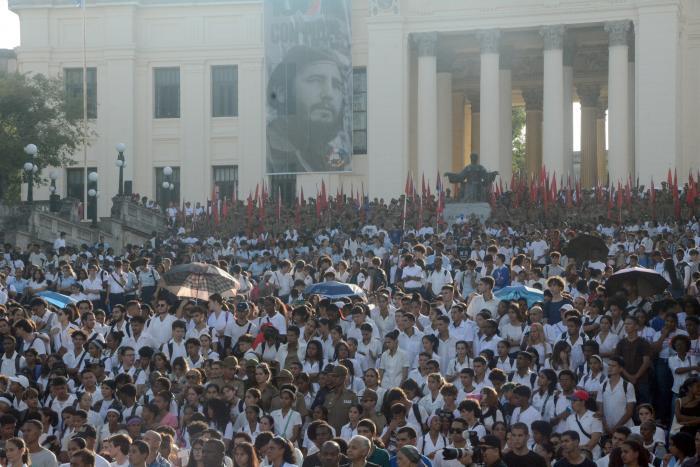
    On November 27th, 2025, Cuba solemnly observed the 154th anniversary of the execution of eight medical students by Spanish colonial forces in 1871. The streets of Havana filled with commemorative activities as citizens gathered to honor the memory of these young martyrs who became symbols of Cuban resistance.

    The ceremony commenced at the University of Havana, where participants descended the steps toward the La Punta monument. The event was presided over by Miguel Díaz-Canel Bermúdez, First Secretary of the Party’s Central Committee and President of the Republic, alongside senior government and party officials.

    Thalía Beatriz Morell García, an ideological representative from the National Secretariat of the Federation of University Students (FEU), emphasized the historical significance of the march. “We march not only in remembrance but for this homeland, built with the blood of its finest sons and daughters,” she stated during the ceremony.

    The commemorative event highlighted the transformation of historical pain into progressive action. Morell García noted that the Cuban Revolution, under the leadership of Fidel Castro Ruz, converted tragedy into inspiration, establishing educational institutions and healthcare systems that honor the students’ original aspirations.

    Additional floral offerings were placed at the monument of Julio Antonio Mella, the student leader and anti-imperialist activist, near University Hill. The ceremony brought together prominent figures including Yuniasky Crespo Baquero, Head of the Ideological Department of the Party’s Central Committee, Rolando Yero Travieso from the Department of Social Sector Affairs, Deputy Prime Minister Inés María Chapman, and leaders from the Young Communist League and student federations.

    The gathering echoed with chants of “Neither dead nor forgotten!”—a powerful refrain demonstrating Cuba’s enduring commitment to preserving historical memory and national dignity against colonial and imperial forces.

  • Column: Twee paspoorten, één waarheid

    Column: Twee paspoorten, één waarheid

    Fifty years after Suriname gained independence from the Netherlands, one contentious issue remains persistently relevant: the Dutch passport. This document has evolved beyond mere travel authorization to become a tangible manifestation of unresolved historical inequalities stemming from the colonial era that continue to shape contemporary societal dynamics.

    The practical advantages of possessing a Dutch passport create a stark divide among Surinamese citizens. Those holding the coveted burgundy-colored document enjoy unparalleled mobility, visa-free access to numerous countries, enhanced consular protection, and greater economic opportunities. In contrast, Surinamese passport holders face significant barriers, including arduous visa application processes, intense scrutiny of financial standing, and implicit questioning of their credibility when seeking international travel.

    This disparity becomes particularly evident during international transit. At airports like Schiphol, Dutch passport holders can freely exit transit areas, rest in hotels, or explore during layovers. Meanwhile, those without equivalent travel documents may remain confined to transit zones for up to twenty-four hours—a physical manifestation of the inequality embedded in citizenship hierarchies.

    The phenomenon extends beyond travel logistics into societal participation. Surinamese-Dutch citizens actively contribute to Suriname’s organizational structures and public discourse, yet retain the security of European Union protection when risks emerge. This dynamic creates an implicit power asymmetry where emotional connection to Suriname doesn’t necessarily translate to shared vulnerability or consequence.

    Language and cultural expressions further reveal enduring colonial mentalities. Phrases like “That’s just Indian stories” (dismissing narratives as exaggeration) or “When black man eat, black man sleep” (implying laziness) perpetuate harmful stereotypes rooted in colonial justification narratives. These linguistic patterns continue to devalue indigenous knowledge systems and reinforce hierarchical thinking.

    The ongoing debates surrounding passport privileges ultimately transcend practical concerns about mobility, touching upon fundamental questions of dignity, recognition, and equal treatment. The emotional connection to Surinamese identity exists independently from the geopolitical value of one’s citizenship documents, yet the world continues to make consequential distinctions based on passport colors.

    Addressing these disparities requires honest acknowledgment of the parallel realities: the emotional landscape of national identity versus the geopolitical realities of passport privilege. Only through this recognition can meaningful dialogue begin toward establishing more equitable connections that honor both historical context and human dignity, regardless of which document one carries.

  • Health Ministry identifies three Chikungunya cases from Cuba

    Health Ministry identifies three Chikungunya cases from Cuba

    Health authorities in the Dominican Republic have confirmed three imported cases of chikungunya virus identified in travelers arriving from Cuba. The nation’s epidemiological surveillance system detected these cases, with subsequent confirmation conducted by the Dr. Defilló National Reference Laboratory. Despite these imported instances, health officials maintain there is currently no evidence of community transmission within the country.

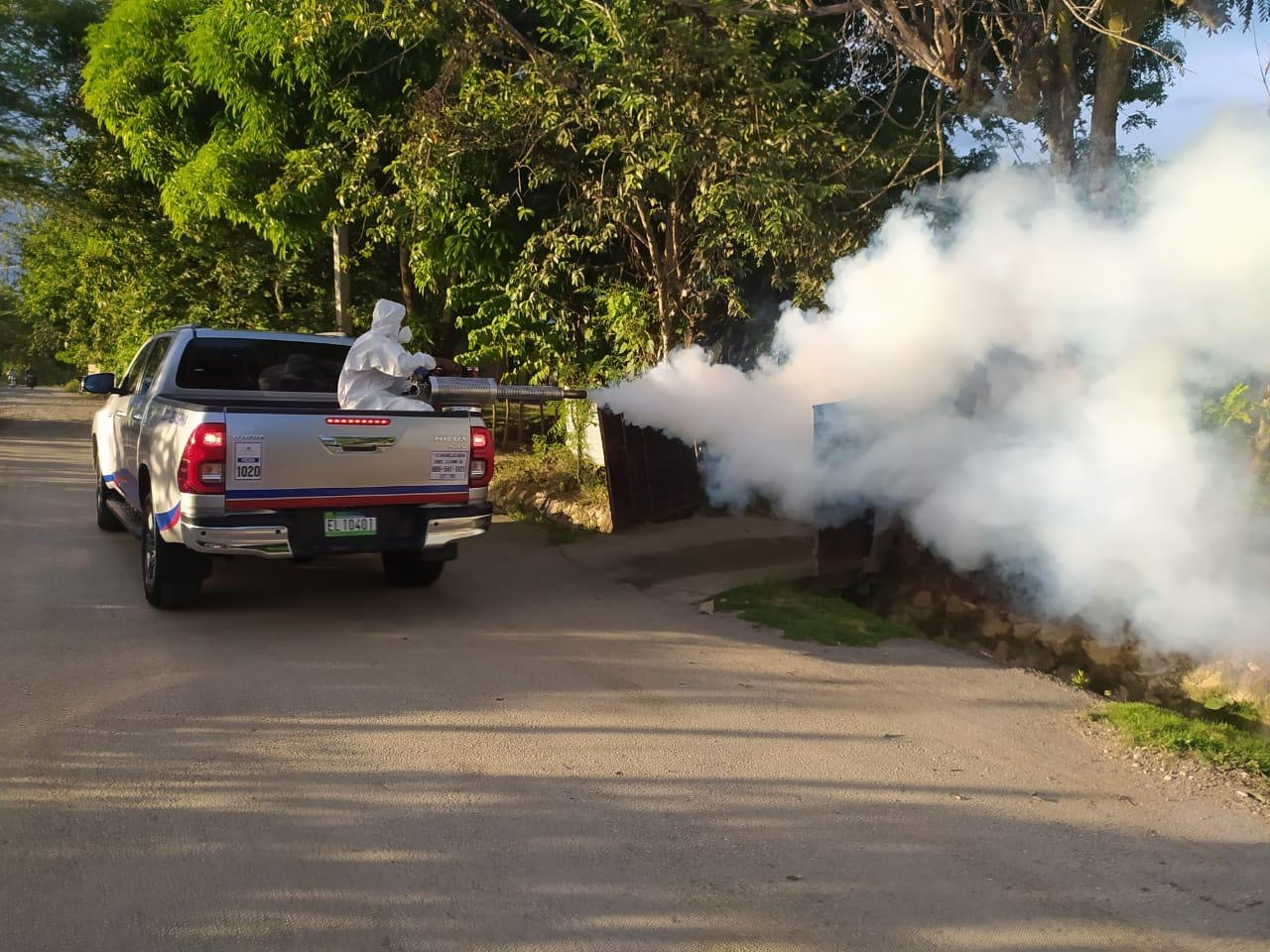
    Health Minister Víctor Atallah provided reassurances to citizens, confirming that government agencies are conducting daily monitoring of the situation. The ministry has implemented enhanced surveillance protocols nationwide and intensified active case-finding measures for febrile illnesses. Vector control operations have been substantially increased, including widespread fumigation campaigns, systematic elimination of mosquito breeding sites, and comprehensive community education initiatives.

    The chikungunya virus, transmitted primarily through bites from infected Aedes aegypti and Aedes albopictus mosquitoes, typically manifests with high fever and severe joint pain, presenting clinical similarities to dengue fever. In response to increasing regional cases throughout the Caribbean, particularly in Cuba, the Dominican Republic has maintained heightened health screening procedures at all airports, seaports, and border crossings.

    Healthcare facilities across the nation have reinforced their preparedness protocols to ensure accurate diagnosis, appropriate clinical management, and timely patient care aligned with recommendations from the Pan American Health Organization/World Health Organization (PAHO/WHO). Health authorities continue urging citizens to eliminate standing water sources, properly cover water storage containers, apply insect repellent regularly, and actively participate in community cleanliness and fumigation efforts.

  • NOW urges schools to foster confidence, prevent gender-based abuse

    NOW urges schools to foster confidence, prevent gender-based abuse

    In a compelling intervention during the 16 Days of Activism against Gender-Based Violence, women’s rights advocate Melissa Savoury-Gittens has proposed comprehensive school programming focused on building self-worth and mutual respect among youth as a fundamental solution to reducing gender-based violence. The president of Barbados’ National Organisation of Women (NOW) emphasized that current approaches often concentrate on addressing abuse after it occurs rather than preventing the underlying conditions that enable it.

    Savoury-Gittens expressed particular concern about young women entering abusive relationships due to diminished self-esteem, noting that many victims remain in harmful situations because they lack the confidence to recognize toxic dynamics. Her research conducted through school outreach programs reveals that the predisposition to accept abuse frequently develops long before actual victimization occurs.

    The advocate called for educational initiatives that teach both girls and boys about healthy relationships, self-love, and mutual respect. She specifically highlighted the need for programs that help young women develop stronger self-identity and the ability to identify various forms of abuse, including psychological manipulation that often precedes physical violence.

    Savoury-Gittens also addressed the role of young men in preventing violence, arguing that educational programming must include boys to effectively change patterns of behavior. She recommended structured guidance on appropriate interpersonal communication and treatment of others as essential components of violence prevention.

    Supporting proposed educational reforms, the NOW president endorsed community service requirements for all students as a character-building initiative that fosters proper mindset development and strengthens community bonds. Additionally, she advocated for enhanced psychological support services in schools, calling for more frequent counselor visits than the current standard of weekly sessions.

    The comprehensive approach proposed by Savoury-Gittens represents a paradigm shift from reactive measures to proactive prevention, addressing the root causes of gender-based violence through early education and confidence-building strategies.

  • ‘Fat Thursday’ as airport sees flights peak, braces for new record

    ‘Fat Thursday’ as airport sees flights peak, braces for new record

    Grantley Adams International Airport (GAIA) in Barbados experienced its most intense operational day of the year this Thursday, handling over 11 simultaneous air-to-sea cruise flights in an event airport staff have nicknamed ‘Fat Thursday.’ Chief Executive Hadley Bourne confirmed this was merely a precursor to an unprecedented surge expected on December 20th, which is projected to eclipse all previous records with more than 50 flights anticipated just days before Christmas.

    Air-to-sea passengers, who utilize Barbados as either a starting point or final destination for their cruises, created a bustling environment that prompted airport management to conduct a media tour of the apron. This demonstration highlighted the operational intensity required to manage the influx, which followed Tourism Minister Ian Gooding-Edghill’s announcement of approximately 8,000 passengers transiting through GAIA that day.

    The day’s operations involved a total of 53 aircraft, comprising 21 scheduled commercial flights, over 11 dedicated air-cruise transfers, and multiple regional services, excluding cargo and private aviation. Bourne reported seamless operations across various carriers including TUI’s Thomson brand and Condor, with the Concorde facility alone processing 11 flights.

    Bourne emphasized that December 20th presents a unique challenge as it combines peak winter commercial traffic with additional air-to-sea transfers, creating what is expected to be the airport’s busiest day in its 87-year history. Airport staff have been preparing throughout the year for this peak period, with enhanced training programs and earlier recruitment of seasonal workers starting as early as September to ensure operational familiarity.

    The increased traffic reflects Barbados’ expanding tourism strategy, which focuses on strengthening European air connectivity, particularly from northern England and Eastern Europe. Minister Gooding-Edghill has characterized the upcoming December surge as a ‘historic occasion’ for Barbadian tourism, signaling the island’s growing prominence as a premier cruise gateway.

  • Energiebanenhub voor Granmorgu-project gelanceerd

    Energiebanenhub voor Granmorgu-project gelanceerd

    Suriname’s energy sector received a significant workforce development boost on Thursday with the official launch of Energy Jobs Suriname, a digital employment platform initiated by TotalEnergies. The innovative portal immediately features 142 available positions while serving as a centralized hub for Surinamese citizens seeking opportunities within the country’s rapidly expanding energy industry.

    The unveiling ceremony gathered government ministers, educational institution representatives, major contractors, and international energy companies, marking a pivotal moment in efforts to enhance local participation in Suriname’s emerging energy economy. The platform constitutes a core component of TotalEnergies’ local content program, which encompasses 14 strategic pillars designed to elevate Surinamese knowledge, skills, and economic engagement.

    TotalEnergies EP Suriname General Manager Artur Nunes-da-Silva emphasized the platform’s role in increasing transparency and providing direct access to energy sector opportunities. “Energy Jobs Suriname transcends being merely a website—it represents a gateway to career possibilities and a concrete step toward integrating local talent into our industry’s growth,” Da Silva stated during the launch event.

    The platform currently showcases 437 identified positions within the sector, with 142 vacancies immediately available. Seven major corporations—TotalEnergies, Staatsolie, SBM Offshore, Halliburton, OneSubsea, Weatherford, and CCC Group—have contributed these initial openings, with additional companies expected to join as the sector expands in coming months.

    Education, Science, and Culture Minister Dirk Currie praised the initiative as a crucial advancement in national capacity building. “This platform bridges our people’s ambitions with opportunities in one of Suriname’s most vital sectors. It represents more than an instrument; it embodies a partnership between education, industry, and talent,” Minister Currie remarked.

    The platform’s introduction coincides with growing recognition of Suriname’s need to address workforce qualification gaps. Industry representatives during a panel discussion highlighted shortages in skilled technicians, engineers, operators, and specialized professionals, emphasizing the critical importance of education and practical training.

    Halliburton’s Operations Manager for Suriname and Trinidad & Tobago, Santiago Zambrano Figuerroa, noted the increasing importance of data analysis, automation, and digital competencies in modern oil and gas operations. Meanwhile, SBM Offshore’s Suriname Country Entry Manager Pierre Gaté emphasized that floating production storage and offloading (FPSO) vessels will require a broad spectrum of technical positions that Surinamese workers could fill with proper training.

    Staatsolie Hydrocarbon Institute Director Vandana Gangaram Panday identified structural challenges, noting that only 60% of Suriname’s potential workforce currently participates actively, with many youths failing to complete secondary education. “Without improvement, a significant gap will emerge between industry requirements and Suriname’s capabilities,” Gangaram Panday warned.

    Oil, Gas, and Environment Minister Patrick Brunings discussed the platform’s strategic significance within Suriname’s broader economic transition. According to Minister Brunings, revenues and knowledge from the oil sector should establish foundations for “Suriname 2.0″—a diversified economy incorporating green industries, agriculture, ICT, and sustainable energy.

    The Energy Jobs Suriname platform ultimately aims to evolve into a comprehensive national employment hub, extending beyond oil and gas to support emerging industries that will ensure economic sustainability. As Suriname prepares for its Granmorgu offshore oil development project, the platform represents a crucial mechanism for ensuring that energy sector benefits genuinely reach the Surinamese population.

  • GNBS developing national policy, adds more products, services for testing

    GNBS developing national policy, adds more products, services for testing

    Guyana is taking significant strides in enhancing its national quality infrastructure through a comprehensive standardization strategy. Minister of Industry and Commerce Susan Rodrigues announced Wednesday that the Guyana National Bureau of Standards (GNBS) is developing a national policy to formalize stakeholder interactions and strengthen quality assurance mechanisms across sectors.

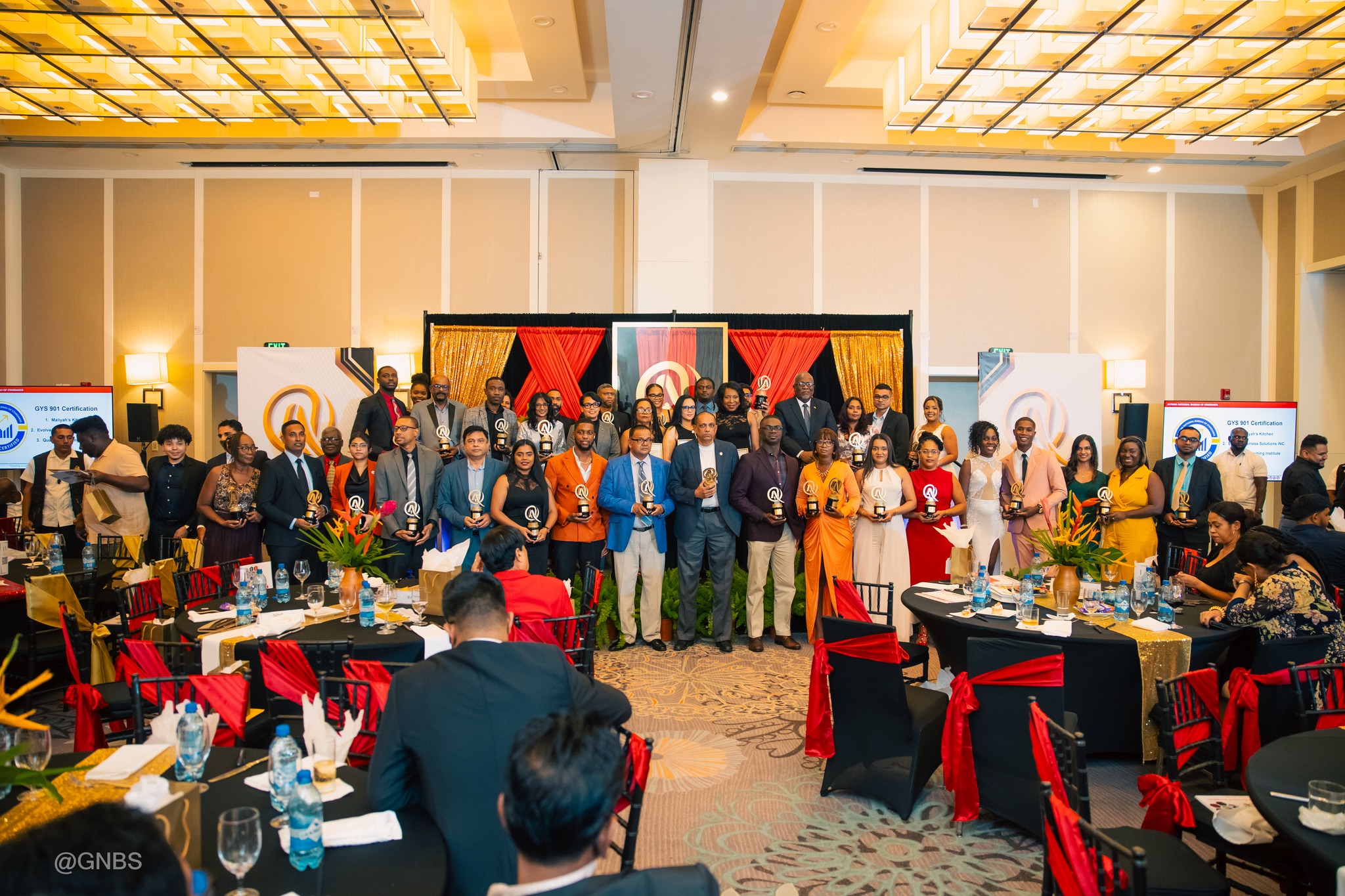
    The policy initiative, revealed during the GNBS’s National Quality Awards ceremony, aims to ensure both public and private sector products and services meet rigorously defined standards. This development comes as the bureau recognized 35 enterprises for excellence in quality standards, including state-owned Guyana Sugar Corporation (GuySuCo), selected from over 100 qualified contenders.

    In collaboration with the Caribbean Regional Organisation on Standards and Quality (CROSQ) and the United Nations Industrial Development Organisation (UNIDO), GNBS has formulated a national standardization strategy for 2025-2028. Minister Rodrigues emphasized this strategy supports digital transformation while focusing on economic growth and competitiveness.

    The bureau has substantially expanded its operational scope, adopting 22 new national standards covering diverse products including salt, ice cream, milk, abattoirs, helmets, and liquid petroleum gas. Beginning in 2026, GNBS will introduce verification services for electric vehicle chargers and expand the ‘Made in Guyana’ certification program to include export requirement criteria through partnership with Guyana Office for Investment (GO-Invest).

    With over 600 standards already developed and 11 additional standards awaiting approval, GNBS has exceeded key performance indicators. The bureau’s capabilities are enhanced through 26 laboratories at its Sophia Exhibition Center facility and expanded legal and metrology services. Administrative improvements include digitizing the metrology database to reduce processing times and enable real-time certificate issuance.

    CROSQ CEO Sharonmae Smith-Walker commended GNBS’s ‘remarkable journey’ since its 2017 establishment, noting that several Caribbean nations have followed Guyana’s lead in developing quality recognition ceremonies. She highlighted Guyana’s commitment to regional collaboration through free training and mentorship programs, specifically mentioning technical assistance provided to Belize in metrology.

  • Goddard workers strike on airport’s busiest day

    Goddard workers strike on airport’s busiest day

    A wave of labor unrest is sweeping through Barbados’ primary aviation hub as airport service employees voice escalating dissatisfaction with their compensation and working conditions. The Barbados Workers’ Union (BWU) has issued a stark warning that additional industrial actions may follow Thursday’s coordinated work stoppage at Goddard Catering Group (GCG), which occurred on the airport’s busiest travel day of the year.

    The disruption unfolded on what industry insiders refer to as “Fat Thursday,” when approximately 8,000 passengers transited through Grantley Adams International Airport. According to BWU Deputy General Secretary Dwaine Paul, the labor action resulted from collapsed negotiations between GCG management and employee representatives. “There was a breakdown in terms of responses to negotiation matters,” Paul stated, explaining why the morning shift workforce withdrew their labor.

    Approximately 50-75 staff members across ground operations, passenger services, customer support, and maintenance departments participated in the work stoppage that began at 7:00 AM. Operations resumed around midday after union representatives received communication from GCG management addressing key concerns. Paul confirmed that based on management’s response, both parties have scheduled negotiations for next week to comprehensively address outstanding issues.

    The union official emphasized that GCG represents just one of multiple airport service providers facing unresolved labor disputes. Paul warned that without prompt resolution, additional industrial actions appear “highly likely” during peak travel season, potentially involving other critical airport operations including air traffic control services.

    When questioned about the strategic timing coinciding with peak passenger traffic, Paul refuted any suggestion of deliberate scheduling, noting instead that airport management should prioritize fair treatment of workers responsible for passenger welfare. Despite attempts to contact GCG’s human resources department for commentary, no response was received by publication time.

  • RealtorDR Launches Initiative to Feed 500 Families Across the North Coast This Christmas

    RealtorDR Launches Initiative to Feed 500 Families Across the North Coast This Christmas

    In a significant demonstration of community solidarity, real estate firm RealtorDR has mobilized a comprehensive campaign to provide essential food supplies to 500 vulnerable families throughout the North Coast of the Dominican Republic this Christmas season. The initiative represents a collaborative effort involving company team members, educational institutions, community organizations, and charitable contributors to assist households experiencing economic hardship during the holiday period.

    The campaign has successfully generated $11,323 in public donations, with RealtorDR committing to match the entire amount, resulting in a substantial total of $22,646. These resources will facilitate the distribution of nutritionally balanced food packages to economically strained families across the municipalities of Sosúa, Cabarete, and Puerto Plata—regions where many residents face heightened financial pressures during seasonal celebrations.

    Robert Maceachern, President of RealtorDR, emphasized the initiative’s community-oriented nature: “We regularly encounter hardworking families who nevertheless struggle to provide complete holiday meals. This campaign represents our commitment to reciprocating the support and hospitality that the Dominican community has consistently extended to our organization.”

    The selection process for beneficiary families employed a meticulously designed collaborative methodology, incorporating insights from local educational professionals, school administrators, and community representatives who possess intimate knowledge of households most affected by economic challenges. This grassroots approach ensures precise targeting of assistance to those with the most pressing needs.

    While the Dominican Republic continues to experience demographic expansion and growing international recognition, numerous communities—particularly along the North Coast—confront persistent issues related to food security and escalating living expenses. Community-led initiatives like this underscore the critical importance of localized efforts in building resilient neighborhoods.

    Although RealtorDR maintains its primary business operations in real estate services throughout Cabarete, Sosua, and Punta Cana, the organization explicitly clarifies that this humanitarian effort remains entirely separate from commercial promotions. Instead, it exemplifies the company’s sustained dedication to meaningful social impact and community development within the Dominican Republic.

    As contributions continue to accumulate, volunteers and partner organizations across the target regions are preparing comprehensive food parcels scheduled for distribution preceding Christmas celebrations. Each package contains essential culinary items including rice, beans, pasta, cooking oil, and traditional holiday ingredients to enable families to prepare nutritious and culturally appropriate meals.

    Campaign organizers articulated the broader significance of the initiative: “This endeavor transcends mere nutritional support—it embodies hope, dignity, and communal solidarity. Collective action, even through modest individual contributions, can generate substantial positive transformation.”

    Prospective supporters can contribute directly through the official campaign portal or assist through network dissemination to amplify the initiative’s reach. The campaign maintains transparency as a core principle, with regular updates provided as the project advances toward its distribution phase next month.