
In an open letter to the editor, a young local buyer has aired his deep frustration over the ongoing failure of the Social Security authority to deliver usable residential land at Paynters, nearly 24 months after the initial property sale. The buyer, who identifies only as Alex, explains that he purchased the plot with the explicit goal of building a family home, a plan that has been completely derailed by the authority’s inaction on critical basic infrastructure. Having spent years paying rising rental costs that he can no longer sustain, Alex invested his life savings into the plot in good faith, counting on the land being ready for construction within a reasonable timeline. Today, instead of a prepared residential development, the entire area remains overgrown and undeveloped, with no completed roads, running water connections, or electrical access — basic utilities that were implied to be delivered when the land was put up for sale. Alex calls the handling of the project “grossly unfair, distasteful, and unprofessional,” arguing that hard-working buyers who made significant financial sacrifices to secure their own property deserve far better treatment from a public institution. After two years of waiting, his patience has run out. If the authority cannot move forward to complete the infrastructure and make the land usable in the near term, Alex is demanding a full refund of the thousands of dollars he spent on the purchase, so he can redirect his hard-earned funds to another housing investment that meets his family’s pressing needs.
作者: admin
-
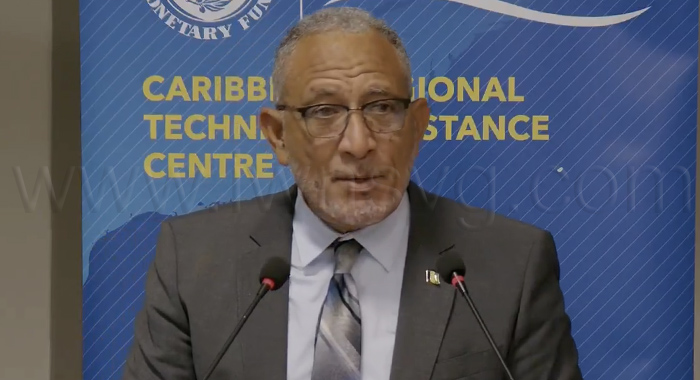
PM urges ‘digital by design’ transformation as AI reshapes public finances
At the opening of the *Financial Management for AI: Harnessing Digital-by-Design Workshop* held on Monday, St. Vincent and the Grenadines Prime Minister Godwin Friday issued a clarion call for a complete overhaul of public financial management practices across Caribbean small island developing states (SIDS), pushing regional leaders to move beyond superficial digitization to a full digital transformation rooted in strong governance, climate resilience, and unwavering human accountability.
Friday opened the event by welcoming dozens of delegates from across the Caribbean, alongside key development partners including the International Monetary Fund’s Caribbean Regional Technical Assistance Centre (CARTAC) and the government of Canada. He positioned the workshop as a critical step forward in the long-running struggle SIDS face to maximize limited public resources, update decades-old administrative systems, and protect long-term fiscal stability at a time of rapid global technological shift and growing frequency of devastating climate shocks.
Public financial management, Friday emphasized, sits at the core of effective, trusted governance. For those unfamiliar with government operations, it may read as nothing more than dry technical work, but behind the line items and budget tables lie high-stakes trade-offs that shape every sector of public life: from healthcare access and public education to national security, support for vulnerable communities, and investments that drive long-term economic growth. For small island developing states in particular, Friday noted, constrained institutional capacity and scarce public revenues leave no margin for waste, duplicated programs, or ill-informed policy decisions – yet these systemic flaws remain widespread across the region.
Drawing on his own country’s experience, Friday highlighted St. Vincent and the Grenadines’ existing fiscal responsibility framework, which enshrines the principle that credible budget drafting, disciplined program execution, and accurate fiscal forecasting are non-negotiable for maintaining public trust and upholding fiscal sustainability. The core stumbling block, he argued, is that most current systems supporting these core functions were built for an era far different from today’s digital, climate-vulnerable reality. Across the Caribbean, public administration remains hampered by departmental silos, manual data entry, and paper-reliant processes, all of which increase the risk of misallocation, waste, and bad decision-making – risks that resource-constrained small economies simply cannot absorb.
Against this backdrop, Friday backed the workshop’s core mission: drawing a clear distinction between incremental digitization of old processes and true digital transformation that builds digital-first systems from the ground up. He aligned St. Vincent and the Grenadines’ reform ambitions with the IMF’s official digital solutions guidelines for public financial management, outlining three core foundational shifts needed for meaningful reform: first, re-engineering core government business processes to be genuinely digital by design; second, building adaptive, cross-system interoperable information technology architecture; and third, updating outdated legal and data governance frameworks to enable responsible, effective use of new technological tools.
With artificial intelligence topping the workshop’s policy agenda, Friday offered a pragmatic warning to regional governments against rushing to adopt AI purely for the sake of keeping up with trends, or being misled by overblown industry hype. “We are all aware of the incessant drumbeat of AI. We know the times are changing, and as the songwriter says, we better start swimming, or we will sink like a stone,” he acknowledged, but stressed that governments must avoid adopting technology in isolation without clear public purpose. The real test of any new tool, he argued, is whether it solves existing, pressing public problems – not whether governments can rework existing systems just to create unnecessary use cases for the latest technology. “We must not invent problems simply so that AI could solve them. Rather, we must see how AI solves the problems that we have now,” Friday said.
When deployed with clear, problem-focused intent, Friday noted that emerging technologies including AI can deliver substantial public benefits, but he emphasized that technology must always remain a tool to serve public needs, not an end goal in itself. He was also clear that digital tools can never replace human accountability for public spending. “Technology such as AI is an enabler for our public offices. It is not a substitute for human accountability,” he said. “AI cannot fix a fundamentally flawed process, nor can algorithms replace professional judgement, institutional ethics, and public oversight. Not yet, anyway.”
To unlock the full benefits of AI and digital public financial management, Friday concluded, regional governments must make sustained investments in upskilling their workforces, ensuring public servants have the training and support needed to work effectively alongside emerging technological tools.
-

Telecom Companies Face Hefty Fines for Failing to Assist Police Investigations
The government of Antigua and Barbuda has enacted strengthened legal provisions that will impose maximum fines of up to EC$50,000 on telecommunication service providers that fail to turn over requested customer and network data to law enforcement agencies within a reasonable timeframe, Prime Minister Gaston Browne has publicly confirmed.
The policy update comes in direct response to longstanding barriers that local police investigators have reported encountering when seeking critical telecommunication data to advance active criminal cases. During a recent appearance on the local *Browne and Browne Show*, Assistant Commissioner of Police Lisbon Michael first brought the systemic challenge to public attention, explaining that mobile phone evidence seized from crime scenes is often one of the most powerful tools for investigators to identify potential suspects and map connections between co-conspirators in illegal activity. Despite the central role that this data plays in solving crimes, Michael noted that law enforcement teams continue to face unnecessary delays and pushback from a subset of service providers operating in the country. “We still have a few challenges with some of the service providers in terms of coming forward with information,” he told the program.
In his formal response to these disclosed obstacles, Prime Minister Browne directed senior police leadership to document every instance of non-compliance and forward those reports to his administration for immediate legal action. The prime minister specifically named the four major telecommunication providers operating in Antigua and Barbuda—Digicel, APUA, PCS, and Flow—stating that any of the firms that refuse to meet law enforcement information requests will face legal consequences. “If you have any issue with Digicel, APUA, PCS and Flow in terms of providing the police with information, let us know,” Browne said. “We will invoke the law, take them to court and fine them accordingly.”
Browne emphasized that the ceiling for fines for non-compliance has been raised to the new maximum of EC$50,000 specifically to act as a meaningful deterrent against delays and uncooperative behavior. He detailed that investigators frequently recover mobile devices from suspected criminals, only to wait extended periods for required data from service providers, who often put forward repeated excuses to avoid turning over records. The updated legislation is designed to eliminate these delays by mandating timely compliance with all lawful law enforcement requests.
“We have strengthened the laws now to make sure that they are compelled to provide information in a timely manner, failing which they will pay a hefty fine,” Browne added. As of the public announcement, neither the prime minister nor law enforcement leadership has identified any telecommunication company that has already been prosecuted or fined under the newly strengthened legal provisions.
-

The Road to 50 — Vincy Mas
As a self-proclaimed devout cultural enthusiast who has faced criticism from church peers who label me a hypocrite for my devotion, I make no apologies for my passion. My love runs deep for every core element of St. Vincent and the Grenadines’ Vincy Mas: the vibrant steelpan rhythms, the elaborate mas costumes, the boundless creative energy, and the infectious music. While I draw the line at explicit content, the raw, unmatched creativity of this festival cannot be denied.
Looking back, when former Carnival Development Committee (CDC) leader Rodney took the helm of the organization, he brought a level of energy and purpose that had been missing for years. He leveraged modern technology to streamline operations, but his greatest achievement was something none of his predecessors managed to pull off: he built a clear strategic plan, put in consistent on-the-ground work, maintained open lines of communication, and kept the general public updated on every major development. Even for those who did not agree with every decision he made, one thing was clear: progress was being made.
Now, as the nation prepares to mark the 50th anniversary of Vincy Mas, I am watching closely with a mixture of anxiety and hope to see what the new leadership at the CDC and its governing boards will deliver. I have never hidden my skepticism about Ricky’s ability to lead the festival effectively. Simply being a participating member of the carnival community does not automatically equip someone with the skills to run an entire major festival, much less grow it.
I have also seen Colin Graham positioning himself as a leading expert on mas and local culture. While his years of participation have earned him respect and veteran status in the community, that experience does not inherently translate to the strategic vision, industry know-how, or leadership capacity needed to transform the carnival sector for the future. To be clear, I am not saying these leaders are incapable of succeeding. I am simply saying that the public is watching their every move, and we will hold them accountable for the decisions they make.
What stands out most to me is how disconnected current Culture Minister Mr. Cupid appears to be from the deep history and core identity of local carnival culture. He comes across as a relative newcomer to the space, and to date, I have not seen him effectively champion or sell the unique cultural product that is authentic Vincy Mas. In my view, he needs to first invest time in learning the nuances of this culture, building his own knowledge and connection, before he can expect the public to buy into his vision for it. That said, I would be delighted to be proven wrong, and I invite him to show the public that my concerns are unfounded.
I have also observed that Rodney no longer has the same freedom to pursue the bold, ambitious ideas he once brought to the table, and this lack of flexibility may be a key part of the current stagnation. A dear friend of mine, who loved carnival more than almost anyone I knew, passed away in recent years, and he left behind a simple mantra that has stayed with me: “If we’re doing it, do it BIG.” That is the energy and ambition we need as we approach this milestone anniversary.
This brings me to the most critical issue facing Vincy Mas today: the need for urgent, systemic reform of the mas industry. Right now, the sector operates with what can only be described as small, entrenched interest groups that hold unaccountable power. Too many people hold influential leadership positions on industry committees while also serving on carnival judging panels, creating clear and unavoidable conflicts of interest. This cannot be allowed to continue if we want to grow the festival.
Conflicts of interest must be addressed directly, not with vague, toothless policy language. We need clear, explicit rules that answer critical questions: Who is eligible to serve as a judge? Who is barred from judging due to existing conflicts? Who can serve on industry governing committees? When are leaders required to recuse themselves from specific decisions? What relationships between decision-makers and mas bands, costume section designers, or masqueraders create unacceptable conflicts, and when must leaders step back?
Enforceable, transparent rules are non-negotiable. If we are serious about elevating Vincy Mas to new heights, especially as we approach its 50th anniversary, we cannot cling to outdated practices just because “that’s how we’ve always done it.” This milestone demands better. We need bold vision, intentional strategic planning, radical transparency, and leaders who understand that participating in carnival is not the same as having the skills to develop and grow the entire industry.
Most importantly, we need leaders who recognize that Vincy Mas is far more than just an annual festival. It is the heart of our national culture, a keeper of our shared history, a core part of our national identity, a canvas for our creative community, and a vital economic industry for St. Vincent and the Grenadines. For those of us who love this culture deeply, watching from near and far, we will not look away. We will continue to hold leadership accountable, because when you love something this much, you do not just cheer it on — you demand it lives up to its full potential.
*Disclaimer: This is an opinion piece. The views expressed are solely those of the author and do not represent the official editorial stance of iWitness News.*
-

The Endurance Economy (Pt 1): The economies we endure
For thousands of ordinary people across the Caribbean, daily life unfolds as a constant series of small, draining hurdles that never make front-page headlines. Take Keisha, for example: she forces herself out of bed at 4:30 a.m. not for an early meeting or a family obligation, but because tap water is finally running — a temporary gift that will vanish without warning. She rushes to finish laundry and fill every available container before the supply cuts out again, turning to her partner Rhaj to ask when they will finally be able to afford their own water storage tank, like her mother already has.
By 6:10 a.m., Rhaj is already out the door. His workplace is only 20 minutes from their home, but he leaves hours early because public transit is notoriously unreliable and gridlock is a guarantee. As they talk, the couple’s unmet needs pile up: a small car like their neighbor Moses just bought, so they can drive their children to private after-school tutoring — or even enroll them in private school entirely, since their local public school has fallen far short of what their kids need.
Later that morning, Keisha meets her friend Lasonta to queue for passport applications for their daughters. Even arriving early, the line stretches out the building door, and two hours pass with no end in sight. What many people dismiss as simple bureaucratic inefficiency has deeper roots: the passport application process itself is rooted in a post-emancipation system designed to control formerly enslaved people through endless paperwork, registration requirements, and deliberate barriers. By the time Keisha and Lasonta’s day wraps up, the power cuts out, forcing Keisha to calculate how long her fridge’s perishable food will last and beg Rhaj for a private generator like Lasonta’s.
These daily struggles are not isolated misfortunes for Keisha, Rhaj and Lasonta. They are the defining feature of what University of the West Indies Five Islands Campus Pro Vice-Chancellor and Principal Professor C. Justin Robinson calls the Endurance Economy: a system where ordinary citizens do not participate in an economy they choose, but simply endure one that has been built to serve everyone but them. These constant small inconveniences never qualify as public disasters, so they never make local news, never trigger emergency cabinet meetings, and never get counted in national economic statistics. They are simply accepted as the unspoken baseline of everyday life for thousands across the region.
Robinson first introduced the concept of the Endurance Economy in his earlier article *No One Is Coming to Save Us*, and this piece launches a series that will dissect the system and outline actionable solutions. He pushes back hard against the common, lazy claim that this culture of endurance is an inherent cultural trait of Caribbean people, arguing instead that it is the direct result of systemic institutional failure. The same people dismissed as unmotivated or indifferent when working at public agencies like the passport office or water authority deliver world-class service at private sector operations including international hotels, offshore call centers, and global accounting firms. The difference is not the workers — it is the institutional structure: clear expectations, robust accountability, performance incentives, and the critical right of customers to take their business elsewhere if service fails.
Tracing the Endurance Economy’s origins, Robinson links it to the region’s historical Plantation Economy, first conceptualized by scholar Lloyd Best. That system was organized entirely around the needs of external foreign actors, leaving local populations to scrape by on whatever resources were left over. That legacy persists today: local people remain afterthoughts, served only after institutions have protected their own procedures, hierarchy, revenue, and convenience.
The Endurance Economy endures in large part because its costs are invisible. Unlike a Category 4 hurricane or a collapsing hospital roof — events that trigger immediate public action and official inquiries — the endless small nuisances of daily endurance only produce private frustration and are often even blamed on the people who suffer them. Robinson describes this as “death by a thousand cuts”: an accumulation of small burdens that drain collective prosperity without ever sparking public outcry.
American journalist Annie Lowrey terms the hours lost waiting in queues and repeating fruitless visits to government agencies the “time tax”: an unlegislated levy that never appears on any national budget, collected from citizens trying to access services that are already rightfully theirs. Keisha and Lasonta paid this tax waiting for hours for a passport; Rhaj pays it every single morning when he leaves home two hours early for a 20-minute commute. This tax is levied on top of official government taxes, and it hits the poorest and most marginalized hardest. Wealthy and well-connected people can simply buy their way out: paying for private water tanks, backup generators, or private education to avoid public failures. The time tax never shows up when finance ministers present national budgets, so it never gets addressed.
Complicating the push for reform, the people with the resources and influence to demand change are often the same people who have already bought their own private exits from the system. When Rhaj and Keisha buy a water tank, they stop caring about public water outages. When Keisha’s mom buys a generator, she stops calling the electric company to complain. When the pair send their kids to private school, they stop agitating for better public education. None of these private choices are morally wrong — families are just trying to protect their own well-being — but every exit removes a powerful voice from the movement demanding public sector repair.
To dismantle the Endurance Economy, Robinson argues, we must first make its invisible burdens visible. Building on colleague Professor Troy Lorde’s call to fix CARICOM’s missing infrastructure, he proposes creating a mandatory annual Endurance Account, paired with public dashboards that measure and publish the full cost of coping with the Endurance Economy. These dashboards would track concrete metrics: hours citizens spend waiting in queues or making repeat visits to agencies, total annual hours of water and power outages, how much household income goes to private backup systems and substitutes for failed public services, and the average wait time for routine applications, claims, and repair requests. Robinson asks whether Caribbean governments can legislate a legal requirement for all public agencies to publish their own annual time tax data.
Once the lost productive time and household costs are formalized on the public record, Robinson says, the national political conversation can finally shift. By turning anecdotal complaints about queues and outages into formal public data, coping will no longer be mistaken for prosperity, and ordinary citizens will finally have the evidence they need to demand meaningful reform. No external actor is going to come count these hidden costs for the Caribbean, Robinson says: the first step to dismantling the Endurance Economy is to put its costs on the national ledger, and stop sweeping private, daily hardship under the rug. The second part of this series will take a deeper dive into customer service failures in the Endurance Economy.
The opinions shared in this piece are those of the author alone, and do not necessarily reflect the editorial stance of iWitness News.
-
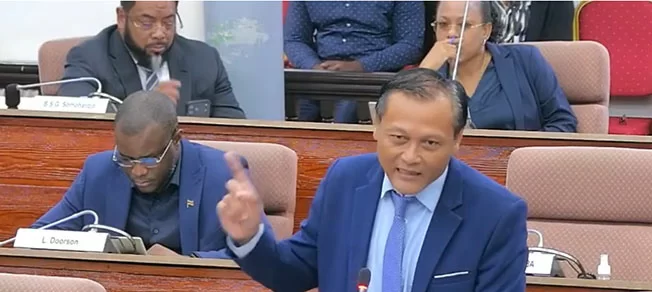
Adhin vraagt Wijnerman opheldering na uitspraken EBS-directeur; felle kritiek Sapoen
A political firestorm has erupted in Suriname’s parliament following incendiary comments from the chief executive of state-owned energy utility Energie Bedrijven Suriname (EBS), prompting top legislative leaders to demand official clarity on outstanding government payments to the utility.
The controversy began when ruling National Democratic Party (NDP) Member of Parliament Raymond Sapoen publicly voiced his deep anger over recent remarks made by EBS CEO Leo Brunswijk directed at the country’s national legislature, De Nationale Assemblee (DNA). Sapoen told fellow lawmakers he was “extremely disturbed” by the tone and content of Brunswijk’s comments, which he claimed amounted to an order for parliament to “keep its big mouth shut” and first pay its outstanding electricity bills.
The confrontation unfolded amid ongoing parliamentary debates over Suriname’s national energy supply security. Sapoen pushed back against the CEO’s rhetoric, arguing that even the head of a state-owned enterprise is not beyond accountability. As a publicly owned company fulfilling a critical public service, Sapoen noted, EBS’s top leadership owes respect to the country’s elected legislative body, and Brunswijk’s confrontational language was entirely inappropriate.
Importantly, Sapoen clarified that he was not weighing in on whether parliament currently carries an outstanding balance with EBS. For him, the core issue is the disrespectful manner in which Brunswijk addressed the nation’s legislature, which he called a serious affront to the institution of parliament. He called on both DNA’s presiding officer and the government, as EBS’s majority shareholder, to address the situation formally.
Within days of Sapoen’s complaint, DNA President Ashwin Adhin confirmed he had already taken formal action, sending a written request to Finance and Planning Minister Adelien Wijnerman seeking full transparency on EBS billing records for government entities, including details on where outstanding invoices are being processed and tracked. Adhin said he expects a timely response from the minister, and if a reply does not arrive within the expected window, parliament will issue a formal reminder to push for a response.
The controversy soon led to confirmation of long-standing unpaid government utility debts in a subsequent parliamentary meeting. Vice President Gregory Rusland addressed the issue directly, confirming that the Surinamese government holds large accumulated payment arrears not only at EBS, but also at the national water utility Surinaamsche Waterleiding Maatschappij (SWM). According to Rusland, some of these outstanding debts date all the way back to 2020.
Rusland added that the cabinet of ministers has already discussed the backlog of unpaid utility bills, and the administration is currently working out structured payment arrangements to clear the outstanding arrears at both state-owned utility providers. “When a company provides services, you have to pay for them,” Rusland affirmed, acknowledging the validity of the core claim behind the CEO’s controversial comments.
-

‘Post-colonial Caribbean is not postcolonial’ – Jomo
At the 2026 Oscar Allen Memorial Emancipation Lecture hosted by the UWI Global Campus in Kingstown, prominent lawyer, social commentator and former Speaker of St. Vincent and the Grenadines’ House of Assembly Jomo Thomas delivered a searing critique of the Caribbean’s self-framing as a post-colonial, emancipated region. Thomas argued that across the bloc, the Caribbean remains intellectually and structurally bound to its colonial legacy, with institutional failures perpetuating this unresolved connection to empire.
The annual lecture, which this year carried the theme “We want to be wise: Education, identity, and liberation in the modern post-colonial Caribbean,” was headlined by educator and climate resilience expert Andrew Simmons, who opened the event by formally calling for Oscar Allen — a late beloved Vincentian community organizer — to be granted national hero status for his lifelong work uplifting poor and marginalized communities. Thomas, speaking as a featured respondent, used the occasion to reflect on Allen’s legacy and tie it to broader ongoing struggles for decolonization across the region.
In a blunt address to an audience of state officials, diplomats, academics and grassroots activists, Thomas rejected the core premise that the Caribbean has achieved a meaningful break from colonial rule. As key evidence of this unfulfilled emancipation, he highlighted gaps in regional education policy: while English and mathematics are mandatory core subjects across all CARICOM member states, Caribbean history is not required coursework in any country of the bloc. This erasure of the region’s own story from formal learning, Thomas argued, exposes the fiction of post-colonial status. “We live a lie to ourselves when we say we are emancipated,” he stated, echoing Allen’s own famous mantra: “Emancipation ain’t reach yet. Emancipation still coming.”
Thomas also shared a personal journey with Allen’s legacy, admitting he was not always an admirer of the organizer’s quiet, understated approach. Early in his career, Thomas viewed Allen as too abstract, too soft-spoken, and not fiery enough for grassroots political work. That perspective shifted entirely when the two worked together alongside the People’s Movement for Change, where Thomas came to recognize what he calls Allen’s “simple profundity.” Though Allen spoke in gentle, approachable language, close listening revealed deep, transformative truths about power and liberation in the Caribbean. One quote from Allen that stuck with Thomas through decades of public life is the organizer’s reminder: “Brothers and sisters, the people are always watching.” Thomas illustrated this truth with a small personal example: when he changed his daily running route, local residents quickly noticed and asked if he had given up running, proving that ordinary citizens constantly hold public figures accountable, even when leaders assume no one is paying attention.
Tying Allen’s legacy to a broader global tradition of critical intellectual work, Thomas drew on insights from leading thinkers across generations. He cited Albert Einstein’s famous argument that “imagination is more important than knowledge,” explaining that knowledge only catalogues what is already understood, while imagination opens new pathways and transformative possibilities for liberation. This, Thomas noted, is exactly the expansive thinking Allen championed through his lifelong advocacy for intentional, critical reading. Thomas recalled a poem he wrote decades ago titled “Dreaming About Dreams,” whose closing line — “I don’t want to dream dreams that are just a dream; I want to dream dreams that we can live” — became a favorite refrain for Allen, who would greet Thomas with the line “the dreamer, dream real dreams” at every meeting.
Turning to the core political responsibility of intellectuals and activists, Thomas referenced the iconic 1968 essay widely associated with Noam Chomsky that frames the core role of the intellectual as telling unvarnished truth to power. He echoed this with a quote from South African senior counsel Muzi Sikhakhane, author of *The Odyssey of Liberation*: “We must tell the truth until it kills us.” Paraphrasing Sikhakhane, Thomas added, “A people who is not truly liberated cannot be said to be free,” noting that Allen would have fully embraced this stance. “Allen would have died of truth … would have died for the truth,” Thomas said.
To illustrate Allen’s belief that reading is a fundamentally emancipatory act, Thomas turned to the little-remembered story of Elma Francois, a Trinidad-based Vincentian labor organizer and activist who is honored as a national heroine in Trinidad and Tobago but remains largely unknown in her native St. Vincent and the Grenadines. After Francois successfully defended herself against a treason charge in Trinidad, she was asked how she secured her acquittal. Her famous reply, Thomas recounted, was: “I read. People must read. But more importantly, they must not read stupidness.” For Thomas, this line is a perfect epitaph for Allen, who was a lifelong lover of books and constantly urged his colleagues and comrades to deepen their political and historical understanding through serious, critical study rather than empty intellectual frivolity.
While Thomas did not directly address Simmons’ call for formal national hero status for Allen, his remarks highlighted the deep ethical and intellectual stakes of how communities remember legacy of movement leaders like Allen. He closed his address by returning to a biblical verse Allen often cited: “act justly, love mercy, walk humbly.” Thomas added a personal twist that he said reflects Allen’s own values: while the verse calls for walking humbly with God, Thomas does not believe Allen ever centered a divine figure in his work. Instead, Allen centered people — and he “walked humbly, anxiously, and loved people.” That, Thomas argued, is how the great Oscar Allen should be remembered.
-
Heat stress grips T&T
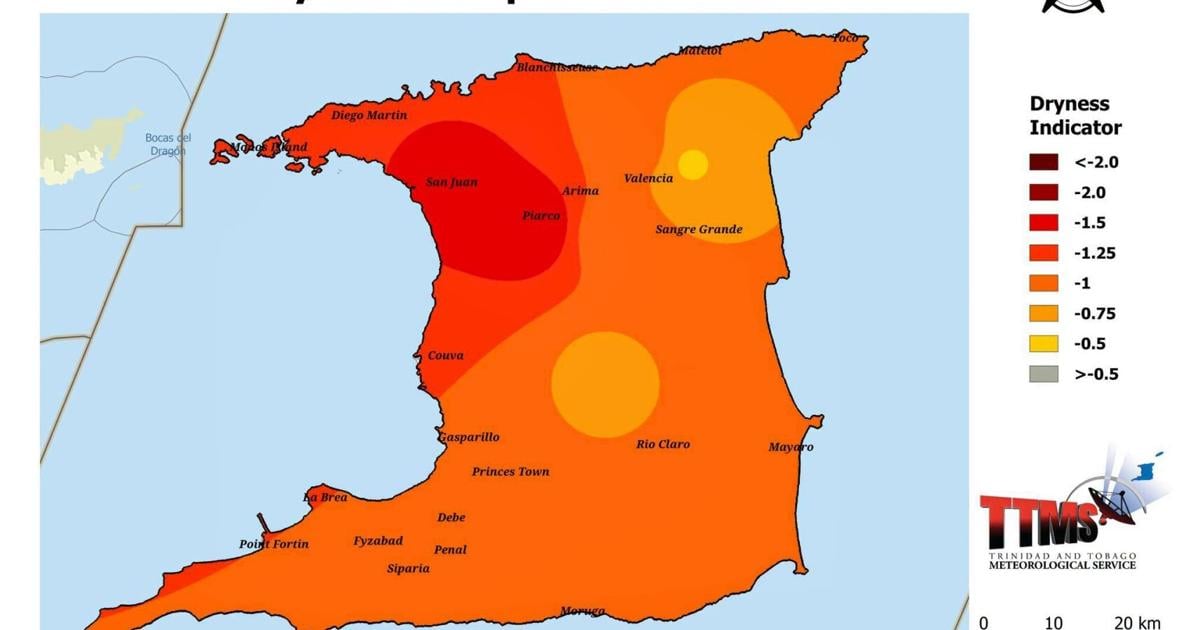
As the 2026 Atlantic hurricane season reaches its historically active peak, the twin-island nation of Trinidad and Tobago is facing an unexpected and growing climate threat: escalating dry conditions that are projected to worsen into 2027, according to an updated official outlook released by the Trinidad and Tobago Meteorological Service (TTMS) this week. Right in the heart of what is typically a wetter hurricane period, the country is already grappling with extreme heat stress, with recent maximum temperatures hitting 33°C in Trinidad and 32°C in Tobago. When adjusted for heat index – the perceived temperature that accounts for humidity – those values rose to 36°C and 35°C respectively, with forecasters projecting continued hot, mostly sunny conditions in the immediate short term. The current drought projection is built on analysis of the three-month Standardized Precipitation Index (SPI) covering July through September 2026, which shows an uneven but widespread pattern of below-average rainfall across both islands. In July, rainfall totals were near normal across most of Trinidad and sections of Tobago, but the Crown Point monitoring station in Tobago recorded just 72% of its typical monthly precipitation, at 115.8mm. Piarco, Trinidad’s main monitoring site, logged 215mm of rain, 94% of its long-term average. Over the full May-to-July period, extreme dryness was confirmed at Crown Point, south-western Tobago and Valencia, with slightly drier-than-normal conditions across central and north-eastern Tobago and north-eastern Trinidad. South-western Trinidad has already slipped into a moderately dry spell, with early drought development already underway. Nationwide, the number of consecutive dry days has risen steadily between June and July 2026, while the frequency of heavy rainfall events of 10mm or more has dropped across both islands. Looking ahead to September, the TTMS has issued an initial drought watch for most of Trinidad, with the highest risk of agricultural drought developing across the lower Caroni River basin from Piarco westward. Moderately dry conditions are expected in south-western Tobago, while central and north-eastern Tobago, north-eastern Trinidad, and the upper Caroni River basin will remain locked in persistent dry conditions through the end of the month. The trend of worsening dryness is expected to accelerate through October. By the end of that month, the TTMS projects that official drought warning conditions will take effect across all of Tobago and north-eastern Trinidad. The upper Caroni River basin will remain moderately dry, while the drought watch will expand from the lower Caroni westward into north-western Trinidad. That pattern is expected to hold through the end of November, with Tobago remaining under drought warning, drought watches in effect across the entire Caroni River basin extending into north-western Trinidad, and moderately dry conditions across northern Trinidad. Overall, short-term drought is projected across Tobago, north-eastern Trinidad, and the lower Caroni River basin between October and November 2026. Beyond the immediate three-month outlook, long-term projections raise even greater red flags. By December 2026 or January 2027, the TTMS warns that a long-term drought watch may need to be enacted, driven by a developing moderate-to-strong El Niño pattern forecast for late 2026. El Niño events across the region typically suppress wet season rainfall, push temperatures higher, and increase evaporation rates across northern South America and the Lesser Antilles, a pattern that could extend drier-than-normal conditions through the 2027 dry season. The growing drought poses major, immediate risks to two critical sectors of the nation’s economy: agriculture and public water supplies. For agricultural producers, irregular rainfall, extended hot spells, and falling soil moisture have combined to create elevated risks for both standing crops and livestock. Water resources are already under pressure, with reduced recharge rates for dams, natural streams, and underground aquifers cutting into the volume of available water for public distribution systems. In response to the developing crisis, the TTMS has issued a series of advisories for government agencies, businesses, and residents. Water and energy authorities are urged to roll out sustained water conservation measures immediately to protect reserves. The general public is asked to adopt careful water storage and usage habits to reduce unnecessary waste. For farmers, forecasters recommend close monitoring of on-farm water use, investment in improved irrigation and on-site water storage, regular weeding to cut down on water competition between weeds and crops, and increased surveillance for pest populations that thrive in drier-than-normal conditions. The TTMS is urging all relevant government and private sector stakeholders to use the updated drought outlook to update contingency plans, strengthen drought management protocols, and expand early warning systems to respond to the worsening conditions ahead.
-

‘Send them home’ won’t solve school problems
A new academic year kicked off across Trinidad and Tobago on Monday, and the national education landscape has quickly become the center of a heated public debate over school discipline policy, sparked by comments from Prime Minister Kamla Persad-Bissessar over the weekend.
In a back-to-school address delivered Sunday, Persad-Bissessar put forward a controversial call for educators across the country to adopt a strict zero-tolerance approach to both disruptive students and unengaged parents. The Prime Minister argued that school staff should not have to shoulder the stress of supporting students who refuse to adjust their behavior or parents who dismiss schools’ concerns about their children’s conduct. She instructed teachers and principals: if a student will not comply with school rules and their parents will not collaborate to address the issue, send the student straight home to have the problem worked out within the family.
The proposal has drawn sharp pushback from Dr. Nyan Gadsby-Dolly, a former education minister and opposition Member of Parliament for St Ann’s East, who framed the Prime Minister’s plan as nothing more than a superficial band-aid that ignores the deep, systemic roots of student misbehavior. In a public Facebook post published Monday, Gadsby-Dolly questioned whether removing disruptive students from campus entirely was the full extent of the government’s strategy to address school discipline challenges, arguing that every child deserves an equal shot at an education as a pathway out of poverty.
Gadsby-Dolly emphasized that disruptive conduct in schools is rarely a random choice; more often, it is a visible symptom of far deeper struggles that many young people face outside of the classroom. “Hungry children misbehave; abused children misbehave, children with undiagnosed learning disabilities misbehave, angry children misbehave, children who lack attention misbehave,” she noted, asking how sending vulnerable students home could possibly resolve the underlying issues driving their behavior. She clarified that her argument does not excuse harmful conduct in schools, but it demands a more thoughtful approach that accounts for the unstable, traumatic home environments many misbehaving students navigate daily.
The core of Gadsby-Dolly’s criticism centers on the current ruling United National Congress (UNC) administration’s prior cuts to student support infrastructure. She pointed out that the UNC dismantled the Student Support Services Division (SSSD), an agency that specialized in addressing root causes of misbehavior by providing parenting support, mental health guidance, and targeted coping resources for students facing life challenges. The administration chose not to renew contracts for hundreds of specialized support staff, including school social workers, guidance counselors, restorative justice practitioners, learning support assistants, diagnostic specialists, special education instructors, and school psychologists. Without these support systems in place, Gadsby-Dolly argues, the education system is abandoning the students who need intervention the most.
“Sending misbehaving children home will not cure the problem of school discipline; nor will it help thousands of students and parents who need counselling, guidance and support to overcome their challenges and succeed educationally,” she said. She also raised urgent questions about the long-term public safety impacts of the policy: “What effect will sending misbehaving students home with no help have on crime and criminality? How do we help misbehaving students to transform their behaviour?”
To replace the superficial zero-tolerance plan, Gadsby-Dolly called on the government to reverse course and restore the SSSD, expand targeted education sector support to address the root causes of disruptive conduct, and reinvest in residential youth programs like MILAT and youth camps. These programs, she explained, provide structured alternative environments for young people who need a full change of scenery to reorient their lives and grow into productive, engaged citizens. Closing her statement, she emphasized that the debate is not about partisan politics, but about the future of Trinidad and Tobago: “This is about the salvation of Trinidad and Tobago. We must think deeper.”
The Prime Minister’s proposal also faced pushback from Crystal Ashe, president of the Trinidad and Tobago Unified Teachers’ Association, who shared concerns about the plan’s long-term consequences during an interview on TV6’s Morning Edition Monday. Ashe noted that many disruptive students actually want to be sent home, as they have little investment in staying in the classroom. He echoed Gadsby-Dolly’s call for structured, supportive systems, arguing that removing students from campus without any rehabilitation or social support does nothing to help them grow.
“When you send them home, they going and watch TV, they going on Facebook, they going on social media. How is that benefiting them? And when years pass and when they become adults in society, how are they going to provide or make any input in society? Will they be productive? No. You are breeding and cultivating bandits,” Ashe said.
The debate comes as the new academic year begins, with educators, policymakers, and families across the country grappling with ongoing challenges of school discipline, student mental health, and equitable access to support resources for vulnerable youth.
-

All 777 schools reopen but problems remain
The 2024 academic term kicked off across Trinidad and Tobago yesterday, with all 777 government-run and state-assisted schools welcoming students back following a two-month summer break. But the celebration of a new school year has been overshadowed by widespread criticism from the Trinidad and Tobago Unified Teachers Association (TTUTA), which says dozens of institutions across the country still face serious unaddressed infrastructure and safety hazards that put students and staff at risk.
In a series of interviews and public statements released yesterday, TTUTA president Crystal Ashe outlined a litany of unresolved problems reported by educators and school leaders: widespread furniture shortages, bat infestations that create unsanitary learning conditions, faulty electrical systems, non-functional water infrastructure, and incomplete construction and repair projects that were supposed to be finished before the first day of class. Ashe emphasized that these are not minor inconveniences, but direct threats to the health and safety of every person entering school buildings.
Ashe, who previously helped collect infrastructural data for the Ministry of Education, argued that the current crisis is entirely preventable. The ministry has long maintained the School Infrastructural Management (SIM) platform, a digital system where school principals log repair needs as they arise — with some requests sitting unaddressed for years. All the information the ministry needed to prioritize and complete repairs over the vacation break was already available in the system, Ashe said, adding that ministry officials simply failed to act in a timely manner.
“The ministry dropped the ball on school preparations this term,” Ashe told TV6’s Morning Edition yesterday. He pointed to one high-profile example: crews from the Ministry of Works and Transport (MTS) only arrived at Malabar Government Primary School for the first time to start repairs this past Sunday, just one day before students were set to return to class.
Pushing back against claims that his criticism is politically motivated, Ashe said TTUTA is only stating verifiable facts to protect educators and students. He drew a clear distinction between his role as an education advocate and that of Education Minister Dr Michael Dowlath, calling on political leaders to show greater accountability. “When can we get political maturity?” Ashe asked. “Just be mature enough to say I made a mistake, I didn’t go as I planned.”
TTUTA officers conducted on-site visits to dozens of schools across the country over the past 48 hours, and their on-the-ground reporting confirms a wide range of ongoing hazards. Multiple schools including Arima Girls’ Government, Malabar Composite Secondary and Brazil Roman Catholic Primary are grappling with critical furniture shortages, while infrastructural construction drags on at Arima North Secondary. San Rafael RC Primary struggles with a broken water pump and a persistent bat infestation, and South East Port of Spain Government School still has nowhere near enough desks and chairs for teaching staff. At St Hilda’s Government School, bats have made their home in the school’s ceiling, creating ongoing health risks.
A recent electrical fire at Gloster Lodge Moravian School left affected areas of the campus still exposed and unsafe, forcing one class and its teacher to relocate to a temporary space. At Cunupia Government Primary School, ongoing flooring work in the administration wing has displaced the principal and vice principal, while multiple hazards have been documented at Fyzabad Anglican Secondary School.
In its official statement, TTUTA clarified it is not seeking confrontation with the ministry. Instead, the association says it is fulfilling its core responsibility to highlight threats to educator and student safety, and push for systemic improvements to school planning. The organization noted that the core issue is a systemic failure: most vacation repair projects started far too late to meet the reopening deadline, despite all necessary data being available through the ministry’s own infrastructure tracking system. TTUTA is calling on the ministry to move beyond just collecting data through its SIM platform, and start using that information to plan and complete repairs well in advance of future school terms.
One notable exception to the general reopening made headlines yesterday: students from Infants to Standard Two at Grant Memorial Presbyterian Primary School were relocated from the school’s original San Fernando Carib Street campus after a section of the building was deemed structurally unsafe by the Ministry of Works. For the duration of the 2024 term, these students will hold classes in a specially prepared space at St Paul’s Anglican School on Ruth Avenue, San Fernando.
In its official statement released ahead of reopening, the Ministry of Education reaffirmed its commitment to a range of ongoing education initiatives, including the national School Nutrition Programme with updated nutrition standards, school supply and book donation drives, digital and AI-enhanced learning programs, and expanded support for students and families. The ministry also confirmed that all Form 1 students will receive their promised free laptops this term, and the S.A.F.E. Police in Schools Programme will continue its work across the country.
In response to the repair backlog, the ministry stated that all outstanding work will be completed after school hours and on weekends to avoid disrupting classes, and that all required health and safety standards will be maintained to protect students and staff.
The National Parent Teacher Association (NPTA) has echoed TTUTA’s calls for urgent action. NPTA president Walter Stewart urged the ministry to resolve all outstanding issues as quickly as possible in a WhatsApp voice note released yesterday. Stewart noted that the association is pleased the vast majority of schools were able to open on schedule, but remains deeply concerned about unaddressed hazards at a number of institutions.
Stewart confirmed that two schools — Fyzabad Anglican Primary School and Gloster Lodge Moravian Primary School — were forced to close early yesterday due to the severity of their ongoing issues. He also highlighted additional problems at Malabar Secondary, which faces furniture shortages, and schools in the Toco area, where students are grappling with transport disruptions.
TTUTA has confirmed it will continue to monitor conditions at schools across the country throughout the opening weeks of the term, and will keep advocating for safe, healthy learning environments that meet the needs of all students and educators.