作者: admin

  • Audit raises questions about ODPEM’s management of disaster relief

    Audit raises questions about ODPEM’s management of disaster relief

    KINGSTON, Jamaica — Jamaica’s national audit watchdog has raised serious red flags over how the country’s top emergency management agency handles public and donated disaster relief funding, including a major post-hurricane recovery program.

    The Auditor General’s Department (AGD) released a damning audit report Tuesday, which was formally presented to Jamaica’s parliament, calling out widespread systemic failures at the Office of Disaster Preparedness and Emergency Management (ODPEM), the government body tasked with leading national emergency response and recovery operations. The probe centered specifically on ODPEM’s stewardship of resources allocated to the Hurricane Melissa Relief Initiative, alongside broader oversight of the National Disaster Fund and the government’s Restoration of Owner or Occupant Family Shelters (ROOFS) shelter recovery program.

    According to the report, ODPEM has demonstrated significant shortcomings across three core operational areas: financial management, institutional governance, and program accountability. One of the most notable gaps uncovered is the extreme lack of transparency around how Hurricane Melissa relief resources have been deployed. As of the audit cutoff date of February 23, 2026, just 1.8 percent of total cash donations earmarked for relief efforts had been spent — a mere $26.2 million out of the $1.44 billion received.

    Auditors also found insufficient regulatory controls for donations processed through a partnering financial services institution. Key documentation gaps include the absence of a formal written agreement outlining terms for retained funds, and incomplete financial reconciliation records that make it impossible to fully track how all donations have been managed.

    For the ROOFS Program, which relied on emergency procurement rules to speed up delivery of shelter materials, the audit identified multiple critical gaps in operational oversight. ODPEM failed to carry out required due diligence on participating suppliers, did not complete formal verification that ordered materials were delivered, lacked proper supporting documentation for payments, and failed to maintain complete records of project completion. These failures mean regulators have no guarantee that $167.3 million worth of program materials were used fully and for their intended purpose, the report concluded.

    Beyond the specific program findings, the audit also assessed whether ODPEM’s internal control systems are robust enough to prevent, identify, and address fraud, waste, and misuse of public and donated disaster resources. The report confirmed that significant unaddressed gaps also remain in the ongoing oversight of the broader National Disaster Fund, raising questions about the agency’s ability to responsibly manage disaster resources at a systemic level.

  • Regional countries urged to expand the role of nursing to strengthen health systems

    Regional countries urged to expand the role of nursing to strengthen health systems

    On the occasion of International Nurses Day, the Pan American Health Organization (PAHO) issued a clear call this Tuesday from Washington D.C., urging Caribbean nations to implement bold, targeted measures to reinforce and scale up advanced practice nursing across the region. PAHO officials frame this move as a foundational strategy to expand access to critical health services and build more resilient, community-focused health systems that better serve population needs.

    Across the Americas, including the Caribbean, nurses make up the single largest segment of the regional health workforce, totaling nearly 7.4 million practicing professionals. These frontline workers carry core responsibilities across every area of public health: from proactive health promotion and disease prevention to long-term management of chronic conditions, and ongoing support for vulnerable communities. Their work is particularly vital in rural and remote regions, where access to physician care is often extremely limited.

    Dr. Jarbas Barbosa, PAHO’s director, emphasized that advancing the role of advanced practice nursing requires four interconnected actions: integrating these professionals more deeply into primary health care systems, embedding innovative digital tools into nursing practice, expanding nursing education opportunities, and increasing nurse representation in public health policy development. All of these steps, he noted, are critical to boosting the accessibility, quality, and long-term sustainability of health care across the region.

    Advanced practice nurses are defined by PAHO as highly trained specialists with the qualifications to take on expanded, autonomous clinical responsibilities. This includes full scope of work from patient assessment, diagnosis, and treatment to ongoing monitoring of both individual and community health outcomes. Globally, more than 100 countries have already adopted these expanded nursing roles, with the United States and Canada operating long-standing, successful advanced practice nursing models. Several Latin American nations have already begun rolling out updated regulatory frameworks, specialized training programs, and new person-centered care models, but much of the Caribbean still has progress to make.

    Extensive global evidence, PAHO reports, confirms that when advanced practice nurses receive sufficient autonomy and institutional support, they directly improve population access to care, strengthen continuity of treatment for patients with chronic conditions, and boost overall patient satisfaction through a more compassionate, individual-centered approach to care delivery.

    Despite these proven benefits, widespread adoption of advanced practice nursing in the Caribbean still faces notable barriers. Outdated regulatory frameworks that restrict nursing scope of practice, a persistent shortage of specialized advanced nursing training programs, and systemic resistance to shifting traditional models of health care delivery all slow progress toward expansion.

    To address these challenges, PAHO has launched targeted regional support initiatives, working directly with national governments to update health workforce planning, foster collaborative interprofessional health care teams, and develop modern, person-centered regulatory frameworks that accommodate expanded nursing roles.

    In closing, PAHO reaffirmed that expanding advanced practice nursing is not just a measure to improve health system efficiency—it is a strategic, once-in-a-generation opportunity to move the region closer to universal health coverage, while building health systems that are more responsive to the actual evolving health needs of populations across the Americas.

  • Iran says US must accept its peace plan or face ‘failure’

    Iran says US must accept its peace plan or face ‘failure’

    Escalating diplomatic tensions between the United States and Iran have pushed a month-old Middle East ceasefire to the edge of collapse, as both sides hardened their positions Tuesday and warned of potential consequences of a return to open conflict. The two-month-long war, launched by joint US-Israeli strikes against Iran, has already spilled across regional borders and sent shockwaves through the global economy, touching the lives of hundreds of millions of people worldwide even amid the current ceasefire. While both sides have dug in their heels and refused to compromise on key demands, neither has signaled a willingness to resume full-scale all-out war.

    Iran’s top nuclear and diplomatic negotiator Mohammad Bagher Ghalibaf issued a blunt statement Tuesday via social media platform X, insisting Washington has no viable alternative but to approve Tehran’s newly submitted 14-point peace proposal. “Any other approach will be completely inconclusive; nothing but one failure after another,” Ghalibaf warned, adding that delayed US decision-making would only increase the financial burden carried by American taxpayers. This comment came shortly after the Pentagon confirmed the total cost of US military operations in the war has risen to nearly $29 billion, a $4 billion increase from the estimate published just two weeks prior.

    The current proposal exchange began after Washington tabled an initial one-page framework for a peace agreement focused on ending hostilities and establishing future talks over Iran’s nuclear program. Tehran’s counterproposal, released in recent days, lays out three core demands: a full end to fighting across all regional fronts including Lebanon, a lifting of the ongoing US naval blockade on Iranian commercial ports, and the unfreezing of billions of dollars in Iranian assets held overseas under decades of US sanctions. US President Donald Trump rejected Tehran’s offer outright, calling it “TOTALLY UNACCETPTABLE” in a public statement, claiming the US would secure “complete victory” over Iran and warning the 30-day-old ceasefire was on the brink of collapse.

    Ahead of his scheduled diplomatic trip to China, Trump confirmed he would hold extended talks with Chinese President Xi Jinping regarding the Iran crisis, but emphasized he does not require Beijing’s assistance to bring the conflict to a close. On the military side, Iranian state media reported Tuesday that the Islamic Revolutionary Guard Corps had launched new defensive military drills in Tehran “to confront any movement of the American-Zionist enemy”. Defense Ministry spokesperson Reza Talaei-Nik doubled down on Iran’s position, warning that if Washington rejects the diplomatic track, it “should expect a repeat of its defeats on the military battlefield”.

    The escalating war of words has deepened uncertainty for ordinary Iranian citizens, many of whom are already grappling with the economic and social fallout of the conflict. “We are just trying to dig our nails into anything that could help us survive. The future is so uncertain and we are just living day to day,” Maryam, a 43-year-old painter based in Tehran, told international reporters. “We are trying to find a way to continue. Keeping hope is very difficult right now.”

    Beyond the immediate human cost, the diplomatic standoff has already roiled global energy markets. Trump’s rejection of Iran’s proposal triggered an immediate spike in global crude oil prices, extinguishing short-term hopes that a diplomatic deal would quickly reopen the Strait of Hormuz to unimpeded commercial shipping. Iran currently restricts maritime traffic through the strategic waterway and has implemented a new toll system for transiting vessels, creating what the CEO of Saudi energy giant Aramco has called the largest energy supply shock “the world has ever experienced”.

    New reporting from The New York Times published Tuesday cited classified US intelligence assessments indicating Iran retains substantial long-range missile capabilities, with roughly 70% of its pre-war mobile launchers and missile stockpile still operational. The assessments also note Iran has reclaimed access to 30 of the 33 missile sites located along the Strait of Hormuz, a waterway that normally carries 20% of the world’s total oil and natural gas supplies. US officials have repeatedly stated that Iranian control of the strait is unacceptable, while Qatari Foreign Minister Sheikh Mohammed bin Abdulrahman Al Thani added his voice to regional criticism Tuesday, saying “Iran should not use this strait as a weapon to pressure or to blackmail the Gulf countries”.

    Sanam Vakil, director of the Middle East and North Africa Programme at London-based think tank Chatham House, noted that Iranian leadership is gambling on outlasting the current US administration. “Tehran is committed to negotiations, but wants to extract concessions because of their improved hand” on the battlefield, Vakil explained. On the international security front, Australian Defense Minister Richard Marles announced Tuesday that Canberra will join a new defensive mission led by France and the United Kingdom to protect commercial shipping through the Strait of Hormuz once the mission is formalized, contributing a surveillance aircraft to help defend the United Arab Emirates against Iranian drone attacks.

    On the Lebanon front, violence has continued to escalate despite an April 17 ceasefire agreement. Lebanon’s health ministry reported Tuesday that a new wave of Israeli airstrikes in southern Lebanon killed 13 people, including a soldier, a child, and two rescue workers. Since the ceasefire took effect, Israeli forces have stepped up strikes amid ongoing cross-border fire with Iran-backed Hezbollah. Lebanese health officials confirmed that more than 2,880 people have been killed in Lebanon since the country was drawn into the broader war on March 2, 380 of whom have died since the ceasefire was implemented. Hezbollah leader Naim Qassem said in a statement Tuesday that the group’s weapons arsenal would not be on the table for upcoming third-round negotiations between Lebanon and Israel, vowing the group would never surrender “however great the sacrifices”. “We will not abandon the battlefield and we will turn it into hell for Israel,” Naim Qassem said.

  • Jamaicans cannot eat fiscal credibility, says Hylton

    Jamaicans cannot eat fiscal credibility, says Hylton

    KINGSTON, Jamaica — In a pointed address to Jamaica’s House of Representatives during Tuesday’s annual Sectoral Debate, opposition trade spokesperson Anthony Hylton launched a sharp critique of the ruling Jamaica Labour Party (JLP) administration’s economic approach, accusing the government of fixating on headline fiscal indicators while ignoring the growing financial strain facing ordinary Jamaican households.

    Hylton, who serves as the Opposition Spokesman on Trade, Industry and Global Logistics, argued that the JLP administration has grown complacent in celebrating macroeconomic wins that do little to improve daily life for most citizens. The government has repeatedly highlighted its achievements in fiscal discipline, macroeconomic stability, and growth in the country’s Net International Reserves — benchmarks that Hylton acknowledges hold genuine importance as foundational pillars for national economic health.

    But these abstract numbers do not tell the full story of Jamaica’s economic reality, Hylton emphasized. “The Jamaican people are not living inside spreadsheets,” he said, outlining the gap between government reporting and on-the-ground experience: working families across the country are navigating persistent spikes in food and energy costs, stagnant wages that fail to keep up with the rising cost of living, and shrinking pathways to upward economic mobility.

    The opposition spokesperson added that even young professional Jamaicans, a core demographic for long-term national growth, are increasingly questioning whether the country can offer them a stable, rewarding future. Too many households, he noted, are barely clinging to financial stability from one month to the next, rather than building long-term prosperity.

    For Hylton, the central question facing Jamaica’s legislative body is not whether the government can balance its books — it is whether the country’s economic strategy is delivering tangible, felt prosperity to everyday people. In one of the most memorable lines of his address, he argued: “Jamaicans cannot eat fiscal credibility. They cannot pay mortgages with macroeconomic statistics. And they cannot build businesses from press releases.”

    Beyond criticizing the current administration’s approach, Hylton pushed for a transformative shift in economic policy, arguing that Jamaicans deserve far more than just basic stability management. What the country needs, he insisted, is a bold, comprehensive national growth strategy designed to build long-term economic resilience, expand access to opportunity, boost domestic productivity, and deliver shared, sustainable prosperity for all segments of society.

    Hylton pointed to a host of inherent advantages Jamaica already holds to support strong growth: a strategic geographic position along the world’s busiest shipping corridors, a skilled English-speaking workforce positioned for global trade and investment, close proximity to some of the world’s largest consumer markets, globally influential cultural brands, a population of driven entrepreneurs, and vast untapped economic potential across multiple sectors. Yet he stressed that inherent advantages are useless without intentional, targeted planning. “Potential without strategy is merely an unrealized opportunity,” he said.

    Hylton framed this gap as the core failure of the national budget the government introduced in March, and positioned the push for a actionable growth strategy as the defining challenge facing the sitting administration and the entire House of Representatives in the coming term.

  • KC part ways with Vassell Reynolds

    KC part ways with Vassell Reynolds

    In a surprising shake-up to Jamaica’s top-ranked schoolboy football program, Kingston College (KC) has cut ties with technical director Vassell Reynolds, elevating former Under-16 head coach Jermaine Miller to take command of the school’s Under-19 squad ahead of the upcoming competitive season.

    Reynolds stepped into the role at KC back in 2023, inheriting a program in deep crisis. A mass exodus of 16 veteran players to rival institutions had left the roster severely depleted, leaving many observers writing off KC’s competitive prospects for the foreseeable future. Defying all early expectations, the experienced coach steered his undermanned side to the semifinal round of both the coveted Manning Cup and Champions Cup competitions in his debut campaign. Building on that momentum, he delivered historic silverware to the school in 2024, leading KC to capture both the Manning Cup title and the all-island Olivier Shield, one of the most impressive underdog runs in recent Jamaican schoolboy football history.

    The 2025 campaign, however, would prove to be Reynolds’ final season at the helm, and it fell short of the high bar set the year prior. KC exited the Manning Cup in the second round, dropping into the secondary Walker Cup competition, where the team was eliminated in the semifinal stage. This mid-season exit came in the third and final year of Reynolds’ original contract with the institution.

    Across his decades-long coaching career, Reynolds has cemented his status as one of the most decorated leaders in Jamaican schoolboy football. Prior to his tenure at KC, he claimed the daCosta Cup title with Ruseas High in 2017, won the 2007 Under-16 All-Island crown with Wolmer’s, and added both the 2015 Walker Cup and 2016 Flow Cup titles to his trophy case during his time with Wolmer’s. He also made history in 2012, leading Hydel High to their first-ever Manning Cup final appearance.

    Off the school pitch, Reynolds holds key roles with Jamaica’s national youth program: he currently serves as assistant coach of the National Under-17 team, a position that will see him travel to the FIFA U-17 World Cup this coming November, and he is also head coach of the National Under-15 squad.

    According to reporting from Observer sources, the decision to part ways stemmed from unmet expectations from KC’s management team, who were far more impressed by the performance of Miller during his time leading the school’s Under-16 program. Miller earned high praise for the attacking, entertaining brand of football he deployed to guide the Under-16 squad to the 2025 national final, where they ultimately fell to Jamaica College.

    Miller, a qualified coach with a Bachelor of Science degree in Physical Education, built his playing career at his alma mater Morant Bay High before going on to compete for a half-dozen top-flight Jamaica Premier League clubs, including Harbour View, Waterhouse, Arnett Gardens, Yallahs FC, and Rivoli United. He launched his coaching career in 2011, holding an assistant coaching role at St Jago before taking the top job at St Catherine High in 2015. He joined KC’s staff in 2023, brought on as Reynolds’ assistant head coach ahead of the 2023 campaign.

  • Manufacturers urged to reformulate as sugar tax takes effect

    Manufacturers urged to reformulate as sugar tax takes effect

    Jamaica’s new tax on sugary non-alcoholic drinks has sent ripple effects across the local beverage manufacturing industry, with the country’s leading scientific research body stepping in to help producers adapt to the new regulatory environment while keeping products accessible and enjoyable for consumers.

    Starting May 1 this year, the Jamaican government implemented a Special Consumption Tax (SCT) of $0.02 per millilitre on non-alcoholic sweetened beverages (NASBs) that contain added sugar or caloric sweeteners, introduced as a revenue measure for the 2026/2027 national budget. Beyond boosting government revenue, the policy also carries a key public health goal: cutting rates of non-communicable diseases (NCDs) that impact a large share of the Jamaican population.

    In response to the policy shift, Dr. Charah Watson, Executive Director of Jamaica’s Scientific Research Council (SRC), is calling on all local beverage manufacturers to reformulate their existing products to cut sugar content. This adjustment, she argues, will not only bring businesses into compliance with the new tax regime but also deliver healthier, more affordable options for consumers without sacrificing the familiar flavor profiles customers expect.

    To smooth this transition, the SRC is offering a full suite of tailored support services to manufacturers of all sizes. “We’re supporting manufacturers in helping them reformulate, identify appropriate sugar alternatives and conduct the necessary quality testing,” Watson explained in an interview with Observer Online. “We can also assist with sensory evaluation with their target market, so as they adjust their recipes, we can directly measure how consumers respond to the updated products.”

    Watson noted that the push for lower-sugar beverages is not a sudden change. Larger local manufacturers have already been moving in this direction since 2018, when public discussions around healthier beverage options for school programs first gained traction. “There have been companies, as far back as 2018 and 2019, that have consistently engaged the SRC to support them in launching lower-sugar products that outperform previous industry standards,” she said.

    Now, the council is working to extend this support to small and medium-sized enterprises (SMEs) and micro-manufacturers, which often lack the resources and agility of larger industry players to adapt to new regulations quickly. “Many smaller producers have not yet taken advantage of the available support, and we want to raise awareness that these services exist to help them stay competitive, not get left behind,” Watson added.

    Priced to be accessible for smaller businesses, the SRC’s reformulation services start at approximately $65,000, with final costs varying based on the complexity of the product being adjusted. “The SRC was created exactly for this purpose: to support small and micro enterprises so that they can actively participate in the marketplace and continue to drive the local economy,” Watson noted.

    Reformulation is far from a simple quick fix, Watson emphasized. Instead, it requires a structured, gradual process that slowly reduces sugar content step-by-step, allowing consumers’ taste palates to adapt to the change over time. Clear communication with customers is also a critical part of the transition process, she added. Manufacturers are encouraged to update product labels to inform buyers of the recipe change, avoiding unmet expectations from customers accustomed to the original product’s flavor. “It’s all about how you manage the transition, and how you effectively communicate that change to your customer base,” Watson explained.

    To further speed up adoption of lower-sugar products, the SRC has also developed pre-made, ready-to-use low-sugar beverage formulations that manufacturers can license and bring to market immediately. These existing recipes include flavored waters and functional drinks, all designed to meet the new regulatory sugar standards while offering consumers healthier alternatives to traditional sugary sodas and sweetened beverages.

    For both consumers and producers, Watson argues that sugar reformulation delivers mutual benefits: it supports the government’s public health goal of reducing NCD rates, while helping businesses retain their market position and competitiveness under the new tax framework. By taking advantage of the SRC’s support, local beverage makers can navigate the regulatory shift successfully while meeting evolving consumer demand for healthier options.

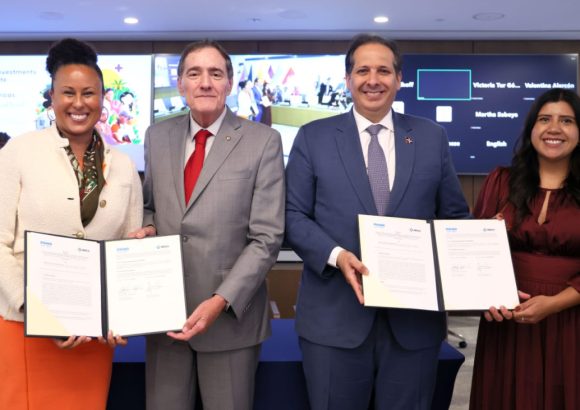
  • Visa launches tap-based identity verification with Fidelity Bank Bahamas

    Visa launches tap-based identity verification with Fidelity Bank Bahamas

    Global payment leader Visa has partnered with fintech firm Keyno and Fidelity Bank (Bahamas) to roll out an innovative tap-powered identity verification solution, eliminating the need for traditional passwords and one-time passcodes for card setup and user authentication.

    Dubbed Tap to Confirm and Tap to Activate, the new system leverages the embedded EMV chip on every Visa card, paired with the company’s proprietary Chip Authenticate service, to complete identity checks directly through banking mobile applications. The first deployment of the technology is already live on Fidelity Bank (Bahamas)’s mobile platform, FIDSECURE, marking the first real-world adoption of this new authentication method.

    The core design goal of the solution is to cut the finance industry’s long-standing dependence on vulnerable SMS verification codes, time-consuming call centre authentication checks, and clunky manual card activation workflows. As digital commerce continues to expand rapidly across the globe, reliable, user-friendly identity verification has become one of the most pressing pain points for retail banks and payment providers, Visa noted in its official launch announcement. The system turns every physical Visa card into a trusted digital identity credential, requiring only a simple tap of the card against a user’s mobile device to complete verification within the bank’s app.

    Beyond new card activation, the tap-based system can also be deployed to secure higher-risk account actions, including password resets, changes to registered mailing addresses, large-value fund transfers, and adjustments to personal account spending limits. Visa emphasizes that the solution delivers robust EMV-level security, widely regarded as one of the most secure card authentication standards globally, while cutting down on the unnecessary friction that frustrates users during traditional verification processes.

    Mike Romero, head of digital solutions for Visa’s Latin America and Caribbean division, explained that the company built the new tool by leveraging its existing global payment infrastructure to make identity checks both more convenient and more secure for consumers and financial institutions alike. “With tap authentication, Visa is transforming the card in your wallet into a secure, intuitive identity credential,” Romero said.

    Robert J Steinman, chief executive officer of Keyno, added that the cross-industry collaboration between the three partners is focused on reimagining digital banking as a more accessible, secure, and trusted experience that only requires a single tap to work. Following the successful initial launch with Fidelity Bank Bahamas, Visa plans to roll out the tap-based verification system to more partner financial institutions globally starting in 2026.

  • Trump posts graphic of Venezuela as 51st US state

    Trump posts graphic of Venezuela as 51st US state

    WASHINGTON, D.C. – A provocative social media post from former U.S. President Donald Trump has ignited a fresh diplomatic firestorm between the United States and Venezuela, landing just as the former commander-in-chief traveled to China for a high-profile, high-stakes diplomatic summit. On Tuesday, Trump shared a custom map graphic on his personal Truth Social platform that showed the South American nation with a small U.S. flag inset and labeled the territory “51st State.”

    The inflammatory post came one full day after Venezuelan interim leader Delcy Rodriguez publicly pushed back against growing speculation about U.S. annexation, stressing that her country had “never” entertained the idea of becoming an American state. The conversation around this provocative claim emerged in the wake of the capture of deposed former Venezuelan president Nicolas Maduro by U.S. forces earlier this year.

    The rhetoric around the issue began building on Monday, when Trump appeared on Fox News and openly confirmed that he was weighing the possibility of adding Venezuela as a new U.S. state. This comment marked a continuation of months of public boasting from Trump about his administration’s influence over the oil-rich South American country.

    Since Rodriguez stepped into the role of interim president, her administration has overseen a marked thaw in once-frosty U.S.-Venezuela relations. Her government has passed a series of economic reforms that have reopened Venezuela’s lucrative mining and petroleum sectors to international investment, with U.S. companies positioned as the primary beneficiaries of the new policies.

    Amid the shifting diplomatic and economic landscape, Venezuela’s domestic political sphere remains fractured. Opposition groups have repeatedly demanded that Rodriguez schedule a national general election to solidify democratic legitimacy. When pressed on the timeline for a new vote during a May 1 press appearance, Rodriguez offered no clarity, saying only that she “didn’t know” when the election would take place, only that it would happen “sometime.”

    The post has drawn quick criticism from political analysts across the Americas, who warn that inflammatory rhetoric of this kind risks undermining the fragile progress that has been made on normalizing relations between Washington and Caracas in recent months.

  • Trump announces departure of food and drug regulation chief

    Trump announces departure of food and drug regulation chief

    Less than 18 months after taking office to lead a promised overhaul of the U.S. Food and Drug Administration, Commissioner Marty Makary has stepped down from his role, wrapping up a tenure marked by cross-cutting criticism and escalating political friction that culminated in his exit Tuesday.

    U.S. President Donald Trump confirmed the departure to reporters in Washington, confirming long-running rumors that a leadership change at the powerful regulatory agency was imminent. Describing Makary as a “terrific guy” and “hard worker respected by all,” Trump pushed back against speculation that he had dismissed the FDA chief, noting Makary had submitted a formal resignation via text message that Trump later shared on his Truth Social platform. Kyle Diamantas, a former top food safety official at the agency, will step into the role as acting commissioner immediately, the president announced.

    A practicing surgeon and one-time Fox News contributor, Makary first rose to national prominence during the COVID-19 pandemic as a vocal contrarian who pushed back against mainstream public health guidelines and institutional medical consensus. When he was tapped to lead the FDA 13 months prior, he campaigned on a platform of sweeping regulatory reform. But his time in office left few stakeholders satisfied, drawing backlash from industry leaders, political activists on both sides of key policy debates, and established public health experts alike.

    The final point of friction came over the Trump administration’s push to authorize the sale of fruit-flavored vapes, a policy Makary openly opposed over well-documented concerns that flavored e-cigarettes drive youth nicotine addiction. The administration moved forward with the policy despite Makary’s resistance, and the outgoing commissioner faced mounting pressure from the White House to sign off on the rule in recent weeks.

    Other flashpoints galvanized criticism across the political and ideological spectrum. Anti-abortion conservatives who have spent years targeting the abortion pill mifepristone—first approved by the FDA 25 years ago—slammed Makary for dragging his feet on completing a long-promised regulatory review of the drug. Major pharmaceutical industry executives faulted his efforts to restructure the FDA’s drug approval process, arguing the changes created unnecessary delays and bureaucratic confusion instead of streamlining oversight. Public health leaders, meanwhile, accused Makary of pandering to anti-vaccine activists after the agency released an unsubstantiated memo linking COVID-19 vaccines to excess deaths, a claim that ran counter to decades of peer-reviewed research on vaccine safety.

    Makary’s exit marks the latest high-profile shakeup at the Department of Health and Human Services, which is currently led by Robert F. Kennedy Jr., a well-known vaccine skeptic who has overseen a wave of departures from traditional public health leadership roles across HHS’ major agencies. Recent months have seen vacancies at the top of the Centers for Disease Control and Prevention and the Office of the Surgeon General, as Kennedy has pushed to replace veteran public health officials with allies aligned with his anti-vaccine and deregulatory agenda.

    Peter Lurie, president of the nonpartisan food and health watchdog Center for Science in the Public Interest, framed Makary’s departure as another symptom of institutional decay at the top of HHS. “This is just more chaos at a beleaguered, battered Department of Health and Human Services,” Lurie said. “When you don’t have a CDC Director, an FDA Commissioner, or a Surgeon General, the obvious question is: Why do you have this HHS Secretary? Robert F. Kennedy Jr., is the cause of much of the chaos that has resulted in these job vacancies. HHS is rotting from the head.”

  • Tourism Ministry advances RD$60 million restoration of Santiago Monument

    Tourism Ministry advances RD$60 million restoration of Santiago Monument

    SANTIAGO, Dominican Republic — A commission tasked with overseeing the city’s tourism development accord has launched an on-site inspection of major renovation works at the Monument to the Heroes of the Restoration, the landmark cultural and tourism project backed by the Dominican Ministry of Tourism with a total investment of 60 million Dominican pesos.

    The inspection delegation was formally welcomed by María Belissa Ramírez de Zaiek, the project lead, during the site visit. Team members walked through the construction zone to review work progress across multiple key components of the multi-faceted upgrade. Among the most significant new installations are cutting-edge smart lighting systems, a full-scale backup power plant to guarantee uninterrupted operations, a dedicated new secure storage space, and completely upgraded central air conditioning. The modern climate control equipment was contributed to the project through a charitable donation from Banco BHD, one of the nation’s leading financial institutions.

    In addition to new infrastructure, the project also addresses critical structural and cosmetic restoration work across the monument’s historic features. Teams are repairing and restoring the building’s original doors and windows, refinishing damaged marble surfaces, reinforcing and restoring interior structural columns, and upgrading the public stairwells that serve the multi-level site. The scope of work also includes the construction of fully accessible, modern new public restrooms to improve the visitor experience.

    The on-site museum housed within the monument, which preserves key historical artifacts and tells the story of the Dominican Restoration War, is also undergoing a full interior redesign and renovation. Currently, project officials project that all construction and enhancement works across the entire monument complex will be finalized before the close of the third quarter of 2026. To minimize disruption to local residents and traveling tourists, the entire renovation is being carried out in staggered, sequential phases. This phased approach allows large portions of the landmark to remain open to the public throughout the construction period, preserving access to one of Santiago de los Caballeros’ most historically significant and frequently visited cultural attractions.