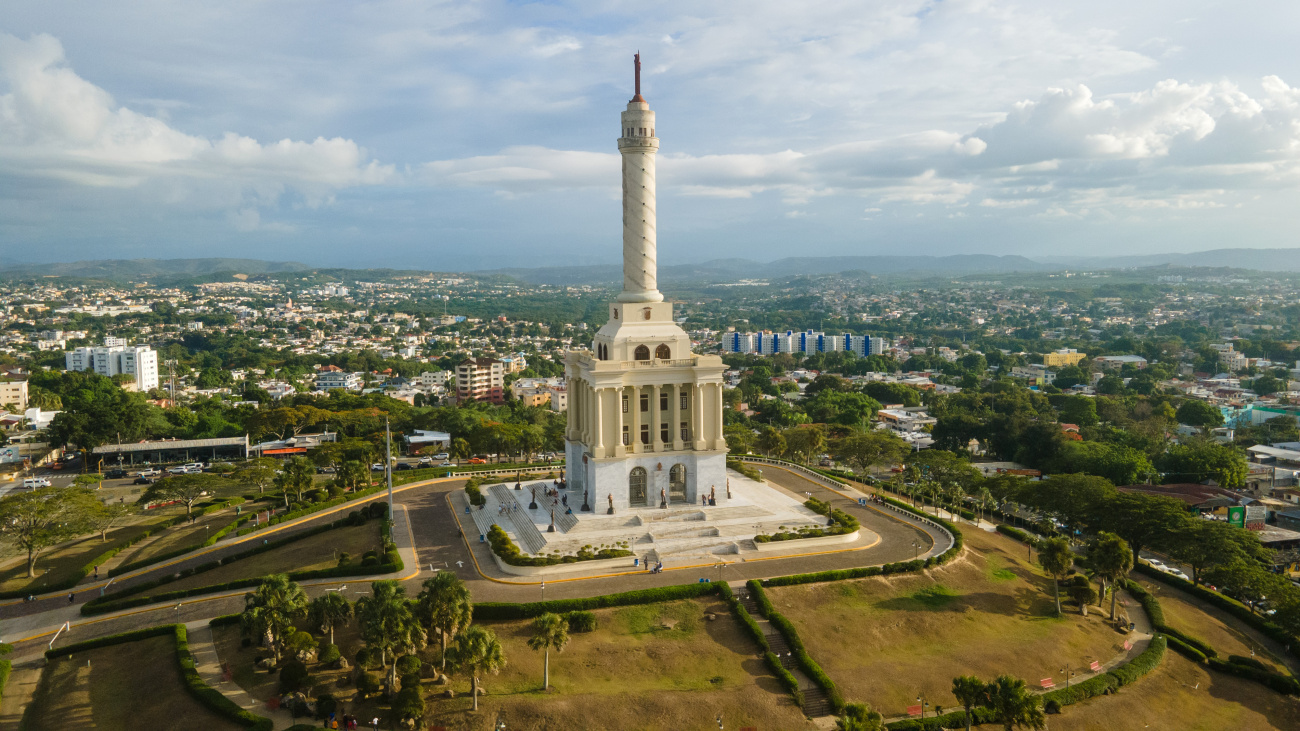
SANTIAGO, Dominican Republic — A commission tasked with overseeing the city’s tourism development accord has launched an on-site inspection of major renovation works at the Monument to the Heroes of the Restoration, the landmark cultural and tourism project backed by the Dominican Ministry of Tourism with a total investment of 60 million Dominican pesos.
The inspection delegation was formally welcomed by María Belissa Ramírez de Zaiek, the project lead, during the site visit. Team members walked through the construction zone to review work progress across multiple key components of the multi-faceted upgrade. Among the most significant new installations are cutting-edge smart lighting systems, a full-scale backup power plant to guarantee uninterrupted operations, a dedicated new secure storage space, and completely upgraded central air conditioning. The modern climate control equipment was contributed to the project through a charitable donation from Banco BHD, one of the nation’s leading financial institutions.
In addition to new infrastructure, the project also addresses critical structural and cosmetic restoration work across the monument’s historic features. Teams are repairing and restoring the building’s original doors and windows, refinishing damaged marble surfaces, reinforcing and restoring interior structural columns, and upgrading the public stairwells that serve the multi-level site. The scope of work also includes the construction of fully accessible, modern new public restrooms to improve the visitor experience.
The on-site museum housed within the monument, which preserves key historical artifacts and tells the story of the Dominican Restoration War, is also undergoing a full interior redesign and renovation. Currently, project officials project that all construction and enhancement works across the entire monument complex will be finalized before the close of the third quarter of 2026. To minimize disruption to local residents and traveling tourists, the entire renovation is being carried out in staggered, sequential phases. This phased approach allows large portions of the landmark to remain open to the public throughout the construction period, preserving access to one of Santiago de los Caballeros’ most historically significant and frequently visited cultural attractions.