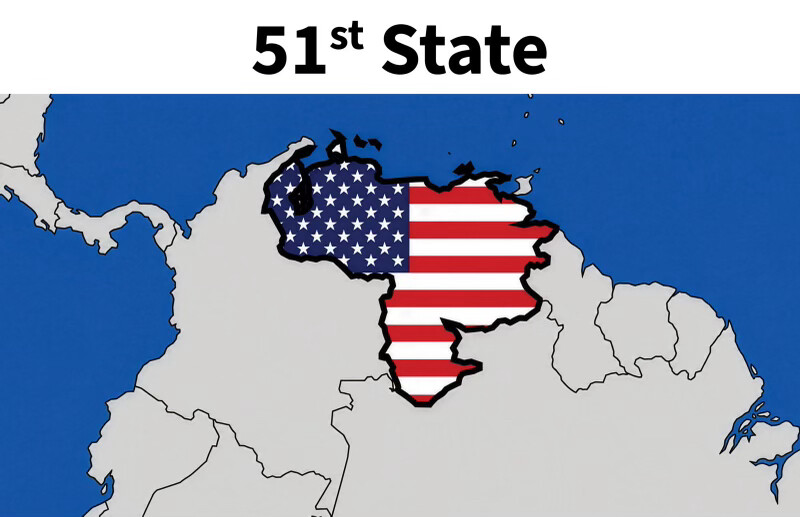
WASHINGTON, D.C. – A provocative social media post from former U.S. President Donald Trump has ignited a fresh diplomatic firestorm between the United States and Venezuela, landing just as the former commander-in-chief traveled to China for a high-profile, high-stakes diplomatic summit. On Tuesday, Trump shared a custom map graphic on his personal Truth Social platform that showed the South American nation with a small U.S. flag inset and labeled the territory “51st State.”
The inflammatory post came one full day after Venezuelan interim leader Delcy Rodriguez publicly pushed back against growing speculation about U.S. annexation, stressing that her country had “never” entertained the idea of becoming an American state. The conversation around this provocative claim emerged in the wake of the capture of deposed former Venezuelan president Nicolas Maduro by U.S. forces earlier this year.
The rhetoric around the issue began building on Monday, when Trump appeared on Fox News and openly confirmed that he was weighing the possibility of adding Venezuela as a new U.S. state. This comment marked a continuation of months of public boasting from Trump about his administration’s influence over the oil-rich South American country.
Since Rodriguez stepped into the role of interim president, her administration has overseen a marked thaw in once-frosty U.S.-Venezuela relations. Her government has passed a series of economic reforms that have reopened Venezuela’s lucrative mining and petroleum sectors to international investment, with U.S. companies positioned as the primary beneficiaries of the new policies.
Amid the shifting diplomatic and economic landscape, Venezuela’s domestic political sphere remains fractured. Opposition groups have repeatedly demanded that Rodriguez schedule a national general election to solidify democratic legitimacy. When pressed on the timeline for a new vote during a May 1 press appearance, Rodriguez offered no clarity, saying only that she “didn’t know” when the election would take place, only that it would happen “sometime.”
The post has drawn quick criticism from political analysts across the Americas, who warn that inflammatory rhetoric of this kind risks undermining the fragile progress that has been made on normalizing relations between Washington and Caracas in recent months.