Escalating diplomatic tensions between the United States and Iran have pushed a month-old Middle East ceasefire to the edge of collapse, as both sides hardened their positions Tuesday and warned of potential consequences of a return to open conflict. The two-month-long war, launched by joint US-Israeli strikes against Iran, has already spilled across regional borders and sent shockwaves through the global economy, touching the lives of hundreds of millions of people worldwide even amid the current ceasefire. While both sides have dug in their heels and refused to compromise on key demands, neither has signaled a willingness to resume full-scale all-out war.
Iran’s top nuclear and diplomatic negotiator Mohammad Bagher Ghalibaf issued a blunt statement Tuesday via social media platform X, insisting Washington has no viable alternative but to approve Tehran’s newly submitted 14-point peace proposal. “Any other approach will be completely inconclusive; nothing but one failure after another,” Ghalibaf warned, adding that delayed US decision-making would only increase the financial burden carried by American taxpayers. This comment came shortly after the Pentagon confirmed the total cost of US military operations in the war has risen to nearly $29 billion, a $4 billion increase from the estimate published just two weeks prior.
The current proposal exchange began after Washington tabled an initial one-page framework for a peace agreement focused on ending hostilities and establishing future talks over Iran’s nuclear program. Tehran’s counterproposal, released in recent days, lays out three core demands: a full end to fighting across all regional fronts including Lebanon, a lifting of the ongoing US naval blockade on Iranian commercial ports, and the unfreezing of billions of dollars in Iranian assets held overseas under decades of US sanctions. US President Donald Trump rejected Tehran’s offer outright, calling it “TOTALLY UNACCETPTABLE” in a public statement, claiming the US would secure “complete victory” over Iran and warning the 30-day-old ceasefire was on the brink of collapse.
Ahead of his scheduled diplomatic trip to China, Trump confirmed he would hold extended talks with Chinese President Xi Jinping regarding the Iran crisis, but emphasized he does not require Beijing’s assistance to bring the conflict to a close. On the military side, Iranian state media reported Tuesday that the Islamic Revolutionary Guard Corps had launched new defensive military drills in Tehran “to confront any movement of the American-Zionist enemy”. Defense Ministry spokesperson Reza Talaei-Nik doubled down on Iran’s position, warning that if Washington rejects the diplomatic track, it “should expect a repeat of its defeats on the military battlefield”.
The escalating war of words has deepened uncertainty for ordinary Iranian citizens, many of whom are already grappling with the economic and social fallout of the conflict. “We are just trying to dig our nails into anything that could help us survive. The future is so uncertain and we are just living day to day,” Maryam, a 43-year-old painter based in Tehran, told international reporters. “We are trying to find a way to continue. Keeping hope is very difficult right now.”
Beyond the immediate human cost, the diplomatic standoff has already roiled global energy markets. Trump’s rejection of Iran’s proposal triggered an immediate spike in global crude oil prices, extinguishing short-term hopes that a diplomatic deal would quickly reopen the Strait of Hormuz to unimpeded commercial shipping. Iran currently restricts maritime traffic through the strategic waterway and has implemented a new toll system for transiting vessels, creating what the CEO of Saudi energy giant Aramco has called the largest energy supply shock “the world has ever experienced”.
New reporting from The New York Times published Tuesday cited classified US intelligence assessments indicating Iran retains substantial long-range missile capabilities, with roughly 70% of its pre-war mobile launchers and missile stockpile still operational. The assessments also note Iran has reclaimed access to 30 of the 33 missile sites located along the Strait of Hormuz, a waterway that normally carries 20% of the world’s total oil and natural gas supplies. US officials have repeatedly stated that Iranian control of the strait is unacceptable, while Qatari Foreign Minister Sheikh Mohammed bin Abdulrahman Al Thani added his voice to regional criticism Tuesday, saying “Iran should not use this strait as a weapon to pressure or to blackmail the Gulf countries”.
Sanam Vakil, director of the Middle East and North Africa Programme at London-based think tank Chatham House, noted that Iranian leadership is gambling on outlasting the current US administration. “Tehran is committed to negotiations, but wants to extract concessions because of their improved hand” on the battlefield, Vakil explained. On the international security front, Australian Defense Minister Richard Marles announced Tuesday that Canberra will join a new defensive mission led by France and the United Kingdom to protect commercial shipping through the Strait of Hormuz once the mission is formalized, contributing a surveillance aircraft to help defend the United Arab Emirates against Iranian drone attacks.
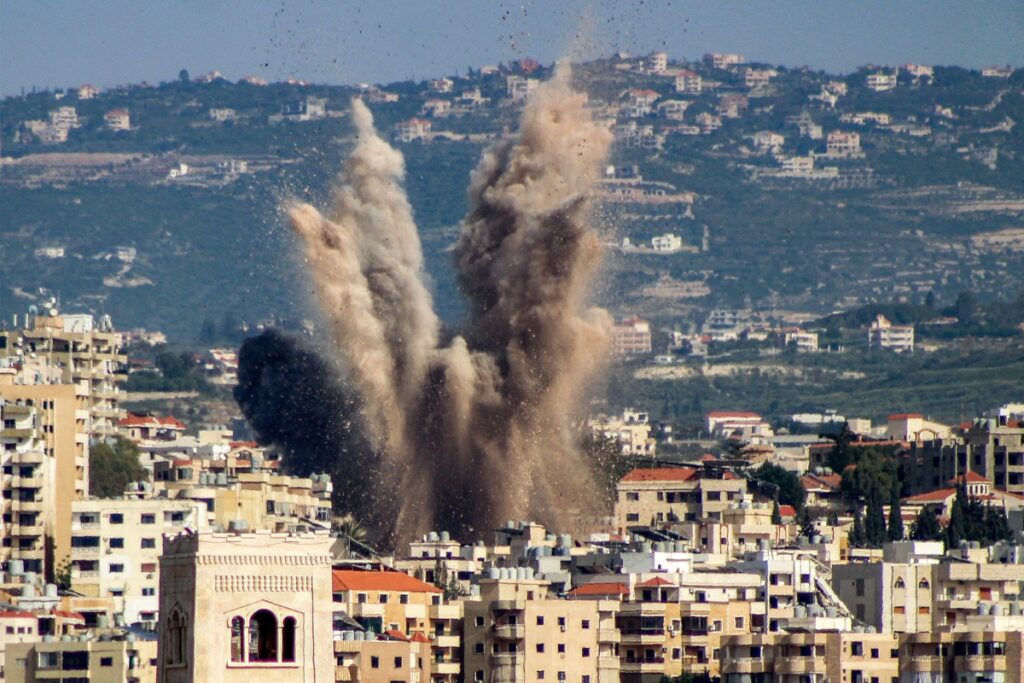
On the Lebanon front, violence has continued to escalate despite an April 17 ceasefire agreement. Lebanon’s health ministry reported Tuesday that a new wave of Israeli airstrikes in southern Lebanon killed 13 people, including a soldier, a child, and two rescue workers. Since the ceasefire took effect, Israeli forces have stepped up strikes amid ongoing cross-border fire with Iran-backed Hezbollah. Lebanese health officials confirmed that more than 2,880 people have been killed in Lebanon since the country was drawn into the broader war on March 2, 380 of whom have died since the ceasefire was implemented. Hezbollah leader Naim Qassem said in a statement Tuesday that the group’s weapons arsenal would not be on the table for upcoming third-round negotiations between Lebanon and Israel, vowing the group would never surrender “however great the sacrifices”. “We will not abandon the battlefield and we will turn it into hell for Israel,” Naim Qassem said.