Less than 18 months after taking office to lead a promised overhaul of the U.S. Food and Drug Administration, Commissioner Marty Makary has stepped down from his role, wrapping up a tenure marked by cross-cutting criticism and escalating political friction that culminated in his exit Tuesday.
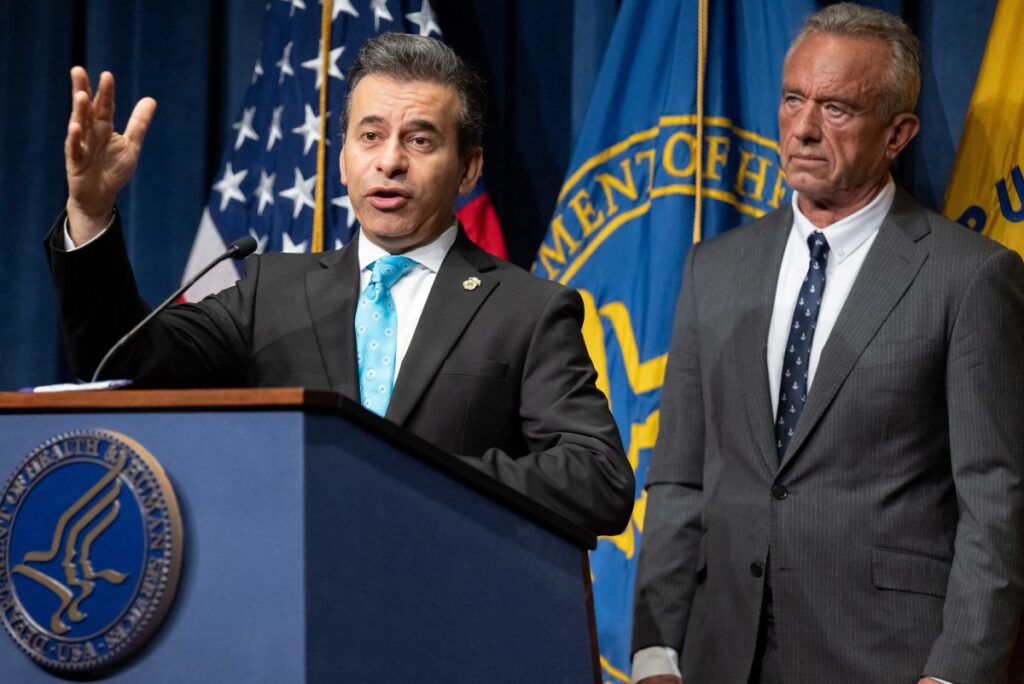
U.S. President Donald Trump confirmed the departure to reporters in Washington, confirming long-running rumors that a leadership change at the powerful regulatory agency was imminent. Describing Makary as a “terrific guy” and “hard worker respected by all,” Trump pushed back against speculation that he had dismissed the FDA chief, noting Makary had submitted a formal resignation via text message that Trump later shared on his Truth Social platform. Kyle Diamantas, a former top food safety official at the agency, will step into the role as acting commissioner immediately, the president announced.
A practicing surgeon and one-time Fox News contributor, Makary first rose to national prominence during the COVID-19 pandemic as a vocal contrarian who pushed back against mainstream public health guidelines and institutional medical consensus. When he was tapped to lead the FDA 13 months prior, he campaigned on a platform of sweeping regulatory reform. But his time in office left few stakeholders satisfied, drawing backlash from industry leaders, political activists on both sides of key policy debates, and established public health experts alike.
The final point of friction came over the Trump administration’s push to authorize the sale of fruit-flavored vapes, a policy Makary openly opposed over well-documented concerns that flavored e-cigarettes drive youth nicotine addiction. The administration moved forward with the policy despite Makary’s resistance, and the outgoing commissioner faced mounting pressure from the White House to sign off on the rule in recent weeks.
Other flashpoints galvanized criticism across the political and ideological spectrum. Anti-abortion conservatives who have spent years targeting the abortion pill mifepristone—first approved by the FDA 25 years ago—slammed Makary for dragging his feet on completing a long-promised regulatory review of the drug. Major pharmaceutical industry executives faulted his efforts to restructure the FDA’s drug approval process, arguing the changes created unnecessary delays and bureaucratic confusion instead of streamlining oversight. Public health leaders, meanwhile, accused Makary of pandering to anti-vaccine activists after the agency released an unsubstantiated memo linking COVID-19 vaccines to excess deaths, a claim that ran counter to decades of peer-reviewed research on vaccine safety.
Makary’s exit marks the latest high-profile shakeup at the Department of Health and Human Services, which is currently led by Robert F. Kennedy Jr., a well-known vaccine skeptic who has overseen a wave of departures from traditional public health leadership roles across HHS’ major agencies. Recent months have seen vacancies at the top of the Centers for Disease Control and Prevention and the Office of the Surgeon General, as Kennedy has pushed to replace veteran public health officials with allies aligned with his anti-vaccine and deregulatory agenda.
Peter Lurie, president of the nonpartisan food and health watchdog Center for Science in the Public Interest, framed Makary’s departure as another symptom of institutional decay at the top of HHS. “This is just more chaos at a beleaguered, battered Department of Health and Human Services,” Lurie said. “When you don’t have a CDC Director, an FDA Commissioner, or a Surgeon General, the obvious question is: Why do you have this HHS Secretary? Robert F. Kennedy Jr., is the cause of much of the chaos that has resulted in these job vacancies. HHS is rotting from the head.”