
After months of lingering uncertainty following the discovery of unidentified human remains along Pigeon Point Beach, authorities in Saint Lucia have confirmed that the bones belong to 33-year-old Schneik Phillip, a man reported missing in late 2023. The Royal Saint Lucia Police Force (RSLPF) made the formal identification announcement this Wednesday, after weeks of waiting for results from forensic DNA analysis.
作者: admin
-

School Buses Back on the Road
After a days-long disruption that left thousands of students across Belize without guaranteed transit to classes, school bus transportation services have fully resumed operations across the country, according to an official confirmation from Belize’s Ministry of Education, Culture, Science and Technology (MOE).
In a brief public statement released September 16, 2026, the ministry formally announced that all contracted school bus routes are once again running for students at all grade levels. The restoration of service follows a widespread suspension that began earlier that week, when multiple government-contracted bus operators pulled their vehicles off roads citing three consecutive weeks of missed government payments.
The root of the disruption traces back to a new contractor vetting process implemented ahead of the 2026-2027 academic school year. Education Minister Francis Fonseca had previously explained that under the updated framework, all school bus contracts are required to undergo a mandatory review by the office of the Contractor General, a procedural change that created unanticipated delays in disbursing contracted funds to operators.
Prior to the ministry’s announcement of restored service, local outlet News 5 first broke the story of the suspensions on Monday, reporting that operators had been forced to halt routes because they could no longer cover fuel, maintenance, and labor costs without the owed government payments. The disruption sparked widespread concern among parent and educator groups, who cited barriers to student attendance and safety risks for children forced to find alternative, unvetted transit.
In its Wednesday statement, MOE acknowledged the new contracting process as the direct cause of the service interruption, and extended gratitude to all affected stakeholders – including parents, students, school leaders, teachers, and the bus operators themselves – for their patience as government teams worked through the backlog of contract reviews to resolve the payment delays.
-
NCCU Says Pointe Michel branch construction is three weeks ahead of schedule
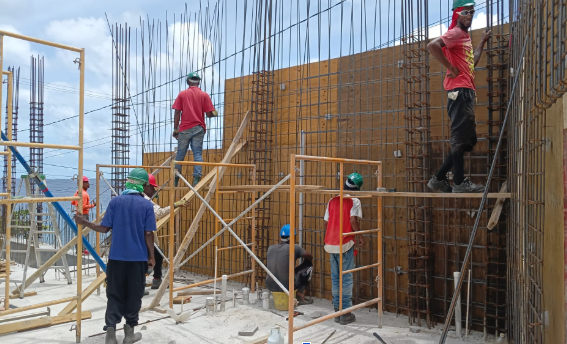
Construction of the National Cooperative Credit Union (NCCU) Ltd.’s new La Salette Branch in Pointe Michel is moving at a faster pace than initially projected, with major milestones already achieved since the project broke ground earlier this year.
In an official press statement, NCCU confirmed that construction has advanced beyond the foundational phase. Contractors have completed the erection of structural walls and reinforced concrete columns, and crews are currently placing steel reinforcement and formwork at the first-floor level. The project officially launched with a groundbreaking ceremony on January 7, 2026.
NCCU Project Manager Hillarian Jules noted that the current build pace has the project outperforming the contractor’s original timeline. “When we compare our progress to the contractor’s scheduled milestones, we are still three weeks ahead of schedule. A tremendous amount of work has been completed, and we are extremely pleased with both the quality of work and the speed of delivery,” Jules said in the statement. “This building will stand as a flagship facility for NCCU, outfitted with cutting-edge modern amenities and aesthetic design.”
Per NCCU’s current project roadmap, Phase One of construction is on track to wrap up by April 2027. The full two-storey facility is projected to be substantially completed by the end of 2027. Phase Two will cover electrical and plumbing infrastructure installation, alongside the full deployment of the building’s information technology systems, and NCCU expects these works will also stay aligned with the contractor’s adjusted timeline.
Designed from the ground up to improve member access and convenience, the new branch will include several first-time amenities for the La Salette location. For the first time, the branch will host an on-site ATM and a night deposit safe for after-hours transactions. Solar panels will be installed to provide reliable backup power during outages.
Additional accessibility-focused features include a dedicated member lobby, a lower-level service counter designed to accommodate senior citizens and people living with disabilities, and an on-site sick bay for staff use.
NCCU officials emphasize that this new development brings the credit union one step closer to delivering a modern, member-centric facility to serve account holders in Pointe Michel and surrounding communities. RoyC Real Estate & Construction Company has been tapped as the general contractor for the project. For NCCU, the strong progress to date marks another key milestone in the organization’s ongoing effort to expand and upgrade its community-facing facilities across the region.
-

Police warn against false reports as two held in Auguste case
Amid a surge of unconfirmed circulating claims about missing persons and attempted kidnappings across social media and private messaging platforms, the Royal Saint Lucia Police Force (RSLPF) has issued a urgent public appeal urging citizens to refrain from sharing unvetted information. The police force emphasized that unfounded rumors not only trigger widespread unnecessary panic across the island nation, but also create significant barriers to active, ongoing criminal investigations.
The official public statement, released Wednesday, addressed growing concerns about unregulated information spreading through digital channels, covering everything from unconfirmed reports of missing people to false allegations of kidnapping attempts. RSLPF underlined that only information officially confirmed and released by the department should be treated as fact by the public.
Alongside the warning, police released a formal update on the status of missing persons reports filed between the start of August and September 14. In total, 11 missing person reports were submitted to the department over this six-week period. Nine of these cases have already been successfully closed, with all missing individuals located and returned to safety unharmed. Only one open case remains active: 59-year-old James Hunter Noel, commonly known by the nickname “Ti Jame” and a resident of Fond Joyeux in Vieux Fort, is still unaccounted for.
Police also confirmed the identity of a body recovered along the Millennium Highway on September 11: the deceased was 21-year-old Merissa Auguste, who had been reported missing just 24 hours before the discovery. A post-mortem examination conducted on September 14 determined that Auguste’s cause of death was strangulation. To date, two people of interest have been taken into police custody, and are currently assisting the department’s Major Crimes Unit with their ongoing probe into the death.
Beyond the case updates, RSLPF detailed the scope of the misinformation it has observed in recent days: unauthenticated voice notes, wildly exaggerated claims about criminal activity, and statements falsely presented as official police communications have all spread widely across local digital networks. The department explained that this unvetted sharing does more than stoke public fear: it can put community members at unnecessary risk and compromise the integrity of active investigations by compromising witness testimony or alerting suspects to investigative strategy.
To curb the spread of harmful misinformation, police are urging all residents to cross-check any information related to crimes or missing persons with RSLPF directly before sharing it to personal or public networks. They also warned members of the public against confronting anyone suspected of criminal activity based solely on unconfirmed online claims, as this could put both the individual and the community in danger.
The department also noted that some forms of false sharing may violate Saint Lucia’s Computer Misuse Act, and warned that formal legal action could be pursued against individuals found to have knowingly shared harmful, unlawful misinformation. For community members with legitimate information related to ongoing criminal cases or suspicious activity, RSLPF encouraged reports through official, established channels, including the dedicated Crime Hotline at 555.
-

Leisure : Did you know ? #59
In the 59th installment of HaitiLibre’s popular twice-weekly general knowledge feature “Did You Know?”, published September 16, 2026, the interactive quiz platform shares a little-known fact about global defense spending that underscores the massive imbalance in military investment worldwide. The core question posed to participants: Which nation holds a distant lead in global military budgets, often outspending the next nine highest-spending countries combined?
The answer reveals that the United States maintains an unrivaled position in global military expenditure, with annual budgets consistently ranging between $800 billion and $900 billion. For 2026, projections place the U.S. military budget at nearly $1 trillion, accounting for roughly 40 percent of total global military spending worldwide.
This unprecedented financial investment grants the U.S. Department of Defense (the Pentagon) substantial strategic advantages: it enables ongoing cutting-edge technological innovation, supports a sprawling global network of military installations, and allows power projection across every continent via a fleet of 11 active aircraft carrier strike groups. According to the feature, the overarching goals of this massive military investment are to preserve U.S. global strategic supremacy, ensure unimpeded freedom of global commercial navigation, and reinforce defense commitments to NATO allies — commitments that were previously called into question during the administration of former U.S. President Donald Trump.
While China has accelerated its own military investment in recent years, the feature notes that a substantial gap remains between the two nations in terms of global logistics infrastructure and research and development capacity. Beyond strategic implications, the colossal U.S. military budget sustains a powerful military-industrial complex that serves as a cornerstone of the U.S. domestic economy. At the same time, the massive allocation of public funds to defense has long sparked heated domestic debate over competing national spending priorities, from healthcare to infrastructure to social programs.
Beyond sharing this key global insight, the update also highlights ongoing growth of the HaitiLibre Quiz platform. As part of its monthly content refresh, 30 new quiz games were added to the platform on September 1, 2026, bringing the total number of available interactive quizzes to 240, with new content added every month. Designed for learners of all ages and skill levels, the platform’s exclusive quizzes are free to access, require no user registration, and offer three difficulty tiers (easy, intermediate, and hard) for every topic. Quizzes are available in both French and English, covering subjects ranging from Haitian current affairs and history to global politics, culture, and science.
Users are invited to visit the platform at https://quiz.haitilibre.com/en to explore content, test their knowledge, and share feedback via a comment form available at the end of each quiz. The platform encourages visitors to share the resource with family and friends, framing interactive quizzing as an accessible way to build general knowledge and learn new facts on a wide range of topics.
-

Smoking can cause heart attacks and strokes. Many smokers don’t know that
For decades, public health campaigns have drilled one core truth about cigarette smoking into public consciousness: it causes lung cancer. But a landmark new study published in BMJ Open has laid bare a troubling, life-threatening gap in global public understanding: the vast majority of smokers remain unaware that smoking is equally, if not more deadly to the heart and vascular system, causing thousands of preventable heart attacks and strokes every year. Even less known are the severe cardiovascular risks posed by secondhand smoke exposure to non-smokers.
To unpack the study’s findings and answer pressing questions about these underrecognized risks, CNN correspondent spoke with Dr. Leana Wen, emergency physician, clinical associate professor at George Washington University, and former Baltimore health commissioner. Dr. Wen walked through the study’s methodology, its alarming conclusions, and what it means for smokers and their loved ones.
The research team drew on data from two of the largest international tobacco surveys ever conducted: the International Tobacco Control Project, which collected responses across 26 countries between 2002 and 2022, and the Global Adult Tobacco Survey, which surveyed participants in 32 countries from 2008 to 2020. With overlapping country participation, the combined dataset included responses from adult smokers across 46 nations, all asked to confirm their knowledge of smoking’s links to lung cancer, heart disease, heart attack, and stroke, as well as secondhand smoke’s risks for non-smokers.
Across both datasets, the results painted a consistent picture of widespread awareness for lung cancer, and steep declines in recognition for cardiovascular harms. Roughly 92% of participating smokers correctly identified smoking as a cause of lung cancer. By comparison, just 85% and 80% of respondents (across the two surveys) recognized the link between smoking and heart disease and heart attack, respectively. Awareness dropped even further for stroke, with only 75% and 66% of respondents in each survey acknowledging the connection.
The gap was even more stark for secondhand smoke. Between 77% and 82% of smokers knew secondhand smoke causes lung cancer in non-smokers, but only 62% to 73% recognized it also causes heart disease and heart attacks. Most surprisingly of all, the study found almost no progress in closing this awareness gap over the past two decades. Across all five measured health risks, the average annual increase in public knowledge was just 0.14 percentage points.
When asked why this gap is so concerning, Dr. Wen emphasized that cardiovascular disease is the leading preventable cause of death linked to smoking worldwide. In 2019 alone, smoking-related heart disease and stroke claimed roughly 2.6 million lives globally — twice the 1.3 million deaths attributed to lung, trachea, and bronchus cancers from smoking. Smokers who only recognize lung cancer as a primary risk are missing half of the life-threatening picture, she explained.
“Knowledge directly shapes behavior,” Wen noted. “Smokers who understand the full scope of smoking’s harms are far more motivated to quit. This is even more critical for secondhand smoke: if a smoker doesn’t know their habit raises cardiovascular risk for the people around them, they’re far less likely to take steps to protect their family, friends, and colleagues from exposure.”
Dr. Wen went on to explain the biological mechanisms that make cigarette smoke so damaging to the heart and blood vessels. Cigarette smoke contains thousands of toxic chemicals, many of which directly damage the inner lining of blood vessels, trigger chronic inflammation, and spur plaque buildup inside artery walls. Smoking also makes blood far more prone to clotting — the primary trigger for both heart attacks (which occur when a clot blocks blood flow to the heart) and the most common type of stroke, which occurs when a clot cuts off blood flow to the brain.
Additional harms come from nicotine, which raises resting heart rate and blood pressure, and carbon monoxide, which reduces the blood’s ability to carry oxygen to vital organs. Over time, these effects stiffen and narrow blood vessels, accelerating the progression of cardiovascular disease. Crucially, Wen added, these risks are not limited to heavy, long-term smokers: cardiovascular damage begins early, and even low levels of cigarette consumption carry substantial risk.
Secondhand smoke carries nearly identical risks, Wen explained: non-smokers exposed to secondhand smoke inhale the same toxic chemicals, which cause the same vascular damage and inflammation that raise coronary heart disease risk. The public health toll is staggering: the study estimates secondhand smoke caused 1.3 million premature deaths globally in 2021 among non-smokers, yet fewer than half of respondents in several high-income countries including the U.S., Canada, the U.K., Australia, and Germany were aware of this cardiovascular risk.
When asked why lung cancer awareness is so much higher than cardiovascular awareness, Wen noted that the link between smoking and lung cancer has been the centerpiece of public health messaging for decades. It features prominently on tobacco warning labels and national education campaigns, so the connection has become deeply ingrained in public knowledge. Cardiovascular harms have never received the same level of focus in public outreach, leading to the major awareness gaps seen across countries, with gaps correlating to a lack of targeted mass education campaigns.
A common misconception holds that cutting back on cigarette consumption substantially reduces cardiovascular risk, but Wen pushed back on this idea. Research confirms that even a few cigarettes a day carry nearly the same level of cardiovascular risk as a full pack a day. The only effective way to reduce risk is to quit entirely. The good news, she added, is that cardiovascular benefits begin almost immediately after quitting: heart rate and blood pressure drop within hours, carbon monoxide levels in the blood return to normal quickly, and over time the risk of heart attack, stroke, and other smoking-related diseases falls dramatically. Quitting offers meaningful health benefits at any age, and stopping earlier delivers larger gains, so it is never too late for a smoker to quit.
For smokers looking to quit, Wen emphasized that the most impactful step is complete cessation, and that proven treatments exist to improve success rates. Nicotine replacement therapy, prescription medications, and combined treatment that pairs medication with behavioral counseling all significantly increase the chance of long-term success. Smokers should work with their healthcare provider to find the right treatment plan for them, and should not be discouraged by failed attempts: most people require multiple attempts to quit for good, and each attempt can help identify triggers and needed support for future success.
In the meantime, smokers must take steps to protect others from secondhand smoke: opening a window or smoking in a separate room does not eliminate the risk of indoor exposure. Smokers should never smoke inside homes, cars, or other enclosed spaces, and should always avoid smoking near children, pregnant people, older adults, and people with pre-existing cardiovascular or respiratory disease.
“Every smoker should know that their habit does not just threaten their lungs,” Wen concluded. “Cigarette smoke damages blood vessels throughout the entire body, directly increasing the risk of fatal heart attacks and strokes. Recognizing this full scope of harm is one more powerful motivation to quit — for your own health, and for the health of everyone you love.”
-

Guyanese law firm staffer found unconscious at Indian airport hotel, declared dead at hospital
On September 16, 2026, a shocking incident unfolded at India’s Kempegowda International Airport (KIA) near Bengaluru, where a long-serving Guyanese accountant was found unresponsive in a terminal transit hotel and later pronounced dead at a nearby medical facility. The deceased has been identified as Racquel Olivia Chandni Seecharran, a Guyanese national who spent two decades as a core team member at one of Guyana’s most prominent legal practices, Hughes, Fields and Stoby (HFS).
Nigel Hughes, a founding partner at HFS, shared his profound grief with local Guyanese outlet Demerara Waves Online News, describing the loss as deeply devastating for the entire firm. “She was not just an excellent team member — she was a high-ranking member of our HFS family,” Hughes said, confirming that Seecharran had traveled abroad specifically to receive specialized medical treatment. Her planned itinerary saw her arrive at KIA from London on a Virgin Atlantic flight at approximately 6:10 p.m. on September 15, with a connecting IndiGo flight scheduled to depart for Mangaluru at 2:35 p.m. the following day. She booked a stay at the airport’s Terminal 2 transit hotel to rest during her layover.
According to official details released by the Central Industrial Security Force (CISF), the agency responsible for security at KIA, hotel staff first attempted to contact Seecharran around 10:30 a.m. on September 16, as her scheduled check-out time approached. When repeated attempts to reach her via phone went unanswered, staff proceeded to her room in the day-use transit facility located in the arrival area of Terminal 2, where they found her unconscious.
KIA’s on-site medical team responded immediately to the emergency, administering first aid before transporting Seecharran by ambulance to a nearby private hospital. Clinical staff at the facility conducted a full examination including an ECG at 12:22 p.m., and found no detectable pulse. She was officially pronounced dead at 1:08 p.m. local time.
Local law enforcement authorities have launched a formal investigation into the incident. Investigators are currently completing required medico-legal procedures, including an autopsy, to determine the exact cause of Seecharran’s death. As of Wednesday afternoon, the circumstances surrounding her passing remain unconfirmed, with authorities yet to release any further details on potential foul play or underlying health causes.
-

Passengers Panic as Violent Shaking Damages Cabin Ceiling on Iranian Flight
A shocking in-flight incident has underscored the sudden terror that can unfold during commercial air travel, after a structural failure sent terrified passengers on an Iranian domestic flight scrambling for safety last week.
The event unfolded on a Sepehran Airlines Boeing 737 en route from Mashhad to Kermanshah, a popular route connecting northeastern Iran to the country’s western region. Minutes after departure, the aircraft began experiencing severe, uncommanded vibration that shook the fuselage violently. Footage captured by one of the passengers on board shows the immediate aftermath of the structural failure: portions of the aircraft’s overhead cabin ceiling collapse inward, as frightened travelers scream out in panic, many bracing for a potential catastrophe.
Flight crews acted swiftly in response to the emergency, activating their standard diversion protocols and turning the aircraft back toward its origin point, Mashhad International Airport. In a positive outcome that avoided what could have been a devastating disaster, the plane touched down safely with no loss of life or reported injuries among passengers and crew.
Local aviation authorities have not yet released full details on the root cause of the vibration that led to the ceiling collapse, nor have they announced any further action against the airline or plans for a full public investigation as of this update. The incident has renewed quiet discussion around aviation maintenance protocols in the region, though no official accusations of negligence have been leveled to date.
-

M&C Drugstore St Lucia is hiring: Pharmacist
Goddard Enterprises Limited (GEL), a financially stable and steadily growing multinational conglomerate, has announced a new full-time opening for a licensed pharmacist at its subsidiary M&C Drugstore, located in Soufriere, St. Lucia. The retail pharmacy chain, which operates under the GEL corporate umbrella, has built its reputation around core values of innovation, ongoing operational improvement, and exceptional customer service, with a core mission to deliver value to customers, employees, business partners, and shareholders alike.
M&C Drugstore emphasizes that it cultivates a dynamic, inclusive workplace that prioritizes team member growth, collaborative innovation, and long-term career development across its diverse operations, creating an environment where every employee can reach their full professional potential. For candidates passionate about patient-centered care and looking to contribute to a growing regional business, this role offers the chance to build a meaningful career alongside a dedicated team of industry professionals.
### Core Responsibilities of the Role
The selected candidate will take on a range of critical duties to support pharmacy operations and customer care, including:
– Accurately and efficiently dispensing prescription medications to patients
– Organizing and overseeing the daily workflow of pharmacy technicians to meet operational standards
– Providing expert pharmacological guidance to healthcare providers and counseling patients on safe and effective drug therapy use
– Managing pharmaceutical procurement and storage in compliance with industry safety standards
– Maintaining accurate, up-to-date patient and inventory records
– Supporting periodic company-wide stock-taking initiatives
– Driving retail pharmacy sales and improving patient retention through quality service
– Directly supervising pharmacy technicians and support staff to ensure full compliance with all regulatory and company policies### Eligibility Requirements for Candidates
Interested applicants must meet a set of core qualifications to be considered for the position:
– Hold a Bachelor of Science Degree or Associate Degree in Pharmacy
– Have a minimum of two years of hands-on experience in professional pharmacy practice
– Be eligible to obtain official professional registration with the St. Lucia Pharmacy Council
– Demonstrate a commitment to service excellence and patient-first care approaches
– Possess strong interpersonal skills and clear written and verbal communication abilities
– Have working knowledge of St. Lucia’s Pharmacy Act and associated regulations
– Show proven ability to lead and supervise a team to meet organizational performance goals
– Be capable of analyzing complex clinical and operational information to make sound professional judgments
– Have a general working understanding of the pharmaceutical retail industry
– Be computer literate, with demonstrated proficiency in Microsoft Word and Excel### Compensation and Benefits
M&C Drugstore offers a competitive compensation and benefits package aligned with the successful candidate’s level of professional experience. The package includes access to group life insurance and group medical insurance coverage, alongside ongoing training and professional development opportunities to support career growth. Eligible employees also have the opportunity to participate in GEL’s Employee Share Option Plan (ESOP), which allows team members to become partial owners of the conglomerate and share in the company’s long-term growth.Qualified candidates interested in applying for the position can submit their application through the official portal at: https://tinyurl.com/538rt6tc. This posting is credited to NOW Grenada, which notes that it is not responsible for the content of third-party contributor postings, and provides a channel for reporting abusive content.
-
NSWMA Moves Derelict Vehicle Removal Efforts From Old Road To Urlings
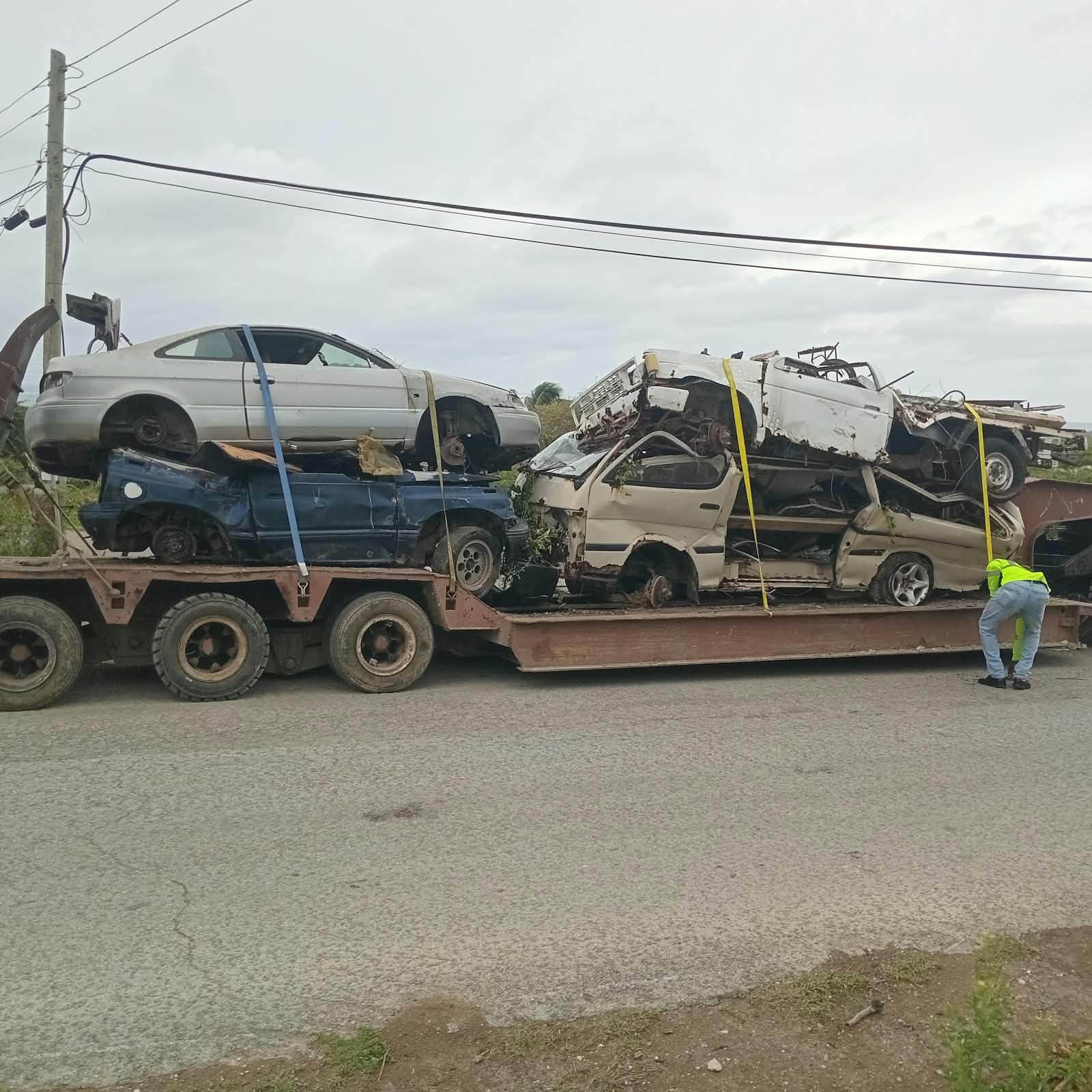
Antigua and Barbuda’s National Solid Waste Management Authority (NSWMA) is putting the final touches on a targeted abandoned vehicle removal campaign in the Old Road community, marking another milestone in the agency’s ongoing mission to elevate public safety and sanitation standards across the twin-island nation. As one neighborhood cleanup draws to a close, the operation is already set to expand into a new area: NSWMA’s dedicated field teams are scheduled to enter Urlings this Thursday to continue systematic removal of derelict and unclaimed motor vehicles that have been left neglected across residential and public spaces. In a public statement released ahead of the next phase of the campaign, the authority has issued a call for full community cooperation from Urlings residents, emphasizing that collaborative participation is key to the initiative’s success. NSWMA has repeatedly underscored that removing abandoned vehicles does more than just tidy up streetscapes; these hulking, unused cars and trucks often become breeding grounds for pests, collect stagnant water that elevates the risk of vector-borne disease, and create unforeseen hazards for pedestrians, cyclists, and young children playing near roadways. The targeted derelict vehicle removal is not an isolated project, but rather one component of a sweeping island-wide strategy launched by NSWMA to transform the visual appeal, livability, and health of communities across Antigua and Barbuda. The agency’s long-term goal is to systematically clear abandoned vehicles from public and private lots across all inhabited areas, creating cleaner, more welcoming spaces that benefit all residents.