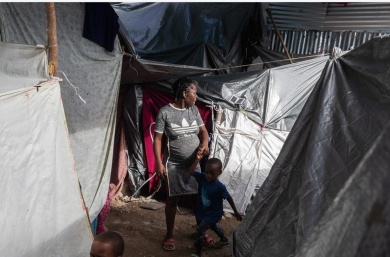
Mass internal displacement in Haiti has reached a staggering new milestone, United Nations officials confirmed this week, with data from the UN’s top humanitarian bodies showing that close to 1.5 million Haitians have been forced from their homes as of May 2024. Between December 2023 and the end of May alone, an additional 95,000 people fled their residences to escape spiraling insecurity across the Caribbean nation.
The crisis has hit the Port-au-Prince metropolitan area particularly hard: escalating gang and armed violence has pushed the displaced population in the capital region past 300,000 for the first time in the country’s ongoing crisis, according to joint figures from the Office for the Coordination of Humanitarian Affairs (OCHA) and the International Organization for Migration (IOM). UN Deputy Spokesperson Farhan Haq told reporters that two major waves of armed clashes in the dense, low-income neighborhood of Cite Soleil, first in March and again in May, were the primary drivers of this new surge of displacement.
In addition to the capital’s unrest, ongoing fighting in the northern Artibonite department continues to force residents to flee their homes. In a geographic breakdown of the crisis, Haq noted that nearly 80 percent of all displaced Haitians are sheltering outside of Port-au-Prince, placing unplanned strain on smaller, rural communities that lack the resources to support large influxes of new arrivals.
While the IOM has recorded a sharp uptick in the number of people returning to their home communities, growing from roughly 87,500 returnees in December to more than 165,000 as of May, many returnees still face impossible conditions for long-term resettlement. Haq emphasized that most returning families report the safety, infrastructure, and economic conditions needed for sustainable reintegration have not been established in their home areas.
Across the country, the vast majority of displaced people are not staying in formal, organized camps: instead, they are hosted by local host families or residing in informal, dangerous settlements, stretching already thin resources in communities that were already grappling with systemic poverty and instability. For both displaced populations and returning residents, Haq said, five core needs remain the most pressing: adequate food supplies, sustainable livelihood opportunities, safe shelter, clean drinking water and functional sanitation systems, and consistent access to life-saving healthcare.
Despite significant barriers including widespread insecurity, restricted access to hard-hit areas, and crippling funding gaps, international and local humanitarian agencies have continued to deliver critical aid to vulnerable communities. But Haq warned that a rapid expansion of the humanitarian response is non-negotiable as needs grow by the day. The UN’s $880 million coordinated humanitarian response plan for Haiti is currently only 23 percent funded, with just $198.7 million secured to date.
Haiti has been trapped in a cycle of deepening political, economic, and social instability since the assassination of President Jovenel Moïse in July 2021. The CARICOM member state is currently working to organize national elections this year, the first such national vote since 2016, though ongoing insecurity has complicated planning for the democratic process.