A new public health alliance has launched to advance critical health equity goals across the Americas and the Caribbean, as the Pan American Health Organization (PAHO) has formalized a technical cooperation agreement with Spain-based Mundo Sano Foundation to accelerate progress on eliminating mother-to-child disease transmission and strengthening regional cervical cancer prevention.
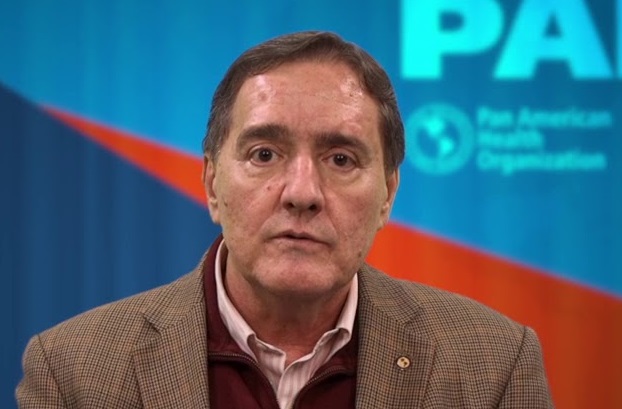
The official signing ceremony took place at the Mundo Sano Foundation’s Madrid headquarters, where PAHO Director Dr. Jarbas Barbosa and foundation President Silvia Gold put their signatures to the collaborative framework.
In remarks following the signing, Dr. Barbosa emphasized that the partnership grows out of a shared core belief: the most intractable public health challenges of our time can only be overcome through long-term strategic planning and a holistic, community-centered approach that centers the needs of people.
The collaboration will center its early work on the development and cross-sharing of specialized technical knowledge tied to integrated health service delivery, aligned with PAHO’s flagship EMTCT Plus+ regional initiative. This effort targets the complete elimination of vertical (mother-to-child) transmission of four major pathogens: HIV, syphilis, hepatitis B, and Chagas disease. Beyond this core focus, the new agreement lays out a flexible framework to gradually expand and test new strategies for strengthening cervical cancer prevention access across the region.
Under the terms of the partnership, Fundación Mundo Sano will contribute its specialized technical expertise on vertical disease transmission, while also supporting efforts to weave cervical cancer prevention actions into existing maternal and public health programs. For its part, PAHO will coordinate structured spaces for cross-regional technical exchange, share its established regional and global clinical guidance, and lead work to analyze and broadly disseminate evidence and lessons generated through the collaboration.
Dr. Barbosa noted that the inaugural phase of work marks the start of what both organizations hope will become a far broader long-term collaboration. “We hope this first phase of work will be the beginning of an even broader collaboration capable of generating evidence, inspiring new solutions and contributing to our shared goal of building a healthier and more equitable Americas for all,” he said.
PAHO’s EMTCT Plus+ initiative, launched to coordinate regional action, works across all 35 nations of the Americas to eliminate vertical transmission of the four targeted diseases while simultaneously strengthening core maternal and child health systems. The initiative prioritizes integrated, people-centered service models to expand equitable access to prevention, diagnostic testing, treatment, and ongoing care for at-risk populations.
Cervical cancer continues to rank as one of the most pressing unmet public health priorities in the region. Current regional elimination strategies center on expanding broad access to life-saving HPV vaccination, routine screening, early detection protocols, and timely treatment—all core components of the global goal to eliminate cervical cancer as a major public health threat within the coming decades.