作者: admin

  • Venezuela wants oil spill compensation from T&T

    Venezuela wants oil spill compensation from T&T

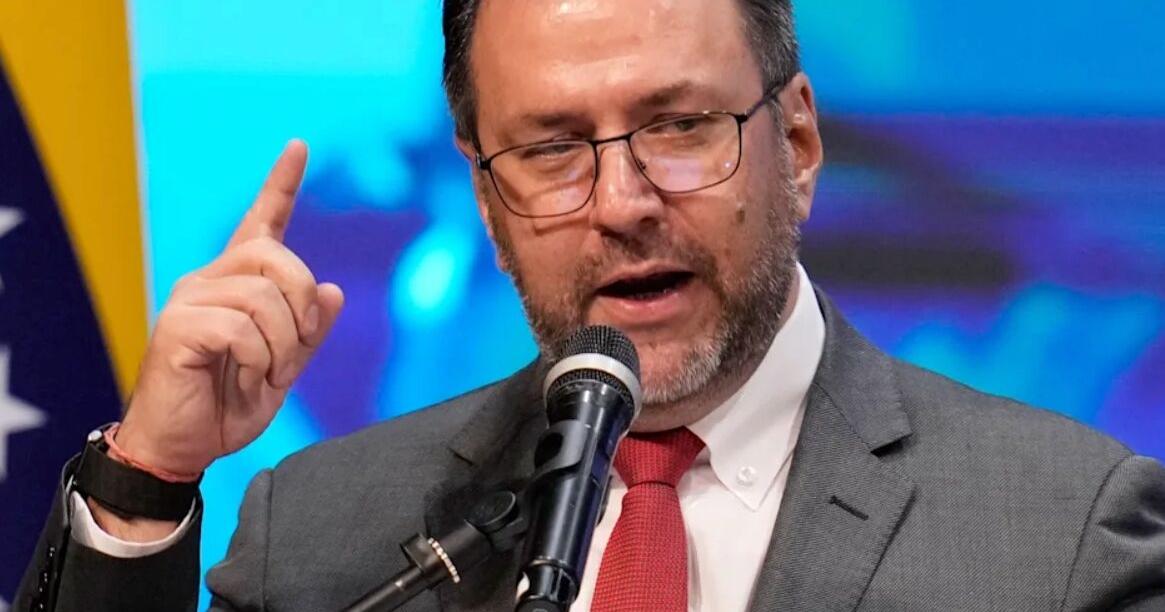
    A fresh diplomatic dispute has emerged between neighboring South American and Caribbean nations over a recent offshore oil spill, with Venezuela formally demanding financial compensation and full information sharing from the government of Trinidad and Tobago. Speaking at a press briefing this week, Venezuelan Foreign Minister Yvan Gil laid out Caracas’ position that the May 1, 2026 spill originated in Trinidadian waters before drifting to Venezuela’s shorelines, leaving widespread harm on coastal ecosystems and artisanal fishing communities that depend on healthy marine environments for their livelihoods.

    Gil emphasized that Venezuela has yet to receive critical details about the incident from Trinidad and Tobago, including the precise source of the leak, the total volume of hydrocarbon released, and the specific type of petroleum product involved. He described the ongoing information gap as a matter of severe concern, noting that it blocks effective mitigation and recovery work on Venezuela’s end. To underscore the scale of the region’s ongoing pollution challenge, Gil highlighted that more than 870 separate hydrocarbon spills of varying sizes were recorded in the Gulf of Paria area between 2015 and 2023, creating a cumulative strain on the unique marine ecosystem of the gulf.

    Under existing international environmental agreements, Gil argued, Trinidad and Tobago is legally required to notify Venezuela immediately of any transboundary environmental incident, share full details of the spilled material, and outline what mitigation measures have already been implemented. The current lack of official data, he contended, constitutes a clear violation of established international protocols. In response, the Venezuelan government is currently compiling a comprehensive environmental damage assessment, which will be used to activate formal legal mechanisms and hold Trinidad and Tobago financially liable for the harm caused.

    The foreign minister also confirmed that Venezuelan diplomatic authorities have already sent multiple formal communications to Port of Spain regarding the incident, with the explicit goal of assessing the full impact of the spill and pursuing compensation when required under international frameworks. He noted that this process follows established precedent, as Trinidad and Tobago has previously provided compensation for earlier oil spills that impacted Venezuelan territory. Repeating Caracas’ core demands, Gil stressed that Trinidad and Tobago must cover 100 percent of the costs for environmental recovery in affected areas, and called for an urgent coordinated joint response to limit the spill’s damage across the Gulf of Paria.

    “We call on the Government of Trinidad and Tobago to take responsibility to assume its duties and to cover the costs involved in reversing the environmental damage, so we can work together with all authorities who are in charge from the very first moment to monitor the entire situation,” Gil stated during the briefing.

    The dispute comes after Trinidad and Tobago’s Energy Minister Roodal Moonilal addressed the incident in Parliament last Friday, responding to a question from Opposition Member of Parliament Stuart Young. Moonilal acknowledged that a “small spill” did occur on May 1, and confirmed that diplomatic communication between the two governments has already been initiated regarding the incident. No further details on the scale of the spill or the status of negotiations have been released publicly by the Trinidad and Tobago government as of the latest updates.

  • Cops bust secret gambling den

    Cops bust secret gambling den

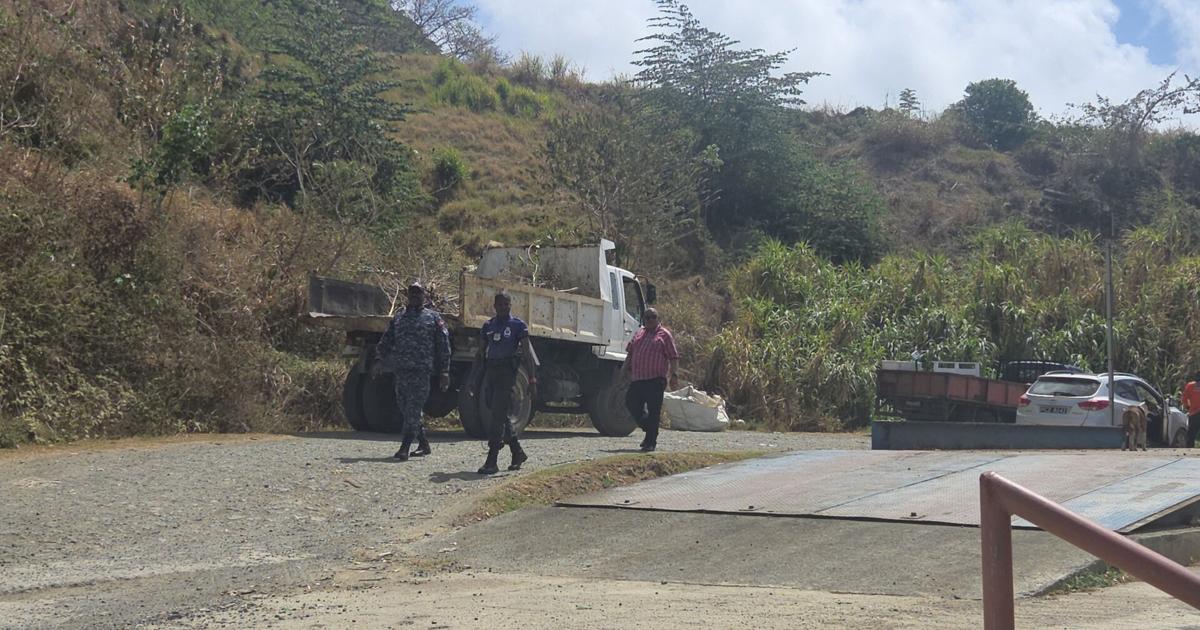
    In a pre-dawn targeted crackdown on illegal activity in D’Abadie district, law enforcement officials have dismantled a secretive underground gambling operation, taking 21 individuals into custody and seizing thousands in cash along with untaxed alcohol, police announced in an official statement.

    The four-hour intelligence-driven operation, carried out jointly by teams from the Inter-Agency Task Force and Maloney Police Station, unfolded between 1:00 a.m. and 5:00 a.m. on Sunday, May 17. Acting on developed tips, officers moved on a registered local business in the area, launching a court-authorized search of the property.

    What investigators uncovered during the search revealed the operation’s deliberate efforts to avoid detection: a hidden, walled-off room concealed within the building’s structure. When officers gained access to the secret space, they found multiple men gathered in the middle of unauthorized gambling sessions, according to police accounts.

    In total, 21 people were taken into custody: the owner of the commercial property and 20 male participants found on site. The premises owner is slated to face two formal charges: operating an illegal common gambling house and selling intoxicating liquor without the required licensing. Each of the 20 participants will be charged with assembling for the purpose of illegal gambling, police confirmed.

    Along with the arrests, law enforcement seized a total of $10,527 in undeclared cash and multiple bottles of untaxed alcohol connected to the operation. The high-coordination sweep was led by senior officers including Superintendent McKenzie, Assistant Superintendents Balewa and Morales, Inspector Smith, and Woman Sergeant Ramai.

  • Third person held in Angelo case

    Third person held in Angelo case

    A weeks-long search for two-year-old Angelo Tobias Plaza, who vanished from his Goodwood, Tobago community in mid-May, has led law enforcement to take a third person into custody, as search teams expand their operation to a local landfill and officials work to counter harmful spread of misinformation on social media.

    According to police sources familiar with the investigation, officers acted on new intelligence received Sunday to target two individuals in Goodwood. When authorities arrived at the scene, one man fled on foot and successfully evaded capture, while the second detainee – confirmed to be a relative of the missing toddler – was taken into police custody. Angelo’s 22-year-old mother and 25-year-old stepfather, who were first detained on Friday afternoon, remain in custody at separate stations as interrogations continue.

    Senior Superintendent of Police Rodhil Kirk told local media outlets on Monday that new tips led search teams to expand their sweep to the Studley Park Landfill, where heavy equipment and specialized personnel are now conducting a thorough grid search. Kirk emphasized that law enforcement is committing all available resources to the case, and the search will not stop until the family and the entire island of Tobago get the closure they need. “We are being thorough with this investigation as I pointed out from the first day,” Kirk said. “As long as we have the strength we will continue to search.”

    Kirk also used the high-profile case to issue a public call for greater community oversight of vulnerable children across Trinidad and Tobago. “It takes a village to raise a child, and we need to adopt that concept or go back to that concept that all of us look out for one another, especially the vulnerable children,” he added.

    Angelo was first reported missing on the night of May 11, triggering a massive multi-agency search effort that has drawn in local police, fire and rescue teams, the Tobago Emergency Management Agency, the national Coast Guard, child protection investigators, and homicide detectives. Homeland Security Minister Roger Alexander confirmed the coordinated multi-agency response during parliamentary remarks last week. Two volunteer search and rescue groups – Hunters Search and Rescue Teams (HSRT), led by both Vallence Rambharat and Shamsudeen Ayube – have also joined the operation, bringing additional manpower and specialized resources to the search.

    Rambharat told reporters Sunday that with support from TEMA, the Tobago House of Assembly, and the Trinidad and Tobago Police Service (TTPS), search teams have used an excavator to dig through targeted sections of the landfill, checking numerous pits for any sign of the toddler. Law enforcement has also deployed a specialized human remains detection (cadaver) dog to the site, a K-9 unit trained to identify the unique scent of human decomposition, capable of locating even tiny fragments of bone or blood buried deep under debris.

    As the search entered its new phase at the landfill, false claims spread rapidly across social media platforms including WhatsApp and Facebook over the weekend claiming Angelo’s body had been recovered. Ayube, who leads the second HSRT contingent on the ground, moved quickly to debunk the rumors, confirming to reporters that as of 4 p.m. Sunday, Angelo remained listed as an active missing person.

    Ayube explained that the false reports likely stemmed from a large police response to the discovery of a decomposing object at the landfill Sunday, which was later confirmed to be the remains of a dog, not a human child. He stressed that the unconfirmed social media posts cause unnecessary pain to Angelo’s family, who continue to hold out hope for the toddler’s safe return.

    Currently, search efforts are concentrated on the Studley Park Landfill after investigators received intelligence that Ayube says is 90% likely to be credible. Early in the investigation, search teams focused on a stretch of coastline near where Angelo was last seen, following initial reports that he may have wandered into the ocean. But as the case progressed, Ayube said search teams found inconsistencies between that initial report and subsequent evidence gathered by investigators, including conflicting details provided to authorities by the child’s mother and stepfather. That led teams to shift their focus to the landfill.

    The volunteer search organization has no plans to withdraw from the case, Ayube confirmed. “We have been known to have cases open for months or years, until a family gets closure,” he said, adding that the team’s core goal remains either returning Angelo safely to his family or securing the closure they need to move forward.

  • Government announces arrival of deportees from US

    Government announces arrival of deportees from US

    BASSETERRE, St. Kitts – Following weeks of intense public debate over the federation’s bilateral migration agreement with the United States, the government of St. Kitts and Nevis has officially confirmed that the first group of third-country nationals deported from the U.S. have arrived in the country as of Tuesday, May 19, 2026.

    Three individuals, citizens of fellow CARICOM member states Jamaica and Belize, completed the transfer from U.S. jurisdiction to St. Kitts and Nevis on the scheduled date, according to an official statement released by the St. Kitts-Nevis Information Service (SKNIS).

    To date, government officials have chosen not to release public details about the logistical coordination of the transfer or the temporary accommodation arrangements for the three deportees while they remain in the federation. The operation is being carried out fully under the terms of a formal Memorandum of Understanding (MOU) negotiated between the St. Kitts and Nevis federal government and the U.S. government, which outlines protocols for the transfer of CARICOM third-country nationals held by U.S. authorities.

    The government’s statement clarifies that under the binding terms of the MOU, the entire transfer process incurs no financial cost to the St. Kitts and Nevis government. All three individuals have already completed mandatory screening through the federation’s standard immigration and national security protocols, and will receive the same immigration status and legal residency provisions that apply to all CARICOM nationals residing in St. Kitts and Nevis.

    The arrival marks the first concrete implementation of the agreement, which gained public attention earlier this year when Prime Minister Dr. Terrance Drew formally announced St. Kitts and Nevis would join a growing list of CARICOM territories that have signed similar arrangements to accept deportees from the United States. At the time of the announcement, Drew stressed that the policy strictly limits acceptance to CARICOM nationals with no prior criminal convictions, a provision the government has reaffirmed this week.

    In his earlier remarks to reporters at a Round Table discussion, Drew emphasized that the MOU was carefully negotiated to align with the federation’s sovereign interests, and made explicit that St. Kitts and Nevis would not accept any deportees who are citizens of Haiti, a key carve-out to address public concerns over the policy.

    The SKNIS statement added that domestic stakeholders have been fully involved in the process from the start: all relevant national security, immigration, and law enforcement agencies have participated in planning and screening for the transfer. Before the individuals arrived, U.S. authorities shared full biographical, medical, and criminal background records with St. Kitts and Nevis officials to enable full vetting.

    Officials confirmed that the three individuals were transferred not due to criminal convictions in the U.S., but for violations of U.S. immigration law. Under the terms of the agreement, the deportees retain the right to choose whether to return to their respective home countries at their own discretion, so long as they comply with the immigration laws of Jamaica and Belize respectively.

    In closing, the government of St. Kitts and Nevis reaffirmed its ongoing commitment to responsible migration governance, upholding its agreed international obligations, and protecting public safety and national sovereignty. Officials urged members of the public to only seek updates and information from official government sources to avoid misinformation about the program and future transfers.

  • Onweersbuien en wateroverlast in delen van het land

    Onweersbuien en wateroverlast in delen van het land

    On May 19, the Meteorological Service of Suriname has issued an official weather advisory warning residents across the country to prepare for scattered periods of heavy rain, intense thunderstorms, and localized flash flooding that could disrupt daily activities.

    According to the service’s forecast, the threat of severe thunderstorms will begin rising in the morning hours, with coastal areas facing the highest initial risk. As the day progresses into the afternoon, cloud cover will continue to thicken across the nation, bringing light to moderate rain showers to both coastal districts and inland regions. Forecasters note that some of these showers will rapidly intensify into full-blown severe thunderstorms, bringing dangerous weather conditions to affected areas.

    The primary hazard highlighted in the advisory is localized waterlogging and flooding triggered by extremely heavy rainfall in concentrated areas. Officials have issued a special recommendation for residents living in low-lying communities: remain vigilant for rising water levels, and prepare for hazardous driving conditions including slippery road surfaces and severely reduced visibility during intense storm cells.

    Meteorologists link the unstable weather pattern to moist air currents moving across northern South America, combined with a persistent active thunderstorm system anchored across the broader region. The same active weather zone stretching from the Atlantic basin has already brought severe thunderstorms and heavy downpours to neighboring countries, including Guyana, French Guiana, and portions of northern Brazil.

    Wind conditions are expected to remain relatively mild overall, with shifting directions between the northeast and southeast and sustained speeds averaging up to 13 kilometers per hour. However, localized gusts accompanying thunderstorms can temporarily spike to around 31 kilometers per hour, creating minor additional hazards for outdoor activity.

    Temperatures for the day are forecast to hit a high of 31 degrees Celsius, with overnight lows dropping to approximately 21 degrees Celsius as storm activity eases.

  • Cuba waarschuwt voor ‘bloedbad’ bij Amerikaanse militaire actie na drone-rapport

    Cuba waarschuwt voor ‘bloedbad’ bij Amerikaanse militaire actie na drone-rapport

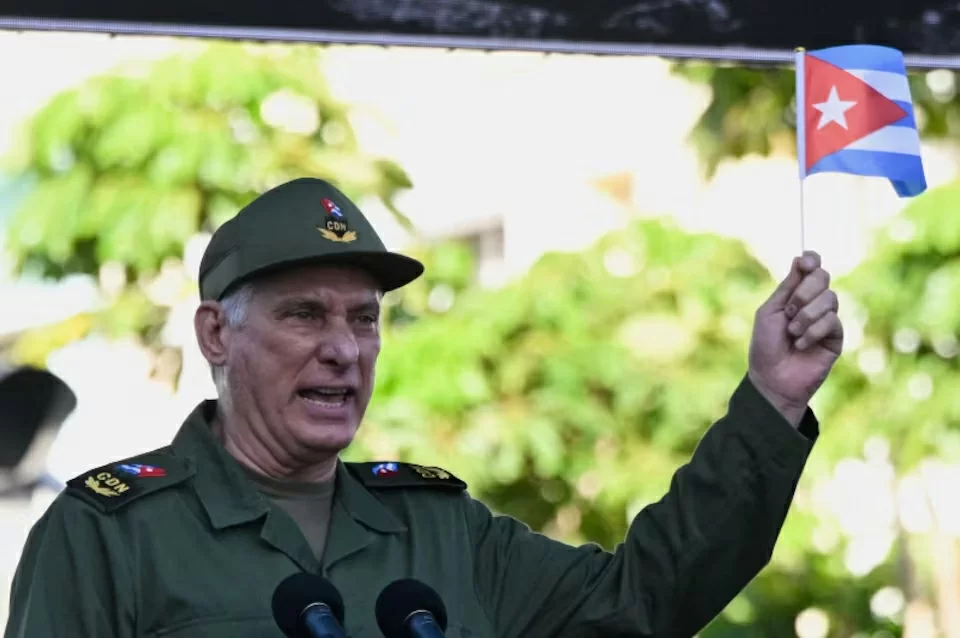
    Rising geopolitical friction between the United States and Cuba has reached a new boiling point this week, after uncorroborated claims of Cuban drone preparations against US interests triggered a fierce public warning from Cuban President Miguel Díaz-Canel. Speaking on the social platform X Monday, Díaz-Canel made clear that any US military aggression against the island nation would result in a devastating bloodbath, with unforeseeable ripple effects that would undermine regional peace and stability across the Caribbean. He also emphasized that Cuba has never posed a genuine threat to US national security, framing the recent allegations as a manufactured pretense for foreign intervention.

    The current crisis was sparked by an Axios report citing unnamed intelligence sources, which claimed Cuba has acquired more than 300 military drones and held internal discussions about deploying them against the US naval base at Guantanamo Bay, American military vessels, and Key West, Florida. Cuban officials have roundly rejected the report as a deliberate fabrication crafted by US interests to justify a potential military incursion into Cuban territory.

    Even as the island grapples with a deep, ongoing economic crisis that has left millions facing widespread scarcity, ordinary Cuban residents in Havana have expressed unified resolve to resist any foreign attack. “Cuba is a strong nation, Cubans are brave, and we are not unprepared,” 57-year-old Havana resident Sandra Roseaux told reporters. “Even if we are hungry, if they come, they will have to fight, because Cuba will not back down from responding.”

    Tensions between Washington and Havana have climbed sharply in recent months, driven largely by a US decision to cut off energy supplies to Cuba starting in January. The move came in response to the arrest of Venezuela’s president, a close regional ally of Cuba, and has already triggered severe fuel shortages across the island, leaving residents with only sporadic, limited access to electricity.

    Last week, Reuters also reported that the US Department of Justice is preparing criminal charges against former Cuban leader Raúl Castro connected to the 1996 downing of two humanitarian aircraft flown by anti-Castro groups. The development marks a significant escalation of pressure on Cuba, echoing the harsh anti-Cuban policy pursued by former US President Donald Trump’s administration.

    Cuban Foreign Minister Bruno Rodríguez reaffirmed that Cuba, like any sovereign nation, retains the full right to legitimate self-defense against external aggression under the UN Charter and established international law.

    Public opinion among ordinary Cubans remains split slightly on the path forward even as unity around self-defense holds. While many echo the hardline resolve of Roseaux, 58-year-old Ulises Medina called for diplomatic engagement to de-escalate the crisis. “It would be wrong for the US to invade Cuba, just as it would be wrong for Cuba to invade the US,” Medina said. “They need to reach an agreement and negotiate. That said, Cuba will defend itself—this nation will never be surrendered.”

    For older Cubans who have lived through decades of US-Cuban tension, the commitment to sovereignty runs deep. Eighty-seven-year-old Jorge Villalobos summed up the widespread sentiment of resolve: “The Cuban people will never allow anyone to interfere in our country. We know how to defend ourselves, even if all we have are sticks and stones.”

  • Column: Eén jaar later: neks no kenki, tra fas’ no de, a new pasi lasi

    Column: Eén jaar later: neks no kenki, tra fas’ no de, a new pasi lasi

    Almost 12 months have passed since Suriname’s 2025 general elections, and the catchy campaign slogans that carried opposition parties to power have faded into memory. Today, the core question facing the nation after its historic power transition is simple: what tangible change has actually been delivered? The entire 2024 electoral campaign was built around the promise of radical transformation – not incremental tweaks to governance, but a full break from the dysfunctional patterns of the past.

    The National Democratic Party (NDP), led by now-President Jenny Simons, campaigned on the rallying cry “Kenki a systeem” – “Change the system.” Its core platform pledged to root out systemic corruption, end patronage politics and crack down on political self-enrichment. Other opposition parties echoed this promise of a new direction: the NPS ran on “A new pasi” – “A new path” – while the A20 bloc campaigned on “Tra fasi de,” or “Another phase.”

    But one year on, an uncomfortable truth has emerged: while campaign slogans have changed, the culture of governance in Suriname has barely shifted. The irony of the current situation is almost painful. The same parties that spent years criticizing the previous administration’s overreliance on unelected commissions, political advisor appointments, cronyism and nepotism now find themselves unable to break free from those exact same mechanisms. President Simons has appointed one new commission after another, with some political figures holding seats on multiple overlapping bodies.

    Blunders have already marred appointments to supervisory boards at state-owned enterprises, and internal tensions have plagued the ruling coalition from its first day in office. Divisions within the NDP itself are also already visible to the public. To preserve the coalition’s 34-seat majority, political expediency and superficial unity have been prioritized over the promised clean-up of governance – a dynamic that is exactly how old, dysfunctional systems perpetuate themselves.

    During the campaign, President Simons repeatedly argued that corruption in Suriname had never been worse, and that the entire national system required fundamental overhaul. This was no offhand comment: it was a sweeping moral indictment of the country’s long-standing governing culture. For that very reason, Suriname’s citizens are fully justified in asking what concrete changes have actually been made to that system. Real change is not measured in words alone; it must show through in governing style, institutional transparency, decisive action and ethical leadership by example.

    No reasonable voter expects miracles in just 12 months. Suriname’s economic challenges are deeply rooted, and no incoming administration could reverse decades of damage in a single year. It would be unfair to demand such rapid results. But what citizens do have a right to expect is clear direction, a sense of momentum, urgency, and the tangible feeling that governance is being done differently. That feeling is largely absent today.

    Even now, when citizens raise concerns about persistent problems, the default response from the new administration is to blame the previous government. It is true that the prior administration bears responsibility for many of the issues facing the country today, but this excuse has a clear expiration date. Notably, the previous Santokhi administration relied on the exact same defense for four years after it took power from an earlier NDP government, continually pointing to the damage it inherited. The risk of this tactic is significant: it leads governments to focus more on explaining problems than on solving them.

    When a new government takes control of a nation, it also takes full responsibility for addressing its challenges. After a reasonable transition and evaluation period, an administration must take firm control of the agenda and clearly communicate its policy course. That kind of decisive leadership is sorely lacking at present. For many Surinamese, President Simons is too rarely visible during public crises, and government-wide communication remains weak, fragmented and reactive. At a time when citizens face daily uncertainty from flooding, rising prices and administrative confusion, clear public communication is not a secondary luxury – it is a core function of leadership. The current practice of having the president interviewed only by her own spokesperson is unacceptable, amounting to preaching only to committed party insiders. If full press conferences are not possible, the president should still deliver direct public statements to the nation, and should not rely on interviews with her own staff.

    The most stark example of this lack of preparedness and change comes from the recent severe flooding across the country. As large swathes of Suriname stood submerged, the Ministry of Public Works was found to have only a single long-arm excavator available to respond to the emergency – one machine for the entire nation. This shortcoming raises fundamental questions: how can a country that has known for decades that it is highly vulnerable to extreme rainfall be so poorly prepared for a predictable disaster? Why was no early warning sounded? Where is the long-term infrastructure planning? Where is the coordinated crisis management? It is exactly in moments like this that the public can see whether real systemic change has occurred.

    So far, what Suriname’s public has observed are the same old familiar political reflexes: backroom compromises to hold the fragile coalition together, caution to avoid inflaming internal tensions, controversial political appointments that raise questions of patronage, and leaders who respond faster to internal party pressure than to public frustration.

    Perhaps this is the hardest truth one year after the 2025 elections: systems do not change automatically just because a campaign slogan promises they will. A system only transforms when those in power are willing to set aside their own political comfort and prioritize broad institutional reform. That is the real test facing Simons’ government today. Surinamese voters did not just vote for new faces last year; they voted overwhelmingly for a fundamentally different way of governing.

  • Kanhai: Pg deed juist door niet naar DNA te gaan

    Kanhai: Pg deed juist door niet naar DNA te gaan

    A prominent Surinamese defense attorney has launched sharp criticism of the flawed political discourse surrounding the National Assembly’s planned questioning of the country’s Prosecutor General, arguing the top law enforcement official acted entirely correctly by refusing to appear in person before the parliamentary committee.

    Speaking on the popular current affairs radio program *Bakana Tori* hosted by Cliff Limburg on Lim FM, Irvin Kanhai warned that active participation by the Prosecutor General in the National Assembly’s deliberations over potential impeachment proceedings against three former cabinet ministers would irrevocably “poison” the future criminal trial from a legal perspective. “If I were representing those former ministers in this case, I would immediately file a legal objection with the court over this improper interference,” Kanhai stated during the interview.

    Kanhai emphasized that under existing Surinamese law, the National Assembly is only empowered to assess whether any potential prosecution would threaten public order and national stability, and is explicitly prohibited from delving into the substantive details of the criminal investigation dossier. He noted that parliamentarians’ demand to question the Prosecutor General on granular investigation details directly contradicts the legal boundaries laid out in the nation’s legislation.

    The attorney further pointed out that the three former officials in question have not even been formally designated as criminal suspects, as they have not yet been officially served with impeachment. For this reason, Kanhai argued, the Prosecutor General is under no obligation to disclose strategic, case-sensitive investigation details. Revealing such information, he added, would effectively compromise the entire prosecution by letting the defense see the prosecution’s full hand ahead of trial.

    Kanhai also took aim at the broader political debate surrounding the controversy, chiding parliamentarians to more carefully read the very legislation they enacted. He acknowledged that if lawmakers are unsatisfied with the Prosecutor General’s performance and wish to remove her from office, existing law provides clear pathways to do so — but those pathways require following proper constitutional procedures, not bypassing legal norms for political expediency.

    “Put your concerns in writing, send the formal petition to the court president, and initiate the legitimate removal process. Instead, all we get is empty political chatter,” Kanhai said, highlighting the lack of meaningful, procedure-compliant action from lawmakers. He also warned that open, public debate about constitutional bodies and ongoing criminal cases inflicts lasting damage to the reputation of Suriname’s core state institutions. While Kanhai confirmed that inter-branch communication on broad policy matters is appropriate and healthy, he stressed that political bodies should never interfere with active criminal matters that are yet to be adjudicated by the courts.

    Kanhai closed by reiterating the dangers of allowing the Prosecutor General to become substantively involved in political decision-making tied to an ongoing criminal case. “This kind of interference hands defense attorneys a ready-made argument to claim later that the entire legal process was compromised from its earliest stages,” he concluded.

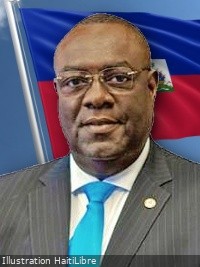
  • 223rd Anniversary of the Haitian Flag : Message from former Ambassador Bocchit Edmond

    223rd Anniversary of the Haitian Flag : Message from former Ambassador Bocchit Edmond

    On the eve of the 223rd anniversary of the creation of the Haitian national flag, former Haitian Foreign Minister and former Ambassador Bocchit Edmond issued a public message to all Haitian people at home and abroad, calling for a return to the founding spirit that birthed the world’s first Black republic to pull the nation out of its current crisis.

    Two centuries and two decades ago, in the midst of a revolution against colonial slavery, Haiti’s founding fathers united to create what would become the enduring symbol of Haitian identity: the iconic bicolor national flag. Edmond emphasized that this banner is far more than a stitched combination of two pieces of fabric. It represents the historic, unyielding choice of the Haitian people to claim freedom, national dignity and collective unity in the face of brutal, dehumanizing oppression. Credit for crafting the original flag, he recalled, goes to Catherine Flon, whose skilled hands and passionate commitment sewed the first banner that would become a global symbol of liberation for all oppressed peoples.

    Today, as the nation marks this milestone, Edmond said, the legacy of that founding act demands more remembrance than ever. While the flag itself has survived centuries of upheaval and challenge, the Haitian nation is currently navigating one of its darkest periods in modern history. The country is fractured by ongoing instability, he acknowledged, describing Haiti as being “in tatters” — but he stressed that the same people who overcame impossible odds to win freedom and found a nation can rebuild once again.

    Edmond called on every Haitian citizen to come together, comparing national reconstruction to re-stitching the torn fragments of the flag itself. He urged Haitians to combine their strength, intellect and collective will to revive the unity that gave birth to the Haitian Republic, noting that while the nation’s founding leaders broke the physical chains of slavery, the current generation’s task is to break the modern chains of division, national indifference and collective despair.

    “Haiti deserves to live. Haiti deserves to be a livable place for all its sons and daughters, wherever they may be on this earth,” Edmond said. Closing his message with the Creole phrase “Solèy la dwe klere pou tout Ayisyen alawon badè” — meaning the sun must shine for all Haitians across the world — he called on the public to honor the sacrifice of Haiti’s founding ancestors not just with ceremonial words, but with tangible action focused on unity, solidarity and national reconstruction. He closed with rallying cries: “Long live Haiti! Long live the Haitian flag! Long live solidarity! Long live national dignity!”

  • Genia Lank-Corinde start diplomatieke missie in Cuba

    Genia Lank-Corinde start diplomatieke missie in Cuba

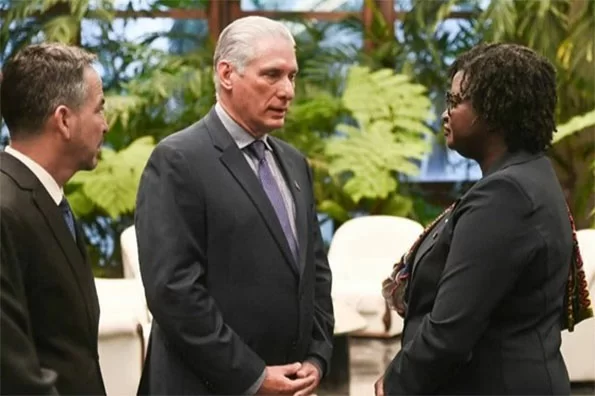
    In a formal diplomatic ceremony held at Havana’s iconic Palace of the Revolution on May 18, Genia Lank-Corinde, the newly appointed ambassador of Suriname to Cuba, officially presented her credentials to Cuban President Miguel Díaz-Canel Bermúdez, marking a new chapter in the long-running bilateral relationship between the two Caribbean nations.

    Speaking after the credential presentation, Lank-Corinde expressed sincere gratitude on behalf of the Surinamese government for the warm hospitality extended by Cuban authorities during her transition to the post. She underscored that Suriname is eager to expand existing collaborative ties across a broad range of priority sectors, including public healthcare, education, agriculture, cultural exchange, and bilateral trade.

    The ambassador also highlighted the deep historical roots of diplomatic engagement between the two countries, noting that 2026 marks 47 years of official relations between Suriname and Cuba. She specifically thanked Cuba for its long-standing commitment to providing annual study scholarships for Surinamese students seeking higher education in Cuba. In response, President Díaz-Canel reaffirmed that this scholarship program will continue unchanged, maintaining the people-to-people connection that has been a cornerstone of bilateral ties for decades.

    Díaz-Canel described Suriname as a sister nation to Cuba, and extended his appreciation for the consistent solidarity shown by Suriname and the broader Caribbean Community (CARICOM) bloc. He specifically thanked Suriname for its long-standing public support in opposition to the decades-long economic blockade imposed on Cuba by the United States.

    Following the formal credential ceremony, Lank-Corinde and delegation members took part in a closing wreath-laying ceremony at the monument to José Martí, Cuba’s revered national hero, located at Havana’s Revolution Square, a traditional gesture of respect for the country’s revolutionary and national legacy.