作者: admin

  • Belize Reframes Migration as National Opportunity

    Belize Reframes Migration as National Opportunity

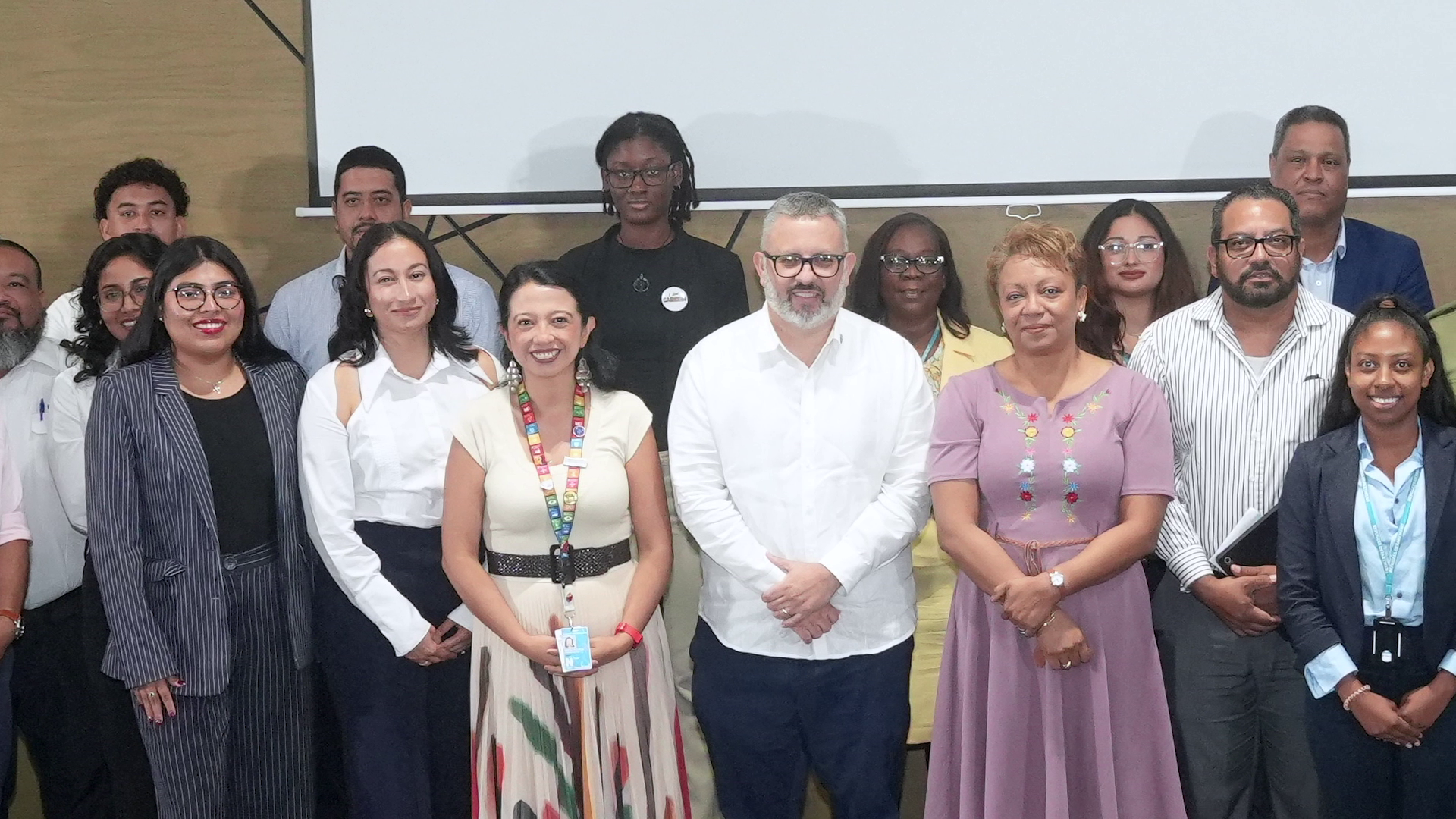
    Nearly 10 years in the planning, Belize is breaking with conventional narratives around cross-border movement, launching a landmark national process to codify a new approach that positions migration as a core driver of national progress rather than a crisis to manage.

    On May 18, 2026, government leaders, international collaborators and local stakeholders convened in the capital city of Belmopan to kick off the first national consultation phase for the country’s inaugural Migration and Development Policy. The multi-day engagement will stretch across four major population centers: Belmopan, Belize City, Bella Vista and the popular coastal hub of San Pedro, with a week of structured dialogue designed to inform a holistic policy framework that integrates migration planning across national security, labor markets and social service systems.

    Opening the gathering, Immigration Minister Kareem Musa framed the consultation as a long-awaited turning point for the small Central American nation. “It is my honor to stand before you today as we open this first National Stakeholder Consultation on the Belize Migration and Development Policy, a milestone that our ministry, government and this country have been working on for almost a decade,” Musa told attendees. “I want to begin with something simple but important. Migration is not a problem to be solved. It is a reality to be managed wisely, humanely and strategically — and for too long, Belize has been navigating that reality without a comprehensive national policy to guide us.”

    Tanya Santos, chief executive officer of the Ministry of Immigration, expanded on the holistic vision guiding the new policy, noting that migration can no longer be reduced to a narrow border security concern. “Migration can no longer be considered just a border issue. It is a labor issue, a health issue, an education issue, a demographic issue and a national development issue,” Santos said. “The development of a Migration and Development Policy is Belize’s formal recognition of this reality.”

    This public consultation phase comes as Belize adapts to shifting regional migration patterns, and the inclusive stakeholder process is intended to ensure the final policy addresses the needs and perspectives of communities across the country. Once finalized, the framework will be the first formal national policy guiding migration management in Belize’s modern history, aligning cross-sector planning with the country’s long-term social and economic development goals.

    This report is adapted from a transcript of an evening television news broadcast, with transcribed Kriol language statements adjusted to follow standard English spelling conventions for digital publication.


  • Andrew Bennett’s Extradition Fight Heads Back to High Court

    Andrew Bennett’s Extradition Fight Heads Back to High Court

    A landmark ruling from the Caribbean Court of Justice (CCJ) has upended a years-long, high-profile extradition battle involving prominent Belizean attorney Andrew Bennett, opening a new chapter in debates over digital privacy rights and constitutional protections in cross-border law enforcement.

    Bennett has been fighting U.S. attempts to extradite him on money laundering charges, allegations he has repeatedly and vehemently denied. At the heart of the American government’s case against him is a cache of private WhatsApp messages, which prosecutors have framed as critical evidence to support the extradition request.

    In its May 18, 2026 decision, the CCJ overturned prior rulings from Belize’s lower courts that had upheld the admissibility of the WhatsApp evidence. The top regional court found a critical flaw in the earlier decisions: both the High Court and Court of Appeal had grounded their rulings in the Interception of Communication Act – a piece of legislation that was not yet in force at the time law enforcement collected the private messages.

    The CCJ declined to issue a final ruling on whether the collection of the messages violates Belize’s constitutional protections for privacy and protection against arbitrary search and seizure, noting that legal arguments on those core questions had not been fully tested in lower courts. Instead, the court remanded the entire case back to the Belize High Court for an entirely new hearing, setting the stage for what legal observers describe as a defining showdown over digital privacy rights in the region.

    Speaking after the ruling, lead defense attorney Hector Guerra emphasized that the CCJ’s decision serves as a critical reminder that the protection of citizens’ fundamental rights must take precedence in extradition proceedings. Guerra explained that his legal team brought a broad argument centered on abuse of process before the CCJ, arguing that any extradition of a Belizean citizen must adhere strictly to existing domestic law, rather than bypassing constitutional safeguards.

    “In this digital age, we all use platforms like WhatsApp and other messaging services to share private information, and every citizen has a legitimate expectation that their communications will remain protected,” Guerra said. “The CCJ’s ruling confirmed that lower courts made a material error in relying on a law that was not even active when the evidence was gathered.”

    Guerra added that even without the Interception of Communication Act in place, Belize’s common law framework requires judicial oversight for any interception of private communications. Those constitutional and common law arguments will now be fully advanced in the new High Court hearing.

    Guerra confirmed that Bennett’s legal team is currently drafting new arguments for the upcoming hearing, including an additional claim of entrapment. As of the latest update, no official date has been scheduled for the new proceedings.

  • Celebration of the 223rd anniversary of the flag at the Haitian Embassy in Paris

    Celebration of the 223rd anniversary of the flag at the Haitian Embassy in Paris

    On May 18, 2026, the Haitian diplomatic mission in Paris hosted a formal commemoration honoring two landmark national occasions: the 223rd anniversary of Haiti’s national flag creation and the country’s annual University Day. Held under the official Haitian government theme, “With the Grenadiers, let’s raise our flag higher,” the event wove a connection between the nation’s historic identity and its recent achievement in qualifying for the 2026 FIFA World Cup, drawing on the athletic team’s momentum to reignite the spirit of collective achievement that has defined Haiti since its founding.

    The celebration unfolded in the embassy’s stately reception halls, gathering a diverse cross-section of international and local stakeholders. Attendees included diplomatic representatives from the Dominican Republic, Gabon, Taiwan, Bolivia, and Chile, as well as senior officials from France’s Ministry for Europe and Foreign Affairs and other members of the Paris-based diplomatic corps. Also in attendance were Haitian diplomatic and consular staff serving across France, Bruno Fuchs, president of the French National Assembly’s Foreign Affairs Committee, Nicolas Guinard, Director of Political Affairs and Democratic Governance at the International Organisation of the Francophonie (OIF), Jean-Marc Four, Director of Radio France Internationale, alongside French parliamentarians, municipal leaders from multiple French cities, OIF administrative officials, Haitian community leaders, and hundreds of members of the Haitian diaspora based in France.

    The formal commemoration opened with a performance of Haiti’s national anthem, a moment of tribute to the independence heroes who gathered in Arcahaie on May 18, 1803, to adopt the iconic bicolor national flag. In his keynote address at the event, Haitian Ambassador to France Louino Volcy centered his remarks on the profound historical and symbolic weight the flag holds for the Haitian people. “The Haitian flag is first and foremost the symbol of immense pride: the pride of a history of freedom, the pride of the first successful slave revolution in the history of humankind, the pride of the first independent Black republic in the modern world and the first independent state in Latin America and the Caribbean,” Volcy stated.

    Volcy walked attendees through the origins of the flag, noting that its adoption grew out of the political-military congress held in Arcahaie amid Haiti’s war of independence, cementing its status as a tangible marker of the nation’s fight for self-determination. Turning to Haiti’s current domestic challenges, the ambassador emphasized the unwavering commitment of Prime Minister Alix Didier Fils-Aimé’s administration to restoring nationwide peace and security, and advancing political, social, and economic stabilization to clear a path for free and credible national elections.

    Volcy stressed that the flag also stands as a testament to Haiti’s enduring presence as a sovereign, resilient nation, and that upholding this legacy requires collective action aligned with the country’s core national values. “Our national motto, ‘Unity is Strength’ remains a pragmatic formula for action that still possesses infinite power and unlimited energy,” he added. “The unity of Haitians can create the necessary strength to face current challenges and allow our bicolor flag to fly even higher.”

    Framing the flag as a three-layered symbol for the nation, Volcy concluded: “the flag is first and foremost the symbol of immense pride, then the symbol of an immense heritage to preserve and defend, and finally, the symbol of a nation standing tall.”

    By the close of the event, the 223rd anniversary celebration had reaffirmed the deep, unshakable connection of the Haitian people—both at home and in the diaspora—to their national history, their foundational symbols, and the enduring ideals of freedom and dignity that the Haitian flag has embodied for 223 years.

  • Seaboard Holdings Violates Dredging Permit, Faces Uncertain Penalty

    Seaboard Holdings Violates Dredging Permit, Faces Uncertain Penalty

    Nearly two weeks after unauthorized offshore dredging work along Belize’s Placencia Peninsula ignited widespread public outcry, local regulators and community leaders are still pressing for full accountability, with new details emerging about the scope of permit violations and ongoing uncertainty over what penalties the development firm will face.

    The controversy traces back to early 2026, when two separate government approvals were granted for the project. On March 16, Belize’s Department of Environment issued formal environmental clearance to Mark Espat, director of Seaboard Holdings and the country’s sitting Economic Ambassador. The clearance allowed the firm to extract 4,500 cubic yards of sand from the Placencia lagoon, with the material earmarked for restoring eroded shoreline along three privately owned parcels and constructing a retaining rock wall. More than a month later, on April 22, Belize’s Mining Unit issued a $650 quarry permit to Albert Loewen acting on behalf of Seaboard Holdings, with the permit set to remain valid through the end of 2026.

    Despite the step-by-step approval process, Mining Inspector Michelle Alvarez confirmed in an official briefing this week that the developer blatantly violated core terms of the granted permit. One of the most significant breaches was the construction of an unapproved access road extending directly into the lagoon — work that was never authorized by the Mining Unit, and that has since been fully dismantled and removed per regulatory orders. Alvarez also confirmed that the firm extracted far more sand than the 4,500 cubic yard limit set in the permit. As a remedy for the over-extraction, the excess material, plus an additional 5% of the total permitted volume, will be donated to the Placencia local community.

    Right now, the biggest outstanding question centers on what penalty Seaboard Holdings will face for the violations. Alvarez confirmed that a fine will be issued, but regulatory officials have not yet finalized the penalty amount. She also acknowledged a longstanding systemic issue: fines for permit violations of this nature are typically minimal under current Belizean law, leading to criticism that the current regulatory framework does little to deter non-compliance from developers.

    Public criticism has also centered on the extremely low $650 cost of the dredging permit. Alvarez addressed that concern this week, noting that while she personally agrees the fee is far too low to reflect the environmental impact of the work, the fee schedule is set by national legislation, not by the Mining Unit itself. She added that the developer did complete all required formal steps to obtain both the environmental clearance and the mining permit before starting work, even though it later violated the terms of those approvals.

    The Placencia Village Council has scheduled a public briefing this evening to revisit the controversy, answering community questions and reiterating ongoing concerns about unregulated offshore development and the enforcement of environmental protections along the peninsula’s sensitive coastline.

  • Police charge man after Glock part seized in Castries raid

    Police charge man after Glock part seized in Castries raid

    A coordinated, multi-unit law enforcement operation targeting high-priority areas across multiple communities in Castrie has led to the arrest and formal charging of a local man, after investigators recovered a identifiable part of a prohibited firearm during a court-authorized search.

    The enforcement action, carried out on Wednesday, May 13, brought together three specialized divisions of the Royal Saint Lucia Police Force (RSLPF): the Gangs, Narcotics and Firearms Unit, the Special Services Unit, and the Central Intelligence Unit. Planning for the operation centered on three key neighborhoods: Wilton Yard, Grass Street, and Leslie Land, where law enforcement teams carried out searches of four separate residential structures in the area.

    Acting on a judicially approved search warrant, officers entered the Leslie Land residence of Elijah Benjamin Khodra, a man also known locally by the alias “Beh Ben”. During the systematic search of the property, investigators uncovered a part confirmed to be the backplate for a Glock pistol, a classified firearm component under Saint Lucian law.

    Following the recovery, Khodra was taken into police custody and formally charged with possession of an unlicensed weapon component, a violation of Section 22(3) of the island’s Firearm Act. He made his initial appearance shortly after at the First District Court for a bail hearing, where the judge granted his release on $15,000 in cash bail, or an alternative acceptable surety bond.

    In a public statement released after the operation, the RSLPF reaffirmed its longstanding commitment to cracking down on individuals connected to illegal weapons, gang activity, and other organized crime across the island, with the core goal of reestablishing a sense of safety and security for all Saint Lucian residents.

    To continue advancing these public safety efforts, law enforcement officials are calling on members of the public with any knowledge of ongoing criminal activity in their communities to share what they know. Tips can be submitted by visiting the nearest local police station, calling the dedicated Crime Hotline at 555, or using the RSLPF’s official Crime Hotline mobile application, which is available for download on the Google Play Store for Android users.

  • Bella Vista Blaze Displaces Entire Household

    Bella Vista Blaze Displaces Entire Household

    On a Sunday morning in late May 2026, a sudden out-of-control fire turned a multi-generational Bella Vista family’s life upside down, leaving the household with no more than the clothing they wore when they escaped the burning structure. The blaze erupted shortly before 6 a.m., spreading rapidly through the family’s residential property that also housed two small businesses, forcing the entire family to evacuate in mere minutes to avoid injury.

    The first sign of danger came when household member Pineda Mejia woke to unfamiliar cracking sounds. Upon investigation, she discovered intense flames already raging through an attached warehouse connected to the main home. Acting with urgent speed, Pineda immediately rushed to extract her elderly mother – 75-year-old retired furniture merchant Bella Mejia – and her eight-year-old daughter from the smoke-filled residence. All five members of the household made it out without physical harm, a small miracle that the family says they are grateful for despite their devastating loss.

    Interviews with Maria Mejia, daughter of the fire’s primary homeowner, revealed that the fire originated in the front section of the property, which housed Pineda and her husband’s bedroom as well as the family’s two business operations. Bella Mejia spent decades running a local home furniture business out of the space, while younger family members recently launched an online clothing retail brand that uses Facebook Live to connect with customers across Belize. Every asset the family owned was consumed by the fire: personal identification documents, family heirlooms, all their clothing and furniture, and the entire inventory of their small businesses, wiping out their primary source of income overnight.

    Maria Mejia noted that the extreme seasonal heat impacting Belize may have contributed to the rapid spread of the blaze, though official investigators have not yet confirmed any cause. Local authorities have launched a full investigation to pinpoint exactly how the fire started.

    In the wake of the disaster, the tight-knit Bella Vista community has already mobilized to support the displaced family. Local villagers have already begun dropping off critical supplies including bottled water and non-perishable food to help the family meet their immediate needs. The Bella Vista Village Council has issued a formal public call for additional donations, including clothing, mattresses, cooking supplies, and other basic household items to help the family rebuild their lives from scratch. Anyone wishing to contribute to the relief effort can contact the village council directly at 673-0116.

  • Belize’s Young Talents Takes Center Stage at National Arts Festival

    Belize’s Young Talents Takes Center Stage at National Arts Festival

    On May 18, 2026, Belize’s capital city, Belize City, opened its doors to a week-long celebration of youth creativity at the Bliss Center, as the annual Primary School Festival of Arts officially gets underway. This year’s event shines a spotlight on young artistic voices from every corner of the country, bringing together diverse creative disciplines from live performance to visual and literary work that have been missing from the national festival for decades.

    The opening day celebrations were led by dynamic back-to-back performances from young artists based in the Belize District, alongside the debut of a national student visual arts exhibition. Hosted at the Belisle Gallery, the exhibit features 50 original pieces selected from an open call that drew submissions from primary and secondary students across Belize. According to Kim Vasquez, Director of Belize’s Institute of Creative Arts, the festival’s core mission is to embrace inclusivity and full representation of all artistic disciplines, going beyond traditional performing arts to elevate underrepresented creative forms.

    A landmark milestone for this year’s festival is the revival of the literary arts segment, which was absent from the national event for nearly 30 years. Following a successful restart last year, 2026 marks the release of the festival’s second annual student literary publication, collecting original short stories and poetry written by young contributors from across the country. The publication was produced in partnership with Simon Moore and the Art Shack based in Belmopan, which provided layout design and support for the project. While only a limited number of printed copies have been produced, organizers have made the full collection available for free download via the 501 Academy digital platform, allowing audiences across the country to access the young writers’ work.

    In the coming days, the festival will travel to coastal communities, with scheduled performances planned for San Pedro and Caye Caulker. The week-long celebration will conclude with the highly anticipated return of Golden Nights, a series of evening showcases that bring together the most standout acts and artwork from every district to cap off the national event.

    This news transcript is adapted from an original evening television broadcast, with Kriol language portions transcribed using a standardized spelling system for accessibility.

  • Athletes Share Academic Dreams, Football and Softball Crown Champions

    Athletes Share Academic Dreams, Football and Softball Crown Champions

    In a special Sports Monday segment focused on the human side of athletic competition, young Belizean athletes are pushing their limits not just for gold, but for life-changing opportunities that extend far beyond the court. This Sunday, inside the walls of Belize Elementary School’s gymnasium, dozens of aspiring volleyball players competed for spots on the Belize City roster ahead of the upcoming 2026 Super Nationals tournament. What looks like an intense round of tryouts is actually a critical stepping stone for young people aiming to earn university athletic scholarships abroad.

    Organized through a partnership between Belize’s National Sports Council and local sporting bodies, Super Nationals was designed to give top-performing student-athletes a national platform where they can showcase their skills directly to international university scouts. Volleyball has already emerged as a proof of concept for this model, according to Allan Sharp, president of the Belize Volleyball Association.

    Sharp explained that the pathway began organically when two of Belize’s star players, Bryton and Kareem, secured opportunities to play college volleyball abroad on their own. After succeeding at the international level, the pair worked with the BK program to expand that opportunity for the next generation of Belizean athletes. “It’s starting to snowball,” Sharp noted, adding that international college coaches are now increasingly reaching out directly to Belize to recruit new talent, after seeing Belizean players thrive in university programs.

    Now, sporting leaders hope Super Nationals will turn this ad-hoc success into a formal, structured recruitment pipeline that works across all Belizean sports. Sharp expressed full support for the initiative, saying that sustained investment in the program is key to its long-term success. He called for extended training periods and a longer pre-tournament match schedule, noting that current timing does not always allow the very best athletes to peak and showcase their top form for visiting scouts.

    For the young athletes trying out, the opportunity is already bringing long-held dreams within reach. Fifteen-year-old Mira Bood, who will graduate high school next year, says earning a volleyball scholarship to an American university is her primary goal. “It would make me feel proud about myself and mostly about my country,” Bood said of the opportunity.

    Sixteen-year-old setter Adrian Courtenay, who already stands six-foot-two with a reputation for precise, soft ball control, shares that same ambition. “I would like to go abroad, play college volleyball and just become one of the best that I could be,” Courtenay said. For him and many other young athletes, a scholarship would mean far more than a chance to compete – it would be a point of pride for both himself and his family.

    District-level tryouts are currently underway across Belize across multiple sporting disciplines, as organizers finalize rosters for the main Super Nationals tournament. While gold medals and regional bragging rights will be on the line when competition kicks off, organizers say the biggest wins will come years down the line, when more Belizean athletes arrive at international university campuses funded by athletic scholarships.

    Alongside the spotlight on the Super Nationals initiative, the segment wrapped up with a roundup of this weekend’s regional championship results. In football, Tut Bay FC claimed the Belize District title after a narrow 2-1 win over Caesar Ridge FC. In the Belize District interoffice softball tournament, the BEL Power Sockets reclaimed their championship throne after a dominant victory over the Police-Teachers Enforcer squad. The Elite Co-ed League title went to One-Two-Three OutKast for the second consecutive year, capping an unexpected repeat run for the underdog squad.

    In the ongoing NEBL basketball season, the final two weeks of regular season play have been upended by major upsets that have shaken up playoff seeding. The Belmopan Trojans took down the San Pedro Tiger Sharks on Friday, while the Dangriga Dream Ballers pulled off an upset against the top-ranked Orange Walk Running Rebels on Saturday. The Belize City Defenders held off a late push from the Cayo Western Ballaz to secure a win. So far, the Defenders and Running Rebels have locked in their playoff spots, while Griga, San Pedro and Cayo are competing for the two remaining playoff positions. With seedings still undecided, anything can happen in the final stretch of the season.

    That wraps up this week’s sports coverage from Shane Williams, who closed the segment with a reminder: “Friendly competition unites and balling is life so keep balling Belize!”

  • Saint Lucia steps up Ebola preparedness measures

    Saint Lucia steps up Ebola preparedness measures

    Even with no immediate risk of Ebola reaching the Eastern Caribbean, the island nation of Saint Lucia has launched a series of proactive measures to reinforce its health infrastructure and border screening protocols, stepping up national readiness for a potential importation of the virus. These preventive steps were officially announced by Health Minister Moses Jn Baptiste during a pre-Cabinet media briefing held on Monday, where he emphasized that preparedness work is already underway across multiple sectors of the country’s health system.

    Among the priority actions is the strengthening of public health procedures at all ports of entry, a core measure to intercept any potential cases entering the country via travel. The government also plans to release regular, transparent public updates through the Office of the Chief Medical Officer to keep residents informed of any developments related to the outbreak.

    Beyond border controls, the Ministry of Health is focused on upskilling frontline healthcare workers through targeted training programs, while also upgrading infection prevention and control standards at all medical facilities across the island. For any suspected Ebola cases detected through enhanced screening, diagnostic testing will be conducted in partnership with the Caribbean Public Health Agency (CARPHA), and Saint Lucia has confirmed it currently maintains a sufficient stockpile of personal protective equipment for medical teams.

    Minister Baptiste noted that national disease surveillance systems are also being upgraded to catch any unusual cases early. “We are upgrading our surveillance and ensuring that our protocols are firmly in place, doing everything necessary just in case the threat reaches our shores,” he told reporters.

    The proactive push for preparedness comes shortly after the World Health Organization (WHO) designated the ongoing Ebola outbreak as a Public Health Emergency of International Concern (PHEIC), the highest level of global public health alert. The current outbreak, caused by the rare Bundibugyo ebolavirus strain, originated in the Democratic Republic of the Congo and has already spread to neighboring Uganda. While there is currently no confirmed evidence of sustained cross-border transmission beyond these two countries, and the WHO has not classified the event as a pandemic, Baptiste stressed that the PHEIC designation demands serious global attention.

    “While this outbreak poses no immediate threat to the Eastern Caribbean at this time, it is critical that we as a country and a region stay alert and strengthen our defenses,” Baptiste said. “Even if the spread remains contained for now, the virus could potentially move internationally, which requires coordinated preparedness action from all nations.”

    The minister also shared contextual information about the varying risks of different Ebola strains to illustrate the importance of vigilance. Historical Ebola variants such as the Zaire strain carry a fatality rate as high as 90 percent, while the Sudan strain has an average fatality rate of around 50 percent. The currently circulating Bundibugyo strain has a lower but still significant fatality rate of approximately 30 percent, a figure that Baptiste emphasized is no reason for complacency.

    Adding to the urgency, Baptiste pointed out that while licensed vaccines and targeted therapeutics exist for several older Ebola strains, there are currently no specific approved medical countermeasures for the Bundibugyo strain behind the current outbreak.

    Saint Lucia’s preparedness efforts are being coordinated in close collaboration with regional and global health bodies, including CARPHA, the Pan American Health Organization, and the WHO. Currently, the island’s Chief Medical Officer and a senior nurse administrator are in Switzerland attending the annual World Health Assembly, where the Ebola outbreak is a top agenda item. The country anticipates receiving the latest guidance and outbreak intelligence when the delegation returns home to inform further adjustments to national preparedness plans.

  • Indian quarry workers were required to pay company if fired

    Indian quarry workers were required to pay company if fired

    Controversial one-sided employment terms for Indian migrant workers at a major Guyanese quarry operated by India-based EKAA HRIM Earth Resources Management have triggered an official multi-agency investigation, following public outcry over alleged unfair labor practices and passport retention.

    Details of the exploitative clauses came to light after Demerara Waves Online News obtained and reviewed one of the seven-year employment contracts binding 38 Indian migrant workers brought to Guyana to work at the 15-year lease quarry. The terms impose steep financial penalties on workers for a range of scenarios, including early termination, dismissal, and unauthorized absence.

    Under the contract terms, workers terminated for cause—including providing incorrect personal information, code of conduct violations, or repeated underperformance after two formal warnings—are required to reimburse the company $3,000 to cover hiring, training, and administrative costs, in addition to covering their own return travel expenses out of pocket. Workers who choose to end their 24-month contract early face even higher penalties of $5,000, with no coverage for return travel provided by the employer. Any worker who absconds from their post forfeits all unpaid wages, accrued leave, and earned bonuses, and must pay an additional $5,000 contract breach fee within 14 days or face legal action.

    The contract also includes restrictive clauses that limit worker speech and flexibility. Workers are barred from making defamatory or false statements about the company or other staff, with immediate termination and no severance pay as a consequence, plus the possibility of additional legal action for reputational damage. EKAA HRIM also reserves the right to modify company policies at its sole discretion, with the original contract and signed code of conduct taking precedence in any dispute. Workers are additionally prohibited from sharing contract details including salary and benefit amounts with external parties, a violation that counts as breach of contract.

    Work schedule terms also raise concerns over excessive working hours and unpaid overtime. The contract requires workers to be on site 12 hours per day, six days per week, with mandatory work on public holidays and non-working days during emergencies at the employer’s request. While the company notes that base pay is structured to include overtime for the standard 72-hour work week, overtime is only granted for hours worked beyond the daily and weekly requirement after meeting production targets. Any extra time worked to hit targets delayed by external factors such as bad weather does not qualify for overtime pay, and workers who fail to meet production targets face automatic salary reductions.

    The situation escalated after Guyana’s Opposition Leader Azruddin Mohamed and a delegation of party leaders visited the quarry site over the weekend to meet with workers and hear their complaints. Multiple workers reported that the company had withheld their passports, a common tactic used to restrict migrant worker mobility. Following the outreach, Labour Minister Keoma Griffith announced Monday that he had coordinated with the Indian High Commissioner to secure the return of all 38 passports to the workers.

    Griffith confirmed that a joint multi-agency investigative team has been assembled to conduct a full on-site inquiry into the workers’ allegations, which include claims of substandard working conditions, unfair labor treatment, and violations of occupational safety and health regulations. The team includes representatives from the Ministry of Labour and Manpower Planning, the Guyana Police Force, the Ministry of Home Affairs’ Trafficking In Persons Unit, and other relevant regulatory bodies.

    The EKAA HRIM quarry, which covers 1,089 acres of leased land with a 30-acre active mining pit, was formally opened by Guyanese President Irfaan Ali in September 2023. The 15-year lease includes an option for renewal at the end of the term, and the company has announced plans to invest up to $20 million in the project. At the opening ceremony, EKAA Chairman Saju Bhaskar highlighted the company’s sustainable development plans, noting that the firm intends to power the entire mining operation with on-site solar energy in line with Guyana’s national low-carbon development strategy. For his part, President Ali noted that the new domestic quarry would help address Guyana’s growing construction material shortage, which has driven rising prices and forced the country to import millions of tons of quarry material in recent years to keep pace with rapid national development.