作者: admin

  • DPP Steps In, Orders Police to Drop Case Against August

    DPP Steps In, Orders Police to Drop Case Against August

    In a sudden twist in a high-profile political case tied to a wider government integrity investigation, the Director of Public Prosecutions (DPP) has ordered law enforcement to discontinue all criminal proceedings against prominent opposition figure Alberto August. The development comes as the country’s Integrity Commission launches a formal probe into claims brought forward by Oscar Mira, a key political figure whose most outspoken critic is August.

    Scheduled to wrap up by the evening of June 30, 2026, the termination of prosecution follows a full internal review of the case file by the DPP’s office. Beyond closing the court matter entirely, the ruling clears the legal path for all property and electronic devices seized from August during the investigative process to be returned to him immediately.

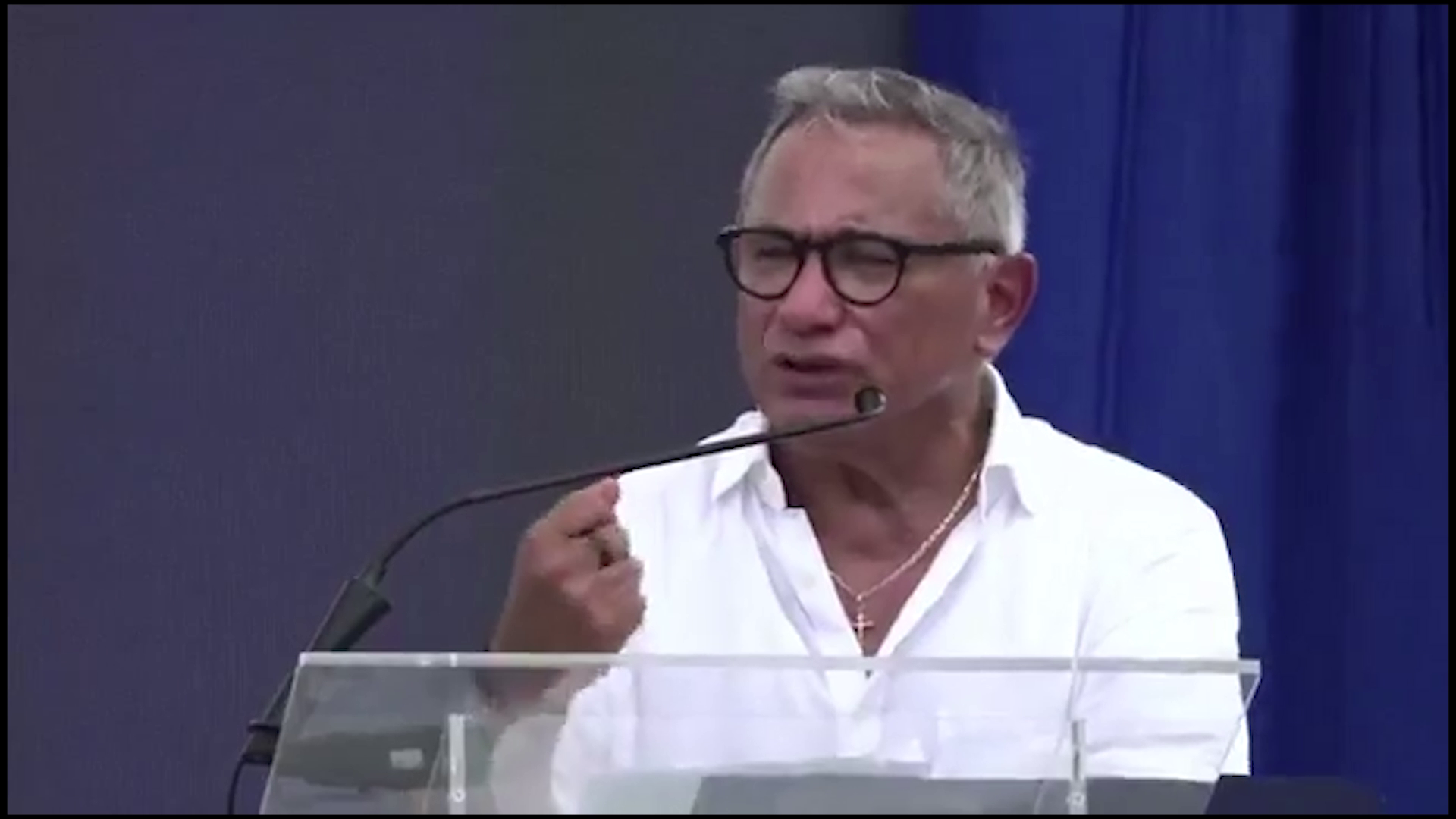
    In a first public statement following the DPP’s decision, August, former chairman of the opposition United Democratic Party (UDP), questioned the prolonged seizure of his personal devices. He confirmed he never denied making the controversial social media post that formed the basis of the initial case against him, leaving him confused over the need to confiscate and hold his phone for an extended period.
    “I am not denying making the post, so why do they need to search the phone for the post? It is not like I am denying it now and then they would have to open the phone to search to see if the text is in there,” August said. “So, I don’t know why they took it. Honestly, I don’t know why they took the phone and I don’t know why they are holding on to it for so long.”

    The case gained significant public and media traction after revelations of its direct connection to a sitting government minister, intensifying scrutiny of the legal process from the start. This news report is a full transcript of an evening television broadcast, with all comments from speakers transcribed accurately using standardized spelling for Kriol language references.

  • Integrity Commission Probe Ahead, But Oscar Mira is Too Busy Building.

    Integrity Commission Probe Ahead, But Oscar Mira is Too Busy Building.

    In the face of mounting scrutiny and an upcoming official investigation by the Integrity Commission over the so-called “Mira Millions” controversy, Oscar Mira, the elected representative for Belmopan, has made clear his priorities: continuing delivery of public development projects for his constituency rather than being distracted by allegations against him.

    Unresolved questions have lingered around the controversial “Mira Millions” affair for some time, prompting an official audit and a formal probe set to be carried out by the region’s anti-corruption Integrity Commission. Rather than pausing his official work to address the controversy head-on, Mira has opted to maintain what he frames as a “business as usual” approach to his representative duties, focusing heavily on ongoing infrastructure improvements that benefit local residents.

    On June 30, 2026, Mira turned to his social media channels to highlight progress on a major road expansion project in Belize’s capital city, Belmopan. The initiative is designed to improve connectivity to newly opened residential zones, making it easier for landowners to develop their properties and for residents to access the new neighborhoods. Mira noted that work on the project has been temporarily slowed by inclement weather, but once conditions improve, construction crews will return to the site to accelerate completion.

    In his public update, Mira emphasized that the ongoing probe and surrounding controversy have not disrupted progress on core development work across his constituency. The road infrastructure project, he reiterated, will soon unlock access to dozens of parcels of land that local residents have been waiting to develop, delivering tangible benefits to the community despite the growing political scrutiny he faces.

  • Tracy Panton Says It’s Time to Audit Belize’s Statutory Bodies

    Tracy Panton Says It’s Time to Audit Belize’s Statutory Bodies

    As public discourse in Belize continues to center on the high-profile Smart Stream controversy, Opposition Leader Tracy Panton is pushing to redirect public and legislative attention to a less-discussed but equally critical issue: the lack of rigorous oversight for the country’s statutory bodies. These quasi-governmental agencies operate outside the formal central government administrative structure, but rely entirely on public revenue to carry out their core functions – a reality that Panton argues demands the same level of financial scrutiny applied to cabinet ministries and central government departments.

    Panton specifically named the Belize Tourism Board (BTB) as a key example of the gaps in accountability, pointing to the agency’s $50 million bond raised explicitly to fund tourism-focused infrastructure development across the country. To date, Panton claims, there has been no clear public accounting of which projects have drawn from this bond funding, how allocation decisions were made, or whether the disbursed funds have been used for their stated purposes.

    Beyond bond proceeds, Panton highlighted the unique revenue structure of many statutory bodies that allows them to bypass the national consolidated fund. For the BTB, all taxes collected by the agency go directly to its own coffers rather than being deposited into the national public purse, creating what she calls an unacceptable lack of transparency around public money management.

    “In my view, what we are seeing right now calls for a full forensic audit,” Panton stated during public remarks. Recalling her time serving as chair of the country’s Joint Public Accounts Committee, Panton shared a stark warning from the former auditor general: unaccounted public fund leakages from these entities add up to nearly $2 million per day. Multiply that figure across an entire year, and the total lost public resources amount to a staggering sum that Belize can ill afford to lose, she argued.

    Panton emphasized that stopping these unaccounted leakages and strengthening oversight would free up critical public funding to expand and reinforce the social safety net programs that many vulnerable communities across Belize rely on, and that the country urgently needs at this juncture.

    This report is transcribed from an evening television newscast broadcast.

  • Shyne Barrow Points the Finger. Tracy Panton Threatens Court Action.

    Shyne Barrow Points the Finger. Tracy Panton Threatens Court Action.

    Amid a rising national push for stricter oversight of public expenditures in Belize, the spotlight has swung back onto Opposition Leader Tracy Panton herself, following sharp accusations from former United Democratic Party (UDP) leader Shyne Barrow. Barrow has publicly pressed Panton to answer lingering questions about her role in approving the controversial Brads Gaming Boledo contract, arguing that the opposition leader must clean her own house before demanding forensic audits of public bodies such as the Belize Tourism Board.

    Local media directly confronted Panton with Barrow’s claims, which frame the contract as corrupt and nepotistic. In a firm response, Panton rejected the allegations as intentionally damaging to her reputation, warning that she is prepared to pursue legal action over what she calls defamatory and libelous comments from Barrow.

    Panton pushed back on the core of Barrow’s accusation, noting that her former role as a Minister of State never granted her the unilateral authority to approve high-stakes government contracts of this scale. “No body unilaterally approved anything under the Barrow administration,” she explained, clarifying that all major government agreements require sign-off from the Office of the Attorney General and the relevant substantive government minister, a power a junior minister does not hold.

    She further detailed that the Brads Gaming Boledo contract followed full regulatory protocol during her oversight of the process: after cabinet approved the initial recommendations, the agreement was sent to the Contractor General for independent review and scrutiny to confirm full compliance with all legal requirements. With four decades of public service to Belize under her belt, Panton emphatically denied ever abusing her position for personal gain, or to benefit friends and family at the expense of the national public interest.

    She added that the contract review process included input from multiple independent oversight bodies, including the Gaming Control Board, Ministry of Finance, Attorney General’s Ministry, Ministry of Economic Development and the Office of the Auditor General, to ensure full transparency and accountability. This report is a transcript of a televised evening news broadcast, with all Kriol-language statements transcribed using a standardized spelling system.

  • Dangriga Murder Suspects Charged: Victim Provided Identity

    Dangriga Murder Suspects Charged: Victim Provided Identity

    A swift legal step forward has brought a measure of tentative closure to a grieving Belizean family, days after 16-year-old Isaiah Norales was fatally gunned down in an early morning shooting in Dangriga District. Authorities have confirmed formal charges against two suspects connected to the teen’s murder: 25-year-old Naheem Bonilla and a 17-year-old minor, whose identity is protected under juvenile justice guidelines.

    The breakthrough in the case came directly from the victim himself, who clung to life long enough after the attack to name his attackers from his hospital bed. For Norales’ family, this development only confirms what they have publicly claimed since the day of the shooting, with relatives saying they were confident investigators already held the key information needed to make arrests.

    In an interview with local outlet News Five shortly after the killing, Sharwell Makin, Norales’ cousin, reflected on the teen’s character and the family’s long-held hope for accountability. “Everybody has a different version of Isaiah. What I got was somebody very loving. He’s very open, he shared everything with me,” Makin said. When asked if Norales had ever indicated his life was at risk before the attack, Makin confirmed the teen never mentioned any threats. “Yes, we are aware [who is responsible],” Makin added. “He was able to say [who it was] so the police have that information, and we’re just hoping for justice. We just want justice, we don’t want nothing else, just justice.”

    Norales only survived a few hours after the Sunday morning shooting before succumbing to his injuries. His dying identification of attackers follows a well-documented precedent in recent Belizean legal history: this type of evidence was the core of the recently concluded high-profile Elmer Nah murder trial, where a dying statement from shooting victim Vivian Ramnarace, who also identified her attacker from a hospital bed before her death, served as the prosecution’s primary instrumental evidence.

    This report is a transcript of an evening television broadcast, with all Kriol-language statements transcribed using a standardized spelling system for accuracy.

  • Independence, republic celebrations scaled back as PM prioritises ‘cost relief’

    Independence, republic celebrations scaled back as PM prioritises ‘cost relief’

    Speaking at the Ideas Forum town hall meeting with hundreds of Barbadian citizens in attendance, Prime Minister Mia Mottley has outlined a series of targeted policy shifts for the small island nation, framing the decisions as empathetic, pragmatic responses to cascading global economic and geopolitical shocks that have pushed household costs upward across the Caribbean. Faced with ongoing international conflict and soaring global inflation, Mottley emphasized that governing a vulnerable small state requires tough, people-first trade-offs, leading her administration to repurpose funds set aside for large-scale national celebrations toward immediate economic relief for working families. The government will compress the planned dual celebrations marking the 60th anniversary of Barbados’ independence and the fifth anniversary of its republican status into a scaled-down three-month program, rather than holding the lavish, multi-event festivities initially proposed.

    In a firm address to attendees, Mottley rejected criticism of the cutbacks, stating that as prime minister, she would never misallocate or misprioritize public funds at a time when global instability is already straining household budgets. “Barbados is going to play our hand exceedingly close together because we do not have control over the international events that shape our economic reality,” she told the crowd, noting that the government will re-evaluate all uncommitted spending to align with current economic pressures.

    One of the administration’s most significant long-term projects, the push for a new national constitution, has reached a critical turning point, Mottley revealed in an unexpected announcement that drew audience applause. The final advisory report from the constitutional review process has now been submitted to the President of Barbados, a milestone that even the country’s attorney general had not been fully briefed on prior to the town hall. The document will be circulated to cabinet ministers within the next two to three weeks, after which the government will launch a nationwide public consultation to gather input from citizens across the island. Mottley pledged that the constitutional reform process would not be rushed to meet an arbitrary deadline, emphasizing that broad public participation is non-negotiable. If the consultation cannot be completed by November as initially hoped, the process will extend to ensure all Barbadians have a chance to weigh in, she said.

    On the economic front, Mottley defended her government’s aggressive measures to shield households from skyrocketing global fuel prices, noting that technical advisors at the Ministry of Finance recently recommended a price hike from the current $3.72 per litre to $4.20 per litre to offset global market volatility. Rejecting the full increase to protect family budgets, the prime minister explained that the administration capped fuel prices at $4.01 per litre, with the government absorbing the remaining cost difference. “The country can handle heavy rain, but it cannot handle a deluge,” Mottley explained, adding that the government will carry the financial burden of the price gap rather than passing the full impact of global market shocks onto everyday citizens. She reiterated that the choice to scale back celebrations was directly tied to this commitment, noting it would be irresponsible to fund large-scale events while forcing households to struggle with daily cost increases.

    Beyond economic and constitutional reforms, Mottley announced a new public health initiative that will see a targeted bill addressing diabetes and kidney disease introduced to Parliament. The legislation will be led by Health Minister Senator Lisa Cummins, marking one of the first major tests of a six-month-old constitutional amendment that grants ministers the right of audience in both parliamentary chambers. Mottley positioned the health bill as a core part of the government’s broader strategy to develop Barbados as a leading regional hub for medical tourism and pharmaceutical manufacturing, leveraging the island’s highly trained healthcare workforce and long-standing reputation as a premier convalescent destination.

    On climate and energy policy, Mottley pushed back against criticism of the government’s plan to use natural gas as a transitional “bridge fuel”, arguing that climate action must be practical for small island states that face extreme exposure to hurricane damage and other climate extremes. She announced a new requirement that all energy sector partners must meet strict methane-free standards, noting that methane is 80 times more destructive to the atmosphere than carbon dioxide. Even with a long-term goal of transitioning to full renewable energy, Mottley explained that natural gas infrastructure provides critical resilience: if a major hurricane destroys the island’s solar and wind farms, natural gas generators can be brought online far faster to restore power to communities across Barbados.

    In a push for greater public participation in national governance, Mottley highlighted the recent creation of the Department of Citizen Engagement and Media Relations, a new government body designed to deliver transparent, reliable public information and create more pathways for citizens to contribute directly to national development. Closing the town hall, the prime minister issued a public appeal to all Barbadians to volunteer their time this summer to support local youth organizations including the Cadets, Girl Guides, and community sports clubs. She stressed that the country does not need just financial contributions from the public — the government and private sector can secure necessary funding — but rather the gift of time to support the next generation. “If we end up with a country that is inhospitable for our young people, we will end up having all the time in the world, which none of us wants,” Mottley said. “I’m appealing to Bajans to step up to the plate.”

  • Elections : Refresher courses for future Electoral Registry Agents

    Elections : Refresher courses for future Electoral Registry Agents

    Haiti’s path to upcoming democratic elections took a critical step forward on June 29, 2026, when the nation’s Provisional Electoral Council (CEP) launched nationwide hands-on refresher training sessions for prospective Electoral Register Agents (ADREs), the frontline workers who will oversee voter registration and balloting across the country. The first wave of training kicked off simultaneously across four Haitian departments: South, Artibonite, Nippes, and the western Palmes Region and Gonâve island, bringing together hundreds of prospective poll workers from dozens of local municipalities.

    Three key hub cities are hosting the first cohort of trainees: Les Cayes in the South department, Gonaïves in Artibonite, and Miragoâne in Nippes. Each session hosts roughly 100 young trainees drawn from across the four host departments, with groups split into two working sections to cover both the theoretical foundations of electoral administration and practical on-the-ground skills required to run smooth voter registration and voting operations. Uniquely, the Miragoâne training hub accommodates not only prospective agents from all 11 communes of Nippes but also agents from five additional communes in the West department: Léogâne, Grand-Goâve, Petit-Goâve, Anse-à-Galet, and Pointe-à-Raquette.

    The structured training model will remain in place across the first four departments for several days, to ensure every ADRE scheduled for deployment in every local commune gets the required preparation before voter registration begins. Following the completion of this first phase, CEP training teams will travel to six more Haitian departments: Grand’Anse, South-East, North, North-East, North-West, and Centre, to roll out the same refresher program to remaining agents. The full training initiative is being carried out in advance of the official start of voter registration, which will proceed in line with Haiti’s existing electoral legal framework.

    In a statement accompanying the launch of the program, the CEP reaffirmed its core commitment to building a more professional, modern electoral process for Haiti. The council emphasized that it intends to run the entire election cycle in an inclusive, impartial manner, adhering strictly to foundational democratic principles of institutional independence, full transparency, and democratic accountability, all in service of the long-term interests of the Haitian nation.

  • Lands and Surveys Commission helping to clear backlogs – Monize

    Lands and Surveys Commission helping to clear backlogs – Monize

    On Tuesday, June 30, 2026, Enrique Monize, Commissioner of the Guyana Lands and Surveys Commission (GLSC), announced a multi-pronged initiative to clear long-standing backlogs in land applications while rolling out modern geospatial and digital land management technologies across the South American nation. The announcement, delivered at the GLSC’s 25th anniversary awards ceremony, marks a key milestone in the government’s push to build a more accessible, transparent land administration system aligned with national development goals.

    As part of the backlog clearance effort, the GLSC is currently conducting boundary surveys on thousands of acres of underutilized public land across nine of Guyana’s 10 administrative regions, excluding the densely populated Demerara-Mahaica (Region Four). Once surveyed, these parcels are transferred directly to the Central Housing and Planning Authority (CH&PA), the government body responsible for housing development and land allocation. Monize told attendees that the agency targets to prepare an additional 8,000 acres of land for CH&PA this year alone, a move designed to eliminate the agency’s housing application backlog in all regions outside Region Four.

    The GLSC’s work complements ongoing progress at CH&PA, which launched a digital single window system for land and construction applications in June 2024. Just days before Monize’s announcement, CH&PA officials reported that the new platform has already cut the backlog of residential land applications by 21%, while seeing a 1% rise in submitted non-residential applications. Speaking at the recently concluded 2026 Building Expo, CH&PA Research Officer Kimberly Cosbert shared detailed data on the system’s uptake: between its launch and June 2026, the platform has received 8,513 total applications, 64.3% for residential projects and 35.7% for non-residential developments. Of those submissions, 3,535 have been fully processed and closed, leaving 4,055 still in the review pipeline. “This shows actually that the system is being used and applications are being moved from one stage to the other,” Cosbert noted, highlighting that the digital overhaul is already streamlining administrative workflows.

    To address backlogs within its own operations, the GLSC has deployed a mobile task force that conducts file audits across all of its regional offices, purging dormant records and processing long-unresolved applications. Monize reported that this targeted cleanup has already led to a “significant decline” in public complaints about delayed land services during community outreach events.

    Alongside backlog reduction, the commission is cracking down on illegal encroachment on public state land. Monize cited a recent incident just one day prior, where an individual attempted to seize publicly owned land at the former Hog Stye toll station. In response, GLSC surveyors immediately demarcated the parcel to reserve it for a planned Public Works Ministry project to install vehicle weighing scales. “Government land has to be left to do government business. We cannot just give everything away,” Monize emphasized, reaffirming the agency’s commitment to protecting state land assets for public use.

    Founded under Act No. 15 of 1999, with official operations launching on June 1, 2001, the GLSC is the successor to the 19th-century Crown Lands Department, later reorganized as the Department of Lands and Surveys under the Ministry of Agriculture. Today, the agency is advancing a series of long-term modernization projects beyond backlog clearance. It is currently updating national maps, with the revised map of the capital city of Georgetown already 90% complete, and new map sets for coastal and developed inland areas currently in production. The GLSC has also begun work on the first-ever updated regional land use plans for West Demerara-Essequibo Islands (Region Three) and Demerara-Mahaica (Region Four), two of the country’s most economically active regions, and will conduct a full review and update of the draft national land use plan.

    Guyanese President Irfaan Ali laid out the government’s broader vision for land sector reform during the event, stating that the administration aims to build a modern, efficient, transparent, and citizen-centric land administration system. Ali articulated priorities including fully digitized, publicly accessible land records, data-driven decision-making based on accurate geospatial information, and expanded geographic information systems (GIS) infrastructure to support evidence-based planning and development nationwide. A core goal of the reform, he noted, is to strengthen tenure security for all land users, including individual citizens, smallholder farmers, private businesses, and local communities. “We want institutions that work seamlessly together in support of national development, and we want a system that balances economic growth with responsible stewardship of our land resources for future generations,” the president said.

  • Govt drafting local content law for energy jobs as domestic gas output shrinks

    Govt drafting local content law for energy jobs as domestic gas output shrinks

    At a public Ideas Forum town hall meeting, Barbados’ Minister of Energy Kerrie Symmonds has outlined sweeping new policy changes for the country’s energy sector, responding directly to calls from seasoned industry professionals to prioritize local workforce development amid shifting regional energy dynamics.

    Veteran energy consultant Brantley Green, who brings 43 years of global oil and gas experience to the discussion, pressed the government to act on a critical window of opportunity for skills development. Green noted that offshore oil and gas exploration projects typically require a five to seven-year lead time between initial seismic surveys and the start of active drilling. This preparatory period, he argued, creates the perfect opportunity to train local Barbadian workers for high-paying specialized roles in the growing sector, through partnerships with local technical institutions like the country’s polytechnic.

    Green also raised urgent concerns about Barbados’ current overreliance on imported energy, pointing out that 90 percent of the island’s natural gas supply currently comes from overseas. He emphasized that developing robust domestic offshore production would cut costly foreign exchange outflows and reduce utility prices for local residents, particularly in communities across St George.

    Symmonds openly acknowledged the validity of Green’s feedback, confirming that the government is moving away from ad-hoc, unstructured workforce training programs to formalize the process through binding legislation. The government’s new local content bill, which is already in an advanced stage of drafting, will set mandatory requirements for job access for Barbadian workers across the entire energy sector, spanning both traditional oil and gas operations and the fast-growing renewable energy industry.

    “Mr Green has hit the nail on the head,” Symmonds stated. “We’re not going to just take a random approach to training. There’s actually going to be what you call a local content piece of legislation, which is currently in a very advanced stage of preparation. That local content legislation will look at the totality of the opportunities which are derived from the oil and gas sector, and also to the renewable energy sector, because that too offers a tremendous range of new jobs for which we’re going to have to train our people.”

    Alongside the policy shift on workforce development, Symmonds confirmed a dramatic decline in domestic onshore gas production that has put the island’s energy security at risk. When he returned to the role of energy minister immediately after the COVID-19 pandemic, domestic wells supplied 70 percent of Barbados’ total gas demand. Today, that share has plummeted to just 30 percent, as most mature onshore fields have been depleted and major new exploration has not been carried out since the early 2010s.

    “The reality is that for many, many of the wells and the fields across this island, we have either run the resources dry, or alternatively, we have to find a way of reinvesting in onshore exploration,” Symmonds explained. “Exploration can be a hit or miss thing, so there’s no certainty that because you start to spend on that, you’re going to get the derivative that you want.”

    To address the growing domestic supply gap, the Mia Mottley administration has pursued a new regional energy partnership with Guyana, South America’s emerging fossil fuel powerhouse, under the bilateral Trident and Arrow initiative negotiated between Prime Minister Mottley and Guyanese President Dr Mohamed Irfaan Ali. Under the framework, Barbados would import natural gas from Guyana to supplement its declining domestic reserves.

    The plan requires final approval from Barbados’ Cabinet and major upfront capital investment to build a purpose-built regasification and distribution terminal on the island. Symmonds emphasized that the government views this infrastructure not as a purely financial burden, but as a strategic investment to protect Barbados’ leading position in regional maritime transport and cruise tourism. As major cruise lines transition their fleets to natural gas-powered vessels to reduce emissions, Barbados aims to become the primary regional refueling and provisioning hub for these ships, outcompeting regional rivals St Lucia and Antigua for this growing market.

    Symmonds framed the dual focus on importing Guyanese gas and expanding renewable energy training as part of a holistic long-term strategy to meet the country’s 2035 carbon reduction targets, noting that natural gas will serve as a critical transition fuel as the island scales up renewable energy capacity. “It is a holistic thing. There are many moving pieces on the table,” he added.

  • Protecting Belize’s Future: Child Justice Guidelines Get Final Approval

    Protecting Belize’s Future: Child Justice Guidelines Get Final Approval

    Against a backdrop of surging youth violence that has left multiple teenagers dead in just weeks, Belize has formally finalized and approved landmark Child Justice Guidelines, a comprehensive policy framework designed to prioritize the rights and well-being of minors who interact with the country’s legal system. The final validation of the guidelines, held at a gathering in Belize City on June 30, 2026, brought together government agencies, child rights advocates, legal experts, and even youth representatives to mark a critical step forward in protecting vulnerable young people across the nation. The process was led by Belize’s National Commission for Families and Children (NCFC) in partnership with UNICEF, as part of a broader national push to overhaul protections for children who come into contact with the law, whether as victims, witnesses, or young offenders. The move comes as the country grapples with a growing crisis of gun violence that is disproportionately impacting its youth. In just the month leading up to the validation session, nine people were killed across Belize, four of whom were teenagers. Two recent high-profile killings — 16-year-old Isaiah Norales, shot dead while cycling in Dangriga, and 17-year-old Derrick Morris, gunned down in Belize City earlier that month — underscore the urgent need for systemic change to support at-risk young people before they become casualties of violence. UNICEF Belize Child Protection Officer Michelle Segura-McGann explained that many children who enter the justice system have already faced severe hardships long before they interact with authorities. She noted a troubling emerging trend: many minors who break the law are recruited into violent criminal gangs, a form of child trafficking that has exacerbated the country’s youth violence crisis. “Most children who come into contact with the law have already experienced abuse, neglect, family separation and other forms of violence before they reach that point,” Segura-McGann said. “That is why bringing all stakeholders together to align on a shared approach is so critical.” Alongside the final approval of the Child Justice Guidelines, the NCFC and UNICEF also launched a new Child Protection and Child Justice Steering Committee, a five-year strategic initiative aimed at embedding child-centered protections across every level of government and civil society. NCFC Director Shakira Sutherland emphasized that a coordinated, cross-sector approach is essential to prevent vulnerable children from falling through gaps in the current system. “No matter whether a child is a victim of crime or has had contact with the law, they are still children, and their rights matter,” Sutherland said. “We need every sector — from the judiciary to health, education, and human development — to put children at the center of every decision, to ensure they get the protection and justice they deserve when they are at their most vulnerable.” The validation meeting included meaningful input from young people themselves, via delegates from Belize’s Child Parliament. Sixteen-year-old Child Parliamentarian Jocelynn Campos shared that current processes often fail to meet the unique needs of minors who enter the justice system. “Too often, children who end up in contact with the law are already in vulnerable situations, and the way we handle those cases isn’t done properly,” Campos said. “These guidelines are critical because they push us to understand their experiences, their feelings, and the root causes of their actions, rather than just applying adult rules to young people.” Experts stress that children have fundamentally different developmental needs than adults, requiring specialized treatment within the justice system. Segura-McGann noted that minors have far greater capacity for rehabilitation than adult offenders, especially when it comes to minor infractions, making diversion programs, therapy, and family support far more effective than traditional punitive measures. Even for 18-year-olds, who are legally recognized as adults under Belizean law, officials say ongoing support is needed, as young people in this age group remain particularly vulnerable to exploitation and abuse. Campos, who advocates for fellow youth across the country, shared her long-term vision for the reforms: she hopes the new guidelines will not only protect vulnerable children but also help nurture the next generation to build a stronger, more prosperous Belize. “I hope that we can come together as a society to nurture our young people to choose the right path,” she said. “When we support our youth, we lay the groundwork for Belize to grow economically and socially for years to come.” Stakeholders emphasize that systemic reforms like the new Child Justice Guidelines are just one piece of the puzzle. Protecting Belize’s children requires collective action across society: families, educators, healthcare workers, law enforcement and community leaders all have a role to play in identifying at-risk youth, providing early support, and building a robust safety net that leaves no child behind. This report was compiled from original on-the-ground reporting by Britney Gordon for News Five.