作者: admin

  • HIGHWAY CASH MACHINE

    HIGHWAY CASH MACHINE

    TransJamaican Highway Limited (TJH), Jamaica’s leading toll road operator, has delivered a stunning 46% year-over-year surge in first-quarter net profit, fueled by higher overall traffic volumes and outperformance from its newly launched May Pen-to-Williamsfield highway extension. For the three-month period ending March 31, the firm reported net income of $13.2 million, up sharply from $9.1 million logged in the same quarter last year. Total quarterly revenues also climbed 29% annually to hit $29 million, marking one of the company’s strongest quarterly growth stretches in recent years.

    The new 1C extension of Jamaica’s Highway 2000, which connects the parishes of Clarendon and Manchester via the May Pen-to-Williamsfield corridor, entered full commercial operation in late December 2025. In its first full quarter of service, the leg contributed $3.5 million in total revenue, equal to roughly 12% of the company’s total group revenue for the quarter. In an interview with the Jamaica Observer on Tuesday, TJH Chief Executive Officer Ivan Anderson explained that the new corridor has exceeded all internal revenue projections, driven by higher-than-expected adoption among motorists.

    “What we have seen is that most people now utilise the full length of the roadway from May Pen to Williamsfield,” Anderson said. “We’re seeing a little different mix in terms of traffic — more long-haul and less short-haul traffic — which has boosted the revenues as well.”

    The solid quarterly results underscore the inherent strength of TJH’s toll road operating model, where fixed infrastructure costs mean that incremental revenue growth from new traffic translates directly to disproportionate gains in bottom-line profit. Beyond the new corridor lift, the company’s ongoing strategy of debt reduction also supported the sharp rise in profitability. While total revenues grew 29% year-over-year, TJH’s finance costs continued a steady decline as the firm paid down outstanding borrowings and redeemed outstanding preference shares.

    For the quarter, pre-tax earnings rose to $16.8 million, while earnings before interest, tax, depreciation and amortization (EBITDA) climbed 31% annually to $23.7 million. Total borrowings fell to $182 million at the end of March, down from $192 million at the same point last year, continuing the company’s multi-year trend of deleveraging its balance sheet.

    Aligning with its commitments to investors made during its initial public offering, TJH declared a $13 million dividend during the quarter that was paid out to shareholders in April. Anderson noted the company has stayed true to its promise of distributing nearly all excess cash to shareholders after accounting for planned maintenance, infrastructure upgrades and debt repayment obligations.

    “We gave some commitments when we went to the IPO, which was that we would distribute almost all the cash we had except for what we needed for routine maintenance, major renewals, and paying down our debt,” Anderson said. “As our profits grow, we continue to pay out more in terms of dividends.”

    Even with the strong contribution from the new extension, Anderson emphasized that TJH’s core earnings still come from the broader Highway 2000 network that spans from Kingston through Clarendon. “Phase 1C is not a significant portion of our revenues,” he said. “But obviously, because our costs are fixed, the additional revenues tend to flow to our bottom line.”

    Looking ahead, TJH is actively positioning itself to bid for upcoming toll road operation concessions across Jamaica, starting with the Montego Bay perimeter road that is currently being developed by the Jamaican government. Anderson noted that the company expects the completed project will be opened to competitive bidding for experienced toll road operators, though he confirmed TJH holds no exclusive rights or first refusal option on the asset.

    “We expect that once it is completed, it may be offered to the entities who can operate toll roads in Jamaica to provide a bid,” Anderson said.

    The company is also monitoring additional proposed highway expansion projects connected to Jamaica’s North-South Highway, including planned new corridors linking to Discovery Bay and White River that Prime Minister Andrew Holness has publicly discussed. “We are very interested in those as well,” Anderson said. “Should they become opportunities, then obviously we’ll look at those in terms of trying to take advantage of those as well.”

    Currently, TJH holds a 35-year concession to operate Highway 2000 East-West, with an option to extend the agreement for an additional 35 years, which would extend the operating rights through 2071.

  • Get in or get out!

    Get in or get out!

    As the Wray & Nephew Jamaica Premier League’s knockout stage reaches its decisive phase, two of the competition’s top clubs will lock horns at Kingston’s National Stadium on Wednesday evening, with a coveted semi-final spot up for grabs. Defending back-to-back champions Cavalier FC will face off against Waterhouse FC in the second leg of their quarter-final tie, which hangs perfectly balanced at 2-2 after a dramatic opening encounter on Sunday.

    What made Sunday’s result all the more remarkable was Cavalier’s comeback from an early two-goal deficit. Waterhouse got off to a blistering start, with striker Neron Barrow and midfielder Denardo Thomas finding the back of the net inside the opening seven minutes to put the title holders on the ropes. But Cavalier refused to collapse, pulling level by the final whistle through second-half strikes from young forwards Daryl Massicot and Kimarly Scott, securing a vital draw that keeps their seven-year semi-final streak alive heading into the decider.

    Speaking after the match, Cavalier assistant coach David Laylor admitted his young side got off to a lethargic start that put them in trouble. “We just gifted them two early goals – we started very slow, and Waterhouse made us pay for that,” Laylor said. “This is one of the strongest Waterhouse squads I’ve seen in many years, and they dominated the first seven or eight minutes of play. We had to make key in-game adjustments to claw our way back into the tie.”

    History is firmly on Cavalier’s side heading into Wednesday’s clash: the club has reached the league’s semi-final stage in every single playoff season since earning promotion back to the top flight in the 2017/2018 campaign. Even though the side lost several key players from last season’s title-winning squad, Laylor says he has full confidence in his young core to deliver another semi-final spot.

    Cavalier have also struggled against their upcoming opponents in recent meetings, having not beaten Waterhouse since September 2024, but Laylor pointed to Sunday’s comeback as proof the team’s young players are growing into their roles at the top level. “The youngsters are really coming into their own now. Two of them got the goals on Sunday, which shows their growing confidence and how much they’ve matured in just one season in the league,” he explained. “That’s a really positive sign for us as we go into this second leg.”

    For Waterhouse, though, Sunday’s result feels like a missed opportunity. Head coach Javier Ainstein, who took over the club in January, says his side squandered a major advantage that makes Wednesday’s game far more challenging. The Argentine coach slammed his side for reckless defensive lapses and complacency that allowed Cavalier back into the tie. “We were so irresponsible at the back. We underestimated their attacking quality, and that allowed their strikers to get the goals they needed,” Ainstein said. “This is a playoff, not a casual weekend kickabout with friends. It’s a serious competition, and we have to approach it that way.”

    Ainstein is aiming to lead Waterhouse back to the semi-finals after the club missed the playoffs entirely last season under former coach Marcel Gayle. He warned his players that they cannot afford to repeat the same mistakes against the champions, who thrive on capitalizing on opponent errors to launch dangerous counter-attacks. “I know exactly what Cavalier’s strengths are – they are dangerous on set pieces, well-organized across their defensive blocks, and deadly on quick transitions,” he noted. “We need to be more composed in possession, because Cavalier will pounce on any mistake we make. We have to eliminate those errors if we want to get through.”

    Wednesday’s match at the National Stadium will feature a second decisive quarter-final clash later in the evening, kicking off at 9:00 pm. That tie is also level after the first leg, with Portmore United and first-time playoff qualifiers Racing United locked at 3-3. Portmore is chasing its first semi-final appearance since 2019, while Racing United – promoted to the top flight in 2024 – is one win away from making history by reaching the final four in its debut playoff campaign.

  • Tufton announces $1-b Health Infrastructure Maintenance Fund

    Tufton announces $1-b Health Infrastructure Maintenance Fund

    As Jamaica pushes forward with a nationwide program to upgrade and expand public hospitals and community health centers, national officials have unveiled a landmark $1-billion initiative to address longstanding gaps in the upkeep of critical medical equipment and facility systems. Health and Wellness Minister Dr. Christopher Tufton made the formal announcement of the new Health Infrastructure Maintenance Fund (HIMF) Tuesday, during his address to the 2026-27 Sectoral Debate held in Jamaica’s House of Representatives.

    Tufton emphasized that the fund is designed to correct a repeated past mistake that has undermined Jamaica’s public health system: investing billions in new construction and upgrades while failing to allocate sufficient resources for ongoing maintenance. He framed the HIMF as a transformative shift toward a more organized, proactive framework for managing public health infrastructure across the country.

    Under the plan, the HIMF will be funded through an earmarked portion of the national annual health budget, with resources allocated to both scheduled routine maintenance and emergency repairs for unexpected system failures. The initiative outlines three core operational priorities: building a centralized, comprehensive baseline inventory of all equipment and facility systems, rolling out standardized routine maintenance schedules across all public health sites, and outsourcing monitoring and maintenance services for high-need critical systems. These priority systems include mechanical infrastructure, electrical networks, plumbing, heating, ventilation and air conditioning (HVAC), and building elevators.

    “The intention is to develop operational manuals and a terms of reference and performance criteria with critical success factors and outsource the routine maintenance of these specific functions for our health facilities,” Tufton explained to parliamentary representatives.

    Preparatory work for the fund is already underway, housed within the Ministry of Health and Wellness’ Health Infrastructure Planning and Project Management Division. To lead the development of the new program, St. Andrade Sinclair, the former regional director of the Western Regional Health Authority, has been reassigned to the ministry’s central headquarters to oversee the rollout process.

    Per the ministry’s timeline, the 2025-2026 financial year will be dedicated to completing foundational work, including a free pilot program to test operational frameworks, ahead of a full national launch in the subsequent financial year. Roughly $1 billion has already been set aside in the current fiscal year’s budget to launch the initiative. Tufton stressed that the proactive maintenance model is critical to eliminating the unplanned equipment and facility breakdowns that have disrupted patient care for years, noting that such disruptions are entirely avoidable with proper advance planning.

  • Crumbling roads, flooding push Oakland Crescent residents to breaking point

    Crumbling roads, flooding push Oakland Crescent residents to breaking point

    For nearly two decades, residents of Oakland Crescent and surrounding neighborhoods in St Andrew South Western have navigated crumbling, flood-prone roads — and their patience has finally run out. The community is issuing an urgent, desperate plea to Jamaica’s National Works Agency (NWA) to intervene immediately, after years of stalled repairs under a national infrastructure initiative have left daily life all but unmanageable for locals.

    What makes the current crisis particularly acute, residents explain, is that even light rainfall turns the community’s main thoroughfare into a rushing makeshift river, thanks to an undersized, chronically clogged drain upstream that overflows with every storm. When floodwaters surge, they carry discarded household appliances, rotting dead animal carcasses and old mattresses downstream along the damaged road, leaving behind debris, foul odors and even more potholes that worsen the street’s decay.

    One long-term resident, who spoke on condition of anonymity, recalled that the road’s decline dates back at least to 2004, when Category 4 Hurricane Ivan tore through Jamaica, destroying the original road surface. While state crews have carried out patchwork repairs over the years, those temporary fixes never last, he said, and the road always reverts to its dangerous, impassable state within a short time.

    Beyond the flooding, the deeply pockmarked, uneven road has disrupted nearly every part of daily life for residents. Vehicle owners struggle to navigate the craters, taxi drivers refuse to enter the neighborhood, and essential service vehicles including garbage trucks and emergency vehicles are blocked from accessing most streets. Locals are forced to haul their household trash half a mile uphill to the main road for collection, visitors have no choice but to park on overcrowded sidewalks, and even construction supply trucks can’t reach properties to carry out home repairs. For the Bible Apostolic Church based in the community, the crisis has kept worshippers away: many congregants now refuse to travel to the church, instead parking at distant neighboring churches or skipping services entirely.

    Resident Kerry-Ann, who joked that the persistent flood pools on the road are big enough to turn into a fish pond, said locals held out real hope for change earlier this year when workers from China Harbour Engineering Company (CHEC) arrived to repair neighborhood sidewalks. CHEC is the primary contractor for the Jamaican government’s $45-billion SPARK (Shared Prosperity through Accelerated Improvement to our Road Network) programme, a national initiative managed by the NWA designed to rehabilitate Jamaica’s crumbling road network, upgrading both local community streets and major national highways to improve safety and accessibility across the island.

    But that hope quickly faded. Months after sidewalk work wrapped up, full road repairs have not started, and the road’s condition has only deteriorated. “When you take taxi, they don’t want to come on this road. When people are coming to you, they cannot access you. You have to drive on the sidewalk,” Kerry-Ann explained. “And then the main issue is the gully, when rain falls, all the water comes right down on this road. Everything floods out. It’s terrible.”

    Fellow resident Harrison said that while he understands the project is part of a larger infrastructure programme, the community can no longer wait for work to resume. “We want the road now, we really want it. Vehicles can barely enter my yard. I see my neighbour doing construction and the truck that’s carrying the material cannot make it inside the yard. It’s almost like the tyre was about to burst. We‘re asking the authorities to start the work now,” he said.

    Area Member of Parliament Dr. Angela Brown Burke, of the People’s National Party, told the Jamaica Observer she has repeatedly pushed the NWA for answers after the project stalled. After residents began raising alarms about worsening flooding and road conditions once preliminary work began, Brown Burke said she sent multiple formal inquiries to the NWA but has never received a formal response.

    “I was glad to see the road started because I know just how much persons in that area were looking forward to the work being completed,” Brown Burke said. “Several months later, they are nowhere because they basically abandoned the work as far as I am concerned; totally stopped the work and we cannot get a proper update.”

    Brown Burke criticized the government’s approach to the stalled project, saying officials appear to treat public infrastructure work as an arbitrary backyard project rather than a core responsibility to impacting residents’ daily lives and livelihoods. “It’s totally unacceptable,” she stressed. As of press time, repeated attempts by the Jamaica Observer to reach the NWA for comment on the stalled project and residents’ complaints have been unsuccessful.

  • Heat on former UHWI chairman

    Heat on former UHWI chairman

    A routine Tuesday meeting of Jamaica’s Public Accounts Committee (PAC) devolved into a fiery, courtroom-style interrogation Tuesday, as two ruling-party Members of Parliament pressed former University Hospital of the West Indies (UHWI) Board Chairman Wayne Chai Chong over the institution’s controversial 2023 international chief executive officer search that ultimately led to the board’s dissolution.

    Government MPs Zavia Mayne, who also serves as a State Minister in the Ministry of Finance, and Heroy Clarke spent hours challenging Chai Chong’s version of events, casting doubt on whether the full dissolved board had actually signed off on critical steps of the hiring process. The interrogation revisited the governance tensions that roiled the prominent public hospital last year, reopening one of the most divisive episodes in the institution’s recent history.

    The failed permanent CEO search, which concluded in the collapse of Chai Chong’s board in late 2023, sparked widespread accusations of ministerial interference, systemic dysfunction, and a total breakdown of institutional governance at the facility. Throughout the tense sitting, the two lawmakers repeatedly pushed back on Chai Chong’s claims, particularly surrounding the level of unified board support for the top overseas candidate and key decisions made during the hiring process.

    Clarke led the aggressive line of questioning around travel costs for the preferred candidate, repeatedly demanding clarity on whether the board had formally approved the airfare and associated expenses to bring the applicant to Jamaica for final interviews. “Did you authorise, did you instruct, did you ask, did you recommend anyone on the board to pay the travelling amount to the person that came from wherever you said she came from?” Clarke asked.

    Chai Chong pushed back against claims of unilateral decision-making, insisting every step of the process had received full board approval. He explained that the board had made the final in-person due diligence a mandatory step for the candidate, who resided outside Jamaica, making the travel arrangement a necessary part of the process. “The board indicated that it wanted to see the individual and complete final due diligence with that individual, and that individual lives overseas so that final due diligence is necessary to be conducted,” Chai Chong said.

    Tensions rose further when Clarke questioned whether the full board was actually aligned behind the international recruitment effort. Chai Chong rejected suggestions he had acted outside of board authority, stressing that the entire search followed formal protocols and was managed by a professional third-party recruitment firm with deep experience in Jamaican public sector hiring.

    He told the committee that the board had identified hiring a permanent CEO as an immediate top priority when it took office, responding to ongoing operational and governance challenges that had left the hospital without stable leadership. “Certainly, as a board, the person that is most important to us is the CEO who we will hold accountable for the performance of the institution. You needed to have someone in place who is permanent, who is conducting the activities and the goals of the institution,” Chai Chong said.

    The board determined the critical leadership role could not be filled through internal promotions, Chai Chong explained, leading it to greenlight an international search conducted by a well-regarded recruitment firm with a track record of work for the Jamaican government and other major national institutions. According to Chai Chong, the process drew more than 90 applicants from across Jamaica and abroad, including candidates from the United Kingdom, Australia, the United States, and other Caribbean nations.

    He also disclosed that the board secured private sector support to top up the successful candidate’s salary, after receiving advice that existing public sector compensation caps would not attract a high-caliber executive capable of turning around the struggling hospital.

    Confrontation flared again when Clarke pressed Chai Chong to recall the exact amount spent on the preferred candidate’s travel, pressing the former chairman after he repeatedly stated he could not remember the specific figure. “You can’t recall? But you know it’s a she, and you can’t recall the money that was paid over to the she, and you were a part of the board at that time, and you were the chairman?” Clarke asked pointedly. After Chai Chong stuck by his claim of not recalling the amount, Clarke openly questioned his credibility, saying, “You know, I came in here this morning and I looked at your face and I said, ‘Here is an honest man’. But then you take all that away from me just now.”

    Mayne also raised questions about the board’s decision to shortlist an overseas candidate who had already reached the standard retirement age, an issue that emerged during the hearing. Chai Chong responded that the retirement age question was not raised during the early stages of the search, but after the board sought clarification, members concluded it was not a barrier to moving forward with the candidate.

    The PAC sitting also revealed new details about why the recruitment ultimately failed. Chai Chong disclosed that the preferred candidate ultimately refused to sign the employment contract over concerns about the hospital’s existing internal reporting structure. The candidate demanded a guarantee that the senior director of clinical services would report directly to the CEO, a condition the board could not resolve before the contract was finalized. “The candidate indicated that the most important person for them to be able to achieve the objectives of the institution was the senior director of clinical services and in their experience in the other organisations that she was in charge of, that person needed to report to the CEO position. So she felt that unless she could be guaranteed by the board that we were able to resolve that position and that situation, she would not be able to effect her duties,” Chai Chong said.

    The hearing then shifted to the dispute that led to the board’s collapse, with opposition MP Christopher Brown, who represents St Mary South Eastern, asking Chai Chong about claims that the Minister of Health intervened to overrule the board’s decision on an acting CEO appointment after the international search fell through.

    Chai Chong confirmed that he resigned from his post because he believed the board’s institutional authority had been irreparably undermined. “Well, I felt that if the board had taken a decision, which is one of the most critical decisions that a board has to make as to the position of the CEO, and if that decision was being overturned, then in essence the board was being told that it had no power, and I was not willing to continue serving where decisions of the board could be overturned without any kind of consultation with the board,” he said.

    Mayne pushed back directly on Chai Chong’s account, denying that the minister had interfered in the process and suggesting the former chairman resigned only after the minister publicly labeled the board dysfunctional. “It is very unusual. I want to put it to you, Mr Chong, that the minister did no such thing and that you are upset because the minister described you as being dysfunctional,” Mayne argued.

    Chai Chong rejected that claim, noting that the description of the board as dysfunctional came after his resignation, so it could not have been the motivation for his departure. “Well, I believe the description of dysfunction took place long after I resigned. So, in that situation, your assertion that I did so because my board was being described as dysfunctional would not be correct,” he said.

  • Fathers who cook for mothers a huge success

    Fathers who cook for mothers a huge success

    On Mother’s Day Sunday, the 10th iteration of Lodge Portmore’s beloved annual ‘Fathers Who Cook for Mothers’ charity gathering unfolded at Ham Stables in St Catherine, drawing widespread acclaim as a resounding community success.

    This decade-old Mother’s Day tradition doubles as a fundraising initiative, and this year’s event directed all proceeds toward covering operational costs for Clifton Basic School, a local primary education institution serving the St Catherine region. Roughly 700 community members turned out to support the cause, and they left fully satisfied after sampling an extensive spread of flavorful, expertly prepared dishes crafted by the participating fathers. Attendees also enjoyed lively entertainment throughout the day from performer Dwight Richards.

    Several standout moments marked the celebration, including a gift presentation where Leighton McKnight awarded a set of custom pillows to Phyllis Scott, with Courts Brand Ambassador Suthania Henry on hand to share in the joyful occasion. In a highlight of the culinary portion of the day, McKnight also took charge of preparing a large, hearty pot of soup for the gathered crowd, showcasing the hands-on spirit that defines the annual gathering.

  • Social media shield

    Social media shield

    Jamaica is set to embark on a comprehensive, research-backed effort to develop potential age-based regulations for children’s social media use, addressing growing public health concerns about the platform’s harmful impacts on young people’s mental wellbeing. Health and Wellness Minister Dr. Christopher Tufton outlined the initiative Tuesday during his 2026-27 Sectoral Debate address to Jamaica’s House of Representatives.

    The full scope of the two-year project falls under the government’s Community Arranged Response Efforts (CARE) Agenda, a $500-million initiative dedicated to addressing pressing family and community health challenges across the island. Beyond social media regulation, the agenda will also tackle other critical public health priorities: a rapidly aging national population, declining fertility rates, and unmet needs in women’s health.

    “We will examine the threats and opportunities for new and emerging policies to support holistic health, to protect the vulnerable and enhance quality and longevity of life,” Tufton told lawmakers. “We will start with our CARE Agenda to highlight and influence critical determinants of better family and community health.”

    Turning to the specific crisis of unregulated youth social media access, Tufton called on Parliament to first acknowledge the role lawmakers themselves play in amplifying toxic online content. “In this House we encourage it at times. We go on some of these programmes, we promote some of the toxicity that is being promulgated; the hate, the vitriol and, unknowingly, maybe… we’re doing harm not just to ourselves but to those we’re trying to provide leadership for,” he said.

    Tufton stressed that the time for inaction has passed, noting that Jamaica currently lacks any coordinated national response to what he frames as a growing public health threat. The first step in the government’s roadmap will be a national study to capture public perceptions of social media regulation for minors. Once that research is complete, the administration will move to develop a formal policy framework, weighing regulatory options and engaging a broad range of key stakeholders—including parents, educators, youth representatives, and major social media platform providers.

    “The time has come to use research-based policy formulation to determine age-based regulation, platform accountability, national digital health guidelines, school-based digital wellness education, expanded youth mental health services, public awareness campaigns for caregivers, and a national surveillance system to track usage patterns and mental health outcomes,” Tufton said. “We will translate these evidence-based findings into a clear policy framework… to ensure that any measures introduced are balanced, practical, and in the best interest of our children.”

    Citing recent national data, Tufton underscored the urgency of action: social media usage is widespread across Jamaica, with more than 1 million users on Instagram and roughly 1.6 million on Facebook as of late 2025, with usage highest among the 25 to 34 age demographic. While the minister acknowledged that social media has delivered tangible benefits—revolutionizing communication, expanding professional networks, and creating new entrepreneurship opportunities—he emphasized that it has also triggered measurable social and psychological harm, particularly for young Jamaicans.

    Local data shows 64% of children aged 0 to 14 report negative impacts on their mental health from social media use, while 47% of 15 to 19 year-old adolescents report similar harms. The risk grows with usage: children spending more than three hours daily on social media are twice as likely to experience mental health challenges. Across the broader Caribbean region, rates of cyberbullying, non-consensual explicit messaging, emotional distress, and suicidal ideation linked to social media have risen sharply, cementing the issue’s status as a regional public health crisis rather than a purely technological concern.

    Jamaica’s push for regulation aligns with a growing global trend of government intervention to protect minors online. Multiple countries have already implemented formal age restrictions: Australia requires users to be at least 16, while Denmark, France, and Indonesia have set a minimum age of 15. Other nations including Spain, Greece, Norway, and Austria are currently evaluating similar policies. Broader regulatory regimes, such as the United Kingdom’s Online Safety Act, already mandate that platforms remove addictive design features like infinite scrolling and autoplay, enforce age verification, and actively monitor harmful content, with steep financial penalties for companies that fail to comply.

    Right now, however, Tufton described Jamaica’s current social media landscape as a “free-for-all”. Recent 2025-2026 local research confirms a strong causal link between heavy social media use and rising rates of anxiety, depression, and digital addiction, with young people and professional content creators disproportionately affected.

    Jamaicans under 24 spend an average of six hours per day on social media—double the average three hours for senior citizens and two hours more than the average for adults. For full-time content creators, the harms are even more pronounced: 42% report clinical anxiety, 38% experience depressive symptoms including persistent low mood and irritability, and 47% suffer from burnout driven by constant pressure to maintain an engaging online persona and secure income through content output.

    Tufton also highlighted the cultural harm of unregulated social media in Jamaica: 36% of local content creators produce material centered on physical altercations, while 29% engage in aggressive online behavior, contributing to a national cultural shift toward normalized vulgarity and harmful content.

    To move the entire CARE Agenda forward, the Ministry of Health and Wellness will open a call for proposals on June 15, 2026, inviting civil society and research organizations across Jamaica to partner in the initiative to address these growing societal risks.

  • Land title boost

    Land title boost

    On Tuesday, Jamaica and South Korea officially kicked off a transformative multimillion-dollar initiative designed to modernize Jamaica’s outdated land administration system, cutting red tape to help thousands of Jamaicans secure formal titles for the land they occupy and work on.

    At the launch ceremony held at the Office of the Prime Minister in St Andrew, Jamaica’s Minister of Land Titling and Settlements Robert Montague revealed that just 55 percent of all land parcels across Jamaica currently hold formal, registered titles. He framed the project as a catalyst for nationwide prosperity, noting, “You should all have your names entered in the titles book. If you do that, prosperity will run from Morant Point to Negril Point.”

    Jamaican Prime Minister Dr. Andrew Holness outlined the core motivations driving the collaboration, highlighting a suite of expected benefits that extend beyond streamlined titling: expanded financial access for citizens and the government, increased systemic transparency, reduced interfamily land disputes, and a more inclusive formal economy. For decades, Holness explained, Jamaicans have grappled with a land administration process that is slow, opaque, and prohibitively difficult to navigate. “We are determined to change that. We are building a system that is faster, more accurate, more accessible, and more responsive to citizens, investors, planners, and communities,” he said.

    Holness emphasized that formal land titling creates cascading economic benefits across all segments of society: working families can access mortgage loans to build or improve homes, smallholder farmers can use their land as collateral for agricultural investment, and outside investors can pursue development projects with clear legal certainty. Drawing on South Korea’s own successful land reform history, he noted that in the 1950s, South Korea overhauled its agricultural land tenure system, eliminating absentee landlordism and transferring ownership to active cultivating farmers. Jamaica now seeks to build a similar equitable, effective framework to resolve a long-standing national gap: thousands of Jamaicans have lived, worked, and raised families on the same plots of land for decades, some more than 50 years, without any formal proof of ownership.

    “This gap between possession and title is not a bureaucratic inconvenience only, it is a barrier to finance, security, to inheritance, and to the formal economy. A land title is more than a document, it is a platform for opportunity. This project is about building that platform at scale,” Holness added.

    Officially named the Land Administration Capacity Enhancement Project, the initiative is a three-party collaboration between Jamaica’s National Land Agency (NLA), the Korea Land and Geospatial Informatix Corporation, and the Korea International Cooperation Agency (KOICA), which is providing a $9 million grant to support the work. The project’s central goal is to accelerate Jamaica’s land registration rate by upgrading both the sector’s digital infrastructure and workforce expertise. It will roll out in three sequential phases over the coming decade.

    The first phase, running from 2026 to 2027, will lay institutional groundwork for the new Land Administration Innovation Centre (LAIC), which will be based at 84 Hanover Street. This phase will focus on building the centre’s capacity to deliver specialized training for future land administration professionals through intensive, hands-on preparation courses. From 2028 to 2029, the second phase will expand the LAIC into a fully functional national training hub, offering specialized technical courses, field-based practical training, instruction in geographic information systems, advanced data management, and ongoing trainer development. Beginning in 2030, the NLA will take full operational control of the LAIC, with continued targeted technical support from South Korea under a train-the-trainer model designed to embed long-term expertise within Jamaica. Myoengso Eo, President and CEO of the Korea Land and Geospatial Informatix Corporation, emphasized that robust land administration is a foundational pillar of national development. “[It] serves as the foundation for the development of roads, railways, airports, urban planning, tax, etc. Korea has achieved a rapid economic growth based on effective land management,” he explained.

    Project organizers outline a broad range of expected outcomes from the initiative: faster land registration processes, legally secure property ownership, increased public revenue from land-related taxes and fees, more orderly national development, creation of skilled local jobs, and accessible digital land services for all users. Joongkeun Oh, Chargé d’Affaires at the Embassy of the Republic of Korea in Jamaica, framed the project as a testament to the two countries’ deep collaborative partnership. “Providing this foundation for economic self-reliance remains a testament to the sincerity of our collaboration,” he said.

    Oh added that the combination of new digital infrastructure and a trained local workforce will empower Jamaica to systematically leverage its land resources to advance two key national goals: achieving greater food self-sufficiency, and generating the critical geospatial data energy companies need to design efficient, modernized national energy grids. He also confirmed that South Korea, in partnership with the United States, stands ready to support Jamaica by facilitating consultations with major international financial institutions including the World Bank and the Inter-American Development Bank to unlock additional financing for the project’s implementation. “We are prepared to collaborate closely in exploring practical financing and implementation strategies for this advanced system integration,” he said.

    Across all stakeholder discussions, the project is consistently framed as a partnership built for long-term Jamaican self-reliance, designed to drive sustainable national progress by strengthening local public institutions, building domestic expertise, and establishing a resilient, inclusive land administration system for decades to come.

  • Young Voices Engage Reparatory Justice as ABRSC Essay Competition Closes

    Young Voices Engage Reparatory Justice as ABRSC Essay Competition Closes

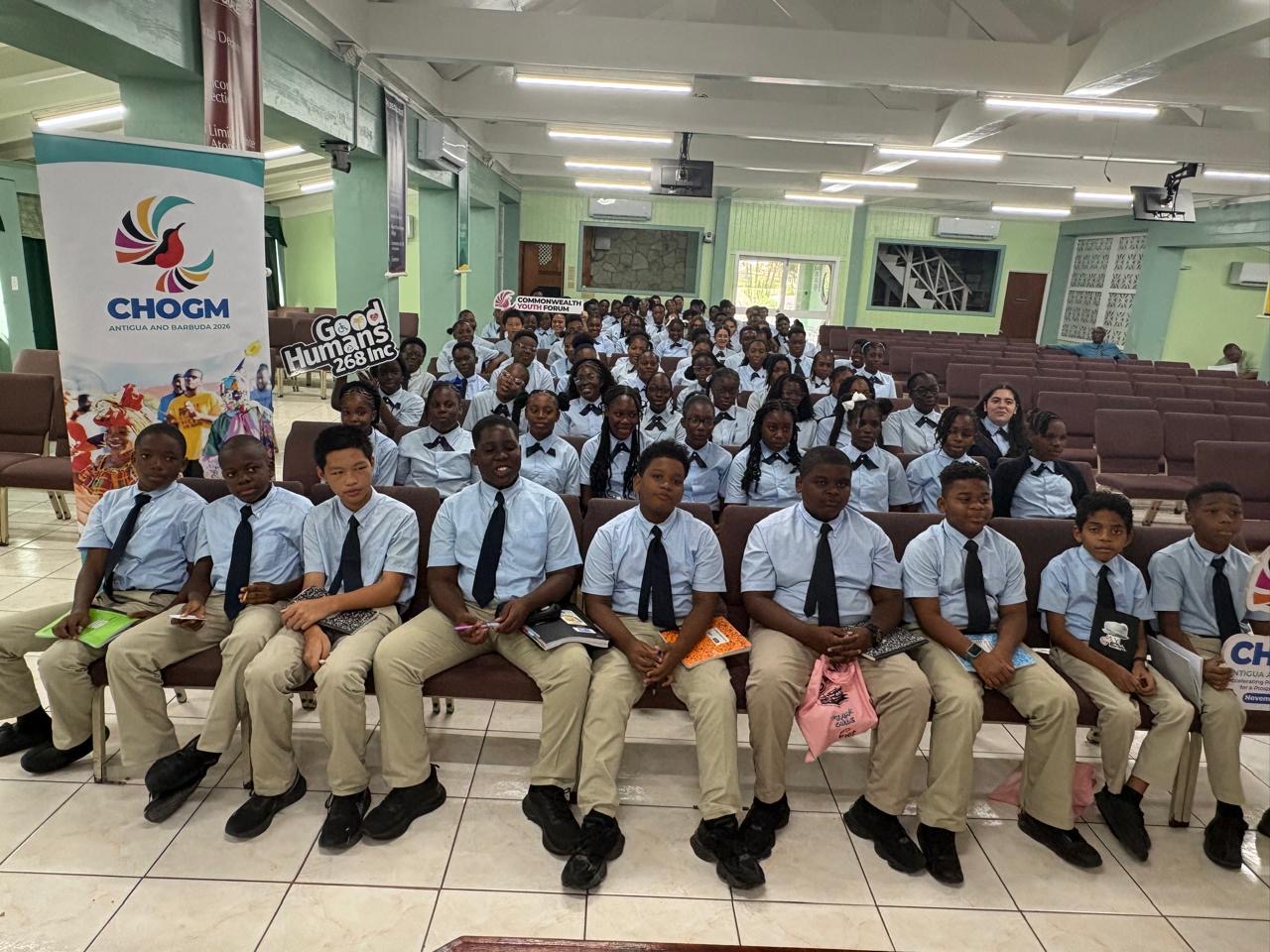
    The Antigua and Barbuda Reparations Support Commission (ABRSC) has formally concluded its landmark youth-focused essay competition, drawing nearly 20 original submissions from motivated secondary, college, and university students across the twin-island nation. Designed to spark critical dialogue around a pressing issue of regional historical and social importance, the competition centered on the theme “Reparatory Justice: Reflection and Projection,” which challenged participating students to explore the core meaning, ongoing relevance, and future trajectory of reparatory justice both within Antigua and Barbuda and across the broader Caribbean community.

    This initiative is one of many ongoing efforts by the ABRSC to advance its core mission: expanding public education, driving advocacy for reparations, and centering youth voices in conversations about historical justice. Commission leaders have expressed sincere encouragement over both the volume of participation and the depth of engagement young people demonstrated for a topic that shapes modern discussions of equity, national development, cultural identity, and redress for historical harms. All participants earned high praise from the ABRSC for investing the time to conduct independent research, reflect deeply on their own perspectives, and articulate thoughtful arguments around this complex social issue.

    At present, all submitted essays are undergoing evaluation by a diverse panel of judges assembled to ensure a fair and comprehensive review. The panel brings together cross-sector expertise, including academic researchers, long-time reparatory justice advocates, published writers, and creative practitioners. The ABRSC has noted that this broad, multidisciplinary makeup of the judging panel guarantees that all submissions will receive a balanced, thoughtful assessment that accounts for multiple perspectives on the topic.

    Per the competition timeline, winners will be officially announced on May 22, 2026, timed to align with commemorations of African Liberation Day, which is marked globally on May 25. A formal prize-giving ceremony to honor top-performing participants will follow one week later, scheduled for May 29, 2026.

    In closing, the ABRSC extended gratitude to all students who submitted entries, as well as to the educators and educational institutions that supported student participation and encouraged young people to engage with the topic. The commission reaffirmed its long-term commitment to building broader public awareness of reparatory justice, creating more accessible opportunities for public engagement, and cultivating inclusive spaces where young people can contribute their unique perspectives to this ongoing national and regional conversation.

  • Footballer Charles plans to transfer to new college in Kansas

    Footballer Charles plans to transfer to new college in Kansas

    A rising talent in international women’s football, Shania Charles from Saint Lucia, is set to take the next step in both her athletic and academic journey at Hesston College, a small liberal arts institution located in central Kansas. The experienced defensive player will make the move from Allen Community College, where she has spent the past two years competing and studying, and is scheduled to begin her tenure at the Kansas-based campus in the fall of 2026 while pursuing her undergraduate degree.

    Hesston College, which boasts a tight-knit student body of just over 400 enrollees, fields its sports teams under two national collegiate athletic bodies: the Continental Athletic Conference (CAC) and the National Association of Intercollegiate Athletics (NAIA). The program has already shown impressive momentum in its young NAIA history – last season, in the Larks’ first year competing as an NAIA member, the women’s football squad fought their way all the way to the CAC championship match, marking one of the most successful debut seasons in the program’s recent history.

    Known as a versatile and battle-tested defender, Charles brings a wealth of on-pitch leadership experience to the Larks, where she will join the squad’s mission to “Defend The Nest” when she steps onto campus next year. During her time at Allen Community College, where she played for the Lady Red Devils, Charles earned the honor of serving as team captain in her final season. That year, she put up solid offensive numbers alongside her defensive duties, netting two goals and notching three assists while anchoring the team’s backline. Beyond the pitch, Charles has also established a strong track record of student leadership engagement at her current institution.

    In her sophomore year at Allen Community College, Charles held the presidency of both the campus Student Senate and the Phi Theta Kappa honor society. She also took a lead organizing role in the college’s annual World Food Fair, building connections across the diverse campus community. A healthcare-focused student, Charles was a core member of a student team that took home first place at a statewide collegiate competition for their impactful mental health awareness campaign targeted at local amateur and youth athletes.