作者: admin

  • Dominica announces under-23 team for regional 3×3 basketball tournament

    Dominica announces under-23 team for regional 3×3 basketball tournament

    The Dominica Amateur Basketball Association (DABA) has formally announced its four-person national Under-23 3×3 roster set to compete at the upcoming ANOCES U23 3×3 Basketball Championship, taking place this weekend in the British Virgin Islands. The two-day tournament, scheduled for May 16 and 17, 2026, will be hosted at the territory’s Multipurpose Sports Complex, bringing together top young 3×3 talent from 10 Caribbean nations and territories, including Antigua, St. Kitts, Grenada, St. Lucia, St. Vincent, and host BVI.

    Dominica’s selected squad features two players from the PSC Falcons club: Karim Daniel and Yawani Regis, alongside Andel Olivacee of 767 Sports Club and Rene Williams from the BAA Sharks. Veteran basketball coach Yannick Regis will lead the team as head of delegation and on-court strategist, while Dominican referee Yehudi John will also join the event as an official representative, selected to officiate matches throughout the tournament.

    Beyond competitive play, the trip includes key professional development opportunities for Dominica’s basketball community. Head Coach Regis is scheduled to take part in a regional coaching symposium, focused on boosting coaching education standards and spreading modern basketball expertise across the Caribbean. Meanwhile, Referee John will participate in a specialized regional officiating training program, designed to elevate refereeing standards both in Dominica and across neighboring regional associations.

    In an official press statement, DABA emphasized that this multi-person delegation reflects the organization’s sustained, holistic commitment to growing basketball in the island nation. Unlike many delegations that only send competing athletes, Dominica’s inclusion of a coach and referee in professional development programs aligns with its long-term strategic plan to build sustainable basketball success from the grassroots up. DABA extended formal congratulations to all selected members, noting their spots on the delegation are a direct reflection of years of consistent dedication, hard work, and contributions to growing the sport at the local level.

    The association also publicly thanked the Dominica Olympic Committee for its critical financial sponsorship of the team’s trip. DABA officials noted that the Olympic Committee’s long-running investment in youth sport and athlete development has consistently created pathways for Dominican basketball stakeholders to gain valuable high-level experience competing and learning at regional and international events.

    Additional recognition was extended to tournament organizers and regional basketball governing bodies for creating the platform that allows Caribbean young athletes to showcase their skills and gain exposure in the fast-growing 3×3 format, which has gained significant global traction since its Olympic debut in 2020. For DABA, the tournament is a key milestone in its broader strategic vision to return Dominica to a prominent competitive position in Caribbean basketball, while creating sustained opportunities for the next generation of players, coaches, and officials to grow.

    To close the announcement, DABA called on the Dominican public and local basketball community to rally behind the delegation as it represents the island nation, widely known as the Nature Isle, on the regional competitive stage. The association closed with its official rallying cry: “Dominica Back on the Regional Stage — Stepping onto the International Stage.”

  • SGU joins Global Biodiversity Alliance

    SGU joins Global Biodiversity Alliance

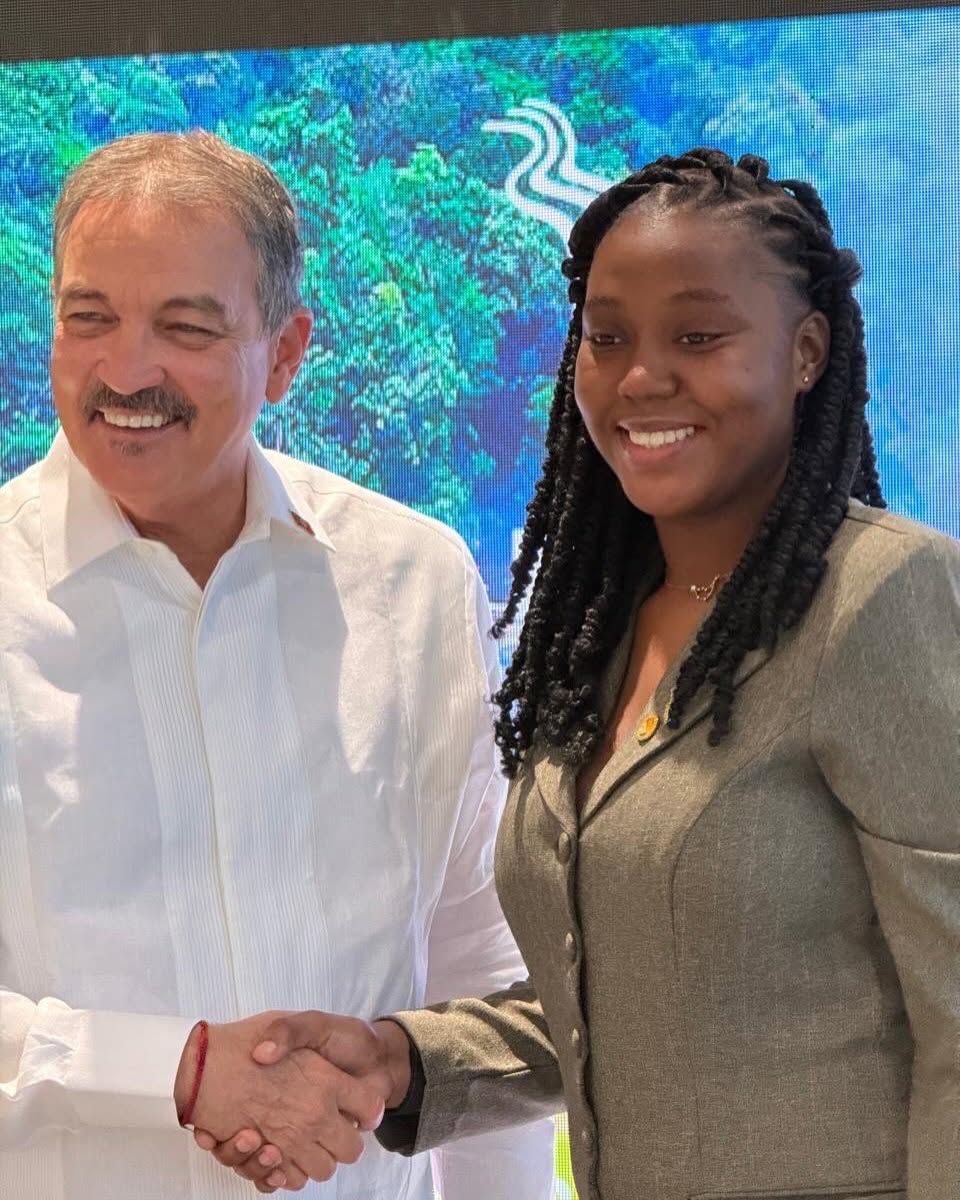
    In a formal ceremony held at Guyana’s State House, St George’s University (SGU) has formally been inducted as the newest non-governmental member of the Global Biodiversity Alliance (GBA), with Guyana’s President His Excellency Dr Mohamed Irfaan Ali presenting the official membership certificate to the institution. SGU’s admission to the alliance, which has already been formally confirmed by the GBA Secretariat, builds on a deepening collaborative partnership between the Grenada-based university and the Government of Guyana rooted in the Georgetown Declaration, a landmark global framework dedicated to halting and reversing global biodiversity loss through the advancement of sustainable, science-centered solutions.

    As a non-governmental institutional member, SGU now joins a rapidly expanding international coalition that brings together national governments, research institutions, and civil society organizations. All members of the alliance work in coordinated alignment with the Kunming-Montreal Global Biodiversity Framework to protect vulnerable ecosystems and speed up progress toward shared global biodiversity targets.

    Speaking on the occasion, Dr Marios Loukas, SGU President and Dean of the School of Medicine, highlighted the institution’s core strength in bridging academic disciplines to tackle pressing, complex global challenges. “Through the Global Biodiversity Alliance, we are expanding our ability to contribute actionable research and foster the kind of collaboration needed to drive measurable progress,” Loukas said, noting that membership opens new avenues for two-way learning and knowledge exchange between SGU scholars and a global network of leading conservation experts.

    Founded as a voluntary, inclusive multi-stakeholder platform, GBA was created to advance open knowledge sharing, scalable conservation financing, and coordinated collective action to protect global biodiversity. The alliance unites stakeholders from every sector—from government and academia to private industry and nonprofits—to accelerate the on-the-ground implementation of global biodiversity goals and advance inclusive, nature-positive sustainable development.

    GBA Secretariat representatives have emphasized that academic institutional partners are foundational to advancing the alliance’s core mission. Collaboration with universities, they note, strengthens global research capacity, expands cross-border knowledge exchange, and improves the delivery of effective conservation outcomes. Pradeepa Bholanath, Senior Director of Climate Change and REDD+ at Guyana’s Ministry of Natural Resources and a leading figure at the GBA Secretariat, welcomed SGU’s membership in a statement. “We are pleased to welcome St George’s University to the Global Biodiversity Alliance as a valued non-governmental member,” Bholanath said. “Through this collaboration, SGU will contribute to a dynamic platform dedicated to halting and reversing biodiversity loss, and we look forward to engaging the University in upcoming initiatives that support the Alliance’s shared global priorities.”

    As a GBA member, SGU will participate in a range of collaborative initiatives focused on advancing evidence-based conservation solutions, expanding interdisciplinary biodiversity research, and building global conservation capacity across under-resourced regions. The university’s entry into the alliance aligns with its long-standing institutional mission to address transboundary global challenges through integrated education, innovative research, and cross-sector partnership. The move also solidifies SGU’s growing role as a global leader in advancing the interconnected goals of global public health and environmental stewardship.

    Reaffirming the institution’s commitment to the alliance’s mission, Loukas added: “This partnership creates new opportunities for SGU to both contribute to and learn from a global network of experts and institutions. We are committed to applying our expertise in ways that strengthen capacity, expand knowledge, and support impactful, science-driven initiatives across regions.”

  • Hippolyte takes top spot on quiet collegiate track weekend

    Hippolyte takes top spot on quiet collegiate track weekend

    As most American collegiate track and field programs entered a quiet transitional period this past weekend — with some student-athletes wrapping up their academic careers via commencement and others fine-tuning their preparations for upcoming championship events — a small group of Saint Lucian competitors turned in standout performances across multiple meets around the United States.

    One of the most notable results came from Western Illinois University senior Mya Hippolyte, who claimed gold in the women’s 100-meter dash at the Huskie Classic. Crossing the finish line in 11.88 seconds, Hippolyte not only secured the win but also set a new personal season best. A 1.3 m/s tailwind aided her run, which marks her fastest 100m time since she clocked 11.71 seconds at the 2025 Ohio Valley Conference Outdoor Championships.

    Over at Washburn University, Kereser Augustin logged two strong 400-meter races across two separate meets in three days. Competing first at the Wichita State Shocker Open, Augustin took second place on the podium with a time of 55.66 seconds. Just a few days later, she traveled to the Pittsburg State Almost Last Chance Meet, where she added a fifth-place finish to her weekend resume with a time of 55.81 seconds.

    Lewis University sprinter Cagini Pilgrim also turned in a pair of solid results at the St. Francis Fighting Chance Invite. In the men’s 200-meter dash, Pilgrim clocked 21.46 seconds to earn a second-place finish. He also advanced to the 100-meter final, where he crossed the line in fourth place with a 10.59-second run after posting a 10.62-second time in the preliminary rounds. His final 100m time marks his second-fastest wind-legal result of the 2026 outdoor season.

    Beyond on-track results, two more Saint Lucian student-athletes celebrated major academic milestones over the weekend. Naya Jules, the current holder of Saint Lucia’s national women’s pole vault record, graduated from Garden City College with an associate degree. Miguel Charlery similarly crossed the commencement stage to collect his bachelor’s degree from East Stroudsburg University.

    The 2026 outdoor collegiate track postseason is set to kick off this week, with the first major championship action kicking off Thursday, May 14, at the junior college Division I Outdoor Championships hosted by New Mexico Junior College in Hobbs, New Mexico. Jules is set to compete in three events and is widely considered a legitimate medal contender heading into the meet: she ranks inside the national top 10 in both the javelin throw and heptathlon, and sits 15th in the pole vault rankings.

    For four-year NCAA Division I, II and III programs, conference championship tournaments will kick off this coming weekend, with more than a dozen Saint Lucian athletes expected to compete for coveted spots in their respective division’s national championship meets in the weeks ahead.

  • Consider our people

    Consider our people

    By Adrian Joseph, DBA

    Every generation of Grenadians carries a core responsibility: to nurture a stronger, more equitable nation while acting as responsible stewards of the country’s natural and social fabric for those who will come after. This mission demands people-centered progress rooted in innovation, robust protection of human rights, unwavering commitment to environmental sustainability, and thoughtful management of the complex, fast-shifting social dynamics shaping modern Grenada.

    Crucially, development must never come at the cost of public health, community safety, environmental integrity, or the long-term economic well-being of ordinary citizens. Today, that principle is being put to the test in Beausejour and its surrounding neighborhoods, where local residents’ calls for the government to enforce proper planning rules, deliver meaningful community consultations, and uphold environmental standards have been dismissed.

    At the center of the conflict is the Rayneau Group of Companies’ asphalt production facility, sited directly within a densely populated residential zone and just meters away from critical community infrastructure. The plant sits a mere 143 meters from a public playing field, 300 meters from a pre-primary school, 500 meters from a secondary school, 151 meters from a Seventh-day Adventist Church, and less than 100 meters from a local river – creating immediate, severe risks of toxic chemical runoff that could contaminate local water supplies.

    Public health advocates warn that it is only a matter of time before the facility’s industrial activity triggers a major environmental disaster and widespread chronic health issues, particularly among the most vulnerable residents: the elderly, young children, and people living with pre-existing health conditions. Too often, the full negative impact of unregulated industrial development only becomes visible once irreversible harm has been done, yet some officials have chosen to ignore the risk, hiding behind outdated, industry-friendly justifications for inaction. While the mistakes of the past cannot be undone, Grenadians have a collective duty to act now to build a better future for all, regardless of political affiliation or socioeconomic status. Every person in this country has an equal right to live in a clean, healthy environment.

    The ongoing disregard for the rights of affected communities around the Rayneau plant runs counter to both Grenada’s national legislation and its binding international obligations. Multiple international human rights and environmental frameworks explicitly require signatory states to take proactive action to protect public health and prevent environmental harm. As a party to the International Covenant on Economic, Social and Cultural Rights, Grenada is legally obligated to uphold the right to the highest attainable standard of health – a right that international legal bodies have explicitly interpreted to include protection from environmental hazards like industrial air pollution and toxic exposure. Similarly, the International Covenant on Civil and Political Rights guarantees the fundamental right to life, which modern international jurisprudence has expanded to require protection from life-threatening environmental conditions. The United Nations Human Rights Council’s recent formal recognition of the universal right to a clean, healthy, and sustainable environment further strengthens this binding obligation.

    These human rights commitments are reinforced by multilateral environmental agreements including the Basel Convention and the Stockholm Convention, which mandate that member states regulate industrial waste, limit toxic emissions, and prevent harm to human health and ecosystems. The unregulated, potentially dangerous emissions from the Beausejour asphalt facility clearly fail to meet Grenada’s obligations under these agreements.

    A core contradiction lies at the heart of this crisis: Grenada’s leaders frequently deliver bold speeches about global climate action and environmental protection on the international stage, but fail to enforce those same standards at home. One of the most critical gaps in this case is the absence of a required Environmental and Social Impact Assessment (ESIA) – a mandatory step under Grenadian law designed to identify risks to communities and ecosystems, facilitate stakeholder engagement, and implement mitigation measures to protect affected populations. While an ESIA is not the only consideration for development projects, it must be a non-negotiable part of planning and regulatory review. Developers like Rayneau must not be allowed to flout ESIA requirements with impunity, as the long-term consequences for local communities and the environment can be catastrophic.

    This crisis raises deeper questions about political leadership and accountability in Grenada: do the government’s commitments to climate action and public health only apply to international speeches, or will they be enforced at home for ordinary Grenadian communities? Time and again, Grenadian ministers take global stages to warn of the urgent threat of climate change and environmental harm, yet back home their words ring hollow. Across local communities, unregulated development, weak regulatory enforcement, and systemic failure to manage environmental and public health risks have become the norm.

    The old African proverb says it takes a village to raise a child – and it takes an engaged, united village to build a just nation. Today, that village must stand with the Beausejour residents who breathe polluted air every day, the parents who worry about their children’s long-term health, and all citizens who believe Grenada’s communities deserve better. If we stay silent while this violation continues, our public health, our natural environment, and the future of generations to come will pay the price. We must demand immediate action to review and reverse the decision to allow the Rayneau facility to operate at its current residential location.

    This campaign is not anti-development. It is a demand that all development in Grenada be responsible, compliant with national law, and aligned with the fundamental right to health and dignity that every community deserves. I am calling for an immediate suspension of all operations at the Rayneau industrial facility, pending a full, independent assessment of its environmental impact, public health risks, and compliance with national regulatory requirements. No Grenadian should be forced to endure illegal, unregulated disregard for their health and well-being, left to wonder what toxins they are inhaling with every breath they take.

    *Disclaimer: NOW Grenada is not responsible for the opinions, statements or media content presented by contributors. In case of abuse, click here to report.*

  • Worker Reportedly Killed in Incident on All Saints Road

    Worker Reportedly Killed in Incident on All Saints Road

    A tragic workplace fatality has shaken a local community after a municipal waste management worker was killed by a passing bus Tuesday morning while performing routine grass-cutting maintenance along All Saints Road.

    The worker, who was contracted to the National Solid Waste Management Authority, was carrying out roadside vegetation trimming when the collision occurred, according to initial law enforcement accounts. Emergency responders who arrived at the scene confirmed the man suffered catastrophic, life-ending trauma in the incident and was pronounced dead immediately after the crash.

    As news of the sudden death spread across the neighborhood, colleagues who were working alongside the victim and local residents were left deeply disturbed by the traumatic event. Many on-site witnesses reported lingering shock in the hours following the collision, as the dangerous reality of roadside municipal work was brought into sharp focus.

    Local law enforcement officials and emergency service teams were dispatched to the crash location within minutes of the first 911 call, and have since cordoned off the section of All Saints Road to conduct forensic evidence gathering. Investigations remain active as authorities work to piece together the full sequence of events, including factors such as traffic conditions, visibility at the time of the collision, and whether any additional contributing elements led to the fatal incident.

    As of the latest media update, officials have not yet released the formal identity of the deceased worker, pending notification of next of kin. A content warning accompanies on-site footage of the crash, as the recorded material contains graphic imagery from the fatal accident scene that may cause distress to sensitive audiences.

  • Grenada pushes towards sports tourism with Pure Grenada Masters Cricket Tournament

    Grenada pushes towards sports tourism with Pure Grenada Masters Cricket Tournament

    The Grenada Tourism Authority (GTA) has wrapped up the first edition of the Pure Grenada Masters Cricket Tournament, a seven-day celebration of regional cricket that delivered measurable economic gains to the Caribbean island’s tourism and local business sectors. The tournament brought 60 veteran cricketers from across the region together to compete, with four visiting teams joining two local squads for the inaugural event.

    Competing sides included the regional West Indies Masters, Munroe Road Masters from Trinidad, North Soesdyke from Guyana, and AMAAS Masters from Barbados. These visiting teams went head-to-head against Grenada’s own representative sides, Spice Isle Masters 1 and Spice Isle Masters 2, across a week of matches that blended on-pitch competition with warm cross-regional camaraderie. After a series of tightly contested games, Guyana’s North Soesdyke claimed the inaugural championship title, with Trinidad’s Munroe Road Masters finishing as tournament runners-up.

    Beyond the boundary ropes, the tournament delivered tangible benefits to Grenada’s local economy, driving increased activity across hospitality, food service, and tourism-focused small businesses as visiting players and guests stayed and spent on the island. To deepen connections between visitors and the local business community, event organizers added a supplementary consumer pop-up marketplace on the final day of competition, giving local brands and independent entrepreneurs a direct space to engage with participating players, traveling supporters, and event guests.

    GTA leadership framed the tournament as a successful proof of concept for Grenada’s growing sports tourism strategy, highlighting how niche sporting events can drive year-round tourism momentum. “The Pure Grenada Masters Cricket Tournament is a shining example of how sports tourism can fuel our local economy and showcase our island’s hospitality,” said Stacey Liburd, CEO of the GTA. “By blending competition with strategic partnerships, we are creating meaningful experiences that benefit our service sectors and keep Grenada’s tourism momentum strong throughout the year.”

    Looking ahead to 2026 and beyond, the GTA has announced plans to cement the Pure Grenada Masters Cricket Tournament as a permanent annual fixture on Grenada’s sporting calendar. The organization’s long-term goals for the event include expanding the field to include more participating teams, drawing larger spectator audiences, and integrating more local cultural experiences and business engagement opportunities into each iteration of the tournament. Officials are also exploring additional complementary initiatives to boost the event’s impact, including voluntourism programs, custom fan travel packages, and expanded corporate sponsorship opportunities, all part of a broader push to establish Grenada as a premier destination for regional and international sporting events.

    “As we continue to deploy our 2026 strategy, we remain fully committed to positioning Grenada as a sports tourism destination,” noted Tornia Charles, Chief Marketing Officer at the GTA. “Our aim of achieving this goal goes beyond just hosting; we intend to create a lasting impact for all Grenadians who benefit from visitors coming to our shores.”

  • Ella-Rose Charles wins National Tourism Youth Congress 2026

    Ella-Rose Charles wins National Tourism Youth Congress 2026

    A 14-year-old student from St Joseph’s Convent St George’s has stepped into the national spotlight as Grenada’s newest Junior Minister for Tourism, after claiming top honors in the final round of the National Tourism Youth Congress.

    Organized by Grenada’s Ministry of Tourism, the Creative Economy and Culture, this annual initiative serves a dual purpose: it engages young people in discussions about the country’s core tourism industry, and selects the national delegate that will represent Grenada at the Caribbean Tourism Organisation Regional Tourism Youth Congress, scheduled to take place in Guyana this coming October.

    In this year’s final competition round, 15-year-old Leah Charles of Happy Hill Secondary School secured the runner-up position, while 15-year-old Micah Purcell-Munroe, also a student from St Joseph’s Convent St George’s, finished in third place.

    Speaking to gathered delegates at the Kirani James Athletics Stadium last Friday, Tourism Minister Hon. Adrian Thomas framed the youth congress as far more than a simple contest, calling it “a national investment in young minds.” He pushed participating students to reframe their relationship to Grenada’s tourism sector, urging them to see themselves not just as casual beneficiaries of the industry’s success, but as its future leaders and creative innovators. “Tourism can open doors for you to become entrepreneurs, managers, chefs, tour guides, event planners, content creators, marine experts, cultural ambassadors, hospitality professionals, policy advisers and even tourism ministers,” Thomas told the assembled students.

    Permanent Secretary Desiree Stephen echoed this framing, choosing to reject the label of “competition” for the event entirely. “It is more of a coming together of great young minds to discuss and present suggestions and recommendations on issues that are critical to the development, enhancement and sustainability of our tourism sector,” she explained. Stephen also commended all students from the four participating secondary schools — St Joseph’s Convent St George’s, Happy Hill Secondary School, Wesley College, and St Andrew’s Anglican Secondary School — for stepping up to the challenge, noting their standout creativity and sharp insight into tourism sector challenges.

    Beyond the title of Junior Minister, winner Ella-Rose Charles will take home a range of additional rewards, including cash prizes, other recognition gifts, and ongoing mentorship opportunities through the Ministry of Tourism, the Grenada Tourism Authority and the Grenada Hotel and Tourism Association. Second and third place finalists also received cash prizes and other awards, while every participating competitor left with a certificate of recognition and branded merchandise, donated by the Ministry of Tourism and the Grenada Tourism Authority. St Joseph’s Convent St George’s, as the winning school, was also awarded a custom commemorative plaque.

    Other competitors that took part in this year’s final round included Makaylah Ramsey and Dwight Thomas — the competition’s only male contestant — both from St Andrew’s Anglican Secondary School, Kitalia Modeste of Wesley College, and Mia Clovey and Anaiah Phillip of St Joseph’s Convent St George’s.

    This year’s event marks the second consecutive year the Ministry of Tourism has hosted the National Tourism Youth Congress, after the initiative was put on a six-year hiatus. The first qualifying round of this year’s competition was held back in April, and Friday’s final proceedings were chaired by Kealah Baptiste, Grenada’s 2025 Junior Minister for Tourism, who closed the event by encouraging all participants to continue pushing for growth and engagement in the tourism sector.

  • UNDP Report Says Caribbean Democracies Under Pressure Despite Development Gains

    UNDP Report Says Caribbean Democracies Under Pressure Despite Development Gains

    The United Nations Development Programme (UNDP) has published its latest Democracy and Development Report 2026, delivering a mixed assessment of progress and challenges across Latin America and the Caribbean. In a bright spot for the region, the report places Antigua and Barbuda among the group of Caribbean nations earning a “Very High Human Development” classification, with a 2026 Human Development Index (HDI) score of 0.851. The analysis covers 14 CARICOM member states, including major Caribbean economies and island nations such as Barbados, Jamaica, Trinidad and Tobago, and St. Lucia.

    While the report affirms that the Caribbean region has retained its longstanding track record of generally stable democratic systems, it issues a clear warning that these governing institutions are facing mounting, multi-faceted strain that tests their capacity to deliver for citizens. Four core stressors are identified: rising criminal activity, accelerating climate change impacts, persistent economic vulnerability, and eroding public confidence in government.

    One of the most stark inequities highlighted in the document centers on climate change. As the report emphasizes, Caribbean nations collectively contribute less than 1% of global greenhouse gas emissions, yet they bear some of the most severe and frequent consequences of global environmental degradation. Recurring climate-fueled natural disasters have repeatedly driven up national debt levels across the region, erasing years of incremental development progress and straining public budgets that could otherwise be allocated to social services and infrastructure.

    Transnational security threats also pose a major challenge to regional stability. The report notes that organized criminal networks and illicit arms trafficking, most of which originate from outside the Caribbean, have permeated local communities, driving up violent crime rates, worsening public insecurity, and diverting state resources from development to law enforcement.

    Despite these accumulating pressures, the report finds that democratic engagement remains robust in much of the region. Antigua and Barbuda, for example, recorded relatively healthy parliamentary voter turnout in recent cycles, reflecting continued public interest in formal electoral processes. That said, growing public frustration is evident across multiple domains: citizens increasingly express discontent over perceived corruption, lackluster economic growth, underperforming public services, and the failure of governments to address pressing priorities in a timely way. As trust in traditional political institutions wanes, more citizens are channeling their engagement through independent civil society groups and grassroots advocacy movements instead of established political parties and state structures.

    Importantly, the report pushes back against narratives that Caribbean democracies are on the brink of collapse. Instead, it frames the current moment as a critical juncture that demands targeted reform: governments must prioritize improving governance accountability, strengthening weak institutional capacity, and aligning policy more closely with the needs and expectations of their populations. The report also highlights encouraging ongoing work through the Caribbean Community (CARICOM), which has launched regional initiatives to shore up democratic resilience, including programs advancing gender parity, youth economic and political empowerment, community-led crime prevention, and expanded social protection systems.

    In closing, the UNDP stresses that long-term preservation of democratic stability and equitable sustainable development across the Caribbean will depend on two key pillars: the expansion of national social safety nets to buffer vulnerable communities from economic and climate shocks, and sustained, targeted collaboration between regional governments and multilateral international organizations to address shared transnational challenges.

  • Wie is schuldig aan wateroverlast?

    Wie is schuldig aan wateroverlast?

    Recent days of heavy downpour have laid bare once again the profound vulnerability of the nation to catastrophic urban flooding. Neighborhood streets have turned into rushing, unmanageable rivers, residential properties have been submerged, schools have suspended classes, working adults are trapped inside their homes, and local business owners face catastrophic threats to both their property and their regular income streams. Motorists who were forced to navigate submerged roadways are now left covering costly repair bills for water-damaged vehicles. Across affected areas, widespread frustration, anger, and a sense of powerlessness have taken hold. But as a society, we must confront one simple, unflinching question: who bears responsibility for this repeated water crisis?

    The answer is far from straightforward, because the unvarnished truth is that this is a collective failure of the entire society. There is no doubt that government holds significant responsibility for the current crisis, but ordinary citizens must also be willing to examine their own behavior honestly. We cannot continually point fingers at the national government when some among us brazenly dump discarded refrigerators, freezers, mattresses and other bulk waste in drainage ditches and storm sewers. We cannot reasonably complain about clogged drainage canals when members of our community casually toss empty bottles, plastic cups and other litter onto streets from car windows as if this careless behavior is socially acceptable.

    Flooding is not triggered by intense rainfall alone; it is also the direct product of harmful human behavior and decades of systemic neglect, a lack of individual discipline, collective accountability, and regulatory enforcement. That said, this shared responsibility does not absolve the national government and public authorities of their outsized responsibility to address the crisis. On the contrary: the core role of government is to set clear direction for society, develop proactive policy, enforce regulatory standards, and educate the public on the dangers of environmental pollution and poor spatial planning.

    So where is the structured, sustained public outreach to inform citizens that clogging drainage ditches and sewers with waste creates life-threatening risks? Where are the national public awareness campaigns to drive home this critical message? Where are the routine inspections and meaningful penalties for individuals and businesses that damage the nation’s critical drainage infrastructure? Why are violators almost never held accountable for their actions? Why are drainage canals not cleared and maintained on a regular, proactive schedule? Why do authorities only act when floodwater is already lapping at residents’ front doors — and in some cases, fail to act even then?

    A government should not only be visible during emergency press conferences or issuing after-the-fact statements. Good governance requires proactive planning, forward thinking, and preemptive action to stop small problems from escalating into full-blown national disasters. It is precisely on this core metric that the current government and public administration have failed.

    After nearly nine months in office, society is fully justified in asking tough questions about the policies of the Ministry of Public Works, Transport and Spatial Planning. Flooding is never just a natural disaster; it is also the outcome of flawed long-term planning, inadequate routine infrastructure maintenance, and a persistent lack of decisive policy action. The claim that “there is no money” can no longer be used as a shield when residents are literally drowning in floodwater in their own communities.

    If it is true that public funding for drainage infrastructure is truly insufficient, then the Ministry of Finance and Planning must also face rigorous scrutiny. How can core public services like functional drainage, resilient infrastructure and residential flood protection not be guaranteed when national budget priorities are set?

    Too often, current leaders blame the previous administration for skipping routine infrastructure maintenance. While that claim may hold a grain of truth, it has long since lost its persuasive power. The public voted for new leadership and gave this government a clear mandate to solve long-standing problems. When leaders accept the responsibility of governing, they also accept the obligation to fix the failures of past administrations, not just repeat them.

    It is easy to criticize from the sidelines. But once you take power and are forced to address pressing national challenges, the true weight of governing becomes clear. Even so, the inherent difficulty of the job can never be an excuse for inaction, negligence or a lack of long-term vision.

    The harsh reality we face is this: climate change will only make extreme rainfall more intense and more frequent in the coming years. Deforestation, destruction of natural green spaces, and lax environmental policy have eroded our natural flood buffer systems to a dangerous degree. If we fail to implement bold, decisive reforms today, the crisis will only grow far worse tomorrow. Repeated flooding will no longer be a temporary inconvenience; it will become an annual recurring national crisis. That is why this moment must serve as a critical wake-up call for every stakeholder: the national government, local public authorities, the private sector, and individual citizens.

    We must stop the pointless blame-shifting that has delayed action for decades. Individual citizens must take responsibility for protecting their shared living environment. The government must finally invest in sustainable policy, proactive infrastructure maintenance, regular inspection, and consistent enforcement. Penalties for illegal dumping and environmental pollution must be visible and impactful enough to deter bad behavior. Spatial planning must be treated as the critical public priority it is. Most of all, we need leadership that does not just name problems, but actually solves them. Because today, we are all drowning — both literally, in floodwater, and figuratively, in inaction.

    The damage already done to homes, vehicles, businesses and public infrastructure is substantial, and it will only grow without action. But the greater damage that is now unfolding is the erosion of public trust in the nation’s leaders. That core question remains unanswered: who is to blame for the recurring flooding crisis?

    Perhaps the most honest answer is that all of us share some responsibility. But that shared blame also means we must work together to find a shared solution.

  • AT&LU Offers 10 Scholarships for UWI Global Campus Short Courses

    AT&LU Offers 10 Scholarships for UWI Global Campus Short Courses

    A new opportunity for skills advancement has opened for members of Antigua’s oldest trade union, with the Antigua Trades and Labour Union (AT&LU) rolling out 10 full scholarships for continuing professional education courses hosted by the University of the West Indies (UWI) Global Campus Antigua and Barbuda.

    To qualify for the funding, applicants must hold active AT&LU membership with a tenure of at least two years, and satisfy all entry prerequisites set out by the UWI Global Campus administration. The scholarship covers all tuition costs for approved 10-week short courses, which are scheduled to kick off the week of May 25. Participants can select from a wide range of industry-relevant subjects tailored to both career growth and entrepreneurial ambition, spanning customer service management, effective leadership strategy, entrepreneurship and business development, financial management, human resource management, project management, supervisory management, real estate economics and appraisals, and community and family work.

    All course instruction will be delivered fully online to accommodate working professionals, offering flexible scheduling that aligns with members’ existing job responsibilities. Without the scholarship, individual course tuition would range from Eastern Caribbean $650 to Eastern Caribbean $800, varying based on the specific program selected.

    For union members interested in claiming this opportunity, the application deadline is set for May 15, 2026, giving interested candidates multiple years to prepare their submissions and confirm their eligibility with both the union and the university. This initiative marks a collaborative effort between the AT&LU and the UWI Global Campus to upskill the local workforce and expand professional access for working people across Antigua and Barbuda.