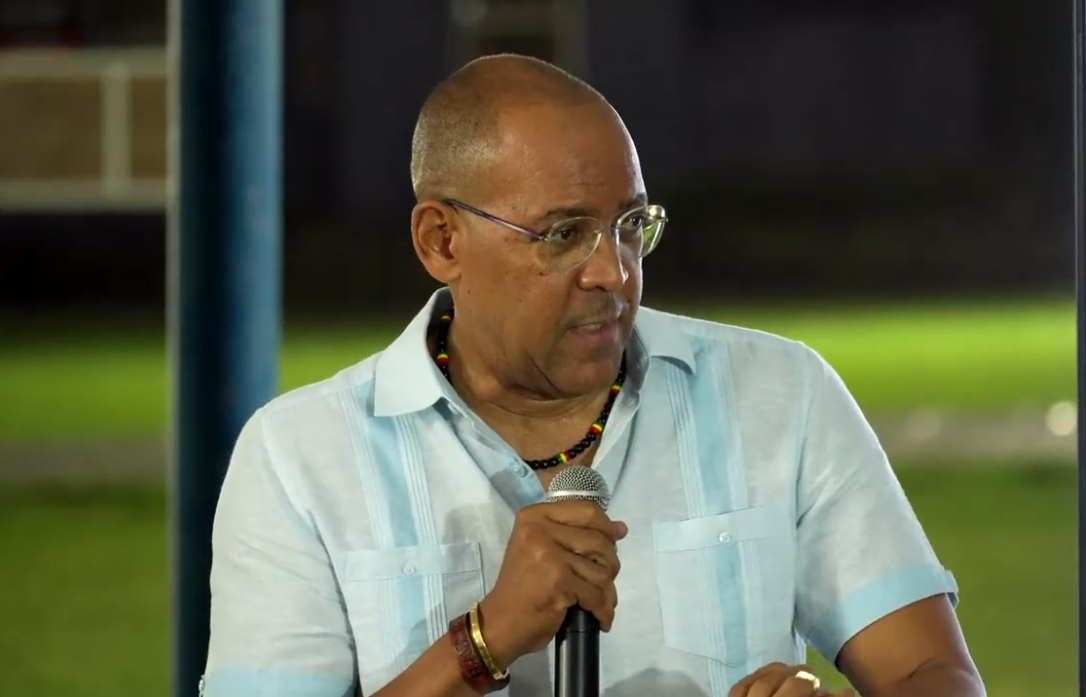
At a public Ideas Forum town hall meeting, Barbados’ Minister of Energy Kerrie Symmonds has outlined sweeping new policy changes for the country’s energy sector, responding directly to calls from seasoned industry professionals to prioritize local workforce development amid shifting regional energy dynamics.
Veteran energy consultant Brantley Green, who brings 43 years of global oil and gas experience to the discussion, pressed the government to act on a critical window of opportunity for skills development. Green noted that offshore oil and gas exploration projects typically require a five to seven-year lead time between initial seismic surveys and the start of active drilling. This preparatory period, he argued, creates the perfect opportunity to train local Barbadian workers for high-paying specialized roles in the growing sector, through partnerships with local technical institutions like the country’s polytechnic.
Green also raised urgent concerns about Barbados’ current overreliance on imported energy, pointing out that 90 percent of the island’s natural gas supply currently comes from overseas. He emphasized that developing robust domestic offshore production would cut costly foreign exchange outflows and reduce utility prices for local residents, particularly in communities across St George.
Symmonds openly acknowledged the validity of Green’s feedback, confirming that the government is moving away from ad-hoc, unstructured workforce training programs to formalize the process through binding legislation. The government’s new local content bill, which is already in an advanced stage of drafting, will set mandatory requirements for job access for Barbadian workers across the entire energy sector, spanning both traditional oil and gas operations and the fast-growing renewable energy industry.
“Mr Green has hit the nail on the head,” Symmonds stated. “We’re not going to just take a random approach to training. There’s actually going to be what you call a local content piece of legislation, which is currently in a very advanced stage of preparation. That local content legislation will look at the totality of the opportunities which are derived from the oil and gas sector, and also to the renewable energy sector, because that too offers a tremendous range of new jobs for which we’re going to have to train our people.”
Alongside the policy shift on workforce development, Symmonds confirmed a dramatic decline in domestic onshore gas production that has put the island’s energy security at risk. When he returned to the role of energy minister immediately after the COVID-19 pandemic, domestic wells supplied 70 percent of Barbados’ total gas demand. Today, that share has plummeted to just 30 percent, as most mature onshore fields have been depleted and major new exploration has not been carried out since the early 2010s.
“The reality is that for many, many of the wells and the fields across this island, we have either run the resources dry, or alternatively, we have to find a way of reinvesting in onshore exploration,” Symmonds explained. “Exploration can be a hit or miss thing, so there’s no certainty that because you start to spend on that, you’re going to get the derivative that you want.”
To address the growing domestic supply gap, the Mia Mottley administration has pursued a new regional energy partnership with Guyana, South America’s emerging fossil fuel powerhouse, under the bilateral Trident and Arrow initiative negotiated between Prime Minister Mottley and Guyanese President Dr Mohamed Irfaan Ali. Under the framework, Barbados would import natural gas from Guyana to supplement its declining domestic reserves.
The plan requires final approval from Barbados’ Cabinet and major upfront capital investment to build a purpose-built regasification and distribution terminal on the island. Symmonds emphasized that the government views this infrastructure not as a purely financial burden, but as a strategic investment to protect Barbados’ leading position in regional maritime transport and cruise tourism. As major cruise lines transition their fleets to natural gas-powered vessels to reduce emissions, Barbados aims to become the primary regional refueling and provisioning hub for these ships, outcompeting regional rivals St Lucia and Antigua for this growing market.
Symmonds framed the dual focus on importing Guyanese gas and expanding renewable energy training as part of a holistic long-term strategy to meet the country’s 2035 carbon reduction targets, noting that natural gas will serve as a critical transition fuel as the island scales up renewable energy capacity. “It is a holistic thing. There are many moving pieces on the table,” he added.