作者: admin

  • Antigua and Barbuda Welcomes Delegates for the 44th annual CHTA Caribbean Travel Marketplace

    Antigua and Barbuda Welcomes Delegates for the 44th annual CHTA Caribbean Travel Marketplace

    Weeks ahead of one of the Caribbean tourism sector’s most anticipated annual industry gatherings, newly installed State Tourism Minister Michael Freeland has launched on-the-ground preparations with an enthusiastic welcome for early arriving delegates at Antigua and Barbuda’s primary international gateway. On Sunday, May 10, Freeland joined a cohort of local tourism officials and industry stakeholders at Sir V.C. Bird International Airport to greet participants traveling in for the 2026 CHTA Caribbean Travel Marketplace, rolling out the warm, signature hospitality the twin-island nation is globally renowned for.

    Among the first high-profile arrivals Freeland personally welcomed were Anguilla’s Tourism Minister Cardigan Connor and Chantelle Richardson, Anguilla’s Director of Tourism, marking the start of a week-long schedule of targeted business meetings, cross-stakeholder networking, and collaborative industry engagement focused on advancing Caribbean tourism. The event, organized annually by the Caribbean Hotel and Tourism Association, serves as a critical regional nexus that unites tourism product suppliers and qualified buyers from across the Caribbean basin and major global source markets. Beyond facilitating B2B transactions, the marketplace is designed to nurture long-term cross-border partnerships that fuel sustainable growth, innovation, and resilience for the regional tourism sector, which is the backbone of many Caribbean economies.

    Antigua and Barbuda’s selection as the 2026 host nation carries meaningful industry significance, highlighting the destination’s rising profile as a leader in Caribbean tourism and demonstrating its proven capacity to host large-scale international industry events smoothly and successfully. Local organizing partners, including Antigua and Barbuda’s Ministry of Tourism, the Antigua and Barbuda Hotels and Tourism Association, and a cross-section of public and private sector stakeholders, have been working for months to refine event plans. The team is focused on delivering a seamless, memorable marketplace experience that showcases Antigua and Barbuda’s top-tier tourism offerings, from its iconic white-sand beaches to its world-class hospitality infrastructure, while setting the stage for productive connections that benefit the entire region.

  • Dominica among Eastern Caribbean nations set to benefit from EU-funded food security initiative

    Dominica among Eastern Caribbean nations set to benefit from EU-funded food security initiative

    Small island developing states across the Eastern Caribbean have long grappled with overlapping threats to food sovereignty, from intensifying climate shocks to persistent economic volatility and heavy reliance on expensive food imports. Now, a groundbreaking public-private partnership between the Zero Hunger Trust Fund (ZHTF) and the European Union is rolling out a targeted regional initiative designed to address these gaps while investing in the next generation of food systems leaders.

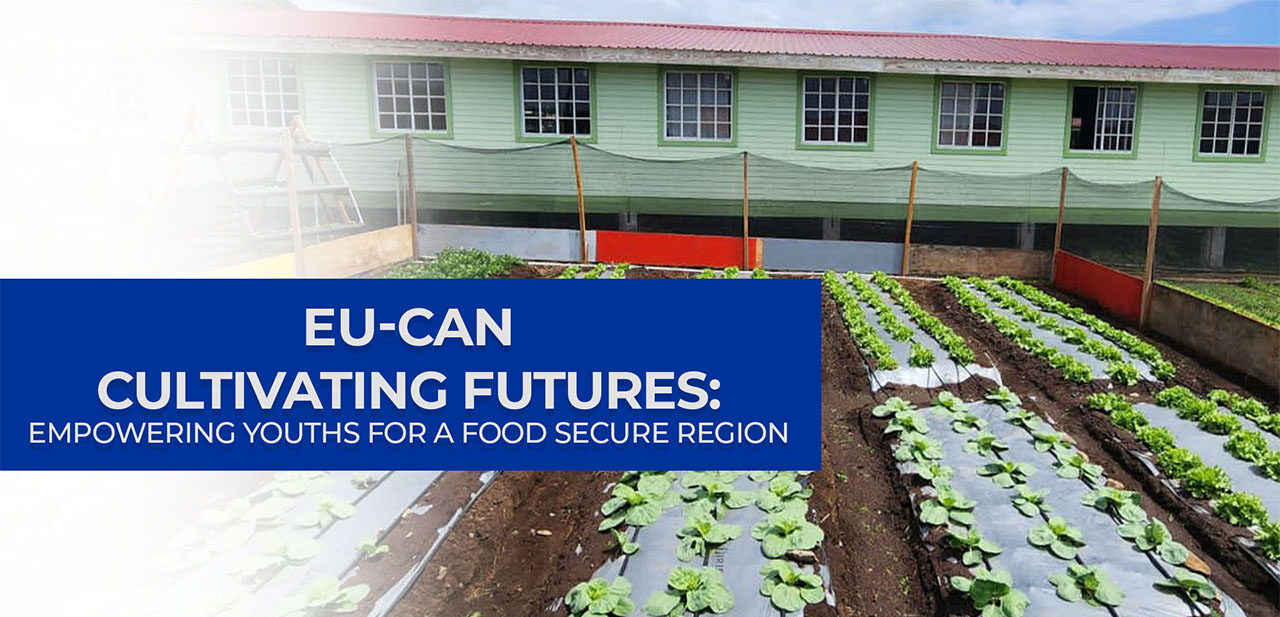
    Officially launched on March 27, 2026, the 18-month “Cultivating Futures – Empowering Youths for a Food Secure Region” project is funded through the EU’s Caribbean Fund for Nutrition (EU-CaN), a four-year regional food security program that supports six member states of the Organisation of Eastern Caribbean States. The first phase of implementation will reach four countries: Dominica, Saint Vincent and the Grenadines, Saint Lucia, and Grenada, marking a major milestone in collective action to improve regional food resilience.

    At the core of the initiative is a focus on integrating sustainable food practices into primary school environments. Over the course of the project, 10 participating primary schools will either establish new ecological school gardens or upgrade existing growing spaces in vulnerable communities. The program targets approximately 1,600 students aged 5 to 11, combining improved access to nutritious local food with hands-on learning opportunities that would not otherwise exist in standard curricula.

    Beyond just building gardens, the initiative provides comprehensive training and ongoing technical support to a broad range of school stakeholders, including teachers, cafeteria cooks, school administrators, and local community partners. Training modules cover climate-smart sustainable farming techniques, garden maintenance, evidence-based nutrition education, and healthy, locally-focused menu planning for school meal programs. This holistic approach ensures that gardens remain productive and educational long after the project’s initial 18-month timeline concludes.

    To encourage engagement and friendly competition among participating institutions, the project will also host a range of youth-centered activities, public outreach forums, national awareness campaigns, and a regional “Garden-to-Lunch” School Garden Competition, which celebrates creativity, innovation, and excellence in sustainable school gardening.

    Safiya Horne-Bique, Director and CEO of the Zero Hunger Trust Fund Saint Vincent and the Grenadines (ZHTF-SVG), framed the project as a transformative investment in both the region’s food future and its young people. “Cultivating Futures places children and communities at the center of sustainable food security efforts across the Caribbean,” she explained. “We are not only expanding access to fresh, nutrient-dense local produce for schools—we are creating space for young people to build a deep, firsthand understanding of agriculture, nutrition, environmental stewardship, and community resilience.”

    Horne-Bique emphasized that regional cooperation is critical to addressing the growing food security challenges facing small island states. “Small island developing states continue to face mounting pressures from climate change, global economic disruptions, and long-standing dependence on food imports,” she noted. “This project demonstrates the power of cross-border partnerships and community-led solutions that empower our youth while strengthening local food systems for generations to come.”

    Project Coordinator Chanda Davis added that the initiative’s hands-on model is designed to make agriculture and sustainability accessible and engaging for young learners, rather than abstract academic concepts. “By integrating ecological gardens into the daily learning environment, students get to actively participate in growing their own food, learn about the value of healthy diets, and build lifelong skills tied to sustainability and self-sufficiency,” Davis said. She added that organizers hope the impact of the project extends far beyond school walls, inspiring a new generation of environmentally conscious citizens and future agricultural leaders across the region.

    “Our goal is to help students see agriculture not just as a casual activity, but as a core pillar of community resilience, economic entrepreneurship, and national development,” Davis explained.

    The Cultivating Futures project is part of a broader global and regional push to reduce food insecurity, improve nutrition outcomes, and boost climate resilience for vulnerable populations across the Caribbean. In the coming weeks, participating national governments will issue formal calls for primary schools to submit applications to join the initiative. A formal regional launch ceremony and media briefing is scheduled for June 23, 2026, in Saint Vincent and the Grenadines, with attendees including representatives from all participating countries, regional intergovernmental bodies, national government agencies, and international development partners focused on food security and sustainable development.

    Updates on project progress, application details, and additional resources are available to the public via the ZHTF-SVG official website (https://zerohungersvg.com/eu-cultivatingfutures/) and the project’s social media channels on LinkedIn, Facebook, and Instagram.

  • Forum held to address establishment of joint investigation teams

    Forum held to address establishment of joint investigation teams

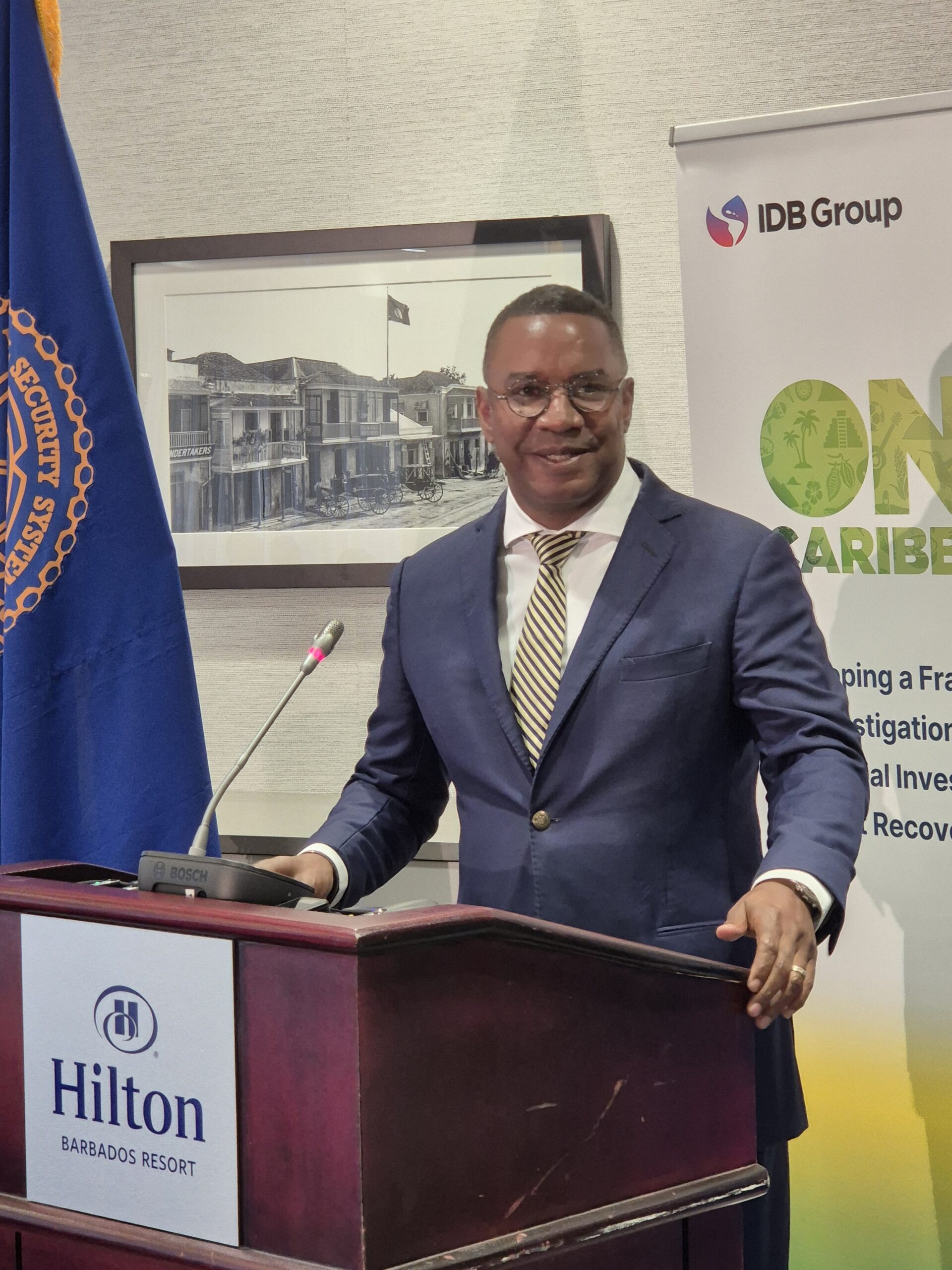
    Top legal and security officials from across the Caribbean have gathered in Bridgetown, Barbados, this week for a landmark two-day working forum focused on building a unified regional framework for joint cross-border investigations into financial crime and stolen asset recovery.

    Hosted at the Hilton Barbados Resort, the event forms the centerpiece of a broader collaborative initiative led by three key stakeholders: the Caribbean Regional Security System (RSS), the Inter-American Development Bank (IDB), and global governance risk consultancy GovRisk International. The gathering brings together attorneys general, prosecutors, law enforcement commanders, and anti-crime specialists from across the region, alongside international partners focused on anti-money laundering, justice sector reform, and transnational organized crime disruption.

    At the core of the forum’s work is the design of a standardized regional model for Joint Investigation Teams (JITs) — coordinated cross-jurisdictional units that bring together investigators, prosecutors, and law enforcement officers from multiple territories to tackle linked criminal cases. Unlike traditional high-level policy conferences, organizers emphasized the event is intended to deliver actionable, practical outcomes rather than abstract discussion.

    “This is not a ceremonial event. It is not intended to be an abstract policy conversation,” said Dominic Le Moignan, Executive Director of GovRisk International, in opening remarks to delegates. “It’s a working legal forum with one practical focus: to help the Caribbean move closer to a workable, regionally owned model agreement for joint investigation teams.”

    Le Moignan acknowledged that building a cohesive cross-border system across dozens of independent Caribbean jurisdictions comes with steep challenges, including divergent national legal frameworks, conflicting rules of evidence, and mismatched operational command structures. “Crime works across borders, but there are significant challenges for our systems to work as freely,” he explained.

    The initiative has already undergone months of preparatory work, including regional consultations, targeted legal analysis, and multi-phase training for law enforcement and legal officials across the Caribbean. Earlier this year, more than 100 regional participants completed virtual training sessions, followed by in-person targeted workshops in Jamaica that brought together officials from Jamaica, Trinidad and Tobago, the Cayman Islands, and the Bahamas. Next week, a second in-person training session will be held for delegates from Barbados, St Kitts and Nevis, Saint Lucia, and St Martin.

    With preparation complete, the forum marks the start of the initiative’s most critical phase: drafting a flexible model legal agreement that individual Caribbean nations can adopt or adapt to their own domestic legal systems. Le Moignan told delegates that the drafting process will be led by the region itself, with input from every participating jurisdiction to ensure the framework fits local needs. “We’re asking you to help craft and shape it, to test the ideas, challenge assumptions, identify risks early, and help define what a workable Caribbean model should look like,” he said.

    The draft framework is expected to address the full range of cross-border operational challenges, including protocols for secure evidence sharing, coordinated operational command, streamlined asset recovery procedures, and mechanisms to resolve conflicts between different national legal systems.

    RSS Executive Director Rear Admiral Errington Shurland, who formally opened the forum, noted that JITs would fill a long-standing gap in regional security by cutting through bureaucratic barriers to improve coordination and information sharing between jurisdictions targeted by connected transnational criminal networks.

    Barbados Attorney General Wilfred Abrahams, delivering the forum’s featured keynote address, emphasized that the initiative could not come at a more critical time for the Caribbean, as transnational organized criminal groups increasingly exploit border gaps to move illicit funds and avoid prosecution. “This initiative over the next two days resonates strongly with us as it captures two key principles for us; enhancing regional collaboration and coordination, and this particularly so among law enforcement agencies,” he said.

    Abrahams revealed that Barbados is currently moving forward with the establishment of its own dedicated national asset recovery unit, designed to strip criminal networks of the profits generated from illegal activity. “Crime, at the end of the day, is a business. Criminals are businessmen in the business of crime,” he noted.

    Francesco De Simone, Chief of Operations at the IDB’s Barbados office, said the regional development bank views targeted financial investigations and asset recovery as among the most powerful tools available to dismantle transnational criminal groups. “Financial crime, corruption, money laundering, and illicit asset flows can undermine economic resilience, public trust, and citizen security in our countries,” he said.

    De Simone added that the Caribbean’s limited national law enforcement and judicial resources make cross-border collaboration not just beneficial, but essential. “The resources are scarce. We understand that the demands are coming from different sides, and because of that, we think the joint investigative teams really have the opportunity and the potential to bring scale and hopefully reduce the burden on individual countries,” he said.

  • Flow Antigua congratulates Solange Benta, the latest winner in Flow’s Riddim and Rewards promotion

    Flow Antigua congratulates Solange Benta, the latest winner in Flow’s Riddim and Rewards promotion

    Telecommunications provider Flow Antigua has extended official congratulations to Solange Benta, who has secured her position as the newest winner of the company’s popular Riddim and Rewards promotion. The ongoing campaign, which has captured widespread public attention across the island nation, is designed to engage local customers through a blend of entertainment-themed incentives and rewarding prizes that celebrate Antigua and Barbuda’s rich musical culture.

    Since its launch, the Riddim and Rewards promotion has built a loyal following among local residents, offering participants regular opportunities to win valuable prizes while connecting with the regional rhythmic musical style known as riddim, a cornerstone of Caribbean cultural expression. Benta’s win marks the latest in a series of successful giveaways hosted by Flow Antigua as part of the campaign, which aims to give back to the community that has supported the brand’s growth in the region.

    In a statement released to the public, representatives from Flow Antigua expressed their excitement about Benta’s victory, noting that the promotion continues to deliver on its promise of creating memorable, rewarding experiences for customers across the country. The company also encouraged all remaining participants to continue engaging with the campaign, teasing that more prizes and winner announcements are planned in the coming weeks.

  • Grenada’s football quad selected for international friendly against Ireland

    Grenada’s football quad selected for international friendly against Ireland

    The Grenada Football Association (GFA) has formally revealed the full 24-man roster for its senior men’s national side, ahead of a groundbreaking international friendly fixture against the Republic of Ireland that has generated widespread excitement among football fans across the Caribbean nation.

    This landmark meeting between the two national teams is scheduled to kick off on May 16, 2026, at a host venue in Murcia, Spain. What makes this clash particularly notable is that it will stand as the first time Grenada and the Republic of Ireland have faced off against each other in men’s senior international football, a historic milestone that signals meaningful progress for Grenada’s program as it continues to seek competitive tests against high-caliber opposition from around the world.

    The selected squad strikes a careful balance between emerging domestic talent and experienced professionals plying their trade in top leagues across Europe and North America. Among the group are players based in English Football League clubs, as well as standouts from Grenada’s own domestic competition. Ahead of the fixture, the entire squad is set to depart the island nation of Grenada this coming Tuesday to begin final preparations in Spain.

    The full roster breakdown by position is as follows:
    **Goalkeepers**: Trishawn Thomas (RGPF FC), Shaquille Charles (St John’s Sports Club)
    **Defenders**: Benjamin Ettienne (Queen’s Park Rangers FC), Jacob Bedeau (Notts County), Dorrel Pierre (St David’s FC), Kayden Harrack (Dagenham & Redbridge), Greg Sandiford (Coventry City), Josh Gabriel (St David’s FC), Joshua Lett (Sunderland AFC)
    **Midfielders**: Narhson Sylvester (Hurricanes SC), Darius Johnson (Phoenix Rising Sun FC), Myles Hippolyte (AFC Wimbledon FC), Keston Williams (Paradise FC), Parish Muirhead (Lewes FC), Kane Vincent Young (Colchester United)
    **Forwards**: Lucas Akins (Mansfield Town), Shavon John Brown (Spokane Velocity), Jermaine Francis (Sutton United), Deanroy Phillip (Shamrock SC), Vijay Valcin (St John’s Sports Club)

    This announcement comes as part of the GFA’s ongoing push to raise the profile of Grenadian football and give its players valuable exposure to elite international competition, a strategy that organizers hope will fuel long-term growth for the sport at all levels across the country.

  • Public versus private, who owns Grenada’s beaches?

    Public versus private, who owns Grenada’s beaches?

    Last week, local land rights advocacy group Grenada Land Actors (GLA) received reports of a sudden disruption to public access at one of Grenada’s popular coastal spots: the Levera Beach entrance from the La Fortune route had been completely blocked by large boulders, with suspicious open burning underway just meters from the access point.

    When local contractor Dexter Forrester arrived at the scene to confront the development team working on the site, he formally notified the Heng Sheng personnel on duty that blocking a public beach access route violated Grenadian law and ordered them to clear the obstructions immediately. Initially, the team claimed they could not understand the instructions. But once the Royal Grenada Police Force (RGPF) was called in to respond to the unpermitted burning, the personnel suddenly understood all legal directives, quickly extinguishing the fires and removing the blocking boulders.

    For GLA, this isolated incident is far from an anomaly—it is the latest visible symptom of a troubling, repeated pattern unfolding across Grenada’s coastline. Time and again, foreign developers have encroached on public beach lands, acting as though these shared natural spaces are privately held, despite clear legal precedent confirming all Grenadian beaches are public domain. This principle was first firmly established decades ago during the high-profile ‘Brownlow saga’ and has since been enshrined in common law. It is further codified in the Integrated Coastal Zone Act (ICZA), which explicitly defines all beach land extending 165 feet from the high-tide mark as public property.

    Yet this long-standing legal standard is being quietly eroded across the island, with developers facing little to no accountability for violations. At La Sagesse, developers have repeatedly stacked boulders along the shoreline to cut off public access to large stretches of the beach. At the Silversands Beach House development, luxury villas have been built directly on public beach land: a GLA survey conducted in March 2026 found the closest villa sits just 50 feet from the high-tide mark, less than a third of the 165-foot minimum required by the ICZA. To add to this violation, the developers have even posted a “Private Property” sign at the beach access point just 21 feet from the high-tide line, barring public entry to land that is legally owned by all Grenadians.

    Recent community consultations have also raised new alarms: the Silversands development team, which already violated regulations at Beach House Beach, is now weighing a similar unlawful encroachment at Dr Groom’s Beach, another popular public coastal space.

    On another part of the island at Woodford, a beach that has served as a traditional landing site for local fishermen for generations—highlighted by journalist Arley Gill on *The Bubb Report* on April 26, 2026—the site is now marked for construction of a private jetty to support raw material imports for a nearby industrial complex. The project has moved forward despite fierce pushback from local communities and repeated demands that developers complete a mandatory full Environmental Impact Assessment before breaking ground, demands that have so far been ignored.

    Taken together, these overlapping incidents add up to a slow but steady loss of public beach access across Grenada, with most violations going unchallenged and unpunished. For generations, Grenadians have relied on these shared coastal spaces—from La Sagesse to Dr Groom’s to Beach House—for core cultural traditions: gathering to socialize, cook outdoors, and spend time with family and friends on weekends and public holidays. These are not luxury recreational spaces reserved for wealthy developers or foreign investors; they are a core part of Grenada’s national cultural fabric.

    For GLA, the debate is no longer whether public beach rights are being eroded. The urgent question now is: how much more public land will be taken before Grenadians mobilize to protect their legal rights and their cultural heritage, one beach at a time?

  • Pottersville man in custody for arson

    Pottersville man in custody for arson

    A resident of Pottersville is now behind bars at Dominica State Prison, facing six separate arson charges connected to a destructive early-morning blaze that tore through multiple structures in Roseau earlier this month. Police Chief Lincoln Corbette confirmed the details of the case in an official media briefing held on Tuesday.

    The suspect, 48-year-old Wilson Joseph, made his initial appearance before a Roseau magistrate court earlier the same day, where law enforcement officials formally opposed any grant of bail. Following the hearing, the court ordered Joseph to be held in pre-trial custody at the island’s state penitentiary. The next scheduled review of Joseph’s case is set for October 2026, according to official court records.

    The incident that led to the charges dates back to 3:20 a.m. on May 6, 2026, when first responders received an emergency call reporting a fire that broke out at Jane’s Cuisine, a local eatery located on Upper Lane in Roseau. Chief Corbette explained that the fire spread at an unusually rapid rate, jumping from the original restaurant location to adjacent adjacent buildings before firefighters could fully contain the blaze. While no casualties have been reported as of the press briefing, multiple properties sustained significant damage from the flames, heat, and smoke.

    Corbette added that official assessments of the total financial and structural damage are still ongoing, as investigators work to document the full scope of the destruction and corroborate evidence connected to the charges. Arson investigations often require extensive forensic analysis to rule out accidental causes and confirm intentional ignition, a process that can take weeks to complete in cases involving widespread damage.

  • Abrahams calls for increased intelligence sharing across region

    Abrahams calls for increased intelligence sharing across region

    In a stark warning delivered at a landmark regional legal forum in Bridgetown, Barbados on Monday, Attorney General Wilfred Abrahams has exposed a critical vulnerability in the Caribbean’s fight against transnational organized crime: fragmented intelligence sharing that criminal networks are actively exploiting to operate across borders undetected. Addressing an audience of legal officials and security policymakers from across the region at the Hilton Barbados, where the gathering focused on advancing joint investigation teams for financial crime and asset recovery, Abrahams emphasized that Caribbean nations can no longer afford to work in isolated silos, while criminal organizations have already evolved into unified, region-wide enterprises.

    “The only people who do not see the Caribbean as one single operating space are us, the policymakers,” Abrahams told attendees. “The criminals certainly do.”

    To illustrate the dangerous gaps in current information-sharing protocols, Abrahams shared a shocking recent case from Barbados’ own law enforcement records. Authorities had intercepted a foreign national who had committed serious offenses in their home country before traveling to Barbados to continue criminal activity locally. After the individual was deported, they legally changed their name via a deed poll and re-entered Barbados – not once, but twice. It was only by chance that a third attempt was foiled, when an airport officer recognized the person’s face from a previous interaction.

    “If you have a known dangerous criminal operating in your country with the free movement that exists across the Caribbean, that person becomes a danger to all of us,” Abrahams said. The same loopholes that allowed this repeated breach are now being exploited by entire transnational gangs and criminal networks across the region, he added.

    Gang members can easily move between Caribbean islands on commercial flights, often avoiding detection because they have not yet been convicted or added to watchlists in their home countries, even when active investigations are already underway. Inadequate cross-border information sharing allows these individuals to commit violent and financial crimes in one jurisdiction, then return to their home base with clean records before local investigators can connect their activities to open cases elsewhere. Abrahams pointed out that this coordinated criminal mobility comes as Caribbean nations continue to grapple with rising gun violence, gang activity, and growing systemic risks from transnational organized criminal networks.

    Abrahams stressed that regional crime-fighting strategies must evolve to match the increasingly integrated structure of modern criminal groups. “While we operate in silos, the criminals are building multinational associations,” he said. “We cannot win any war against crime without good information shared in a timely manner, whether at the local, regional, or international level.”

    The Attorney General also acknowledged a persistent underlying barrier to cooperation: institutional and intergovernmental mistrust. He noted that in some cases, even different agencies within the same national department still withhold critical intelligence from one another, and that this cultural reluctance to share information must be overcome if the region is to get ahead of criminal networks.

    To address these barriers, Abrahams highlighted the value of formal collaborative frameworks such as joint investigation teams, which bring together law enforcement and legal authorities from multiple jurisdictions to create structured, standardized channels for intelligence sharing and coordinated case work. The two-day forum, convened by the Regional Security System (RSS), the Inter-American Development Bank and GovRisk International, is specifically focused on developing a unified Caribbean legal framework to support these cross-border teams targeting financial crime and stolen asset recovery.

    Abrahams closed by urging regional governments to move beyond exploratory policy discussions and commit to tangible, immediate action. “This can’t be just another talk shop,” he said. “The only path forward is to reach a point where we fully share relevant information where it counts. As children, we were all taught to share. As policymakers and adults responsible for public safety, we should live that lesson now.”

  • Temporary closure of Mont Tout Back Road

    Temporary closure of Mont Tout Back Road

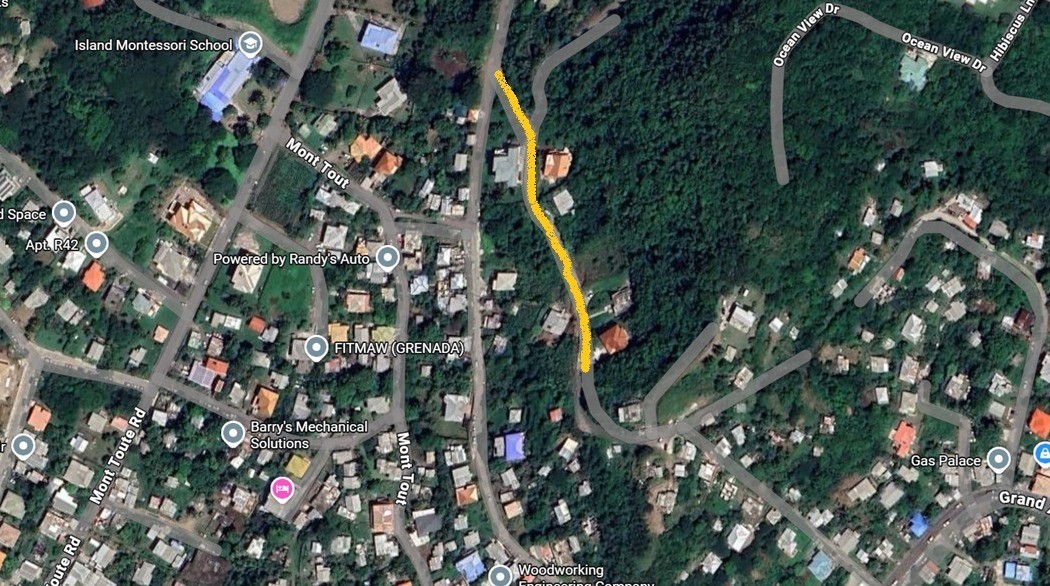
    Drivers and local commuters in St George, Grenada, are preparing for a major disruption to their daily travel routines, after the nation’s Ministry of Infrastructure, Public Utilities, Civil Aviation and Transportation announced a temporary indefinite closure of a key local roadway. Starting Monday, May 11, 2026, Mont Tout Back Road, located in the Grand Anse district of St George, will be completely closed to all motor vehicle traffic, with no confirmed reopening date released to the public as of the announcement.

    The government agency explained that the full closure is required to carry out critical infrastructure improvement projects along the stretch of road. The planned works include full resurfacing of the existing pavement, the installation of a new upgraded drainage system, and the construction of a new reinforced curb wall along the route. All three projects are designed to improve long-term road safety, reduce flood-related disruptions during heavy rain events, and extend the service life of the roadway for local residents and visitors.

    In its official statement, the Ministry extended a formal apology to residents, businesses, and daily commuters who will be affected by the travel disruption. Officials noted that while detours may add travel time for those relying on the route, the short-term inconvenience will result in a safer, more durable roadway for the community long-term. The agency also called on the general public to cooperate with traffic management measures during the construction period.

    This official announcement was originally issued by the Ministry of Infrastructure, Public Utilities, Civil Aviation and Transportation. NOW Grenada, the outlet publishing the notice, has clarified that it holds no responsibility for the content of statements released by third-party contributors, and provides a channel for users to report any abusive content related to its platform.

  • ‘Never Fail Me’: Son’s tribute after mother’s killing in double homicide

    ‘Never Fail Me’: Son’s tribute after mother’s killing in double homicide

    Days before one of the most cherished holidays for families across the globe, a brutal shooting on Marchand Boulevard claimed two lives, leaving tight-knit communities in Saint Lucia reeling from senseless violence. The first victim, 64-year-old Charmaine Pearl Ramsay, a 22-year veteran of the local police force and mother of five surviving children, was killed instantly in the Saturday night attack on May 9. A second victim, 38-year-old Sheston Duncan, succumbed to his critical injuries just hours later after being rushed to a nearby hospital.

    In the immediate aftermath of the tragedy, Ramsay’s eldest son, whose identity has been withheld by authorities for personal security, spoke publicly with reporters to share his family’s overwhelming grief. Fighting back tears, he described his mother as a relentless, devoted parent who never once let him down throughout his 28 years of life. “I never imagined my mother would lose her life in that kind of way,” he told reporters. “For the kind of person my mother was, I never thought I would lose her to such violence.”

    Ramsay, who spent more than two decades serving the community as a police officer, shaped her son’s entire upbringing through the values of honesty, accountability and unwavering support she instilled in him. Even in his adult years, she remained a constant, caring presence: cleaning his home, washing his clothes, and showing up for him in every challenge and milestone. When asked what he would miss most, he highlighted this unshakable commitment. “In every aspect of my life, my mother would always come and represent me no matter what it be,” he said.

    The grieving son recalled the chaotic, terrifying moments after the shooting that still haunt him. He was at his own home nearby when he heard a volley of gunshots ring out across the neighborhood, but had no idea his mother was caught in the crossfire. It was only when he walked toward her home to check on her that a neighbor broke the devastating news. “When I go there, I see my mother lying there, lifeless already,” he said. “I feel like I was just losing my brains at the moment.” Still, he said he is clinging to his faith and the lessons his mother taught him to stay strong for the rest of his family. “I already gave my life to Christ, so I just consider I have to pray and let life take its course.” To this day, he says he cannot fathom any motive for killing his mother, who dedicated her life to protecting and supporting her community.

    A close friend of Ramsay, who had planned a joyful Mother’s Day celebration with the victim just days before, shared her own heartbreak over the killing. The two had arranged to attend church together, then spend the evening dancing in honor of the holiday. “And look at how the lady pass away,” she said in disbelief. Like many residents, she is now calling for an immediate end to the wave of violence that has shaken the neighborhood. She warned that innocent bystanders—especially children—face constant risk as violent incidents continue to plague the area. After the shooting, fear has spread so widely that local parents are keeping their children home from school, she confirmed. “A mother called the principal and said she not sending her children to school because of what happened,” she said. In an emotional appeal to those behind the violence, she urged them to lay down their weapons. “All those who are doing violent things, stop it, please. Have mercy on everybody else because all of us have family.”

    Top political leaders have also weighed in on the tragedy, condemning the brutal killings and pledging action to bring those responsible to justice. Prime Minister Philip J. Pierre, who also serves as Parliamentary Representative for Castries East, released a formal statement via his official Facebook page expressing his deep sorrow over the deaths. “As Parliamentary Representative, I am deeply saddened by the homicides that occurred over the weekend. I extend sincere condolences to the families and loved ones of those who lost their lives,” he wrote. Pierre confirmed that his administration has already held urgent talks with the leadership of the Royal Saint Lucia Police Force, and assured the public that authorities are working tirelessly to track down and prosecute the perpetrators. “These acts of violence are a matter of grave concern,” he stated. “The safety and security of our citizens remain a top priority of my Government.”