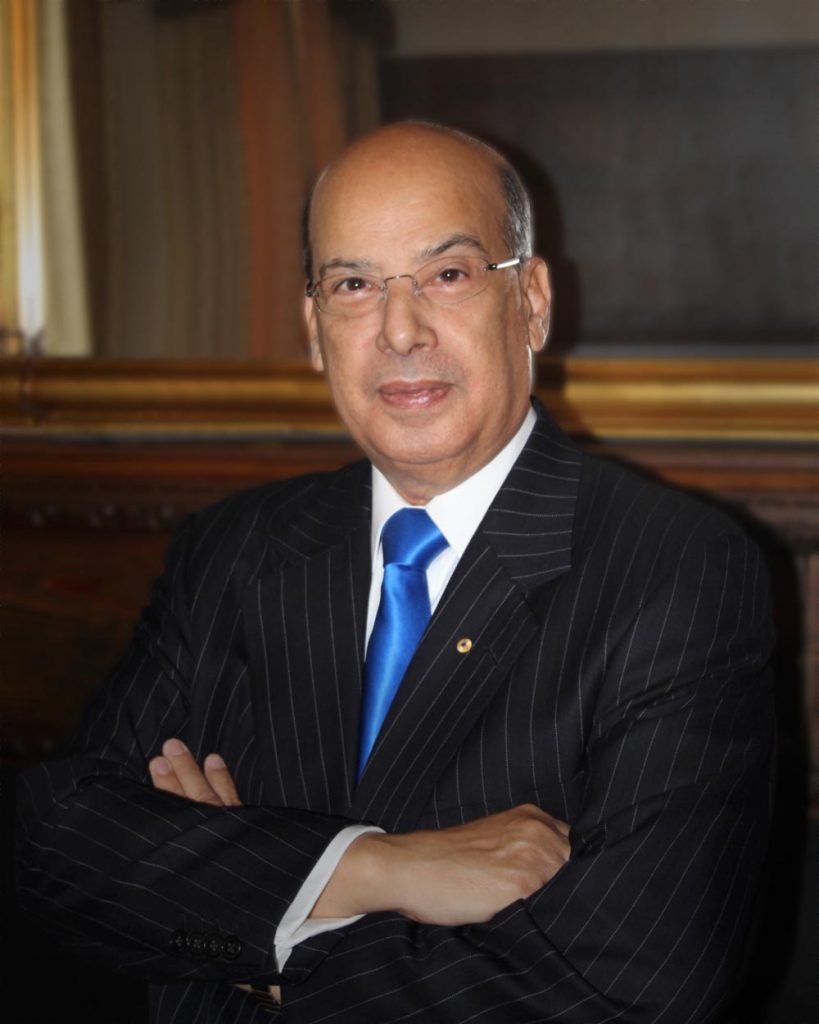
In a formal installation ceremony held Wednesday at the Organization of American States headquarters in Washington D.C., Sir Ronald Sanders, Antigua and Barbuda’s top envoy to the U.S. and the OAS, officially assumed the chairmanship of the Inter-American Council for Integral Development (CIDI), the OAS’s lead hemispheric body for development-focused policy dialogue and cross-nation cooperation that reports directly to the organization’s General Assembly.
In his inaugural address as CIDI chair, Sir Ronald anchored his two-year tenure around a foundational question that he argues will define progress across the Americas: how can regional stakeholders build enabling conditions for business growth that translates to tangible, inclusive development for all people? He pushed back against common framings that pit private enterprise against public development goals, emphasizing that business is not an adversary of development, but an irreplaceable core partner. In particular, he highlighted micro, small, and medium-sized enterprises (MSMEs) as the primary drivers of the job creation, economic opportunity, and social inclusion that development agendas promise to deliver.
To advance this vision, Sir Ronald has structured his CIDI work plan around three mutually reinforcing pillars: Certainty, Capacity, and Capital. Underpinning the entire agenda is the core belief that no single OAS member state can deliver sustainable, widespread development in isolation. The new chair went further, arguing that development is not just one of many priorities for the inter-American system—it is the bedrock that supports all other OAS mandates. Without meaningful development progress, he noted, human rights remain out of reach for food-insecure households, democracy fails to take root where working people cannot access dignified employment, and public security crumbles when young people are locked out of the formal economy. Neglecting development, he warned, ultimately weakens every other pillar of the Inter-American system.
Sir Ronald also addressed longstanding equity concerns in multilateral hemispheric cooperation, noting that multilateralism’s core strength is bringing nations of all sizes and development levels to the same table as equal stakeholders. This formal equality, he argued, is the foundation of the OAS’s credibility across the region.
A veteran diplomat with decades of experience advocating for small island developing states and inclusive multilateralism, Sir Ronald is Antigua and Barbuda’s most senior diplomatic representative and one of the Caribbean’s most prominent voices on development policy. He has previously served as President of the OAS Permanent Council three separate times, a unique distinction that has given him extensive, unmatched experience steering the organization’s collaborative decision-making processes.
Closing his acceptance remarks, Sir Ronald issued a collective call to action to all OAS member states, framing his tenure as a new starting point for collective action. “Every point of arrival is a point of departure,” he said. “When the time comes for us to depart from this phase of our work on development, I ask you all to help produce meaningful results that our people can see, can feel and can measure.”