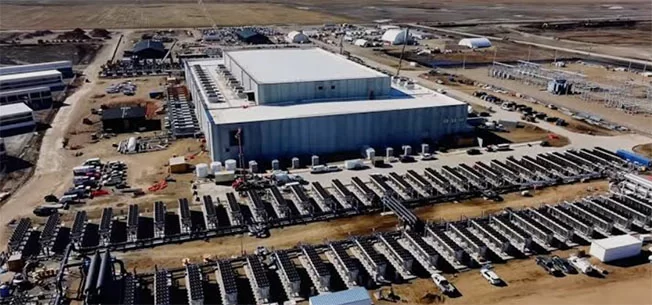
The twin-island Caribbean nation of Trinidad and Tobago has unveiled an ambitious plan to carve out a new role as a regional artificial intelligence and data processing hub, signing three landmark partnership agreements with United States-based firms to build large-scale AI data centers and restart the country’s idled steel industry. The deals, struck by the administration of Prime Minister Kamla Persad-Bissessar, are projected to generate more than 5,000 new jobs across the projects, marking the first large-scale partnerships of this kind between any Caribbean country and U.S. companies focused on AI infrastructure development.
The memoranda of understanding were signed with three entities: Florida-headquartered Hummingbird AI Holdings, global professional services firm Ernst & Young LLP based in New York, and Pinnacle Steel and Vanadium Corporation. Under the terms of the agreements, Ernst & Young will lead development of a 300-megawatt data center purpose-built for AI workloads, while Hummingbird AI Holdings will handle pre-development and planning for a second 150-megawatt AI and data processing facility. The third agreement formalizes plans to restart operations at a steel plant that was recently acquired by Pinnacle Steel and Vanadium, bringing a key industrial sector back online after a period of inactivity.
Prime Minister Persad-Bissessar framed the suite of projects as a transformative step in Trinidad and Tobago’s long-running push for economic diversification. For decades, the country’s economy has been heavily reliant on oil and gas exports, leaving it vulnerable to global commodity price swings. The government now aims to establish the nation as the Caribbean’s leading technology and innovation hub over the coming years, with the AI data center projects serving as a cornerstone of that strategy. Persad-Bissessar also noted that the United States played a facilitating role in bringing the agreements to fruition.
But the government’s optimistic outlook has been met with sharp criticism from environmental organizations and industry analysts, who warn that the massive infrastructure projects pose significant risks to the nation’s already strained natural resources. Large-scale AI data centers are among the most energy-intensive industrial facilities in the world, requiring massive volumes of water for cooling systems to manage the heat generated by high-density AI computing hardware. Those demands have sparked particular alarm because Trinidad and Tobago has battled chronic water shortages for years, with many households relying on stored water due to inconsistent public drinking water distribution.
Social activist Wayne Kublalsingh argues that economic progress cannot be measured solely by new investment and job creation. He emphasized that large, energy- and water-intensive projects place disproportionate stress on local natural resources, and called on the government to release a clear, public plan explaining how it will meet the additional demand for water and electricity generated by the new data centers without harming residential access to critical resources.
The concerns raised in Trinidad and Tobago align with a growing global debate over the environmental tradeoffs of AI expansion. A recent report from the United Nations University projects that data centers could account for nearly 3 percent of total global electricity consumption by 2030, as demand for AI computing continues to surge worldwide. This growth has forced governments and industry stakeholders around the world to grapple with balancing the significant economic opportunities of AI development against the substantial environmental footprint of the infrastructure required to support it.
For the broader Caribbean region, the Trinidad and Tobago agreements mark a notable departure from the region’s traditional economic development models. While most Caribbean nations have built their economies around tourism, fossil energy production, or financial services, Trinidad and Tobago is now seeking to position itself as a competitive destination for large-scale AI and data processing operations. Whether this initiative can serve as a replicable new economic model for the region will depend on two key factors: the successful execution of the planned projects, and the government’s ability to effectively address the environmental and infrastructure challenges that have already drawn public scrutiny.