作者: admin

  • Too Hot to Learn? Rising Temperatures Disrupt Belize Classrooms

    Too Hot to Learn? Rising Temperatures Disrupt Belize Classrooms

    As an early summer heatwave settles over Central America, the small Caribbean nation of Belize is facing a growing disruption that extends far beyond routine outdoor discomfort: it is upending daily learning in the country’s classrooms.

    This May, unseasonably high temperatures and oppressive humidity have pushed thermal comfort to its limit for students and staff across the country, with one of the hardest-hit institutions being Belize Elementary/High School in the heart of Belize City. On a recent visit mid-morning, official thermometers registered a relatively moderate 90 degrees Fahrenheit, but thick 66 percent humidity pushed the real-feel temperature well past the 100-degree mark. Inside unairconditioned classroom walls, the stifling heat does not dissipate as the day goes on; by early afternoon, temperatures climb even higher, leaving both learners and educators drained and struggling to concentrate.

    School administrators moved quickly to implement low-cost, practical adaptations to protect student health and preserve learning continuity for the final weeks of the academic year. The most visible change comes to the school’s dress code: the standard formal button-up uniforms made of heavy traditional fabrics have been temporarily set aside, and students are now permitted to wear lightweight casual clothing that supports better air circulation and heat dissipation.

    Beyond policy changes to uniforms, the school has prioritized constant hydration, widely recognized as the first line of defense against heat-related illness. Water coolers are positioned across the entire campus, and administrators have relaxed rules banning personal drinks in classrooms. Students are now allowed to keep full water bottles at their desks and refill their containers as often as they need throughout the school day.

    Principal Majiba Sharp told reporters that the flexible, quick adjustments have already delivered clear, positive results in the school’s daily operations. Before the changes, many younger students complained constantly about the oppressive heat, and school staff were concerned about cases of heat exhaustion or fainting among learners. Since implementing the new rules, Sharp reports that there have been no heat-related fainting incidents, far fewer complaints from students, and a noticeable reduction in the grogginess and lethargy that made afternoons unproductive just weeks ago.

    Teachers echo Sharp’s assessment, noting that while the classroom environment remains far from cool, the small adjustments have made a major difference in students’ ability to stay focused and engaged through the end of the school day. With climate projections showing that early summer heatwaves will only grow more intense and more frequent in the Caribbean region in coming years, the low-cost adaptations tested at Belize Elementary could serve as a model for other schools across the country grappling with rising temperatures. For now, administrators say they will keep the temporary measures in place for the remainder of the term, prioritizing student safety and health as temperatures continue to climb.

  • Hantavirus Outbreak at Sea Prompts Monitoring Across Caribbean Ports

    Hantavirus Outbreak at Sea Prompts Monitoring Across Caribbean Ports

    In response to a deadly hantavirus outbreak linked to a transatlantic cruise voyage, public health authorities across the Caribbean have activated enhanced monitoring protocols at all regional ports of entry, even as officials stress the overall public risk remains low and urge the public to avoid unnecessary panic.

    The incident unfolded aboard the MV Hondius, a vessel carrying 147 passengers and crew members representing more than 20 nations. As of the latest update on May 11, 2026, the vessel has recorded eight total cases: three laboratory-confirmed hantavirus infections and five suspected cases, with three fatalities reported so far.

    Epidemiological investigators are still working to trace the origin of the exposure, with two leading hypotheses under active examination: whether infected individuals contracted the virus before boarding the ship in Argentina, or whether transmission occurred during the open ocean voyage.

    The Caribbean Public Health Agency (CARPHA), the regional public health governing body, has confirmed that as of now, there is no evidence of local hantavirus transmission within any Caribbean member state. Despite this reassuring finding, officials are prioritizing precautionary measures, ramping up screening and surveillance at all ports to catch any potential imported cases early.

    Dr. Lisa Indar, Executive Director of CARPHA, explained the scientific context that underpins the agency’s risk assessment. “Based on the evidence available, the rodent species that maintains this virus in nature is not present in the Caribbean. Therefore there is no established local route of transmission in our region,” Indar stated. She added that rare human-to-human hantavirus transmission only occurs through prolonged, close contact with an infected individual, and the virus has an incubation period ranging from one to six weeks after exposure. Currently, there are no approved antiviral treatments or licensed vaccines for hantavirus; clinical care focuses on supportive interventions such as oxygen therapy and close intensive monitoring of patient symptoms.

    “CARPHA advises our member states to remain vigilant but not alarmed,” Indar said. The agency’s regionally adapted early warning surveillance and laboratory network is already actively tracking the situation, with the capacity to rapidly detect and respond to any new cases that emerge. CARPHA also noted it is committed to maintaining proactive, transparent communication with member state health authorities and the general public, prioritizing accurate information sharing to curb the spread of dangerous misinformation about the outbreak.

  • Market Manager Defends Enforcement at Michael Finnegan Market

    Market Manager Defends Enforcement at Michael Finnegan Market

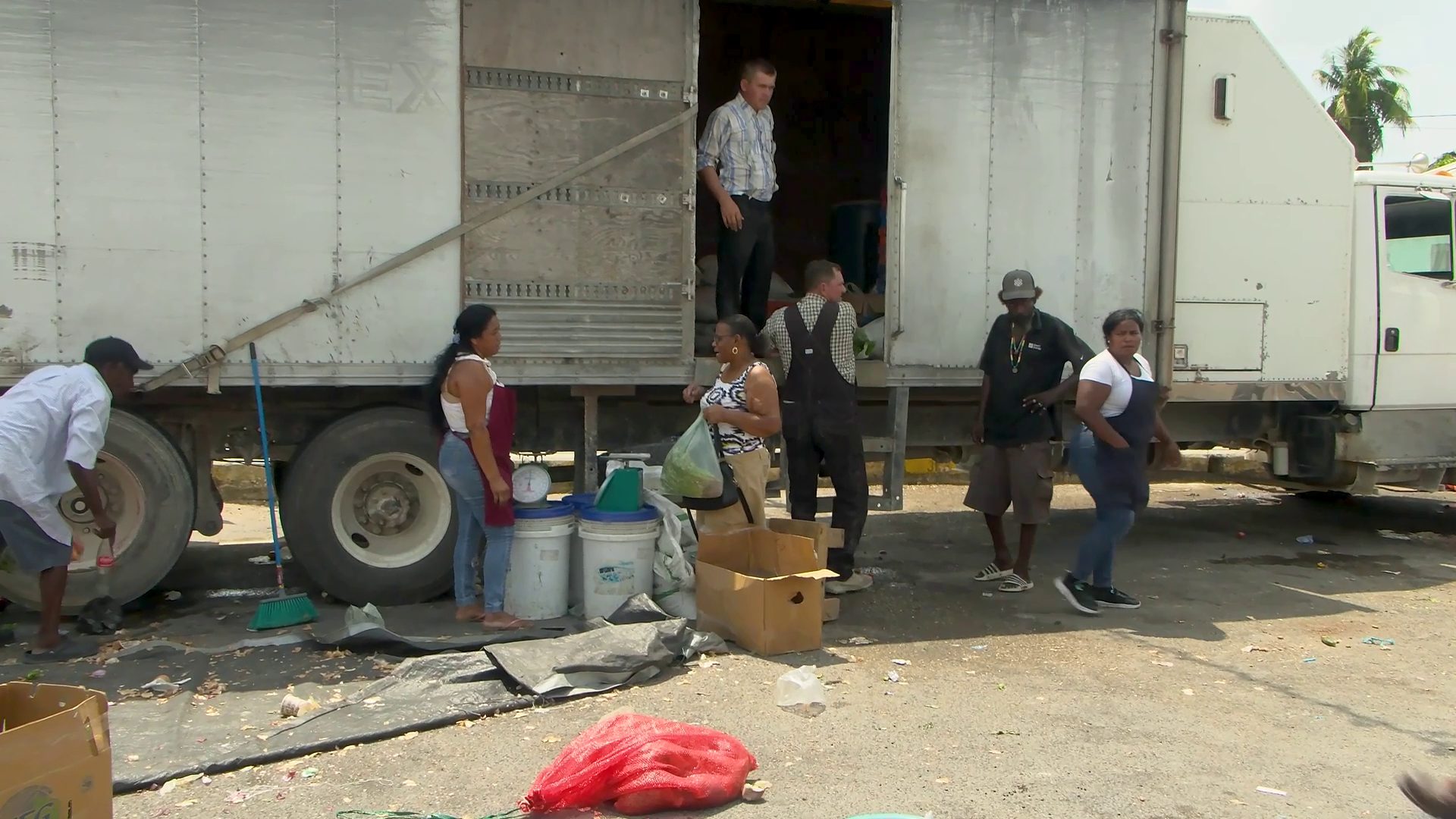
    A simmering conflict over selling scheduling and access at Belize City’s iconic Michael Finnegan Market has boiled over into public view, leaving small retail vendors feeling sidelined amid renewed enforcement of long-dormant trading rules. Last week, retail vendors at the popular public market told local reporters that strict new enforcement from city council officials has pushed them to the brink, restricting their operations exclusively to Saturdays and barring them from setting up stalls on the traditional wholesale trading days of Tuesdays and Fridays.

    But in a public defense of the policy released Wednesday, Delroy Herrera, market manager for the Belize City Council, pushed back against claims that the restrictions are new. He explained that the split-day trading model has been enshrined in local market regulations for years, and the recent crackdown only comes after months of escalating complaints from wholesale vendors who said their business was being disrupted.

    Herrera detailed the root of the friction: For an extended period, many retail vendors had been flouting the existing rules to set up on wholesale trading days. Once on site, Herrera said, these retailers would pressure wholesale sellers to raise their prices, accusing wholesalers of undercutting their profit margins by selling directly to customers at bulk rates. This, the manager argued, put retailers in the wrong, as they had no authority to dictate pricing or trading terms on days reserved for wholesale operations.

    Under the long-standing framework, Herrera explained, the system is designed to benefit both groups: Wholesalers get dedicated days to move large quantities of product at bulk prices, while retailers source their stock from wholesalers and then sell it at a marked-up rate to end consumers exclusively on Saturdays. To resolve the ongoing conflict between the two groups, the council made the decision to reinstate full enforcement of the original rulebook rather than crafting new policy.

    “Based on the amount of complaints that we had with the wholesalers, who are saying that they’re having friction and so forth with the retailers, because they want to designate their prices and stuff, we have decided okay let’s look into it and go back to what we had in law, the Tuesdays and Fridays for the wholesale day, and then the retailers come up on Saturdays,” Herrera explained in a statement to local media.

    Herrera added that enforcement officials are now monitoring the market to ensure compliance from both sides, noting that the council has documented evidence — including video footage — of both groups violating the day-designation rules: wholesalers selling on retail Saturdays and retailers setting up on wholesale weekdays. Moving forward, he said, the policy will protect both groups: wholesalers will retain their dedicated trading days, while retailers will get exclusive access to the Saturday customer base that relies on their smaller-batch, retail-priced goods. “I believe that the wholesalers will be protected tomorrow. And moving forward, the retailers as well will be protected on Saturdays,” he said.

    The dispute has sparked broader local discussion about whether the enforcement of the decades-old rules is being carried out fairly, and whether the policy disproportionately harms small retail vendors who rely on multiple trading days to make a living. Local news outlets have confirmed they will continue tracking developments as the situation unfolds to update the public on any changes to the policy or further conflict between vendor groups.

    This report is adapted from a transcript of a televised local newscast, originally published online.

  • Senator Hughes Says New UPP Senators Are Trained to Scrutinize Laws

    Senator Hughes Says New UPP Senators Are Trained to Scrutinize Laws

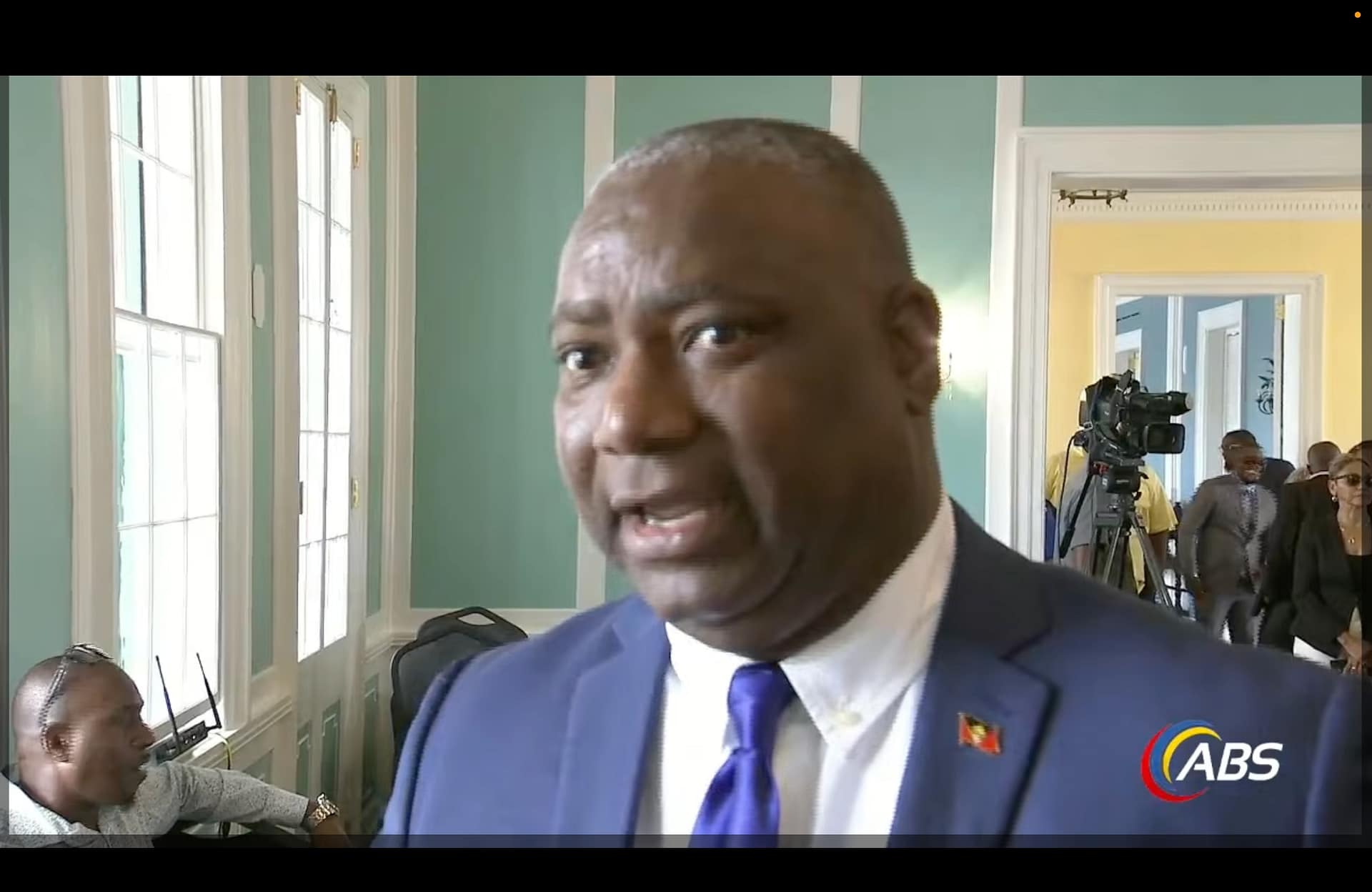
    Fresh off his swearing-in at Government House this week, newly reappointed Opposition Senator Chester Hughes has opened up about the strategic composition of the United Progressive Party (UPP) Senate delegation, built to bring rigorous scrutiny to government legislation and enforce accountability for the ruling administration.

    In a post-ceremony interview with ABS Television, Hughes emphasized that the UPP’s Senate picks are far more than routine political appointees. Instead, he explained, the team was carefully assembled to merge three core strengths: formal legal training, deep academic expertise, and decades of frontline trade union advocacy on behalf of working people. This combination, he argued, leaves the opposition uniquely equipped to review proposed laws and push back against government policy that fails to serve ordinary citizens.

    Three of the five UPP Senate appointees hold law degrees, Hughes confirmed: himself, Jonathan Wehner, and Malaka Parker. This concentration of legal expertise means the opposition will approach every bill with trained, critical attention to detail, ensuring no problematic provisions slip through unchallenged.

    Beyond legal training, the delegation also boasts strong representation from Antigua and Barbuda’s labour movement. Three sitting UPP senators are veteran trade union leaders, with roots in fighting for worker rights: Ashworth Azille, a representative of the Antigua and Barbuda Union of Teachers; Malaka Parker, former president of the Antigua and Barbuda Workers’ Union (ABWU); and Hughes, who is a former ABWU president and currently serves as the union’s Deputy General Secretary.

    Hughes stressed that this dual foundation of legal and labour experience will allow the UPP Senate team to both effectively analyze legislation and center the needs of working-class Antiguans and Barbudans in every debate. Academic knowledge of legislative structure paired with on-the-ground experience advocating for citizens facing economic hardship creates a well-rounded opposition that cannot be dismissed, he added.

    For Hughes personally, this return to the Senate comes with far more preparation than his first tenure. When he previously served in the Upper House, he identified primarily as a trade unionist; today, he joins the chamber as a legally trained professional with years of additional political experience and a broader understanding of how the legislative arena operates. His personal goal, he said, is to inject more balanced perspective and historical context into ongoing Senate debates.

    Looking ahead to the coming legislative term, Hughes pledged that the UPP opposition will bring unapologetically robust scrutiny to the government. Antiguans and Barbudans should expect lively, uncompromising debate, he said, with the opposition consistently pushing for answers on decisions that impact public life. “We will be holding the government’s feet to the fire. We will be asking questions through the Senate,” Hughes stated.

    The opposition’s core mission will be holding the ruling government accountable for its policy choices, while tirelessly advocating for justice for all ordinary citizens, particularly those already struggling with financial and social hardship. Hughes put it plainly: the UPP’s role in the Senate is to upend the comfort of sitting politicians while delivering relief to the citizens bearing the brunt of poor governance. “Our job right now is to make those who are comfortable very uncomfortable in the House and those who are uncomfortable bring relief to them through the Senate,” he said.

    Closing his remarks, Hughes extended gratitude to both his faith and party leadership. He thanked Almighty God for the opportunity to return to public service, and recognized Opposition Leader Jamale Pringle for renewing his trust in Hughes by selecting him for the Senate appointment.

  • Nine Detained So Far Under New State of Emergency

    Nine Detained So Far Under New State of Emergency

    In a sweeping law enforcement action launched just days after a targeted State of Emergency (SOE) was declared for high-risk zones across Belize City and multiple rural sections of the Belize District, authorities have taken nine adults into custody as of initial reports, with armed security patrols now deployed across the affected communities. All detainees are being held at facilities managed by the Kolbe Foundation, Belize’s independent body that oversees the country’s correctional services.

    Belize’s top law enforcement leadership has emphasized that the extraordinary emergency measure was not implemented hastily, but followed rigorous security evaluations and actionable intelligence that confirmed an immediate, widespread threat to public safety and private property. “The decision was not made lightly… We believe it was absolutely necessary,” Commissioner of Police Dr. Richard Rosado stated in an official briefing, confirming that all nine people currently in custody are adults.

    Deputy Commissioner Bart Jones underscored that the ongoing crackdown is intentionally targeted rather than a broad, unfocused sweep of local communities. Rejecting concerns that the emergency powers would grant police unchecked authority for mass detentions, Jones explained that all arrests are rooted in verified intelligence, ongoing investigative work and targeted interviews. “It will not be operated as a carte blanche wholesale detention of persons but based on intelligence, interviews, based on current investigations,” he said.

    Many of the detainees are linked not only to organized gang-related criminal activity, Jones added, but are also persons of interest in a string of recent and unsolved shooting incidents and homicide cases that have shaken the region in recent months. This operation, he noted, is far more focused and precisely targeted than previous law enforcement actions taken under similar emergency declarations.

    Under the emergency powers granted to law enforcement by the SOE declaration, several new restrictions are in effect across the designated zones. Gatherings of three or more people in public spaces are classified as a criminal offense, minors are required to be off the streets and inside private residences by 8 p.m. local time, and police officers are authorized to conduct stops and searches of individuals and properties without requiring a prior warrant.

    Despite the broad emergency powers, Commissioner Rosado moved to reassure law-abiding residents that the measure will not disrupt their daily lives. “The SOE is targeted and specific to certain individuals and does not affect the law-abiding citizen in any way,” he said.

  • Universiteit bereikt belangrijke mijlpaal met accreditatie Bachelor Bouwkunde

    Universiteit bereikt belangrijke mijlpaal met accreditatie Bachelor Bouwkunde

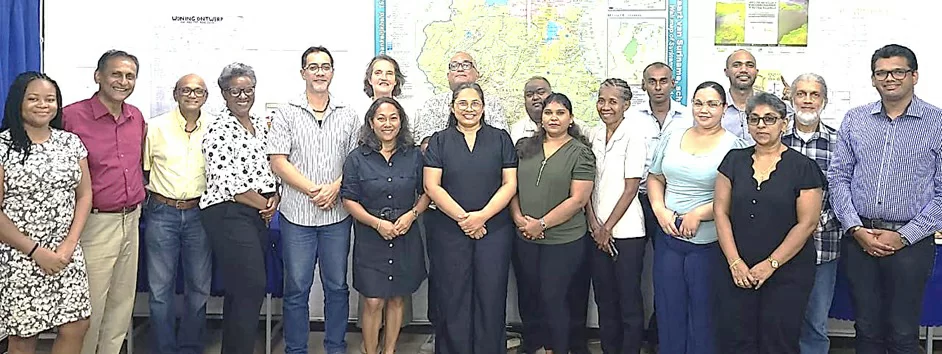
    Suriname’s leading higher education institution, Anton de Kom University of Suriname (AdeKUS), has marked a major milestone in advancing academic quality across its programs, as its Bachelor of Civil Engineering program under the Faculty of Technological Sciences (FTeW) has secured full accreditation from the National Accreditation Organization (NOVA).

    Awarded on May 6, 2026, the accreditation is valid for a six-year term and serves as independent validation of the program’s high educational standards, as well as the university’s long-standing commitment to continuous quality improvement across all academic offerings. Following this successful accreditation outcome, AdeKUS now boasts 26 fully accredited academic programs – a clear metric that reflects growing national and international confidence in Suriname’s higher education sector.

    Launched just 19 months prior to the accreditation, in October 2024, the Bachelor of Civil Engineering program falls under the infrastructure study track within FTeW. Its curriculum is designed to cover core industry competencies including civil works design and management, advanced construction materials and technologies, and urban planning. A key distinguishing feature of the program is its intentional focus on eco-friendly, energy-efficient design principles, aligning the coursework with pressing global trends in environmental engineering and climate adaptation.

    The program’s pedagogical framework is built around the concept of system thinking, which trains students to approach complex engineering challenges from an integrated perspective starting in their first year of study. Through interactive learning formats and hands-on practical assignments, students develop both sharp analytical capabilities and on-the-job skills to resolve real-world civil engineering problems effectively. This skill-focused design not only creates a solid foundation for graduates pursuing advanced master’s degrees at international institutions, but also prepares them for immediate entry into the regional and global workforce.

    Accreditation brings a wide range of tangible benefits for students, faculty, and the broader Surinamese society. For enrolled students and future graduates, the NOVA accreditation guarantees that their degree carries international recognition, confirming they received education that meets global quality benchmarks. This directly improves their employability and expands their options for further study, both within Suriname and at institutions abroad.

    For AdeKUS as an institution, the successful accreditation acts as a catalyst for ongoing improvement, encouraging the university to continue innovating its curricula and teaching practices to meet evolving industry needs. It also strengthens transparency and builds greater trust among industry employers and national and international academic partners.

    More broadly, the accreditation of this program supports long-term national development in Suriname by producing highly qualified engineering professionals who can contribute to the country’s sustainable infrastructure expansion and inclusive economic growth. With this latest achievement, AdeKUS reinforces its position as the country’s leading knowledge institution, consistently adapting its programs to meet both societal demands and international academic standards.

  • CARPHA seeks to calm fears over cruise ship hantavirus outbreak

    CARPHA seeks to calm fears over cruise ship hantavirus outbreak

    As global attention and widespread online misinformation fuel growing public anxiety over a hantavirus outbreak tied to a European cruise ship, Caribbean public health leaders have moved quickly to reassure communities, emphasizing that the overall health risk to the region remains minimal despite the three confirmed deaths linked to the incident.

    During a formal media briefing on the Andes hantavirus strain at the center of the outbreak, Dr. Lisa Indar, Executive Director of the Caribbean Public Health Agency (CARPHA), outlined that coordinated regional and international health bodies are maintaining continuous, close monitoring of the evolving situation. The outbreak traces back to the Dutch-flagged cruise vessel MV Hondius, which departed Argentina on April 1 carrying roughly 150 passengers and crew members hailing from at least 28 nations, including the Philippines, the United States, the United Kingdom, and the Netherlands. The first official alert of a cluster of unexplained respiratory illnesses was submitted on May 2 by the United Kingdom’s International Health Regulations focal point, prompting the World Health Organization (WHO) and Dutch public health authorities to immediately implement strict, targeted infection control and monitoring protocols.

    As of the morning of May 11, WHO has documented a total of eight cases, combining both confirmed and suspected infections, with three fatalities recorded. A number of passengers and crew have already disembarked or been medically evacuated across multiple different jurisdictions, triggering large-scale international contact tracing operations to identify and monitor any potential exposed individuals.

    Indar took the briefing to clarify key facts about hantaviruses to counter misinformation spreading across social media. Most hantavirus strains are transmitted exclusively to humans through contact with infected rodents or their bodily excretions, including droppings, urine, and saliva. However, the Andes strain involved in this outbreak is a unique exception: it is the only documented hantavirus strain capable of limited person-to-person spread, a detail that has been distorted in many unvetted online posts.

    One prominent false rumor circulating across regional social platforms claimed that a passenger from the Federation of Saint Kitts and Nevis had contracted the virus during the voyage. Indar directly refuted this claim, confirming that the nation’s Chief Medical Officer had already issued an official statement confirming no suspected or confirmed cases of hantavirus linked to the outbreak have been identified in the country. “There has been a lot of misinformation that has been going out,” Indar told reporters, urging the public to prioritize verified, scientific information over unsubstantiated speculation. She emphasized that “based on the scientific evidence, the risk remains low” for the Caribbean, adding that CARPHA remains extremely diligent in its monitoring and would be the first to alert the regional public if the situation changes unexpectedly.

    Dr. Horace Cox, CARPHA’s Director of Surveillance, Disease Prevention and Control, echoed Indar’s message, calling for measured vigilance rather than widespread panic. “Our message to the public is that even though the risk at this moment based on evidence available to us is low, we do encourage that they implement the public health measures and actions that we have included in our media releases,” Cox said. He noted that basic practices including consistent rodent control and routine hand hygiene are critical preventive measures not only for hantavirus, but also for other common rodent-borne illnesses such as leptospirosis. Amid what he described as a “deluge of information” online, Cox encouraged the public to seek updates exclusively from trusted sources, including CARPHA’s official website and established regional public health institutions.

    Globally, hantaviruses are a family of viruses primarily hosted by wild rodents. Human infection most often occurs when individuals inhale aerosolized particles contaminated with rodent excretions, which can lead to hantavirus pulmonary syndrome, a severe respiratory condition that can be fatal in some cases. While the Andes strain’s limited ability to spread between people makes this cruise-linked outbreak unusual, global health bodies have repeatedly reaffirmed that the overall international public health risk remains low at this time.

  • New Senator Ashworth Azille Promises “Very Robust Discussions” in Upper House

    New Senator Ashworth Azille Promises “Very Robust Discussions” in Upper House

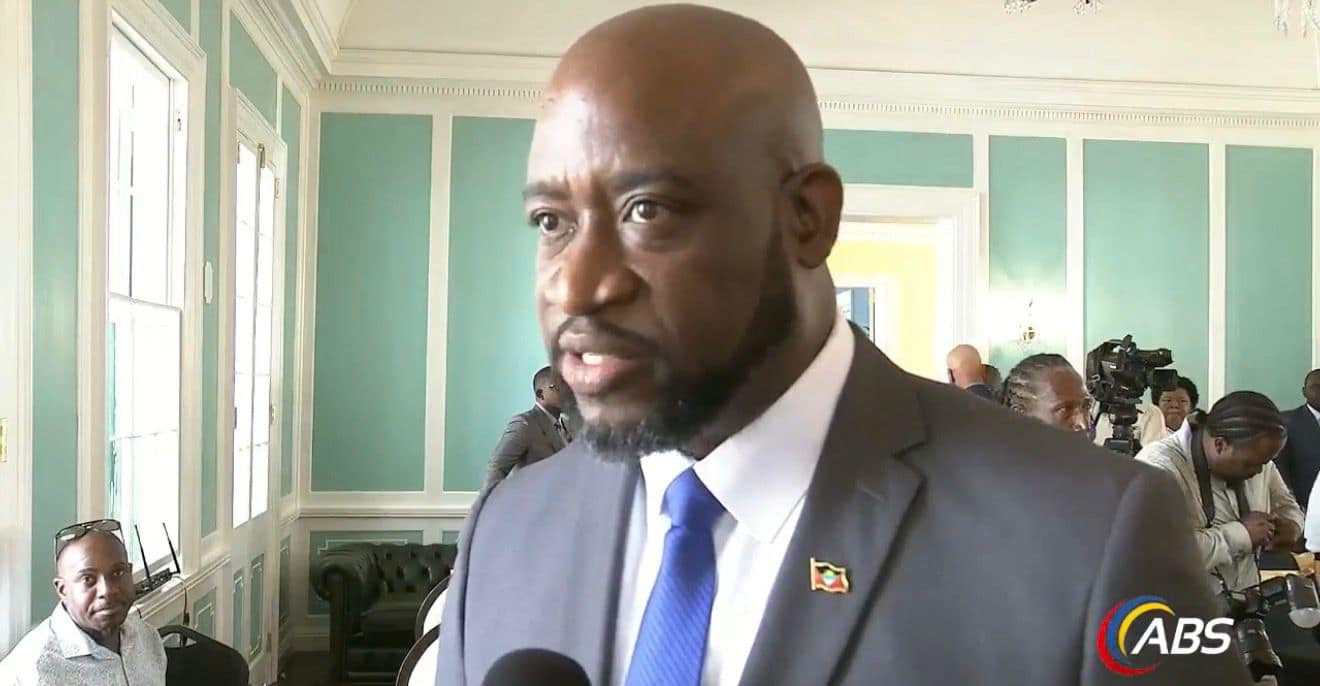
    Following Monday’s formal swearing-in ceremony at Government House, Antigua and Barbuda’s newest Opposition Senator Ashworth Azille has laid out his ambitious policy and representation goals for the incoming parliamentary term, committing to bring energetic, people-centered advocacy to the nation’s Upper House.

    In a post-ceremony interview with ABS Television, Azille made clear he is ready to embrace the weight of the responsibilities that come with his new role, signaling that he will bring rigorous, substantive debate to every piece of legislation brought before the Senate. “I look forward to very robust discussions on the legislations that will come before the Senate for discussion,” the new senator shared.

    Azille described his appointment to Parliament as an extraordinary honor, one that reflects the deep trust placed in him by Opposition Leader Jamale Pringle and the United Progressive Party. “To ask me to serve at this level is a profound, profound honor,” he emphasized. He also echoed comments made by Governor General Sir Rodney Williams during the swearing-in event, reaffirming that the Opposition holds a critical constitutional role in upholding Antigua and Barbuda’s democratic framework.

    A former educator and veteran trade union leader, Azille brought attention to one of his key priorities for his term: inspiring the next generation to participate in national politics and public development. He argued that political leadership has too often been restricted to a small circle of established figures, and he hopes his own appointment will encourage young Antiguans and Barbudans to step forward and contribute to nation-building.

    Drawing on his experience from the recent election campaign, Azille noted he observed a widespread appetite for new, responsive leadership across the country. “There is a hunger for leadership in this country. I certainly stand here as one who’s putting up my hand together with my colleagues to say that we are ready to take this mantle of leadership,” he said.

    While acknowledging that partisan politics frequently creates unnecessary division, Azille pledged to reframe parliamentary engagement around addressing the tangible needs and aspirations of all citizens, with a core focus on advancing justice for the public. “We are looking forward to an engagement that really takes into consideration all of the hopes, aspirations and dreams of the people of Antigua and Barbuda,” he stated.

    Opening up about his personal background, Azille addressed a common question he encountered on the campaign trail: although he was born in neighboring Dominica, he has called Antigua and Barbuda home for more than 40 years, after moving to the country as a child. He is a product of the nation’s public education system, having attended Phillip Primary School, Clare Hall Secondary School and Antigua State College.

    Before entering frontline politics, Azille built a 23-year career in education as a teacher and school principal. He also built an extensive record in the trade union movement: he held multiple leadership roles, including general secretary and president, with the Antigua and Barbuda Union of Teachers, and also served as president of the Caribbean Union of Teachers. He says his entire professional career has been rooted in the values of justice, fairness and equity, focused on amplifying the voices of marginalized groups that are often left unheard in public discourse. This senate appointment, he noted, is a new opportunity to advance that mission at the national legislative level.

    Azille was one of three Opposition senators sworn in during Monday’s ceremony, joining colleagues Jonathan Wehner and Chester Hughes. A fourth Opposition Senate pick, Malaka Parker, was unable to attend the event due to travel commitments and will be sworn in at a later date.

  • BEC at 70 inks ‘Barbados Declaration’

    BEC at 70 inks ‘Barbados Declaration’

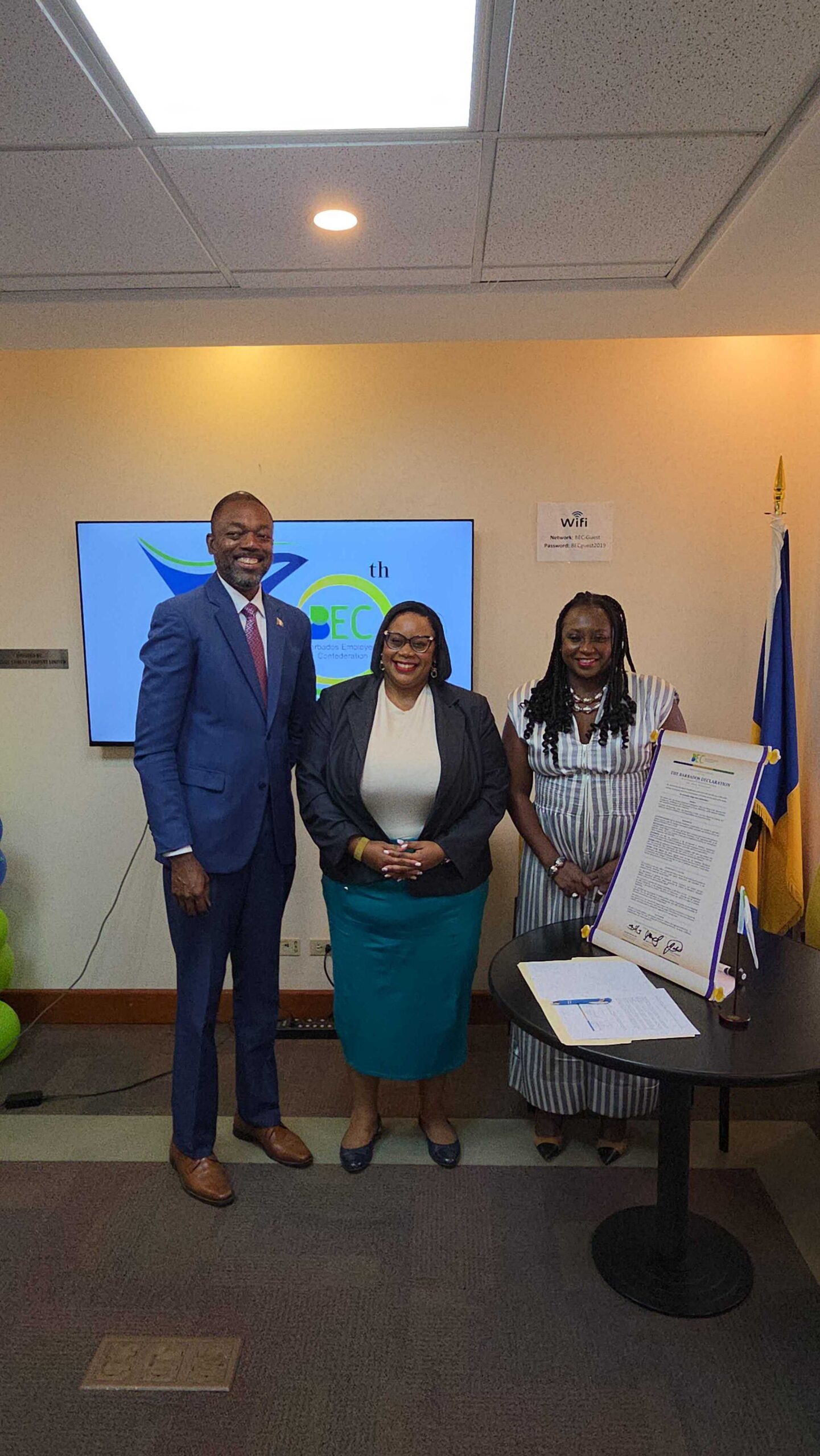
    BRIDGETOWN, Barbados – On a landmark Monday gathering marking seven decades of operation, the Barbados Employers’ Confederation (BEC), a cornerstone of the island nation’s industrial relations framework, cemented its forward-looking vision with the signing of the game-changing Barbados Declaration. This formal, multi-stakeholder pledge commits the organisation to advancing collaborative social dialogue and resilient, sustainable economic growth amid the accelerating disruptions of global technological transformation.

    Founded in 1956, the BEC has grown from an emerging collective of forward-thinking business leaders into one of the three core pillars of Barbados’ renowned Social Partnership model. Monday’s platinum anniversary event brought together key stakeholders including Barbados’ Minister of Labour Colin Jordan, senior trade union leaders, and top private sector executives, blending a retrospective look at the organisation’s 70-year legacy of shaping industrial relations with the launch of a clear roadmap for the next chapter of Barbados’ economic development.

    At the heart of the anniversary celebrations was the official signing of the Barbados Declaration, a document that outlines five binding core commitments spanning employer advocacy, the evolving future of work, and the strengthening of collaborative ties between businesses and their workforces. BEC Executive Director Sheena Mayers-Granville emphasized that the declaration is far more than a symbolic ceremonial gesture, framing it instead as a concrete “statement of intent” to guide the organisation’s work in the decades ahead.

    Reflecting on the BEC’s origins, Mayers-Granville recalled that the organisation’s founding visionaries recognised 70 years ago that without a seat at the decision-making table, critical policies shaping Barbados’ economy would be crafted without input from the business community. “Seventy years later, we are still at the table,” Mayers-Granville affirmed. “Dialogue is not a weakness. Sitting across the table from a trade union or a minister of government and seeking a shared solution is not a concession—it is the only pathway to sustainable outcomes.”

    Addressing the long-standing tensions that often characterise labour-capital relations, Mayers-Granville offered a unifying perspective: “The interests of workers and the interests of employers are not opposites; they never were. A business that cannot grow cannot create jobs, and a workforce that is not supported cannot sustain growth. These truths are not competing; they are the same truth seen from different angles.”

    BEC President Gail-Ann King framed the 70-year milestone not as a simple celebration of longevity, but as a moment to reaffirm the organisation’s central role in upholding national economic and social stability. “Today is not simply a celebration of longevity. It is a moment of reflection, recommitment, and renewal,” King said. “For 70 years, the BEC has advocated for enterprise development, sound industrial relations, and productive dialogue in the national interest. We are particularly proud of our contribution to the social partnership model, which remains one of the defining features of Barbadian democracy.”

    Against a backdrop of global shifts toward digital transformation and the transition to climate-resilient economies, King noted that the BEC’s leadership has never been more critical. “The next decade will require adaptability, innovation, and collaboration,” she added. “Employers must continue investing in people while embracing digital transformation and strengthening productivity.”

    Minister of Labour Colin Jordan extended official congratulations to the BEC on its platinum anniversary, specifically praising the organisation for bringing much-needed structure and stability to Barbados’ industrial relations ecosystem. Looking back at the labour unrest of 1926 and 1937 that predated the BEC’s founding, Jordan observed that the organisation’s formation catalysed a fundamental shift away from unilateral employer decision-making toward intentional, inclusive engagement with all stakeholders.

    Jordan also used the high-profile platform to issue a public call for more Barbadian businesses to join the confederation, noting a clear gap in how BEC member organisations and non-members approach labour dispute resolution. “In my ministry, we recognise a difference between BEC members – those who allow the BEC to be their advocate – and some others,” Jordan said. “We see a difference in the approach to dealing with people. We need organisations like the BEC to bring some order, stability, and confidence.”

    As the BEC enters its eighth decade of operation, the Barbados Declaration has been positioned as the official benchmark against which the organisation expects its performance to be measured. Facing growing systemic challenges ranging from the integration of artificial intelligence into the workforce to shifting national demographic trends, the BEC has made clear it will remain an active, solution-focused participant in national policymaking rather than a passive observer.

    As Mayers-Granville put it: “70 years is a long time, but it’s not a reason to slow down. The BEC intends to be here for more than 70 years in the future.”

    The five core commitments laid out in the Barbados Declaration are: Advocacy to foster an environment where businesses can thrive rather than just survive; active leadership in shaping AI integration, digitalisation, and workforce skills frameworks for the future of work; protection and preservation of Barbados’ homegrown model of mutual respect and collective negotiation in industrial relations; contribution to national sustainability and universal decent work goals; and ongoing commitment to collaborative social dialogue across all sectors.

  • Progresso FC: People’s Stadium “Deplorable”

    Progresso FC: People’s Stadium “Deplorable”

    One of Belize’s top-tier professional football clubs has launched a public appeal for support to address years of systemic neglect at its home venue, People’s Stadium in Orange Walk Town.

    In an official online statement released on May 11, 2026, Progresso FC, a competing member of the Premier League of Belize, outlined the grim conditions that players have been forced to tolerate at the stadium for the past four years. The club’s statement highlights that the venue’s changing rooms and associated bathroom facilities are in a deeply unfit state, lacking even basic functional and hygienic standards required for competitive sports.

    Photographic documentation of the stadium confirms these concerning reports: floors are covered in layers of accumulated grime, waste is strewn across interior spaces, multiple window panes are shattered, damaged entryways are makeshift propped closed with scrap plywood, and sections of the changing room roof are sagging and at risk of collapse. These unsafe, unsanitary conditions have created a poor environment for both Progresso FC’s own players and all other groups that use the public stadium.

    The club is specifically reaching out to the local business community, loyal football supporters, and all Orange Walk Town residents to contribute to a rehabilitation project focused on upgrading the stadium’s changing rooms. According to Progresso FC, the overhaul of these facilities will do more than just fix immediate safety hazards: it will create a cleaner, safer, and more dignified space for the country’s young emerging athletes, which the organization says will in turn encourage greater youth participation in organized sports and keep young people engaged in positive, constructive community activities.

    Beyond serving Progresso FC’s competitive needs, the club emphasizes that upgraded facilities will deliver widespread benefits to the entire local community. Improved changing rooms will serve visiting competing clubs, local amateur football leagues, regional youth tournaments, local school sports programs, and the wide range of public community events hosted at People’s Stadium each year.

    Community members and organizations interested in supporting the project can contribute in multiple ways: cash donations, construction materials for the renovation, or volunteer labor. Those wishing to get involved can reach out to the club via phone at 610-3717 or 611-0604 to coordinate their contribution.