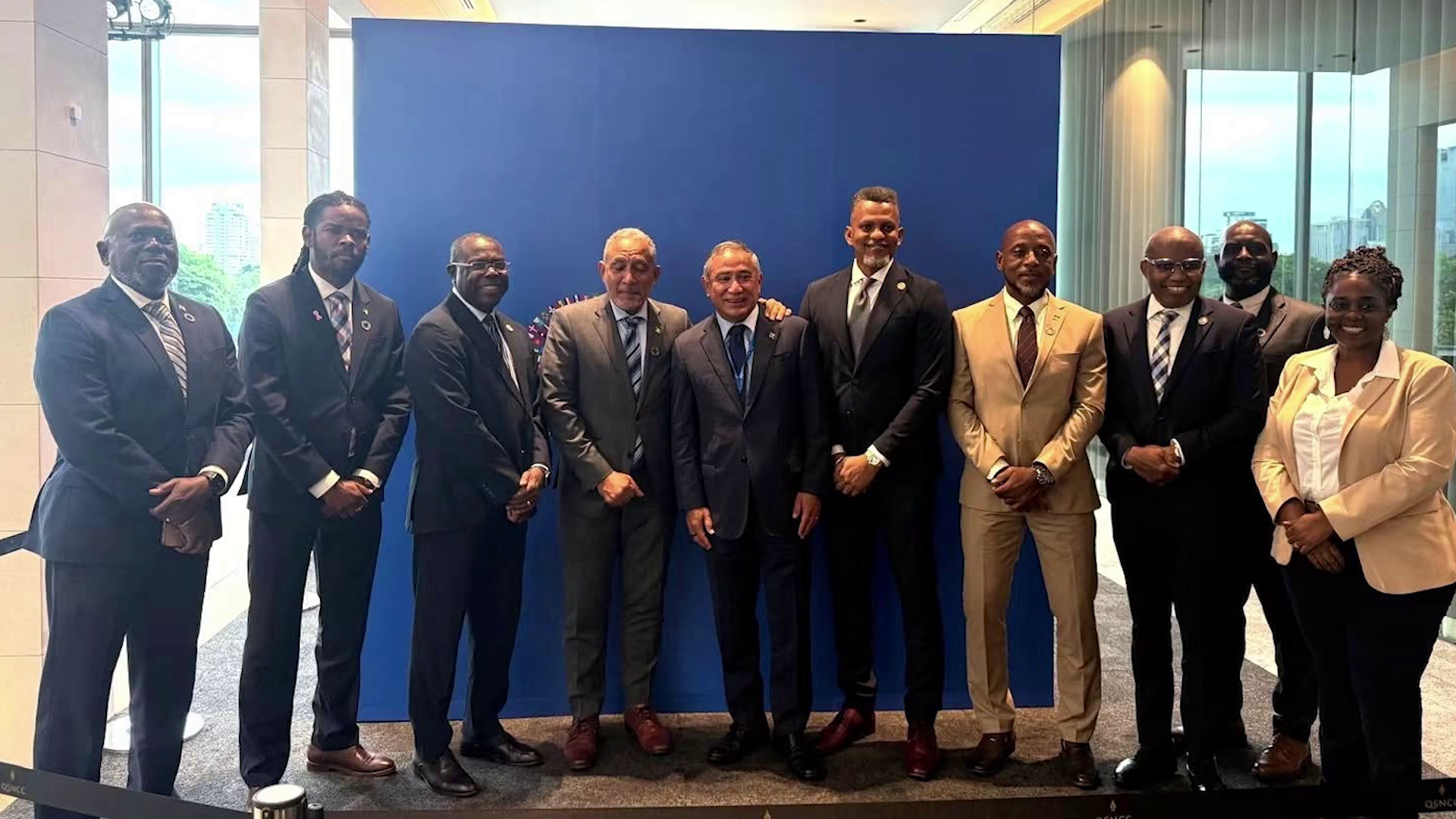
As delegates from across the globe gather in Bangkok for the 2026 IMF-World Bank Annual Meetings, small developing nation Belize has emerged as a sharp voice advocating for targeted international investment to tackle overlapping climate, food security and energy crises that threaten its long-term stability. Belizean Prime Minister John Briceño is leading his country’s delegation at the October gathering, making a direct case for multilateral financing to address interconnected challenges the nation cannot solve with domestic resources alone, from invasive sargassum blooms to rising import costs and unstable energy infrastructure.
In his address to meeting attendees, Briceño emphasized that Belize carries the economic and social burden of crises it played almost no role in creating. The most visible and pressing threat is the massive influx of sargassum seaweed that has choked the country’s Caribbean coastlines in recent years, devastating the core tourism sector that supports thousands of local livelihoods. Briceño noted that unchecked climate change and harmful industrial practices across the wider region have only worsened this crisis, compounding the damage to Belize’s natural ecosystems and economy.
To address the sargassum crisis, Briceño confirmed that Belize’s delegation is currently in active negotiations with the World Bank to secure dedicated financing for large-scale sargassum removal projects. Beyond just clearing coastlines, the government is also exploring innovative ways to repurpose the harvested seaweed as a renewable energy source, turning a costly crisis into a potential opportunity for the country’s clean energy transition. The prime minister reported that early talks have already yielded encouraging progress, giving his team optimism that funding will be approved in the near term.
Beyond environmental recovery, Briceño outlined two other core priorities for Belize’s financing request: strengthening domestic food production and expanding reliable, renewable energy capacity. Small and medium-sized local farmers have endured repeated climate and economic shocks in recent years, leaving food security vulnerable to volatility in global import prices for food and fuel. Investing in agricultural support will not only protect farmers’ livelihoods but also shore up Belize’s ability to feed its population, Briceño explained.
On the energy front, the prime minister highlighted that ending persistent rolling blackouts and expanding national energy capacity is an urgent priority for all Belizean residents. The initiative is already backed by the Millennium Challenge Compact and a strategic partnership with the United States, and additional multilateral financing would allow the government to accelerate the transition to more renewable energy sources and improve grid reliability.
Ahead of the closing days of the annual meetings, Briceño is set to chair a high-level working session bringing together more than 50 leaders – most of them finance ministers from small developing states across the globe – to push for tangible action on the unique challenges small economies face. “Our message will be clear: Strategies must become action, and action must produce results – better jobs, greater opportunity and improved living standards for our people,” Briceño said, adding that his delegation remains committed to ensuring Belize’s needs are not just heard, but meaningfully addressed at the global gathering.
Belize’s Minister of Economic Development Osmond Martinez echoed these concerns during a separate roundtable hosted by the IMF and World Bank, warning that repeated climate disasters are pushing small island developing states like Belize into a dangerous debt trap. As governments are forced to divert limited public funds to post-disaster recovery, they are left with almost no fiscal space to invest in proactive climate adaptation and resilience that would reduce damage from future crises, Martinez explained.
This report is adapted from a televised evening news transcript, with original Kriol language content standardized using an official spelling system.