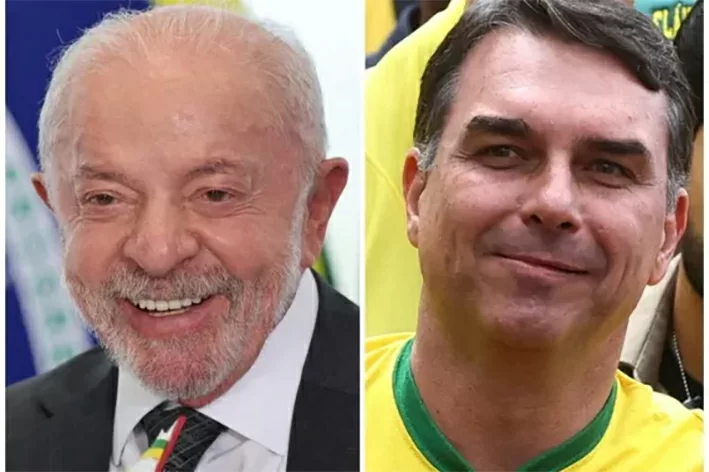
On October 4, Brazilian voters head to the polls for an election that carries stakes far beyond just naming the country’s next president for the coming four-year term. What is unfolding in the world’s fifth-largest democracy is nothing less than a showdown over the future of its democratic institutions, national trajectory and competing interpretations of its recent history, with a razor-tight contest that almost all analysts predict will require a second runoff round.
Brazil enters one of its most consequential national elections in decades at a moment of deep political polarization, mixed economic signals and renewed national debate over the rule of law. Alongside the presidency, voters will also select an entirely new National Congress, shaping the balance of power in Brasilia for the next administration regardless of who takes the top job.
The two frontrunners represent starkly opposing ideological and political camps. On the left is incumbent President Luiz Inácio Lula da Silva, 80, leader of the Workers’ Party (PT), who is seeking an unprecedented fourth non-consecutive term. Challenging him is Senator Flávio Bolsonaro, 45, the eldest son of former far-right President Jair Bolsonaro and the candidate of the right-wing Liberal Party, running to carry forward his father’s political legacy.
The ideological divide between the two candidates was on full display during final campaign rallies over the weekend. Lula drew an estimated 150,000 supporters to a gathering in São Paulo, framing the election as a clear choice between upholding democratic governance and what he described as a return to authoritarian barbarism. Flávio Bolsonaro, meanwhile, held a motorcade campaign through Rio de Janeiro, striking a confident tone that he could secure an outright victory in the first round.
Polling, however, points overwhelmingly to a second round, scheduled for October 25. Under Brazilian electoral rules, a candidate must win a majority of valid votes to claim victory in the first round; if no candidate hits that threshold, the top two contenders advance to a runoff. The latest polling data shows Lula holding a narrow lead in the first round, but not enough to cross the 50% majority threshold. A recent Datafolha poll puts Lula at 45% of valid votes, with Flávio Bolsonaro close behind at 40%. In a simulated runoff, the gap shrinks to just three points – 48% for Lula, 45% for Flávio Bolsonaro – within the poll’s margin of error, and a significant share of voters still report they may change their preference before voting closes. That makes the final outcome highly unpredictable, even heading into election day.
For Lula, the 2026 election is as much a defense of his political legacy as it is a campaign for a new term. He first served as president from 2003 to 2010, and returned to the Planalto Palace in 2023 after narrowly defeating Jair Bolsonaro in the 2022 election, making his career almost synonymous with the modern history of Brazil’s left-wing movement. Lula’s campaign points to falling poverty rates, near-historic low unemployment and steady economic growth during his third term, with independent analysis showing extreme poverty dropping sharply between 2022 and 2024.
Still, Lula’s economic record is not uniformly positive. For many ordinary Brazilians, daily cost-of-living remains a persistent strain. A recent Quaest survey found that a large share of the population believes wage gains have not kept pace with rising living costs, while inflation, public debt and a wide budget deficit remain key political vulnerabilities for the incumbent. This mismatch between solid macroeconomic indicators and household financial stress is one of the biggest challenges Lula’s campaign has had to address. To counter this, Lula has added a second core message: Brazil must chart its own independent course, rather than letting Washington dictate its domestic and foreign policy.
For Flávio Bolsonaro, the candidacy is about more than winning the presidency – it is a mission to preserve and advance the far-right political movement his father built. Jair Bolsonaro was convicted over his role in the 2022 attempted coup to overturn his election loss to Lula, turning the former president into a polarizing symbol of the battle between his movement and Brazil’s judiciary. Flávio has positioned himself explicitly as the heir to that movement, defending his father as a victim of political persecution and pledging a fierce crackdown on violent crime – a strategy designed to exploit one of Lula’s key weak points with voters.
Issue polling bears out this contrast: a recent Quaest survey found that 31% of voters rank violent crime as their top concern, followed by corruption at 20% and the economy at 19%. Voters consistently rate Flávio Bolsonaro more favorably than Lula on crime, corruption and inflation, while Lula holds clear advantages on poverty reduction, inequality, healthcare and foreign policy. Flávio’s campaign has leaned into this simple framing: Lula represents the corrupt, elitist status quo, while Bolsonaro represents real change for working Brazilians.
Flávio is not without his own political baggage, however. A wide-ranging corruption investigation involving disgraced fallen banker Daniel Vorcaro has ensnared politicians, business leaders and institutions across the political spectrum, and Flávio has been drawn in over financial ties connected to a documentary about his father, *Dark Horse*. The scandal has also spilled over to Brazil’s Supreme Court, with influential justice Alexandre de Moraes – who led the legal cases against Jair Bolsonaro – facing growing political scrutiny over his own connections to the case.
For Flávio, this works to his political advantage: it lets him amplify his narrative that his family is being persecuted by biased, corrupt institutions that already target conservatives. The scandal does not break cleanly along left-right lines, though: associates of Lula also had ties to Vorcaro, making it impossible to frame as a simple case of right versus wrong.
What makes this election most unusual is the outsized influence of a candidate who is not even on the ballot: Jair Bolsonaro. The former president remains the undisputed symbolic center of Brazil’s far right, and Flávio’s entire campaign centers on framing his father as a political martyr for the movement. Jair Bolsonaro’s conviction itself is a core flashpoint in the election: for Lula and his supporters, it proves that Brazil’s democratic institutions are strong enough to withstand anti-democratic attacks, while for Bolsonaro loyalists, it is proof the judiciary has become irredeemably politicized. A Flávio victory would immediately raise urgent questions about whether the new administration would move to overturn Jair Bolsonaro’s conviction and reshape the Brazilian justice system.
A second non-candidate looms large over the election as well: former U.S. President Donald Trump. The question of U.S.-Brazil relations has become an increasingly central campaign issue, after Trump publicly harshly criticized the conviction of Jair Bolsonaro and the U.S. has applied growing diplomatic pressure on Brazil. In recent days, the issue has escalated dramatically: the Brazilian government is investigating allegations of foreign interference in the election, following reports of U.S. financial support to groups and initiatives opposing the Lula administration and Brazilian judiciary. Brazil’s attorney general has warned that foreign meddling in the country’s democratic institutions will not be tolerated, and the temporary suspension of some U.S. consular services in Brazil has sparked further political backlash. Lula’s campaign has asked Brazil’s electoral tribunal to include these developments in its ongoing investigation into foreign interference.
This escalation means the election carries global as well as domestic stakes. A Lula victory would almost certainly see Brazil continue its current policy of diplomatic independence from Washington, while a Flávio Bolsonaro win would likely lead to much closer alignment between Brasilia and a second Trump U.S. administration.
It would be a mistake to frame this election as just a rerun of the 2022 Lula-Bolsonaro matchup. Brazil has shifted significantly in four years: the Bolsonaro movement retains a large, loyal base but Jair Bolsonaro is no longer the candidate, while an 80-year-old Lula must convince voters his agenda still offers the best path forward to address inequality and poverty. Brazilian politics has also grown more fragmented, with multiple minor candidates in the race and concurrent elections for Congress and state governorships that will shape the balance of power in Brasilia regardless of who wins the presidency.
At its core, the election turns on three fundamental questions for Brazil: Can Lula turn the economic and social progress of his third term into enough voter enthusiasm to secure a fourth term? Can Flávio Bolsonaro convert widespread voter anger over crime, corruption and cost-of-living struggles into a new right-wing majority? And most importantly: Can Brazil pull back from deep political polarization without triggering a new direct confrontation between the executive, opposition and judiciary?
The odds that Brazil will name a president outright on October 4 remain very low. Polling suggests Lula will finish first, but without a majority, with Flávio Bolsonaro close enough to force a runoff. In a second round, the race is effectively a dead heat, meaning voters who support minor candidates on October 4 will hold the decisive balance of power, as will undecided voters who do not strongly support either frontrunner.
That makes October 4 not an endpoint, but a first round of selection. The real battle – between two political movements, two competing economic visions and two opposing interpretations of Brazilian democracy – will only truly begin after the first round votes are counted. Brazil is choosing a new direction on Sunday, but it may not be until October 25 that the country learns just how sharp that turn will be.