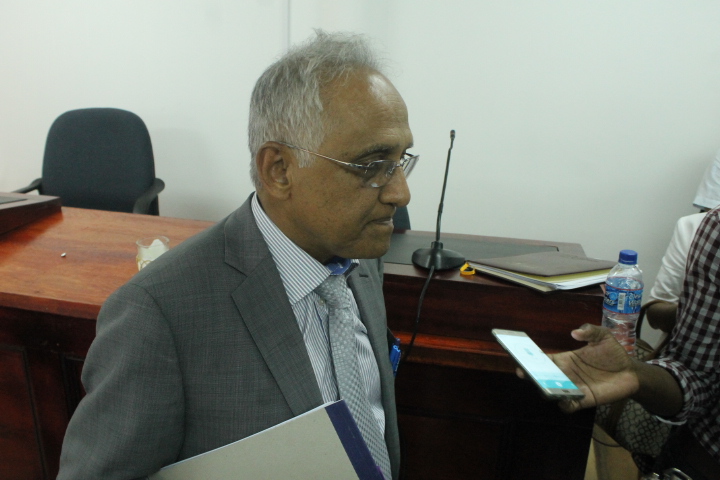
Georgetown, Guyana – November 21, 2026: High-profile Guyanese attorney and longstanding civil society advocate Christopher Ram has formally rejected a restrictive procedural mandate issued by the MV Barima Commission of Inquiry (COI), a presidential-appointed five-member panel tasked with probing the July 18 maritime disaster that left multiple people dead or unaccounted for when the passenger vessel MV Barima sank. The contested directive, communicated to Ram via official letter from COI Chairman Retired Justice Godfrey Smith on November 18, limits Ram’s permitted role as retained counsel for the affected bereaved and displaced families exclusively to drafting witness statements and delivering closing submissions, while reserving all direct examination of his clients for the COI’s in-house legal team. In his formal written response sent the same day, Ram notified Smith that he cannot in good professional conscience abide by these terms, arguing that the arrangement would gut his clients’ right to meaningful, independent legal advocacy. Ram emphasized that competent, client-centered representation extends far beyond post-hoc commentary on evidence that has already been collected: it encompasses the right to present testimony directly on behalf of clients, clarify ambiguous lines of questioning, raise unaddressed critical issues during proceedings, and ensure every material point relevant to the families’ loss is fully explored. He stressed that the COI’s own legal staff owe their fiduciary duties to the commission as an institutional body, not to the specific, individual interests of the bereaved families, a fundamental conflict that cannot be resolved even with good-faith effort. Ram further noted that closing statements cannot possibly correct irreversible gaps, omissions, or overlooked critical details in evidence that has already been formally recorded during witness testimony. To contextualize his protest, Ram cited the widely respected 2014 presidential COI investigating the 1980 assassination of Dr. Walter Rodney, co-founder of the Working People’s Alliance, which explicitly granted retained private counsel full authority to lead and re-examine their own witnesses. He pointed out that this prior procedural framework proved that robust participation by independent family lawyers is fully compatible with a commission’s statutory authority to manage its own proceedings, and called out the apparent contradiction between the new restrictive rules and Smith’s publicly stated core promise for the MV Barima probe: “Wherever the evidence leads we go.” Ram clarified that his decision to step back from formal in-person representation under the imposed constraints does not constitute the families withdrawing from the inquiry, abandoning their claims, or waiving any of their legal rights to redress. Beyond the representation dispute, Ram’s three-page formal letter also raised two additional high-stakes concerns: the unacceptable, multi-month delay in fully recovering the sunken MV Barima vessel, which threatens to destroy critical physical evidence and prolong the trauma of grieving families, and the lack of clarity over whether the COI intends to place any arbitrary limits on examining senior policymakers and political leadership who oversaw decisions related to the vessel’s maintenance, mandatory replacement timeline, and authorization to continue operating despite documented safety concerns. A long-time vocal critic of multiple successive Guyanese government policies, Ram acknowledged the COI’s legal statutory right to set its own procedural rules, but argued that this authority does not compel him to accept a role that reduces his clients’ right to independent legal representation to a hollow, procedural formality rather than a substantive, protective safeguard.