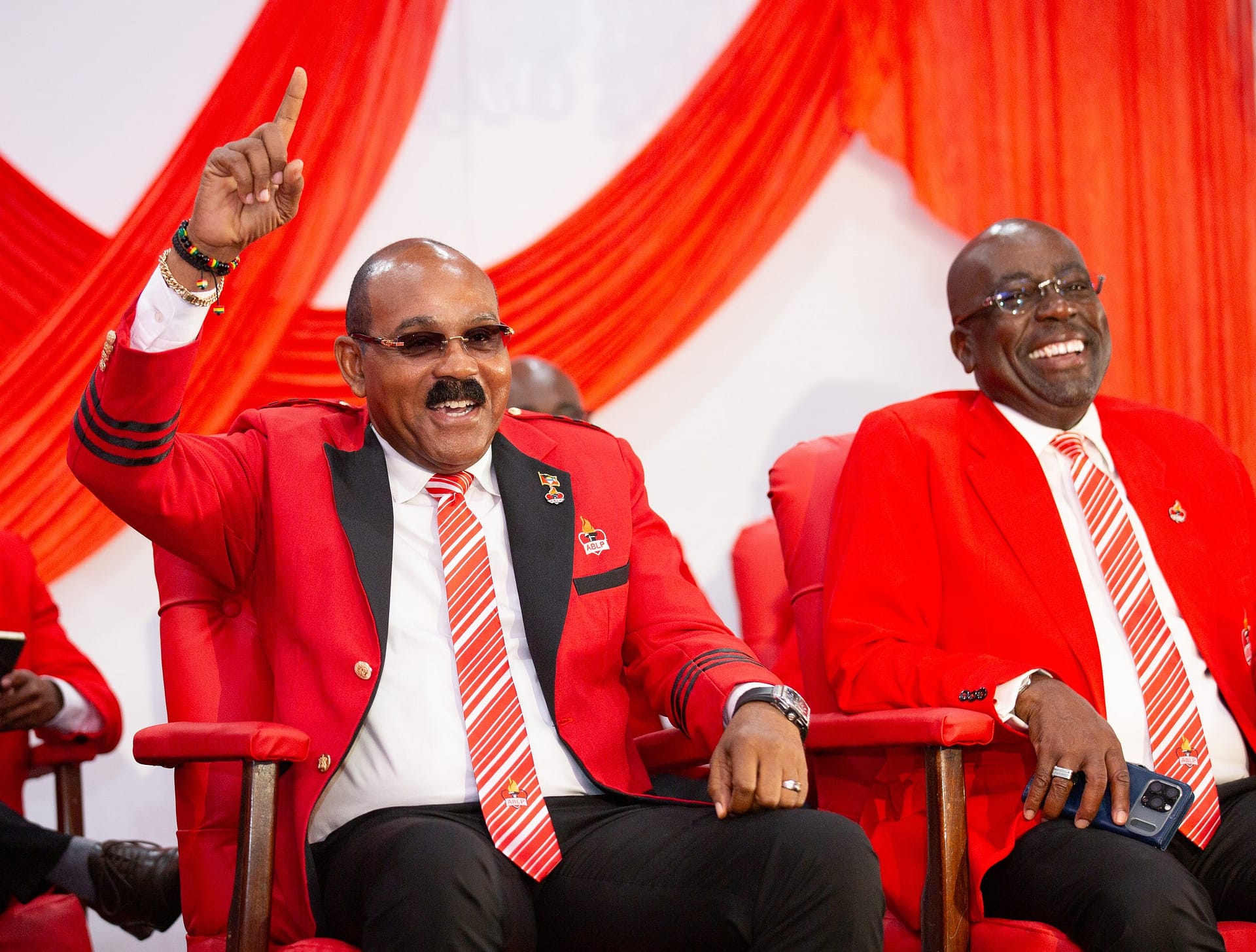
As Antigua and Barbuda enters the final stretch of campaigning ahead of the April 30 general election, sitting Prime Minister Gaston Browne has launched a pointed warning to voters, claiming that sweeping campaign promises from the opposition United Progressive Party (UPP) could ultimately trigger broad tax hikes for residents — including the possible return of the personal income tax abolished by his current administration.
Speaking during an interview with local outlet Pointe FM, Browne drew attention to what he frames as a critical gap in the UPP’s policy platform: the opposition has failed to outline a clear, viable plan to fund its extensive electoral proposals, and has offered no definitive denial that taxes will rise if the party takes power. “I observe that they have not said that they will not increase taxes. Notice they have remained silent on that issue,” Browne told the station.
While Browne acknowledged the UPP has issued a surface-level assurance it would not reintroduce personal income tax, he invoked a 20-year-old historical precedent to cast doubt on that promise. Ahead of the 2004 general election, Browne recalled, the UPP made identical commitments to avoid bringing back the tax — only to reverse course immediately after winning office. “We saw that movie before,” he said.
Browne added that when the UPP reimposed the tax, it was billed as a temporary, one-year measure to shore up public finances. Instead, the levy remained in place for a full decade, until Browne’s current administration won power and repealed it entirely.
Beyond the tax debate, the prime minister accused the UPP of running a misleading campaign built on uncoordinated, unplanned policy ploys rather than a cohesive governing agenda. He noted that he has yet to see the opposition release a full, comprehensive election manifesto, arguing that the party is only rolling out piecemeal promises to win over voters without any plan to deliver on them. “They’re just putting all these piecemeal promises out there,” Browne said.
The prime minister also drew a line between his administration’s approach and the opposition’s electoral strategy, rejecting what he called a “giveaway war” of unsustainable spending pledges. Browne argued that opposition parties face no accountability for extravagant promises before an election, as they only face consequences if they win power. “When you’re in opposition… you can promise anything,” he said.
In contrast, Browne highlighted his own government’s track record of fiscal discipline as a defining achievement, claiming that his administration has delivered a standard of national financial management never before achieved in Antigua and Barbuda. “We believe in fiscal responsibility,” he said.
Browne’s comments come as all major political parties ramp up their campaigning, with economic policy and measures to address rising cost of living emerging as the central battleground issues for the upcoming vote.