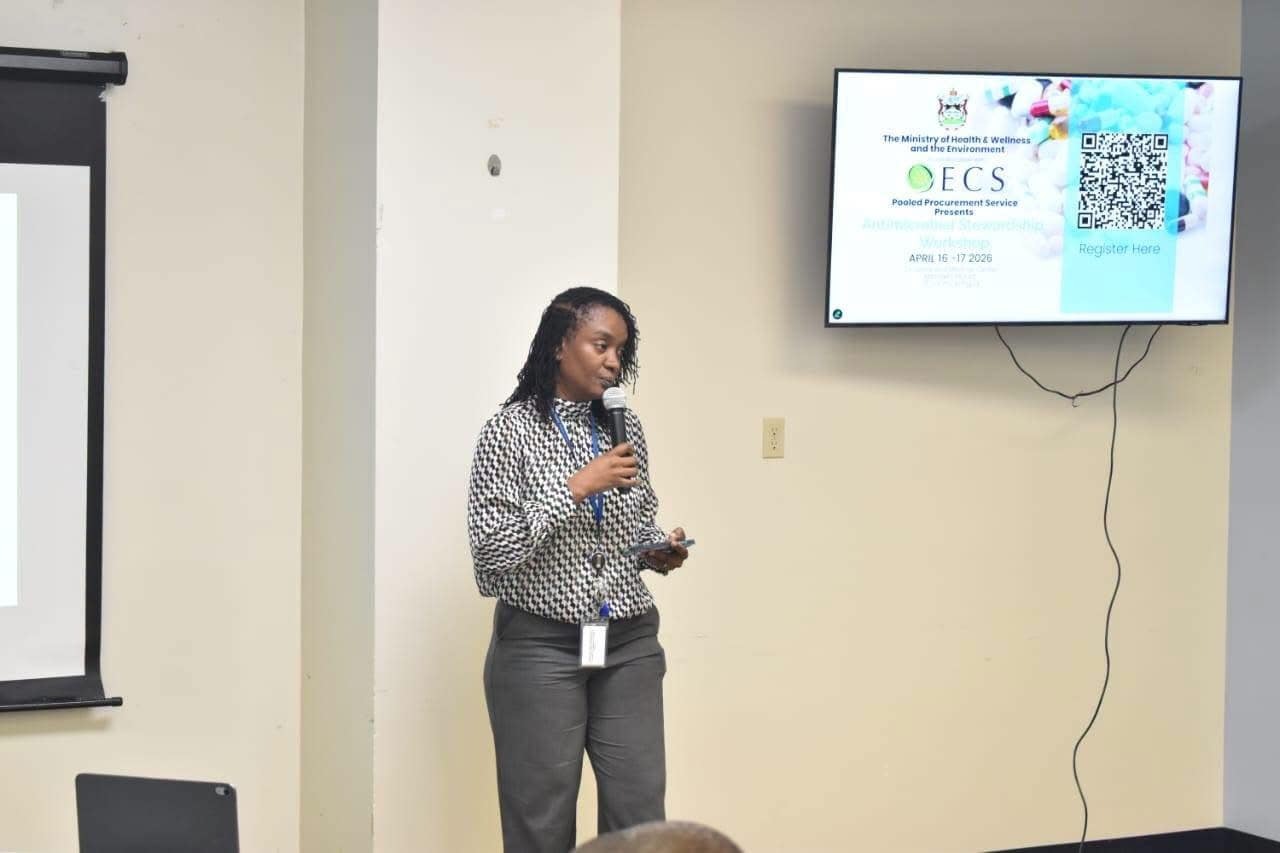
Against a backdrop of rising global concern over antimicrobial resistance (AMR), a critical two-day training workshop focused on Antimicrobial Stewardship (AMS) kicked off on April 16, 2026, at the Sir Lester Bird Medical Centre (SLBMC). Hosted by Antigua and Barbuda’s Ministry of Health, Wellness, the Environment and Civil Service Affairs, the initiative brought together a diverse cross-section of health-focused stakeholders to confront one of the most pressing silent threats to modern public health.
Unlike traditional single-sector training events, this workshop intentionally gathered professionals spanning multiple fields tied to AMR spread: practicing clinicians, registered pharmacists, bedside nurses, clinical laboratory technicians, veterinary practitioners, and public health policy officials. This inclusive structure was designed to advance the cross-cutting One Health framework that experts increasingly identify as essential to addressing AMR, which spreads across human, animal, and environmental systems.
All workshop sessions were led by Abraham S.T. Weekes, a Senior Technical Specialist with the Organization of Eastern Caribbean States Pharmaceutical Pooled Procurement Service (OECS-PPS). With more than 20 years of hands-on experience spanning regional hospital pharmacy practice, pharmaceutical system strengthening, and antimicrobial stewardship programming, Weekes brought context-specific expertise tailored to the unique needs of small island developing states in the Eastern Caribbean.
In her opening address to participants, Permanent Secretary Stacey Gregg-Paige emphasized the immediate urgency of coordinated action on AMR. She noted that antimicrobial resistance does not only impact individual patient outcomes—it fundamentally reshapes how healthcare is delivered, strains already limited health system resources, and undermines the long-term sustainability of public health infrastructure across the region. Gregg-Paige framed AMR as a core component of national and regional health security, noting that its impacts extend far beyond individual care to threaten broader community resilience.
The Permanent Secretary called the workshop both timely and indispensable, highlighting that cross-professional collaboration is the only effective path to meaningful progress on AMR. She explained that the convening created a rare space for local stakeholders to reflect on current gaps in antimicrobial use, discuss shared challenges, and co-develop practical, context-appropriate action plans to strengthen stewardship across Antigua and Barbuda’s healthcare system.
Gregg-Paige further reiterated the critical importance of adopting a One Health approach, which recognizes the inherent interconnectedness of human, animal, and environmental health. She also pointed to the urgent need for expanded and strengthened AMR surveillance systems—tools that are essential to tracking antimicrobial use patterns, detecting emerging resistance strains early, and supporting evidence-based policy and clinical decision-making.
Rather than relying solely on theoretical lectures, the workshop centered on practical, case-based learning that addressed AMR challenges in both acute clinical care and community health settings. Core session topics included an overview of the current AMR threat landscape in the Caribbean, the core governance roles and functions of local antimicrobial stewardship committees, and actionable strategies to embed rational antimicrobial use into routine healthcare practice.
Participants collaborated in working groups to develop locally adapted solutions to AMR, strengthen national governance and surveillance frameworks, and build more durable cross-stakeholder collaboration pathways. A dedicated continuing education session was also held to update clinicians and pharmacists on the latest evidence-based best practices for antibiotic prescribing and stewardship.
Gregg-Paige urged participants to engage fully in the workshop’s activities and keep a focus on measurable, actionable outcomes after the event concludes. “The true value of this engagement will be determined by what follows… in the decisions made, the consistency of approach, and the outcomes achieved,” she told attendees.
Globally, AMR is recognized by the World Health Organization as one of the top 10 public health threats facing humanity, and the Eastern Caribbean region is no exception to this risk. The Ministry of Health reaffirmed that expanding and strengthening antimicrobial stewardship across all care settings is an essential strategy to preserve the effectiveness of existing life-saving medications, guarantee positive treatment outcomes for patients, and protect overall community health safety.
In closing, the Ministry extended its sincere gratitude to the OECS-PPS for its technical support and leadership, as well as to all participating stakeholders for their commitment to advancing this critical public health initiative.