ST. JOHN’S, Antigua — As Antigua and Barbuda prepares for its upcoming general election, the country’s Electoral Commission has recorded a striking upward trend in applications for replacement voter identification cards, with more than 30,000 requests submitted since the start of 2024. Data from the commission’s latest progress report reveals that momentum behind the voter ID renewal initiative has accelerated sharply since February, with the most intense activity concentrated across March and the first half of April.
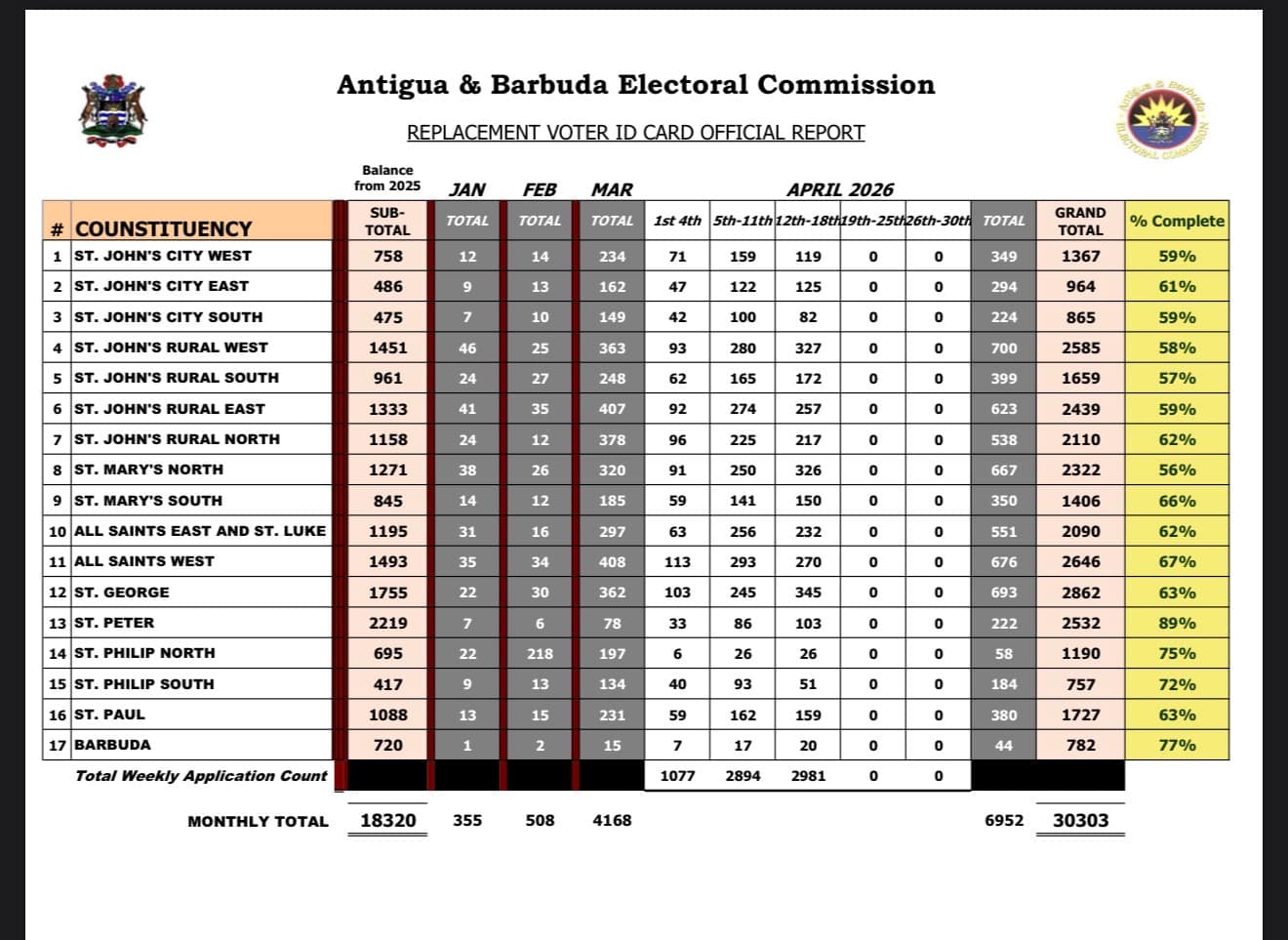
By mid-April, the cumulative number of replacement applications had reached 30,303, with 6,952 requests processed in just the first two weeks of the month. This sharp uptick follows a similar surge in March, when 4,168 applications were logged — a massive jump from the 508 applications recorded in February and 355 in January. A closer look at weekly data for April shows demand growing steadily week over week: 1,077 applications were submitted in the first week of the month, rising to 2,894 in the second week, and climbing again to 2,981 by the end of the third week.
Regional breakdowns of the renewal process highlight significant disparities in completion rates across the country’s constituencies. The small rural constituency of St. Peter leads all regions with an 89% completion rate, followed by the sister island of Barbuda at 77%, St. Philip North at 75%, and St. Philip South at 72%. By contrast, multiple densely populated urban constituencies centered around the capital, including St. John’s City West, St. John’s City South, and St. John’s Rural West, have yet to crack the 60% threshold for completed replacement card applications.
In terms of total application volume, three constituencies account for the largest share of requests: St. George has recorded 2,862 applications, All Saints West has 2,646, and St. John’s Rural West has 2,585. These numbers demonstrate strong engagement from voters across both rural and semi-urban areas of the country, even as urban centers lag behind in completion rates.
The rising number of applications signals growing public interest in the electoral process, as voters prepare to cast their ballots in the upcoming general election. The early-year slow pickup in applications shifted to a sustained surge starting in March, a trend that has continued into April with no signs of slowing. Electoral officials have repeatedly urged all registered voters to complete their replacement ID application and collect their new cards ahead of polling day, stressing that valid updated identification is required to participate in the election. The commission continues to work through the backlog of applications to ensure all eligible voters are properly registered before voting begins.