标签: Trinidad and Tobago

特立尼达和多巴哥

  • PM: Al-Rawi ‘untouchable’

    PM: Al-Rawi ‘untouchable’

    A fiery political storm has erupted in Trinidad and Tobago after the main opposition People’s National Movement (PNM) fled a parliamentary sitting Friday rather than face a vote to remove one of its senior senators over alleged misconduct linked to a multibillion-dollar pharmaceutical procurement scandal. Prime Minister Kamla Persad-Bissessar has levied sharp accusations that Opposition Leader Pennelope Beckles lacks the authority to oust Senator Faris Al-Rawi, claiming the lawmaker is shielded by unelected “fake elite financiers” she says have controlled the PNM since 2010.

    In a late-night social media statement posted after the chaotic parliamentary session, Persad-Bissessar highlighted that the opposition did not walk out when the government proposed removing fellow PNM Senator Janelle John-Bates from her post. The mass exodus only began when governing party MP Jearlean John formally called on Beckles to remove Al-Rawi over his role in the scandal, she argued. This selective exit, the prime minister claimed, is clear proof that Beckles is merely a placeholder installed by the PNM’s hidden financial backers, and is forced to follow their orders rather than act in the country’s best interest.

    The controversy centers on findings from Parliament’s Public Administration and Appropriations Committee (PAAC), which investigated questionable billion-dollar payments awarded to pharmaceutical suppliers under former PNM Health Minister Terrence Deyalsingh. The committee’s special report uncovered evidence of potentially unethical and even illegal behavior by both John-Bates and Al-Rawi related to witness testimony submitted to the investigative panel.

    During Friday’s sitting, Government Minister Saddam Hosein tabled a motion to adopt the PAAC’s special review, which initially targeted John-Bates. Hosein told the chamber that Al-Rawi bore greater responsibility for the scandal, noting he had altered Deyalsingh’s official witness statement before it was submitted to the PAAC. Hosein then moved to amend his motion to call on Beckles to request the President revoke the Senate appointments of both lawmakers over their conduct. When the Deputy Speaker ruled the amendment inadmissible, debate grew increasingly heated, with repeated objections from senior PNM MPs Colm Imbert and Nyan Gadsby-Dolly. The entire opposition bloc ultimately walked out of the chamber en masse.

    Hosein directly questioned Beckles’ leadership during the debate, asking whether she was too afraid of Al-Rawi and his backers to hold him accountable. Persad-Bissessar doubled down on this critique in her post-session remarks, saying the opposition’s walkout was a deliberate admission that Beckles cannot exercise independent control over the PNM’s parliamentary business. “They showed themselves to be a party totally controlled by its fake-elite financiers, existing only to serve them,” she said. “The current hierarchy of the PNM cannot touch Faris Al-Rawi because he is protected by the PNM’s fake elite financiers, who have hijacked and owned the PNM since 2010.”

    When contacted by the *Sunday Express* for comment, Al-Rawi pushed back against the accusations. He noted that Persad-Bissessar has targeted him politically for 16 years, and dismissed her latest claims as underhanded political maneuvering, comparing them to unsporting googly deliveries bowled behind a batsman’s back. Al-Rawi, who shared a birthday with legendary Trinidadian cricketer Brian Charles Lara on the day of the interview, said he is bound by legal professional privilege in the matter and cannot speak at length on the details, adding that the country’s courts will ultimately resolve any outstanding legal questions.

    The dramatic walkout has amplified longstanding questions about internal power dynamics within the PNM just months ahead of a expected general election, turning a scandal over public health procurement into a major test of Beckles’ authority as opposition leader.

  • T&T’s crisis of image-based sexual abuse

    T&T’s crisis of image-based sexual abuse

    For years, a hidden, highly organized criminal network operating across Trinidad and Tobago has systematically exploited thousands of women, trafficking their non-consensual intimate images in underground pornography rings that have evaded meaningful legal intervention. These networks, which operate across encrypted group chats and anonymous cloud storage platforms, see explicit content sorted by victim name, traded among members, and even auctioned off for profit, with participants actively encouraged to source more non-consensual material to add to the collective pools.

    The images at the center of these rings are often stolen directly from victims’ personal devices or leaked without permission after being taken privately. For those targeted, the harm extends far beyond a one-time violation of privacy: multiple victims have reported sustained extortion, relentless harassment, stalking, and threats from ring members, with many telling reporters they have endured lasting psychological trauma, reputational ruin, and irreversible disruption to both their personal relationships and professional careers.

    Recent legal action has already exposed systemic failures in addressing this crisis. The Humanitarian Foundation for Positive Social Change (HFPSC) brought a constitutional challenge over the ongoing existence of these rings and the lack of effective police action, and the Court of Appeal recently ruled that Trinidad and Tobago Police Service (TTPS) failed to uphold its duty to protect a child pornography victim whose intimate images were widely circulated across these platforms. While the TTPS has pledged to launch a broader investigation into the phenomenon and the networks have been pushed further into the dark web, a critical gap in national legislation remains: the non-consensual sharing of adult intimate images by local abusers is not classified as a criminal offense. As a result, countless adult victims are turned away by law enforcement when they report the abuse, and are instead advised to pursue costly, slow civil claims against their abusers that few can afford.

    To unpack the scope of this crisis and outline paths forward, the Sunday Express recently spoke with Clare McGlynn KC (Hon), a leading global expert on gender-based violence and legal regulation of image-based abuse and a law professor at Durham University in the United Kingdom. A highly respected voice in the field, McGlynn coined the term “image-based sexual abuse” to reframe this harm beyond a simple privacy violation, positioning it as a distinct form of sexual violence. She currently serves on the Council of Europe’s Committee on Combating Technology-Facilitated Violence against Women, the UK’s Judicial Appointments Commission, and contributed to the drafting of the UK’s landmark Online Safety Act 2023, which requires major tech platforms to implement strict protections for users, especially children, against harmful content. She has also worked with European institutions to strengthen the EU’s binding directive on gender-based violence.

    In the interview, McGlynn emphasized that addressing image-based sexual abuse requires a coordinated, whole-society response that combines stronger platform regulation, meaningful legal accountability for perpetrators, and widespread public education and awareness campaigns to prevent abuse before it occurs.

    When asked about the biggest barriers to legal reform, McGlynn pointed to a persistent global failure to recognize the severity of harm caused by online, technology-facilitated abuse. “Online abuse can have a devastating impact on every part of your life, from your personal life, to professional life, your economic security, and your trust in society. It ruptures your life as you knew it, with survivors often dividing their lives into before and after,” she explained, noting that policy makers still tend to prioritize physical violence over ongoing, chronic online abuse that follows victims every day.

    On the question of how to persuade governments to enact stronger protections for women in contexts where the sexualization of women and girls and unregulated pornography are normalized, McGlynn argued that the core of reform must center on the principle of consent. She explained that even when a woman voluntarily chooses to take or share intimate images for a private purpose, this does not equal consent for those images to be distributed publicly or traded without her permission. She added that the hypersexualization of women and girls, amplified by mainstream pornography that frames women as constantly available for any sexual act, normalizes abuse and erodes understanding of consent, making the problem far more difficult to address.

    Asked about the risk of widespread exposure to non-consensual explicit content shaping younger generations’ attitudes toward sex and women, McGlynn warned that regular exposure to image-based abuse legitimizes and normalizes non-consensual sexual violence, and that the public still vastly underestimates both the prevalence and harm of this abuse. Commenting on France’s strict age verification laws to block minor access to pornography, she noted that such measures only work if they are actively enforced, but argued that the bigger problem is the violent, misogynistic content of mainstream pornography itself. “We would not be so bothered about a young person, a 14-year-old, accessing pornography if it were not so sexually violent, misogynistic and racist. So, I think we need to focus on changing the content of mainstream porn, rather than age assurance,” she said.

    With rising reports of teen suicide linked to sextortion, McGlynn called for far more open public discussion about this crisis, noting that most victims are teenage boys who often feel ashamed and alone. She urged parents to talk openly with their children, emphasizing that sextortion is never the victim’s fault, and that help is available. She also highlighted the growing risk of deepfake abuse, where perpetrators can create explicit fakes of a young person without them ever sharing an intimate image, leaving victims afraid that no one will believe the content is fabricated. Crucially, she added, even when a young person has shared a real intimate image, parents and society must avoid condemnation: many are coerced or duped by organized criminal gangs, and shame only pushes victims further into crisis.

    Reflecting on the impact of this abuse on survivors, McGlynn shared the story of a young woman she has worked with closely over the past two years, identified only as Jodie to protect her privacy, who discovered that one of her closest friends had created and distributed deepfake explicit images of her. The experience was devastating, but Jodie has since become a passionate advocate for legal reform to protect other women from facing the same harm.

    McGlynn explained that her own work in this field is driven by the survivors she has collaborated with, who have bravely shared their stories to demand change. She noted that younger women are disproportionately affected by online abuse, yet their voices are often ignored or dismissed in policy spaces. “I would like readers to understand that online and tech abuse is life-shattering. It is also harmful to our societies as a whole, as women remove themselves from public life due to their experiences of harassment and abuse, and fear of further abuse,” she said. McGlynn ended by emphasizing that technology itself is neutral; the root of the crisis lies in systemic gender inequality and misogyny that must be addressed head-on. “There is a lot of work ahead! But we must work every day to try to make the changes that will mean that women and girls can live their lives without the constant fear of harassment and abuse.”

  • Beckles: Decision pending

    Beckles: Decision pending

    A deepening parliamentary controversy in Trinidad and Tobago has placed two opposition senators under formal investigation, with one already stepping forward to offer her resignation amid allegations of conspiracy to deceive a key legislative committee. The controversy traces back to an ongoing Public Administration and Appropriations Committee (PAAC) inquiry into the government’s pharmaceutical acquisition processes, which centers on claims that former Health Minister Terrence Deyalsingh pressured the National Insurance Property Development Company Ltd (NIPDEC) to grant preferential payment terms to a major pharmaceutical importer.

    The issue first came to light two weeks ago, on April 13, during a closed-door PAAC meeting. When Deyalsingh submitted a formal witness statement to the committee on April 8, committee investigators discovered tracked edits in the document that could be traced directly to Opposition Senator Janelle John-Bates. The PAAC subsequently finalized a Special Report highlighting John-Bates’ conduct, and alleged that she and fellow Opposition Senator Faris Al-Rawi participated in a conspiracy to commit contempt of Parliament by failing to disclose their roles in preparing Deyalsingh’s evidence.

    During yesterday’s sitting of the Senate, the upper house of Trinidad and Tobago’s Parliament, John-Bates opened her remarks by issuing a public apology and formally submitting her resignation to Opposition Leader Pennelope Beckles. While she apologized for the public controversy her involvement sparked, John-Bates firmly denied any allegations of conspiracy or intent to obstruct parliamentary work. “I recognise that my involvement in this matter has given rise to public concern and has contributed to a level of controversy that risks distracting from the important work of this honourable Parliament and from the issues affecting the people of Trinidad and Tobago,” she stated in her address. “For that, I apologise unequivocally to the citizens of our country and to the members of this Senate. It was not my intention to obstruct or impede the work of the Committee or the Parliament, and I deny that I conspired to commit a contempt of Parliament.”

    For his part, Al-Rawi has defended his actions, noting that he served as Deyalsingh’s personal attorney for the committee proceedings, and has not issued an apology or resignation to date.

    Speaking to reporters outside the Red House before yesterday’s sitting, Beckles confirmed that she is actively reviewing John-Bates’ resignation offer, but declined to share a timeline for a final decision. “Well, I am happy that she apologised so it’s under active consideration at this time,” Beckles told reporters. When asked whether Al-Rawi should also step down and issue a public apology, the opposition leader added that she had already requested a full written report from Al-Rawi and planned to hold a one-on-one meeting with him to discuss the matter before making any decision on his future in the Senate.

    Shortly after John-Bates’ resignation announcement, Senate President Wade Mark ruled that a prima facie case of breach of parliamentary privilege had been established against both senators, following a motion raised by Government Senator and PAAC member David Nakhid. Mark formally referred both cases to the Senate’s Privileges Committee for full investigation. If the committee finds the two senators liable for contempt or breach of privilege, both could face suspension from the legislature.

    “In this instance, my role is limited to determining whether a prima facie case of breach of privilege exists,” Mark explained in his ruling. “The decision on whether any matter referred to is indeed a breach of the privilege of this Senate or contempt of Parliament falls to the Committee of Privileges. I have carefully considered both matters and having regard to the facts presented and well-established parliamentary practice and procedure, I am satisfied that a prima facie case has been made in each instance, accordingly, I now refer both matters to the Committee of Privileges for investigation and report.”

    Notably, Al-Rawi is currently a sitting member of the Privileges Committee, which means he will need to be replaced by an alternate opposition senator for the duration of the investigation into his conduct. The committee is chaired by Mark, and also includes Attorney General John Jeremie, Government Senator Darrell Allahar, and Independent Senator Michael Simon de la Bastide.

    Pressure on John-Bates had already intensified earlier this week, when the Joint Select Committee on National Security – of which she is a member – was forced to suspend business after Energy Minister Dr Roodal Moonilal tabled a motion calling for her removal from the committee, citing concerns over perceived conflict of interest and impaired impartiality.

    Yesterday also saw the Senate debate and vote on a motion to formally adopt the PAAC’s Special Report on the pharmaceutical inquiry. The motion passed with a clear majority, earning 18 votes in favor, 7 votes against, and 4 abstentions. Al-Rawi and John-Bates voted alongside other opposition lawmakers against adoption, while independent senators were split on the decision: one voted against the motion, three supported it, and four abstained. John-Bates will retain her senate seat until Opposition Leader Beckles makes a final decision on whether to accept her resignation.

  • Joint patrols to return

    Joint patrols to return

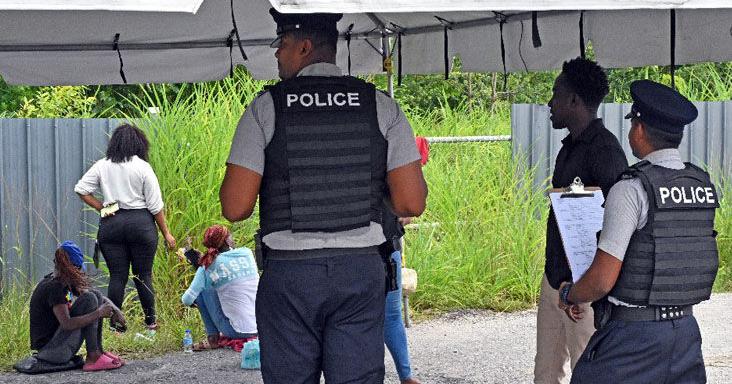
    A wave of frightening violent home invasions has triggered an immediate expansion of police operations across the Longdenville region and its surrounding communities, Trinidad and Tobago’s Minister of Homeland Security Roger Alexander has confirmed to the Senate. Over just a 48-hour window between Wednesday and Friday, local authorities received at least three formal reports of home invasions in the Longdenville community, alongside two additional matching incidents in nearby Cunupia. One documented attack, which unfolded on Raghunanan Road, left a 44-year-old Longdenville resident traumatized after three masked, armed invaders held her captive for 45 minutes, repeatedly issuing death threats during the ordeal.

    During a recent sitting of the Senate, Opposition Senator Faris Al-Rawi pressed Alexander to outline what urgent interventions the government would roll out to address rising insecurity and support residents impacted by the traumatic attacks. In his response, Alexander confirmed that the Trinidad and Tobago Police Service (TTPS) has launched a coordinated community-centered strategy to rebuild public trust and restore a sense of safety to the area as quickly as possible.

    “Given the severity of the recent home invasions and traumatic incidents in Longdenville, it is critical that law enforcement continue working hand-in-hand with local residents to rebuild trust and confidence in the shortest timeframe possible,” Alexander told the upper legislative chamber. He also revealed that he had held a closed-door meeting with Longdenville residents earlier the same day, though he declined to share sensitive details of the private discussions to protect those in attendance.

    Minister Alexander also noted that Longdenville was previously shortlisted for designation under a Zone of Special Operations (ZOSO), a special security framework that enables expanded law enforcement powers. The ZOSO legislation ultimately failed to pass the Senate back in January, blocking the designation from going into effect at that time.

    Despite the legislative setback, Alexander confirmed that TTPS has already ramped up operational capacity across Longdenville and adjacent high-risk areas including Enterprise. The expanded security measures include a sharp increase in standard foot patrols, mobile vehicle patrols, and intelligence-driven targeted patrols. The government has also instructed the national Gang Unit to increase its activity in the region, and is preparing to reactivate joint patrol units made up of both police and military personnel to deter criminal activity.

    “These steps are designed to help Longdenville residents regain that sense of safety and security that has been disrupted by criminal elements,” Alexander said, adding that all law enforcement personnel have been explicitly directed to operate within the bounds of the law while protecting local communities. According to the minister, most local residents have expressed clear support for the government’s new security measures, with one resident telling him that locals would back any intervention that delivers tangible improvements to public safety.

    Alexander also highlighted that some residents have acknowledged existing gaps in personal and property security across the community, including the common practice of leaving homes and lots unsecured — a choice that creates easy opportunities for criminal actors to target properties. In response to these gaps, TTPS officers have been instructed to host community outreach sessions to educate residents on evidence-based safety practices and provide support to help households shore up their personal security.

  • Faris under fire

    Faris under fire

    A major parliamentary controversy unfolded during a recent sitting of the Senate of Trinidad and Tobago, where sitting government ministers launched sharp criticism against opposition Senator Faris Al-Rawi, SC, over his alleged role in a coordinated plan to compromise the integrity of the Public Administration and Appropriations Committee (PAAC). The fallout has led the Senate President to order both Al-Rawi and fellow opposition Senator Janelle John-Bates, a sitting PAAC member, to face investigation by the parliamentary Privileges Committee over allegations of contempt of Parliament.

    The confrontation was opened by Labour Minister Leroy Baptiste, who tabled a motion to adopt the PAAC’s Special Report detailing John-Bates’s misconduct. Baptiste argued that Al-Rawi was fully aware of John-Bates’s status as a PAAC member, and documentary evidence attached to the special report directly and irreversibly implicates the opposition senator in the misconduct.

    The evidence in question centers on a witness statement submitted to the PAAC by former Health Minister Terrence Deyalsingh. In-depth metadata and tracked change analysis of the document reveals that both John-Bates and Al-Rawi contributed extensively to drafting the statement, with Al-Rawi personally carrying out revisions, edits, and in multiple cases overwriting changes previously made by other contributors.
    Baptiste emphasized that Al-Rawi’s participation in the drafting process cannot be written off as an innocent oversight. Instead, he framed the actions as part of a prearranged sequence of coordinated activities that resulted in fabricated and improperly shaped evidence being presented to the parliamentary committee, directly undermining the body’s institutional integrity.

    During the subsequent parliamentary debate, Senate President Wade Mark approved two separate privilege motions put forward by Government Senator and sitting PAAC member David Nakhid. Nakhid’s first motion addressed John-Bates’s conduct, noting that the PAAC’s own special report had concluded she deliberately compromised the committee’s impartiality and took part in what amounts to a conspiracy to commit contempt of Parliament. Nakhid explained that John-Bates violated core parliamentary standards by failing to recuse herself from the committee’s review of Deyalsingh’s evidence, despite having secretly assisted in drafting and advising on the memorandum, and failing to disclose her involvement to the committee. He added that if the PAAC chair had not intervened to stop her, John-Bates would have continued to take part in the committee’s deliberations, raising severe red flags about commitment to impartiality and adherence to parliamentary ethics.

    Nakhid’s second privilege motion targeted Al-Rawi, a senior barrister with decades of legal experience. He pointed out that Al-Rawi’s edits appear repeatedly across the tracked version of Deyalsingh’s statement, and argued that as a Senior Counsel, Al-Rawi should have recognized immediately that John-Bates’s involvement in the drafting process was improper. Citing Erskine May’s seminal Treatise on the Law, Privileges, Proceedings and Usage of Parliament, Nakhid noted that any conspiracy to deceive either chamber of Parliament or its committees is legally defined as contempt of Parliament. He further argued that legal professional privilege cannot be invoked to shield deceptive conduct, alleging that Al-Rawi conspired with Deyalsingh and John-Bates to mislead the PAAC, thereby committing contempt and abusing the parliamentary privilege afforded to his position.

    Following the debate, Senate President Wade Mark formally ruled that both Al-Rawi and John-Bates must be referred to the Privileges Committee for full investigation into the allegations.

    Minister of Housing Anil Roberts joined the growing chorus of government criticism against Al-Rawi, noting that the opposition senator’s actions are particularly troubling given his prior service as Attorney General of the country. Roberts argued that the full weight of the PAAC special report and supporting evidence shows Al-Rawi witnessed a young parliamentary colleague making a serious, admitted error, and chose to do nothing to stop it. He dismissed the entire affair as an undisputed political horror story for the opposition People’s National Movement (PNM), noting that both Al-Rawi and John-Bates are trained attorneys, making their conduct all the more disappointing.

    Roberts further called out Al-Rawi, a third-generation parliamentarian, by referencing public criticism from former PNM General Secretary Ashton Ford, who previously labeled Al-Rawi a non-performer. He stressed that Al-Rawi, a 30-year veteran of legal practice who previously led a high-profile prosecution that secured a witness tampering charge, should have recognized immediately that John-Bates’s actions were improper. Roberts alleged that Al-Rawi not only failed to warn John-Bates that her conduct amounted to witness tampering and urge her to resign and apologize to the PAAC, but actually joined the scandalous conspiracy alongside John-Bates and Deyalsingh to corrupt and undermine the PAAC’s core work.

    Roberts closed by calling on the full Parliament to defend its institutional integrity by demanding both senators resign from office. He directed his call specifically at Al-Rawi, claiming the senior senator refuses to apologize or step down despite the weight of evidence against him. To prevent a repeat of the prior high-profile “Emailgate” parliamentary scandal, Roberts called for an immediate full investigation, including retaining United States legal counsel to compel Google via subpoena to preserve all email correspondence between Al-Rawi, John-Bates, and Deyalsingh stored on the company’s servers. He also urged the Parliament to seek formal legal opinion on whether the conduct amounts to criminal offenses including witness tampering, conspiracy to pervert the course of justice, misconduct in public office, corruption, and fraud.

  • Ramdeen: Money to fix roads, buy meds

    Ramdeen: Money to fix roads, buy meds

    Trinidad and Tobago’s state-owned National Gas Company (NGC) has announced a major strategic reallocation of its $700 million corporate social responsibility sponsorship budget, shifting funds away from cultural and community event sponsorships toward urgent public needs including road repairs, hospital medication stock, public servant salaries, and national social safety net support. The announcement was made by NGC Chairman Gerald Ramdeen during a recent gas supply contract signing ceremony with Houston-based energy firm EOG Resources at Port of Spain’s Hyatt Regency.

    Ramdeen used the public event to push back against widespread public criticism of the company’s earlier sponsorship cuts, which sparked outrage across Trinidad and Tobago’s cultural sector late last year. At that time, NGC withdrew funding from high-profile local organizations including the Bocas Lit Fest literary festival and multiple top steel orchestras across the country, drawing significant public pushback over the loss of support for community and cultural initiatives.

    In his address, Ramdeen outlined the dramatic operational cost cuts the new NGC board has implemented since taking over leadership, noting that annual operating costs fell from $1.8 billion to $1.1 billion under the current leadership. He also pushed back against common narratives that attribute the company’s doubled profit growth over the past 10 months to restructuring at Atlantic LNG, the country’s major liquefied natural gas export facility. Instead, he credited targeted operational decisions and intentional leadership appointments for the improved financial performance.

    A key example Ramdeen highlighted was the company’s decision to invest in a new truck compressor, a move that resolved long-standing pressure issues that had previously restricted gas flow into Atlantic LNG. Prior to this investment, he noted, infrastructure limitations sometimes prevented NGC from delivering any gas to the export facility. The new compressor has allowed NGC to take full control of gas flows to Atlantic LNG, and to offer compression services to downstream partners under existing transportation contracts. Today, Ramdeen noted, NGC is delivering nearly 200 million standard cubic feet of gas daily to Atlantic LNG, even ahead of the 90 million cubic feet per day of new production expected to come online from upcoming projects next year. This consistent, elevated output has already allowed the country to export an additional full cargo of LNG, generating more than US$50 million in extra revenue for the national treasury at current market prices, he added.

    Ramdeen defended the budget reallocation, noting that the company receives 10 new sponsorship requests daily, and that the $700 million previously allocated to event and group sponsorships will now deliver far greater public benefit by addressing core public needs. “That money will now be taken to fix your roads, to put medicine in your hospitals, to pay your public servants to look after the social net of this country, and that is where it rightfully should be,” he said. The reallocated funds will also be returned to national shareholders, aligning with the company’s new mandate to prioritize broad public good over discrete cultural sponsorships.

    The contract signing with EOG Resources marks a continued partnership between the state-owned NGC and the international independent energy firm, reinforcing ongoing collaboration to expand domestic gas production and export capacity in Trinidad and Tobago.

  • REFINERY SOON

    REFINERY SOON

    On this year’s May Day commemorative march, which started from the Oilfields Workers’ Trade Union (OWTU) headquarters in San Fernando’s Circular Road and ended at Harris Promenade, Joint Trade Union Movement (JTUM) president Ancel Roget delivered a series of key updates for Trinidad and Tobago’s labor movement, sharing promising news on the long-shuttered Pointe-a-Pierre refinery and ongoing wage negotiations.

    Roget, who also leads the OWTU, told assembled workers that the years-long campaign to restart the 2018-closed refinery is in its final stages, with a reopening now within close reach. Once operational again, he emphasized, the facility will bring critical employment opportunities to more than 4,000 skilled and semi-skilled workers, delivering broad economic benefits to working people across the entire nation.

    The labor leader credited progress on the refinery restart to the union movement’s strategic engagement with national governance, pointing to the collaborative work with La Brea MP Clyde Elder, Point Fortin MP Ernesto Kesar, and Labour Minister Leroy Baptiste. Roget stressed that he maintains full confidence in his allies within the current government and parliament, calling on all union members to stand firm in solidarity with representatives pushing for worker interests at the national level.

    His comments align with recent remarks from Energy Minister Dr Roodal Moonilal, who told attendees at the United National Congress’ national congress Saturday that multiple entities have formally expressed interest in the refinery restart program, with new inquiries emerging as recently as April 24.

    Roget used the May Day platform to push back against former prime minister and former energy minister Stuart Young, accusing him of seeking to undermine the current government’s work. He issued a clear warning: if any actor attempts to derail the government’s work to advance national prosperity and progress, the country’s trade unions are prepared to launch public, on-the-ground campaign actions in response. “Leave the Government alone to conduct the business in the interest of the people of Trinidad and Tobago,” Roget said, pushing back against criticism of the administration’s efforts.

    Addressing speculation around the union movement’s strategic approach, Roget responded to critics who had questioned his public silence on key issues in recent months. He explained that the movement often pursues private, behind-the-scenes advocacy to deliver results, noting that a lack of public comment does not equal inaction. “Sometimes not because you’re not hearing us saying something publicly, it does not mean we are not representing privately. We are but we have to be strategic…we are very focused and our eyes remain on the prize,” he explained.

    On the topic of wage negotiations, Roget outlined significant progress for public sector workers, noting that a 10% wage adjustment has already been secured for members of the Public Services Association (PSA) and the National Union of Government and Federated Workers (NUGFW), delivered through the persistent advocacy of the union-aligned representatives. For outstanding negotiations with other unions, Roget confirmed that JTUM has scheduled a May 13 meeting with Labour Minister Baptiste, where union representatives will present their proposals and enter formal discussions. While he declined to share a fixed timeline for concluding all remaining talks, Roget gave a firm assurance to workers that every outstanding negotiation will be settled in favor of labor.

    This year’s May Day march carried the official theme of “advancing the workers’ agenda,” designed to center the needs of all working people across Trinidad and Tobago regardless of sector or affiliation. Roget emphasized that the most important element of the day is participation to protect worker rights and working conditions, rather than the size of the crowd. Still, turnout for the 2024 march was notably lower than 2023’s event, including a complete absence from the Trinidad and Tobago National Nursing Association (TTNNA). TTNNA’s absence came in protest of the fact that regional health authority workers, who remain on 2013 salary scales, did not receive the 10% wage increase granted to PSA workers, a point confirmed by Stuart.

    Roget closed his remarks with a political appeal to members, urging them to retain their religious values and to never support a return of the People’s National Movement (PNM) to government. Representatives from a range of major national employers including T&TEC, PowerGen, NP, The University of the West Indies, the University of Trinidad and Tobago, NTA, YTEPP, TTPWU, TIWU and MTS did participate in the event.

  • Dad gunned down in front son at QPS

    Dad gunned down in front son at QPS

    A senseless act of violence has shaken Port of Spain, Trinidad and Tobago, after a 49-year-old father was fatally shot in full view of his young child at a popular public gathering space — just hours after he buried a victim of an earlier deadly mass shooting.

    Masud Prosper, a long-time employee of the Ministry of Health who resided on Belle Eau Road in Belmont, had just finished picking up his 9-year-old son from football practice on the afternoon of the incident. At approximately 5:30 p.m., he pulled his black Mitsubishi Lancer into a parking zone behind the food court at Queen’s Park Savannah, a central open space frequently used by local families for recreation and public events.

    As the pair sat together in the parked vehicle, an unidentified gunman walked up to the car and opened fire, striking Prosper multiple times. The attack was immediate, and Prosper died at the scene. Miraculously, his young son escaped the incident without physical injury.

    Shortly after first responders arrived at the scene, Adisha Pierre, Prosper’s common-law wife, arrived with her daughter. In an interview with reporters, she described Prosper as a quiet, hardworking man who focused entirely on providing for his family and stayed far removed from gang activity.

    “All I was thinking was he would have been having a time playing football with our son, but they killed him in front of his own child,” Pierre said. “He goes to work, he minds his business, he comes home, and he sees about his son. He’s a father trying his best out here and he didn’t deserve that at all. He never had any ties to violence or gang activity in all the time I’ve known him.”

    Pierre confirmed that Prosper had spent that same morning at the funeral for one of the four people killed in a mass shooting along Lady Young Road in Morvant on April 19, the latest in a string of gang-linked killings to hit the country.

    She questioned why her partner was targeted, saying the attack clearly appeared to be a pre-planned hit. “Why was my spouse targeted? This was a hit but why him? What did he do to deserve this?” she asked. Though Prosper was not involved in any gangs, Pierre said she believes his killing is a consequence of the rising gang violence that has plagued the area, adding that Prosper had repeatedly warned her to avoid traveling along Belle Eau Road due to safety risks linked to gang activity.

    The killing brings the country’s national murder toll to 118 for the year up to the date of the incident, compared to 130 recorded by the same point last year. While the overall murder count has seen a minor year-over-year decline, the brazen nature of the latest killing — which took place in a busy public area in the capital, with a young child as a witness — has renewed public outcry over the persistent gun violence that continues to tear apart communities across the nation.

  • ‘Express’ wins appeal over police search

    ‘Express’ wins appeal over police search

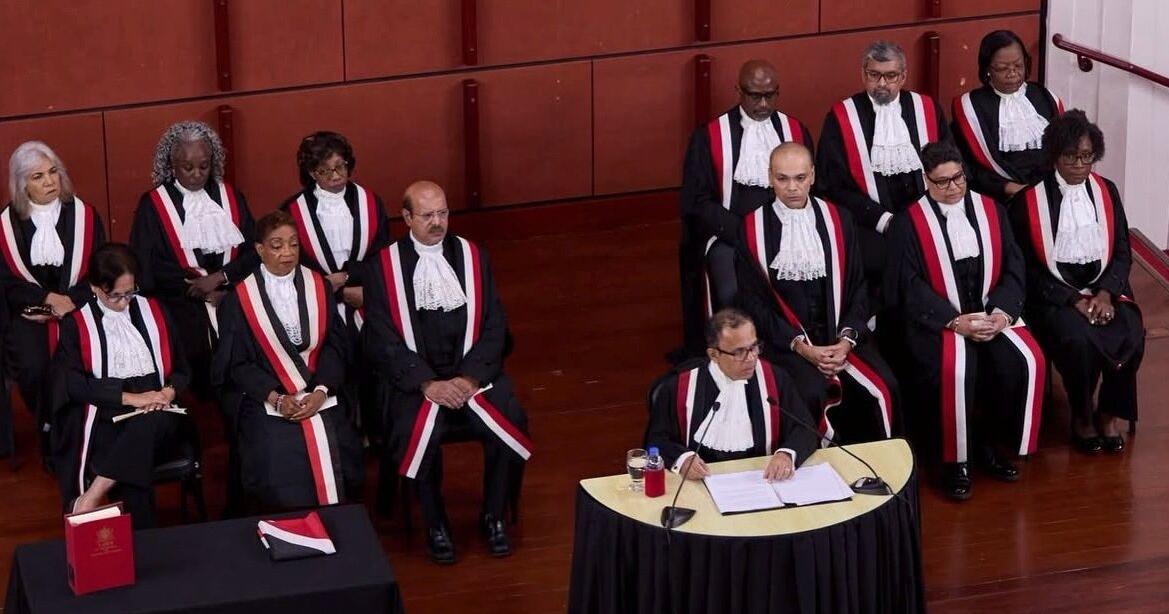
    A landmark ruling from Trinidad and Tobago’s Court of Appeal has cemented critical protections for press freedom in the country, after the judiciary sided with Trinidad Express Newspapers Ltd in an appeal brought by state law enforcement and a senior police superintendent.

    The legal battle traces back to a 2020 investigative report published by the Express, written by veteran journalist Denyse Renne, which exposed questionable financial transactions linked to a high-ranking police official. In the wake of the publication, police launched a probe into alleged “tipping off” violations, led by Superintendent Wendell Lucas, and secured judicial search warrants to enter the newspaper’s Port of Spain headquarters. The stated goal of the operation was to unmask Renne’s confidential source.

    On March 11, 2020, law enforcement executed the second of the two approved warrants, entering the Express’ headquarters, Express House, and seizing four digital flash drives from the office of then-editor-in-chief Omatie Lyder. The media entities involved—parent company One Caribbean Media Ltd, the Express itself, and Lyder—immediately challenged the constitutionality of the warrants. They argued that the search violated fundamental rights enshrined in Trinidad and Tobago’s constitution, specifically the guarantee of press freedom outlined in Section 4(k).

    The case was first heard at the High Court, which ruled in favor of the media group and struck down both warrants as unconstitutional. Undeterred, the Office of the Attorney General and police appealed that ruling, asking the higher court to overturn the lower court’s decision.

    In the judgment delivered Wednesday, a majority of the three-justice panel upheld the core of the High Court’s ruling that the executed search violated constitutional press freedom protections. Justices of Appeal Nolan Bereaux and Peter Rajkumar formed the majority, while Justice James Aboud issued a separate dissenting opinion, marking a clear split among the judiciary on the balance between police investigative powers and press rights.

    Writing the lead majority judgment, Justice Bereaux reaffirmed that the second search warrant was unlawful on two key grounds: first, police failed to submit sufficient evidence to justify granting the warrant, and second, the Justice of the Peace who approved the warrant did not conduct the required balancing of competing public interests. “The justice of the peace could neither be satisfied that there was probable cause for the search nor that the search struck the right balance,” Bereaux explained.

    The justice emphasized that when law enforcement seeks to search a media organization—especially for the purpose of identifying a confidential journalistic source—extraordinary care must be taken to balance the public interest in solving crime against the foundational role of a free press in democratic governance. “The sanctity of the confidentiality of journalistic sources is an essential element of the right to freedom of the press,” he added.

    The court also highlighted two additional flaws in the warrant: its overly broad scope, which allowed police to search nearly all of the newspaper’s electronic data without any restrictions or safeguards to protect unrelated confidential material, and the absence of any evidence that police had exhausted alternative, less intrusive investigation methods before targeting the newsroom.

    While the majority departed from the High Court on one narrow point—finding the first, never-executed warrant did not itself violate constitutional rights—it upheld the ruling that the second executed warrant and the seizure of the flash drives were unconstitutional. In a departure from the lower court’s order that damages be assessed at a later hearing, the appellate panel awarded the media respondents a fixed compensation sum of TT$25,000, framing the award as a deliberate step to vindicate the fundamental right to press freedom.

    In his concurring opinion, Justice Rajkumar echoed the majority’s concerns, agreeing that the warrants were impermissibly broad and failed to properly account for their harmful impact on journalistic work, including the risk of creating a chilling effect that would discourage sources from coming forward with information of public interest.

    In his dissenting opinion, Justice Aboud took an alternative position on the legal and constitutional questions raised by the case, underscoring the court’s internal division over how much latitude police should have to intrude on media operations in the course of criminal investigations.

    Legal teams for both sides were led by senior bar members: Sophia Chote SC, Peter Carter, and Samantha Ramsaran represented One Caribbean Media, the Express, and Lyder, while Senior Counsel Fyard Hosein, Rishi Dass, and Kadine Matthews argued the case for the state.

  • ‘They said they would kill me’

    ‘They said they would kill me’

    Early yesterday morning, a coordinated string of violent home invasions swept through the quiet residential community of Longdenville, Trinidad, leaving one local survivor traumatized and highlighting a growing regional crime crisis that has put ordinary residents on high alert.

    A 44-year-old female resident of Raghunanan Road, one of the attack targets, spoke publicly to local media outlet Express on condition of anonymity, citing ongoing fears for her personal safety. She shared a harrowing minute-by-minute account of the 45-minute attack that unfolded just after 2:30 a.m., when she was the only person home.

    The incident began when unusual outdoor noises pulled her out of sleep. Checking her home security camera system, she immediately noticed something was wrong: all of her cameras had been shifted out of their normal positions. Spotting a stranger moving along the side of her home, she fumbled to call the national 999 emergency line, and had only just managed to blurt out her address when the three attackers forced their way into the property, cornering her in the bathroom where she had hidden.

    According to the victim, the assailants—who appeared to be in their early 20s, wore concealing ski masks, work boots, long-sleeve tees and dressed to look like local construction workers—were all armed with what she believes were pistols. They quickly seized her phone, throwing it into a toilet to cut off any potential communication with police, before demanding cash, gold jewelry and access to a safe, none of which the victim kept stored at her home.

    After stealing a small amount of cash from her wallet, the trio began ransacking every room of the property, turning over closets, opening cabinets and even searching inside kitchen appliances. One attacker ordered the others to bind the victim, cutting a cord from her own standing fan to tie her hands behind her back and force her to lie face down on the floor. Working up the courage to free herself while the men were distracted by looting, the victim managed to wiggle out of the loose bonds and made a desperate dash for the front door, only to be caught quickly by the assailants, who re-bound her more tightly—this time securing both her hands and feet before returning to their search.

    The attack took a more chilling turn when the criminals, frustrated by the small amount of valuables they had found, began pressing the victim for information about her neighbors. They demanded to know how many people lived in adjacent homes, where those neighbors worked, and if any of them kept large amounts of cash or valuables on the property. The victim told reporters she believes the gang was already scoping out their next target after coming up empty at her home. Throughout the ordeal, the men repeatedly threatened to kill her if she lied or did not cooperate, warning they would return later to harm her if she gave them false information.

    The invasion ended abruptly when the gang spotted the lights from a private security patrol the victim had hired to monitor her neighborhood. Panicked by the approaching patrol, the attackers fled out of the back of the property, running through the yard before escaping over a fence. After waiting several minutes to confirm the men were gone, the victim once again managed to wiggle free of her bonds and flag down the security team, who contacted local law enforcement.

    Police investigators later confirmed to the victim that her attack was one of three separate home invasions carried out in the Longdenville area overnight, all linked to the same criminal network. One of the other attacks, police said, targeted a home in a gated community, where six masked armed assailants carried out the robbery. A forensic check of the victim’s property revealed how the gang gained entry: they climbed over the back boundary wall of her home, broke through the steel burglar proofing on a side window, and squeezed one man through the opening to unlock the back door for the other two accomplices.

    In the wake of the traumatic attack, the victim slammed the ongoing state of violent crime across Trinidad, calling it “ridiculous” and noting she had taken every possible precaution to protect her home, including sturdy locked doors, burglar proofing, a professional alarm system and regular private security patrols. “I never thought something like this would happen to me,” she said. “I don’t know what else to do. My privacy was invaded.”

    She is now calling for policymakers to implement harsher criminal penalties for home invasion offenders, and demanding increased, more consistent patrols and vigilance from local police. Traumatized by the attack, she said she is even reconsidering her long-held opposition to personal gun ownership for self-defense, despite her discomfort with the idea. “I can’t see myself killing somebody, but at one point, I thought they were going to kill me because they were upset that I had nothing valuable,” she explained.

    The victim also acknowledged that the recent passage of new, stricter home invasion legislation by the national government was a direct response to this growing wave of violence. “It is innocent people being attacked. This is a pure home invasion looking to rob people and terrorise them,” she said. For her part, the attack has left her so shaken that she is now considering leaving the country entirely. “Sometimes, I consider migrating because I used to think I’m safe, but I don’t think I could ever feel safe again,” she added.

    This string of attacks is just the latest in a growing surge of home invasions across Central Trinidad over the past month. Reports of similar violent robberies have already been recorded in nearby communities including Chaguanas, Cunupia, and Freeport, leaving residential communities across the region on edge.