标签: Trinidad and Tobago

特立尼达和多巴哥

  • Police: Bank card used after disappearance

    Police: Bank card used after disappearance

    For decades, Bernard Mahabir, 71, and Kenneth Gill, 67, shared a close bond as friends who regularly gathered socially. What began as an ordinary day of casual meeting would end in a senseless tragedy that has left their small community reeling in shock.

    Investigative details from local law enforcement outline the sequence of events that led to their deaths. On Sunday morning around 11 a.m., Gill left his residence in Cazabon Gardens, Trincity, and picked up his lifelong friend Mahabir from his home in Pasea, Tunapuna. The pair first drove to a Lopinot community center, where Gill parked his white Nissan Tiida, before Gill’s son transported them to a social gathering in La Pastora, Lopinot. By 5 p.m., the two men were dropped back at the community center, and from there they walked to a nearby neighborhood bar for an additional hour of casual time together.

    Investigators now believe that this stop at the bar would ultimately seal their fates. After observing Gill making payments with his bank card during their time at the bar, attackers targeted the pair, seeing two older retirees as vulnerable, easy targets for a violent robbery. The two men were last seen alive by relatives at approximately 6 p.m., when they drove out of the Lopinot area in Gill’s car.

    By 9:40 a.m. the following Monday, concerned wives of both men had filed official missing person reports at the Arouca Police Station. Law enforcement immediately launched an investigation and called in the volunteer Hunters Search and Rescue Team, led by Shamshudeen Ayube, to assist in the search. Before their remains were located, Gill’s stolen bank card was used by the attackers to make multiple unauthorized withdrawals: $3,000 was pulled from ATMs in Sangre Grande in two separate transactions, and an additional $1,500 was withdrawn from an ATM in Arima.

    Roughly five and a half hours after the missing reports were filed, at 3:15 p.m. Monday, police received a tip that led them to Tapana Road, a side route off Valencia Old Road in Valencia. There, they discovered the charred remains of Gill’s Nissan Tiida, with the burnt bodies of the two friends locked inside the vehicle’s trunk. The following morning, the remains were transported to the Forensic Science Centre in Federation Park, where family members formally identified the victims.

    The tight-knit community where the men lived has remembered the pair as beloved, upstanding members. One neighbor of Gill told local reporters that Gill was an exceptionally kind neighbor who had lived in the Trincity neighborhood with his family for 30 years. Relatives of Mahabir shared that the two men had grown up together on the same street in Pasea, Tunapuna, and their decades-long friendship was so close that each man’s children considered the other a surrogate uncle. Mahabir, a retired married father of two, had left his position with the Tunapuna Piarco Regional Corporation roughly a decade prior; outside of his public service, he was known as a skilled tailor and an enthusiastic beekeeper.

    As of Monday night, this double murder brings the national homicide toll for the current year to 117. For comparison, the homicide count on the same date last year was 126, marking a modest year-over-year decrease in total killings despite this high-profile violent crime.

  • Republic Bank announces  fee increases from Friday

    Republic Bank announces fee increases from Friday

    Starting this Friday, customers of Republic Bank Ltd, the largest commercial banking institution in Trinidad and Tobago, will face broad-based increases to fees across nearly all everyday banking services, a change that will raise costs for everything from routine withdrawals to penalty charges for account mismanagement.

    The revised fee structure touches nearly every part of retail and small business banking: routine debit transactions on multiple account types that previously included a capped number of free withdrawals will now carry per-transaction costs. Penalty fees have seen even steeper jumps: non-sufficient funds (NSF) fees will climb from $34.50 to $57.50, matching the new $57.50 rate for overdraft fees that previously sat at $30. Late payment penalties on some loan products have even doubled, reaching a maximum of $100 per infraction.

    The fee increases come as no surprise to many industry observers, who have warned of cost pass-through to consumers since Trinidad and Tobago’s Finance Minister Davendranath Tancoo introduced a 0.25% asset levy on commercial banks and insurance companies in the 2024 national budget. When announcing the policy, Tancoo justified the levy by pointing to the strong financial performance of the country’s large financial institutions, noting that major banks and insurers have delivered consistent earnings, maintained healthy liquidity ratios, and grown their asset bases steadily thanks to conservative lending strategies and supportive monetary conditions.

    “Despite this, the average citizen continues to be subjected to unreasonably high fees and near-zero returns on their savings and investments,” Tancoo stated at the time, arguing that the 0.25% levy was a fair measure to generate additional public revenue. Officials projected the policy would add $575 million annually to the national government’s income.

    Ironically, the new levy has prompted the very fee hikes Tancoo criticized, with Republic Bank moving to pass its new tax burden directly to consumers. The bank’s latest financial disclosures, released in early 2026, confirm the institution’s strong profitability that the finance minister referenced: for the full year ending September 30, 2025, Republic Financial Holdings Ltd, the parent company of Republic Bank, posted a net profit of $2.2 billion attributable to equity holders. That marks a 9.8% year-over-year increase, or $196 million, from the $2 billion profit recorded in 2024.

    Profit growth has remained strong into the final quarter of 2025 as well: between October and December 2025, the group reported a $595.7 million profit, an 8.9% rise from the $547 million earned in the same quarter the previous year. By the end of December 2025, the group’s total assets hit $131.1 billion, a 6% increase of $7.5 billion compared to December 2024. Fees and commissions already make up 15.4% of the group’s total annual revenue, according to its most recent annual report.

  • Anger over Delcy’s brooch

    Anger over Delcy’s brooch

    A seemingly small accessory has ignited a major diplomatic row across the Caribbean Community (Caricom), just days before a landmark international court hearing on one of the Western Hemisphere’s longest-running territorial disputes. The source of the tension is a deliberately worn brooch, shaped as a map of Venezuela that claims the resource-rich Essequibo region as Venezuelan territory, sported by Venezuela’s acting President Delcy Rodriguez during back-to-back official visits to two Caricom member states in late April 2026.

    Rodriguez’s visit schedule saw her meet Grenada Prime Minister Dickon Mitchell on April 9, before traveling to Bridgetown on April 27 to hold talks with Barbados Prime Minister Mia Mottley. Her choice of accessory did not go unnoticed by Guyanese leadership, which has formally protested the act to Caricom chairman Dr. Terrance Drew in an official letter dated April 28, 2026.

    For decades, the 159,000-square-kilometer Essequibo region — which makes up nearly two-thirds of Guyana’s current territory and holds vast untapped oil, mineral and forestry reserves — has been at the center of a sovereignty dispute between the two neighboring South American nations. The root of the conflict dates back to the 1899 Arbitral Award, which set the current border when Guyana was still a British colony. In 2018, Guyana launched formal proceedings at the International Court of Justice (ICJ) in The Hague to secure a binding ruling affirming the 1899 award’s legal validity and Guyana’s full sovereignty over the region. Oral hearings in the landmark case are scheduled to open on May 4, 2026.

    Venezuela has consistently rejected the 1899 award as legally flawed, and has refused to recognize the ICJ’s jurisdiction over the dispute, instead pushing for negotiations under the 1966 Geneva Agreement framework. Despite Venezuela’s jurisdictional challenge, the ICJ ruled in 2023 that it holds authority to adjudicate the case, and issued binding provisional measures ordering both parties to maintain the status quo, avoid any actions that would escalate the dispute, and allow Guyana to continue administering the region. Upcoming oral hearings mark a major step toward a final binding resolution.

    The current context of Venezuelan politics adds a new layer of urgency to the dispute: earlier in 2026, on January 3, a United States military operation removed long-time Venezuelan President Nicolás Maduro from power, taking him into custody to face criminal charges in New York. Rodriguez, a close ally of Maduro, was installed as acting president following Maduro’s ouster, and is preparing to contest upcoming national elections in Venezuela. Political analysts view her deliberate display of the disputed map as a move to galvanize nationalist support among Venezuelan voters ahead of the ballot.

    In his formal letter to Caricom’s leadership, Guyanese President Dr. Irfaan Ali described Rodriguez’s brooch as a calculated and provocative escalation of Venezuela’s territorial claim, directly violating the ICJ’s provisional measures and the 2023 Argyle Declaration. That agreement, brokered by Caricom in St. Vincent and the Grenadines in December 2023, saw then-President Maduro and President Ali commit to avoid the use or threat of force, refrain from escalation, and respect the ongoing ICJ process while the case is pending.

    Ali stressed that displaying a map claiming Essequibo as Venezuelan territory during official Caricom-hosted engagements risks being interpreted as regional acquiescence to Venezuela’s unlawful claim. “Venezuela cannot, while the case is before the Court, seek to normalise by symbols, maps, legislation, appointments or official display what it has failed to establish in law,” Ali wrote in the letter. He added that such provocative actions undermine Venezuela’s stated commitment to peaceful dispute resolution, international law, and good neighborly relations, noting that repeated symbolic and administrative moves to assert claim over Essequibo directly contradict the ICJ’s 2023 order requiring maintenance of the status quo.

    The Guyanese president reaffirmed his country’s unwavering commitment to a peaceful, lawful resolution through the ICJ, noting that Guyana continues to place full confidence in the court’s process and upcoming ruling. He called on all nations, including Venezuela, to abide by United Nations Charter principles, refrain from provocative acts, and respect the ongoing judicial process. Ali also urged Caricom to uphold its long-standing stated support for Guyana’s sovereignty and territorial integrity in both official declarations and the conduct of official regional engagements, calling for continued vigilance to safeguard the bloc’s principled position on the dispute.

    Reaction across Caricom has been mixed so far. Trinidad and Tobago Prime Minister Kamla Persad-Bissessar stated she remains unfazed by Rodriguez’s meetings with regional leaders, noting that Trinidad and Tobago maintains open diplomatic channels with Venezuela’s interim government. She also pointed out that Rodriguez, who was previously sanctioned by the United States, had only recently regained the ability to travel internationally for official engagements. In addition to her meetings with the Grenadian and Barbadian prime ministers, Rodriguez also held a previously unannounced meeting with former Trinidadian Prime Minister Stuart Young, who now serves as energy minister. Young publicly disclosed the meeting by posting a photo of himself and Rodriguez to social media.

    Prior to Maduro’s ouster, Guyana and international partners had repeatedly accused Venezuela of violating both the Argyle Declaration and ICJ provisional measures through a series of escalatory moves, including formally declaring Essequibo a new Venezuelan state, moving to award oil exploration concessions in the disputed region, and conducting maritime incursions near Guyana’s existing offshore oil operations. International bodies including the Commonwealth have repeatedly stated that these actions run counter to the spirit of the Argyle agreement, and have called on Venezuela to adhere to the ICJ’s binding provisional orders.

  • Crime victim Nakhid wants tighter security

    Crime victim Nakhid wants tighter security

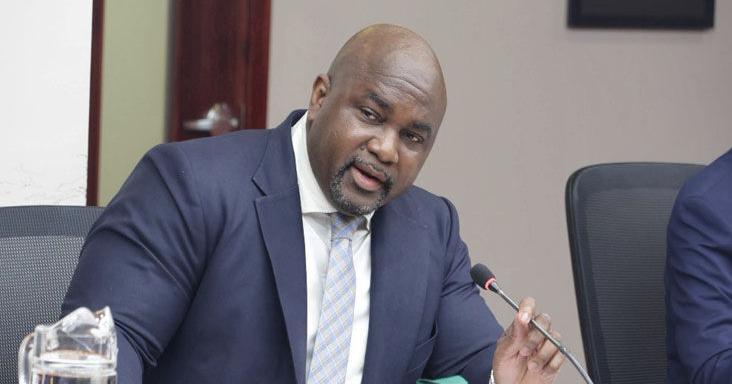
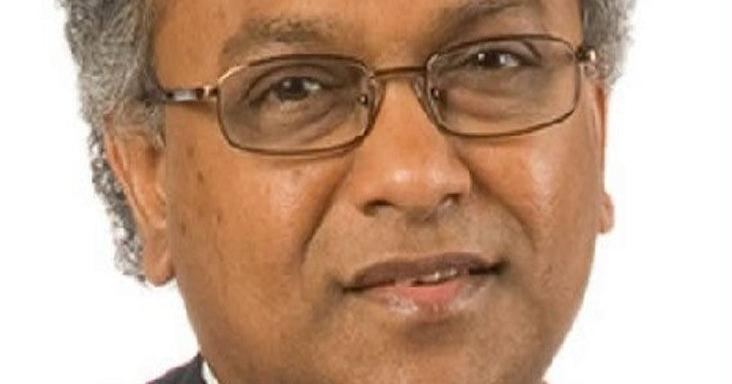
    A high-profile incident of vehicle theft has sparked renewed calls for stronger public safety measures across Trinidad and Tobago, after United National Congress Senator David Nakhid fell victim to a targeted car break-in that stole thousands of dollars earmarked for local charitable work. The brazen two-minute theft unfolded on Monday afternoon, following what Nakhid says was a deliberate跟踪 from a commercial bank branch in Maraval.

    According to official police timelines, the senator parked and locked his black Mercedes-Benz in the lot of Simple Choice Mart, a Cascade supermarket, at approximately 4:15 p.m. after leaving the Maraval bank. He entered the store to pick up a small number of items, and just two minutes later, when he exited the building at 4:17 p.m., he discovered the glass on his vehicle’s rear right door had been smashed by the perpetrator.

    A quick inventory of the car revealed significant losses: $10,000 in cash was missing, along with two designer perfumes – a Christian Dior fragrance valued at $2,600 and a second bottle worth $800. Additional personal items including bank cards and official identification documents were also taken by the thief. Nakhid quickly filed an official report with officers at the Belmont Police Station, who have remained in regular contact with him throughout the investigation.

    Speaking to reporters Tuesday outside the country’s Parliament building in Port of Spain, Nakhid said he has no doubt he was followed from the bank by criminals targeting customers who have just completed withdrawals. He argued that this incident is not an isolated one, but part of a growing, troubling pattern of criminal gangs staking out bank customers to rob them after they leave the bank’s secure premises.

    The senator pushed back against any attempts to frame the incident through a political lens, emphasizing that regardless of his public position, this was first and foremost a criminal act that highlighted a broader public safety crisis. He revealed that the entire sum of stolen cash was set aside for his monthly charitable outreach across communities along the East-West Corridor, where he regularly distributes food hampers and covers utility bills for low-income residents.

    “I’ve always said I’m willing to give the shirt off my back in charity…but I don’t accept to be violated by anybody,” Nakhid told reporters, describing the theft as a personal violation while expressing confidence that law enforcement would identify and apprehend the culprits. He noted that existing closed-circuit television footage from the area, paired with a witness statement, should give investigators solid leads to work with.

    Nakhid’s core demand is for commercial banks across the country to expand their security protocols beyond their immediate branch walls, to cover adjacent parking areas where customers are often most vulnerable immediately after completing transactions. He proposed concrete changes, including having armed security personnel conduct regular patrols of surrounding parking lots and actively monitor for any suspicious behavior that signals pre-robbery surveillance.

    Despite the frightening experience, Nakhid said he does not feel unsafe going about his public and personal work, but stressed that his case serves as an important cautionary tale for all local residents. He commended Belmont Police officers for their professional, prompt response to his report, but made clear that his top priority remains the swift arrest and prosecution of those responsible for the theft.

    “This is something circumstantial. It happened,” he said. “But I want to see these people caught.”

  • Nurses stepping up action over wages, says Stuart

    Nurses stepping up action over wages, says Stuart

    Nurses across Trinidad and Tobago have entered a new stage of industrial action this week, rolling out a regulated one nurse-to-six-patients staffing ratio as pressure builds on the newly elected one-year-old government to resolve long-stalled wage negotiations. This announcement came directly from Idi Stuart, president of the Trinidad and Tobago National Nursing Association (TTNNA), during a live interview on i95.5 FM on Monday, April 28.

    Stuart explained that the industrial action strategy has been rolled out in three planned phases, with this week’s implementation of the standardized staffing ratio marking the second stage of pushback. The first phase, which drew thousands of participating nurses and other healthcare workers, saw a mass public protest march through the streets of Port of Spain in recent weeks. If the government continues to refuse to meet with the association to address nursing demands, Stuart confirmed a third phase – another large-scale mass protest – will be activated.

    “After the government declined our repeated requests for negotiations, our executive held a special general meeting and approved three key actions,” Stuart told reporters. “The first, effective April 28, is the rollout of total patient-centered nursing care aligned with international best practice, and that means sticking to this one-to-six staffing ratio. We’re calling it our anniversary gift to the Minister of Health.”

    Contrary to framing the action as a disruption to care, Stuart emphasized that the new staffing model is designed to improve the quality of care that patients receive. For years, he noted, nurses have been forced to take on far higher patient loads than international guidelines recommend, working extensive unpaid and unplanned overtime just to keep facilities operational. This overextension has come at a severe cost: nurses’ physical and mental health has declined, while the quality of care has been compromised.

    “To deliver care that is safe, efficient, patient-centered and effective, we have to work within our professional job specifications, the same standards that are recognized globally,” Stuart explained. “If we keep pushing ourselves beyond those limits like we have for years, patients end up suffering. Now, every patient will get the high-quality, focused care they deserve.”

    Stuart added that the new work rule will remain in place indefinitely, allowing nurses to step back from the unsustainable overwork that has become the norm across the public health system. “Nurses have harmed their own health overworking to keep these facilities running, but our sacrifice has been appreciated neither by patients who deal with overstretched care nor by the politicians who run the system,” he said.

    The dispute also centers on specific controversies at the North Central Regional Health Authority (NCRHA), where chairman Dr. Tim Gopeesingh has touted cuts to overtime pay as a major cost-saving measure. Stuart pushed back on that claim, arguing that NCRHA facilities simply cannot function without nurses working scheduled overtime, given the chronic severe understaffing that plagues the system.

    NCRHA nurses have been organizing around a slate of grievances beyond wage negotiations, including a freeze on payments for completed extra pool duties, an ongoing audit of what Gopeesingh has called an “overtime racket” – a claim the TTNNA vehemently denies – persistent staff shortages, poor hospital working conditions, and the fact that many nurses are still being paid on 2013 salary scales despite years of inflation and increased workload.

    As of Monday, multiple media attempts to reach Health Minister Lackram Bodoe and Dr. Gopeesingh for comment on the new staffing ratio protest were unsuccessful, with no response to calls or inquiries by press time.

  • KPB 2.0’ stands her ground

    KPB 2.0’ stands her ground

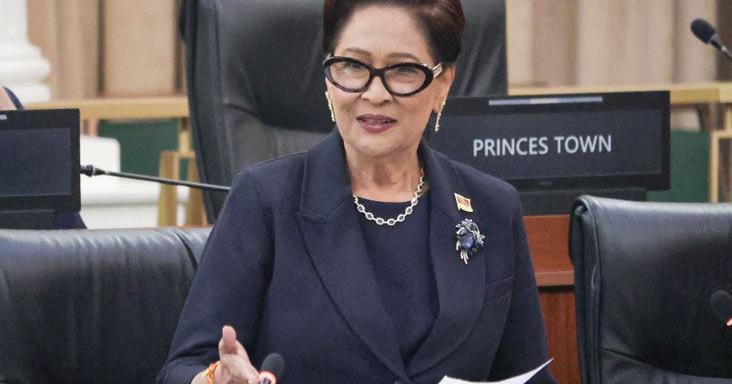
    On the eve of the first anniversary of her United National Congress (UNC) administration taking office, Prime Minister Kamla Persad-Bissessar delivered a blunt, unapologetic warning to her political opponents and critics during an exclusive interview with local outlet the Express: “If you come for my eye, I will take your whole head.”

    April 28, 2026 marks exactly 12 months since the UNC secured victory in the 2025 general election, ending a decade-long tenure of the previous People’s National Movement (PNM) government that left the Caribbean nation with soaring crime and economic stagnation. Referred to by the UNC as “KPB 2.0”, this iteration of Persad-Bissessar’s leadership marks a sharp departure from the more conciliatory approach she adopted during her earlier time in office.

    In a wide-ranging 19-question interview, the 74-year-old prime minister outlined a new, hard-nosed governing philosophy rooted in data-driven decision-making and uncompromising action for law-abiding citizens. “My disposition is more stoic, hard-nosed and focused on helping those who help themselves,” she explained, rejecting calls for the passive “turn the other cheek” approach she embraced in past tenures. “I have no intention of trying to please everyone. My aim is to please the law-abiding people who go out every day and make an honest day’s work to positively contribute to society. It is either peace or total war, no in-between.”

    Addressing widespread criticism that her confrontational tone is unbefitting of a head of government and undermines national unity, Persad-Bissessar pushed back forcefully, arguing that repeated concessions to bad-faith critics only embolden hostility. She dismissed most criticism as the product of personal bias, political allegiance and irrational hatred, noting that she only accepts input from qualified, fair-minded analysts. She rejected the idea of unifying with opposition factions that she accuses of pushing exploitative policies that would steal from hardworking workers to reward their political base.

    Responding to questions about ongoing labor protests and fears of growing civil unrest amid worker dissatisfaction, the prime minister emphasized that legal protest is a protected right, but it will not shift her government’s policy priorities, which are rooted in what is best for the country as a whole. She pointed to her administration’s fulfillment of a key campaign promise: a 10% wage increase that has already been rolled out to more than 51,000 workers across the public service, national energy, and education sectors.

    On the international and regional front, Persad-Bissessar has upended long-standing Trinidad and Tobago diplomatic norms by openly breaking with traditional neutrality to align closely with the administration of U.S. President Donald Trump, while taking an unusually firm stance against long-standing operating procedures within the Caribbean Community (Caricom). When asked about the diplomatic shift, she explained that the U.S. administration’s conservative, pro-capitalist policy framework aligns with her own, and that she expects the alignment to deliver tangible benefits: increased foreign direct investment, accelerated economic growth, and improved regional security against transnational criminal networks. She pushed back against claims of regional isolation, confirming Trinidad and Tobago has no plans to leave Caricom, but declined to publicly outline future negotiating strategies for regional reform.

    Crime, long the most urgent domestic issue facing Trinidad and Tobago, has been a core focus of the Persad-Bissessar administration. The prime Minister expressed full confidence in her national security ministers Roger Alexander and Wayne Sturge, highlighting significant early gains: murders are down 42%, serious crimes have dropped 30%, and violent crime has fallen 32% from the previous administration’s highs. She defended the decision to implement two states of emergency, noting that while the measure is not a permanent solution to the country’s crime crisis, it is a valuable tactical tool. Persad-Bissessar also criticized the previous PNM government for delaying the measure until just before the 2025 election, using it as a political gimmick after more than 5,000 murders and 8,000 sexual assaults occurred on their watch. She declined to detail full future crime-fighting strategies, arguing that tipping off criminal organizations would undermine operational success.

    When asked to rate her government’s performance after one year, Persad-Bissessar said that judgment should be left to the voting public, but acknowledged that the administration has made significant progress cleaning up the mess left by 10 years of PNM rule. “We have been there for 12 [months] and the fixes cannot be made overnight,” she said. “I do think we are off to a good start: We employed 15,000 people and got murders down by 42%, stabilised the economy with growth in 2027 projected at 3%.” She pointed to progress on the legislative agenda, financial management and national security as the administration’s biggest early wins, and confirmed she has not received any corruption complaints against her cabinet, which she described as corruption-free.

    On questions of internal party governance, Persad-Bissessar said there is currently no leadership vacancy, and argued that political power must be earned rather than handed over. She added that the UNC membership will select the next party leader when the time comes, closing with another sharp warning to potential challengers: “if you come for my head, make sure you don’t miss!” She expressed full confidence that the UNC will win re-election in the 2030 general election.

    Addressing criticism that some UNC ministers engage in unprofessional, distasteful outbursts on social media, the prime minister said she does not micromanage ministers’ personal expression, and that freedom of speech is protected within the bounds of the law. She noted that voters will ultimately hold ministers accountable for their behavior at the ballot box.

    Looking ahead to the administration’s second year in office, Persad-Bissessar promised continued progress on job creation and economic expansion, alongside a ruthless crackdown on criminal networks and their associates that refuse to comply with the law. When asked about personal reflections on her 74th birthday, held earlier in April, she shared a quiet personal note: she mourns her late parents and loved ones, and urged all citizens to cherish their close family members. Closing with a sharp quip about persistent unsubstantiated rumors about her health circulating among opposition supporters, she joked that PNM fans seem to know more about her health than she does.

  • 3 denied bail for Eversley murder

    3 denied bail for Eversley murder

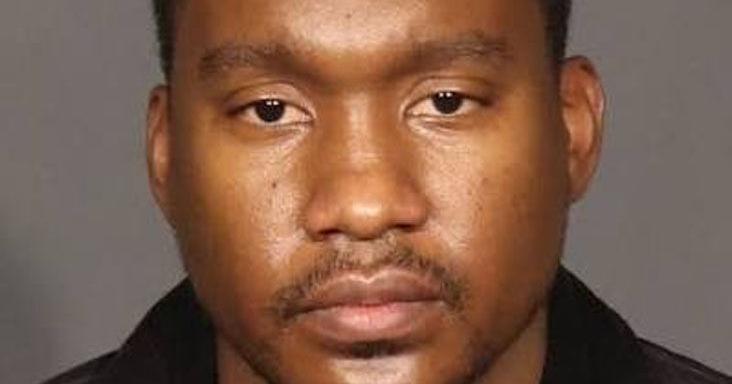
    A high-profile murder case of a serving municipal police officer took another dramatic turn on Tuesday, as three men already charged with killing corporal Anuska Eversley appeared in court to face a raft of new offenses tied to one of the largest illegal firearms caches uncovered in recent memory. All three suspects were denied bail and remanded into custody following the hearing, held before Master Delicia Bethelmy.

    The three accused—28-year-old municipal police officer Jivan “Bigs” Cooper, 20-year-old construction worker Kwame Arnold, and 24-year-old scrap iron dealer Nicholas “Nico” Ramdass, all residents of Claxton Bay—had the charges, formally laid by ASP Maharaj, read aloud in court. The allegations stem from the April 19 killing of Eversley, whose body was discovered inside the Municipal Police Station at King’s Wharf, San Fernando. A post-mortem examination confirmed she died after being strangled and beaten, and her funeral service was held on the same day as the court appearance.

    Beyond the murder charge, the trio is also accused of robbing Eversley of her government-issued service weapons and ammunition, and committing acts of violence against the officer during the fatal attack. The new firearms charges reveal a far larger stockpile of illegal weapons than law enforcement had previously disclosed publicly: 114 pistols, one revolver, six shotguns, two MPX submachine guns, and 173 firearm magazines intended for trafficking, along with a total of 4,395 rounds of assorted ammunition—4,355 9mm rounds, 30 12-gauge shells, and ten .38 caliber rounds. Prior to this court hearing, official police updates to the media had only acknowledged the recovery of 60 weapons and 1,532 rounds of ammunition, marking the first time the full scope of the seized cache has been confirmed.

    None of the accused were required to enter pleas at this stage of the proceedings. Cooper is represented by defense attorney Keith Beckles, while duty counsel Krysan Rambert appeared for Arnold and attorney Perusha Lord represented Ramdass. Both Arnold and Ramdass announced following the hearing that they plan to retain private legal counsel going forward.

    Beckles raised a series of critical procedural concerns during the hearing, centered heavily on widespread pre-trial publicity across social media platforms. He told the court that his client’s driver’s permit was widely circulated online before formal charges were even filed, and Cooper had already been named and sensationalized as the primary suspect in the case. Beckles argued that this pervasive, misleading coverage could taint the jury pool and create irreversible bias against his client. He also questioned significant delays in the submission of the full case file to the Office of the Director of Public Prosecutions, and raised objections to a further detention order issued against Cooper after an initial temporary detention order expired during his pre-trial custody.

    Responding to the defense’s concerns, police prosecutor Reagan Ramanan explained that the July 24 target date for file submission is necessary due to the extraordinary complexity and size of the case. The case file currently includes hundreds of witness statements, physical evidence exhibits, crime scene photographs, video footage, interview transcripts, and a full report from the Cyber Crime Unit, with additional statements still pending. Ramanan also clarified that neither he nor ASP Maharaj had prior knowledge of the additional detention order issued under the Emergency Powers Regulations, as such orders are issued directly by the Minister of Homeland Security.

    Master Bethelmy issued a formal scheduling order outlining next steps for both the prosecution and defense, and ruled that the three accused would reappear for a further hearing on October 15. The court also advised the defendants that they may submit written applications for bail ahead of that date.

    In the wake of Eversley’s killing, Commissioner of Police Allister Guevarro submitted a formal recommendation to Minister of Rural Development and Local Government Khadijah Ameen, calling for a new policy requiring all municipal officers’ firearms to be stored for safekeeping at central police stations before being issued for duty. Ameen subsequently issued a directive ordering all chief executive officers of city, borough, and regional corporations to comply with the new protocol.

  • Bloody Sunday

    Bloody Sunday

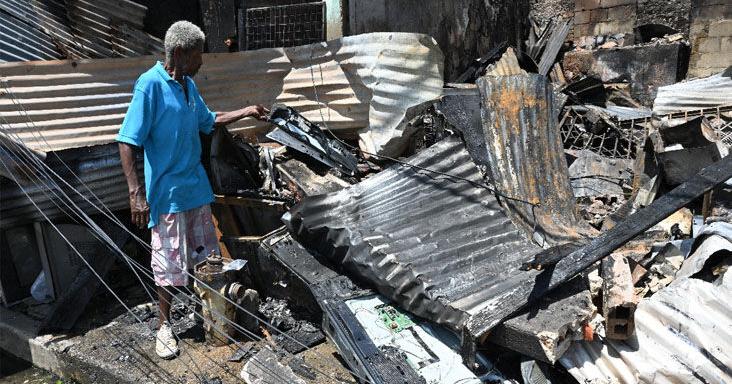
    Three brutal killings unfolded across three different Trinidad and Tobago communities within a six-hour window on Sunday, sending shockwaves through local neighborhoods and pushing the country’s overall murder toll to 117 for the current year.

  • WIN FOR SHAMFA

    WIN FOR SHAMFA

    In a decisive internal election held Sunday, Shamfa Cudjoe-Lewis has claimed victory in a head-to-head contest for the leadership of the People’s National Movement (PNM) Tobago Council, defeating rival candidate Kelvon Morris. The former Member of Parliament for Tobago West made history as the fourth woman to hold a top national political leadership position in Trinidad and Tobago, following in the footsteps of President Christine Kangaloo, Prime Minister Kamla Persad-Bissessar, and Opposition Leader Pennelope Beckles.

    Speaking to reporters Monday outside the PNM Tobago headquarters in Scarborough, Cudjoe-Lewis called for unified action to rebuild the party’s standing in Tobago, noting that internal elections often create rifts that need mending. “My first priority will be reaching out to my challenger and every candidate who stepped forward to serve,” she said. “That work is critical to rebuilding our party, strengthening our connections, and repairing any damage done over the course of the campaign. We are one family, so we need to have those difficult conversations to move forward—we need every hand on deck to rebuild the PNM.”

    Cudjoe-Lewis expressed that she feels both grateful and humbled by the outpouring of support from party members, saying she is fully prepared to take on the challenges of the new role. “I’m pleased, and I’m humbled that so many people placed their confidence and trust in me for this enormous task,” she shared. “I know this will not be easy. It will take serious commitment and discipline, but I am ready to get to work.”

    With unofficial results showing she secured 63% of the vote—1,228 votes compared to Morris’ 730, ahead of the official release of full results—Cudjoe-Lewis emphasized that her victory is a win for the party’s grassroots base. She ran a people-focused, grassroots campaign centered on listening to rank-and-file members about their priorities for the PNM, a strategy rooted in her past experience as a youth leader and sitting legislator. “This campaign was about knocking on doors, calling members, and having the intimate conversations I’ve always had with our supporters,” she explained. “We connected, we listened, we engaged, and we showed up for the people of Tobago.”

    Looking ahead to her first term as leader, Cudjoe-Lewis outlined an early policy priority: cleaning up and verifying the PNM Tobago Council’s membership roll to ensure more smooth internal elections in future cycles.

    For his part, defeated candidate Kelvon Morris—who had earned the backing of high-profile PNM figures including former Chief Secretary Kelvin Charles and former political leader Tracy Davidson-Celestine—has extended a hand of cooperation to the new leader, saying he will fully support Cudjoe-Lewis moving forward. Morris framed unity as the top priority for the party after the election, noting that the democratic process had spoken clearly. “First and foremost, I want to extend my sincere congratulations to Mrs. Shamfa Cudjoe-Lewis,” Morris said. “This is what democracy is all about: the membership has made their choice, and she has my full support, now and going forward.”

    Morris pushed back against any suggestion that his association with senior party figures hurt his electoral performance, noting both candidates ran on a platform of party unity. “Mr. Charles and Mrs. Davidson-Celestine are valuable assets to the PNM, and I don’t believe my connection to them had any bearing on this result,” he said. “Nothing went wrong in this campaign. This was simply a case of members having two good options, and on this occasion they chose Shamfa Cudjoe-Lewis as their preferred leader. People make their choices based on their own priorities, and I am proud of the campaign we ran.”

    Morris closed by reaffirming his unwavering commitment to both the PNM and the people of Tobago. “As we move ahead, my commitment to the party remains unchanged, and Tobago will always be my top priority,” he said. “I will play my part in holding the current leadership accountable, while continuing to contribute meaningfully to the development of both our party and our island. My commitment to the people of Tobago does not end today—it continues with purpose, responsibility, and resolve.”

  • Venezuela’s Acting President visits Barbados

    Venezuela’s Acting President visits Barbados

    BRIDGETOWN, Barbados – In a continued push for diplomatic engagement with Caribbean nations following dramatic political upheaval in her home country, Venezuela’s Acting President Delcy Rodríguez touched down in Barbados on Sunday. This trip marks her second visit to a member state of the Caribbean Community (Caricom) since she took office in January, after a United States incursion into Venezuela resulted in the detention of sitting President Nicolas Maduro.

    Rodríguez’s first Caricom stop came in early April, when she made a brief several-hour visit to Grenada on April 9. During that trip, she held closed-door talks with Prime Minister Dickon Mitchell and his full cabinet, an encounter an official Grenadian statement later characterized as having unfolded in a “cordial and constructive atmosphere.”

    While official details of her current Barbados itinerary have not been made public, a senior source familiar with the visit confirmed to the Caribbean Media Corporation (CMC) that Rodríguez is scheduled to hold one-on-one talks with Barbadian Prime Minister Mia Mottley before she departs the island nation Monday afternoon. The source noted that the trip is part of a broader diplomatic tour of Caribbean states, saying “She seems to be making the rounds to some Caribbean countries.”

    Despite the lack of pre-visit official details, Prime Minister Mottley released a public statement via her social media channels framing the meeting as a meaningful opportunity for bilateral and regional progress. “The visit will provide an opportunity for high level discussions on areas of practical cooperation and wider regional development,” Mottley wrote. She added that Barbados’s foreign policy framework has long been grounded in core principles of mutual respect, open dialogue, and results-driven engagement. “We continue to engage our partners with a clear focus on building relationships that can deliver tangible benefits for our people and the wider region,” she emphasized.

    Rodríguez’s diplomatic tour of the Caribbean comes on the heels of a high-profile meeting last week between the acting president and former Trinidad and Tobago prime minister Stuart Young, who shared a photograph of their gathering in Caracas across his social media platforms. Young, who previously served as Trinidad and Tobago’s energy minister, wrote on Facebook that “It was a pleasure meeting Her Excellency, Delcy Rodríguez, Presidenta Encargada, of the Bolivarian Republic of Venezuela earlier this week.”

    The meeting underscores the shifting diplomatic dynamics around Venezuela within the Caribbean, particularly for Trinidad and Tobago, where current Prime Minister Kamla Persad-Bissessar – who was declared “persona non grata” by Venezuela’s National Assembly – has a long history of open criticism toward both Rodríguez and the Maduro administration. Even so, Persad-Bissessar recently announced that Port of Spain plans to dispatch an official diplomatic mission to Caracas to advance negotiations over cross-border energy reserves, with the goal of securing what the government calls Trinidad and Tobago’s “just share” of the resources.

    At the center of these energy negotiations are two key offshore gas fields. The Dragon gas field, which sits within formally recognized Venezuelan territorial waters but lies in close proximity to Trinidad and Tobago’s existing energy infrastructure, has long been identified as a critical potential supply source for the country’s growing liquefied natural gas (LNG) industry. Development of the field has been stalled for years, however, due to persistent geopolitical tensions and sweeping international sanctions imposed on Venezuela’s energy sector. A second field, Loran Manatee, spans the two countries’ overlapping maritime boundaries, and while Trinidad and Tobago has already moved forward with development on its portion of the reserve, negotiations over Venezuela’s share remain ongoing.