标签: Trinidad and Tobago

特立尼达和多巴哥

  • POSGH Central Block at ‘97%’

    POSGH Central Block at ‘97%’

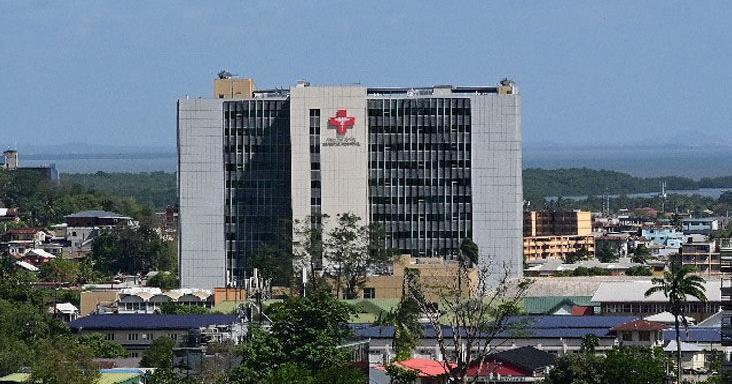
    Years of delays and unforeseen disruptions are drawing to a close for one of Trinidad and Tobago’s most high-profile public infrastructure projects, with the long-awaited Central Block expansion of Port of Spain General Hospital now entering its final construction phase. Officials confirmed this week that the $1.3 billion, 540-bed facility is 97% complete as of June 23, 2026, and is on track to reach substantial completion by the new target date of July 14.

    The update came in an official response from Trinidad and Tobago’s Ministry of Works and Infrastructure to local outlet *Express*, which had requested confirmation on whether the project had met its earlier revised completion deadline of June 30.

    Project management lead, the Urban Development Corporation of Trinidad and Tobago, has set the July 14 milestone for the completion of all core structural and utility work, including mechanical systems, electrical wiring, plumbing, and information and communications technology infrastructure — all required pre-requisites before the facility can be formally handed over to health authorities for operational setup.

    In a statement, the ministry highlighted that the project has made meaningful progress in transforming what was long a half-finished, underutilised construction site into a functional healthcare space nearing active service. Preparations for handover are already well underway, with the entire new wing having undergone a full deep cleaning to prepare for the arrival of clinical teams and patients. Once substantial completion is certified, the Central Block will be transferred officially to the Ministry of Health to launch full clinical operations.

    First approved for construction by the previous Trinidad and Tobago government back in 2017, the project has faced a cascade of setbacks that pushed its completion far beyond initial timelines. Two of the most impactful disruptions were a 6.9 magnitude earthquake that struck the region in 2018, which caused construction delays and required structural reassessments, and the global Covid-19 pandemic that disrupted supply chains, slowed worker availability, and paused work on site for extended periods. The project’s progression towards completion marks a major win for public healthcare access in the region, addressing years of unmet demand for expanded hospital capacity.

  • Advocate slams Govt’s delay explanation

    Advocate slams Govt’s delay explanation

    Migration and human rights activists in Trinidad and Tobago are pushing back against the government’s official justification for widespread delays in processing migration and residency applications, arguing that the policy punishes law-abiding migrants who have followed all regulatory requirements to gain legal status. The criticism comes in direct response to recent remarks from Minister of Homeland Security Roger Alexander, who blamed the backlog on undocumented migrants crossing the country’s porous borders to sneak into the ongoing registration exercise, falsely claiming long-term residency in the nation.

    Speaking via telephone with the Express on Thursday, leading migrant rights advocate Sofia Figueroa-Leon rejected Alexander’s explanation as logically inconsistent and fundamentally unfair. She emphasized that there is no connection between the alleged illegal entry of new arrivals and the thousands of migrants who already completed all pre-requisite steps for registration, including submitting online applications and attending mandatory in-person appointments.

    Figueroa-Leon argued that if the government is facing operational challenges in securing its borders or managing the registration process, those issues should be addressed directly rather than shifting the burden onto compliant applicants. “If they lack sufficient staffing or the capacity to manage the process, that is an administrative failure on the government’s part, not a problem that migrants should have to bear,” she noted. “Migrants came forward voluntarily to complete the registration process because they want to live legally in this country. They fulfilled their end of the agreement, so it is the government’s responsibility to hold up its end. Putting all applications on hold because of border control failures is unprofessional and not a serious policy response. The ball is now firmly in the government’s court to move forward with processing.”

    Her criticism was echoed by other migrant support leaders and registered applicants, who echoed the call for the government to separate border enforcement from the processing of lawfully completed applications. Angie Ramnarine, coordinator of the Romaine Migrant Support Group, noted that it was predictable that registered migrants would encourage family members to join them after the government launched the regularization exercise, adding that securing national borders has always been the government’s core responsibility. “Rather than punishing people who already followed all the rules, the government should focus on doing its job to stop unauthorized new arrivals,” Ramnarine said.

    Gabriela Alvarado, a 40-year-old migrant who completed her registration years ago and has lived in the country with her family for more than a decade, also called Alexander’s comments unfair. “I stood in long lines, filled out all the required paperwork, paid my $700 fee, and did everything by the book, and we are still waiting for approval,” Alvarado said. “It’s unjust that we have to pay for the government’s failures.”

    The controversy comes as the country’s first-ever Migrant Registration Framework wraps its initial phase, which has already drawn nearly 30,000 applications from people representing more than 60 nationalities. Venezuelan nationals make up the overwhelming majority of applicants, with children accounting for more than half of the total registered population. The regularization program grants approved applicants temporary legal status to live and work in Trinidad and Tobago through September 2026.

    Even before the latest delay controversy, the program has faced widespread criticism from civil society groups. After the initial online registration portal closed earlier this year, hundreds of undocumented migrants who missed the deadline due to system glitches or a lack of clear public outreach pleaded with authorities for a final extension to sign up. Civil society organizations have also raised ongoing concerns about a lack of transparency from national security officials, documenting multiple cases where migrants who visited immigration offices to ask for application updates were instead served deportation orders.

  • TOTING FOR TOILETS

    TOTING FOR TOILETS

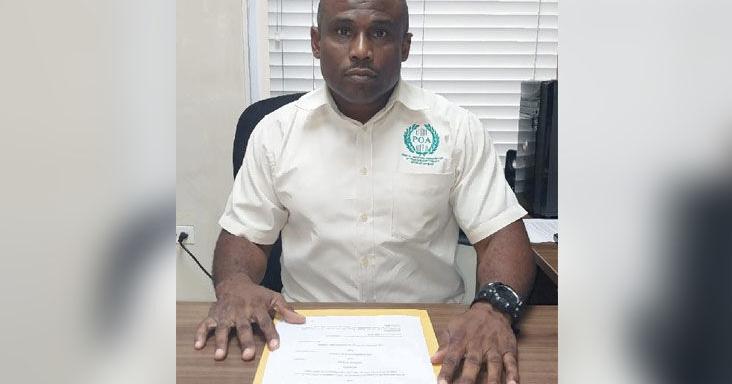
    Decades of unaddressed infrastructure failures have left both correctional officers and incarcerated people at Trinidad and Tobago’s Port of Spain Prison trapped in unacceptable living and working conditions, leading the national Prison Officers’ Association (POA) to publicly pressure the Ministry of Homeland Security to approve the purchase of critical replacement water pumps.

    POA Public Secretary Lester Logie outlined the gravity of the crisis during an address to union members on Wednesday, urging the ministry’s permanent secretary to issue immediate authorization to acquire the three pumps the facility has lacked for an extended period. Without functioning pumping equipment, every section of the prison – from senior leadership offices to correctional officer dormitories and the facility’s Emergency Response Unit quarters – has been cut off from reliable running water.

    Logie detailed the grim daily reality for people at the prison: correctional staff are forced to manually carry water to flush toilets and bathe, a burden that even extends to the superintendent’s own office. Incarcerated people face the same dehumanizing conditions, hauling water to their cells for hygiene and toilet use.

    What makes the situation even more unacceptable, Logie argued, is that funding for the low-cost pumps already exists through revenue generated by the prison’s on-site commissary. The commissary, where family members purchase personal items for incarcerated people, generates consistent profits that Logie says should be allocated to improving core prison operations. He questioned where these accumulated profits have been diverted, noting that the small cost of three 3-horsepower pumps should not be an insurmountable barrier.

    “We cannot have officers continuing to work in these conditions, making requests to the association for these types of basic items when there is an available source of funds that are clearly being used for other things that are not critical for the running of the prison,” Logie said. The union leader is now calling for a full public accounting of all commissary revenue, to ensure funds are directed toward the improvement of the Prison Service as they were intended.

    The water crisis is not the only unaddressed hazard at the facility, Logie added. He revealed the prison recently faced a severe rat infestation in its ration storage room, but management took no action until the POA escalated the issue directly to the Minister of Homeland Security. Rather than prioritizing pest control to protect food supplies, Logie said prison leadership focused instead on disciplining officers who reported the problem, launching an investigation to identify which staff member shared information with the union.

    Logie urged correctional officers to continue reporting unsafe working conditions to the union regardless of potential pushback from management, emphasizing that exposing these failures is the only path to reform. He has now called for direct intervention from Homeland Security Minister Roger Alexander and Prime Minister Kamla Persad-Bissessar to resolve the crisis.

    As of Wednesday, repeated attempts by journalists to reach Minister Alexander and acting Commissioner of Prisons Carlos Corraspe for comment on the allegations went unanswered.

  • Moonilal: Act of sabotage

    Moonilal: Act of sabotage

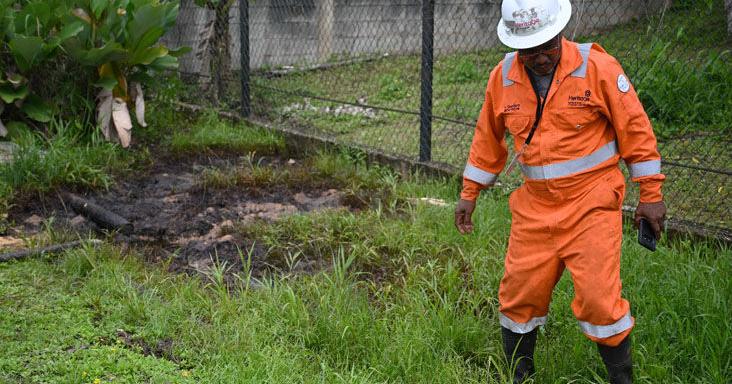
    A deliberate act of vandalism targeting an energy infrastructure pipeline in Barrackpore has caused an oil leak, prompting a large-scale emergency response and clean-up operation led by national energy authorities and private industry partners. Trinidad and Tobago’s Minister of Energy Dr. Roodal Moonilal confirmed the incident occurred along GP Road, where thieves deliberately damaged a joint pipeline operated by a private firm in partnership with state-owned Heritage Petroleum Ltd. The attackers removed a 6-foot section of the pipeline to steal the metal, leaving the line compromised and spilling crude hydrocarbon into the surrounding area.

    Minister Moonilal shared details of the incident with reporters on the sidelines of a graduation ceremony for Grant Memorial Presbyterian School, held at Susamachar Presbyterian Church in San Fernando. The case has been formally registered with local law enforcement as an act of sabotage, marking a troubling escalation of criminal targeting of critical national energy assets.

    “Individuals unlawfully entered the facility, destroyed the pipeline, and their clear intention was to steal large lengths of this critical infrastructure,” Moonilal explained to the press. “This is an act of vandalism and theft that we unreservedly condemn, and it has reached a point where criminals are directly targeting operational pipeline networks.”

    In the immediate aftermath of the incident being reported, Heritage Petroleum and multiple state agencies mobilized rapidly to contain the spill and mitigate environmental harm. Clean-up crews have already deployed specialized resources to protect nearby residential communities, active agricultural lands, and local livestock populations, while formal criminal investigations are underway.

    “We have mobilized all necessary resources for clean-up and have implemented scientific environmental monitoring protocols to protect the environment, private property, crops, livestock and all other at-risk assets,” Moonilal added. The national government is collaborating closely with law enforcement to advance the investigation and identify the perpetrators responsible for the attack.

    Looking ahead to prevent future incidents, Moonilal confirmed the government will partner with Heritage Petroleum to boost security protocols across all national oilfield operations, hardening critical infrastructure against criminal tampering and theft.

    In an official public statement released yesterday, Heritage Petroleum also joined in condemning the sabotage, echoing the minister’s concerns over public safety and environmental risk. The company confirmed that a preliminary on-site assessment verified the removal of approximately six feet of pipeline by the attackers. Immediately after receiving reports of the leak, Heritage activated its formal Incident Command System, rolling out pre-planned emergency response protocols to manage the incident.

    The company has deployed vacuum trucks and heavy industrial equipment to recover spilled oil, and has placed containment booms in nearby waterways to stop the spread of hydrocarbon contamination. Company representatives have been in direct communication with local residents and other stakeholders to provide real-time updates and any necessary support. As a precautionary public health measure, ongoing air quality testing and monitoring is being conducted to confirm that pollutant levels in the surrounding area remain within safe limits.

    “Heritage Petroleum unequivocally condemns all acts of sabotage against our infrastructure,” the company’s statement read. “These incidents not only cause loss of containment but also create unacceptable risks to public safety, the natural environment, and the critical national energy infrastructure that supports our country’s economy. In response, we have already expanded proactive precautionary measures to increase monitoring and security across all of our hydrocarbon assets.”

    The matter has been formally referred to local law enforcement for full criminal investigation, and all relevant national regulatory bodies including the Ministry of Energy and Energy Industries and the Environmental Management Authority have been notified of the incident, with investigations continuing as clean-up operations progress.

  • Sturge: MiLAT  suspended, not closed

    Sturge: MiLAT suspended, not closed

    Trinidad and Tobago’s Defence Minister Wayne Sturge has formally confirmed that the Military-Led Academic Training Programme (MiLAT), a long-standing initiative aimed at rehabilitating at-risk young people, has been temporarily paused. The confirmation came this week following swirling public speculation after all contracted teachers and civilian administrative staff attached to the programme were sent off-site on Monday, leaving nearly 100 junior trainees in limbo and sparking widespread questions about the initiative’s long-term future.

    Contrary to circulating reports that the programme had been permanently shut down, Sturge emphasized that the suspension is only a temporary measure while the government carries out a full-scale structural and financial restructuring of MiLAT. Speaking to local media outlet the Express, Sturge outlined that two key factors drove the decision: mounting financial pressures on the state and the programme’s current unsustainable business model.

    “The programme has not been closed down but temporarily suspended pending ongoing structural reform,” Sturge explained. “It was necessary to suspend at this time having regard to severe financial constraints coupled with the fact that it was not economically viable in its present form.”

    The minister added that the government deliberately timed the suspension to follow the completion of Caribbean Secondary Education Certificate (CSEC) examinations for the current Form Five cohort, minimizing disruption to students who were already close to finishing their academic cycle. Currently, government agencies are collaborating to redesign the programme to address its shortcomings: the Ministry of Defence is working in lockstep with the Trinidad and Tobago Defence Force Reserves and the Ministry of Tertiary Education to develop a revised framework that will allow remaining Form Four students to resume their training as quickly as possible.

    A core critique of the current MiLAT model laid out by Sturge is its disproportionately high operating costs. He noted that official data shows the per-student cost of the programme is significantly higher than the cost of educating a student at a public university, a gap that has made the current model unfeasible for continued state funding.

    Since its launch, MiLAT has been framed as a key public safety intervention: it combines military-style discipline, formal academic instruction, and practical life skills training for vulnerable youth, with the explicit goal of reducing youth engagement in crime and supporting rehabilitation for at-risk young people. Opposition critics have already raised alarms that pausing the initiative will remove a critical crime prevention tool and lead to a spike in criminal activity among disconnected youth.

    Sturge pushed back firmly against these claims, rejecting the opposition’s narrative outright. He argued that the link between MiLAT’s suspension and rising crime is unfounded, pointing out that even when the programme operated at full capacity under the previous national administration, crime rates surged to unprecedented historic highs. “I am firmly of the view that temporarily suspending the programme will have little to no effect on crime and criminality, given that the last administration had these programmes yet crime skyrocketed to record levels previously unseen. I don’t buy that narrative which has become a trademark of the Opposition,” he said.

    The minister declined to address two key outstanding questions raised by reporters: he did not directly confirm or deny reports that the contracts of all non-military staff would not be renewed, leaving the employment status of these workers unclear. He also declined to provide a specific timeline for when the restructured programme will resume operations, only stating that the government is committed to completing the restructuring process “in the shortest possible time.”

  • Lawyers rally around magistrate

    Lawyers rally around magistrate

    Unconfirmed reports of an impending corruption arrest for a sitting Trinidad and Tobago magistrate have sparked a public defense from a team of high-profile local attorneys, who reject all allegations of impropriety and warn that undermining the judiciary poses a grave risk to the nation’s rule of law.

    Local outlet *Trinidad Express* first broke the story exclusively yesterday, reporting that the unnamed judicial officer was set to be taken into custody over claims he accepted bribes in exchange for issuing favorable court rulings. While the outlet did not name the magistrate at the center of the claims, attorney Prakash Ramadhar called an urgent press conference at his San Fernando law chambers, with acting Chief Magistrate Brian Debideen in attendance alongside fellow attorneys Michael Rooplal and Vishan Girwar.

    Ramadhar opened the conference by addressing the widespread speculation that has followed the *Express* report. Though no official name was published in the original article, Ramadhar confirmed that the allegations tie to a long-simmering public issue connected to specific rulings handled by Debideen. With nearly 40 years of legal practice in the country under his belt, Ramadhar argued that unsubstantiated rumors are too often framed as concrete evidence in Trinidad and Tobago’s public discourse, and false claims are frequently presented as proven fact. He stressed that the current government has prioritized restoring integrity, transparency and lawful process to public institutions, making the unproven tarnishing of a respected judicial officer especially unacceptable.

    Ramadhar reaffirmed that the magistrate has upheld his judicial oath and committed no wrongdoing. He added that if formal charges are ultimately filed, the legal team will mount a vigorous defense on his behalf, and leave no stone unturned in clearing his name. “If any action is taken against him, we shall deal with that at that point in time….he will not go unattended,” Ramadhar said. “We will respond with all of our might to restore what is true and what is real…but we hope that the authorities and those who have power to make the decisions before errors are fallen into, will take a very robust approach in looking at what may be presented as potential facts.”

    The veteran attorney also pushed back against the assumption that all criminal prosecutions are rooted in solid evidence and good-faith intentions. He cited high-profile past cases involving Naraynsingh, Dhanraj Singh and Sadiq Baksh to illustrate that many public allegations in the country lack merit. “Not every allegation in Trinidad and Tobago is there merit attached to it. It is the courts that we resort to, to fight these things; but when you attack the court, that is where the gravest danger is,” he added.

    Fellow attorney Michael Rooplal then broke down the two specific cases at the center of the bribery claims, which date back between 15 months and a year, noting all court proceedings in these matters are part of the public record.

    The first case involved an elderly lawful Firearm User’s Licence (FUL) holder who was charged with possession of excess ammunition. The defendant pleaded guilty when the matter was heard at the San Fernando Magistrates’ Court. After the prosecution recommended a non-custodial sentence and the defense presented mitigating arguments, the magistrate imposed a bond, which Rooplal emphasized is explicitly permitted under Trinidad and Tobago law. “The law specifically provides for such a penalty to be imposed on an individual in those circumstances and the magistrate in his lawful exercise of discretion imposed a bond. There is nothing, as far as we can tell, untoward, certainly from our past practice as criminal defence lawyers, in that being done,” Rooplal explained.

    Rooplal also addressed a malicious WhatsApp rumor that began circulating after the 2025 ruling in this case, which has recently resurfaced. He confirmed the judiciary previously investigated the claims and issued an official statement confirming the social media content was entirely false, based on the official court recording of the proceedings.

    The second case at the center of the allegations centers on a cash detention order under proceeds of crime legislation. Rooplal explained that at the first hearing, the magistrate ruled that the seized mixed currency of Trinidad and Tobago dollars and U.S. dollars would remain in detention, in line with prosecution requests. At a subsequent hearing, after evidence was presented and cross-examination concluded, the prosecution conceded there were no legal grounds to continue holding the local currency, and the magistrate ordered its release. The U.S. currency was ordered held for an additional three months, before a subsequent magistrate ordered its full release. Rooplal confirmed that every ruling issued by Debideen in this matter aligned strictly with the law and followed prosecution submissions.

    Rooplal noted that rampant, unregulated speculation on social media has spun out of control in recent weeks, with unconfirmed names being circulated and baseless conspiracy theories spreading widely. The press conference, he explained, was called to allow the magistrate to present his side of the story publicly before any formal action is taken, given that the allegations clearly tie to the matters he adjudicated.

  • Court allows inspection of police diaries in Hadeed case

    Court allows inspection of police diaries in Hadeed case

    In a significant legal development unfolding in a virtual habeas corpus hearing on Wednesday, High Court Justice Frank Seepersad has approved a request from legal representatives for detained businessman Dominic Hadeed and his wife Genevieve to inspect official police station diaries. The ruling comes amid serious allegations that a standard criminal probe into the couple was abruptly reclassified after the habeas corpus challenge was filed, shifting it to fall under the country’s Emergency Powers Regulations.

    The Hadeeds were taken into police custody last week as part of a wide-ranging investigation into an alleged conspiracy to target and assassinate sitting government officials. Their legal team, led by a cohort of senior counsels including Douglas Mendes, Gilbert Peterson, Faris Al-Rawi, Carlon McLeod and Chase Pegus, has argued from the outset that the initial arrests followed standard criminal procedure. According to Mendes’ submission to the court, the pair were arrested using the routine police powers that allow officers to detain, question and formally charge suspects, with no public or official indication at the time of arrest that the operation was being carried out under emergency legislation or a formal Preventive Detention Order (PDO).

    The critical shift in the case, Mendes told Justice Seepersad, came only after the defense team lodged the habeas corpus application at the High Court this past Saturday. Immediately following the filing of the challenge to the detention’s lawfulness, the couple was suddenly reclassified as being held under a PDO. This sequence of events, Mendes argued, raises profound red flags about potential misuse of standard investigative authority and suggests the procedural shift was not conducted in good faith. He emphasized that the defense’s core argument remains that the couple’s detention was unlawful at the time the application was filed.

    Attorneys representing the Commissioner of Police countered that the detention orders were actually drafted and approved prior to the formal issuance of the PDO, a claim the defense says only reinforces their concerns over procedural irregularity. Justice Seepersad clarified that the matter before the court was not a constitutional challenge, but rather a straightforward habeas corpus application. Still, he acknowledged that the judiciary retains inherent supervisory jurisdiction to confirm that proper legal processes are being followed in all detention matters. While he questioned whether the PDO impacts the court’s authority to hear the habeas corpus challenge, and stressed that he does not want to unnecessarily waste judicial time, he ruled that the diary inspection could be completed quickly, and granted the defense’s request.

    Following the ruling, Al-Rawi told the court the defense team would complete the diary review, obtain updated instructions from the Hadeeds, and file all responding affidavits by Thursday morning. Police Commissioner Allister Guevarro was present for the virtual hearing and represented by his legal team Ramdath Phillip and Anya Ramute-Mohan.

    The hearing unfolded against a broader backdrop of multiple detentions connected to the same police counter-conspiracy operation. Genevieve Hadeed’s aunt, Star Sabga, was also arrested last week in connection with the case and remains in custody, though Justice Seepersad noted that the current habeas application does not address her detention. The matter was first heard on Saturday morning, when it was adjourned to Wednesday to give state legal teams time to file responding affidavits on the lawfulness of the detention. The case is scheduled to reconvene for further arguments at 10 a.m. Thursday.

  • Landlords rush to beat deadline

    Landlords rush to beat deadline

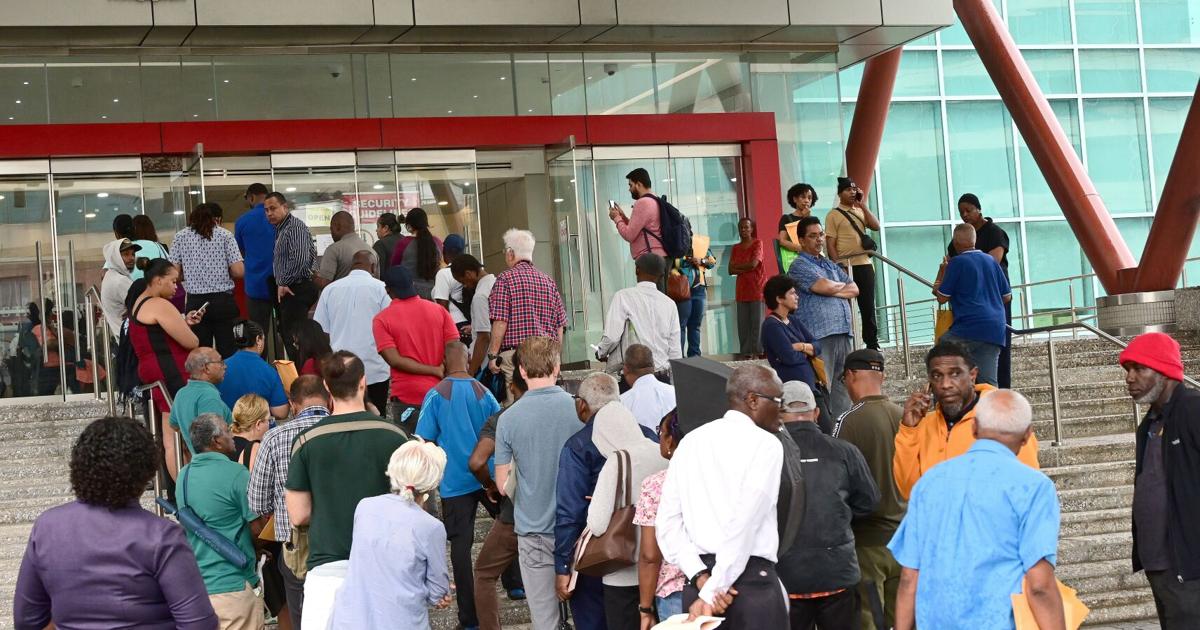
    On the eve of the final registration deadline for Trinidad and Tobago’s new Landlord Business Surcharge, dozens of property owners crowded the Inland Revenue Division (IRD) office at the Ministry of Finance in Port of Spain, scrambling to complete their required paperwork before midnight. Throughout the entire morning on June 29, a snaking line of landlords wrapped around the exterior of the IRD building, with many waiting hours to submit their forms and pay the mandatory registration fee.

    Interviews with several registrants on the ground painted a mixed picture of the process: while most acknowledged the line moved at a steady pace despite its length, many criticized the IRD’s outdated organizational system and inconvenient requirements. One woman who successfully completed her registration after waiting noted that the facility only offers seating for 20 people inside, forcing staff to admit applicants in small batches. Instead of using a modern digital ticketing system to manage queue order, staff rely on a clunky manual process that has people skipping empty chairs to count their place in line – a system she described as thoroughly archaic.

    Like many last-minute registrants, this woman said she deliberately chose to beat the June 30 deadline a day early, explaining she had no choice but to come early to avoid what she expects will be an even bigger chaotic nightmare on deadline day. She also pointed out that the large crowd included not just surcharge registrants, but also members of the public completing other routine tax transactions, which contributed to the longer wait times.

    Other landlords expressed frustration with the new levy itself, calling the added financial and administrative burden unfair. One woman who had already paid $800 in property tax last year said she was now forced to pay an extra $2,500 just to complete registration for the new surcharge. She added that she had already made one trip to the IRD office earlier, only to find she was missing a required document, forcing her to return a second time on the busy pre-deadline day.

    One male registrant explained his last-minute visit stemmed from a packed work schedule that left him no time to complete the process earlier. Another local observer noted that long queues outside the Port of Spain IRD office are extremely uncommon, echoing the point that the large turnout is a combination of routine tax business and the surcharge registration deadline. Notably, the original registration deadline was May 30, before officials extended the cutoff to June 30 in a prior adjustment.

    The Landlord Business Surcharge was first introduced as a core measure in the government’s 2026 national budget, codified under the 2025 Finance Act, and is set to officially go into effect starting January 2026. The levy applies to all gross quarterly rental income earned by both residential and commercial landlords operating in the country. Under the tax structure, landlords pay a 2.5% surcharge on quarterly income up to TT$20,000, and a higher 3.5% rate for any quarterly rental income that exceeds that threshold.

  • Gas shortages force tough decision

    Gas shortages force tough decision

    Global methanol industry leader Methanex Corporation, headquartered in Vancouver, Canada, has announced plans to indefinitely shutter its 860,000-tonne annual capacity Titan methanol facility in Point Lisas, Trinidad and Tobago, after failing to reach a new natural gas supply agreement with local authorities. The plant’s existing contract is set to expire this coming September, triggering the planned shutdown process. The facility currently employs more than 100 local workers.

    In an official corporate statement, Methanex confirmed it will launch a comprehensive preservation program for the Titan plant, designed to keep the option open for a future restart if market and supply conditions improve significantly. This marks the second Methanex facility in the region to be placed in long-term idled storage: the company’s Atlas methanol plant, a joint venture where Methanex holds a 63.1% economic stake, has already remained indefinitely idled in a preserved state since 2024.

    Rich Sumner, president and chief executive officer of Methanex, framed the shutdown as a difficult but necessary strategic choice to protect long-term shareholder value. “Trinidad and Tobago has been part of our company’s history for decades, and our local team there has been outstanding,” Sumner said. “This decision reflects the challenging operating environment we face: structurally imbalanced natural gas supply and demand in the country has made continued commercial operation unviable.”

    Sumner added that company leadership held extensive discussions with both the Government of Trinidad and Tobago and the National Gas Company of Trinidad and Tobago (NGC) ahead of finalizing the idling plan. “We recognize and appreciate their ongoing work to address the country’s natural gas supply challenges,” he noted. “We will continue to monitor market and policy developments closely, and we plan to reassess our position over the coming years. Right now, our top priority is supporting our affected team members through this transition and completing the idling and preservation process safely.”

    The Titan facility is already not contributing to Methanex’s adjusted earnings before interest, taxes, depreciation and amortization (EBITDA) or adjusted free cash flow, the company confirmed. Methanex also noted it does not expect to incur significant cash costs as a direct result of the shutdown decision. Any adjustments to production or financial guidance will be released alongside the company’s regular second quarter 2026 financial results, scheduled for publication on July 28. Methanex is a publicly traded company listed on both the Toronto Stock Exchange and the Nasdaq Stock Market, and it holds the title of the world’s largest methanol supplier.

    This shutdown is not the first disruption for the Titan plant. The company idled Titan back in March 2020 in response to collapsing global methanol demand caused by the COVID-19 pandemic. In September 2024, Methanex chose to idle the larger Atlas facility due to persistent gas shortages, and restarted operations at the smaller Titan plant to allocate limited gas supplies to what was then its most viable local asset.

    Reached for comment by local media, Trinidad and Tobago’s Energy Minister Dr. Roodal Moonilal only confirmed he had seen Methanex’s press release via WhatsApp, and did not provide any further statement. Multiple requests for additional comment from former prime minister and past energy minister Stuart Young and NGC chairman Gerald Ramdeen went unanswered as of press time.

    Methanex’s exit of the Titan plant marks the second departure of a major international energy operator from Trinidad and Tobago in recent months. In October last year, agricultural fertilizer giant Nutrien began a controlled shutdown of its nitrogen operations at the Point Lisas facility, citing both port access restrictions imposed by the country’s National Energy Corporation and a long-running lack of reliable, affordable natural gas that had left the operation unprofitable. By May of this year, Nutrien had launched a formal process to sell off all its Trinidad and Tobago assets.

    Back in May, Methanex had already publicly signaled it was weighing all possible outcomes for its operations amid uncertain gas contract negotiations with NGC. Speaking during an earnings call with investors on May 7, Sumner noted that the company was open to a short-term supply deal or a potential idling, and that the final outcome would depend entirely on negotiations with NGC.

    At that time, Sumner emphasized that Trinidad and Tobago remains an “extremely tight gas market”, with all major sectors including liquefied natural gas, ammonia, and methanol operating well below their full production capacity. He also highlighted ongoing uncertainty surrounding plans to import additional natural gas from neighboring Venezuela, noting that any new supply from the country is still years away, and carries significant commercial risk for methanol producers. “There’s a lot for us to consider as we watch developments moving forward,” he said in May.

  • Maxi driver shot dead outside Brazil home

    Maxi driver shot dead outside Brazil home

    A brazen early-morning ambush has left a well-regarded maxi-taxi driver dead outside his home in Brazil Village, leaving law enforcement with no clear leads as to what prompted the deadly attack.

    The victim, identified as 56-year-old Ronald Ramgoolie, was gunned down shortly after leaving his residence on Savannah Drive around 6:30 a.m. yesterday. According to initial police reports, Ramgoolie had stepped outside to inspect his 24-seater maxi-taxi, which he nicknamed “General,” when an unidentified attacker opened fire, hitting him multiple times before fleeing the scene on foot.

    Neighbors and family members who heard the gunfire rushed outside immediately, discovering Ramgoolie’s body lying on the roadway just meters from his vehicle. First responders from the San Raphael Police Station were the first law enforcement officials to arrive at the crime scene, with investigators from the Region Two Homicide Bureau and the regional Crime Scene Unit arriving shortly after to process evidence and conduct interviews with witnesses.

    As of press time, investigators have not been able to establish a potential motive for the killing. Multiple law enforcement sources confirmed that Ramgoolie had no documented connections to illegal activity, and no suspicious behavior linked to the driver had been reported to local police prior to the shooting.

    Brenton Knights, president of the Route Two Maxi-Taxi Association, paid tribute to Ramgoolie on Tuesday, describing him as a calm, dedicated professional with a strong drive to build a better life for his family. Knights recalled that when he first met Ramgoolie roughly five years ago, the driver was operating a smaller maxi-taxi, but through hard work and ambition, he had worked his way up to owning and operating the larger 24-seater vehicle.

    “Life is a precious thing and any loss of life will never be good, because it is not even our own to take,” Knights said in an interview. “So I find what happened to him was totally unacceptable regardless of what were the circumstances.” Knights added that Ramgoolie was a devoted family man who was well-liked by his peers and the community he served.

    The killing brings the national murder toll to 190 as of last night, matching the exact same death toll recorded on the same date last year.