标签: Trinidad and Tobago

特立尼达和多巴哥

  • US dining brands arrive in Trinidad

    US dining brands arrive in Trinidad

    For many Trinidadians, the casual American dining chains Applebee’s and IHOP have only existed in TV commercials during imported U.S. cable programming or as a distant memory from overseas trips. That is set to change in less than a month, as the first ever co-branded location of the two chains prepares to open its doors at Grand Bazaar in Valsayn, with a target launch date in mid-August.

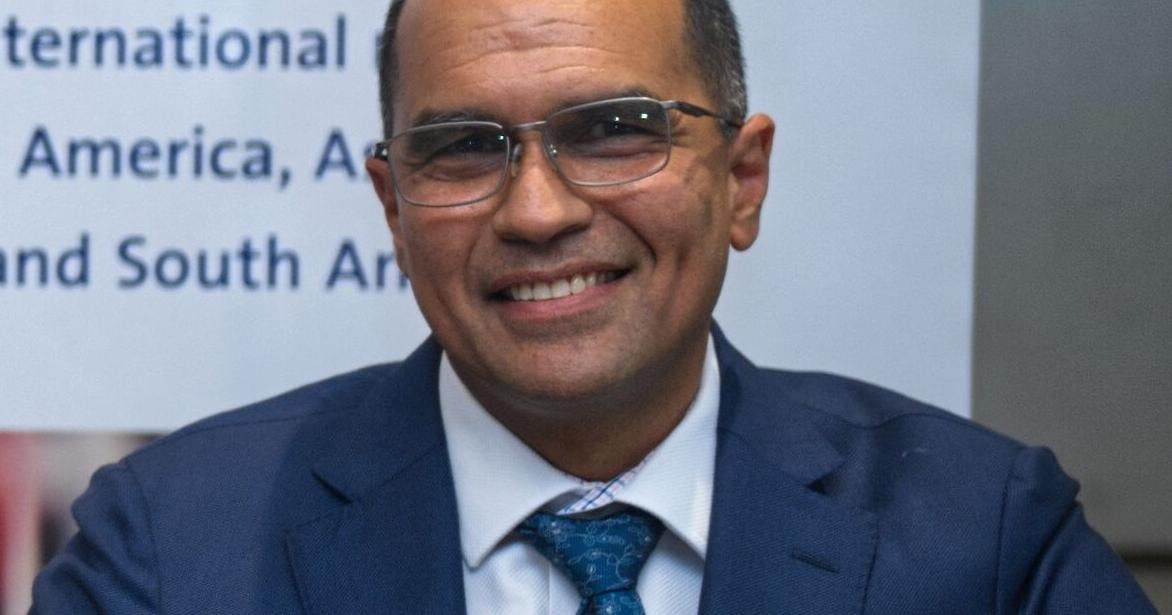
    The path to this opening has not been straightforward, according to project CEO Vishnu Maharaj. What is now the IHOP-Applebee’s site was originally planned as a Trinidad outpost of American seafood chain Red Lobster, a project that was nearly complete when the parent company filed for Chapter 11 bankruptcy protection in the U.S., bringing all development to an immediate halt. “The décor was done. There was a very exquisite wooden décor with mahogany wood. When the project came to a halt, I looked for something else,” Maharaj recalled in an interview with local outlet Express.

    Maharaj first considered bringing in Asian chain PF Chang’s, but advisors warned against the move, noting the local market already had a saturated selection of Chinese-focused restaurants. It was not until June 2024 that Maharaj learned of the new dual-brand IHOP-Applebee’s concept that had launched in Mexico, and he immediately recognized the unique opportunity. “Those two franchises coming to Trinidad for the first time—I had to get it. I approached the franchise company, so it started from there,” he said.

    Even after securing the dual-brand rights, Maharaj made one last attempt to revive the Red Lobster project after the chain emerged from bankruptcy under new ownership. However, the new leadership told him the brand was pausing all international expansion to focus on its domestic U.S. operations, clearing the way for the IHOP-Applebee’s venture to move forward.

    Looking at shifting consumer tastes, Maharaj explained why the new dual concept made far more sense for the current market than the decades-old Red Lobster plan. Thirty years ago, when Maharaj first pursued the Red Lobster project, the chain was a leading affordable family dining option in the U.S., but it has since been outpaced by newer casual dining concepts. The IHOP-Applebee’s combo offers an unparalleled experience: two iconic global brands operating under one roof with a single combined menu that lets diners mix and match items from both chains. The location will operate 7 a.m. to 10 p.m. Sunday through Thursday, with extended hours until 11 p.m. on Fridays and Saturdays to accommodate weekend crowds.

    Since news of the opening broke on social media, local reaction has been overwhelmingly positive, Maharaj said, with widespread excitement building across the country in just 24 hours. “Years of hard work seem to be paying off,” he noted. Maharaj emphasized that the project was intentionally designed to fill a gap in the local market: with no shortage of local dining options already operating in Grand Bazaar and across Trinidad, the venture brings an authentic international casual family dining experience to locals who have never had the chance to travel to the U.S. to visit these chains. “Another local restaurant was not the solution,” he said.

    Unlike many international hospitality ventures in Trinidad, Maharaj does not anticipate foreign currency access will be a major barrier to operations. All food supplies will be distributed through local retail giant Massy Distribution, which already has established access to foreign exchange to cover import costs, the main forex expense for the restaurant. The location will employ a minimum of 60 full and part-time staff to cover operating hours.

    While parking congestion is a common challenge at most Trinidadian malls, including Grand Bazaar, Maharaj is confident the issue will not deter diners. The restaurant’s early opening hours for breakfast mean most customers will arrive before mall stores open at 9 a.m. on weekdays, and the mall is fully closed on Sundays, when the restaurant remains open. When mall stores are operating, the property offers a complimentary shuttle service from the less crowded north entrance parking lot to the central shopping area, helping to ease overflow.

    Maharaj confirmed the Trinidad location will serve the exact same core menu as any U.S. or international outpost, with just a small number of exclusive additions created specifically for the dual-brand concept. There are no current plans to add localized menu items to appeal to regional tastes, a move Maharaj says is unnecessary given the size of the combined menu, which offers more than 100 options to suit a wide range of preferences. “Why would I want to alter a perfect menu at this time? Later on, we could probably try something for a limited time. If it works then we put it on the menu,” he said.

    To mark the opening, the first 100 children who visit with a paying adult on launch day will receive a free stack of IHOP’s signature pancakes. Maharaj noted that modern Trinidadian consumers are far more receptive to international brands than they were when the first McDonald’s opened in Port of Spain decades ago, thanks to increased global travel and wider exposure to international culture through media. He added that there is plenty of room for both local and international dining brands in Trinidad’s growing casual dining market, noting that consumers regularly mix up their dining choices rather than sticking exclusively to one or the other. With few dedicated family casual dining options currently available locally, Maharaj says the dual-brand outlet fills a clear need that will be welcomed by diners across the country.

  • Foster served  court order  at airport

    Foster served court order at airport

    After a days-long effort to complete service, law enforcement in Trinidad and Tobago has successfully delivered a court order to People’s National Movement (PNM) General Secretary Foster Cummings, compelling the ruling political party to disclose full financial and administrative records related to the multi-million-dollar construction of its Port of Spain headquarters, Balisier House.

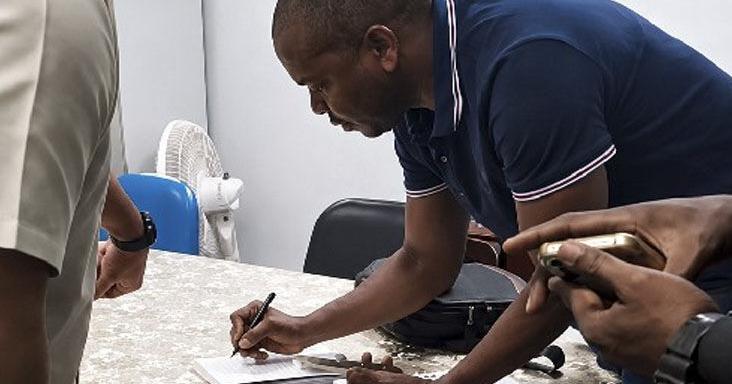
    The process of serving the order faced unforeseen delays after police first attempted to deliver the document to Cummings last Friday, with no success. Officers ultimately intercepted Cummings shortly after 12:15 a.m. on Wednesday at Piarco International Airport, as the party official re-entered the country following an overseas trip. Two officers from the Trinidad and Tobago Police Service (TTPS) Special Branch pulled Cummings aside for a private conversation, walked him through the details of the court order, and confirmed he accepted and signed for the document, according to anonymous sources familiar with the process.

    Two days before the successful service at the airport, on the prior Tuesday, uniformed police constables had already visited Balisier House to collect background details about the property’s trustees and management structure. When they arrived, they were told Cummings was not present at the party’s headquarters, and were redirected to PNM chairman Marvin Gonzales to receive the request. As of this update, Opposition Leader Pennelope Beckles remains outside of Trinidad and Tobago and has not issued a public statement on the proceedings.

    The legal action stems from a High Court ruling granted last Friday by Justice Margaret Mohammed, which approved the TTPS’s request for a Preliminary Unexplained Wealth Order (PUWO) against the PNM and its trustees. Under the terms of the court’s approval, police had a seven-day window to complete service of the order to the named respondents.

    The investigation into Balisier House’s construction funding has been unfolding for months. On July 10, 2026, TTPS Commissioner Allister Guevarro appointed Acting Assistant Commissioner of Police Ramdath Phillip to lead the probe, and authorized Phillip to file the PUWO application with the High Court. The request was submitted in line with Section 58(1) of Trinidad and Tobago’s 2019 Civil Asset Recovery and Management and Unexplained Wealth Act, legislation designed to help authorities investigate and recover assets obtained through criminal activity.

    In the court filing, Phillip names the PNM’s trustees as the first respondent and the PNM, represented by its general secretary, as the second respondent. The application was filed as an ex parte proceeding, meaning only the police side presented argument to the court for the initial order, a standard process for this type of investigative court tool.

    According to the filing, investigators uncovered the property in question during a probe into an unspecified “specified offence” under the act. The application lays out four key grounds for suspicion laid out by investigators: first, that the total combined wealth of the respondents exceeds the total value of assets they have obtained through legal means; second, that the total value of the relevant assets exceeds TT$500,000; third, that the Balisier House property is either owned by the respondents or under their effective control; and fourth, that the property was acquired through the commission of a specified criminal offence.

    Police are asking the High Court to force the PNM and its trustees to submit formal sworn declarations of assets and respond to detailed questions about the origins of the funding used to build the headquarters. A PUWO functions as a unique investigative tool under the 2019 act, allowing law enforcement, with prior court approval, to compel individuals or organizations to explain the source of assets when reasonable suspicion exists that the wealth was generated through unlawful activity.

    The PUWO application was signed by Phillip on July 10, 2026, and stamped by the High Court the same day, after review by Justice of the Peace Kimberly Prescott. Court documents show Commissioner Guevarro is represented in the proceeding by King’s Counsel Anthony Peto KC and junior counsel Thomas Cleaver of London’s Blackstone Chambers, with local attorney Dayadai Harripaul acting as instructing counsel for the case.

    In response to the police action, PNM chairman Marvin Gonzales has rejected the investigation as a politically motivated witch-hunt, marking the first formal public pushback from the party against the court proceedings.

  • Parents signal legal action

    Parents signal legal action

    A devastating jet ski collision at Pigeon Point Heritage Park in Tobago that claimed the life of 7-year-old Angelica Jogie on April 8 has now moved toward potential litigation, with the young girl’s family issuing a formal pre-action protocol letter to hold three parties accountable for the tragedy.

    Represented by Freedom Law Chambers, led by senior counsel Anand Ramlogan, the family’s legal filing names the Tobago House of Assembly (THA), Pigeon Point Heritage Park Ltd, and the involved jet ski operator as proposed defendants. The claim is brought on behalf of Angelica’s parents Salisha Anita Narine-Jogie and Arnold Jogie, her surviving sister Angelina Jogie, and the estate of the deceased child.

    According to details outlined in the July 15-dated letter, the family was wading and bathing in a clearly marked designated swimming area at the popular coastal park when the rogue jet ski allegedly entered the restricted zone and struck multiple family members. Angelica suffered severe multiple traumatic injuries from the impact and could not be saved, a finding confirmed by her official death certificate cited in the legal document. Both of Angelica’s parents sustained physical injuries in the collision, while 10-year-old Angelina was forced to watch the entire horrific incident and its fatal outcome unfold firsthand.

    Angelica’s legal team alleges the jet ski operator committed multiple acts of negligence: the operator failed to maintain proper control of the watercraft, did not exercise reasonable care while operating near the beach, intentionally entered an area reserved for swimmers, and did not take evasive action to avoid hitting members of the public lawfully enjoying the beach.

    Beyond the operator’s actions, the filing argues that systemic failure by public and park management authorities created the dangerous conditions that allowed the crash to occur. The THA and Pigeon Point Heritage Park Ltd hold formal responsibility for the management, safety oversight, and regulation of all water-based activities at the site, including jet ski operations. The family alleges that neither entity implemented, maintained, nor enforced basic adequate safety protocols to protect beachgoers from the known risks of unregulated jet ski activity.

    Notably, the letter highlights that authorities were aware of these hazards for more than a decade before the 2024 fatal collision. As early as 2015, local records showed at least five serious jet ski accidents had been reported in south-west Tobago, sparking consistent public complaints and policy discussions about the danger jet skis posed to swimmers. In response to these concerns, the THA appointed a special task force that drafted a formal Jet Ski Policy and Regulations framework in 2017.

    That 2017 draft policy explicitly recognized the lethal risk of jet skis operating close to bathing areas, and put forward a series of evidence-based safety recommendations: these included a mandatory 300-foot exclusion zone for jet skis around all areas used by swimmers, snorkelers and divers; the creation of clearly marked separate operating zones for watercraft; mandatory operator licensing; coordinated enforcement by police, the Coast Guard and fisheries officials; and financial penalties for operators that violated the rules. The policy also required all jet ski activity to be confined exclusively to designated operating areas.

    Despite having this risk assessment and regulatory roadmap in place for seven years before Angelica’s death, no action was taken to implement or enforce these critical protective measures, the family’s legal team argues. This long-standing failure to act allowed a known dangerous situation to persist, directly creating the conditions that led to the young girl’s death.

    The legal filing also raises serious concerns about the delayed emergency response after the collision. The family faced an unreasonably long wait for an ambulance to arrive at the scene, a delay that exacerbated the pain and suffering Angelica endured before her death, according to the claim.

    The long-term trauma of the incident has devastated every member of the Jogie family, the letter details. Salisha Narine-Jogie has been diagnosed with a recognized psychiatric injury and sustained nervous shock from witnessing her daughter’s fatal collision. Arnold Jogie suffered lasting physical impairments from his own injuries in the crash and has also endured severe ongoing psychological trauma following his daughter’s death. Angelina, the surviving sister, has experienced significant emotional and behavioural changes since losing her sibling, and the entire family’s daily routine, interpersonal relationships, and overall quality of life have been permanently upended.

    Both parents were forced to miss extended periods of work after the tragedy: Salisha was out of employment for six weeks, while Arnold could not work for 35 days. The family is seeking a wide range of damages to compensate for their harm, including compensation for personal injuries, pain and suffering, loss of enjoyment of life, nervous shock, psychiatric harm, past and future lost earnings, and reduced earning capacity. They are also claiming special damages to cover out-of-pocket costs for medical treatment, transportation, and ongoing counselling and mental health care.

    On behalf of Angelica’s estate, the family is additionally pursuing damages for the child’s loss of expectation of life and lost future earnings over her entire expected lifespan. The claim also calls for aggravated and exemplary damages, arguing that the defendants’ conduct showed a blatant disregard for the safety of children and families using the public beach facility.

    The pre-action letter requires all named defendants to issue a formal position on liability and enter into good faith settlement discussions within a set timeframe. Freedom Law Chambers has notified that if no substantive response is received within 28 days of the letter’s delivery, full High Court civil proceedings will be launched without additional warning.

    As of press time, attempts to contact THA Chief Secretary Farley Augustine for comment on the impending litigation were unsuccessful. Local law enforcement confirms that its criminal investigation into Angelica’s death is nearing completion. Investigators are scheduled to meet with Director of Public Prosecutions Roger Gaspard, SC, this week to receive guidance on what criminal charges, if any, will be filed in connection with the tragedy.

  • Calls grow for clarity on AI data centres

    Calls grow for clarity on AI data centres

    A fierce national debate over the Trinidad and Tobago government’s plan to build large-scale AI data centres has escalated this week, as a public petition demanding a suspension of the projects has surged past 19,000 signatures, while business leaders have called for greater transparency and inclusive stakeholder dialogue before moving forward. The proposal, unveiled last week by Prime Minister Kamla Persad-Bissessar, includes two major facilities: a 300-megawatt general data centre with supporting infrastructure, and a 150-megawatt AI-focused data centre that could be expanded to 500 megawatts. The prime minister has framed the projects as a forward-looking opportunity to create new jobs, generate much-needed foreign exchange, and diversify the country’s economy, but critics have raised urgent red flags over the plan’s hidden costs.

    The opposition to the proposal is led by Syam Nath, founder of Nath Bioacoustics and co-founder of the Trinidad and Tobago Cetacean Sighting Network, who launched the change.org petition calling for a full halt to the projects until the government releases comprehensive public details on their impacts. As of late yesterday, the petition had collected more than 19,000 signatures from residents across the country. Nath and other conservation advocates stress that Trinidad and Tobago’s coastal and marine ecosystems are one-of-a-kind and highly sensitive, already facing multiple ongoing threats from human activity and climate change. Beyond ecological risks, many signatories have echoed concerns that the hyper-scale data centres, which require massive amounts of electricity and water for daily operations, will put additional strain on the country’s already overstretched public utilities. Many residents noted that persistent pipe-borne water shortages have plagued communities across the nation for decades, arguing the government should prioritize upgrading public infrastructure before approving resource-heavy private projects.

    Persad-Bissessar has pushed back against critics, dismissing their concerns and urging opponents to abandon what she called an out-of-touch stance. She has reaffirmed that data centres represent a critical new stream of modern revenue for the country, and in a notable retort, she criticized the widespread littering that plagues many Trinidad and Tobago communities as a far more pressing public issue. Even among the country’s business community, however, opinions on the proposal remain deeply split, with multiple leading industry groups calling for full transparency and broad public consultation.

    Gregory Aboud, president of the Downtown Owners and Merchants Association (DOMA), said the local business community broadly welcomes new investment, particularly foreign direct investment that can boost economic growth. Even so, he acknowledged that public opinion on the development is sharply divided, and argued that all stakeholders—including the general public—must be given space to weigh in on the proposal. Aboud pointed out that environmental conservationists’ concerns deserve full investigation, and key questions remain unanswered about whether the country’s existing water and power networks can support the massive resource demands of hyper-scale data facilities. “Any foreign investment should clearly lay out what tangible benefits it will bring to Trinidad and Tobago,” Aboud said, adding that “this matter needs a lot more discussion and disclosure to come up with a consensus that everyone accepts on behalf of the future interest of T&T.”

    Kiran Singh, head of the Greater San Fernando Chamber of Commerce, struck a similar balance, acknowledging that the data centre projects could unlock meaningful economic benefits for the island nation. Singh noted that economic diversification and growing foreign exchange earnings are critical priorities for Trinidad and Tobago, and the development could help advance both goals. At the same time, he acknowledged the validity of public concerns around long-standing utility access gaps, and joined the call for greater government disclosure and a fully consultative process that addresses both potential harms and benefits of the proposal.

    The domestic debate in Trinidad and Tobago comes as the future of data centre development has become a flashpoint for political controversy in the United States, following New York’s landmark decision this week to become the first U.S. state to implement a moratorium on new data centre construction. The moratorium was put in place to allow for further study of the facilities’ impacts on the environment and public health. Former U.S. President Donald Trump has sharply criticized the move, framing it as a catastrophic economic mistake that will cost the state thousands of jobs and billions in revenue.

    In a post on his own social media platform, Trump called data centres “one of the biggest driving forces in the future for jobs” and described them as “big, strong, bold, and money machines for the state in which they are built.” He claimed New York Governor Kathy Hochul had canceled all existing and planned data centre projects “for political reasons,” and said companies that would have built in New York are now relocating their projects to other states including Alabama, Florida, Texas and Arizona. Trump called the tax revenue and new jobs generated by data centres “liquid gold,” arguing that “New York State has made a terrible decision.” He added that “all of this income, and other benefits, will be going to Red States, and some Blue, where data centres are sought as cash cows, with lower taxes and record-setting jobs.”

    Trump pushed back against concerns over resource use, noting that data centre operators are required to pay for their own water and power use, with any surplus revenue returned to state and local communities. “Data centres are tremendous wins for the states and communities that are lucky enough to get them. New York should change its policy, immediately,” he said. He closed by warning that “the radical Left Dumocrats must not be allowed to cause us to lose data centres, AI, and all of this incredible new technology to China and other countries.”

  • Chris Must List: Delay trial until end of SoE

    Chris Must List: Delay trial until end of SoE

    A high-profile legal case involving Canadian travel content creator Christopher “Chris Must List” Hughes has taken a new turn in Trinidad and Tobago, as a senior magistrate has pushed back against a defense request to delay the creator’s upcoming sedition trial until the country’s ongoing state of emergency (SoE) expires. Hughes, who was hit with sedition charges in May 2024 over allegations he promoted gang culture — claims he has vehemently denied — faces a maximum penalty of two years behind bars and a fine if convicted.\n\nAppearing before Deputy Chief Magistrate Brian Debideen on behalf of his client, defense attorney Criston J Williams argued that ordering Hughes to return to Trinidad and Tobago for trial during the current SoE exposes him to severe, unnecessary legal risk. Williams told the court that under the emergency regulations in place, his client could be slapped with a three-month preventive detention order (PDO) immediately upon landing, with no trial required to hold him. The attorney emphasized that this threat is not speculative: it is rooted in both the existing state of emergency framework and formal correspondence from Trinidad and Tobago’s Ministry of Homeland Security that outlined strict movement restrictions for Hughes.\n\n“The current security climate makes this far too dangerous for my client to return,” Williams told the court. “I have a serious, genuine fear that he will be served a PDO the moment he steps off the plane. I cannot in good conscience take that risk.” He added that the defense intends to call Homeland Security Minister Roger Alexander as a witness if the trial moves forward, and repeated his request to adjourn proceedings until the emergency regulations lapse on September 17.\n\nWhile the SoE is currently set to end next month, Trinidad and Tobago’s constitution does allow for a three-month extension if a special three-fifths majority vote passes in both the House of Representatives and the Senate. This possibility of extended emergency powers has only deepened the defense’s concerns. Local data shows authorities have already issued more than 400 PDOs across the country in 2024, underscoring how widely the emergency detention power is being used.\n\nMagistrate Debideen, however, rejected the defense’s arguments, suggesting the request for delay is an unnecessary tactic to prolong the case. He pointed out that Hughes’ legal team has not yet submitted a formal request to Minister Alexander for the immigration exemption Hughes would need to re-enter the country, after he was previously barred from returning. “You are complicating a very simple issue,” Debideen told Williams. “It is clear you and your client do not want this matter to go to trial — you are just dragging this out.”\n\nWilliams pushed back against the accusation, insisting the only goal of the application is to protect Hughes’ personal safety and legal rights while the state of emergency remains in effect. The case also brought an additional rebuke from the bench, after Debideen reviewed a social media video Hughes posted online following the last court hearing. The magistrate issued a stern warning that criminal defendants cannot publicly discuss active court proceedings or offer their own interpretations of the case.\n\n“I am not going to tolerate that kind of behavior,” Debideen said. “This case will be resolved based on law and evidence, not public commentary.” Williams apologized to the court on Hughes’ behalf and gave a formal assurance that there would be no further public statements about the case from the defendant while it remains pending.\n\nWith the future of Hughes’ appearance in court still uncertain, Debideen has ordered the Office of the Director of Public Prosecutions to review the country’s Criminal Procedure Rules and outline what legal options are available if Hughes fails to appear for trial. State attorney Stacey Laloo-Chong told the court she would consult with Director of Public Prosecutions Roger Gaspard, SC, before the next hearing scheduled for July 28. The original trial start date was set for July 22.

  • Methanex shuts down Titan plant

    Methanex shuts down Titan plant

    The global methanol industry leader Methanex has finalized the indefinite shutdown of its Titan methanol facility in Point Lisas, Trinidad and Tobago, formalizing a decision first announced last month over a failed natural gas contract renegotiation. Colin Bain, managing director and president of Methanex Trinidad and Tobago, confirmed to local outlet Express on Wednesday that production at the 860,000-tonne annual capacity plant ceased at the start of that day.

    The shutdown has quickly become a flashpoint in national political discourse, with opposition figures from the People’s National Movement (PNM) directly blaming the incumbent administration led by Prime Minister Kamla Persad-Bissessar of the United National Congress (UNC) for the outcome. Stuart Young, former prime minister and energy minister under the PNM, condemned the government’s negotiation approach in a public post Wednesday, calling the administration “incompetent and unsophisticated” for failing to strike a new commercial agreement before the plant’s existing gas contract expires this September. Young highlighted that the previous PNM government successfully maintained the sector through 10 years of negotiated agreements from 2015 to 2025, preserving thousands of jobs, critical foreign exchange earnings, and broader economic benefits. “In less than a year, the UNC has destroyed our energy sector, Who is winning?” Young wrote. As of Wednesday afternoon, incumbent Energy Minister Dr Roodal Moonilal had not issued a public response to requests for comment on the shutdown.

    Back on June 29, Vancouver-based Methanex first publicly confirmed its plan to idle the facility indefinitely, after failing to reach consensus on a new natural gas supply contract with the National Gas Company of Trinidad and Tobago (NGC). The plant’s current supply agreement is set to expire at the end of September, and with no new deal in place, the company moved forward with the shutdown schedule. More than 100 employees currently work at the Titan plant, and company leadership confirmed they are prioritizing support for affected staff through the transition period.

    Per the company’s official announcement, Methanex will implement a full plant preservation program to keep the facility viable for a potential future restart if market and regulatory conditions improve significantly. This is not the first Methanex facility in Trinidad and Tobago to be idled: the company’s 63.1% jointly owned Atlas methanol plant has remained in preserved idle status since 2024, after being idled previously in 2020 due to pandemic-driven demand collapse and temporarily restarted when Atlas was shut down. Titan is the second major international energy operator to wind down operations in Trinidad and Tobago in recent months; in October 2025, Canadian fertilizer producer Nutrien launched a controlled shutdown of its Pt Lisas nitrogen operations, citing persistent natural gas supply unreliability and port access restrictions. Nutrien has since begun the process of selling off its Trinidad and Tobago assets.

    Rich Sumner, president and chief executive officer of Methanex Corporation, framed the shutdown as a difficult but necessary decision to protect long-term shareholder value. “We have a long history in Trinidad and Tobago with an outstanding organisation that has played an important role in our company’s history,” Sumner said in a statement. “This difficult decision reflects our focus on preserving long-term shareholder value in a challenging environment where the structurally tight gas supply and demand balances in Trinidad and Tobago are making operations commercially unviable.”

    Sumner added that the company had held extensive negotiations with both the national government and NGC ahead of the shutdown, acknowledging the entities’ ongoing work to address the country’s broader natural gas supply crunch. “We will monitor future developments closely, with a view to reassessing conditions and our position over the coming years,” he said, confirming that the company’s immediate focus is supporting its local team and completing the safe shutdown and preservation work.

    As of the second quarter of 2026, Titan is not contributing to Methanex’s adjusted earnings before interest, taxes, depreciation, and amortization (EBITDA) or adjusted free cash flow. The company noted it does not expect to incur significant material cash costs from the shutdown decision, and will release any updated production or financial guidance alongside its regular second quarter earnings report scheduled for July 28, 2026. Methanex is the world’s largest methanol supplier, publicly traded on both the Toronto Stock Exchange under the ticker MEOH and the Nasdaq Stock Market in the United States.

  • AI data centres petition tops 17,000 signatures

    AI data centres petition tops 17,000 signatures

    Public pushback against the Trinidad and Tobago government’s plan to build large-scale artificial intelligence data centres is growing rapidly, with a citizen-led petition demanding a suspension of the project collecting more than 17,000 signatures in just days. The grassroots campaign, launched on change.org, has highlighted deep-seated concerns over the strain the hyperscale facilities could place on the country’s already overstretched water and electricity infrastructure, as well as risks to local ecosystems and public health.

  • PM: $2m approved for parade

    PM: $2m approved for parade

    Social media speculation that Trinidad and Tobago would cancel its annual Independence Day military parade for the second year in a row has been officially debunked by top government officials, who confirm the iconic national celebration will go forward as scheduled with $2 million in funding already approved.

    The unrest began after a leaked Cabinet Minute from the June 11, 2026, cabinet meeting began circulating widely across digital platforms. Cabinet Minute No. 1434 stated that the Defence Minister had been granted permission to withdraw a original proposal for the ceremonial military parade and route march marking the nation’s 64th year of independence. The out-of-context wording quickly sparked rumors that the 2026 event would be scrapped, following the 2025 parade’s cancellation last year, when the government cited ongoing national security operations under a declared state of emergency.

    Opposition leader Marvin Ganzales, chairman of the People’s National Movement, was quick to press the government for clarity, accusing the administration of failing to communicate its plans openly. Ganzales argued that the withdrawal of the proposal raised legitimate concerns that the country would lose its central Independence Day event for a second consecutive year, calling for an immediate public explanation to resolve growing public uncertainty.

    Within hours, Prime Minister Kamla Persad-Bissessar stepped forward to dismiss the speculation, explaining that the leaked minute had been widely misunderstood. “The proposal is not withdrawn. Two million dollars has already been approved. An earlier note was withdrawn and replaced by an updated note. The parade is not cancelled,” the Prime Minister told local outlet the Express, confirming the event’s schedule remains unchanged.

    Defence Minister Wayne Sturge followed with an official statement doubling down on the confirmation, labeling the cancellation rumors as intentionally misleading. “At a time when the nation should be focused on unity, patriotism, and national pride, it is regrettable that some individuals continue to promote incomplete information and unsubstantiated conclusions for public consumption, with the clear intention of causing disharmony and confusion,” Sturge said. He urged the public to only trust official updates from authorized government channels and to practice caution when encountering unvetted claims shared on social media.

    As one of Trinidad and Tobago’s most cherished national traditions, the Independence Day parade has long served as a cornerstone of national identity. Held annually on August 31, the event brings together uniformed groups from across the country: the Trinidad and Tobago Defence Force, Police Service, Fire Service, Prison Service, Cadet Force, and other public safety organizations, which perform ceremonial drills, official inspections, and a public route march watched by thousands of gathered spectators. The celebration marks the nation’s formal independence from the United Kingdom, attained on August 31, 1962, and is widely viewed as a public symbol of national pride, collective discipline, and public service to the country.

  • SPAIN SHUTS OUT FRANCE

    SPAIN SHUTS OUT FRANCE

    In a electric 2026 FIFA World Cup semifinal clash at Arlington, Texas, Spain secured a dominant 2-0 victory over top-ranked France on Wednesday, booking their spot in Sunday’s final and extending one of the most impressive unbeaten runs in international men’s football. The result marks the third consecutive summer that La Roja has knocked France out of a major tournament in the semifinal stage, capping a performance built on youthful creativity and clinical defensive solidity.

    The opening goal came in the 22nd minute, sparked by 19-year-old Barcelona winger Lamine Yamal, just one day removed from celebrating his birthday. After French defender Lucas Digne miscontrolled a clearance with his head, Yamal darted into the penalty area from behind to challenge for the loose ball. The young winger was kicked by Digne as he went for the ball, with the contact drawing a clear penalty from the referee. Mikel Oyarzabal stepped up to convert the spot kick past France goalkeeper Mike Maignan, putting Spain ahead — the first time either side had trailed in their seven matches of this World Cup. The goal was Oyarzabal’s fifth of the tournament and his 30th in 60 caps for Spain.

    Spain doubled their lead in the 58th minute through a sharp give-and-go between Pedro Porro and Dani Olmo. After Olmo received the ball, he was knocked off his feet by defender Dayot Upamecano just after slipping a return pass to Porro, who calmly finished past Maignan to put La Roja up 2-0. Moments later, Yamal thought he had added a third, but his close-range finish was ruled out by an offside call that denied the teenager a birthday goal.

    From that point, Spain’s defense and goalkeeper Unai Simón held firm against a French side that could not find a way back into the game. Heading into the semifinal, France had conceded just two goals in their entire tournament run, and Simón entered the match having kept six clean sheets and conceded only one goal across seven games. That solid defensive showing held, as Simón shut out all of France’s attempts to pull level, extending his tournament tally of shutouts.

    The final scoreline leaves France disappointed, as the top-ranked side in the world missed their chance to become just the third men’s team in history to reach three consecutive World Cup finals. Instead, Didier Deschamps’ side will drop into the third-place match against the loser of Thursday’s second semifinal between Argentina and England, scheduled for this Saturday in Miami Gardens, Florida.

    After the final whistle, Spanish head coach Luis de la Fuente praised his side’s effort against a side he called the best in the world. Midfielder Rodri echoed that sentiment, emphasizing how hard the team had worked to reach this stage. “So difficult to get to this moment, but we want more,” Rodri said. “We want to win this World Cup.” Porro, who scored the decisive second goal, deflected credit to the entire squad, saying: “We gave it our all in order just to go through to the final. We knew that we’re a very tough team, we’re doing things really well. This is our team, it’s not about me.”

    French midfielder Rayan Cherki acknowledged his side’s underperformance in the match. “In so many ways, France was missing everything today,” Cherki said through a translator. “Truly, everything was missing today. We’ll be back in four years and we won’t make the same mistakes.”

    The result extends Spain’s incredible unbeaten streak in regular international play to 37 matches, dating back to March 2024. The run, made up of 28 wins and nine draws, breaks the Spanish men’s national team record of 35 consecutive unbeaten matches set between 2007 and 2009. For France, the loss ends their streak of six consecutive World Cup wins, a run that matched the record set by their 2018 and 2022 squads.

    Notably, Wednesday’s win is the third straight summer that Spain has defeated France in a major tournament semifinal. Two years ago, Yamal scored in a 2-1 Spanish win over France in the 2024 European Championship semifinal, just days before his 17th birthday. Last year, Spain downed France 5-4 in a Nations League semifinal. Ahead of this clash, Yamal had publicly said France should fear his Spanish side, a prediction that proved fully accurate after the final whistle.

    Spain will now face the winner of Thursday’s semifinal between defending champion Argentina and England in Sunday’s World Cup final, held at MetLife Stadium in East Rutherford, New Jersey, just across the Hudson River from New York City. While fans in central Madrid celebrated jubilantly immediately after the final whistle, the Spanish squad now turns its focus to ending their historic run with the sport’s biggest prize.

  • Ali, Chris Must List, Richards attorneys write to CoP

    Ali, Chris Must List, Richards attorneys write to CoP

    A high-stakes request for an independent criminal investigation into Trinidad and Tobago’s statutory national intelligence framework has been formally submitted to the country’s Police Service, driven by growing public concerns over repeated violations of two key national security laws. The demand comes from three legal practitioners — Criston J Williams, Blaine Sobrian and Aaron Lewis — of the Port-of-Spain-based Quantum Legal firm, who represent three clients facing separate national security-related actions: detained citizens Earl Richards, Rajaee Ali, and Canadian vlogger Christopher Hughes, who is also known publicly as Chris Must List.