标签: Trinidad and Tobago

特立尼达和多巴哥

  • KFC drive-thru scare as car catches fire

    KFC drive-thru scare as car catches fire

    A quiet Sunday afternoon trip to pick up fast food took an unexpected turn at the Trincity Mall KFC drive-thru, when a sedan burst into flames following a low-speed fender bender, local authorities confirmed. No people were hurt in the incident, though the vehicle was completely destroyed by the blaze.

  • Head, arms, legs missing: Burnt body found

    Head, arms, legs missing: Burnt body found

    On a Sunday afternoon, authorities made a grim discovery in a sparsely populated, isolated region of Arouca: heavily burnt skeletal human remains, local law enforcement confirmed. The incident unfolded shortly after 3:30 p.m., when members of the Arouca Police District received an urgent request for support from Captain Vallance Rambharat, a lead official with the Hunters Search and Rescue team. Rambharat’s team, which specializes in searching hard-to-reach terrain, guided responding police officers to an unpaved access track branching off Zircon Circular in the Bon Air West neighborhood. The site sits roughly a quarter of a mile away from the area’s main paved road, tucked away from frequent public access. Upon arriving at the marked location, first responders located the partial remains in an open natural drainage channel that runs parallel to the remote track. Initial on-site examinations conducted by law enforcement have confirmed that multiple key body parts are missing from the remains. The absent sections include all limbs below the elbows, all lower leg segments below the knees, and the full skull. As of the latest updates, police have not released any information on the potential identity of the deceased, nor have they shared details on possible causes of death or timelines for when the remains may have been deposited at the site. Investigations into the discovery are still ongoing, with law enforcement expected to conduct further forensic testing to shed light on the case.

  • PM: Recovery will take time

    PM: Recovery will take time

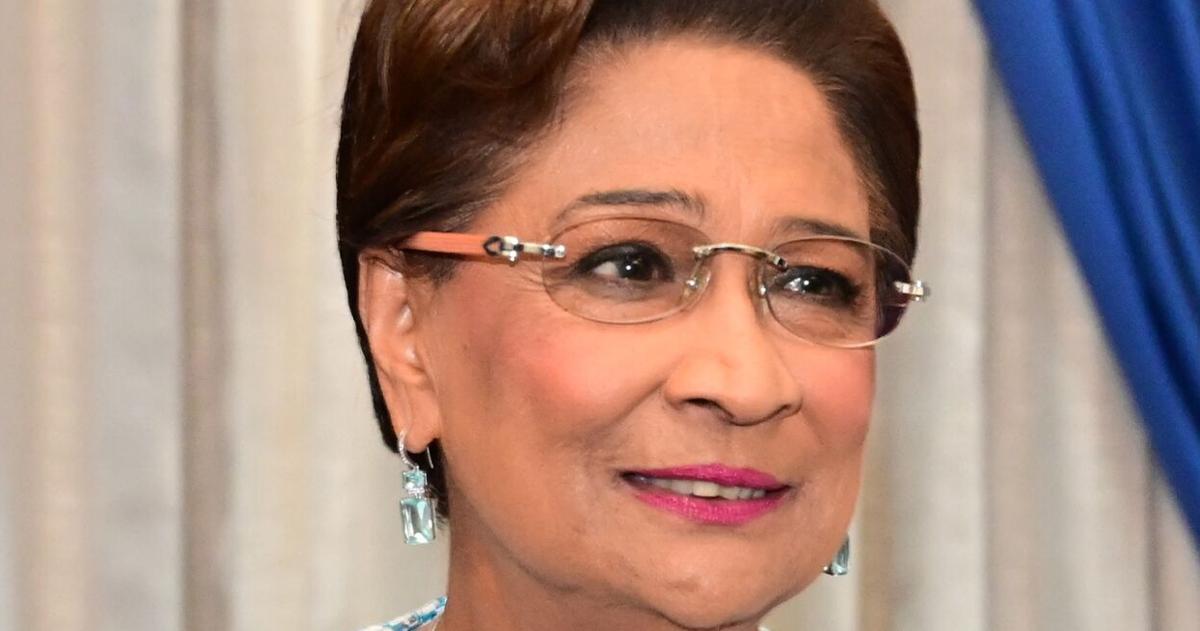
    When the United National Congress (UNC) took power in Trinidad and Tobago in April 2025, it inherited a national treasury drained of resources and a decade of systemic mismanagement left by the previous People’s National Movement (PNM) administration. Prime Minister Kamla Persad-Bissessar laid out this challenging starting point and detailed her government’s early policy wins during a keynote address at the UNC’s 37th annual national congress, held Saturday in Couva.

    Persad-Bissessar painted a stark picture of the economic damage the new administration inherited, telling assembled supporters that meaningful national recovery will require years of targeted effort to reverse a decade of damage. During the PNM’s 10-year tenure, she said, the country’s total national debt surged from $75.4 billion in 2015 to $144.7 billion in 2025 – a near-doubling of the national obligations. At the same time, overall economic output shrank by 20%, the country’s foreign reserve holdings were cut in half, and billions in public savings were withdrawn from state accounts.

    Despite this weak starting position, Persad-Bissessar emphasized that the UNC has already delivered on core campaign promises within its first months in office. The administration quickly released a people-first national budget that cut the price of super gasoline by $1 per unit and eliminated value-added tax on all essential food items, policies designed to reduce cost-of-living burdens for working households.

    “We restored fairness to a system where, for too long, ordinary citizens carried the weight of elite mismanagement,” the prime minister said. “Your UNC Government put more money back into your pockets.”

    One of the administration’s most high-profile early achievements is a 10% wage increase for public sector workers, a policy the prime minister highlighted as a top campaign pledge fulfilled. An agreement between the Chief Personnel Officer and the Public Services Association (PSA) has already locked in the raise, delivering pay increases to more than 51,000 public workers: 17,000 PSA members, 20,000 National Union of Government and Federated Workers members, and 14,000 public school teachers. Persad-Bissessar confirmed that negotiations and planning are already underway to extend similar wage adjustments to other public sector employee groups. The government has also fulfilled its pledge to eliminate taxes on private pensions, a win for retired citizens across the country.

    Beyond domestic policy gains, the UNC has successfully restored international investor and institutional confidence in Trinidad and Tobago’s economy, the prime minister said. Within its first year in office, the administration successfully issued a US$1 billion sovereign bond that drew 2.5 times oversubscription, with participation from more than 140 institutional investors across the globe. “That is a clear signal – the world believes in Trinidad and Tobago again,” Persad-Bissessar said. The government has also secured the country’s removal from both the European Union’s tax blacklist and the Financial Action Task Force’s (FATF) anti-money laundering blacklist, reversing diplomatic and economic damage from the previous administration and rebuilding the country’s global credibility.

    As it works to resuscitate long-stagnant economic growth, the UNC government has placed a high priority on targeted social support for vulnerable and marginalized citizens, the prime minister added. The government has already disbursed $1 million in ex gratia compensation to families impacted by the 2022 Paria diving tragedy, a long-unresolved issue the previous administration failed to address. A wide range of ongoing social programs are delivering tangible support: more than 117,000 elderly citizens have received $3.8 billion in pension payments; 25,602 people living with disabilities have accessed $520.3 million in disability grants; 13,869 low-income vulnerable families have received $216 million in direct cash support; 12,614 people have accessed $75.7 million in targeted food assistance; and 2,808 people impacted by disasters have benefited from 1,232 individual disaster relief grants.

    ### Progress in Healthcare and Diplomatic Outreach

    Beyond economic and social policy, Persad-Bissessar highlighted meaningful improvements to the country’s public healthcare system, long plagued by underfunding and access gaps. The Couva Children’s Hospital, shuttered for years under the previous administration, has been fully reopened and has already completed more than 600 same-day surgical procedures. Regional health authorities have expanded access to care across the country, doubling the number of operational public healthcare clinics and adding hundreds of new doctors, nurses and frontline medical staff to the understaffed public system.

    On the diplomatic front, the UNC government has reengaged with global and regional partners at the highest levels to rebuild bilateral and multilateral ties, the prime minister said. She pointed to her own high-level meeting with United States President Donald Trump during the recent Summit of the Americas as a key step in repairing bilateral relations, as well as a meeting between Foreign and Caricom Affairs Minister Sean Sobers and King Charles III during an official visit to the United Kingdom. Persad-Bissessar came to Sobers’ defense amid recent controversy over Trinidad and Tobago’s objection to the reappointment of Caricom Secretary-General Dr. Carla Barnett, dismissing unsubstantiated claims that Sobers missed a key negotiating meeting due to seasickness as baseless rumor. The prime minister also highlighted a successful official visit by Indian Prime Minister Narendra Modi, which deepened long-standing cultural and economic bilateral ties between the two nations.

    For the island of Tobago, Persad-Bissessar reaffirmed that equitable development remains a top priority for the UNC administration. The 2025 national budget included the largest ever allocation for Tobago, totaling $3.725 billion earmarked for local infrastructure and social programs. The long-standing airfare subsidy for the domestic inter-island airbridge remains in place, and the cabinet has not yet made a final decision on a proposal to add two new unsubsidized flights to the route. The national government is also working closely with the Tobago House of Assembly (THA) to advance a full slate of legislative and administrative reforms: addressing long-standing legal anomalies in the THA Act, exploring the creation of a dedicated Tobago Local Police Service, reforming the outdated alien landholding licensing system, maintaining the existing export licence for the Studley Park quarry, advancing planning for a new desalination plant in Charlotteville to address chronic water shortages, and resolving decades-long unresolved land tenure disputes for local residents.

  • UNC Pivots towards US alignment

    UNC Pivots towards US alignment

    It has now been 12 months since the United National Congress (UNC) won a decisive electoral victory in Trinidad and Tobago, and the small Caribbean nation has undergone a quiet but transformative geopolitical realignment, moving steadily into alignment with United States foreign policy while breaking with longstanding regional norms and historic ties to neighboring Venezuela. Since Prime Minister Kamla Persad-Bissessar took office on April 28, 2025, her administration has embraced American security strategy, echoed Washington’s domestic political rhetoric, and repeatedly backed some of the U.S.’s most divisive global actions, creating growing tensions across the Caribbean and Latin America.

    This ideological alignment predated the UNC’s assumption of power: during the 2025 election campaign, Persad-Bissessar’s party already mirrored the policy priorities of U.S. Republican Party and former president Donald Trump, including anti-immigrant rhetoric framing migration as an “invasion” and a pledge to reintroduce religious instruction into public schools. Echoing Trump’s 2016 “America First” platform that propelled him to the White House, Persad-Bissessar centered her campaign on a “T&T-first” agenda, a slogan that would later become the title of her administration’s inaugural national budget. Following the NRA’s endorsement of Trump, the UNC also expanded its proposals for broad “Stand Your Ground” self-defense legislation and enshrined the “right to bear arms” as a core priority in its electoral manifesto.

    Since taking office, the pro-U.S. shift has only accelerated, particularly in relation to key geopolitical flashpoints. The Persad-Bissessar administration has repeatedly voiced open support for Trump administration military operations both in Venezuela, which sits just seven miles from Trinidad and Tobago at its closest point, and across the Middle East, regularly labeling governments in Caracas and Tehran as “dictatorial regimes.” The government has even moved to adopt Washington’s global terror designation list outright, branding Venezuelan criminal group Tren De Aragua and Iran’s Islamic Revolutionary Guard Corps (IRGC) as terrorist organizations in lockstep with the U.S.

    The most public demonstration of this new alignment came in late 2025, when the U.S. military launched a series of air and sea strikes targeting vessels it claimed were trafficking narcotics to American shores across the Caribbean Sea. The campaign, which grew into Operation Southern Spear, saw the U.S. reposition at least eight warships and thousands of troops to the region, increasing military pressure dramatically on Venezuela. Persad-Bissessar openly praised the buildup, issuing a public statement welcoming the first strike on September 2 that killed 11 people the U.S. labeled “narco-terrorists” from a Venezuelan coastal town. In the statement, she declared that “all drug traffickers should be killed violently” — a position she has refused to back away from, even as international legal experts have raised questions about the legality of the extrajudicial kinetic strikes.

    Shortly after the strikes began, the prime minister issued a direct warning to neighboring Venezuela, a longstanding regional ally, warning that any incursion into Guyanese territory would grant the U.S. “unflinching access” to Trinidad and Tobago’s land and territorial waters. When the guided-missile destroyer USS Gravely docked in Port of Spain for joint military exercises hosted by Trinidad and Tobago, the Maduro-era Venezuelan government responded by cutting all natural gas trade ties with the nation and declaring Persad-Bissessar persona non grata, while state-backed protests filled the streets of Caracas to condemn her policies. Maduro himself repeatedly accused the prime minister of intentionally damaging regional stability and destroying decades of constructive bilateral relations, warning that any hostile action originating from Trinidad and Tobago would be met with a proportional military response. Undeterred, Persad-Bissessar dismissed Venezuelan retaliation as inconsequential to both her personally and the national economy.

    After the U.S. launched Operation Absolute Resolve, the January 3, 2026 military operation that removed Nicolas Maduro from his Caracas presidential compound, Trinidad and Tobago went a step further, permitting the U.S. to install a advanced military-grade air defense radar system on the island of Tobago and granting U.S. military aircraft access to the nation’s civilian and military airports. The administration has repeatedly denied any direct role in the raid on Maduro or attacks on Venezuelan civilians, but has continued to back U.S. policy in the country in public forums. At a recent Caricom Heads of Government meeting, Persad-Bissessar labeled Maduro a “narco-dictator” and claimed that both Trinidad and Tobago and Guyana face direct security threats from Venezuela.

    In response to the comments, the interim Venezuelan government led by Delcy Rodriguez, who has cooperated with the U.S. following Maduro’s ouster, issued a formal communique criticizing Persad-Bissessar’s stance. When the U.S. eased sanctions on Venezuelan energy projects, granting OFAC authorization to major energy firms including Shell to resume cross-border gas development, Persad-Bissessar hailed the move as a major economic win for Trinidad and Tobago, and announced a government delegation would travel to Caracas to negotiate new energy deals. No public update on the talks has been released to date, and Rodriguez notably skipped Trinidad and Tobago on her first foreign tour earlier this month, only visiting Grenada, telling reporters “we have positive relations with Grenada” when asked why she omitted Port of Spain.

    This pro-U.S. shift has not been limited to Venezuela. Following Maduro’s ouster, the Trump administration ramped up pressure on Cuba, blocking shipments of sanctioned Venezuelan oil that have long served as the island’s primary energy source, triggering widespread fuel shortages and deepening a growing humanitarian crisis. At the February 2026 Caricom summit, Persad-Bissessar again aligned with Washington, declaring that Trinidad and Tobago would not back Cuba’s “dictatorial regime.” “We cannot advocate for other people to live under communism and dictatorship while we enjoy democracy and capitalism in our Caricom region,” she said. “That is an oxymoron, a plain contradiction.”

    Weeks later, when the U.S. launched Operation Epic Fury in Iran that killed former Supreme Leader Ayatollah Ali Khamenei and ignited a multi-week regional war in the Persian Gulf, Trinidad and Tobago again issued a statement backing U.S. action. The Ministry of Foreign Affairs said the country supported U.S. efforts “to prevent oppressive regimes from acquiring nuclear weapons capabilities that would jeopardise international peace and security,” noting that nuclear proliferation remains a critical threat to the global community. On March 19, Trinidad and Tobago joined the U.S., United Kingdom, France, Germany, Italy, Japan, Canada and other nations in a joint statement condemning Iranian military actions and the closure of the Strait of Hormuz. Last week, the government formally added Hezbollah, Hamas and the IRGC to its national list of designated terrorist organizations, matching the U.S. designation.

    This new foreign policy marks a stark break from Trinidad and Tobago’s decades-long stance of regional neutrality. As a founding member of the 15-nation Caribbean Community (Caricom), previous Trinidad and Tobago administrations have long upheld the bloc’s collective commitment to maintaining the Caribbean as a conflict-free “Zone of Peace.” But under Persad-Bissessar, the government has rejected this longstanding regional consensus. Last year, the administration reserved its position on a formal Caricom declaration reaffirming the Zone of Peace, and Persad-Bissessar later rejected the concept as a “false ideal” during a speech to the United Nations General Assembly.

    Tensions between Port of Spain and the Caricom secretariat have escalated sharply in recent months. In late December 2025, Persad-Bissessar warned regional nations against criticizing the U.S., pointing to Antigua and Barbuda and Dominica, which faced U.S. visa restrictions under the Trump administration after publicly opposing Washington’s policies. In a post to her X account, she accused Caricom of disproportionately siding with the former Maduro government, repeated calling the Zone of Peace “fakery,” and made clear Trinidad and Tobago wanted no part of the regional consensus.

    At the February 2026 Caricom Heads of Government meeting in St. Kitts, Persad-Bissessar went further, calling the regional bloc an “unreliable partner” and questioning why it had not condemned what she framed as Venezuelan threats to Trinidad and Tobago and Guyana. The dispute spilled into a wider conflict over the reappointment of Caricom Secretary General Carla Barnett, who is set to begin a second five-year term in August 2026 following a vote by Caricom heads at a closed retreat in Nevis.

    Trinidad and Tobago’s foreign minister Sean Sobers, who took over the country’s delegation after Persad-Bissessar left the summit a day early, issued a formal objection to the reappointment, claiming the process violated the Treaty of Chaguaramas because Trinidad and Tobago was not consulted and the vote was not added to the official meeting agenda. Caricom Chairman Terrance Drew responded that the vote was held at a properly announced retreat, and Sobers was invited but declined to attend, citing seasickness. Sobers rejected that claim, and announced Trinidad and Tobago would suspend participation in Caricom meetings until the government received all correspondence related to Barnett’s reappointment.

    Last week, Persad-Bissessor escalated the dispute further, releasing a public statement alongside screenshots of a WhatsApp group chat showing that a “heads-only” retreat was scheduled for February 26, after she had already left the summit. She accused Caricom’s leadership of lying, and labeled the bloc’s leadership dysfunctional, dishonest and incompetent, while also criticizing regional foreign ministers for failing to defend Sobers amid the dispute.

    Political analysts who have tracked the UNC’s first year in office note that the new foreign policy has emerged as the most distinct shift of the administration, drawing mixed reactions from the Trinidad and Tobago public and regional stakeholders. While analysts acknowledge that overt alignment with the U.S. could deliver short and medium-term economic and security benefits for the small island nation, they caution that the long-term consequences for regional stability and Trinidad and Tobago’s standing in the Caribbean remain unclear.

  • Colleagues honour her life beyond the badge

    Colleagues honour her life beyond the badge

    A solemn, dignified farewell was held yesterday for acting Corporal Anuska Eversley, the 41-year-old Trinidad and Tobago Municipal Police Service (TTMPS) officer brutally murdered while on duty at the San Fernando Municipal Police Station. Colleagues, senior law enforcement leaders, friends, and grieving family members gathered at San Fernando’s Faith Centre to honor her 17 years of public service and celebrate her life beyond the police badge.

    Dozens of uniformed officers from across the regional division filled the funeral venue, answering the call to stand in solidarity with Eversley’s bereaved loved ones. In accordance with the family’s explicit wishes, formal military-style ceremonial traditions were omitted from the service, but the collective presence of Eversley’s fellow officers served as a quiet, powerful tribute to her years of commitment and the lasting mark she left on the national law enforcement community.

    Eversley’s life was cut short more than a week prior, when she was beaten and strangled during an overnight shift at the station. Her body was discovered by a fellow officer on the morning of April 19, and investigators found the facility’s secure firearms strong room had been completely emptied. The brazen, on-duty killing and mass weapons heist sent immediate shockwaves through both Trinidad and Tobago’s law enforcement circles and the general public.

    To date, the investigation into the theft of the massive cache of weapons—more than 100 pistols and over 4,000 rounds of ammunition—remains active. Several senior officers and Eversley’s former colleagues have already been placed on administrative suspension pending the outcome of the probe. Coinciding with yesterday’s funeral, three suspects made their first court appearance on charges of Eversley’s murder and the weapons heist: Jivan “Bigs” Cooper, a serving TTMPS colleague; 20-year-old construction worker Kwame Arnold; and 24-year-old scrap iron dealer Nicholas “Nico” Ramdass, all residents of Claxton Bay.

    Addressing mourners, San Fernando Mayor Robert Parris reflected on the tragic circumstances of Eversley’s killing, voicing deep lament over what he called a dangerous erosion of trust—even between professional colleagues—that has reshaped Trinidad and Tobago’s social fabric. “Somehow, Trinidad and Tobago is no longer the one I grew up in the 80s and 90s. We have veered away from family values, we cannot leave our back door open anymore. You cannot trust your own co-worker,” Parris said. He pledged full support to the police division and the San Fernando station to help the community recover and rebuild unity after the tragedy, vowing to assist investigators to secure a just resolution to the case. Parris also called for responsible discourse from social media users and ethical, measured reporting from journalists, and made a public commitment to stand by Eversley’s three children, promising they would not grieve alone.

    Senior Superintendent Wayne Mohammed, head of the Municipal Police Division, delivered a heartfelt eulogy remembering Eversley as a skilled, capable officer who built deep, enduring bonds with her colleagues rooted in trust, camaraderie, and mutual respect. Mohammed emphasized that Eversley’s violent, untimely death in the line of duty has left an indelible mark on the TTMPS and the entire Trinidadian public. “We, the members of the Trinidad and Tobago Municipal Police Service, unequivocally condemn this evil act, which stands in stark contrast to the values of decency and respect for human life,” Mohammed said. “But even in our grief and outrage, we must not lose sight of who Anuska was and what she represented. She stood for duty. She stood for courage. Her sacrifice is a solemn reminder of the risks borne daily by those who wear the uniform in service to others.” Beyond her professional service, Mohammed highlighted Eversley’s role as a devoted wife and loving mother, who is survived by her husband, a 6-year-old daughter, an 18-year-old daughter, and a 13-year-old son. “To them, she was not only a protector of the public but the heart of their home — their source of love, guidance, and strength,” he added.

    Officiating Bishop Michael Brown acknowledged the raw, widespread pain of the loss, telling the gathered crowd Eversley was a woman who brought purpose, strength, and meaning to every space she entered. “Today is not an easy day. We are here because her life was taken suddenly. Her passing was not the quiet transition that we would have wished for. The hurt that we carry today is felt deeply in every heart gathered here,” Brown said. “Even in the midst of tragedy, we stand firm in this truth – no act of violence can silence the love she gave and the joy she shared, or the impact she made. Today, we do not focus only on the pain of her loss, but we stand here to recognise the power of her life. Take everything to God in prayer.”

    Eversley’s brother, Jonathan Eversley, shared a warm, lighthearted memory from their childhood that drew soft smiles from the congregation, offering a moment of reprieve from collective grief. He shared that even in mourning, his family remains grateful for the years of love they shared with Anuska, noting that her greatest joy and legacy was her role as a mother. “Beyond the laughter and stories, her greatest role was being a mother. She poured her love, strength and dedication into her children. Everything she did with them in mind. That love and commitment will continue to live on through them. Today, we feel the weight of her absence deeply,” he said.

    One of Eversley’s police academy batchmates, Figaro, reflected on her unwavering professionalism and commitment to camaraderie, remembering her as an officer who always carried out her duties with uncompromising integrity. Assistant Commissioner of Police Wayne Mystar—who currently leads the TTMPS after ACP Surendra Sagramsingh was placed on administrative leave following the incident—presented Eversley’s family with a framed portrait of the fallen officer and an official TTMPS flag.

    After the conclusion of the funeral service, a solemn procession traveled along San Fernando’s Coffee Street to the Guides Funeral Home and Crematorium, led by Eversley’s family, followed by Mystar, Mohammed, other senior police leaders, and Mayor Parris. Photographer Dexter Philip captured images of the procession, which saw relatives carry Eversley’s casket through the streets to the final resting place.

  • High voter turnout for PNM Council race: Shamfa, Kelvon confident

    High voter turnout for PNM Council race: Shamfa, Kelvon confident

    Members of the People’s National Movement (PNM) in Tobago headed to polling stations across the island on Wednesday to select the next political leader of the party’s Tobago Council, in an internal election that drew renewed engagement from party supporters even amid minor logistical hiccups. Polling operations kicked off at 8 a.m. local time and wrapped up at 6 p.m., with no official vote counts released as of the publication of this report. Two high-profile candidates are vying for the top leadership post, and both have expressed optimism about their chances of winning, while pledging to unify the fractured party once the election concludes.

    Former Member of Parliament for Tobago West, Shamfa Cudjoe-Lewis, cast her ballot at the Hampden/Lowlands Multi-Purpose Facility, where she spoke to reporters about her outlook on the race. Cudjoe-Lewis framed the internal election not as a contest between individual personalities, but as a critical step toward rebuilding the PNM Tobago Council after a period of division. She noted that a high voter turnout would be a win for the entire party regardless of which candidate claims victory, because it demonstrates broad continued investment in the organization’s future among PNM supporters across all ideological and factional groups.

    Ahead of the leadership vote, Cudjoe-Lewis pointed out that the election process had driven an unexpected surge in new party membership: at least 500 people have signed up as new PNM members specifically to participate in this leadership contest, and the majority of these new registrants joined through her campaign outreach. It is this ground-level momentum, she said, that leaves her confident she will secure the leadership post, and equally confident the party can heal and reunite once results are finalized.

    The other leading candidate for the role, former Tobago House of Assembly (THA) minority leader Kelvon Morris, cast his vote at Bishop’s High School, where he echoed Cudjoe-Lewis’s confidence in his own victory while acknowledging some growing pains in the day’s voting process. Morris explained that only two polling stations were open for the election, leading to long lines and extended wait times for voters. While he praised the election supervisory committee for making the best of the limited resources available to them, he confirmed he had reached out to election supervisors to request the addition of extra polling booths to speed up processing for the remaining voters.

    Morris also noted minor administrative issues, including some errors on the voter roll that left long-time PNM voters who had participated in past internal elections unable to find their names on registration lists. Even with these disruptions, Morris emphasized he was encouraged by the level of voter enthusiasm. Following a 15-0 defeat for the PNM in recent Tobago House of Assembly elections, many had predicted low turnout and fading support for the party, but Morris said large numbers of loyal members still turned out to exercise their democratic right to select the party’s next executive leadership team.

    Morris argued that his four years of consistent, committed public service in Tobago had earned him the trust of both PNM members and the broader Tobagonian public. He centered his campaign on uniting the divided party, noting that even rival political figures have acknowledged his track record of bringing together factionalized groups that have been separated for years. Like his opponent, Morris pledged that regardless of the election’s outcome, he would work to unify the PNM: he said all participating members, including his rival candidate, would be included in the party’s work moving forward to build a single, united PNM Tobago Council.

  • Car goes airborne as 2 friends die in crash

    Car goes airborne as 2 friends die in crash

    A devastating early-morning road accident on Tobago’s Claude Noel Highway has claimed the lives of two local construction workers, leaving their tight-knit community in mourning and prompting renewed calls for cautious driving across the island.

    The fatal incident unfolded just after 10 a.m. on Thursday, when the vehicle carrying the two men—identified as Shakka Rivers and Keyon “Sprang” Nimblett, both lifelong residents of Signal Hill, Tobago—careened out of control. According to Corporal Carva Vincent, public information officer for the Tobago Traffic Branch, Nimblett was behind the wheel traveling east when he attempted to swerve to avoid an oncoming approaching vehicle. The evasive maneuver sent the car spinning off the roadway, where it first struck a road traffic sign before colliding with a large tree along the highway’s southern shoulder. Witnesses and first responders reported the vehicle went fully airborne after losing control, and both men were pronounced dead at the crash site.

    By the time recovery teams arrived to extract the victims’ bodies, grieving family members had already reached the scene. The two workers were close friends outside of their jobs, and their loved ones were inconsolable, with loud screams of grief echoing across the crash site as the bodies were removed.

    For Rivers’ family, the accident comes on the heels of an already devastating period. Kyria Caton, Rivers’ brother, told local reporters he was at home when he received the urgent phone call about the crash. “To be honest, I start to cry and ask God how much more because just November we buried (our mother) and now my brother. It is overwhelming,” Caton said.

    Nigel Taitt, the local area representative for Signal Hill Patience Hill and a close cousin of Rivers, was visibly shaken when he arrived at the scene. “Shakka is my cousin, my very close cousin and Sprang my very close friend so right now I am emotional and hurt because I was not expecting this news,” Taitt told reporters. “I must say condolences to the rest of the family, friends of the men but I am emotional and shaken up.”

    In the wake of the crash, Corporal Vincent issued an urgent appeal to motorists across Tobago, emphasizing that excessive speed was a primary contributing factor in the double fatality. “There is no need for speed, speed is of paramount in most of these road traffic accidents which resulted in two persons dying because of speed. Take your time, you will reach where you have to go. If you have to reach a destination a certain time leave way before and take your time. Look we have persons now, families are mourning now for the death of these two individuals,” he said.

    This latest crash brings Tobago’s total road fatalities for the current calendar year to four, underscoring ongoing concerns about road safety across the Trinidad and Tobago islands.

  • Regional leaders  condemn attack

    Regional leaders condemn attack

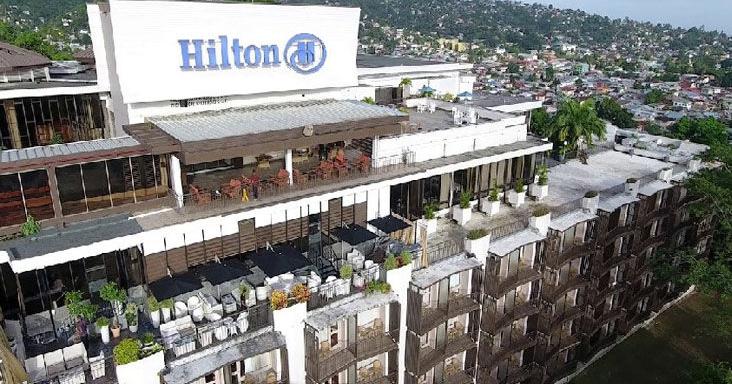
    On Saturday night, a chaotic act of violence unfolded just outside the ballroom of the Washington Hilton, where former U.S. President Donald Trump was attending the annual White House Correspondents’ Association Dinner — marking his first appearance at the high-profile media event since his initial presidential election.

    According to reporting from the Associated Press, 31-year-old Cole Tomas Allen, a resident of Torrance, California, gained entry to the hotel as a paying guest before storming the lobby adjacent to the event’s underground ballroom armed with multiple firearms and a knife. Allen pushed past security barricades, charging directly toward the ballroom where thousands of attendees, including senior U.S. government officials, were seated. Chaos erupted immediately as guests scrambled under tables to take cover, and Secret Service agents engaged the attacker mid-charge. One Secret Service officer, wearing a bullet-resistant vest, sustained a gunshot wound during the confrontation, though officials confirmed he was in stable condition and recovering as of the update. Allen was tackled into custody without sustaining injuries, and was transported to a local hospital for a mental health evaluation before his scheduled court appearance the day after the incident.

    Trump, who was unharmed and immediately evacuated from the stage by security, spoke to reporters at the White House just two hours after the incident, still dressed in his formal event tuxedo. He noted, “When you’re impactful, they go after you. When you’re not impactful, they leave you alone,” adding that law enforcement was treating the attack as the action of a lone offender. As of initial investigations, authorities have not confirmed Allen’s intended target or uncovered a clear motive for the attack. The breach of security at the event, which draws top U.S. political and media figures annually, has already sparked urgent public questioning about the adequacy of safety protocols for high-risk gatherings.

    In the wake of the failed attack, multiple regional leaders across the Caribbean and Latin America have released statements condemning the violence and expressing solidarity with the United States. Trinidad and Tobago Prime Minister Kamla Persad-Bissessar was among the first to speak out, announcing via her official X (formerly Twitter) account that she had prayed for Trump’s safety following the incident. “The swift action of the United States Secret Service in apprehending the shooter is commendable, and I extend my best wishes to the injured officer,” she wrote. Persad-Bissessar also condemned all acts of violence targeting democratic leaders and institutions, noting that this marked the latest in a string of threats against Trump. “My thoughts are with those affected and traumatised by this incident. I pray for his continued safety and for the people of the United States,” she added.

    Venezuela’s acting president Delcy Rodriguez also issued a formal rejection of the attack. “We reject the attempt of aggression against President Donald Trump and his wife Melania, to whom we extend our wishes of goodwill, as well as to the attendees of the Correspondents’ Dinner,” Rodriguez said in her X post. She emphasized that “Violence will never be an option for those of us who defend the banners of peace.”

    Guyanese President Dr. Irfaan Ali echoed the condemnation, expressing relief that Trump, First Lady Melania Trump, and all other attendees escaped unharmed. “We are deeply concerned about the shooting incident at the White House Correspondents’ Dinner. We are relieved that President Trump, First Lady Melania Trump and all attendees are safe following the swift response of security personnel,” Ali wrote. He added, “We condemn all acts of violence and stand in solidarity with the people of the United States at this time.”

    Allen faces two immediate criminal charges connected to the incident, including one count of assaulting a law enforcement officer with a deadly weapon. The investigation remains ongoing as authorities work to uncover a full account of the attacker’s planning and motive.

  • Rewards, risks in US alignment

    Rewards, risks in US alignment

    For the small twin-island Caribbean nation of Trinidad and Tobago, a quiet but significant shift in foreign policy has unfolded over the past 12 months: a deliberate alignment of national strategy with the United States, rooted in overlapping security priorities and tangible energy sector opportunities. This calculated reorientation, which leaves room for occasional independent stances on global issues, brings immediate advantages but also carries unaddressed long-term risks tied to the volatility of American politics, regional political analysts have warned in recent interviews.

    Speaking with local outlet the Express, leading Trinidadian political scientist Dr. Bishnu Ragoonath laid out the clear trajectory of the current administration, which took office one year ago. While the government has preserved independent positions on select high-profile issues – most notably its recent United Nations vote supporting global reparations for historical slavery – the overarching direction of its foreign policy is unmistakably tied to Washington, he argued.

    Ragoonath outlined two core drivers behind the shift: security cooperation and energy access. For decades, Trinidad and Tobago has faced a persistent challenge as a key transshipment hub for illicit trafficking, including drug smuggling and human trafficking, between Latin America, North America, and Europe. Local and regional institutions lack the resources and maritime capacity to effectively seal the nation’s porous borders, he noted, with no CARICOM (Caribbean Community) member state able to provide the necessary logistical or operational support. Turning to the U.S., which already maintains significant maritime patrol presence in regional waters, addresses this critical gap.

    The second, and arguably more compelling, driver is access to untapped natural gas reserves in Venezuelan territorial waters. Trinidad and Tobago’s domestic energy sector depends heavily on natural gas for domestic consumption and export, making new supply sources a core national priority. Ragoonath explained that the current administration has explicitly recognized that Washington’s influence over Venezuelan energy policy is critical to unlocking these reserves. Rather than pursuing direct bilateral negotiations with Caracas – which the country has so far avoided – Trinidad and Tobago is allowing U.S. energy firms to lead negotiations, with the expectation that Venezuelan gas will eventually be piped to Trinidadian processing platforms located near the bilateral maritime border. “To that extent the country is hoping that through the U.S. push into Venezuela that we will benefit indirectly,” Ragoonath told the Express.

    In the near to medium term, this strategy has already delivered measurable benefits. Beyond improved border security and the promise of new energy supplies, Ragoonath noted that closer ties have spared Trinidad and Tobago from the stricter U.S. visa restrictions imposed on some other Caribbean nations in recent months. Prime Minister Kamla Persad-Bissessar has framed the policy as rooted in pragmatic national interest: while some critics have labeled moves “anti-CARICOM”, the Prime Minister has long argued that her core mandate is to prioritize Trinidad and Tobago’s economic and security needs above regional consensus.

    Yet the strategy carries a major, unavoidable risk: the deep polarization and unpredictability of U.S. domestic politics, particularly ahead of November’s midterm congressional elections. Ragoonath pointed out that Persad-Bissessar’s administration has effectively aligned with the current Republican-led congressional majority, centered on Donald Trump’s policy agenda. If Democrats capture control of both houses of Congress in the upcoming vote, the direction of U.S. policy toward Venezuela and the Caribbean could shift dramatically, leaving Trinidad and Tobago exposed. “It is a risk Kamla Persad-Bissessar has taken in throwing her eggs into one basket but so far it has worked in her favour. How long it will continue to work, only time will tell,” Ragoonath said.

    Despite the rift over foreign policy alignment, analysts agree that tensions will not fracture the 15-member CARICOM regional bloc. Long-running disagreements over unanimity and institutional governance have plagued Caribbean integration efforts for decades, Ragoonath noted. Unlike the European Union, which has a dedicated parliamentary body to debate and reconcile differing national positions, CARICOM operates under the 1973 Treaty of Chaguaramas, which requires full unanimity for major policy decisions – a standard that has not been met for years. Even at the most recent CARICOM summit, Jamaican Prime Minister Andrew Holness openly affirmed that all member states retain full sovereignty over their individual foreign policy choices. Ragoonath added that he supports Persad-Bissessar’s calls for comprehensive reform of CARICOM’s governance structures, which have failed to adapt to changing regional priorities.

    International relations expert Dr. Anthony Gonzales echoed this assessment, telling the Express that recent public disagreements over CARICOM are targeted at the bloc’s current leadership, not the regional integration project itself. Once the current leadership dispute is resolved, Trinidad and Tobago’s working relationship with the bloc will return to normal, he argued. Core areas of cooperation, including trade rules, tariff coordination, and free movement of goods, remain fully intact, he noted. The current divergence over U.S. alignment is also far from unprecedented: during the 2019 Juan Guaido political crisis, CARICOM was openly split over whether to recognize Guaido as Venezuela’s interim president, with some members cutting diplomatic ties with Caracas entirely. “If Trinidad wants to support the U.S. on certain things, a lot of countries do. They may prefer a neutral position, but they are not necessarily against the U.S., so it is not uncommon,” Gonzales said.

    Gonzales confirmed that Trinidad and Tobago’s foreign policy shift toward closer U.S. alignment is clear, though he personally opposes elements of the strategy. “I find it hard to accept the support for the moves against our migrants, deportations and the anti-minority anti-black rhetoric, placing people in detention centres and so on. You do not know where you are with President Trump…but that is the reality of the world,” he said. Even so, he noted that closer ties with Washington are unlikely to cause lasting harm to Trinidad and Tobago: the U.S. has been a traditional security and economic partner for Caribbean nations for decades, and the current alignment is just a deepening of that long-standing relationship.

  • SHOT DEAD AT HOME

    SHOT DEAD AT HOME

    A fatal police shooting in a residential neighborhood near San Fernando, Trinidad and Tobago has ignited public anger and calls for accountability after 45-year-old laborer Shivnath Jogie was killed by officers responding to a domestic altercation report early Sunday morning. The incident, which unfolded at Jogie’s home on Old Trainline Road in Corinth, has left family members, neighbors, and former law enforcement leaders questioning the necessity of the deadly force used, while police defend their officers’ actions as compliant with official protocols.

    According to official statements from the Trinidad and Tobago Police Service (TTPS), officers were dispatched to the area just after 1 a.m. at the request of emergency health services, who needed support responding to a reported wounding. First responders found 33-year-old Quesi Alfred, a local resident, suffering from a head wound inside a nearby home, and after providing initial care to Alfred, they received information that led them to Jogie’s residence a short distance away. The TTPS account claims that when officers arrived at Jogie’s home, he approached them menacingly while armed with a cutlass in one hand and a hammer in the other. Fearing for their immediate safety, officers followed use-of-force protocol and fired a single round that struck Jogie, who was quickly transported to San Fernando General Hospital and pronounced dead shortly after arrival.

    But Jogie’s family and local witnesses are telling a vastly different story, painting the incident as an unnecessary execution that violated Jogie’s right to defend his own property under Trinidadian law. Britney Francis, Jogie’s niece, told local reporters that the altercation that preceded the police response was not initiated by her uncle. She explained that Alfred had entered Jogie’s yard armed with a cutlass to confront him, and Jogie only acted in self-defense to disarm Alfred and chop him during the struggle. After the fight, Alfred returned to his own home and contacted authorities, not Jogie.

    Francis has raised sharp questions about why officers resorted to lethal force so quickly, pointing to Trinidad and Tobago’s 2025 Home Invasion (Self-Defence and Defence of Property) Act, which grants homeowners the legal right to stand their ground against intruders and use reasonable force—including deadly force when necessary—to protect themselves and their property. “This was an execution. It was a straight shot to his face,” Francis said. “If the police did their job properly, he might not have been dead today. They shot him in his face, a single gunshot wound.”

    Neighbors who gathered at the scene on Monday echoed the family’s demands for a full, transparent investigation, describing the shooting as heartless, unjust, and out of proportion to the threat Jogie allegedly posed. One witness, who said he saw the confrontation unfold, called the incident a failure of policing, saying “it was traumatising to see someone getting killed in their own home for defending themselves.” Another long-time neighbor who knew Jogie for decades described him as a non-violent man who only became talkative when drinking, holding no grudges and presenting no danger to the community. “This is the first time that we have experienced something like this in his district. We want a proper investigation,” the resident said.

    Francis also added her voice to growing calls for mandatory body cameras for all on-duty police officers, noting that camera footage would eliminate conflicting accounts of the incident and provide clear proof of exactly what transpired. “If there was footage to show exactly what had happened, it would save us from having questions and wasting time with ‘he said’ and ‘she said’, and to have proof of what took place,” she explained.

    That call was echoed by former Trinidad and Tobago Police Commissioner Gary Griffith, who issued a scathing rebuke of current TTPS leadership on Facebook, blaming “backward and vindictive leadership” for the fatal outcome. During his tenure as commissioner, Griffith secured funding to equip all patrol officers with non-lethal force options including batons, pepper spray, and tasers, as well as body cameras to document all interactions with the public, creating a tiered use-of-force framework that allowed officers to respond proportionally to different threat levels. But Griffith claims current leadership has stored all of this non-lethal and recording equipment in a warehouse, rejecting the technology and minimum force policy out of malice and ignorance. “In this situation, if they were mandated to be equipped with what I provided, it would not have resulted in a death,” Griffith wrote. “But those in authority, out of malice and ignorance in embracing technology and minimum use of force, have decided to put the thousands of pepper spray, tasers, and body cameras in a warehouse. Well done.”

    In its official statement, the TTPS reaffirmed that its officers acted within the bounds of existing use-of-force policy, and noted that all police-involved shootings are automatically subject to rigorous, thorough review per established legal and internal protocols. The service asked the public to remain calm while the active investigation moves forward, saying the case remains at a sensitive stage. As public pressure mounts for transparency, the investigation into Jogie’s death continues, with community leaders and the family waiting for answers about what really happened inside the Corinth home that early Sunday morning.