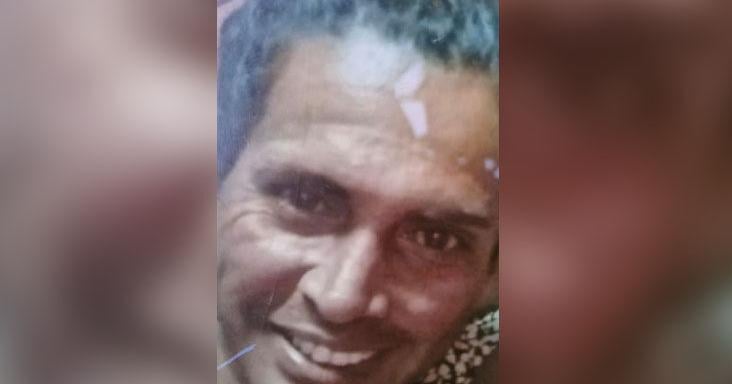
A fatal police shooting in a residential neighborhood near San Fernando, Trinidad and Tobago has ignited public anger and calls for accountability after 45-year-old laborer Shivnath Jogie was killed by officers responding to a domestic altercation report early Sunday morning. The incident, which unfolded at Jogie’s home on Old Trainline Road in Corinth, has left family members, neighbors, and former law enforcement leaders questioning the necessity of the deadly force used, while police defend their officers’ actions as compliant with official protocols.
According to official statements from the Trinidad and Tobago Police Service (TTPS), officers were dispatched to the area just after 1 a.m. at the request of emergency health services, who needed support responding to a reported wounding. First responders found 33-year-old Quesi Alfred, a local resident, suffering from a head wound inside a nearby home, and after providing initial care to Alfred, they received information that led them to Jogie’s residence a short distance away. The TTPS account claims that when officers arrived at Jogie’s home, he approached them menacingly while armed with a cutlass in one hand and a hammer in the other. Fearing for their immediate safety, officers followed use-of-force protocol and fired a single round that struck Jogie, who was quickly transported to San Fernando General Hospital and pronounced dead shortly after arrival.
But Jogie’s family and local witnesses are telling a vastly different story, painting the incident as an unnecessary execution that violated Jogie’s right to defend his own property under Trinidadian law. Britney Francis, Jogie’s niece, told local reporters that the altercation that preceded the police response was not initiated by her uncle. She explained that Alfred had entered Jogie’s yard armed with a cutlass to confront him, and Jogie only acted in self-defense to disarm Alfred and chop him during the struggle. After the fight, Alfred returned to his own home and contacted authorities, not Jogie.
Francis has raised sharp questions about why officers resorted to lethal force so quickly, pointing to Trinidad and Tobago’s 2025 Home Invasion (Self-Defence and Defence of Property) Act, which grants homeowners the legal right to stand their ground against intruders and use reasonable force—including deadly force when necessary—to protect themselves and their property. “This was an execution. It was a straight shot to his face,” Francis said. “If the police did their job properly, he might not have been dead today. They shot him in his face, a single gunshot wound.”
Neighbors who gathered at the scene on Monday echoed the family’s demands for a full, transparent investigation, describing the shooting as heartless, unjust, and out of proportion to the threat Jogie allegedly posed. One witness, who said he saw the confrontation unfold, called the incident a failure of policing, saying “it was traumatising to see someone getting killed in their own home for defending themselves.” Another long-time neighbor who knew Jogie for decades described him as a non-violent man who only became talkative when drinking, holding no grudges and presenting no danger to the community. “This is the first time that we have experienced something like this in his district. We want a proper investigation,” the resident said.
Francis also added her voice to growing calls for mandatory body cameras for all on-duty police officers, noting that camera footage would eliminate conflicting accounts of the incident and provide clear proof of exactly what transpired. “If there was footage to show exactly what had happened, it would save us from having questions and wasting time with ‘he said’ and ‘she said’, and to have proof of what took place,” she explained.
That call was echoed by former Trinidad and Tobago Police Commissioner Gary Griffith, who issued a scathing rebuke of current TTPS leadership on Facebook, blaming “backward and vindictive leadership” for the fatal outcome. During his tenure as commissioner, Griffith secured funding to equip all patrol officers with non-lethal force options including batons, pepper spray, and tasers, as well as body cameras to document all interactions with the public, creating a tiered use-of-force framework that allowed officers to respond proportionally to different threat levels. But Griffith claims current leadership has stored all of this non-lethal and recording equipment in a warehouse, rejecting the technology and minimum force policy out of malice and ignorance. “In this situation, if they were mandated to be equipped with what I provided, it would not have resulted in a death,” Griffith wrote. “But those in authority, out of malice and ignorance in embracing technology and minimum use of force, have decided to put the thousands of pepper spray, tasers, and body cameras in a warehouse. Well done.”
In its official statement, the TTPS reaffirmed that its officers acted within the bounds of existing use-of-force policy, and noted that all police-involved shootings are automatically subject to rigorous, thorough review per established legal and internal protocols. The service asked the public to remain calm while the active investigation moves forward, saying the case remains at a sensitive stage. As public pressure mounts for transparency, the investigation into Jogie’s death continues, with community leaders and the family waiting for answers about what really happened inside the Corinth home that early Sunday morning.