For the small twin-island Caribbean nation of Trinidad and Tobago, a quiet but significant shift in foreign policy has unfolded over the past 12 months: a deliberate alignment of national strategy with the United States, rooted in overlapping security priorities and tangible energy sector opportunities. This calculated reorientation, which leaves room for occasional independent stances on global issues, brings immediate advantages but also carries unaddressed long-term risks tied to the volatility of American politics, regional political analysts have warned in recent interviews.
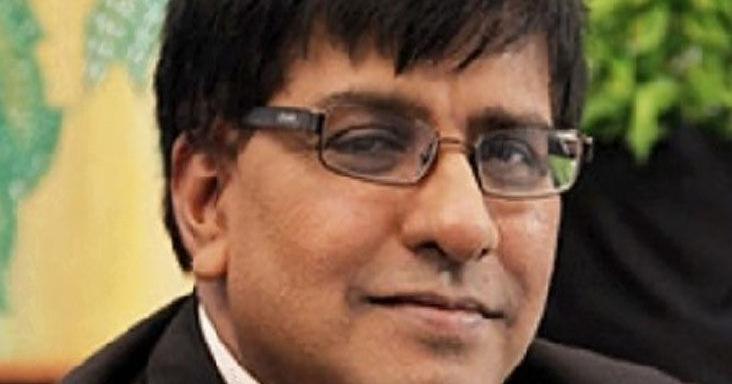
Speaking with local outlet the Express, leading Trinidadian political scientist Dr. Bishnu Ragoonath laid out the clear trajectory of the current administration, which took office one year ago. While the government has preserved independent positions on select high-profile issues – most notably its recent United Nations vote supporting global reparations for historical slavery – the overarching direction of its foreign policy is unmistakably tied to Washington, he argued.
Ragoonath outlined two core drivers behind the shift: security cooperation and energy access. For decades, Trinidad and Tobago has faced a persistent challenge as a key transshipment hub for illicit trafficking, including drug smuggling and human trafficking, between Latin America, North America, and Europe. Local and regional institutions lack the resources and maritime capacity to effectively seal the nation’s porous borders, he noted, with no CARICOM (Caribbean Community) member state able to provide the necessary logistical or operational support. Turning to the U.S., which already maintains significant maritime patrol presence in regional waters, addresses this critical gap.
The second, and arguably more compelling, driver is access to untapped natural gas reserves in Venezuelan territorial waters. Trinidad and Tobago’s domestic energy sector depends heavily on natural gas for domestic consumption and export, making new supply sources a core national priority. Ragoonath explained that the current administration has explicitly recognized that Washington’s influence over Venezuelan energy policy is critical to unlocking these reserves. Rather than pursuing direct bilateral negotiations with Caracas – which the country has so far avoided – Trinidad and Tobago is allowing U.S. energy firms to lead negotiations, with the expectation that Venezuelan gas will eventually be piped to Trinidadian processing platforms located near the bilateral maritime border. “To that extent the country is hoping that through the U.S. push into Venezuela that we will benefit indirectly,” Ragoonath told the Express.
In the near to medium term, this strategy has already delivered measurable benefits. Beyond improved border security and the promise of new energy supplies, Ragoonath noted that closer ties have spared Trinidad and Tobago from the stricter U.S. visa restrictions imposed on some other Caribbean nations in recent months. Prime Minister Kamla Persad-Bissessar has framed the policy as rooted in pragmatic national interest: while some critics have labeled moves “anti-CARICOM”, the Prime Minister has long argued that her core mandate is to prioritize Trinidad and Tobago’s economic and security needs above regional consensus.
Yet the strategy carries a major, unavoidable risk: the deep polarization and unpredictability of U.S. domestic politics, particularly ahead of November’s midterm congressional elections. Ragoonath pointed out that Persad-Bissessar’s administration has effectively aligned with the current Republican-led congressional majority, centered on Donald Trump’s policy agenda. If Democrats capture control of both houses of Congress in the upcoming vote, the direction of U.S. policy toward Venezuela and the Caribbean could shift dramatically, leaving Trinidad and Tobago exposed. “It is a risk Kamla Persad-Bissessar has taken in throwing her eggs into one basket but so far it has worked in her favour. How long it will continue to work, only time will tell,” Ragoonath said.
Despite the rift over foreign policy alignment, analysts agree that tensions will not fracture the 15-member CARICOM regional bloc. Long-running disagreements over unanimity and institutional governance have plagued Caribbean integration efforts for decades, Ragoonath noted. Unlike the European Union, which has a dedicated parliamentary body to debate and reconcile differing national positions, CARICOM operates under the 1973 Treaty of Chaguaramas, which requires full unanimity for major policy decisions – a standard that has not been met for years. Even at the most recent CARICOM summit, Jamaican Prime Minister Andrew Holness openly affirmed that all member states retain full sovereignty over their individual foreign policy choices. Ragoonath added that he supports Persad-Bissessar’s calls for comprehensive reform of CARICOM’s governance structures, which have failed to adapt to changing regional priorities.
International relations expert Dr. Anthony Gonzales echoed this assessment, telling the Express that recent public disagreements over CARICOM are targeted at the bloc’s current leadership, not the regional integration project itself. Once the current leadership dispute is resolved, Trinidad and Tobago’s working relationship with the bloc will return to normal, he argued. Core areas of cooperation, including trade rules, tariff coordination, and free movement of goods, remain fully intact, he noted. The current divergence over U.S. alignment is also far from unprecedented: during the 2019 Juan Guaido political crisis, CARICOM was openly split over whether to recognize Guaido as Venezuela’s interim president, with some members cutting diplomatic ties with Caracas entirely. “If Trinidad wants to support the U.S. on certain things, a lot of countries do. They may prefer a neutral position, but they are not necessarily against the U.S., so it is not uncommon,” Gonzales said.
Gonzales confirmed that Trinidad and Tobago’s foreign policy shift toward closer U.S. alignment is clear, though he personally opposes elements of the strategy. “I find it hard to accept the support for the moves against our migrants, deportations and the anti-minority anti-black rhetoric, placing people in detention centres and so on. You do not know where you are with President Trump…but that is the reality of the world,” he said. Even so, he noted that closer ties with Washington are unlikely to cause lasting harm to Trinidad and Tobago: the U.S. has been a traditional security and economic partner for Caribbean nations for decades, and the current alignment is just a deepening of that long-standing relationship.