标签: Suriname

苏里南

  • Afro  Caraïbische Educatie Academie reikt eerste certificaten uit

    Afro Caraïbische Educatie Academie reikt eerste certificaten uit

    PARAMARIBO – In a significant milestone for community-based education, the Afro-Caribbean Education Academy (ACEA) has successfully graduated its inaugural class of 18 students aged 11-18. The ceremony, held recently, marked the completion of an intensive extracurricular program designed to empower Surinamese youth through cultural awareness and practical life skills.

    Established by the National Reparation Platform Suriname Foundation (NRPS), ACEA represents an innovative educational initiative focusing on identity development, social consciousness, and community strengthening through an inclusive framework. The academy’s curriculum encompasses six core modules: historical studies, social competencies, cultural philosophy, creative expression, entrepreneurship fundamentals, and financial budgeting.

    Although the program commenced with 30 enrolled participants, 18 students successfully completed the comprehensive requirements. Instruction was delivered by experienced educators possessing both professional teaching credentials and demonstrated affinity with the target demographic. Program administrators noted the cohort’s exceptional engagement and knowledge acquisition throughout the curriculum, characterizing the learning environment as mutually inspiring for both students and instructors.

    The culminating ceremony featured addresses from NRPS leadership alongside demonstrative presentations by participating youth, showcasing their acquired knowledge and skills. The foundation’s board oversaw program execution, emphasizing the institution’s commitment to addressing educational gaps through culturally relevant pedagogy that extends beyond conventional school settings.

  • China blijft kolencentrales bouwen ondanks  bloeiende zonne- en windenergiesector

    China blijft kolencentrales bouwen ondanks bloeiende zonne- en windenergiesector

    China demonstrated a remarkable energy dichotomy in 2025, achieving unprecedented growth in renewable energy capacity while simultaneously commissioning more coal-fired power plants than at any point in the previous decade. According to a joint research report published Tuesday by the Centre for Research on Energy and Clean Air and Global Energy Monitor, the world’s largest emitter activated over 50 major coal power units—each with generation capacity exceeding 1 gigawatt—alongside 78 gigawatts of total new coal capacity.

    The scale of this expansion is staggering, with China commissioning more coal plants in a single year than India had throughout the entire preceding decade. This development raises crucial questions about whether the Asian giant can sufficiently reduce carbon emissions to mitigate climate change impacts.

    Despite this coal surge, even larger additions of wind and solar capacity—315 gigawatts and 119 gigawatts respectively, according to government statistics—caused coal’s share in total electricity generation to decline marginally. Clean energy growth fully compensated for the entire increase in electricity demand, resulting in approximately 1% decrease in coal-powered electricity production.

    The driving forces behind this paradoxical development are multifaceted. China’s ongoing economic development requires substantial energy expansion as more of its 1.4 billion citizens enter the middle class and acquire energy-intensive appliances. Additionally, power shortages in 2021-2022 heightened existing energy security concerns, prompting governmental directives for increased coal capacity that led to a construction approval surge.

    Government authorities position coal as essential backup for weather-dependent renewables, particularly following droughts that affected hydropower in Western China. The National Development and Reform Commission has explicitly endorsed coal’s supporting and balancing role in the energy transition. However, analysts warn that excessive coal capacity could potentially delay the shift to cleaner energy sources due to political and financial pressures to maintain operational plants.

    The report urges China to accelerate retirement of outdated coal facilities and commit to ensuring energy sector emissions don’t increase between 2025-2030 in its upcoming five-year plan. The ultimate climate impact will depend on whether coal plants remain limited to backup support rather than baseline electricity production.

  • Medische Zending-poli Coeroeni officieel geopend

    Medische Zending-poli Coeroeni officieel geopend

    In a significant advancement for rural healthcare infrastructure, Suriname’s Minister of Health, Welfare, and Labor André Misiekaba officially inaugurated the Medical Mission polyclinic in the southwestern village of Coeroeni on Monday. The ceremony marks a transformative development for residents of Coeroeni and surrounding communities who will now receive structured primary healthcare services and guaranteed medication access.

    The opening ceremony witnessed the presence of key officials including VWA Director Rakesh Gajadar Sukul and Medical Mission Director Herman Jintie, alongside traditional leadership figures including the granman of Sipaliwini, local captains, and community representatives.

    Minister Misiekaba emphasized that personal visits to interior villages are essential for understanding the actual healthcare needs of the population. “Policy cannot be created solely from behind a desk but must align with on-the-ground realities,” the minister stated, according to the Health Ministry.

    The ministry has established a sustainable arrangement through collaboration between Medical Mission and the State Health Fund ensuring consistent medication supply to the polyclinic. This system guarantees drug availability not only for Coeroeni but also for neighboring villages, addressing a critical gap in remote healthcare delivery.

    Misiekaba further highlighted that traditional authorities can directly approach the ministry when medical challenges arise within their communities. The improvement of interior healthcare services represents a cornerstone of government policy under President Jennifer Simons’ leadership.

    The operationalization of this polyclinic constitutes a major stride in strengthening basic healthcare services in this region of Suriname, demonstrating the government’s commitment to equitable healthcare distribution across all geographical areas.

  • Goud staat op het punt nieuwe records te bereiken nu kopers terugkeren

    Goud staat op het punt nieuwe records te bereiken nu kopers terugkeren

    Gold markets are experiencing a dramatic resurgence as investor demand and central bank acquisitions propel the precious metal toward unprecedented valuations. Following a significant two-session decline that attracted bargain hunters, analysts project gold will reach new record levels while silver maintains its volatile trajectory.

    The precious metal recorded its most substantial single-day gain since 2008 on Tuesday, rebounding from a substantial sell-off triggered by President Donald Trump’s appointment of Kevin Warsh as Federal Reserve chair, dollar strengthening, and profit-taking activities. This recovery demonstrates the underlying strength of gold’s market position despite temporary fluctuations.

    Market strategists point to persistent inflationary pressures exceeding target levels, escalating debt concerns, and growing investor preference for portfolio diversification beyond traditional stocks, bonds, and fiat currencies. Bart Melek, Head of Commodity Strategy at TD Securities, emphasized that “inflation remains well above target, debt is increasing, and investors continue to view precious metals as a way to diversify their portfolio and reduce dependence on stocks, bonds, and fiat currencies.”

    Financial institutions have issued bullish projections, with UBS and JP Morgan anticipating gold prices reaching $6,200-$6,300 by year-end. Deutsche Bank maintains a 2026 estimate of $6,000, while Citi upheld its baseline scenario predicting an average first-quarter price of $5,000. Spot gold prices climbed 5.4% to $4,915 per troy ounce during morning trading.

    The physical market’s dynamics are now under intense scrutiny following gold and silver’s record peaks of $5,594.8 and $121.6 respectively on January 29th, before experiencing corrections. Gold’s 9.8% decline on Friday represented its most substantial single-day drop in 43 years according to LSEG data, which analysts characterize as a healthy market adjustment.

    Standard Chartered analyst Suki Cooper noted that “the physical market will be crucial in determining the bottom, particularly after Chinese New Year,” referencing the mid-February holiday period in the world’s largest consumer market. Investment demand, particularly from retail sectors, has emerged as the primary driver behind gold’s price surge as other traditional demand sectors—jewelry and central bank purchases—have stagnated.

    Philip Newman, Director at Metals Focus, cautioned that “we expect prices to remain volatile, even though conditions remain favorable for further significant price increases this year,” while acknowledging gold could surpass the $5,500 threshold.

    Silver exhibits even greater volatility due to its smaller market size, recently trading 9.3% higher at $86.8 after retreating from Thursday’s record high. The January rally was largely driven by momentum trading and substantial inflows from private investors. Analysts at Mitsubishi observe that silver has lost a key driver from last year’s gains as concerns about U.S. import tariffs following critical minerals revisions have diminished and London supply constraints have eased. However, the retreat from record levels benefits industrial applications by alleviating extreme margin pressure on solar energy producers.

  • Duurzaam ontwikkelingsprogramma West-Suriname gestart

    Duurzaam ontwikkelingsprogramma West-Suriname gestart

    A comprehensive five-year development program has been officially launched in Western Suriname, marking a significant step toward creating improved opportunities for local communities while simultaneously protecting natural resources and promoting sustainable economic activities. The initiative was formally inaugurated during a high-level gathering that brought together government officials, indigenous community representatives, and international partners.

    During the launch ceremony, project partners, stakeholders, and local community delegates unanimously affirmed their shared objectives and collaborative approach to implementation. Patrick Brunings, Suriname’s Minister of Oil, Gas, and Environment, emphasized that this program aligns perfectly with the nation’s long-term development framework known as Suriname 3.0, which prioritizes biodiversity conservation and sustainable economic expansion as core principles.

    The ambitious program will be coordinated under the administrative oversight of the Ministry of Oil, Gas, and Environment, with the United Nations Development Programme (UNDP) serving as the primary implementing partner. Financial backing for the initiative is being provided by the Global Environmental Facility (GEF), ensuring adequate resources for the multi-year project.

    Strategic implementation will focus on four fundamental pillars: sustainable biodiversity management practices, strengthening nature-friendly economic systems, enhancing governance structures and landscape planning methodologies, and promoting knowledge exchange alongside regional cooperation mechanisms. This integrated approach aims to balance ecological preservation with economic advancement while ensuring local communities benefit directly from development initiatives.

  • Bangladesh nadert verkiezingen: India, Pakistan en China volgen nauwlettend

    Bangladesh nadert verkiezingen: India, Pakistan en China volgen nauwlettend

    Bangladesh stands at a critical geopolitical crossroads as it approaches its first national elections since the 2024 ousting of Prime Minister Sheikh Hasina and her Awami League party. The political transition has triggered significant realignments in the nation’s foreign relations, with neighboring powers India, Pakistan, and China closely monitoring developments that could alter regional power dynamics.

    Currently governed by an interim administration led by Nobel laureate Muhammad Yunus, Bangladesh’s electoral landscape is dominated by the Bangladesh Nationalist Party (BNP) and Jamaat-e-Islami (JIB), both of which launched their campaigns in late January. The Awami League, historically maintaining strong ties with India, remains excluded from participation due to its role in the violent suppression of student protests in 2024 that resulted in 1,400 casualties.

    The 78-year-old Hasina, now residing in exile in India, was convicted in absentia by Bangladesh’s International Crimes Tribunal last November and sentenced to death. India’s continued refusal to extradite the former leader has significantly strained bilateral relations, with Hasina herself condemning the upcoming elections as “a government born of exclusion that cannot unite a divided nation.”

    Political analysts observe a dramatic paradigm shift in Bangladesh’s geopolitical orientation since Hasina’s removal. Relations with India have deteriorated to historical lows amid growing anti-India sentiments and trade restrictions, while connections with Pakistan have noticeably improved and strategic ties with China have substantially deepened.

    India’s strategic concerns center on maintaining a cooperative government in Dhaka that won’t threaten its interests. Despite tensions, Prime Minister Narendra Modi and interim leader Yunus met in Bangkok last April, reaffirming commitments to a stable and peaceful Bangladesh.

    Pakistan has actively capitalized on the political transition, with Prime Minister Shehbaz Sharif and Minister Ishaq Dar visiting to strengthen military and diplomatic ties. The restoration of direct trade and aviation links after years of interruption signals warming relations, with Pakistan particularly favoring a JIB-led government but accepting BNP leadership provided it doesn’t restore ties with India.

    China has emerged as a pragmatically engaged power, maintaining consistent relations with Dhaka since 1975 regardless of governing parties. The Yunus administration has already secured over $2 billion in Chinese investments and loans, with discussions ongoing about combat aircraft acquisitions and cooperation on Rohingya refugee management.

    Beijing views political stability in Bangladesh as crucial for protecting its substantial investments and has maintained communications with multiple parties since last year. China’s neutral stance supports any government that preserves its interests, reflecting its growing influence across South Asia.

    The election outcomes will significantly impact regional dynamics: India seeks cooperative partnership, Pakistan prefers Islamist leadership but accepts alternatives, while China maintains pragmatic neutrality. Analysts emphasize that despite campaign rhetoric, any new government must ultimately prioritize pragmatic cooperation with regional powers and global stakeholders.

  • Column: Hervormen, ja, maar niet blind

    Column: Hervormen, ja, maar niet blind

    A profound political confrontation has erupted within Suriname’s governing coalition over proposed judicial reforms, exposing deep divisions about the future of the country’s legal system. What began as technical legislative discussions has transformed into a fundamental debate about power, trust, and the preservation of constitutional integrity.

    The tension reached its peak when ABOP party leader Ronnie Brunswijk, a key coalition figure, dramatically opposed initiatives advanced by his coalition partner Ebu Jones. Despite both belonging to the same governing alliance, their clash revealed significant ideological differences regarding the extent and nature of proposed judicial changes.

    Brunswijk, while acknowledging the necessity for judicial reform, raised critical questions about the concrete solutions these measures would provide and who would bear responsibility if implementation fails. Notably, the ABOP leader—who had previously criticized the Attorney General—now advocated for protecting the prosecution service’s independence, suggesting concerns about overreach in the proposed changes.

    Meanwhile, NPS faction leader Jerrel Pawiroredjo shifted the debate from theoretical frameworks to practical realities, questioning how these reforms would actually benefit citizens. He emphasized that public trust in justice begins not in supreme courts or prosecutorial colleges, but at police stations where citizens struggle to file reports and cases languish unattended.

    The discussion highlighted several sensitive issues, including the potential dangers of lifetime appointments for attorneys general. While such positions guarantee independence, they risk creating unaccountable institutions. Conversely, alternative appointment models could introduce political influence and external pressure, potentially undermining judicial integrity.

    The debate ultimately centers on whether reforms will strengthen Suriname’s legal foundation or inadvertently weaken it through poorly conceived changes. As President Chan Santokhi’s administration navigates these turbulent waters, the outcome will determine whether judicial reform becomes an instrument of empowerment or an exercise in institutional destabilization.

  • Brunswijk: Jones is handlanger van de regering

    Brunswijk: Jones is handlanger van de regering

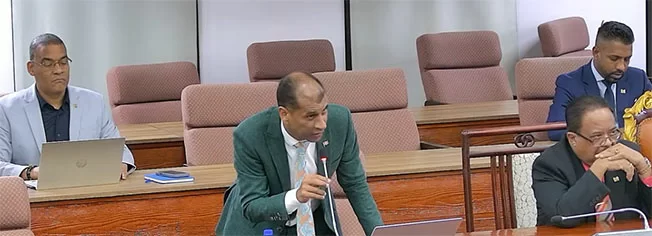
    A legislative session in Suriname’s National Assembly descended into visible confrontation between ABOP party leader Ronnie Brunswijk and NDP parliamentarian Ebu Jones during debates on proposed judicial reforms. The tension centered on political accountability for initiative legislation seeking to restructure the judicial system and Public Prosecutor’s Office.

    Brunswijk accused Jones of acting as a ‘government accomplice,’ alleging he was ‘playing government’ by sponsoring the reforms. The ABOP leader expressed particular concern about potential erosion of the Prosecutor General’s independence, warning against misuse of legislative initiative powers.

    When questioned about possible political influence on prosecutions, appointment procedures, and checks-and-balances, Brunswijk clarified he doesn’t oppose reform in principle but considers this too significant to handle through initiative legislation. He expressed dissatisfaction that the proposals reached parliament ‘suddenly’ without prior governmental explanation, insisting the administration should officially present and defend such weighty matters.

    The debate escalated when Brunswijk suggested Jones sought to ‘play government’ through his legislative initiative. Jones responded vehemently, emphasizing parliamentarians’ constitutional right to propose laws and rejecting any characterization as government proxies. He noted Brunswijk’s contradictory position by simultaneously referencing governmental discussions while claiming to speak purely as a legislator.

    Despite partial retraction of phrasing, tensions remained high throughout exchanges that required repeated intervention by Assembly Chairman Ashwin Adhin. The presiding official reminded members that points of order and interruptions shouldn’t serve as continuous combat tools, while reaffirming legislators’ right to propose laws.

    Following the tumult, Brunswijk reserved final judgment pending explanations from both initiative sponsors and government representatives. He emphasized maintaining critical perspective, stating parliamentarians shouldn’t become ‘yes-men’ and must reject proposals causing societal unrest.

  • Pawiroredjo: Begin bij politie en capaciteit; meerdere pg’s lossen kernproblemen niet op

    Pawiroredjo: Begin bij politie en capaciteit; meerdere pg’s lossen kernproblemen niet op

    In a comprehensive critique delivered before De Nationale Assemblée, opposition leader Jerrel Pawiroredjo (NPS faction leader) has raised substantial concerns regarding proposed constitutional amendments affecting Suriname’s Public Prosecutor’s Office and judicial system. The parliamentarian questioned the fundamental rationale behind modifying Article 146 of the constitution, noting the explanatory memorandum fails to clearly identify which specific problems the changes intend to resolve.

    Pawiroredjo emphasized that evaluating judicial system performance must begin with citizens’ daily experiences with justice, which commences not with judges but rather with police response, criminal investigation, and law enforcement operations. He cited persistent public complaints regarding extended police response times, cumbersome reporting procedures, and deficient official documentation processes.

    The opposition leader identified systemic capacity shortages as the core challenge, noting both the Public Prosecutor’s Office and judiciary have faced structural problems for years due to critical staff shortages—including court clerks, prosecutors, deputies, and judges—coupled with inadequate compensation that fails to retain expertise. He advocated for prioritizing recruitment, training, and improved remuneration instead of creating multiple prosecutor general positions.

    Regarding cassation jurisdiction, Pawiroredjo acknowledged its potential benefits for legal uniformity and development but expressed reservations about establishing a national Supreme Court. He argued such an institution would pose significant risks in Suriname’s small-scale society by diverting scarce judicial capacity from first and second instance courts where most cases are handled. Instead, he proposed joining the Caribbean Court of Justice as a more realistic and efficient alternative.

    Pawiroredjo also cautioned against eliminating the Prosecutor General’s nomination input in appointment processes, warning this could lead to selections based on non-professional criteria and increase vulnerability to external influence. He further criticized proposals to lower the age limit from 70 to 65 as historically inconsistent and potentially disruptive without careful analysis of outflow, continuity, and capacity implications.

    The parliamentarian additionally opposed removing the constitutional anchoring of the Prosecutor General’s instruction authority toward police officials, describing this as a serious weakening of the prosecutorial foundation. He concluded that while modernization is necessary, uncontrolled interventions risk causing more damage than they aim to repair.

  • MCP heropent winkel en breidt assortiment verder uit

    MCP heropent winkel en breidt assortiment verder uit

    In a significant move marking its 65th anniversary, Suriname’s state-owned dairy enterprise Melkcentrale N.V. (MCP) has officially reopened its flagship store on Van Idsingastraat, signaling a new chapter of modernization and territorial expansion. The reopening ceremony, presided over by Director Monché Atompai, represents the company’s strategic pivot toward product innovation and operational growth.

    The newly revitalized store, previously operated by third-party tenants, has been brought back under MCP’s direct management. Customers can now access the complete range of MCP products, including offerings from subsidiary companies MCP Agro (fruit products) and MCP Aqua (bottled drinking water).

    Beginning February 9th, MCP will introduce new product lines developed through collaborations with local fruit farmers. The company is concurrently engaging with the Ministry of Regional Development to integrate interior region farmers into its supply chain, promoting inclusive economic participation.

    Enhancing customer convenience, MCP has implemented telephone and digital ordering systems allowing consumers to place orders for subsequent pickup. This modernization effort aligns with the company’s broader service improvement initiatives.

    Looking toward future growth, Director Atompai revealed ambitious expansion plans targeting multiple districts including Nickerie, Marowijne, and interior regions such as Tapanahony and Atjoni. These developments represent both financial and geographical scaling for the state enterprise.

    The comprehensive revitalization strategy underscores MCP’s commitment to local production enhancement, sustainable growth, and improved societal service delivery through modernized retail operations and expanded territorial presence.