标签: Suriname

苏里南

  • Acht jaar procederen, geen teruggave: beslag 19,5 miljoen euro blijft

    Acht jaar procederen, geen teruggave: beslag 19,5 miljoen euro blijft

    In a definitive ruling that concludes an eight-year legal battle, the Netherlands’ Supreme Court has upheld the seizure of €19.5 million in cash transported from Suriname. The decision affirms The Hague Court of Appeal’s August 2024 judgment, bringing finality to a complex international asset forfeiture case that began on April 17, 2018.

    The funds were initially intercepted by the Dutch Fiscal Information and Investigation Service (FIOD) at Amsterdam’s Schiphol Airport on suspicion of money laundering. The currency shipment, which arrived by air from Suriname, was owned by three commercial banks: De Surinaamsche Bank, Hakrinbank, and Finabank. The Central Bank of Suriname (CBvS) acted as the formal shipper for the consignment, which was destined for China.

    Legal challenges were mounted by both the commercial banks and CBvS against the seizure. Throughout previous proceedings, the Supreme Court had twice ruled that decisions ordering the funds’ return were insufficiently motivated. The Hague Court of Appeal ultimately dismissed these complaints in 2024, allowing the seizure to remain in effect.

    The appellate court determined that CBvS could not claim immunity under international customary law, finding insufficient evidence that the seized funds constituted Central Bank property or were being utilized for its core functions of monetary policy and currency management. The court characterized CBvS’s role as merely facilitative and noted it was not ‘highly improbable’ that criminal courts would eventually order forfeiture of the funds.

    The Central Bank and commercial institutions subsequently appealed to the Supreme Court, contesting the immunity rejection, the legal framework applied to seizure assessments, and the proportionality of maintaining the asset freeze.

    In December 2025, the Advocate General recommended upholding the appellate decision. The Supreme Court adopted this advisory opinion and dismissed the appeals under Article 81 of the Judiciary Organization Act, indicating the complaints lacked grounds for reversal and raised no novel legal questions requiring substantive consideration.

    This ruling concludes a internationally monitored case that has drawn significant attention to cross-border financial enforcement. The funds remain seized pending ongoing criminal investigations.

  • Nieuwe brug verbetert bereikbaarheid Bende Kondre

    Nieuwe brug verbetert bereikbaarheid Bende Kondre

    In a significant infrastructure development for Suriname’s interior regions, Minister of Regional Development Miquella Huur officially inaugurated a new concrete bridge in Bende Kondre, Boven Suriname on February 10th. The 16-meter long and 3-meter wide structure spans a heavily utilized creek that serves as a vital transportation route for residents of Bende Kondre and surrounding villages.

    The newly completed bridge represents a major enhancement to regional connectivity and safety standards. Prior to its construction, residents faced considerable challenges crossing the waterway, particularly during adverse weather conditions. The infrastructure project directly addresses these mobility constraints while facilitating improved access to essential services and economic opportunities.

    Minister Huur expressed satisfaction with the project’s completion, emphasizing her ministry’s ongoing commitment to nationwide community development. “While we cannot fulfill all requests simultaneously,” Huur stated, “this bridge demonstrates our sustained dedication to improving living conditions across all regions of Suriname.” The minister extended gratitude to both the construction contractor and local residents whose collaborative efforts ensured the project’s successful realization.

    District Commissioner Humphry Jeroe appealed to the community to maintain the infrastructure properly, highlighting the importance of local stewardship in preserving public assets. Granman (paramount chief) Albert Aboikondo conveyed appreciation for the government’s development efforts, acknowledging the bridge’s transformative potential for the region. Community members echoed this sentiment, expressing hope that the project would catalyze further developmental initiatives in the area.

    The inauguration ceremony signifies the Surinamese government’s continued focus on addressing infrastructure disparities in remote communities, potentially setting a precedent for similar projects in other underserved regions of the country.

  • Cuba voert noodmaatregelen in vanwege brandstoftekort

    Cuba voert noodmaatregelen in vanwege brandstoftekort

    Cuba has enacted urgent fuel conservation measures in response to a crippling US energy blockade that has severely disrupted daily life across the island nation. The Cuban government announced Monday that international airlines would no longer have access to aircraft fuel starting Tuesday, prompting Air Canada to immediately suspend all flights to Cuba.

    The streets of Havana fell unusually quiet as the emergency protocols took effect, designed to preserve rapidly diminishing fuel reserves. In response to what officials describe as economically paralyzing pressure from the Trump administration, the government has implemented reduced work weeks for state enterprises, curtailed school hours, and restricted fuel sales to essential services only.

    Additional austerity measures include the closure of hotels with low occupancy rates and the consolidation of tourists into fewer accommodations. Popular resort destinations such as Varadero and other provincial areas are experiencing hotel shutdowns, according to anonymous tourism industry professionals.

    The fuel shortage has created widespread uncertainty among Cuba’s 9.6 million residents. Public transportation has been drastically reduced, while taxi operators have significantly increased fares. Many citizens now face extended waiting periods for transportation, complicating daily routines and economic activities.

    This latest crisis compounds Cuba’s longstanding economic challenges, which have persisted under a US trade embargo since 1962. The situation deteriorated further when Venezuela—formerly Cuba’s primary oil supplier—ceased deliveries following last month’s US intervention that resulted in the abduction of Venezuelan President Nicolás Maduro. The Trump administration has threatened tariffs against any nation continuing to supply Cuba with petroleum products.

    The looming fuel shortages threaten to trigger large-scale power outages across the island. Officials confirmed Sunday that Cuba cannot refuel long-haul flights for at least one month, severely impacting international connectivity.

    Cuban Foreign Minister Bruno Rodríguez condemned the US blockade as “cruel aggression” designed to break the political will of the Cuban people. While reaffirming Cuba’s openness to dialogue, Rodríguez emphasized that any discussions must occur on Cuba’s own terms.

    Mexico, previously Cuba’s second-largest oil source after Venezuela, has expressed support for Cuba and initiated diplomatic talks with the US to resume oil exports. President Claudia Sheinbaum warned of an impending humanitarian crisis but stated Mexico cannot expose itself to US tariffs. Mexico recently dispatched over 800 tons of humanitarian aid to Cuba.

    The Russian government has also denounced US measures as “suffocating” and is collaborating with Cuba to provide assistance during the crisis.

  • Column: Samen voelen? Dan eerst samen inleveren

    Column: Samen voelen? Dan eerst samen inleveren

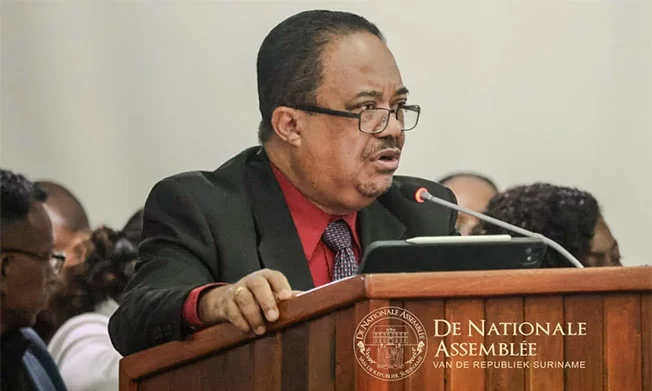
    A profound disparity in compensation between Suriname’s political elite and its public sector workers has ignited widespread social discontent. While teachers with 35 years of experience barely net SRD 13,000 monthly, nurses remain systematically underpaid, and civil servants survive on minimal allowances, members of De Nationale Assemblee enjoy compensation packages increasingly indefensible to the populace they represent.

    The controversial legislation enabling these benefits was passed in the previous parliament shortly before May 2025 elections. The National Democratic Party (NDP), then in opposition, stood alone in principled opposition, condemning the increases as unjust, antisocial, and irreconcilable with the nation’s economic reality. Today, that same party sits in the coalition government, not only accepting but defending the very law they once rejected.

    Financial disclosures reveal staggering figures: The President receives SRD 130,364 monthly, while the Assembly Chairperson gets 85% of that amount (approximately SRD 110,000). Regular assembly members earn 60% of the presidential salary (roughly SRD 66,485 gross), but with additional allowances and provisions, their net monthly income approaches SRD 95,000—totaling approximately SRD 132,000 gross.

    Beyond base compensation, parliamentarians receive comprehensive medical coverage for themselves and their families—including dental, vision care, and overseas treatment when necessary. Additional benefits include vehicle, housing, communication, and representation allowances; travel and accommodation expenses; domestic travel reimbursements including vehicle rentals; VIP airport facilities; diplomatic passports; and potentially a forthcoming 20% management allowance.

    This privileged existence contrasts sharply with a nation where parents struggle to afford public transportation for their children, where healthcare and education sectors must repeatedly strike to be heard, where many work two or three jobs to stay afloat, and where consecutive economic reforms have decimated the middle class.

    Proponents argue that assembly members must maintain full-time availability—a reasonable requirement in principle. While formally barred from holding additional government positions, they face virtually no restrictions on private sector activities. Many serve as entrepreneurs, exporters, or consultants, while others enjoy continuous income from previous ministerial, advisory, or civil service roles. The emerging portrait reveals a political class securing itself while demanding sacrifices from the rest of society.

    Poetini Atompai (NPS) during the election campaign pledged to amend this law—a promise he now renews with commitment to legislative initiative. While positive, words alone no longer suffice. Society has moved beyond trusting intentions to demanding action: submit the proposal, gather co-sponsors, place it on the agenda, force a vote, and show the nation who supports correction versus who clings to privileges at the treasury’s expense.

    Labor unions observe closely while negotiating, recognizing that calls for wage restraint ring hollow while leadership makes no concessions. Negotiations concern not merely percentages but exemplary conduct. Officials frequently claim “no space” exists for increasing civil servant salaries, yet apparent abundance remains for luxury, official travel, and expanding benefits for those in power—a contradiction the public both sees and remembers.

    Social media anger appears raw and sometimes unrefined but not unfounded. Terms like “puppet show,” “theater,” and “self-enrichment” emerge from years of disappointment. Cynicism isn’t innate but learned through repeated behavioral patterns.

    Nobody claims assembly members should serve without compensation, but remuneration must correspond to level, responsibility, performance, and social context. Those receiving top compensation must deliver excellence: substantive work, attendance, legislation, oversight, and integrity.

    “Feeling together,” asserts Atompai—a powerful phrase. But feeling together without sacrificing together constitutes rhetoric, not solidarity. If seriousness exists, it must begin where power resides, not with the populace. Submit the amendment law. Place it on the agenda. Demonstrate who truly wishes to feel together—and who merely wishes to enjoy together.

  • Politie kondigt ontruiming goudgebied aan, Sampie pleit voor dialoog

    Politie kondigt ontruiming goudgebied aan, Sampie pleit voor dialoog

    Surinamese law enforcement authorities have declared that the territory spanning from New Koffiekamp’s border to the Royal Hill mine, including the Redi Bergi sector, must be completely evacuated by 08:00 hours on Friday, February 13th. This zone falls within the legally sanctioned concessions of ZiJin Rosebel Gold Mines.

    Assembly representative Edgar Sampie (ABOP) has raised serious concerns regarding the potential societal repercussions of forced evacuations. According to Sampie, numerous artisanal miners have operated in this region for years, making substantial financial investments in their operations.

    The official police notification mandates immediate departure of all individuals from the designated area, requiring dismantlement of encampments and removal of personal possessions. Failure to comply will trigger joint enforcement operations between police and national military forces without additional warning, executed under prevailing legal statutes. This directive carries formal legal validity.

    “Many miners have constructed permanent dwellings, acquired heavy machinery, and depend on this work as their primary livelihood,” Sampie explained to Starnieuws. Their mining earnings support family sustenance, educational expenses, debt settlements, and future planning, with some having committed to vehicle installment plans and housing construction projects.

    While acknowledging Zijin’s legal concession rights, the affected miners seek governmental clarity regarding post-eviction scenarios. The central question remains: what becomes of these individuals after displacement? How will they be supported during transition?

    The parliamentarian emphatically advocates for diplomatic engagement and compromise solutions. He proposes tripartite negotiations between government authorities, mining corporation representatives, and artisan miner delegates to establish sustainable resolutions. “Removing this workforce without alternative provisions risks escalating criminal activities not merely in Paramaribo but throughout Suriname’s interior regions,” Sampie cautioned.

    Highlighting the historical context, Sampie noted New Koffiekamp’s existence predating Rosebel and Zijin’s operational presence, urging consideration of this temporal precedence despite current legal concessions.

    Although lacking direct authority to halt evictions, the ABOP legislator intends to lobby Justice & Police and Natural Resources ministers to convene consultations with miner representatives. “Government must demonstrate willingness to hear these citizens’ concerns and collaboratively develop mutually acceptable solutions,” Sampie concluded, emphasizing dialogue-based conflict prevention over coercive measures.

  • Melkcentrale viert 65-jarig bestaan met korting, nieuwe producten en uitbreidingsplannen

    Melkcentrale viert 65-jarig bestaan met korting, nieuwe producten en uitbreidingsplannen

    Suriname’s leading dairy producer, De Melkcentrale NV, has launched an extensive 65-day celebration marking its 65th anniversary on April 15th, unveiling ambitious expansion plans and innovative product lines that signal significant growth for the company.

    The anniversary celebration features a special promotion allowing Monikarta loyalty cardholders to purchase milk packages for SRD 25 at the company’s Van Idsingastraat location—a 65% discount from the regular price. This exclusive offer requires presentation of both Monikarta and identification cards, with the discount non-transferable to other customers.

    During a press conference announcing anniversary activities, Managing Director Monché Atompai introduced two groundbreaking products: Sucamel Light, a reduced-sugar cocoa milk with lower calories, and Monchémel, a pineapple-almond flavored milk named in his honor by staff members recognizing his dedicated leadership.

    The company’s strategic expansion includes decentralization initiatives beginning with Nickerie district, where preparations are already underway to establish new retail locations. Atompai confirmed international ambitions through supply agreements being negotiated with Guyana, Saint Martin, and several other unspecified countries.

    Product development remains a core focus, with the dairy producer working on new cereal varieties, cheese, butter, and plant-based alternatives including coconut and almond milk. Simultaneously, the company is establishing a fruit juice production line with machinery currently being installed by Indian specialists—a project funded through a grant to Suriname’s Ministry of Agriculture, Livestock and Fisheries.

    The juice production facility, expected to become operational within 60-90 days, will initially focus on producing markoesa (passion fruit) juice. With an estimated 150,000-200,000 Monikarta holders nationwide, De Melkcentrale will deploy mobile teams to serve loyalty customers during special sales days throughout the anniversary period.

  • Indiumprijs stijgt fors door Chinese speculatie en schaarste

    Indiumprijs stijgt fors door Chinese speculatie en schaarste

    The global market for indium, a critical metal essential for touchscreens, advanced computer chips, and next-generation solar cells, is experiencing unprecedented price surges reaching their highest levels in over a decade. Market data reveals that Rotterdam traders are currently selling indium at $500-600 per kilogram, representing a staggering 55% increase since September of last year.

    This remarkable price escalation stems from a convergence of factors: intensified speculative trading on Chinese exchanges, tightening supply from major producers, and growing demand from high-tech and defense sectors. China, which dominated global refined indium production with approximately 70% market share in 2024, has significantly reduced exports. December 2025 figures show China exported merely 22.7 tons of raw indium, marking a 23% monthly decrease.

    South Korea, accounting for roughly 17% of worldwide production (180-190 tons out of the global total of 1,080 tons), contributes significantly through major producers like Korea Zinc, which annually sells 90-100 tons. However, production constraints are mounting due to stricter environmental regulations in China, where indium is primarily obtained as a byproduct of zinc ore processing. These environmental policies have curtailed production expansion capabilities, creating structural supply limitations.

    The metal’s strategic importance continues to grow across multiple industries. Beyond consumer electronics, indium is crucial for sustainable technologies including high-efficiency solar cells and advanced computing systems. Adding to demand pressures, the U.S. defense sector recently initiated a procurement request for high-quality indium for military applications valued at up to $125 million, signaling recognition of its strategic significance.

    Market analysts predict sustained price elevation given the fundamental supply-demand imbalance: constrained production against escalating demand from both commercial and defense sectors. This trend highlights broader vulnerabilities in critical mineral supply chains and the growing geopolitical dimensions of resource security.

  • Hongkongse criticus China, Jimmy Lai, veroordeeld tot 20 jaar cel

    Hongkongse criticus China, Jimmy Lai, veroordeeld tot 20 jaar cel

    In a landmark ruling that has drawn international condemnation, Hong Kong media magnate Jimmy Lai Chee-ying has been sentenced to 20 years imprisonment—the most severe penalty ever issued under the city’s national security legislation. The 78-year-old British citizen, founder of the now-defunct Apple Daily newspaper, was convicted on charges of conspiracy to collude with foreign powers and publishing seditious materials.

    The verdict culminates a nearly five-year legal battle that began with Lai’s arrest in August 2020, shortly after China implemented the National Security Law in response to pro-democracy protests. Throughout the proceedings, Lai maintained his innocence, declaring himself a “political prisoner” targeted by Beijing for his criticism of Chinese policies.

    Eight co-defendants, including former Apple Daily executives and activists, received prison terms ranging from six to ten years after pleading guilty. The court identified Lai as the central figure in conspiracies aimed at compelling foreign nations, particularly the United States, to impose sanctions and blockades against Hong Kong and China.

    The sentencing has triggered strong international responses. Australia, the United Kingdom, European Union, Japan, and Taiwan expressed serious concerns about the verdict’s implications for freedom of expression in Hong Kong. UN Human Rights Chief Volker Türk called for the judgment to be quashed and urged Lai’s release on humanitarian grounds, citing his advanced age and health conditions.

    British Foreign Secretary Yvette Cooper described the sentence as effectively “a life term” and pledged continued diplomatic efforts on Lai’s behalf. Japanese officials voiced apprehension about the ruling’s impact on freedoms of speech, assembly, and association.

    Chinese and Hong Kong authorities defended the verdict as necessary for safeguarding national security. Hong Kong leader John Lee characterized Lai as responsible for “numerous heinous crimes” and stated the punishment brought “great relief” to society.

    Lai’s family and supporters condemned the sentence as inhumane, noting his diabetes and hypertension. His son Sebastien called the verdict “devastating” and declared it represented the “total end” of Hong Kong’s independent judicial system, appealing for his father’s release before it becomes “too late.”

    The case symbolizes the intensified suppression of political dissent since the 2020 national security legislation, with prosecutors highlighting Lai’s meetings with American politicians including Mike Pence and Mike Pompeo as evidence of foreign interference.

  • AZP wijst braindrain zorgpersoneel aan als hoofdreden lange wachttijden

    AZP wijst braindrain zorgpersoneel aan als hoofdreden lange wachttijden

    Paramaribo Academic Hospital (AZP) has identified the persistent exodus of healthcare professionals as the primary catalyst for extensive surgical waiting lists and the systematic reduction of medical services. Since 2023, the institution has consistently raised alarms regarding the departure of qualified staff and the urgent need for structural improvements in employment conditions.

    Hospital Director Claudia Redan recalled that a comprehensive proposal for sustainable solutions to better compensate medical personnel was initially submitted in 2021. While temporary allowances were implemented and provided short-term relief, they proved inadequate for long-term stability. These supplements failed to contribute to pension accrual and did not address fundamental issues such as proper overtime compensation.

    The scaling back of operating theaters and other critical services originated during this same period. Officially, AZP has been functioning at approximately 50% of its surgical capacity for several years, with recent months dipping even below this threshold. Compounding the challenge, AZP remains the only medical facility performing emergency surgeries around the clock, frequently requiring postponement of scheduled procedures due to urgent cases from the Emergency Department.

    Redan detailed multiple countermeasures implemented in recent years, including significant expansion of operating room assistant training programs. The hospital also attempted to borrow surgical assistants from neighboring institutions or secure operating time at other facilities for AZP surgeons. These efforts proved unsuccessful as other hospitals faced similar capacity constraints, ultimately redirecting additional patient volume back to AZP.

    Although patients requiring non-complex procedures could theoretically seek treatment at other hospitals, an ongoing dispute between surgeons and the State Health Insurance Fund (SZF) prevents SZF-insured patients from accessing these alternatives. This situation creates additional and unjustified pressure on the academic medical center.

    AZP emphasizes that surgical procedures may only occur in safe and responsible environments. The hospital has issued apologies for current service limitations while requesting public understanding. Simultaneously, work continues on structural solutions, with expectations that gradual increases in surgical capacity will materialize within one to two months.

  • Seguro wint in Portugal, Anutin zegeviert in Thailand

    Seguro wint in Portugal, Anutin zegeviert in Thailand

    Two nations on opposite sides of the globe witnessed significant political transformations this weekend as Portugal and Thailand held decisive elections that could reshape their respective political futures.

    In Portugal, center-left candidate Antonio Jose Seguro secured a commanding victory in Sunday’s presidential runoff election. With approximately 95% of ballots counted, the 63-year-old Socialist Party leader captured 66% of the vote, soundly defeating his right-wing opponent Andre Ventura, who trailed with 34%. Despite severe weather conditions including storms and flooding that threatened voter participation, turnout remained consistent with the first round. Seguro is poised to assume the ceremonial presidential office from Marcelo Rebelo de Sousa in early March.

    Seguro has positioned himself as a moderate force committed to fostering political stability, while Ventura’s significant support surge—despite his defeat—signals the growing influence of right-wing populist movements within Portuguese and broader European politics.

    Meanwhile, in Southeast Asia, Thai interim Prime Minister Anutin Charnvirakul emerged as the clear victor in parliamentary elections. His Bhumjaithai party secured approximately 192 seats in the 500-member lower house according to preliminary results, substantially outpacing the progressive People’s Party (117 seats) and populist Pheu Thai party (74 seats). This decisive mandate positions Anutin to form a more stable coalition government, potentially ending a prolonged period of political instability marked by frequent power transitions and military intervention.

    The premier, who called elections amid ongoing border tensions with Cambodia, capitalized on rising nationalist sentiment and successfully implemented strategies to win over rural voters. Declaring the outcome “a victory for all Thais,” Anutin emphasized his commitment to national service.

    In a parallel constitutional development, nearly two-thirds of Thai voters endorsed drafting a new constitution to replace the 2017 military-backed charter criticized by opponents as undemocratic. Having operated under twenty different constitutions since the end of absolute monarchy in 1932, Thailand now moves toward potential constitutional reforms that could reshape its governance structure.

    These simultaneous electoral events highlight contrasting political trajectories: Portugal embracing moderate stability while Thailand navigates toward potential political normalization after years of turbulence.