标签: Suriname

苏里南

  • De toekomst is van ons, Surinamers

    De toekomst is van ons, Surinamers

    Suriname stands on the brink of a transformative economic era as it prepares to join the ranks of oil-producing nations within the coming years. This transition promises substantial foreign investments and sectoral growth extending beyond energy into logistics, infrastructure, maritime services, and financial sectors. However, this development brings to the forefront a critical challenge: ensuring that the wealth generated from Suriname’s natural resources actually benefits its citizens rather than being diverted through international corporate structures.

    At the heart of this challenge lies transfer pricing—the practice of setting prices for transactions between companies within the same multinational corporation. When entities like TotalEnergies conduct internal transactions involving services, equipment rentals, licenses, royalties, and technical expertise across different jurisdictions, the assigned prices determine where profits are recorded and taxes are paid. If these internal prices don’t reflect Suriname’s economic reality, value created locally can easily shift abroad.

    The stakes are considerable. Even during the current preparatory phase, significant tax revenues are potentially being lost. As more international corporations establish operations across energy, logistics, construction, and service sectors, this leakage could accelerate. Suriname maintains a 36% corporate tax rate, among the highest in the region, creating incentives for multinationals to report profits in lower-tax jurisdictions despite conducting economic activities within Suriname’s borders.

    This issue transcends mere taxation—it represents a fundamental question of economic justice. Surinamese citizens have long endured high tax burdens, inflation, and economic uncertainty. Proper transfer pricing regulations would enable the country to secure future revenues without further increasing pressure on households. By establishing clear rules for profit allocation and taxation rights aligned with contemporary global developments, Suriname can claim its fair share of resource wealth.

    Globally, countries have served as profit transit points for corporations like Apple, Shell, and Starbucks, where wealth generated in one jurisdiction is shifted elsewhere through fiscal engineering. Suriname now has the opportunity to learn from these experiences and implement robust transfer pricing policies before production and capital flows become entrenched. Such measures could secure substantial revenues throughout the oil and gas production lifecycle.

    The choices made today regarding fiscal governance will determine whether future income streams benefit Surinamese society or disappear invisibly abroad. The nation’s deep-sea wealth won’t automatically translate into prosperity—it requires deliberate policy design to ensure value remains where it’s created.
  • Bangladesh in nationale rouw na dood prominente studentenactivist

    Bangladesh in nationale rouw na dood prominente studentenactivist

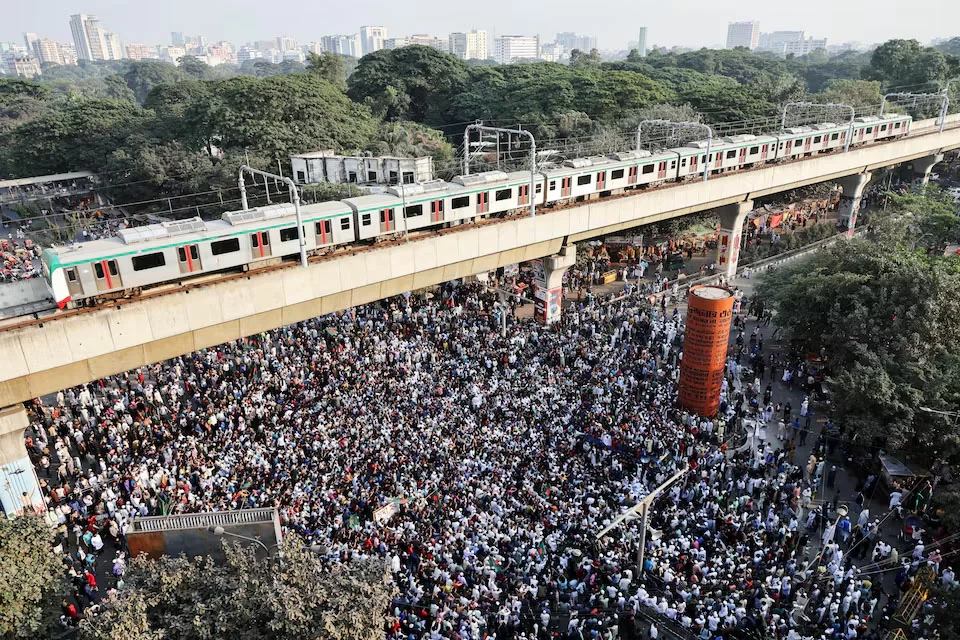
    Bangladesh declared a national day of mourning on Saturday in honor of Sharif Osman Hadi, a prominent leader of the 2024 student uprising movement, whose tragic death has ignited two days of massive protests across the nation. The 32-year-old activist, who succumbed to gunshot wounds sustained during an attack by masked assailants over a week ago, was laid to rest in a heavily secured funeral ceremony at the Parliament Building in Dhaka.

    Authorities deployed extensive police forces equipped with body cameras throughout the capital ahead of the funeral procession, which commenced at 2:00 PM local time at the South Plaza of Jatiya Sangsad Bhaban. The national flag flew at half-mast across all government buildings as a symbol of collective grief.

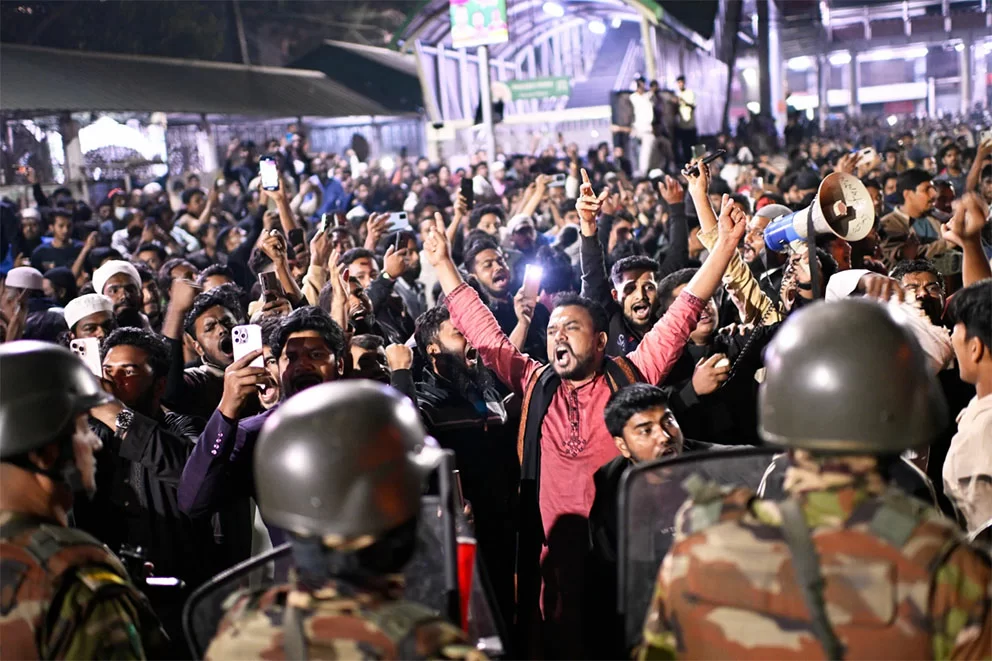
    While protests had largely subsided by Saturday, media outlets continued reporting fresh incidents of violence. Cultural institutions, newspaper offices, and political buildings faced arson attacks and storming throughout the week, highlighting the nation’s escalating tensions. The residence of Anisul Islam Mahmud, chairman of the National Democratic Front and leader of a Jatiya Party faction, was vandalized and set ablaze in Chattogram, Bangladesh’s second-largest city.

    The Bangladesh Shilpakala Academy, the state-sponsored cultural center, announced temporary suspension of all activities due to security concerns following attacks on its premises. Major newspapers Prothom Alo and The Daily Star, both targeted by protesters, struggled to maintain operations with staff forced to evacuate to rooftops during fires while pledging to continue digital publications.

    Hadi served as spokesperson for Inquilab Moncho (Platform for Revolution), a leading force within the student protest movement. He passed away Thursday at a Singapore hospital from head injuries sustained during the assassination attempt. The activist had been preparing to contest the February 2026 parliamentary elections representing Dhaka-8 constituency.

    His death triggered violent demonstrations that targeted residential properties, party offices, and even the Indian Assistant High Commission in Chittagong. Protesters expressed fury over alleged Indian involvement, suggesting the perpetrator might have fled to India.

    Bangladesh’s interim government, led by Nobel laureate Muhammad Yunus since Prime Minister Sheikh Hasina’s resignation in August 2024, strongly condemned the violence while appealing for calm. Demonstrators continued demanding extradition of suspects and justice for Hadi and other victims. Hasina herself received a death sentence in November for human rights violations during the brutal suppression of the student uprising that claimed approximately 1,400 lives.

    Families of victims maintain hope that the former prime minister and others responsible for the crackdown will eventually face trial.

  • Voorzitter Politiebond bekritiseert structurele problemen korps

    Voorzitter Politiebond bekritiseert structurele problemen korps

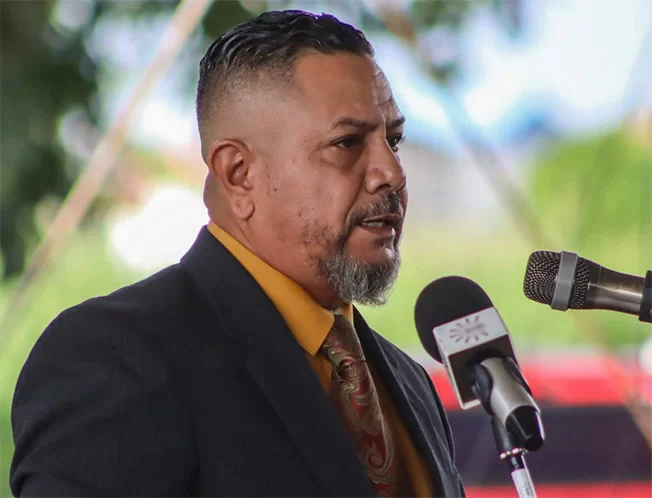
    In a striking address during Friday’s police promotion ceremony, Suriname Police Union Chairman Chief Inspector Revelino Eijk delivered a powerful critique of the deteriorating working conditions and legal protections within the Suriname Police Force (KPS). While congratulating newly promoted officers, Eijk emphasized that structural deficiencies within the corps demand immediate attention rather than continued neglect.

    Eijk articulated that promotions represent more than mere rank advancements—they signify recognition of dedication, discipline, professionalism, and loyalty to both the police force and Suriname. He stressed that promotions constitute earned rights under legal frameworks rather than organizational favors, bringing not only expanded authority but greater responsibilities, including exemplary conduct within the corps and toward society.

    The union leader highlighted policing as a vocation rather than conventional employment, noting its inherent risks to personal safety and sacrifices in private life. Consequently, appreciation, fairness, and clear career trajectories become essential components for officer retention and morale. Transparent and equitable promotion processes, according to Eijk, fundamentally contribute to motivation, trust, and organizational cohesion.

    Eijk expressed particular concern for officers who met service duration, performance, and evaluation criteria yet were overlooked for promotions. He asserted that a professional police corps can only function effectively when every member feels recognized and valued.

    The Police Union chairman positioned his organization as a constructive partner in collaborations with KPS, the Ministry of Justice and Police, and other unions, though emphasizing this cooperation isn’t unconditional. Agreements must be honored, and decisions affecting officers’ legal status must adhere to proper governance principles. Eijk noted that trust is increasingly undermined by broken commitments and inadequate communication.

    Eijk detailed critical operational shortcomings: inadequate training programs despite high policing standards, severe shortages of uniforms, equipment, patrol vehicles, computers, and other essential resources. Multiple police facilities operate in disrepair with substandard sanitation and unhygienic conditions.

    Financial protections for officers raised additional concerns. Promotion-related financial resolutions frequently experience prolonged delays, deferring monetary recognition. When back payments eventually occur, significant portions are withheld through taxation, transforming promotions into financial burdens rather than rewards for some officers. Eijk revealed that some officers have retired without receiving their entitled financial benefits.

    Eijk further criticized investigative procedures against officers accused of criminal offenses or duty violations, noting these processes often lack diligence and proper administrative principles in disciplinary actions. He referenced a recent judicial ruling that vindicated an officer dismissed in 2013 after twelve years, requiring full reinstatement with back pay.

    All these issues, Eijk concluded, revolve around a central concept: trust. Trust in the organization, agreements, and leadership isn’t automatic but must be earned and maintained. The Police Union urges authorities to address these challenges as systemic problems requiring structural solutions rather than isolated incidents. Investing in personnel, resources, training, and proper legal status constitutes essential prerequisites for sustainable security and professional policing.

  • Trump sluit oorlog met Venezuela niet uit

    Trump sluit oorlog met Venezuela niet uit

    President Donald Trump has declined to rule out potential military confrontation with Venezuela during a recently published interview, signaling heightened tensions following increased U.S. naval operations in the Caribbean region.

    When questioned by NBC News regarding possible armed conflict, Trump responded unequivocally: “That’s not something I would exclude, no.” The president similarly avoided clarifying whether his administration seeks to remove Venezuelan leader Nicolás Maduro from power, stating instead that “He knows exactly what I want. He understands better than anyone.”

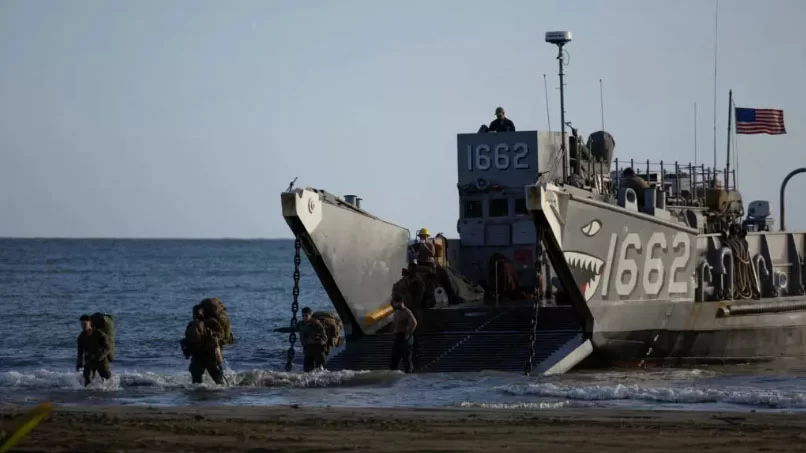
    This strategic ambiguity comes alongside reinforced American military deployments throughout the Caribbean basin over recent months. U.S. Marines have been conducting amplified amphibious exercises in Puerto Rico’s Arroyo region, demonstrating heightened operational readiness.

    The administration has intensified economic pressure through petroleum sanctions, with Trump announcing further seizures of Venezuelan oil tankers following last week’s interception of a vessel departing the South American nation. Trump asserted that “more seizures will follow” while making controversial claims regarding Venezuela’s nationalized oil industry, alleging the country had “taken all our energy rights, taken all our oil not so long ago, and we want it back.”

    Concurrently, the U.S. Treasury Department imposed sanctions against seven individuals allegedly connected to Maduro and his wife, accusing them of supporting what officials termed a “rogue narcostate.” Treasury Secretary Scott Bessent declared the administration would not permit Venezuela to “continue flooding our nation with lethal drugs,” characterizing Maduro’s government as threatening hemispheric stability.

    Trump has consistently labeled Maduro as leading a “narco-terrorist” cartel, with U.S. forces conducting multiple engagements against suspected drug trafficking vessels since September that have resulted in over 100 casualties. The president has repeatedly hinted at impending ground operations against narcotics networks, though the recent focus has shifted prominently toward energy resources.

  • Wetenschappelijk personeel AdeKUS hervat onderwijs en toetsing

    Wetenschappelijk personeel AdeKUS hervat onderwijs en toetsing

    Academic activities at Suriname’s Anton de Kom University (AdeKUS) have returned to normal following the suspension of industrial action by teaching staff. The decision to end the work stoppage was reached during an emergency general assembly convened by the University’s Scientific Staff Union (VWPU), effectively restoring all educational instruction and examination processes.

    The resolution comes after high-level negotiations between union leadership and President Jennifer Simons on December 17. This meeting was prompted by a formal communication dispatched by VWPU to the presidential office on December 8. The dialogue included the presence of Suriname’s Minister of Education, Science and Culture alongside other senior government officials.

    During the critical discussions, participants emphasized the urgent necessity for implementing structural solutions to address longstanding concerns affecting academic staff. A concrete timeline has been established, setting a firm deadline of January 2026 for the presentation of comprehensive resolutions. Both parties have committed to this schedule, with expectations that substantive measures will be finalized within the stipulated timeframe.

    VWPU leadership has expressed cautious optimism regarding the government’s commitment to fulfilling pledged actions within the agreed period. The union’s chairman, Aroenprekash Badal, indicated that while the temporary cessation of actions demonstrates good faith, the union remains prepared to reassess their position should implementation falter.

  • Veel kritiek in DNA op initiatiefwet Duurzaam Natuurbeheer: terug naar tekentafel

    Veel kritiek in DNA op initiatiefwet Duurzaam Natuurbeheer: terug naar tekentafel

    Suriname’s National Assembly witnessed intense parliamentary debate on Friday regarding the proposed Sustainable Nature Management Act, with widespread concerns about legislative preparation, institutional power imbalances, and inadequate protection for indigenous communities.

    The contentious legislation, designed to replace the outdated 1954 Nature Conservation Act, faced scrutiny from multiple parliamentary factions. Rossellie Cotino (NDP), chair of the rapporteurs committee, acknowledged Suriname’s need for modern environmental legislation to maintain its status as a heavily forested nation with minimal deforestation. However, she highlighted significant flaws in the current proposal.

    Central to the criticism was the concerning concentration of power within the National Environmental Authority (NMA). Cotino and other assembly members questioned why the legislation didn’t instead strengthen the existing Forest Management Agency (LBB) and establish clear management under a single organization. This overlap, critics warned, could create operational tension between LBB and NMA.

    Additional concerns included insufficient coordination with existing legislation such as the Hunting Act and Animal Protection Act, and the unusual absence of specified ministerial responsibility for implementation—a standard provision typically included in final provisions.

    Jerrel Pawiroredjo (NPS faction leader) emphasized that legislation shouldn’t be rushed, even with potential external funding at stake. International environmental organizations have pledged $20 million for sustainable projects, contingent on proper legislation. Parliamentary members, including Assembly President Ashwin Adhin, unanimously asserted that parliament wouldn’t be pressured by external factors.

    The legislation’s treatment of indigenous rights emerged as another critical issue. Jennifer Vreedzaam (NDP) delivered sharp criticism regarding the inadequate implementation of the Free, Prior and Informed Consent (FPIC) principle, noting that parliament had recently extensively debated the importance of consultation with indigenous and tribal peoples. She emphasized that FPIC represents a fundamental legal principle rather than optional consultation.

    Tashana Lösche (NDP) noted that while the law references areas traditionally used by indigenous and tribal communities, it fails to specify their exact locations or establish formal boundary demarcation. Steven Reyme (A20) questioned why the proposal doesn’t explicitly recognize collective land and usage rights, despite Suriname’s international obligations.

    One of the initiative’s proponents, Wedperkash Joeloemsingh (NDP), acknowledged during consultations that the law requires amendments and thanked members for their critical contributions. He emphasized that the legislation wasn’t intended as rushed work and wasn’t related to financial considerations, but rather aimed to establish clear responsibility allocation.

    The session has been adjourned until Monday for further deliberation.

  • EU keurt lening van $ 106 miljard goed voor Oekraïne

    EU keurt lening van $ 106 miljard goed voor Oekraïne

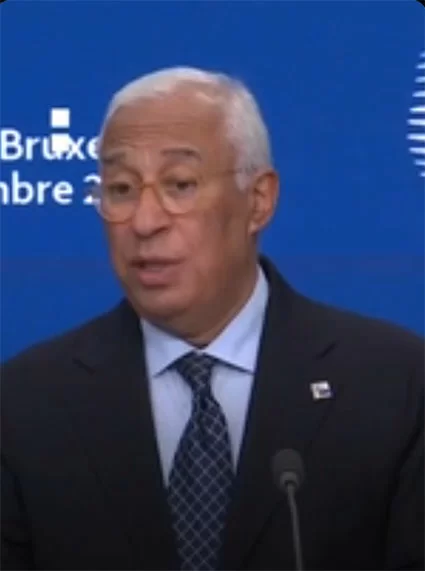
    European Union leaders reached a landmark agreement Friday to provide Ukraine with a massive €90 billion ($106 billion) interest-free loan to address the country’s military and economic needs through 2027. The decision came after marathon negotiations that exposed deep divisions within the bloc regarding the use of frozen Russian assets.

    The agreement, announced by EU Council President António Costa via social media, represents a critical financial lifeline for Ukraine as it approaches potential bankruptcy by spring 2025. The International Monetary Fund estimates Ukraine will require €137 billion ($161 billion) during 2026-2027 to sustain its defense efforts and maintain government operations.

    Originally, EU officials had contemplated utilizing approximately €210 billion ($246 billion) in Russian central bank assets frozen primarily in Belgium. However, this proposal encountered staunch opposition from Belgian Prime Minister Bart De Wever, who characterized the plan as legally precarious and potentially damaging to Euroclear, the Brussels-based financial clearinghouse holding €193 billion ($226 billion) in frozen Russian funds.

    The negotiations stretched late into Thursday night as leaders attempted to reassure Belgium about protection from Russian retaliation. When talks reached an impasse, the EU ultimately opted to raise the funds through capital markets rather than risk setting what De Wever described as a “dangerous global precedent for legal certainty.”

    Hungary, Slovakia, and Czech Republic opposed the aid package but ultimately agreed not to block it in exchange for financial protection guarantees. Hungarian Prime Minister Viktor Orbán, who maintains close ties with Russian President Vladimir Putin, declared that “giving money means war” and dismissed the rejected asset-seizure plan as a “dead end.”

    French President Emmanuel Macron praised the agreement as a “significant step forward,” while German Chancellor Friedrich Merz confirmed that the frozen Russian assets would remain blocked until Russia pays war reparations to Ukraine—estimated by President Volodymyr Zelenskyy at over €600 billion ($700 billion). Merz emphasized that the EU reserves the right to utilize immobilized Russian funds for loan repayment if Russia fails to provide compensation.

    The decision came amid intense protests by European farmers angry about a proposed trade deal with South American nations, creating a tumultuous backdrop for the Brussels summit that Ukrainian President Zelenskyy attended to personally advocate for urgent financial support.

  • 170 politieambtenaren maken promotie bij jaarafsluiting KPS

    170 politieambtenaren maken promotie bij jaarafsluiting KPS

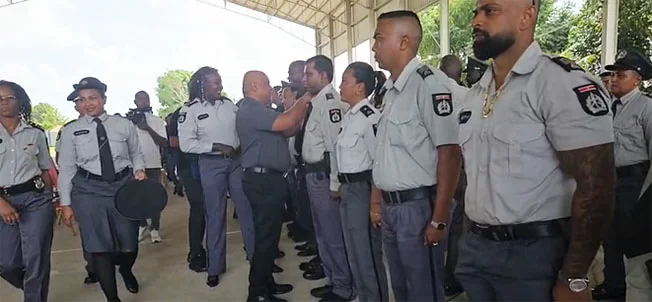
    In a significant year-end ceremony marking career advancement within the Suriname Police Force (KPS), 170 police officers were promoted to higher ranks during Friday’s proceedings at the Police Academy. The promotions represented substantial progressions across multiple levels of the law enforcement hierarchy.

    The comprehensive promotion list included 116 first-class police officers elevated to the rank of brigadier, while 40 second-class officers advanced to first-class status. Additionally, two third-class officers received promotions to second-class positions. The advancement initiative extended to senior ranks as well, with eight police majors rising to the position of sub-inspector and four brigadiers ascending to major.

    Distinguished officials addressed attendees prior to the formal promotion ceremonies. Speakers included Revelino Eijk, Head Inspector and Chairman of the Surinamese Police Union (SPB), Acting Police Commissioner Melvin Pinas, and Minister of Justice and Police Harish Monorath. The series of addresses concluded with remarks from Attorney General Garcia Paragsingh.

    Following the official promotions, the formal segment concluded with a traditional toast. Notably absent was the customary firing of the pagara (firecracker chain), as legal regulations permit this practice only during the period from December 27, 2025, through January 2, 2026.

    The police leadership extended congratulations to all promoted officers, expressing confidence that they would continue their dedicated service toward maintaining safety and livability in Suriname within their new capacities. The event concluded with opportunities for informal gathering among participants. The KPS additionally conveyed holiday greetings to the community, wishing citizens blessed celebrations and a peaceful, prosperous 2026.

  • Simons roept op tot vrede en eenheid tijdens Volkskerstzang

    Simons roept op tot vrede en eenheid tijdens Volkskerstzang

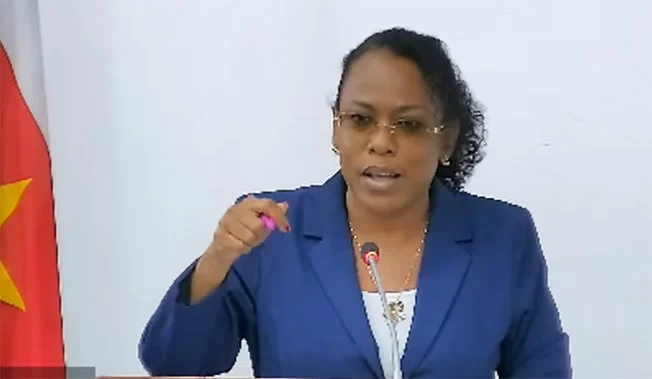
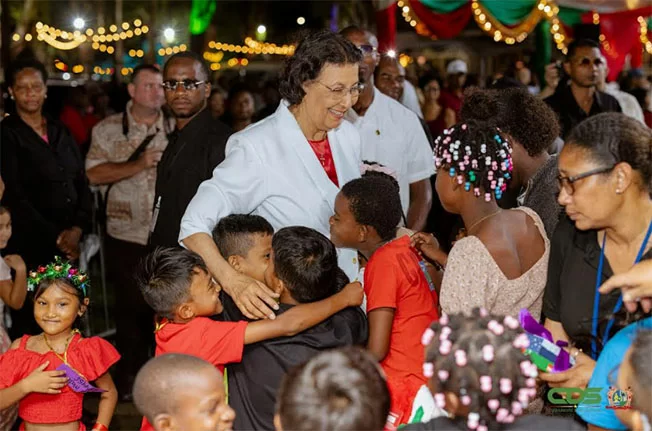
    In a stirring address during the National Christmas Carols event at Independence Square, President Jennifer Simons of Suriname delivered a powerful message emphasizing unity, mutual care, and inner peace as essential foundations for the nation’s future. The President articulated that the peace commemorated during Christmas must originate within individuals to genuinely benefit society as a whole.

    President Simons framed Christmas as both a period of reflection and hope, referencing the birth of Jesus Christ as the dawn of light that dispels darkness. She stressed that this inner illumination must first occur within each person before they can effectively address the needs of others and contribute to national development.

    Highlighting interconnectedness as crucial to national progress, Simons urged Surinamese citizens to become guardians of one another and embrace mutual responsibility, particularly during challenging economic and social times. Her central thesis maintained that Suriname can only thrive through collective care and solidarity.

    The President noted encouraging signs of growing social cohesion, pointing to the diverse religious backgrounds represented among attendees at Independence Square. She characterized this interfaith gathering as a promising seed of national unity that requires nurturing and protection.

    Simons extended appreciation to citizens actively maintaining clean environments, businesses supporting school rehabilitation projects, and organizations that voluntarily facilitated the National Christmas Carols event. The celebration featured blessings from spiritual leaders across multiple faith traditions and musical performances accompanied by the police band.

    Concluding her address, the President wished strength and hope to the nation while advocating for daily incremental steps toward a better tomorrow guided by mutual support and solidarity. “The peace that God has promised us must begin within ourselves,” Simons affirmed, encapsulating her vision of personal transformation preceding national advancement.

  • Bangladesh in crisis na dood 2024-opstandleider

    Bangladesh in crisis na dood 2024-opstandleider

    Bangladesh faces escalating political turmoil following the tragic death of prominent youth activist Sharif Osman Hadi, whose passing has triggered widespread violence and raised concerns about national stability ahead of February’s critical elections.

    Hadi, the 32-year-old spokesperson for the Inquilab Mancha student movement, succumbed to injuries in a Singapore hospital after being shot in the head during his campaign launch in Dhaka last week. His six-day intensive care battle ended tragically, sparking immediate outrage across the nation.

    The capital city Dhaka and other major urban centers have witnessed violent demonstrations, with protesters attacking and setting fire to offices of major publications including Prothom Alo and The Daily Star. The interim government led by Nobel laureate Muhammad Yunus has declared Saturday a national day of mourning while appealing for calm and promising a transparent investigation into the shooting.

    Complicating the situation, anti-India sentiments have emerged among demonstrators who believe the perpetrators fled to neighboring India. This development has triggered diplomatic tensions, with India summoning Bangladesh’s ambassador to discuss security concerns for its diplomatic mission in Dhaka.

    The political landscape has been further destabilized by the exclusion of the Awami League—the party of ousted Prime Minister Sheikh Hasina—from the February 12 elections. Security forces have heightened vigilance nationwide as protests continue, creating an atmosphere of uncertainty during this critical pre-election period.