In a critical response to Nepal’s deepening energy crisis following last month’s devastating natural disasters, India has approved a temporary accelerated power export plan to help the neighboring Himalayan nation bridge its severe electricity deficit. India’s Ministry of Energy announced the new arrangement on Monday, outlining that up to 654 megawatts of power will be supplied to Nepal for 18 hours daily through the end of December 2026. The arrangement officially entered into force on September 13, with delivery scheduled from midnight to 6:00 PM local time each day.
Under the agreed framework, the vast majority of the exported power – up to 600 megawatts – will flow through the 400 kV double-circuit Muzaffarpur–Dhalkebar transmission line, while an additional 54 megawatts will be transported via the 132 kV single-circuit Tanakpur–Mahendranagar link. Officials confirmed that the supply volume for the period starting January 2027 will be reviewed and adjusted in December 2026, based on Nepal’s progress in infrastructure recovery and domestic generation capacity.
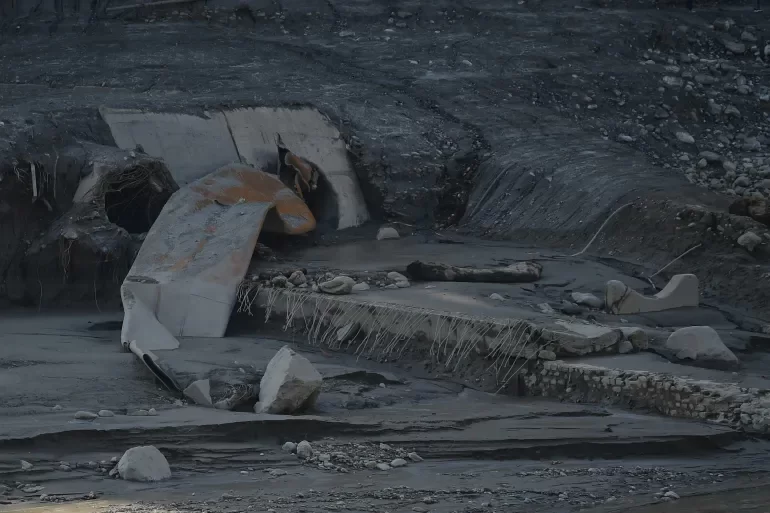
The energy crisis that prompted this cross-border support stems from a catastrophic ice and rock avalanche that struck the Nepal-Tibet border region on August 26. The avalanche triggered massive flooding along the Bhotekoshi and Trishuli river corridors, marking one of the deadliest natural disasters to hit central and northern Nepal in recent history. As of September 11, Nepalese authorities confirmed the disaster had claimed 1,385 lives, with more than 5,100 people still listed as missing. Roughly 900 of those unaccounted for are employees of local hydropower plants, a loss that has compounded the already severe disruption to the country’s electricity generation sector.
At least 12 major hydropower projects were either completely swept away or suffered irreparable damage in the disaster. Notable affected facilities include the 216 MW Upper Trishuli-1, 111 MW Rasuwagadhi, 120 MW Rasuwa Bhotekoshi, and 60 MW Upper Trishuli 3A plants.
Hydropower accounts for nearly all of Nepal’s domestic electricity production. Before the disaster, the country maintained a total installed generation capacity of roughly 4,200 megawatts, and regularly exported surplus energy to India. The disaster wiped out an estimated 550 megawatts of usable capacity, leaving Nepal with a domestic deficit of between 350 and 400 megawatts. Faced with this gap, Nepal was forced to immediately halt all power exports to India and begin sourcing emergency imports from its southern neighbor to meet domestic consumer and industrial demand.
Beyond the immediate human and generation losses, the disaster has laid bare the significant structural vulnerabilities of hydropower infrastructure across the Himalayan region. Industry analysts point out that risk extends far beyond dam structures themselves: when entire river corridors are inundated, power plants, substations, transmission lines, access roads, and worker housing all become critical weak points that can disable entire generation systems. Recovery efforts have been further slowed by the fact that access routes and transmission networks needed to reach damaged plants were also destroyed in the floods.
Electricity support is not the only assistance India has extended in the wake of the disaster. India has also deployed personnel and resources to support Nepal’s search, rescue, and early recovery operations, and has delivered more than 70 tons of emergency relief supplies to affected communities. Multiple other countries and international bodies have also pledged financial and material support, including the European Union, Germany, Switzerland, Sri Lanka, and the Maldives.
The new emergency power arrangement builds on the already deepening energy partnership between India and Nepal. In 2024, the two nations signed a landmark long-term power trade agreement that paves the way for Nepal to export up to 10,000 megawatts of electricity to India over the next decade. Several additional cross-border transmission lines are currently under construction to support this expanded long-term collaboration.