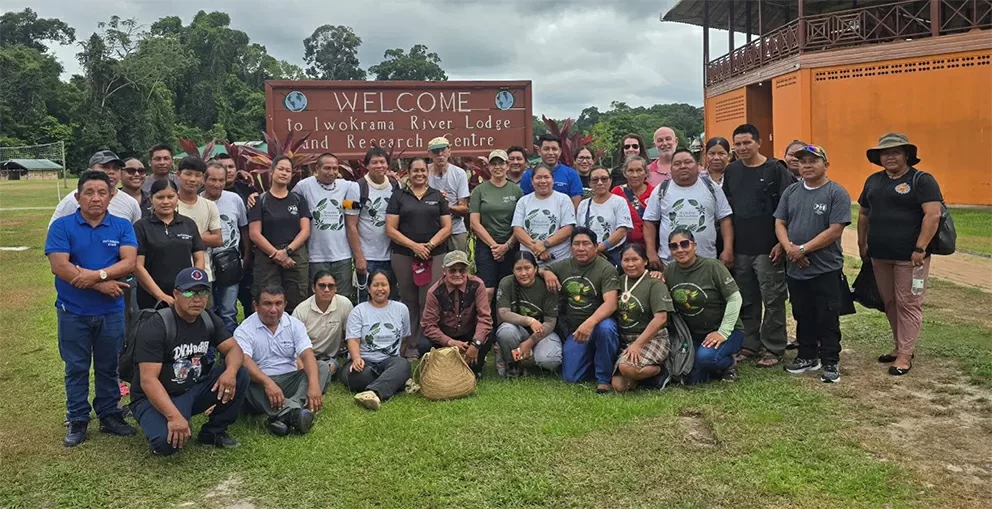
Indigenous knowledge-holders and traditional healers from Suriname, Guyana, and Brazil have marked a historic milestone by establishing the Regional Network of Traditional Knowledge and Healers, a first-of-its-kind collaborative body aimed at securing greater formal recognition for Amazonian traditional medicinal plant knowledge and healing practices within national public health systems.
The founding of the network took place during a four-day convening held from September 8 to 11, 2026, at Iwokrama River Lodge, located deep within Guyana’s protected Iwokrama Rainforest. Representatives of Indigenous communities from all three Amazon-bordering nations gathered to share ancestral expertise on traditional therapies, medicinal plant use, and culturally rooted health practices, building on two prior regional knowledge exchange events organized over the past four years. The gathering was coordinated by the Amazon Conservation Team Guianas (ACT Guianas), a Suriname-registered non-governmental organization that has partnered with Indigenous and tribal groups across the Guiana Shield since 2002 to support territorial stewardship and cultural preservation.
Core objectives of the new network include creating a unified regional platform anchored in shared ethical protocols, clear communication frameworks, and a coordinated advocacy agenda to push for respectful recognition of traditional medicine by national governments and public health institutions. Beyond formal establishment, participants used the convening to share successful healing practices across bordering communities, reflect on lessons learned from prior collaborative efforts over the past four years, strengthen ethical and consistent standards for traditional healing across the region, and explore pathways toward formal integration of traditional practices into national healthcare systems.
A central focus of the gathering was learning from Brazil’s decades-long policy framework for integrating Indigenous health into national care, a model that Suriname and Guyana are examining for potential adaptation. Brazil first enshrined a decentralized Indigenous Health Subsystem into its national Unified Health System (SUS) in 1999, structured around regional Indigenous health districts that require policy to center the unique local realities and cultural identities of Indigenous peoples, covering not only clinical care but also sanitation, food security, housing, environmental protection, and health education. Since 2006, Brazil has also maintained a national policy for integrative and complementary practices within SUS, which formally recognizes medicinal plant use and phytotherapy as valid care options. As of 2024, more than 23,000 Brazilian health teams offer these integrative practices across roughly 21,000 primary health care centers nationwide.
The gathering opened with a sacred spiritual cleansing ritual led by Adele John, a young apprentice healer from Guyana’s Surama Village, setting a culturally rooted tone for the days of collaboration. Following opening ceremonies, participants engaged in immersive forest learning activities around the Iwokrama site and breakout working sessions to draft a three-year strategic roadmap for the new network. A key ceremonial highlight of the forum was the formal signing of the network’s founding charter by official representatives from all three participating countries.
The Iwokrama International Centre for Rainforest Conservation and Development (IICRCD), which hosted the event at its river lodge facility, expressed full support for the initiative. “We are delighted to host the ACT team and Indigenous healers from across the region,” a center spokesperson said. “We endorse the establishment of this network and wish them every success in building an Indigenous knowledge platform for the region and advocating for the integration of Indigenous medicinal knowledge into national health systems.”
ACT Guianas, which is headquartered in Paramaribo, coordinates conservation and cultural preservation initiatives across Suriname, Guyana, French Guiana, and northern Brazil, working directly with Indigenous communities to strengthen their capacity to manage and protect their ancestral territories.
The launch of the new network aligns with a growing regional movement to center Indigenous traditional knowledge as a critical component of sustainable development and accessible, culturally appropriate healthcare. As early as August 2025, during the Fifth Presidential Summit of the Amazon Cooperation Treaty Organization (ACTO), Suriname highlighted the essential role of Indigenous and local community traditional knowledge in protecting the Amazon biome. In March 2025, Suriname hosted the national Traditional and Integrative Health Systems Conference, co-organized by Medische Zending Primary Health Care Suriname and ACT Guianas, where the Ministry of Public Health signed a memorandum of understanding with four partner organizations including ACT Guianas to advance collaboration on integrative health. By the end of 2024, Suriname’s National Assembly had already received a draft bill to establish a regulatory authority, OTIMSI, tasked with overseeing the development of traditional and integrative medical systems across the country.