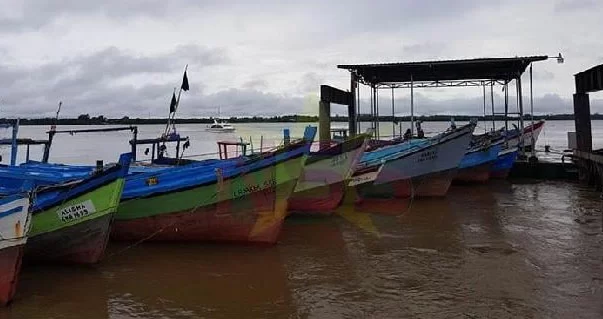
At the 30th United Nations Climate Change Conference (COP30) in Belém, the Association of Saamaka Communities (VSG) delivered a compelling message. Represented by a delegation of twenty members, the VSG called for direct funding, recognition of traditional knowledge, and a central role for the Saamaka people in combating climate change. The organization emphasized that sustainable forest management is impossible without the involvement of those who have protected the forests for centuries. In plenary sessions and thematic meetings, the VSG highlighted the severe impact of climate change on the Saamaka communities, whose identity, culture, and livelihoods are deeply intertwined with the forest. Hugo Jabini, Director of the VSG Foundation Bureau, stressed, ‘The time for talking is over. We are the guardians of the forest, yet we bear the heaviest burdens.’ He urged the international community to transition to direct, community-managed funding, as only a small fraction of current funds through NGOs reaches the villages. The VSG proposed several concrete measures: recognition of Community Conserved Areas (CCAs) as the foundation of sustainable forest management, accessible climate financing for local communities, sustainable partnerships between governments, regional and international organizations, and local communities, and knowledge sharing and capacity building to train and support youth and women in sustainable forest management. A key message from the VSG was the importance of traditional Saamaka knowledge, shaped by generations of living in harmony with the forest, offering valuable insights into resilient and sustainable management. The VSG called on policymakers and international partners to integrate this knowledge into national and global climate strategies to develop innovative, future-proof models. The VSG’s participation was further amplified by a cultural performance by the Seketie group in the green zone of COP30. The songs, dances, and colorful pangi’s of Saamaka women and Basia Paul Wooje of Guyaba were a moving tribute to the forest, describing the beauty, value, and spiritual significance of the Amazon. The VSG’s prominent presence at COP30 underscored the crucial role of the Saamaka communities in protecting Suriname’s forests and the global climate. The VSG demands genuine recognition, direct resources, and meaningful involvement to enable the guardians of the forest to continue their essential role in a time when the planet needs this protection more than ever.
标签: Suriname
苏里南
-

Wisselvallig weer met bewolking en regen
The day begins predominantly dry across much of the country, with localized fog patches along rivers and low-lying areas in the early morning. As the morning progresses, the skies clear, leading to a mix of sunshine and thin cloud cover. By the afternoon, cloudiness gradually increases, particularly in inland areas and the Brokopondo and Sipaliwini districts, where isolated rain and thunderstorms may develop. These showers can be brief but intense in some locations. Coastal regions, however, remain calmer, though a light shower cannot be entirely ruled out. Temperatures in the afternoon range between 30 to 33 degrees Celsius, accompanied by high humidity that may make it feel warmer. Winds are moderate, predominantly from the east to northeast. In the evening and overnight, shower activity and cloud cover decrease once again, resulting in dry conditions along the coast, while the southern regions may continue to experience occasional showers for a longer duration.
-

Orkaanschade in Jamaica loopt op tot recordbedrag van US$8,8 miljard
Hurricane Melissa has left a trail of destruction in Jamaica, with estimated damages amounting to a staggering $8.8 billion, according to a joint report by the World Bank and the Inter-American Development Bank (IDB). This figure represents the highest recorded damage in the country’s history, equivalent to 41% of Jamaica’s 2024 Gross Domestic Product (GDP). The assessment was conducted using the Global Rapid Damage Estimation (GRADE) method, which evaluates physical damage immediately after a disaster. The analysis focused on housing, non-residential buildings, infrastructure, and the agricultural sector, though broader economic losses are expected to be significantly higher. Preliminary findings reveal that 41% of the damage is attributed to housing, 33% to infrastructure, 21% to non-residential buildings, and 5% to the agricultural sector. Despite the relatively low percentage, the agricultural sector is anticipated to suffer substantial economic losses due to prolonged disruptions in production and distribution. Susana Cordeiro Guerra, World Bank Vice President for Latin America and the Caribbean, emphasized Jamaica’s resilience and strong leadership culture as key factors in the recovery process. The World Bank and IDB have pledged full support, including emergency funding, technical assistance, and long-term resilience-building programs. The GRADE method, supported by the Global Facility for Disaster Reduction and Recovery (GFDRR) and Japan’s Ministry of Finance, provides a rapid, independent assessment of physical damage, offering a preliminary understanding of the disaster’s impact. Jamaica, in collaboration with the IDB, the Economic Commission for Latin America and the Caribbean (ECLAC), and the Planning Institute of Jamaica, will now proceed with a comprehensive damage and loss analysis to guide effective and sustainable reconstruction efforts.
-

Column: Zware klus
Suriname’s hopes of securing a direct spot in the 2026 FIFA World Cup were dashed after a disappointing performance against Guatemala in their final group stage match. Despite Panama’s victory securing their top position in the group and automatic qualification, Suriname struggled to find inspiration, especially without their key player Vaessen, who reportedly sustained an injury before the match. Guatemala, already out of contention for the World Cup, dominated the game from start to finish, exposing Suriname’s vulnerabilities. The Surinamese team appeared disjointed, with frequent ball losses and players resorting to individual efforts that were repeatedly thwarted by Guatemala’s defense. A late own goal by Guatemala provided Suriname with a lifeline, allowing them to secure a place in the upcoming playoffs. In March, Suriname will compete against New Caledonia, Bolivia, the Democratic Republic of Congo, Iraq, and Jamaica for the remaining two World Cup spots. The playoff format will see the teams divided into two groups, with the highest-ranked teams (Iraq and Congo DR) receiving a bye in the first round. Suriname, currently ranked 126th in the FIFA rankings, faces a challenging path, potentially matching up against either Iraq or Congo DR in the decisive round. The journey to World Cup qualification remains an uphill battle for Suriname, requiring significant improvement in their gameplay and cohesion.
-

Uitkeringen Moni Karta in 2023 onrechtmatig verstrekt
The Audit Office of Suriname has released a damning report revealing that the Ministry of Social Affairs and Housing (SoZaVo) unlawfully distributed financial aid to individuals with disabilities and vulnerable households in 2023. The social benefits, channeled through the Moni Karta system, lacked a legal foundation and were issued based on outdated directives with no legal validity. This mismanagement involved hundreds of millions of Surinamese dollars, which, according to the Audit Office, had no legitimate basis. The 2023 State Budget had allocated over SRD 476 million for these groups. The report highlights that no resolution or State Decree exists to regulate these payments, with the ministry relying on 1999 and 2023 missives that hold no legal weight. During the investigation, the Audit Office examined 43 case files across district offices in Paramaribo, Wanica, and Para, uncovering severe deficiencies. These included missing medical certificates for individuals with disabilities, incomplete utility receipts, inadequate documentation for minors and guardianship cases, and chaotic, entirely manual record-keeping without digital registration. The Audit Office warns that these flaws increase the risk of fraud and improper payments, such as disbursements to deceased individuals or duplicate aid within a single household. The report also criticizes the lack of internal controls within SoZaVo, noting that 2022 guidelines are inconsistently applied and that the Internal Control Department fails to conduct systematic verifications. The Audit Office urges the government to urgently establish laws and regulations governing social assistance, preferably through a State Decree or resolution. It also calls for stricter oversight on dossier completeness, mandatory medical certifications, clear address registration, and regular audits. The ministry has yet to respond to the Audit Office’s draft report, leaving it unclear whether necessary reforms and legislation will be implemented promptly.
-

Ultrabewerkt voedsel vormt groeiend gezondheidsrisico wereldwijd
Ultra-processed foods (UPFs) are increasingly recognized as a significant threat to public health, prompting calls for urgent intervention from international experts. A comprehensive review of scientific studies highlights a dramatic shift in global dietary patterns, with fresh, unprocessed foods being replaced by cheap, heavily processed alternatives. This trend is linked to a heightened risk of chronic conditions such as obesity, diabetes, and even depression. The review, conducted by 43 experts based on 104 long-term studies, identifies associations between UPFs and at least 12 health issues, including cardiovascular disease, kidney disease, and increased mortality. Examples of UPFs include sausages, chips, cookies, sodas, instant soups, ice cream, and many types of supermarket bread. The global consumption of these industrially manufactured products is rising rapidly, leading to poorer overall dietary quality due to excessive sugar, unhealthy fats, and insufficient fiber and protein. Professor Carlos Monteiro of the University of São Paulo, creator of the Nova classification system, emphasizes that UPFs are displacing fresh and minimally processed foods worldwide. Large international food corporations play a pivotal role in this shift, prioritizing profit, aggressive marketing, and political lobbying to avoid stricter health regulations. However, critics of the Nova classification argue that the degree of processing does not solely determine a product’s healthiness. Items like whole-grain bread, breakfast cereals, low-fat yogurt, fish sticks, and baby formula, classified as UPFs, still contain nutrients beneficial to a healthy diet. Statistician Kevin McConway cautions that the observed correlations do not establish causation, and further clinical studies are needed to identify specific components of UPFs contributing to disease. Researchers like Professor Jules Griffin also highlight the benefits of food processing and advocate for more research into its health impacts. Co-author Dr. Phillip Baker of the University of Sydney argues that despite gaps in evidence, immediate action is necessary, akin to global efforts against the tobacco industry. The food industry, meanwhile, maintains that UPFs can be part of a balanced diet, with the Food and Drink Federation noting improvements in recent years, including reduced sugar and salt content. The UK’s Scientific Advisory Committee on Nutrition has described the links between UPFs and adverse health effects as “concerning” but acknowledges uncertainty over whether processing or the unhealthy composition of these products is the primary cause. Current dietary advice remains unchanged: increase consumption of vegetables, fruits, and fiber while limiting sugar, salt, and saturated fats.
-

BOG start nieuwe fase bij 98 -jarig bestaan
The Bureau of Public Health (BOG) in Suriname marked its 98th anniversary on November 18, coinciding with the soft opening of its new headquarters. The event, attended by Health Minister André Misiekaba, highlighted the organization’s pivotal role in the nation’s preventive healthcare system. Minister Misiekaba emphasized that the new building symbolizes BOG’s readiness to confidently embrace the future. ‘This is tangible proof that BOG not only honors its past but is also stepping into the future with conviction,’ he stated. The minister underscored BOG’s foundational role in Suriname’s public health, particularly its Central Laboratory, which played a critical role during the COVID-19 pandemic as the first in the Caribbean to initiate COVID-19 diagnostic capabilities. ‘This achievement was no coincidence but the result of years of dedication,’ Misiekaba added. The new facility, coupled with internal relocations, lays a solid foundation for the decades ahead. The minister also announced an ambitious shift in BOG’s mission, aiming to transform it into Suriname’s leading National Knowledge and Research Institute for Public Health. ‘We are entering a new phase where we will no longer settle for merely recording diseases. BOG must become the intellectual engine behind public health,’ he declared. Acting Director Radjesh Ori reflected on BOG’s evolution over the years, noting its indispensable role in society. ’98 years is a respectable age. BOG has become a household name and is irreplaceable,’ Ori remarked. Minister Misiekaba concluded by emphasizing that true change lies not in infrastructure but in the dedication and expertise of BOG’s staff. Despite ongoing public health challenges, he expressed confidence in the team’s ability to drive scientific transformation. ‘If we embrace this scientific shift, the results—a healthier and more productive Suriname—will be well worth it,’ he said, calling for collective ambition and collaboration to make BOG a proud cornerstone of Surinamese science and public health.
-

Nieuw informatiesysteem versterkt Surinames bewaking van diergezondheid
Suriname has taken a significant leap forward in animal disease monitoring and control with the development of a state-of-the-art Information System on Animal Health. This initiative, supported by Chilean expert José Ignacio Gomez, a specialist in surveillance systems, aims to significantly enhance the nation’s ability to track and manage animal diseases. A dedicated team from the Directorate of Livestock has recently completed training in data analysis, epidemiological assessment, and disease management, equipping them with the necessary expertise to operate the new system effectively. Dr. Gomez highlighted the team’s transformation from novices to experts, stating, ‘The surveillance team had no prior experience but is now fully proficient.’
A robust surveillance program is critical for any country, not only facilitating cross-border trade in animal products but also safeguarding the economy. The outbreak of animal diseases can lead to skyrocketing food prices and substantial economic losses, making early detection and expert intervention essential. The urgency to remain vigilant has grown as exotic animal diseases edge closer to Suriname. Three severe diseases—Avian Influenza in poultry, African Swine Fever in pigs, and Foot and Mouth Disease in cattle—are already present in various Caribbean, South, and Central American countries. In response, Dr. Gomez and the surveillance team have developed a national emergency plan to address potential outbreaks swiftly.
Additionally, the team has crafted a comprehensive preparedness plan for critical animal diseases. The implementation of the new animal health and disease surveillance information system marks a significant milestone, with Dr. Gomez noting that only a few well-developed countries possess similar systems. ‘The system is implemented, operational, and user-friendly,’ he emphasized. The platform can be updated anytime, from any location, and is accessible exclusively to authorized users.
With these advancements, Suriname is leading the Caribbean region in modern animal disease surveillance, bolstering its readiness to combat potential outbreaks effectively.
-

Een leven vol natuur en fotografie
Luo Hong, a celebrated Chinese photographer and entrepreneur, has dedicated his life to capturing the breathtaking beauty of nature and wildlife through his lens. His journey, deeply influenced by his parents’ advice to ‘always stay true to yourself and bring joy to others,’ has shaped both his personal and professional life. Renowned for his masterful nature photography, Luo Hong’s work reflects a profound respect for the natural world.
-

Kwaliteitsverbeteringen Kwatta Landbouwmarkt, duidelijkheid over terreinstatus
The recently completed fish hall at the Kwatta Agricultural Market marks the beginning of a new era in quality improvement for the market. The board of the S. Kisoensingh Foundation, which oversees the Kwatta Agricultural Market, presented this development during an introductory meeting with Mike Noersalim, Minister of Agriculture, Livestock, and Fisheries (LVV). During the meeting, the foundation shared detailed financial data, including income and expenditure reports. It was previously reported that the market generates approximately SRD 500,000 in monthly revenue, which, according to the foundation, nearly covers its operational costs. Currently, around 700 vendors utilize the market, primarily on Sundays and Wednesdays. These vendors pay a fixed fee per sales day for access to facilities such as tables, seating, roofing, and sanitation. A key topic of discussion was the legal status of the land on which the market operates. Minister Noersalim clarified the ministry’s policy: the land will remain dedicated to market activities, with other forms of business explicitly excluded. The foundation retains the authority to manage the market and continue operations on the LVV-owned land. Both parties agreed that the meeting resolved uncertainties and emphasized the need for continued collaboration to ensure the market’s orderly and transparent management.