标签: Suriname

苏里南

  • VS trekt zich terug uit 66 internationale organisaties

    VS trekt zich terug uit 66 internationale organisaties

    In a sweeping move that signals a profound shift in foreign policy, the Trump administration has formally suspended U.S. financial support to 66 international organizations through a presidential executive order signed Wednesday. The targeted entities span multiple United Nations agencies and global partnerships, with particular focus on climate, labor, and social initiatives that the administration has characterized as “woke” overreach.

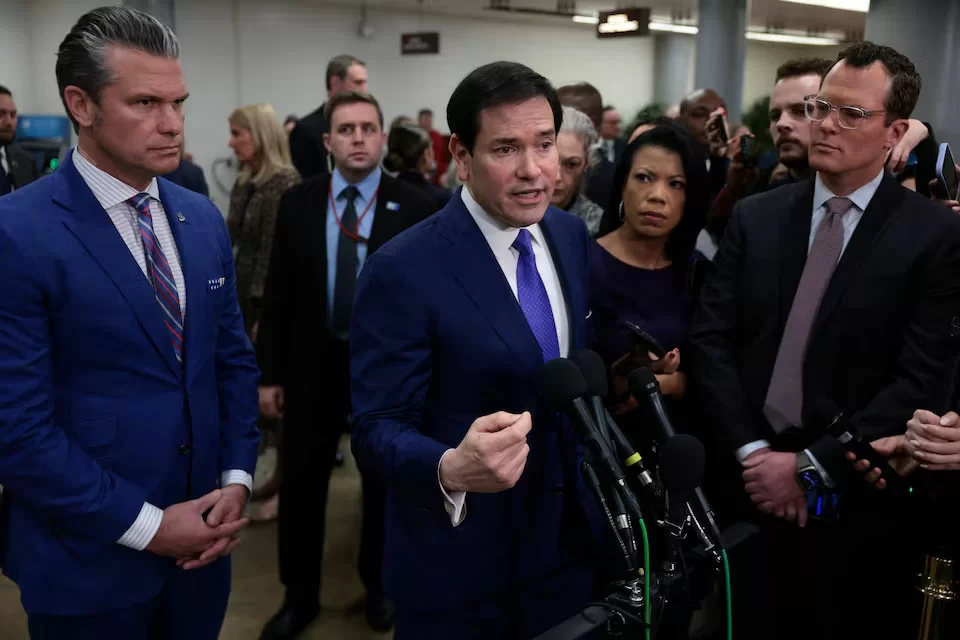
    The extensive list includes both UN-affiliated bodies and independent international forums such as the Partnership for Atlantic Cooperation and the Global Counterterrorism Forum. Secretary of State Marco Rubio defended the action, stating many organizations were “redundant, poorly managed, wasteful of resources, and threatened U.S. sovereignty and prosperity.”

    This withdrawal represents an acceleration of the administration’s selective approach to global engagement, following previous exits from the World Health Organization, UN Refugee Agency (UNRWA), and UN Human Rights Council. Critics describe the approach as a “my-way-or-the-highway” strategy that only embraces international cooperation when perfectly aligned with Washington’s interests.

    The policy shift coincides with heightened U.S. military activities that have unsettled both allies and adversaries. Recent actions include the capture of Venezuelan leader Nicolás Maduro and signals that the U.S. might consider acquiring Greenland. On Wednesday morning, U.S. authorities seized two Venezuelan-linked oil tankers under sanctions, part of broader efforts to control the world’s largest proven oil reserves.

    Among the most significant withdrawals is from the UN Framework Convention on Climate Change (UNFCCC), the foundation of the Paris Climate Agreement that the U.S. previously abandoned under Trump. Climate experts and former advisors have condemned the move as “shortsighted and damaging” to global climate policy.

    The disengagement extends to humanitarian efforts, including defunding the UN Population Fund, which supports global sexual and reproductive healthcare. While Republican critics had previously accused the organization of promoting forced abortions, a subsequent State Department evaluation found no evidence supporting these claims.

    The administration indicates it will redirect resources to strengthen U.S. influence in strategic international institutions where competition with China is intensifying, particularly the International Telecommunication Union and International Labor Organization.

    This mass withdrawal forces the UN and related bodies into significant restructuring and budget cuts while highlighting the growing divide between the U.S. and other nations on multilateral cooperation. The repercussions may fundamentally reshape global approaches to climate change, human rights, and security challenges.
  • Venezolaans leger begraaft soldaten die omkwamen tijdens Amerikaanse operatie

    Venezolaans leger begraaft soldaten die omkwamen tijdens Amerikaanse operatie

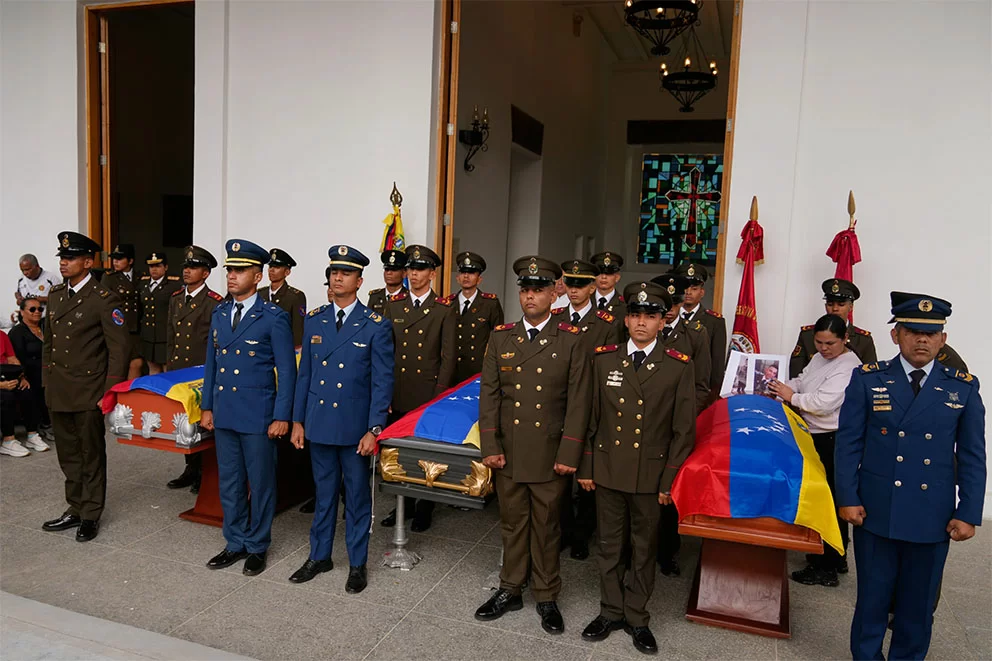
    Venezuela’s military held a solemn funeral ceremony in Caracas on Wednesday for dozens of soldiers killed during the US-led operation that resulted in the capture of President Nicolás Maduro. The emotional service featured military honors as grieving families stood alongside uniformed officers at a cemetery in the southern part of the capital city.

    A military band played solemn music while family members and soldiers marched behind rows of flag-draped coffins. Armed members of the National Guard maintained security throughout the ceremony, patrolling the cemetery grounds for hours before and during the proceedings. Men carried wooden caches adorned with Venezuelan flags past lines of uniformed officers in a display of military tradition.

    Military commander Rafael Murillo addressed the gathered families, stating, “Thank you for giving them the opportunity to begin a military career.” The soldiers received a rifle salute as their caskets were lowered into the ground, with many relatives weeping openly during the emotional moment.

    The funeral followed Acting President Delcy Rodríguez’s declaration of a seven-day mourning period for the fallen officers. According to Venezuelan military statements, at least 24 Venezuelan officers perished during the nighttime US military operation between Saturday and Sunday that resulted in Maduro and First Lady Cilia Flores being taken to New York to face drug trafficking charges.

    Meanwhile, Venezuelan Interior Minister Diosdado Cabello provided a significantly higher casualty estimate during a state television appearance, claiming at least 100 people died and a similar number were injured during the American operation. He did not specify the number of civilian versus military casualties or their nationalities.

    In a related development, Cuba announced that 32 Cuban military and police personnel working in Venezuela were killed during the US operation. Venezuelan Attorney General Tarek William Saab has announced that the Public Ministry will investigate the deaths, which he characterized as war crimes.

    The Venezuelan military expressed its resolve in an Instagram message: “Their spilled blood cries not for revenge, but for justice and strength. It confirms our unwavering promise not to rest until we have rescued our legitimate president, completely dismantled the terrorist groups operating from abroad, and ensured that such events never again stain our sovereign territory.”

  • Groenland: Veiligheidsdreiging door Rusland en China?

    Groenland: Veiligheidsdreiging door Rusland en China?

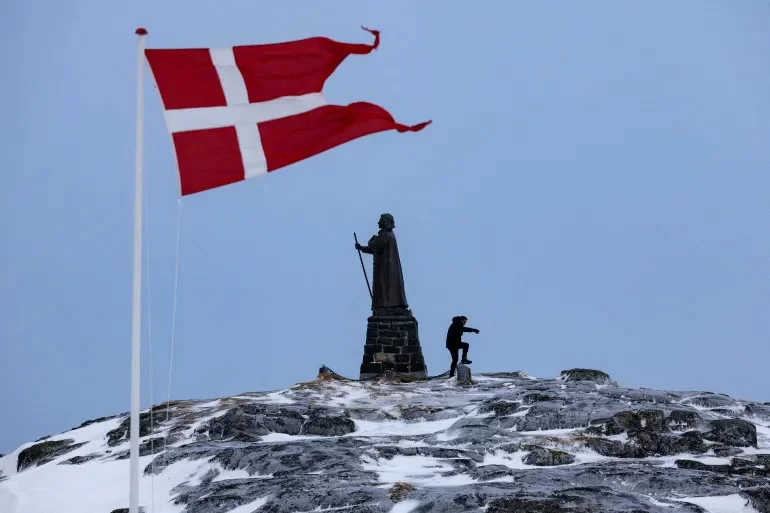
    The White House has reaffirmed Greenland as a national security priority for the United States, citing the need to counter perceived threats from “adversaries in the Arctic region” in an official statement released Tuesday. This declaration follows President Donald Trump’s recent remarks aboard Air Force One on January 4th, where he asserted that Greenland is “filled with Russian and Chinese ships everywhere” and essential for American security interests.

    Secretary of State Marco Rubio is scheduled to engage in diplomatic discussions with Danish officials regarding Greenland next week. However, the administration maintains that military options remain under consideration. “The President and his team are evaluating various approaches to achieve this crucial foreign policy objective, and naturally, the deployment of U.S. military forces remains within the Commander-in-Chief’s available options,” the White House statement elaborated.

    This isn’t the first instance of Trump’s expressed interest in acquiring Greenland. During his second term, he has repeatedly emphasized the territory’s strategic importance, stating in March: “We need Greenland for international security. We must have it.”

    Greenland, an autonomous territory within the Kingdom of Denmark since 1979, gained the right to declare independence via referendum in 2009. Both Greenlandic and Danish leadership have consistently rejected Trump’s propositions. Danish Prime Minister Mette Frederiksen stated categorically on January 4th: “There is absolutely no basis for discussing U.S. acquisition of Greenland. The United States has no right to annex any of the three countries within the Danish kingdom,” referencing both Greenland and the Faroe Islands.

    Strategic analysts highlight the complexities of military action against a NATO ally. Melinda Haring, senior fellow at the Atlantic Council Eurasia Center, told Al Jazeera: “If the U.S. chooses military force to acquire Greenland, it would be extremely complicated. Denmark is a NATO member; the U.S. is too. This fundamentally challenges the purpose of the military alliance.”

    Greenland’s geographical significance lies in its position offering the shortest route from North America to Europe, providing strategic advantages for military operations and ballistic missile warning systems. The U.S. seeks to enhance its military presence with radars in waters between Greenland, Iceland, and the United Kingdom—key transit areas for Russian and Chinese vessels that Washington wishes to monitor.

    Beyond military considerations, Greenland possesses substantial mineral resources, including rare earth elements critical for high-tech industries and battery production. A 2023 study identified 25 of the 34 minerals classified as “critical raw materials” by the European Commission within Greenland’s territory.

    Despite Trump’s claims of significant Russian and Chinese naval presence, current data from ship-tracking services like MarineTraffic show no evidence of such activity near Greenlandic waters. The rhetoric occurs within broader geopolitical competition in the Arctic, where melting ice due to climate change is making previously inaccessible resources increasingly available. Nations including the U.S., Canada, China, and Russia are expanding their focus on the region.

    Russian President Vladimir Putin addressed these developments at the International Arctic Forum in Murmansk in March 2025, stating: “Russia has never threatened anyone in the Arctic region, but we are closely monitoring developments and will respond appropriately by enhancing our military capabilities and modernizing our military infrastructure.” Putin acknowledged believing Trump was serious about acquiring Greenland and expected continued U.S. efforts.

    Meanwhile, Russia and China are collaborating on developing Arctic shipping routes. Russia aims to increase oil and gas shipments to China despite Western sanctions, while China seeks alternative routes to reduce dependence on the Strait of Malacca. The Northern Sea Route through the Arctic Ocean is becoming increasingly navigable due to melting ice, potentially significantly shortening shipping times. Russian oil shipments to China via this route increased by 25% last year.

    China has actively explored the region, dispatching ten scientific expeditions to the North Pole and constructing research vessels specifically designed to study waters north of Russia.

  • Javian en oma Edith begraven na familiedrama in Commewijne

    Javian en oma Edith begraven na familiedrama in Commewijne

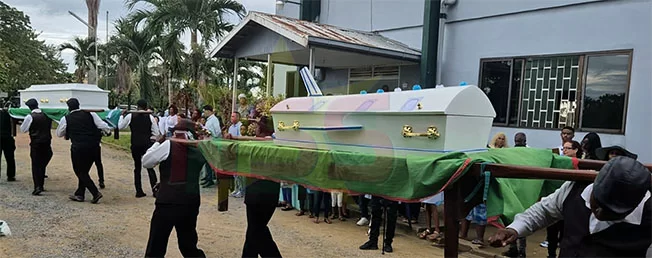
    Under a cloud of profound grief, Suriname laid to rest seven-year-old Javian Schattevoo and his 80-year-old grandmother Edith Brammerloo on Wednesday. The funeral service was marked by raw emotional outpouring as heart-wrenching cries of anguish echoed through the ceremony. In a poignant tribute to the young victim’s favorite toy, Javian’s casket was crafted in the distinctive shape of an airplane.

    Singing pallbearers carried the coffins from the service while trumpet music accompanied the ceremonial procession to the gravesites at René’s Hof cemetery, where mourners participated in traditional dancing carries as part of the burial rituals.

    The victims represent two of the ten lives lost in December’s horrific family massacre in Commewijne district. The perpetrator, Dennis Aroma, took nine lives including four of his own children before ending his own life within 24 hours of the atrocity.

    Aroma’s four children were buried on New Year’s Eve, while the assailant himself was laid to rest on Tuesday. Two survivors of the attack continue to recover from their injuries.

    In response to the tragedy, the Psychiatric Center Suriname (PCS) has deployed around-the-clock psychosocial support teams to assist grieving family members and affected community residents. Justice and Police Minister Harish Monorath attended Wednesday’s funeral to express official condolences and solidarity with the devastated families.

    The mourning process in Commewijne continues with Friday’s scheduled burial of married couple Oron, two additional victims of the massacre. The community remains deeply traumatized by a tragedy that has left permanent scars on this close-knit Surinamese district.

  • Verspreide regenbuien vooral in de middag

    Verspreide regenbuien vooral in de middag

    Meteorological conditions across the region are exhibiting classic rainy season characteristics, featuring warm and humid atmospheric conditions with daytime temperatures reaching 29-31°C. Evening and overnight periods will provide modest relief as mercury levels drop to approximately 23-24°C.

    The day will commence with intermittent sunshine and light cloud cover across many areas. As the morning progresses into afternoon hours, cloud density is forecast to intensify significantly. Scattered rainfall and thunderstorm activity is predicted to develop, particularly across inland regions and southern territories. Coastal zones will experience slightly reduced precipitation probability, though localized showers remain a distinct possibility.

    Moderate northeasterly winds will periodically deliver refreshing breezes, though high humidity levels may still create muggy and oppressive conditions. During precipitation events, winds may become gusty and unpredictable, with temporary visibility reduction occurring in affected areas. The combination of thermal conditions and atmospheric moisture creates characteristic tropical discomfort despite occasional wind-driven cooling effects.

  • VS lanceert plan voor stabilisatie en oliecontrole in Venezuela

    VS lanceert plan voor stabilisatie en oliecontrole in Venezuela

    The United States has formally articulated a comprehensive three-phase strategy for Venezuela focused on stabilization, economic recovery, and political transition, according to Secretary of State Marco Rubio. This development follows Saturday’s controversial capture of Venezuelan leader Nicolás Maduro by American forces.

    The blueprint commences with establishing stability through interim authorities collaborating closely with Washington. Subsequently, American oil corporations will receive guaranteed access during the reconstruction phase, ultimately transitioning to a democratically elected government chosen by the Venezuelan people.

    President Donald Trump issued stern warnings of potential additional military interventions should emerging leadership figures from Maduro’s circle resist American demands, which predominantly center on securing Venezuelan oil resources. The administration aims to refine and market up to 50 million barrels of Venezuelan crude, with US forces continuing seizure operations against oil tankers linked to Venezuela.

    Secretary Rubio emphasized Washington’s substantial control over the interim government, asserting that oil revenue would be meticulously managed through US-controlled accounts to prevent corruption and benefit Venezuelan citizens.

    The initiative has encountered sharp bipartisan criticism. Democrats have condemned the approach as ‘oil kidnapping’ and denounced the lack of transparency. Former House Speaker Nancy Pelosi questioned the absence of public hearings regarding operational costs and motivations, while Senator Chris Murphy characterized the plan as ‘insane’ and condemned it as a violent oil seizure scheme.

    Republican dissent emerged concurrently, with Representative Don Bacon stressing the necessity of installing legitimately elected leadership and cautioning that excessive focus on oil could undermine broader American objectives.

    Energy Secretary Chris Wright highlighted the critical importance of controlling Venezuela’s oil market to stabilize the economy and rebuild the energy sector. The strategy involves initially marketing stored oil reserves followed by future production sales, with revenues administered through American-supervised accounts. Wright confirmed ongoing discussions with US oil companies regarding their participation in Venezuela’s long-term production restoration.

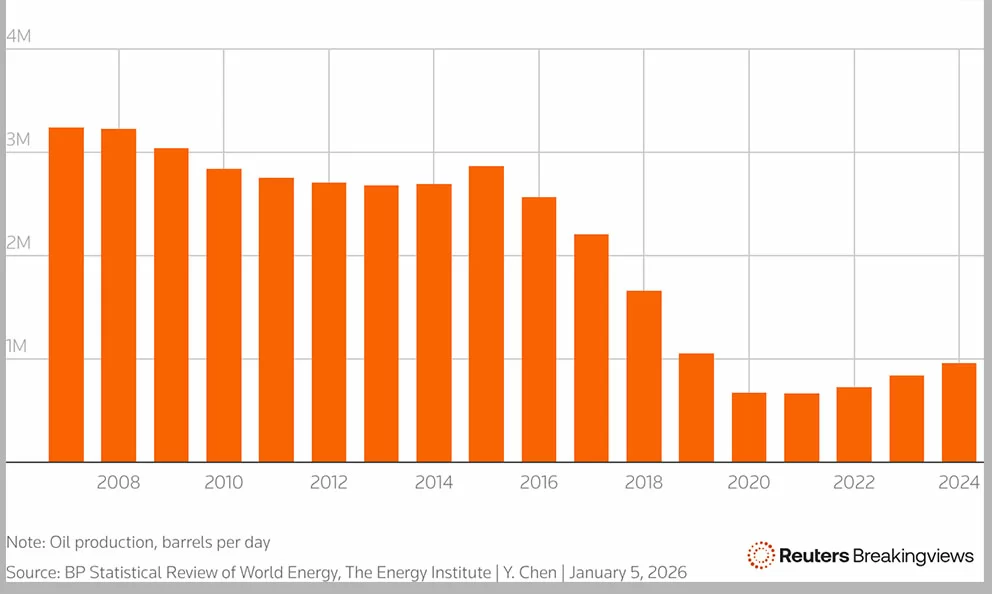
    Venezuela possesses the world’s largest oil reserves yet suffers from chronically low production due to prolonged mismanagement and investment deficits. Wright anticipates short-term production increases through advanced technology and equipment, though full recovery to historical production levels would require years.

    Washington recently announced a $2 billion crude oil export agreement with Caracas, interpreted as Venezuelan officials acquiescing to Trump’s demands under threat of further military action. American refining companies responded favorably, with stock appreciations observed in major corporations including Marathon Petroleum, Phillips 66, and Valero Energy.

    The White House has scheduled a Friday meeting with executives from ExxonMobil, ConocoPhillips, and Chevron regarding their anticipated involvement in the reconstruction process, though these corporations remain reticent in public statements.

    The US proposal has elicited mixed global reactions, raising concerns about sovereignty violations, economic interests, and Venezuela’s future trajectory. Coming developments will prove decisive for both Venezuela’s stability and international stakeholders’ regional influence.

  • Column: Regelmatig wandelen

    Column: Regelmatig wandelen

    Thousands of Surinamese citizens from all age groups undertook an extraordinary predawn pilgrimage across the Wijdenboschbridge on January 8th, transforming the infrastructure project into the nation’s largest participatory fitness event. The annual walking tradition saw participants converging on Commewijne as early as 5:00 AM, with all attendees required to commence their journey by 7:00 AM, demonstrating remarkable dedication to this increasingly popular wellness ritual.

    This massive turnout reveals a substantial public demand for accessible physical activities that current offerings fail to satisfy. While the bridge walk has successfully mobilized citizens who might otherwise remain sedentary, its current format as a standalone annual event represents a missed opportunity for broader public health advancement.

    Organizational stakeholders, particularly the national athletics association, could leverage this demonstrated enthusiasm to develop structured movement initiatives. Practical constraints understandably prevent frequent bridge closures, but alternative approaches could replicate the event’s success through decentralized community-based programs.

    A proposed framework suggests regular neighborhood walking events organized at the ressort level, complemented by quarterly district-wide gatherings. Such structured programming would provide ongoing mental health benefits through stress reduction while simultaneously addressing Suriname’s growing obesity concerns.

    The consistent thousands-strong participation indicates deep-seated public appetite for organized physical activity. Rather than relying solely on government coordination, neighborhood associations and non-governmental organizations could spearhead these initiatives, potentially transforming a singular annual phenomenon into sustained movement supporting national physical and mental wellbeing.

  • Hanisha Jairam nieuwe Surinaamse ambassadeur in New Delhi

    Hanisha Jairam nieuwe Surinaamse ambassadeur in New Delhi

    The Republic of Suriname has designated Hanisha Jairam as its next extraordinary and plenipotentiary ambassador to New Delhi, India. The Ministry of Foreign Affairs, International Business, and International Cooperation has formally submitted the necessary documentation to Indian authorities to initiate the agrément process—a mandatory diplomatic procedure required before the appointment can be finalized.

    Jairam, a member of the National Democratic Party (NDP), will succeed current ambassador Arun Hardien in representing Surinamese interests in India. She brings substantial administrative and policy expertise from her extensive career in government and educational sectors. Currently serving as district administrator at the Ministry of Regional Development, Jairam has previously held roles as an educator and board member within various organizations.

    Her academic qualifications include a Master’s degree in Business Administration with a finance specialization, complemented by additional training in policy development, leadership, and governance. Jairam also previously served as president-commissioner at Canawaima, further demonstrating her executive capabilities.

    Upon successful completion of the agrément process with Indian authorities, Jairam will be officially sworn in and commence her diplomatic duties as Suriname’s chief representative in India, strengthening bilateral relations between the two nations.

  • VS neemt Russische tanker met Venezolaanse banden in beslag

    VS neemt Russische tanker met Venezolaanse banden in beslag

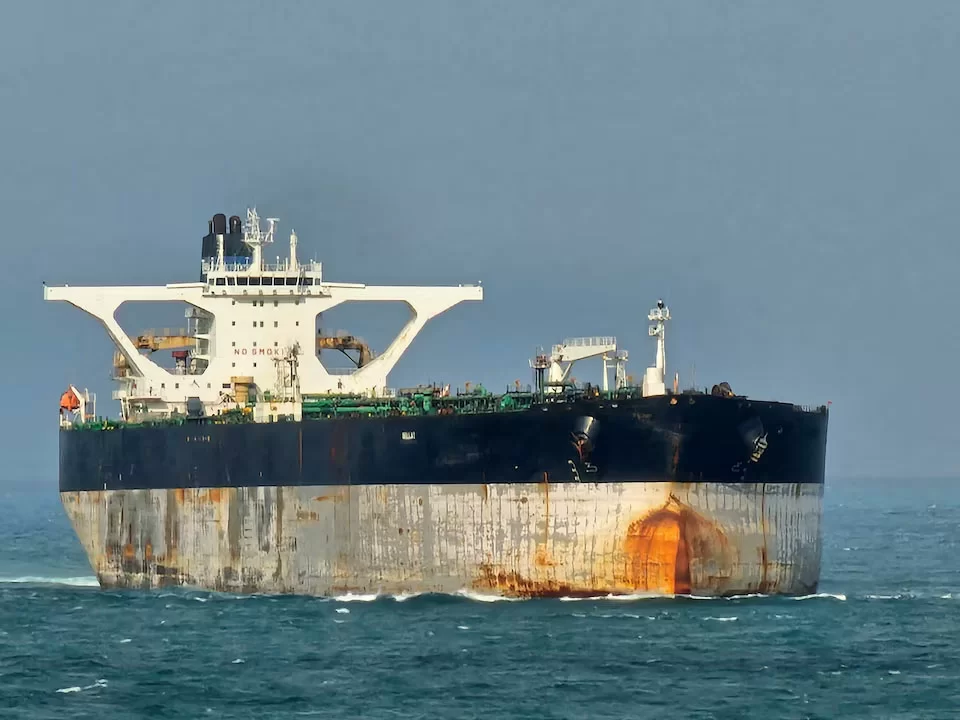
    In a significant escalation of maritime tensions, the United States has seized the Russian-flagged tanker Marinera (formerly known as Bella-1) in international waters. This decisive action forms part of President Donald Trump’s aggressive strategy to regulate oil supply across the Americas and pressure Venezuela’s socialist government toward alignment with US interests.

    The seizure occurred following a dramatic two-week pursuit across the Atlantic Ocean, during which the vessel was tracked by US Coast Guard and military assets. The operation gained additional complexity as Russian submarines and naval vessels were observed in the vicinity, creating a tense standoff between the world powers.

    Russia has issued a vehement diplomatic response, condemning the seizure as a gross violation of international law and characterizing it as an unlawful, politically motivated act. The Kremlin has demanded immediate clarification from Washington and warned that such actions risk significantly heightening international tensions, particularly given existing strains over the Ukraine conflict.

    This incident represents the latest development in America’s sustained pressure campaign against Venezuela since the deposition of Nicolás Maduro. US authorities have systematically blocked sanctioned vessels from entering or exiting Venezuelan waters, targeting the OPEC member’s crucial oil exports.

    The Marinera had previously attracted attention last month when it refused boarding attempts and subsequently reflagged under Russian registry. In a parallel operation, US Coast Guard units intercepted another fully-loaded tanker, the Sophia, with Venezuelan connections near Northeast South America—marking the fourth such interception in recent weeks.

    Russian state broadcaster RT aired footage showing US helicopters circling the Marinera, reporting apparent attempts to board the sanctioned vessel, which was reportedly empty at the time of seizure.

  • VS grijpt Venezolaanse olie, wereld reageert scherp

    VS grijpt Venezolaanse olie, wereld reageert scherp

    In a significant geopolitical shift, the Trump administration has secured an agreement to redirect Venezuela’s oil shipments originally destined for China, marking a dramatic turnaround in Washington’s approach to Caracas. The deal, which involves importing and refining up to $2 billion worth of previously sanctioned Venezuelan crude, represents President Trump’s strategic maneuver to gain control over the South American nation’s substantial oil reserves.

    While Nicolás Maduro’s socialist allies maintain power in Venezuela, interim President Delcy Rodriguez is navigating a delicate balance between condemning Maduro’s recent abduction and initiating cooperation with Washington under Trump’s pressure. Sources within state oil company PDVSA indicate negotiations have advanced significantly, though Caracas has yet to officially confirm the export agreement.

    The United States announced plans to process and sell approximately 50 million barrels of oil previously immobilized by American sanctions. President Trump declared via Twitter that proceeds would remain under his administration’s control, purportedly benefiting both the Venezuelan people and US interests. This anticipated supply increase triggered an immediate market response, driving crude prices down by approximately 1%.

    China has vehemently condemned Washington’s actions, with Foreign Ministry spokespersons labeling the US a ‘bully’ and accusing it of gross violations of international law and Venezuelan sovereignty. As last year’s importer of nearly 390,000 daily barrels of Venezuelan oil, China is now reportedly considering increased imports from Iran and Russia according to trading sources.

    The US military intervention in Venezuela, which targeted Maduro’s capture, has drawn international condemnation from Russia, China, and other Venezuelan allies. Washington’s partners express particular concern over the precedent of abducting a sitting head of state, especially amid Trump’s additional threats toward Mexico and Greenland.

    Recent operations in Caracas resulted in dozens of casualties, including 23 Venezuelan soldiers and 32 members of Cuban military and intelligence services. Maduro, who has ruled since 2013, denied drug trafficking charges in a US court Monday while maintaining his claim as Venezuela’s legitimate president.

    Despite ousting Maduro, the US appears temporarily prioritizing cooperation with his senior allies to ensure stability, focusing particularly on revitalizing the oil industry through American corporate involvement. Political reforms and prisoner releases seem secondary concerns for now.

    Venezuelan opposition leader María Corina Machado, currently in exile, seeks to return for what she believes would be a victorious free election. Meanwhile, Washington warns high-ranking Maduro-era officials including stubborn Interior Minister Diosdado Cabello and Defense Minister Vladimir Padrino, both under US sanctions and criminal prosecution.

    The US is additionally pressuring Venezuela to expel advisors from China, Russia, Cuba, and Iran, while Russia has deployed naval vessels to escort an aging oil tanker attempting to circumvent American blockade measures.

    Recent Atlantic Ocean confrontations saw the US Coast Guard attempting to seize a Venezuela-related oil tanker after extended pursuit, with Russian naval ships operating nearby—highlighting ongoing tensions surrounding sanction enforcement and control over Venezuelan oil exports.