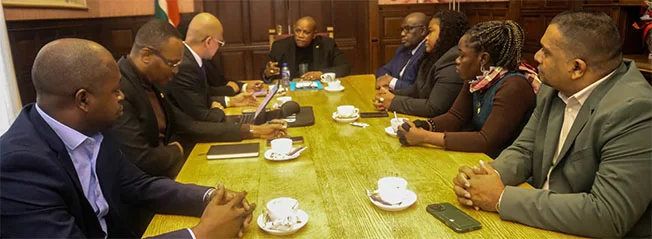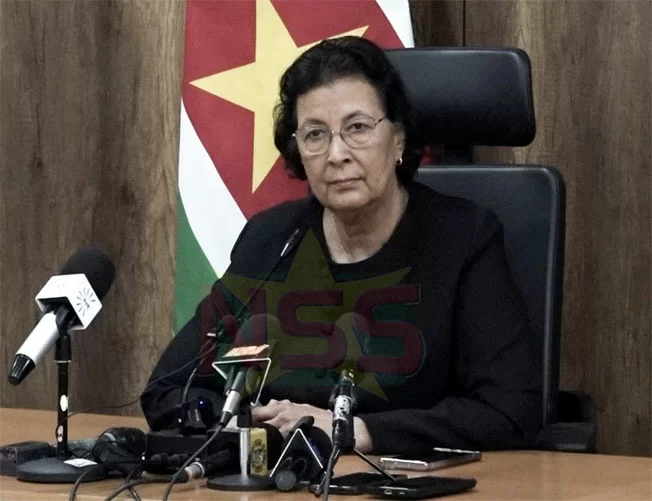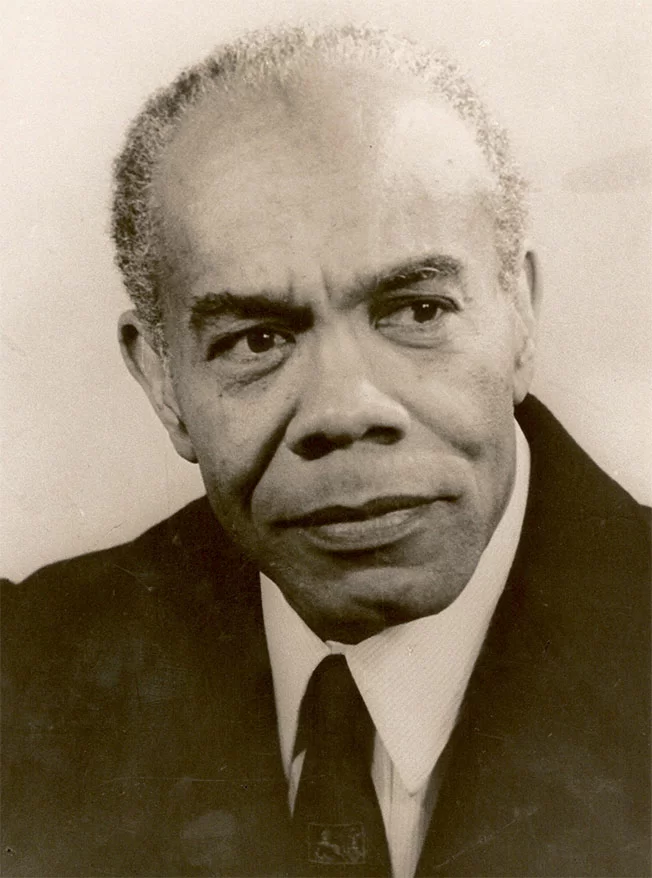
On Srefidensidag, the Stichting Arbeidsmobilisatie en Ontwikkeling (SAO) welcomed a distinguished guest: Dutch Prime Minister Dick Schoof. His visit was a gesture of appreciation for the craftsmanship of SAO trainees, who have constructed a miniature replica of a traditional Surinamese folk house. This project not only enhances the trainees’ employability in the field of built heritage but also contributes significantly to the preservation of historic wooden buildings in Paramaribo. Prime Minister Schoof was particularly impressed by the trainees’ specialized skills, which make them valuable assistants in restoration projects—a critical need given the many buildings requiring urgent attention. The centerpiece of the visit was ‘Oso Tori Oso,’ a wooden miniature house inspired by a traditional folk dwelling on Mahonylaan. Created by trainees from the Construction, Woodworking, GaWaSa, and Welding departments, the project is part of a broader collaboration involving the Dutch foundation Under the Blue Surface (UBS), SAO, NAKS, and other partners. It intersects heritage, art, theater, and architecture, highlighting Suriname’s unique building styles and the stories behind its iconic wooden houses, which are becoming increasingly rare in Paramaribo. Funded through the Dutch International Cultural Policy, the miniature house initially toured as a traveling exhibition, drawing significant public interest, and now has a permanent home on the SAO grounds. It serves as a tangible reminder of Paramaribo’s 19th and 20th-century streetscapes. Dr. Raj Jadnanansing, Deputy Minister of Health, Welfare, and Labor, who welcomed Prime Minister Schoof, emphasized the importance of sustainable collaboration between Suriname and the Netherlands. He advocated for continued joint projects and exchange programs between SAO and Dutch vocational institutions to enhance the knowledge and skills of students and interns on both sides. SAO Director Joyce Lapar highlighted previous successful collaborations and expressed her ambition to expand the miniature project, including a replica of the former home of Anton de Kom. She hopes for support from the Dutch Embassy and renewed twinning initiatives between the two countries. Prime Minister Schoof assured that SAO remains a key focus in the bilateral cooperation between the Netherlands and Suriname.
标签: Suriname
苏里南
-

Bevriende naties willen bilaterale samenwerking met Suriname uitbreiden
Suriname marked its 50th anniversary of statehood with a series of high-profile bilateral discussions, as President Jennifer Simons welcomed representatives from allied nations to the Presidential Palace on November 25, 2025. Among the distinguished guests were Dutch Prime Minister Dick Schoof, CARICOM Secretary-General Carla Barnett, Prefect of French Guiana Antoine Poussier, Barbados’ Education Minister Sandra Husbands, and Brazil’s Minister of Planning, Budget, and Management Simone Tebet. Each conveyed their governments’ congratulations and expressed a shared commitment to deepening cooperation with Suriname.
Brazil’s Minister Tebet highlighted the potential for a ‘development boom’ in Suriname by 2027, emphasizing the need for strategic preparation. Brazil pledged to enhance collaboration in healthcare, energy, logistics, and cross-border connectivity between northern Brazil, Guyana, Suriname, and French Guiana. Meanwhile, Prefect Poussier discussed the finalization of a border treaty clarifying the Suriname-France boundary, which is expected to strengthen bilateral ties and address challenges faced by border communities.
CARICOM’s Barnett focused on agriculture, food security, and climate change, urging increased climate financing and regional transport improvements. Dutch Prime Minister Schoof reaffirmed the Netherlands’ commitment to fostering an equal and respectful partnership with Suriname, particularly in oil and gas exploration, tourism, and education initiatives, leveraging their shared linguistic heritage.
-

DNA blikt terug op 50 jaar Srefidensi en roept op tot nationale vernieuwing
During an extraordinary public meeting of the National Assembly commemorating 50 years of independence, political leaders from various parties in Suriname emphasized the importance of national unity, justice, and sustainable development. The session, marked by diverse contributions, reflected on the nation’s past, cautioned against repeating historical mistakes, and underscored the urgency of shaping the next fifty years with discipline, vision, and collaboration.
NDP leader Rabin Parmessar highlighted Suriname’s resilience, noting that despite challenges, including an ‘imposed fraternal conflict,’ the nation has maintained its unity. He stressed the need to responsibly harness future opportunities, particularly in the oil and gas sectors, while acknowledging Suriname’s unique position as a carbon-negative country with over 90% forest coverage.
VHP leader Asis Gajadien paid tribute to the leaders of 1975, including Jagernath Lachmon and Henck Arron, while calling for a new era of innovation and national renewal. NPS leader Jerrel Pawiroredjo reflected on the historical process of decolonization, emphasizing the importance of democracy and collective rebuilding.
ABOP leader Ronnie Brunswijk described independence as ‘a piece of our soul,’ urging unity and recognizing the role of cultural figures in shaping Surinamese identity. PL leader Bronto Somohardjo acknowledged the rapid pace of independence but framed the anniversary as a starting point for the next fifty years.
BEP leader Ronny Asabina emphasized that true progress is only possible when every child feels included, while A20 leader Steve Reyme called for breaking old patterns and addressing inequality to achieve sustainable development. The leaders collectively agreed that the next half-century must be built on wisdom, collaboration, and a shared vision for the nation’s future.
-

Bolsonaro begint aan 27 jaar celstraf voor couppoging
Former Brazilian President Jair Bolsonaro has commenced his 27-year prison sentence this weekend following his conviction by the Supreme Court. The charges stem from his alleged leadership in a coup attempt after his electoral defeat in 2022, undermining the democratic rule of law, and directing an armed criminal organization. Bolsonaro, aged 70, was transferred to the federal police headquarters in Brasília on Saturday after attempting to remove his electronic ankle monitor. The court interpreted this as a potential escape attempt, though Bolsonaro claimed he was experiencing hallucinations. Initially, Bolsonaro was allowed to await his appeal under house arrest, but after his appeal was rejected last week, all legal avenues were exhausted. His lawyers’ request for house arrest due to poor health was also denied. The Supreme Court decided to place Bolsonaro in a special cell within the police headquarters for security reasons. The 12-square-meter cell includes a private bathroom, air conditioning, a TV, and a bed, with no contact permitted with other detainees. Several former top officials, including two generals, a former Minister of Justice, and Bolsonaro’s intended vice president, have also been detained. A former security chief and congressman remains at large, reportedly in the United States. Despite his conviction, Bolsonaro retains popularity among a segment of the Brazilian population. His ally, former U.S. President Donald Trump, labeled the prosecution a ‘witch hunt.’ During the trial, the U.S. increased import tariffs on Brazil to 50%, though these were largely reversed after diplomatic discussions between Brazilian President Lula and Trump at the ASEAN summit. The sentencing of Bolsonaro is historic, marking the first time a former Brazilian president has received a long-term prison sentence for attempting a coup. Analysts predict the case will have lasting implications for Brazil’s political landscape.
-

Adhin: 50 jaar onafhankelijkheid vraagt om eerbied én zelfonderzoek
During an extraordinary meeting of the National Assembly (DNA) on November 25, Speaker Ashwin Adhin emphasized the need for national reflection and the reinforcement of Suriname’s state foundations. Addressing government officials, parliament members, international guests, and the public in the Congress Hall, Adhin highlighted the importance of evaluating the nation’s progress since its independence 50 years ago. He expressed gratitude to delegations from neighboring countries, partner states, and the broader international community, noting the presence of representatives from the Netherlands, India, China, Indonesia, and the Asantehene of the Ashanti Kingdom as a testament to Suriname’s historical, cultural, and diplomatic ties. Adhin identified four critical structural challenges facing Suriname: financial stability, autonomous long-term planning, organizational strength of the state and society, and political culture. He warned that without addressing these issues, the next 50 years could mirror the past. Adhin called for a renewed commitment to sovereignty, responsibility, and leadership, asserting that true independence is not just a date but an attitude. He urged citizens, leaders, and institutions to embrace discipline, better organization, system strengthening, and integrity to fulfill the promise of 1975.
-

Massale viering van 50 jaar Srefidensi op Onafhankelijkheidsplein
Suriname marked its 50th anniversary of independence, known as Srefidensi, with a series of vibrant celebrations centered around Independence Square. The event was a testament to national pride and unity, despite a minor incident during the festivities. A parachutist descending with a massive Surinamese flag captivated the audience, who erupted in cheers upon his safe landing. Earlier in the day, another parachutist carrying the SLM flag had a mishap, landing incorrectly. The crowd, visibly concerned, breathed a sigh of relief and applauded warmly as he was taken to an ambulance, signaling the resilience and spirit of the occasion. The parade and military display were highlights of the day, with President Jennifer Simons, also the Commander-in-Chief, receiving enthusiastic greetings as she inspected the troops. Notably, the presence of numerous women in leadership roles within the armed forces drew appreciative cheers and applause from the audience. The event also featured the introduction of new police uniforms and a parachute show, which, despite a rough landing by one participant, concluded successfully, leaving the crowd in high spirits. In her address at the presidential palace, President Simons emphasized the importance of unity, dignity, and mutual respect in building a prosperous future for Suriname. She called on the nation to work together over the next fifty years to create a thriving country for future generations.
-

A20: Suriname staat klaar voor een nieuw Jubeljaar
On November 25, 1975, Suriname boldly chose its own path, marking the beginning of a journey towards independence. Development aid served as a starting point, not a permanent crutch. Now, fifty years later, the nation stands at a pivotal crossroads. Its future is no longer dictated by donors but by its own strength, resources, and commitment to forging a sustainable economic path. This year not only commemorates a historic milestone but also what Steven Reyme, party chairman and representative, aptly termed ‘Suriname’s Jubilee Year’—a time for reflection, recovery, and renewal, echoing the biblical Jubilee’s themes of freedom, forgiveness, and rectifying inequality. This symbolism aligns seamlessly with the narrative of Suriname’s fifty years of independence.
Suriname’s journey has been marked by growth and setbacks, hopeful moments and challenging periods. Through it all, its leaders—despite their imperfections—have consistently passed the baton to the next generation, a legacy worth honoring on this historic day. Like the biblical Jubilee, Suriname has experienced times of recovery, course correction, and renewal. Fifty years of independence demand the same introspection: What do we restore? What do we leave behind? Where do we begin anew? And what does our future hold?
Today, Suriname stands on the brink of a transformative era:
– Developing its own energy sources to create economic opportunities.
– Diversifying its economy to reduce vulnerability.
– Building better governance, transparency, and credibility.
– Addressing the rightful demands of its youth for genuine opportunities and prospects.The Jubilee Year calls for justice:
– No child left without education.
– No district without basic services.
– No citizen left marginalized.Suriname’s natural wealth becomes truly valuable when wisely invested in education, infrastructure, healthcare, technology, sports, and local economies. Looking ahead, Suriname envisions a future where:
– Highly educated Surinamese earn global respect.
– Sports fields, cultural centers, and talent programs nurture youth in every district.
– Diversification in agriculture, tourism, technology, industry, and energy becomes a reality.
– Every Surinamese has access to safe and affordable housing.
– The diaspora actively contributes to national progress.
– Unity prevails over division: We are Surinamese. Period.In the spirit of the Jubilee, a new beginning means breaking old patterns, restoring trust, creating stability, and addressing inequality. This is not an unfounded dream but an achievable choice.
On this fiftieth Independence Day, A20 calls on the nation to embrace action and progress. This Jubilee Year is an opportunity to free Suriname from outdated habits and focus on justice, integrity, and sustainable development. The next fifty years belong to us. Let us fill them with policy, discipline, dreams, and deeds. It can be different. It must be different. Tra fas dé!
-

Koning Willem-Alexander opent Surinamemuseum in Amsterdam
On Srefidensi Dey, King Willem-Alexander officially inaugurated the Surinamemuseum in Amsterdam, a project spearheaded by the Vereniging Ons Suriname. The event was attended by Amsterdam’s Mayor Femke Halsema, who praised the initiative, emphasizing the museum’s role in bridging the historical and cultural ties between the Netherlands and Suriname. “Understanding Amsterdam is impossible without acknowledging Suriname’s story,” Halsema remarked, pointing to landmarks like the Palace on the Dam and the warehouses of the West India Company as reminders of the city’s colonial past and its involvement in slavery. She highlighted the museum’s significance in providing a space for the history of enslaved Surinamese and their descendants, a narrative long overlooked in Dutch society.
King Willem-Alexander, who received a guided tour from museum director Jan Gerards, congratulated Suriname on its 50th anniversary of independence. He expressed his enthusiasm for an upcoming state visit to Suriname with Queen Máxima, stating, “We would have liked to visit much earlier, but now we can focus on building mature and equal bilateral relations rooted in our shared history.”
The Surinamemuseum, housed in the 19th-century Hugo Olijfveldhuis on Zeeburgerdijk, offers visitors an immersive experience. The entrance features a recreation of the Surinamese rainforest, complete with taxidermied birds, animals, and reptiles, while large screens showcase the country’s natural landscapes. Subsequent rooms delve into the history and culture of Suriname’s diverse population, with significant attention given to the era of slavery, including life on plantations and the struggles of freedom fighters like Boni and Anton de Kom. The latter is honored with a striking installation by artist Ken Doorson. The museum’s top floor provides an overview of Suriname’s past 50 years, covering its turbulent post-independence era and the enduring influence of Surinamese immigrants on Dutch music, art, and sports.
-

President: De viering is voor vandaag; vanaf morgen bouwen we aan onze roadmap
In a landmark address during the extraordinary session of the National Assembly commemorating Suriname’s 50th anniversary of independence, President Jennifer Simons urged the nation to embark on a new phase of collective development. Speaking to a diverse audience, the President emphasized the need for unity beyond political and ethnic divides, advocating for the creation of a long-awaited national roadmap.
Reflecting on the historical significance of November 25, 1975, President Simons acknowledged the challenges Suriname faced in its early years, including internal tensions and political struggles, which hindered the establishment of a unified national vision. “Fifty years later, the time has come to finally achieve this,” she declared.
The President highlighted the importance of serious reflection, evaluation, and shared responsibility in shaping Suriname’s future. She called on all citizens, regardless of political affiliation, origin, or residence, to participate in crafting a vision centered on social justice and well-being. While recognizing the country’s economic potential, she cautioned about the need to navigate global power dynamics realistically.
President Simons stressed that the true work begins now, urging Surinamers to focus on a shared future where everyone can thrive. She reminded the nation of its inherited responsibility to build a socially just society that prioritizes the welfare of its people.
The President outlined three pillars of independence—political, economic, and psychological—that Suriname must strive to achieve. She introduced the concept of ‘Srefidenki,’ a collective awareness necessary to transform today’s opportunities into benefits for all citizens.
Concluding her speech, President Simons delivered a powerful message: “The struggle is not against others. It is against everything that hinders us from achieving our goals—within ourselves and in our society. By confronting these challenges and bringing out the best in ourselves, we can develop this nation.”
-

Arbeid als Kompas voor de Toekomst van Suriname
Fifty years ago, Suriname chose to stand on its own feet, embarking on a journey marked by progress, setbacks, pride, struggle, growth, and disappointment. Today, on November 25, the nation not only celebrates its golden jubilee but also reflects deeply on its past and future. At the heart of Suriname’s resilience through every era has been one constant force: labor. It is the workers, craftsmen, nurses, farmers, entrepreneurs, teachers, youth, and elders who have formed the backbone of the economy, sustaining the nation even when policies and circumstances were unfavorable. Labor must once again take center stage in Suriname’s development, demanding strength, learning, discipline, tolerance, and unity. Progress is never automatic; it requires a working community that continually evolves and supports one another. The labor movement, too, deserves recognition for its pivotal role in the nation’s history. As Suriname celebrates 50 years as a republic, the labor movement must remain vigilant, ensuring that labor remains protected, strengthened, and just, even in times of growth. Suriname has made mistakes—sometimes due to inexperience, division, or short-term interests—but these errors need not be obstacles. They can serve as fertile ground for growth, transforming past missteps into wisdom for the future. Suriname, though small in size, is a nation of immense diversity, resilience, and character. A new Surinamese identity is needed—one that unites the courage of the Indigenous, the discipline of the Javanese, the pride of the Creoles, the determination of the Hindustanis, the creativity of the Maroons, the flexibility of the Chinese, and the hospitality of the Boeroes. These traits are not contradictions but the building blocks of a unified Surinamese character. To become a model of a small yet well-functioning nation, Suriname must embrace unity in vision, responsibility, and the belief that this country belongs to all its people. The power lies within the people, in their work, attitude, and willingness to do better than yesterday. On this 50th anniversary, the Surinamese Party of Labor (SPA) calls for cherishing and strengthening the good, honestly acknowledging and learning from the wrong, placing labor at the core of progress, building a national identity on the strengths of all cultures, and choosing a future where Suriname not only exists but thrives. Suriname can be a nation that transcends itself, determines its own course, and achieves greatness in its actions, regardless of its size. Together, with labor, unity, and pride, Suriname will continue to build its future.