标签: Suriname

苏里南

  • Onweersbuien en wateroverlast in delen van het land

    Onweersbuien en wateroverlast in delen van het land

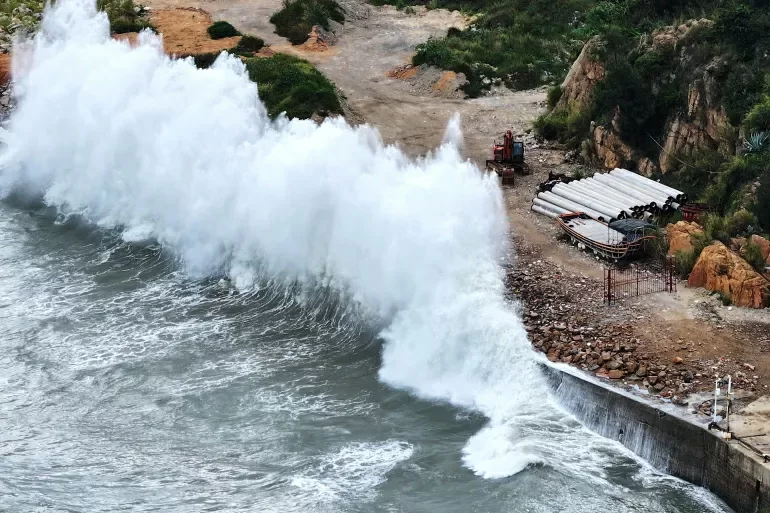
    On May 19, the Meteorological Service of Suriname has issued an official weather advisory warning residents across the country to prepare for scattered periods of heavy rain, intense thunderstorms, and localized flash flooding that could disrupt daily activities.

    According to the service’s forecast, the threat of severe thunderstorms will begin rising in the morning hours, with coastal areas facing the highest initial risk. As the day progresses into the afternoon, cloud cover will continue to thicken across the nation, bringing light to moderate rain showers to both coastal districts and inland regions. Forecasters note that some of these showers will rapidly intensify into full-blown severe thunderstorms, bringing dangerous weather conditions to affected areas.

    The primary hazard highlighted in the advisory is localized waterlogging and flooding triggered by extremely heavy rainfall in concentrated areas. Officials have issued a special recommendation for residents living in low-lying communities: remain vigilant for rising water levels, and prepare for hazardous driving conditions including slippery road surfaces and severely reduced visibility during intense storm cells.

    Meteorologists link the unstable weather pattern to moist air currents moving across northern South America, combined with a persistent active thunderstorm system anchored across the broader region. The same active weather zone stretching from the Atlantic basin has already brought severe thunderstorms and heavy downpours to neighboring countries, including Guyana, French Guiana, and portions of northern Brazil.

    Wind conditions are expected to remain relatively mild overall, with shifting directions between the northeast and southeast and sustained speeds averaging up to 13 kilometers per hour. However, localized gusts accompanying thunderstorms can temporarily spike to around 31 kilometers per hour, creating minor additional hazards for outdoor activity.

    Temperatures for the day are forecast to hit a high of 31 degrees Celsius, with overnight lows dropping to approximately 21 degrees Celsius as storm activity eases.

  • Cuba waarschuwt voor ‘bloedbad’ bij Amerikaanse militaire actie na drone-rapport

    Cuba waarschuwt voor ‘bloedbad’ bij Amerikaanse militaire actie na drone-rapport

    Rising geopolitical friction between the United States and Cuba has reached a new boiling point this week, after uncorroborated claims of Cuban drone preparations against US interests triggered a fierce public warning from Cuban President Miguel Díaz-Canel. Speaking on the social platform X Monday, Díaz-Canel made clear that any US military aggression against the island nation would result in a devastating bloodbath, with unforeseeable ripple effects that would undermine regional peace and stability across the Caribbean. He also emphasized that Cuba has never posed a genuine threat to US national security, framing the recent allegations as a manufactured pretense for foreign intervention.

    The current crisis was sparked by an Axios report citing unnamed intelligence sources, which claimed Cuba has acquired more than 300 military drones and held internal discussions about deploying them against the US naval base at Guantanamo Bay, American military vessels, and Key West, Florida. Cuban officials have roundly rejected the report as a deliberate fabrication crafted by US interests to justify a potential military incursion into Cuban territory.

    Even as the island grapples with a deep, ongoing economic crisis that has left millions facing widespread scarcity, ordinary Cuban residents in Havana have expressed unified resolve to resist any foreign attack. “Cuba is a strong nation, Cubans are brave, and we are not unprepared,” 57-year-old Havana resident Sandra Roseaux told reporters. “Even if we are hungry, if they come, they will have to fight, because Cuba will not back down from responding.”

    Tensions between Washington and Havana have climbed sharply in recent months, driven largely by a US decision to cut off energy supplies to Cuba starting in January. The move came in response to the arrest of Venezuela’s president, a close regional ally of Cuba, and has already triggered severe fuel shortages across the island, leaving residents with only sporadic, limited access to electricity.

    Last week, Reuters also reported that the US Department of Justice is preparing criminal charges against former Cuban leader Raúl Castro connected to the 1996 downing of two humanitarian aircraft flown by anti-Castro groups. The development marks a significant escalation of pressure on Cuba, echoing the harsh anti-Cuban policy pursued by former US President Donald Trump’s administration.

    Cuban Foreign Minister Bruno Rodríguez reaffirmed that Cuba, like any sovereign nation, retains the full right to legitimate self-defense against external aggression under the UN Charter and established international law.

    Public opinion among ordinary Cubans remains split slightly on the path forward even as unity around self-defense holds. While many echo the hardline resolve of Roseaux, 58-year-old Ulises Medina called for diplomatic engagement to de-escalate the crisis. “It would be wrong for the US to invade Cuba, just as it would be wrong for Cuba to invade the US,” Medina said. “They need to reach an agreement and negotiate. That said, Cuba will defend itself—this nation will never be surrendered.”

    For older Cubans who have lived through decades of US-Cuban tension, the commitment to sovereignty runs deep. Eighty-seven-year-old Jorge Villalobos summed up the widespread sentiment of resolve: “The Cuban people will never allow anyone to interfere in our country. We know how to defend ourselves, even if all we have are sticks and stones.”

  • Column: Eén jaar later: neks no kenki, tra fas’ no de, a new pasi lasi

    Column: Eén jaar later: neks no kenki, tra fas’ no de, a new pasi lasi

    Almost 12 months have passed since Suriname’s 2025 general elections, and the catchy campaign slogans that carried opposition parties to power have faded into memory. Today, the core question facing the nation after its historic power transition is simple: what tangible change has actually been delivered? The entire 2024 electoral campaign was built around the promise of radical transformation – not incremental tweaks to governance, but a full break from the dysfunctional patterns of the past.

    The National Democratic Party (NDP), led by now-President Jenny Simons, campaigned on the rallying cry “Kenki a systeem” – “Change the system.” Its core platform pledged to root out systemic corruption, end patronage politics and crack down on political self-enrichment. Other opposition parties echoed this promise of a new direction: the NPS ran on “A new pasi” – “A new path” – while the A20 bloc campaigned on “Tra fasi de,” or “Another phase.”

    But one year on, an uncomfortable truth has emerged: while campaign slogans have changed, the culture of governance in Suriname has barely shifted. The irony of the current situation is almost painful. The same parties that spent years criticizing the previous administration’s overreliance on unelected commissions, political advisor appointments, cronyism and nepotism now find themselves unable to break free from those exact same mechanisms. President Simons has appointed one new commission after another, with some political figures holding seats on multiple overlapping bodies.

    Blunders have already marred appointments to supervisory boards at state-owned enterprises, and internal tensions have plagued the ruling coalition from its first day in office. Divisions within the NDP itself are also already visible to the public. To preserve the coalition’s 34-seat majority, political expediency and superficial unity have been prioritized over the promised clean-up of governance – a dynamic that is exactly how old, dysfunctional systems perpetuate themselves.

    During the campaign, President Simons repeatedly argued that corruption in Suriname had never been worse, and that the entire national system required fundamental overhaul. This was no offhand comment: it was a sweeping moral indictment of the country’s long-standing governing culture. For that very reason, Suriname’s citizens are fully justified in asking what concrete changes have actually been made to that system. Real change is not measured in words alone; it must show through in governing style, institutional transparency, decisive action and ethical leadership by example.

    No reasonable voter expects miracles in just 12 months. Suriname’s economic challenges are deeply rooted, and no incoming administration could reverse decades of damage in a single year. It would be unfair to demand such rapid results. But what citizens do have a right to expect is clear direction, a sense of momentum, urgency, and the tangible feeling that governance is being done differently. That feeling is largely absent today.

    Even now, when citizens raise concerns about persistent problems, the default response from the new administration is to blame the previous government. It is true that the prior administration bears responsibility for many of the issues facing the country today, but this excuse has a clear expiration date. Notably, the previous Santokhi administration relied on the exact same defense for four years after it took power from an earlier NDP government, continually pointing to the damage it inherited. The risk of this tactic is significant: it leads governments to focus more on explaining problems than on solving them.

    When a new government takes control of a nation, it also takes full responsibility for addressing its challenges. After a reasonable transition and evaluation period, an administration must take firm control of the agenda and clearly communicate its policy course. That kind of decisive leadership is sorely lacking at present. For many Surinamese, President Simons is too rarely visible during public crises, and government-wide communication remains weak, fragmented and reactive. At a time when citizens face daily uncertainty from flooding, rising prices and administrative confusion, clear public communication is not a secondary luxury – it is a core function of leadership. The current practice of having the president interviewed only by her own spokesperson is unacceptable, amounting to preaching only to committed party insiders. If full press conferences are not possible, the president should still deliver direct public statements to the nation, and should not rely on interviews with her own staff.

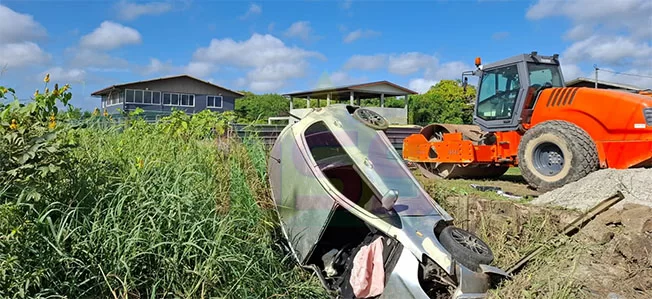
    The most stark example of this lack of preparedness and change comes from the recent severe flooding across the country. As large swathes of Suriname stood submerged, the Ministry of Public Works was found to have only a single long-arm excavator available to respond to the emergency – one machine for the entire nation. This shortcoming raises fundamental questions: how can a country that has known for decades that it is highly vulnerable to extreme rainfall be so poorly prepared for a predictable disaster? Why was no early warning sounded? Where is the long-term infrastructure planning? Where is the coordinated crisis management? It is exactly in moments like this that the public can see whether real systemic change has occurred.

    So far, what Suriname’s public has observed are the same old familiar political reflexes: backroom compromises to hold the fragile coalition together, caution to avoid inflaming internal tensions, controversial political appointments that raise questions of patronage, and leaders who respond faster to internal party pressure than to public frustration.

    Perhaps this is the hardest truth one year after the 2025 elections: systems do not change automatically just because a campaign slogan promises they will. A system only transforms when those in power are willing to set aside their own political comfort and prioritize broad institutional reform. That is the real test facing Simons’ government today. Surinamese voters did not just vote for new faces last year; they voted overwhelmingly for a fundamentally different way of governing.

  • Kanhai: Pg deed juist door niet naar DNA te gaan

    Kanhai: Pg deed juist door niet naar DNA te gaan

    A prominent Surinamese defense attorney has launched sharp criticism of the flawed political discourse surrounding the National Assembly’s planned questioning of the country’s Prosecutor General, arguing the top law enforcement official acted entirely correctly by refusing to appear in person before the parliamentary committee.

    Speaking on the popular current affairs radio program *Bakana Tori* hosted by Cliff Limburg on Lim FM, Irvin Kanhai warned that active participation by the Prosecutor General in the National Assembly’s deliberations over potential impeachment proceedings against three former cabinet ministers would irrevocably “poison” the future criminal trial from a legal perspective. “If I were representing those former ministers in this case, I would immediately file a legal objection with the court over this improper interference,” Kanhai stated during the interview.

    Kanhai emphasized that under existing Surinamese law, the National Assembly is only empowered to assess whether any potential prosecution would threaten public order and national stability, and is explicitly prohibited from delving into the substantive details of the criminal investigation dossier. He noted that parliamentarians’ demand to question the Prosecutor General on granular investigation details directly contradicts the legal boundaries laid out in the nation’s legislation.

    The attorney further pointed out that the three former officials in question have not even been formally designated as criminal suspects, as they have not yet been officially served with impeachment. For this reason, Kanhai argued, the Prosecutor General is under no obligation to disclose strategic, case-sensitive investigation details. Revealing such information, he added, would effectively compromise the entire prosecution by letting the defense see the prosecution’s full hand ahead of trial.

    Kanhai also took aim at the broader political debate surrounding the controversy, chiding parliamentarians to more carefully read the very legislation they enacted. He acknowledged that if lawmakers are unsatisfied with the Prosecutor General’s performance and wish to remove her from office, existing law provides clear pathways to do so — but those pathways require following proper constitutional procedures, not bypassing legal norms for political expediency.

    “Put your concerns in writing, send the formal petition to the court president, and initiate the legitimate removal process. Instead, all we get is empty political chatter,” Kanhai said, highlighting the lack of meaningful, procedure-compliant action from lawmakers. He also warned that open, public debate about constitutional bodies and ongoing criminal cases inflicts lasting damage to the reputation of Suriname’s core state institutions. While Kanhai confirmed that inter-branch communication on broad policy matters is appropriate and healthy, he stressed that political bodies should never interfere with active criminal matters that are yet to be adjudicated by the courts.

    Kanhai closed by reiterating the dangers of allowing the Prosecutor General to become substantively involved in political decision-making tied to an ongoing criminal case. “This kind of interference hands defense attorneys a ready-made argument to claim later that the entire legal process was compromised from its earliest stages,” he concluded.

  • Genia Lank-Corinde start diplomatieke missie in Cuba

    Genia Lank-Corinde start diplomatieke missie in Cuba

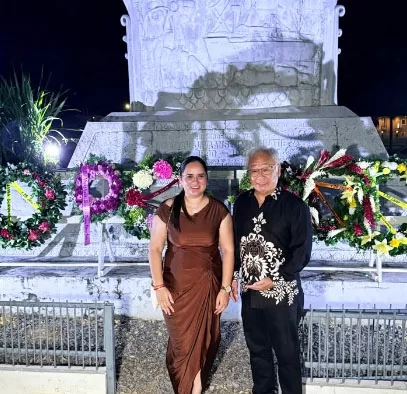
    In a formal diplomatic ceremony held at Havana’s iconic Palace of the Revolution on May 18, Genia Lank-Corinde, the newly appointed ambassador of Suriname to Cuba, officially presented her credentials to Cuban President Miguel Díaz-Canel Bermúdez, marking a new chapter in the long-running bilateral relationship between the two Caribbean nations.

    Speaking after the credential presentation, Lank-Corinde expressed sincere gratitude on behalf of the Surinamese government for the warm hospitality extended by Cuban authorities during her transition to the post. She underscored that Suriname is eager to expand existing collaborative ties across a broad range of priority sectors, including public healthcare, education, agriculture, cultural exchange, and bilateral trade.

    The ambassador also highlighted the deep historical roots of diplomatic engagement between the two countries, noting that 2026 marks 47 years of official relations between Suriname and Cuba. She specifically thanked Cuba for its long-standing commitment to providing annual study scholarships for Surinamese students seeking higher education in Cuba. In response, President Díaz-Canel reaffirmed that this scholarship program will continue unchanged, maintaining the people-to-people connection that has been a cornerstone of bilateral ties for decades.

    Díaz-Canel described Suriname as a sister nation to Cuba, and extended his appreciation for the consistent solidarity shown by Suriname and the broader Caribbean Community (CARICOM) bloc. He specifically thanked Suriname for its long-standing public support in opposition to the decades-long economic blockade imposed on Cuba by the United States.

    Following the formal credential ceremony, Lank-Corinde and delegation members took part in a closing wreath-laying ceremony at the monument to José Martí, Cuba’s revered national hero, located at Havana’s Revolution Square, a traditional gesture of respect for the country’s revolutionary and national legacy.

  • In Memoriam: Toyabali Ahmadali

    In Memoriam: Toyabali Ahmadali

    On May 17, 2026, Suriname lost one of its most prominent public figures: Toyabali “Hadji Toyab” Ahmadali, a former parliamentarian, government minister and respected Islamic community leader, passed away at the age of 95. Born on January 21, 1931, Ahmadali built a decades-long legacy that bridged Suriname’s political landscape and multi-religious civil society, leaving an enduring mark on the nation’s development.

    Ahmadali’s educational and early career path laid the foundation for his future public service. After completing studies at the Suriname Law School, he moved to the Netherlands in 1958 to pursue higher education, graduating from the Amsterdam Social Academy in 1962. He returned to his home country shortly after, taking a position at Suriname’s Ministry of Justice and Police. There, he focused his work on parole reform and prison administration, eventually rising to lead the nation’s Delinquent Care Service.

    His formal political career began in 1967, when he was elected to the Estates of Suriname, the country’s national legislative body. He won re-election in late 1969, and was quickly appointed Minister of Social Affairs in the cabinet led by Prime Minister J. Sedney, a post he held through the cabinet’s 1969 to 1973 term. Following the 1973 and 1977 general elections, he returned to parliament to continue his legislative work. In the early 1980s, he served first as an advisor to the Council of Ministers, and later as a member of the President’s Advisory Council.

    One of Ahmadali’s most landmark policy contributions came during his tenure as Social Affairs Minister. He championed a critical shift in how Dutch development aid was allocated in Suriname, ensuring that not just the Surinaamse Islamitische Vereniging (SIV, Suriname Islamic Association) qualified for funding to build a children’s home and school complex, but also non-Islamic community organizations including the SMA and Sanatan Dharm. Before this policy change, which Ahmadali championed into implementation, almost all international development aid in Suriname was reserved exclusively for Christian organizations—an inequity he worked successfully to dismantle.

    Beyond his political career, Ahmadali was a central and deeply respected leader within Suriname’s Muslim community, holding multiple key roles within the SIV for decades. He served as chairman of Imdadia Isha’at Islam, chaired the SIV Advisory Council, and acted as imam of Imdadia Isha’at Islam from 2004 through 2025. Throughout his life, he worked tirelessly to spread Islamic teachings, foster unity across all Surinamese communities, and provide spiritual guidance to people of all ages. His wisdom, dedication, and commitment to collective well-being earned him widespread respect across ideological and religious divides.

    In recognition of his far-reaching contributions to public life and faith communities, Ahmadali was awarded numerous high honors, including being named a Knight of the Order of the Netherlands Lion and an Officer of the Order of the Yellow Star. He is survived by his wife, four children, four step-children and eight grandchildren. In a statement announcing his passing, his family noted that the loss of Ahmadali will be deeply felt for generations by his loved ones, the SIV community, and the entire nation. While his passing leaves a gap that cannot be filled, his legacy of service, inclusive policy-making, and intercommunity unity will continue to live on in the hearts and minds of all who knew him.

  • Wereld Hypertensie Dag: PAHO waarschuwt voor te hoge zoutconsumptie in Amerika

    Wereld Hypertensie Dag: PAHO waarschuwt voor te hoge zoutconsumptie in Amerika

    Across Latin America and the Caribbean, excessive salt intake has emerged as a pressing public health crisis, far exceeding global health guidelines and driving rising rates of life-threatening cardiovascular conditions, regional health authorities have warned.

    The World Health Organization (WHO) recommends that healthy adults cap daily sodium intake at 2000 milligrams, equal to roughly one teaspoon or 5 grams of salt, with even lower limits set for children. But current consumption data across the region tells a starkly different story: average daily salt intake ranges from 8 to 12 grams, two to nearly three times the WHO-recommended threshold. In major regional economies including Argentina, Brazil and Mexico, average daily consumption hovers between 9 and 10 grams, while Caribbean nations such as Jamaica and Trinidad and Tobago report intake between 8 and 11 grams per day. This consistent overconsumption acts as a major modifiable risk factor for hypertension and cardiovascular disease, the leading causes of death in the region.

    Fabio da Silva Gomes, a food and physical activity advisor for the Pan American Health Organization (PAHO), explained that most people drastically underestimate how much salt they consume daily. Contrary to common belief that most excess sodium comes from table salt added during cooking or at meals, approximately 80% of dietary sodium in regional diets is sourced from processed and ultra-processed products, including cured meats, pre-packaged snacks, and breakfast cereals. As consumption of these highly processed products has risen sharply across the region, the need for targeted public policy and consumer protection regulation has grown more urgent.

    One widespread consumer misconception that health officials aim to correct centers on the perceived health differences between popular salt varieties. Whether marketed as sea salt, Himalayan salt, or standard table salt, nearly all commercial salt products are primarily composed of sodium chloride, and carry the same heart health risks when consumed in excess. While some commercially available salt substitutes reduce sodium content and boost potassium, which can offer benefits for heart health, these products are not recommended for pregnant people, children, or individuals living with kidney disease.

    Health officials identify the lobbying and influence of the food processing industry as one of the largest barriers to cutting population-wide salt intake. Food companies frequently seek to delay or weaken mandatory sodium reduction regulations by questioning public health research, pushing for ineffective voluntary industry commitments, and even pursuing legal action to block stricter rules.

    For individual consumers, da Silva Gomes advises prioritizing whole foods over heavily processed alternatives and preparing more meals at home to maintain control over sodium content. “By adjusting recipes and cooking with intentionality, people can protect their own health and that of their families,” he noted.

    Data from early adopters shows that mandatory regulatory measures are the most effective tools for cutting population salt intake. Policies including mandatory maximum sodium limits for processed foods and required front-of-package warning labels for high-salt products have already delivered results. Argentina, Mexico and Colombia have already implemented these warning label systems, which have driven measurable reductions in consumer purchases of high-salt products. Additional effective steps include regulating marketing for high-salt processed foods and limiting access to these products in school settings.

    PAHO supports national governments across the region in advancing healthier food policies, strengthening regulatory frameworks, and boosting public awareness of sodium-related health risks. These efforts align with WHO’s global target of cutting population salt intake by 30% by 2030. PAHO provides member states with practical resources including the PAHO Regional Sodium Reduction Targets, in-person training, and free online courses on regulatory design. The organization also works to accelerate the adoption of front-of-package warning labels to help consumers make informed, healthier choices.

    As part of this year’s World Salt Awareness Week, PAHO is rolling out public education campaigns highlighting the health harms of excess salt and calling for coordinated action across governments, industry, and civil society to protect regional public health. Through this collaborative approach, health leaders aim to cut preventable deaths from hypertension and cardiovascular disease, and build a healthier future for communities across Latin America and the Caribbean.

  • Russische drone raakt Chinees schip bij Oekraïense kust

    Russische drone raakt Chinees schip bij Oekraïense kust

    On the night between Sunday and Monday, Russian forces launched one of the largest cross-border strikes against Ukraine in recent months, deploying 524 drones and 22 missiles across multiple target areas. Among the attack targets were two civilian cargo vessels sailing in the Black Sea off Ukraine’s Odesa region, a critical Black Sea shipping and economic hub that has faced repeated Russian bombardments on civilian infrastructure since the full-scale invasion began.

    According to Ukraine’s maritime port authority, the two vessels struck by Russian drones were flagged under different jurisdictions: one to the Marshall Islands, and the other to Guinea-Bissau. The Marshall Islands-flagged vessel, the KSL Deyang, is owned by Chinese interests and carries an all-Chinese crew. Russian drone attacks left part of the ship’s hull charred and damaged, but the Ukrainian navy confirmed no crew members sustained injuries in the strike. The ship was approaching Pivdennyi port in the Odesa region to load a cargo of iron ore concentrate, and remained seaworthy enough to continue its planned voyage after the attack.

    Ukrainian President Volodymyr Zelenskyy issued a statement via social media following the incident, emphasizing that Russian command must have been fully aware of the Chinese ownership of the vessel when the strike was ordered. Attacks on civilian shipping in the Odesa port area have become a regular tactic for Russian forces since the full-scale invasion launched in February 2022, with Moscow repeatedly targeting infrastructure and commercial vessels to disrupt Ukraine’s critical agricultural and mineral export routes through the Black Sea.

    The incident comes at an unusually sensitive moment in geopolitical terms, falling just 24 hours before Russian President Vladimir Putin was set to travel to Beijing for high-level talks with Chinese President Xi Jinping. The ongoing full-scale war in Ukraine is expected to top the agenda for the bilateral meeting. China has maintained an official stance of neutrality since the invasion began, repeatedly calling for ceasefires and negotiated peace settlements while avoiding explicit public condemnation of Russia’s 2022 invasion of Ukraine.

  • SEOB en IMF: Suriname nog onvoldoende voorbereid op olie-inkomsten

    SEOB en IMF: Suriname nog onvoldoende voorbereid op olie-inkomsten

    As Suriname prepares to tap into its emerging offshore oil and gas reserves that promise to deliver billions in new state revenue, two leading financial oversight bodies — the International Monetary Fund (IMF) and the Suriname Economic Oversight Board (SEOB) — have issued urgent calls for sweeping structural reforms to avoid a repeat of the country’s past economic crises. Both institutions warn that without stronger financial institutions, tightened fiscal discipline and greater governance transparency, the incoming oil windfall risks being mismanaged rather than driving long-term inclusive growth.

    In its latest technical assistance report focused on Suriname’s fiscal preparedness, the IMF acknowledges that the South American nation has already taken initial positive steps to update its regulatory framework, including reforms to its accounting law and the establishment of a national Savings and Stabilization Fund designed to manage volatile commodity revenue. However, the fund stresses that practical implementation of these reforms has fallen drastically behind schedule. Key governing bodies, enforcement decisions and independent oversight mechanisms required for the new system to operate effectively have yet to be put in place, the report notes.

    The IMF’s core warning centers on the risk that unregulated oil revenue could trigger the same boom-and-bust economic cycle that has plagued many resource-dependent developing nations. Without a robust fiscal framework in place, the fund argues, incoming oil money could lead to unsustainable expansion of government spending, a renewed rise in national debt and widespread macroeconomic instability. To mitigate these risks, the IMF highlights the critical need for clear binding fiscal rules, standardized transparent public spending reporting and fully independent oversight of all state expenditures drawn from oil revenue.

    Looking at the role of the newly established Savings and Stabilization Fund, the IMF outlines that the vehicle is intended to serve two core long-term purposes: acting as a financial buffer to absorb sudden swings in global oil prices, and preserving a share of resource wealth for future generations of Surinamese. But the fund makes clear that these goals can only be achieved if the fund operates under strict, legally binding rules for withdrawals, debt management and independent external oversight.

    In its own latest public bulletin, the SEOB echoed the IMF’s concerns and raised additional red flags about unresolved structural vulnerabilities in Suriname’s economy. The board notes that the country continues to grapple with persistent structural government deficits, a still-unsustainable high national debt burden and chronically weak institutional capacity across government agencies. Beyond fiscal risks, the SEOB warns that Suriname’s economy remains overly reliant on mining and oil extraction, with meaningful progress on broad-based economic diversification lagging far behind what is needed to build long-term resilience.

    The SEOB also drew attention to a separate, underreported risk to Suriname’s oil sector ambitions: the recent shutdown of the Anti-Money Laundering Project Implementation Unit (AML-PIU), a specialized body that led the country’s national efforts to counter money laundering and terrorist financing. The oversight board warns that the dissolution of this unit could cause severe damage to Suriname’s international reputation at a critical time, when the country is courting major foreign direct investment from global energy companies to develop its new oil and gas projects. A weakened anti-financial crime framework could lead to increased international scrutiny, restricted access to global financial markets and deter potential foreign investors, the board argues.

    Both the IMF and SEOB agree that the coming half-decade will be a make-or-break period for Suriname’s long-term economic trajectory. Without urgent action to address institutional weaknesses and implement promised structural reforms, both bodies warn, the country risks squandering its once-in-a-generation oil windfall and repeating the patterns of economic crisis, budget collapse and governance instability that have held back growth for decades.

  • Olieprijzen stijgen opnieuw na drone-aanval op nucleaire centrale in VAE

    Olieprijzen stijgen opnieuw na drone-aanval op nucleaire centrale in VAE

    Global crude oil prices climbed further on Monday, pushing Brent crude reaching its highest level since early May, following a reported drone strike targeting a nuclear power plant in the United Arab Emirates (UAE). This upward price momentum comes against a backdrop of stalled diplomatic efforts between the region, with peace talks between the U.S.-Israeli bloc and Iran have broken down, and emerging indications that Washington is actively considering military options against Tehran.

    By Monday’s market close, benchmark Brent crude had advanced $1.44, or 1.32%, to settle at $110.70 per barrel. U.S. West Texas Intermediate (WTI) crude rose $1.84, equal to a 1.75% gain, to hit $107.26 per barrel, also its highest level since early May. Last week alone, both major crude contracts surged more than 7%, driven by fading market optimism over a potential peace deal that would end attacks and ship seizures around the Strait of Hormuz, the critical chokepoint through which roughly 20% of global oil trade passes.

    Recent drone strikes targeting infrastructure in both the UAE and Saudi Arabia, paired with increasingly heated rhetoric between the U.S. and Iran, have stoked widespread market fears of a full escalation of conflict in the oil-rich Gulf region. UAE officials are currently investigating the origin of the attack on the Barakah nuclear power plant, and have reaffirmed the country’s right to respond to what they label as terrorist attacks on sovereign territory.

    Separately, Saudi Arabia announced it had intercepted three drones that entered its airspace from Iraqi territory, and issued a warning that it would take all necessary operational measures to protect its national sovereignty and domestic security.

    Tony Sycamore, a market analyst at IG Markets, noted that the recent string of drone attacks acts as a clear warning to global powers. “Renewed U.S. or Israeli military strikes against Iran could trigger a wave of additional proxy attacks on energy infrastructure and critical facilities across the Gulf region, carried out by Iran or its regional allied groups,” Sycamore explained.

    U.S. news outlet Axios also reported that former U.S. President Donald Trump is preparing to convene a meeting with his national security advisory team to discuss a range of potential military actions against Iran.